Complete Guide to Shinnenji Temple (Mie Prefecture) | Detailed Explanation of History, Access, and Visiting Information
About Shinnenji Temple
Shinnenji Temple is a Buddhist temple located in Mie Prefecture. It has a long history as a center of local faith and has been cherished by many parishioners and visitors. The temple’s name, “Shinnen,” carries the deep meaning of wholeheartedly praying to Buddha, and true to its name, it is known as a temple that values faith.
While Mie Prefecture has many religious facilities, including Ise Grand Shrine, Shinnenji Temple has also played an important role in supporting the spiritual culture of the region. Even today, it maintains deep ties with the local community through funerals, memorial services, and annual events.
History and Origins of Shinnenji Temple
Background of Founding
The founding of Shinnenji Temple is closely intertwined with the history of the region. Mie Prefecture has flourished since ancient times as a pilgrimage route to Ise Grand Shrine, and many temples were built there. Shinnenji Temple is thought to have been established within this historical context as a place of faith for the local residents. Japanese Buddhist temples spread throughout Japan from the Heian period to the Kamakura period, and the danka system (parishioner system) was established from the Muromachi period to the Edo period. Shinnenji Temple also has a history of taking root in the local community within this development of Japanese Buddhism.
Transmitting Faith Across Generations
Temples have functioned not merely as religious facilities, but also as centers of local culture and education. Shinnenji Temple has played a role in providing peace of mind to people through Buddhist teachings and deepening community ties through ceremonies such as weddings and funerals.
Due to the temple registration system of the Edo period, all people were obligated to belong to a temple, and temples also functioned as household registration systems. Because of this historical background, Shinnenji Temple has also built deep ties with local residents.
About the Principal Image and Sect
Characteristics of Various Buddhist Sects
In Mie Prefecture, there are temples of various sects, including Senshuji Temple, the head temple of the Shinshu Takada sect, and temples of the Rinzai sect. Each Buddhist sect has its own unique doctrines and practices, and its principal deity also differs.
In Jodo Shinshu temples, Amida Buddha is the principal deity, and salvation is taught through chanting the Buddha’s name. In Nichiren temples, the Lotus Sutra is the fundamental scripture, and the chanting of the mantra “Namu Myoho Renge Kyo” is emphasized. In Zen Buddhism, the practice of enlightenment through seated meditation is central.
Forms of Faith at Shinnenji Temple
At Shinnenji Temple, faith is practiced through daily services, annual events, and interaction with parishioners. Temple services and memorial services provide valuable opportunities for remembering the deceased and for the living to engage with Buddhist teachings.
Even today, many people visit temples for ancestral memorial services, memorial services for stillborn babies, and protection from misfortune. Shinnenji Temple responds to the faith of these people by performing various memorial services and prayers.
Highlights of the Temple Grounds
Main Hall and Temple Layout
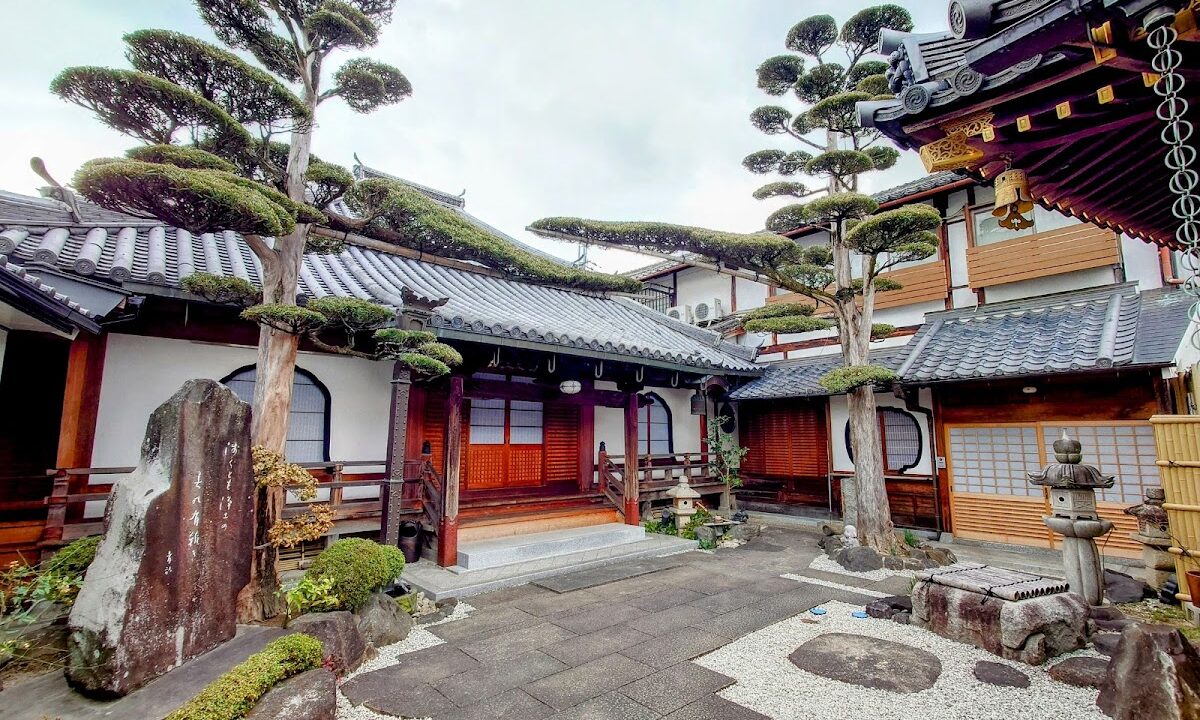
Japanese temple architecture exhibits various styles depending on the sect and era. Generally, the layout consists of the main hall (Hondo), the priest’s quarters (Kuri), the bell tower, and the main gate (Sanmon).
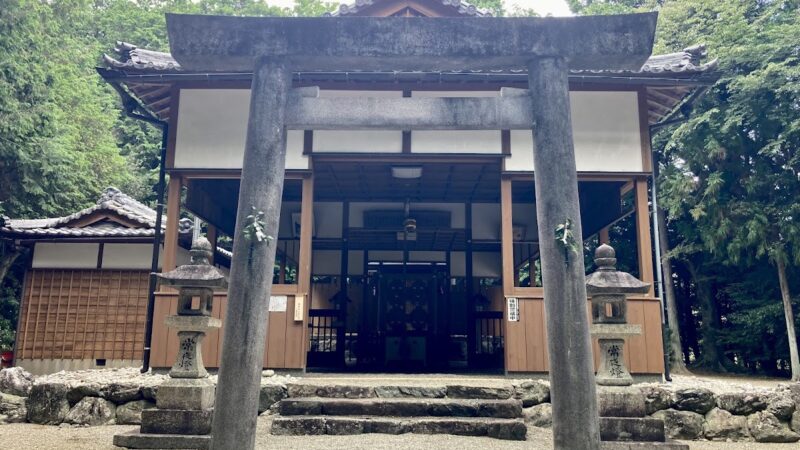
The main hall is the central building of the temple and the most sacred place where the principal image of worship is enshrined. Here, worshippers clasp their hands together, chant sutras, and offer prayers to Buddha. The architectural style and decorations reflect the history and characteristics of the temple and its sect.
Atmosphere and Environment of the Temple Grounds
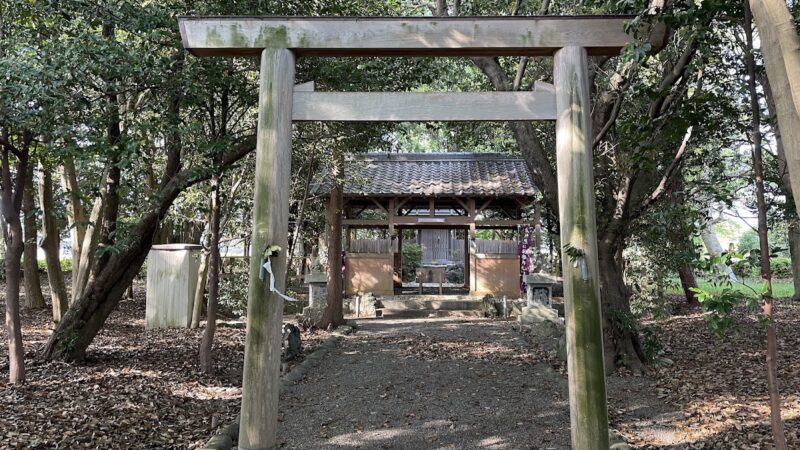
Temple grounds offer a tranquil space away from the hustle and bustle of everyday life. Surrounded by trees, the grounds allow one to appreciate the beauty of nature in each season, creating a calming effect.
Especially in older temples, centuries-old trees, historical stone monuments, and gravestones are scattered throughout, conveying the passage of time and the weight of history. This environment itself is an important element in providing spiritual peace to worshippers.
Annual Events and Memorial Services
Main Annual Events
Buddhist temples hold various events throughout the year. These events are important opportunities to practice Buddhist teachings and deepen bonds with parishioners.
Spring Events
- Spring Equinox Ceremony: An important time for ancestor worship
- Flower Festival (Buddha’s Birthday Ceremony): A ceremony celebrating the birth of Buddha (April 8th)
Summer Events
- Obon: The most important event for welcoming and honoring the spirits of ancestors
- Segaki Ceremony: A memorial service for spirits without relatives and those suffering in the realm of hungry ghosts
Autumn Events
- Autumn Equinox Ceremony: Ancestor worship similar to the spring ceremony
- Thirteenth Night Ceremony: A memorial service expressing gratitude for the harvest
Winter Events
- New Year’s Eve Bell Ringing: The bell is rung 108 times on New Year’s Eve to dispel worldly desires
- Shusho-e Ceremony: A memorial service praying for peace in the new year
Daily Memorial Services
In addition to annual events, various memorial services are held daily at temples. Typical examples include funerals, memorial services (first seven days, forty-ninth day, first anniversary, third anniversary, etc.), and monthly memorial services. These memorial services not only pray for the repose of the deceased’s soul, but also provide an opportunity for those left behind to engage with Buddhist teachings and reflect on life and death. At Shinnenji Temple, these services also deepen the bonds with parishioners.
Etiquette and Manners for Visiting a Temple
Basic Etiquette for Visiting a Temple
When visiting a temple, it is good to be aware of the following basic etiquette.
Bow at the Temple Gate
The temple gate is the boundary separating the secular world from the sacred realm. Before passing through the gate, bow and compose yourself before entering the temple grounds.
Procedure for Washing Hands
- Take the ladle with your right hand and wash your left hand.
- Switch the ladle to your left hand and wash your right hand.
- Switch the ladle back to your right hand, receive water in your left hand, and rinse your mouth.
- Finally, stand the ladle upright and wash the handle.
Worship at the Main Hall
- Quietly place your offering in the offering box.
- Ring the bell if there is one.
- Join your hands in prayer and bow.
- Pray sincerely.
- Bow again and leave.
Attire and Items to Bring When Visiting a Temple
Unless you are attending a special memorial service, everyday clothing is acceptable, but you should avoid revealing or flashy clothing. For funerals and memorial services, mourning attire or subdued-colored clothing is appropriate.
Bringing prayer beads (juzu) makes for a more respectful visit. Prayer beads are a symbol of Buddhism and are believed to dispel worldly desires.
Access Information
Overview of Access to Temples in Mie Prefecture
Mie Prefecture is easily accessible from Nagoya via Kintetsu and JR lines, and from Osaka via Kintetsu lines. Within the prefecture, in addition to trains, local buses and private cars are also used for transportation.
Access from Major Stations
- From Nagoya Station: Use Kintetsu Limited Express or JR Rapid Mie
- From Osaka Namba Station: Use Kintetsu Limited Express
- From Kyoto Station: Use Kintetsu Limited Express
Access to Shinnenji Temple
For specific access methods to Shinnenji Temple, it is recommended to inquire with the temple in advance. Generally, temples in Mie Prefecture can be accessed in the following ways:
Using Public Transportation
Walk, take a taxi, or use a local bus from the nearest station. Since the number of services may be limited in some areas, it is important to check the timetable in advance.
Using a Private Car
Check in advance whether the temple has parking. Since congestion is expected during memorial services, aim to arrive early.
Mie Prefecture’s Temple Culture and Shinnenji Temple
Mie Prefecture’s Buddhist Culture
Mie Prefecture is a sacred site of Shintoism, known for Ise Grand Shrine, but it is also a region with many Buddhist temples. The tradition of “syncretism of Shinto and Buddhism” remains strong, and a unique religious culture has been formed where shrines and temples coexist.
Senshuji Temple (Tsu City), the head temple of the Shinshu Takada sect, is an important temple possessing a national treasure building. Furthermore, Kongoshoji Temple (Asama-yama), which protects the northeast direction (the “demon’s gate”) of Ise Grand Shrine, is deeply connected to pilgrimages to Ise, as evidenced by the saying, “If you visit Ise, climb Asama; if you don’t climb Asama, your pilgrimage is incomplete.”
The Role of Temples in Local Communities
Even in modern times, temples play an important role in local communities. Beyond ceremonial roles such as funerals and memorial services, they also function as places for transmitting local history and culture, and as places where people gather and interact.
Shinnenji Temple, as a member of this community, continues to transmit Buddhist teachings while cherishing its ties with parishioners and local residents. In today’s society, where the birthrate is declining and the population is aging, the role of temples is becoming increasingly important.
About Memorial Services and Buddhist Rituals at Temples
Funerals and Buddhist Rituals
One of the most important roles of a Buddhist temple is conducting funerals and Buddhist ceremonies. In Japanese Buddhism, various rituals have developed to pray for the peace of the deceased in the afterlife and to heal the grief of the bereaved.
Funeral Procedure
- Pillow Sutra: A sutra chanted immediately after death.
- Wake: A ceremony to remember the deceased and spend the night together.
- Funeral Service/Memorial Service: The final farewell to the deceased.
- Cremation/Interment
Types of Memorial Services
- First Seven Days (7th day)
- Forty-Ninth Day (49th day): End of mourning period
- Hundredth Day (100th day)
- First Anniversary (1st year)
- Third Anniversary (2nd year)
- Seventh Anniversary (6th year)
- Thirteenth Anniversary (12th year)
- Subsequently, Seventeenth, Twenty-Third, Twenty-Seventh, Thirty-Third Anniversary, etc.
Other Memorial Services
Mizuko Kuyo (Memorial Service for Stillborn Children)
A memorial service is held for children who have died due to miscarriage or stillbirth. It is an important ceremony to empathize with the parents’ grief and pray for the repose of the child’s soul.
Ancestral Memorial Service
A memorial service for all ancestors is held at specific times, such as during the equinox or Obon festival. This provides an opportunity to reflect on family history and feel the interconnectedness of life.
Perpetual Memorial Service
This system allows temples to perform perpetual memorial services in cases where there are no successors or where the family does not wish to burden their descendants. It is gaining attention as a form of memorial service that adapts to the changing family structures of modern times.
The Danka System and Temple Management
History of the Danka System
The Danka system originated from the temple registration system of the Edo period. It is a system in which people belong to a specific temple and receive financial support. Temples perform funerals and memorial services for their parishioners, providing spiritual support.
This system allowed temples to gain a stable operational base, and parishioners to secure a place of faith and a place for ancestor worship. It can be said to be a unique Japanese religious culture based on the spirit of mutual assistance.
The Relationship Between Parishioners and Temples in Modern Times
In modern times, the Danka system is also changing due to urbanization, the rise of nuclear families, and changes in religious awareness. However, the culture of ancestor worship remains strong, and many people maintain their relationship with temples.
The temple, too, is striving to contribute to the local community in various ways, without being bound by the traditional parishioner system. They are promoting the creation of an open temple through activities such as holding Dharma talks, sutra copying sessions, Zen meditation sessions, and participating in local events.
Faithful Life at Shinnenji Temple
Daily Practice of Faith
Our involvement with the temple is not limited to funerals and memorial services. Visiting and praying at the temple on a daily basis is also an important practice of faith.
Morning Prayer
Visiting the temple in the morning and praying allows you to start the day refreshed. The time spent praying in the quiet temple grounds is a valuable opportunity to calm the mind.
Sutra Copying/Buddhist Image Copying
Copying Buddhist scriptures and drawing Buddhist images are ways to calm the mind and connect with Buddhist teachings. Many temples hold sutra copying sessions.
Listening to Dharma Talks
Listening to the head priest’s Dharma talks allows for a deeper understanding of Buddhist teachings. You can gain insights from a Buddhist perspective on the worries and challenges of modern society.
Participation in Temple Events
By participating in annual events, you can feel the changing seasons and experience traditional Buddhist culture. During the equinox and Obon festivals, many parishioners gather to commemorate their ancestors.
These events also serve as opportunities for interaction among people belonging to the same temple, strengthening the bonds of the local community.
Temple Pilgrimage in Mie Prefecture and Shinnenji Temple
Major Temples in Mie Prefecture
Mie Prefecture boasts numerous temples with rich history and prestige.
Senshuji Temple (Tsu City)
The head temple of the Shinshu Takada sect. Possessing the national treasures Miei-do and Nyoraido, it is a representative temple of Mie Prefecture.
Kongōshōji Temple (Ise City)
Known as a temple protecting the northeast direction (demon’s gate) of Ise Grand Shrine, it is located on the summit of Mt. Asama.
Keishoji Temple (Tsu City)
An ancient temple said to have been an imperial temple of Emperor Shōmu.
Kannonji Temple (Suzuka City)
It is revered as a Kannon (Goddess of Mercy) that wards off evil.
The Significance of Temple Visits
By visiting multiple temples, you can learn about the unique characteristics, history, and differences in sects of each temple. Furthermore, by experiencing various Buddhist statues and architectural styles, you can deepen your understanding of Japanese Buddhist culture.
When visiting Shinnenji Temple, visiting the surrounding temples and shrines will allow you to experience the rich religious culture of Mie Prefecture more deeply.
Summary
Shinnenji Temple is an important temple in Mie Prefecture that supports local faith and culture. While preserving traditions cultivated over a long history, it continues to play a role as a spiritual haven for people in modern society.
Temples are not merely religious facilities; they are the center of local communities and inheritors of history and culture. By visiting Shinnenji Temple, you can experience Buddhist teachings, find peace of mind, and feel the history and culture of the region.
When visiting Mie Prefecture, please visit not only famous tourist spots such as Ise Grand Shrine, but also locally rooted temples like Shinnenji Temple. The time spent praying in the tranquil temple grounds will be a precious opportunity to forget the hustle and bustle of everyday life and to reflect on yourself.
When visiting, please be mindful of proper etiquette and manners, and show respect for the temple’s history and traditions. We also recommend participating in annual events and memorial services to gain a deeper understanding of Buddhist culture. We hope that Shinnenji Temple will be a place that contributes to your peace of mind and spiritual well-being.