Complete Guide to Ushihana Shrine (Mie Prefecture) | The Oldest Shrine in Kishu with a 5000-Year History and the Legend of Emperor Jimmu’s Eastern Expedition
Nestled quietly in the Kumano region of southern Mie Prefecture, Ushihana Shrine is known as the oldest shrine in the Kishu region, said to have been founded 5000 years ago. Deeply connected to the legend of Emperor Jimmu’s eastern expedition, this shrine conveys the romance of ancient Japanese history. This guide provides a detailed introduction to its history, enshrined deities, highlights within the grounds, and access information.
Basic Information on Ushihana Shrine
Location and Access
Ushihana Shrine is located at 1509 Funada, Kiho-cho, Minamimuro-gun, Mie Prefecture. The place name is “Ushigahana,” and this place name is the origin of the shrine’s name. It is located near the Funada sluice gate, in a quiet area close to the mouth of the Kumano River.
Address: 1509 Funada, Kiho-cho, Minamimuro-gun, Mie Prefecture
Nearest Station: Approximately 15 minutes on foot from Udono Station on the JR Kisei Main Line
Parking: Limited space available on the shrine grounds
Pronunciation and Alternative Names of the Shrine
The official name is “Ushihana Shrine,” pronounced “Ushihana Jinja.” Locally, it is affectionately called “Ushibana-san.” It is believed that the name “Ushihana” originated from the place name “Ushigahana.”
History as the Oldest Shrine in Kishu
5000-Year-Old Legend
Ushihana Shrine is said to have been founded approximately 5000 years ago, making it the oldest shrine in the Kishu region. This corresponds to the late Jomon period to the early Yayoi period, making it one of the oldest shrines in Japan.
Of course, the 5,000-year timeframe is purely legendary, but there is no doubt that this region has been an object of worship for people since ancient times. The Kumano region has been revered as a sacred place where gods reside since ancient times, and Ushibana Shrine is considered one of the origins of this faith.
Connection to Emperor Jimmu’s Eastern Expedition
The most important aspect of Ushibana Shrine’s history is its connection to Emperor Jimmu’s Eastern Expedition. According to the *Nihon Shoki* (Chronicles of Japan), when Emperor Jimmu was in danger in Kumano during his eastern expedition, Takakuraji-no-Mikoto, acting on a divine command from Amaterasu-Omikami, presented the sacred sword “Futsu-no-Mitama” and saved the emperor.
There is a tradition that Takakuraji-no-Mikoto remained in this area, and that the later enshrinement of him is the origin of Ushibana Shrine. Emperor Jimmu’s Eastern Expedition is a central story in Japan’s founding myths, and the fact that this area was one of its important stages enhances the historical value of Ushibana Shrine.
Records from the Edo Period
The Edo period geographical record, “Kii Zoku Fudoki,” also mentions Ushibana Shrine, introducing it as an important shrine in Funada Village. This indicates that it functioned as a center of local faith even at that time.
During the Edo period, it was also worshipped as the guardian deity of draft oxen (oxen used for farming), and it is said that many people prayed for successful cultivation in this region, where agriculture was thriving. There is a theory that the shrine’s name, Ushibana (ox nose), is related to this belief.
Deities and Divine Virtues
Main Deity: Takakuraji-no-Mikoto
The main deity of Ushibana Shrine is Takakuraji-no-Mikoto. Takakuraji-no-Mikoto is a deity appearing in the “Nihon Shoki” and “Kojiki,” known for his achievement of presenting a sacred sword to Emperor Jimmu upon receiving a divine command from Amaterasu-Omikami.
He is also known as “Ame-no-Kaguyama-no-Mikoto” and is considered the ancestral deity of the Mononobe clan. Due to his important role in Emperor Jimmu’s eastern expedition, he is revered as a god of national peace, victory, and guidance.
Enshrined Deities
Along with Takakuraji-no-Mikoto, the following deities are enshrined:
Hon-da-wake-no-Mikoto
This is the divine name of Emperor Ojin, the 15th emperor, and a god widely worshipped as Hachiman. He is known as the god of military fortune, national protection, and industrial development.
Amenokoyane-no-Mikoto
This is the god who recited prayers when Amaterasu Omikami hid in the Heavenly Rock Cave, and is the ancestral god of the Fujiwara clan. He is revered as the god of learning, wisdom, and the power of words.
By enshrining these three deities, Ushibana Shrine has become a shrine with a wide range of divine virtues, including national peace, military fortune, learning, and industry.
Divine Virtues and Faith
The main divine virtues of Ushibana Shrine are as follows:
- Guidance and Good Fortune: Because Takakuraji-no-Mikoto guided Emperor Jimmu, the deity is believed to bestow the blessing of opening the path in life.
- Victory and Prayer for Success: As the deity who led the Eastern Expedition to success, the deity is believed to grant success in competitions and contests.
- National Security and Regional Protection: Since ancient times, the deity has been considered a protector of the region.
- Agriculture and Industrial Development: From the belief in the deity as the guardian of draft oxen, the deity is believed to promote the development of agriculture and industry.
- Protection from Evil and Disaster: Because the deity dispelled evil spirits with a sacred sword, the deity is believed to bestow the blessing of protection from evil.
Highlights of the Shrine Grounds
Main Hall and Shrine Architecture
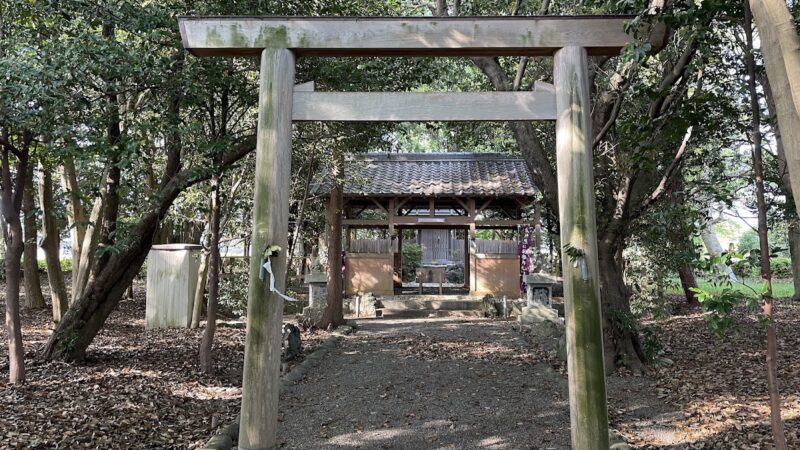
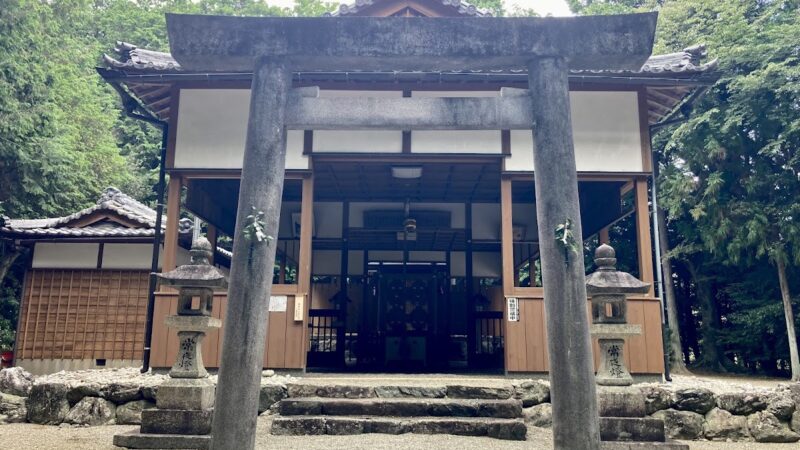
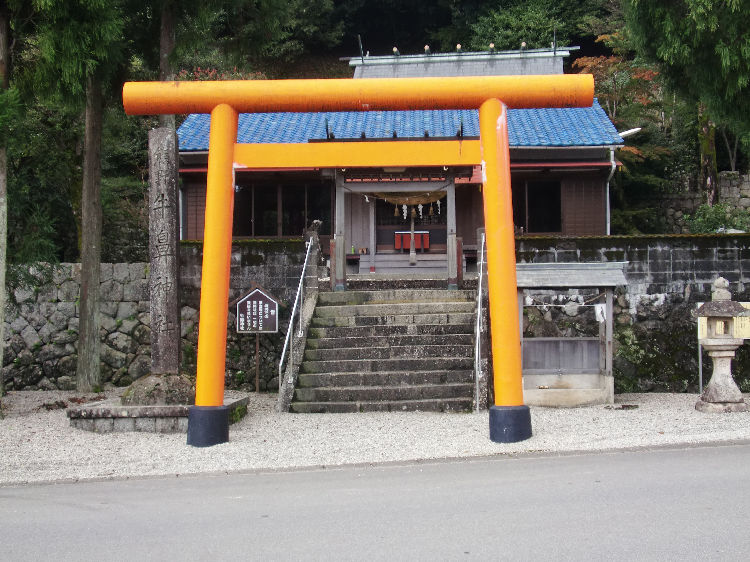
The main hall of Ushibana Shrine retains the characteristics of traditional shrine architecture in the Kumano region. While not large in scale, it is a simple yet solemn shrine.
The architectural style of the main hall is nagare-zukuri (flowing style), and the roof is covered with copper plates. Surrounded by trees, it is a space imbued with a tranquil atmosphere.
Atmosphere of the Shrine Grounds
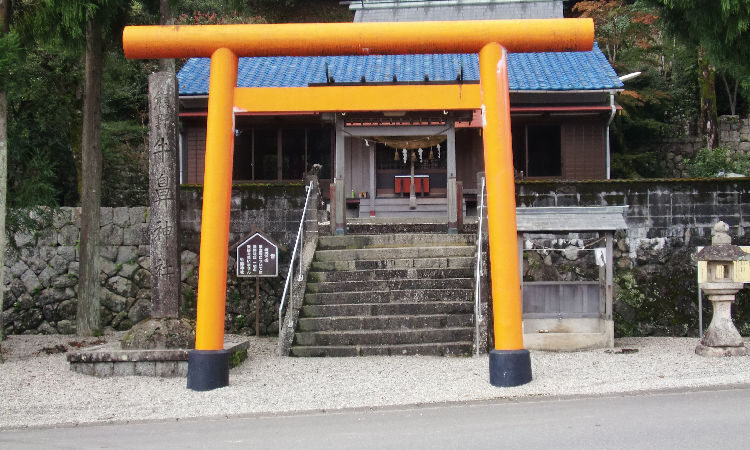
The shrine grounds are not particularly large, but they are a sacred space surrounded by ancient trees. Following the path, you pass through a torii gate and climb stone steps to reach the main hall.
Information boards are installed on the grounds, providing detailed information about the shrine’s history and enshrined deities. These boards mention “5,000 years since its founding” and “the oldest shrine in the Kishu region,” emphasizing the shrine’s historical importance.
Surrounding Natural Environment
The Funada district of Kiho Town, where Ushibana Shrine is located, is a naturally rich area near the mouth of the Kumano River. The Funada sluice gate is nearby, allowing visitors to feel the majestic flow of the Kumano River.
Kumano has been revered since ancient times as a sacred place where “the gods reside,” and Ushibana Shrine is situated in a place imbued with this spiritual energy. When visiting, paying attention to the surrounding nature will enhance your pilgrimage experience.
Festivals and Annual Events
Annual Festival
The annual festival of Ushibana Shrine is held on a fixed date each year. Local parishioners and devotees gather to express gratitude to the shrine’s deities and pray for peace and prosperity in the region and a bountiful harvest.
The festival involves solemn religious ceremonies, preserving local traditions. While not large in scale, it is a warm and deeply rooted community festival.
Other Events
Regular festivals, such as monthly festivals, are held throughout the year. Individual prayers and requests for protection against misfortune are also accepted.
Positioning within the Religious Culture of the Kumano Region
Relationship with the Kumano Sanzan
While the Kumano Sanzan (Kumano Hongu Taisha, Kumano Hayatama Taisha, and Kumano Nachi Taisha) are well-known in the Kumano region, Ushibana Shrine is a shrine that has preserved its own unique local beliefs, separate from these major shrines.
In particular, it is geographically close to Kumano Hayatama Taisha and is located in the same Kumano River basin. While Kumano Hayatama Taisha is the central figure of Kumano faith, Ushibana Shrine has played a distinct role as a local tutelary deity.
As a Historical Site on the Route of Emperor Jimmu’s Eastern Expedition
Kumano is one of the important settings in the legend of Emperor Jimmu’s eastern expedition. The story of the emperor and his party encountering hardship in Kumano and escaping peril with the help of Takakuraji-no-Mikoto is a crucial scene in Japan’s founding myth.
Ushibana Shrine is deeply connected to this legend and is a fascinating historical site for history enthusiasts tracing the expedition route. While several shrines in the Kumano region share similar traditions, Ushibana Shrine is considered to have a particularly long history.
As a Local Guardian Deity
In the Funada district of Kiho Town, Ushibana Shrine has long been revered as the local tutelary deity. It is deeply intertwined with the lives of the local people, and is visited at various milestones in their lives, from birth and growth to marriage.
Even today, it functions as the center of local festivals and events, and plays a role as a bond within the local community.
Etiquette and Manners for Worship
Basic Worship Method
When visiting Ushibana Shrine, please follow the etiquette below.
- Bow before the Torii Gate: Before entering the shrine grounds, bow before the torii gate.
- Walk along the edge of the path: The center of the path is considered the path of the gods.
- Purify yourself at the water basin: If there is a water basin, purify your hands and mouth.
- Etiquette in front of the main hall: The basic etiquette is two bows, two claps, and one bow.
- Bow upon leaving: When leaving the shrine grounds, turn around and bow after passing through the torii gate.
Photography
Photography is generally permitted on the shrine grounds, but please refrain from taking pictures inside the main hall or during Shinto rituals. Also, please be considerate of other worshippers.
Maintaining Tranquility
Ushibana Shrine is located in a quiet residential area. Please refrain from speaking loudly or making noise, and be mindful of behaving appropriately in this sacred space.
Access and Surrounding Information
Access by Public Transportation
By Train
The nearest station is Udono Station on the JR Kisei Main Line. The shrine is approximately a 15-minute walk from the station. From the station, head towards National Route 42 and enter the Funada area.
By Bus
The Kiho Town Community Bus is also available, but since the number of services is limited, it is recommended to check the timetable in advance.
Access by Car
From Nagoya
Approximately 10 minutes from the Kiho IC on the Kisei Expressway. Head south on National Route 42 to the Funada area.
From Osaka/Wakayama
Head south on National Route 42, passing through Shingu City to Kiho Town. The area near the Funada Water Gate is a landmark.
Parking
There is some parking space on the shrine grounds, but it is difficult for large vehicles. Please be considerate of the neighbors.
Nearby Tourist Attractions
Kumano Hayatama Taisha Shrine
Approximately 15 minutes by car. One of the three Kumano shrines and a World Heritage Site.
Kumano River
One of Japan’s three major rapids. You can enjoy activities such as river boating.
Udono Library/Kiho Town Cultural Center
A facility where you can learn about the history and culture of the region.
Roadside Station “Kiho Town Sea Turtle Park”
There is a sea turtle protection facility, and you can also purchase local specialties.
The Charm and Significance of Visiting Ushibana Shrine
Feeling the Romance of Ancient History
The greatest charm of Ushibana Shrine is its connection to ancient history and mythology. The immense span of 5,000 years, the story of Emperor Jimmu’s eastern expedition—the founding of Japan—these elements connect us, living in the modern age, to the ancient past.
Unlike large-scale tourist shrines, Ushibana Shrine is characterized by its quiet and simple atmosphere, allowing visitors to reflect on ancient times.
Learning about Local History
Visiting Ushibana Shrine is also an entry point to learning about the history of Kiho Town and the Kumano region. You can experience firsthand how long people have lived and how faith has been nurtured in this area.
You can learn about the unique culture of the region, such as the change in the place name from “Uchigahana” to “Ushibana,” and the Edo period’s belief in working oxen.
A Quiet Worship Experience
Because it is a simple shrine that has not been commercialized for tourism, you can have time to quietly reflect on yourself. At Ushibana Shrine, you can escape the hustle and bustle and find peace of mind in a sacred atmosphere.
About Kiho Town and Funada District
Overview of Kiho Town
Kiho Town is located at the southernmost tip of Mie Prefecture, bordering Shingu City in Wakayama Prefecture. Situated at the mouth of the Kumano River, it enjoys a mild climate and abundant nature.
The population is approximately 10,000, with agriculture and fishing being the main industries. In recent years, it has also become known as a sea turtle nesting ground, and nature conservation activities are thriving.
Characteristics of Funada District
Funada district is a settlement located along the Kumano River within Kiho Town, and has flourished since ancient times as an important point for water transport. The Funada sluice gate plays an important role as a flood control facility.
It is a quiet rural area with a peaceful rural landscape. Ushibana Shrine remains a spiritual pillar of the region and is still cherished by the local people.
Points to Note When Visiting
Season and Clothing
Ushibana Shrine is an outdoor shrine, so please dress appropriately for the season when visiting.
- Summer: The sun is strong, so prepare a hat, parasol, and water.
- Winter: The wind can be cold due to its proximity to the sea. Take precautions against the cold.
- Rainy Season: Don’t forget to bring rain gear.
Insect Repellent Measures
As this is a place rich in nature, insect repellent spray is especially recommended during the summer.
Shrine Office Hours
As this is a small shrine, the shrine office is not always open. If you wish to receive a Goshuin (shrine stamp) or prayer, it is recommended to contact them in advance.
Significance of Visiting Ushibana Shrine
Historical Value
With a history of 5000 years, considered the oldest in Kishu, and its connection to the legend of Emperor Jimmu’s eastern expedition, Ushibana Shrine is a valuable historical site for those interested in ancient Japanese history.
Precisely because it is not a large-scale tourist shrine, it has value as a pure place of faith uncommercialized.
Spiritual Value
Away from the hustle and bustle of modern society, Ushibana Shrine is a place worth visiting for its spiritual fulfillment, offering quiet prayers in a place of worship that has continued since ancient times.
Just as Takakuraji-no-Mikoto guided Emperor Jimmu, visiting this shrine may provide guidance when you are lost on your life’s path or when you are about to take a new step.
Understanding Local Culture
Visiting Ushibana Shrine helps you understand the culture of Kiho Town and the Kumano region. You can learn about a form of faith rooted in the local community, different from the famous shrines in large cities.
Summary: Recommendation to Visit Ushibana Shrine
Located in Kiho Town, Mie Prefecture, Ushibana Shrine is said to be the oldest shrine in Kishu, with a history of 5000 years, and continues to pass down ancient faith to the present day. It enshrines Takakuraji-no-Mikoto, who is associated with the legend of Emperor Jimmu’s eastern expedition, and is a shrine that bestows divine blessings of national peace, victory, and guidance.
Located in the sacred land of Kumano, Ushibana Shrine maintains its unspoiled charm, untouched by large-scale tourism, while continuing to attract the faith of local people. The time spent contemplating ancient times and finding peace of mind within its tranquil grounds will be a precious experience for those of us living in the modern age.
When visiting the Kumano Sanzan shrines, or when exploring southern Mie Prefecture, be sure to also visit Ushibana Shrine. You will surely feel the serene atmosphere of this oldest shrine in Kishu and the weight of its 5,000-year history.
Through your visit, you will have the opportunity to confront the history of ancient Japan, the local culture, and your own heart. Ushibana Shrine is a profound shrine that holds different meanings for each visitor.