Sakasha Shrine (Ise City, Mie Prefecture) Complete Guide: The History and Charm of a Historic Shrine Dedicated to the Local Guardian Deity Since Ancient Times
Sakasha Shrine, located in Yokaichiba-cho, Ise City, Mie Prefecture, is a shrine that has been revered by the local people for centuries. Despite being located near Ise Grand Shrine, this shrine possesses its own unique history and beliefs. This guide provides a detailed explanation of its origins, enshrined deities, grounds, and access methods.
What is Sakasha Shrine?: An Overview of an Ancient Shrine Rooted in the Land of Ise
Sakasha Shrine is located at 12-10 Yokaichiba-cho, Ise City, Mie Prefecture, and is known as an ancient shrine that has been located in the area since ancient times. The name “Sakasha” is thought to originate from the topography and historical background of the region, and it has attracted the faith of residents as a place to enshrine the local guardian deity (ubusunagami).
A ubusunagami is a deity that protects the people born in a particular land, and is an important object of worship at shrines throughout Japan. Saka Shrine also has a history of being revered by the residents of Yokaichiba-cho as a guardian deity that watches over them from birth to death.
Characteristics of Saka Shrine
The greatest characteristics of Saka Shrine are its long history and its community-based form of worship. While not a large shrine, it remains a central presence in the local community, maintaining strong ties with residents through festivals and annual events.
The shrine grounds are open all day, allowing for worship at any time. Located in a quiet residential area, it offers a peaceful atmosphere away from the hustle and bustle, providing a tranquil environment for peaceful worship.
History of Saka Shrine: A Lineage of Faith Continuing from Ancient Times
Origin of Founding
Although there are no clear records of the exact founding date of Saka Shrine, it is believed to be an ancient shrine that has been located in the area for at least several hundred years.
The Ise region has been a region where faith centered on Ise Grand Shrine has flourished since ancient times, but at the same time, many small shrines dedicated to their own local tutelary deities also existed in each settlement. Saka Shrine, as one of these local shrines, has been closely intertwined with the lives of the people of Yokaichiba-cho.
Changes in its Role in the Community
During the Edo period, it served as a central presence in the village community, where prayers for bountiful harvests and protection from disease were offered. Even during the Meiji era’s policy of consolidating shrines, it was able to survive as an independent shrine thanks to the strong faith of the local residents.
Since the modern era, it has continued to function as the center of local festivals and annual events, and remains a spiritual cornerstone of Yokaichiba-cho to this day.
Deities and Beliefs: Gods Enshrined at Saka Shrine
Deities as Local Guardian Deities
It is said that Saka Shrine enshrines the local guardian deity. Often, the specific name of the guardian deity is not explicitly stated, and it is worshipped as the spirit of the land itself, or as a general term for the gods who have protected the land since ancient times.
The worship of the local guardian deity is one of the most fundamental forms of faith in Japanese Shinto, where people have expressed gratitude for being born in their land and prayed for lifelong protection.
Characteristics of the Faith
The characteristic of the faith at Saka Shrine lies in its simple, community-oriented form of worship. Rather than elaborate festivals or large-scale events, it focuses on daily worship and maintenance by local residents.
Many residents visit the shrine for life events such as New Year’s prayers, Shichi-Go-San (a traditional rite of passage for children), and exorcisms, making it a place of faith passed down through generations.
Shrine Grounds: Highlights of Saka Shrine
Shrine Building and Grounds Layout
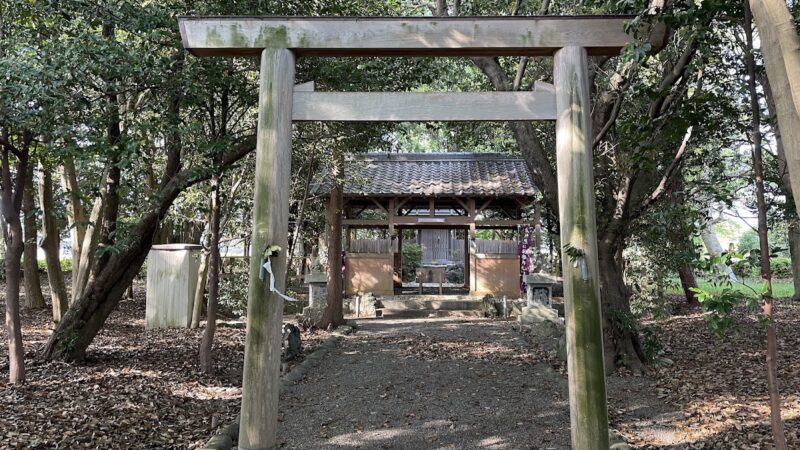
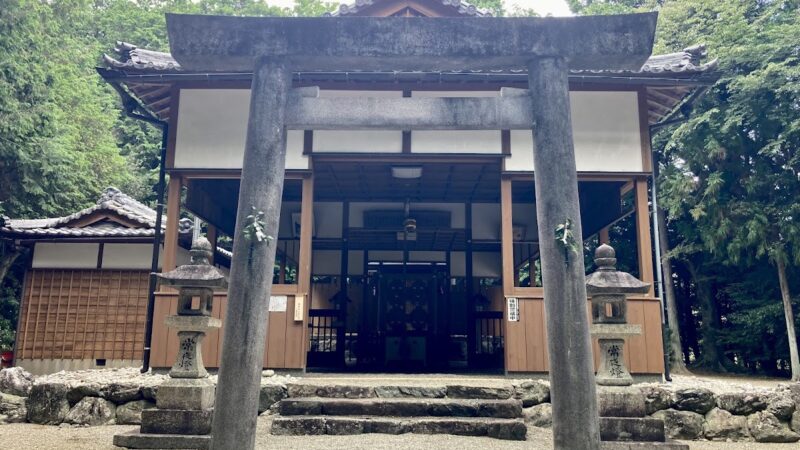
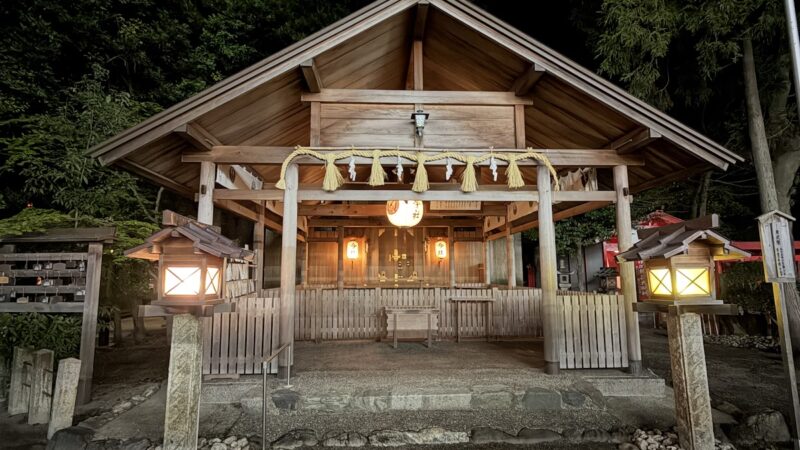
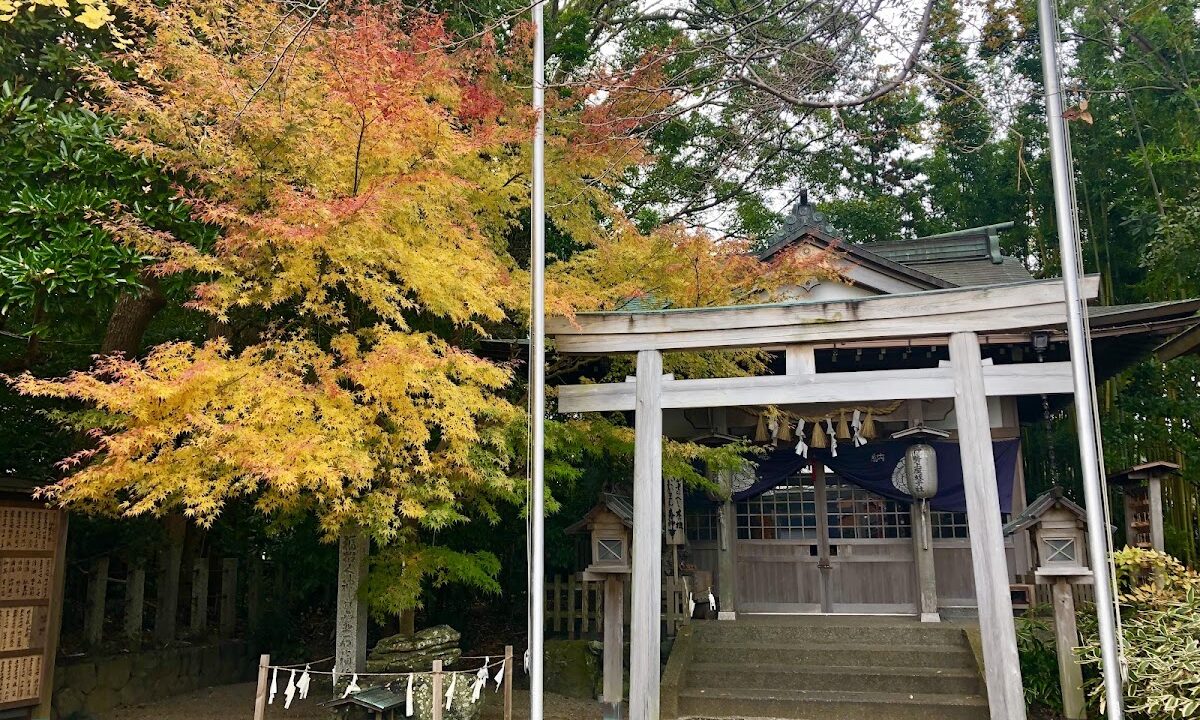
Despite being located in a residential area, the grounds of Saka Shrine maintain a tranquil atmosphere. Although small in scale, the well-maintained grounds reflect the respect and affection that local residents have for the shrine.
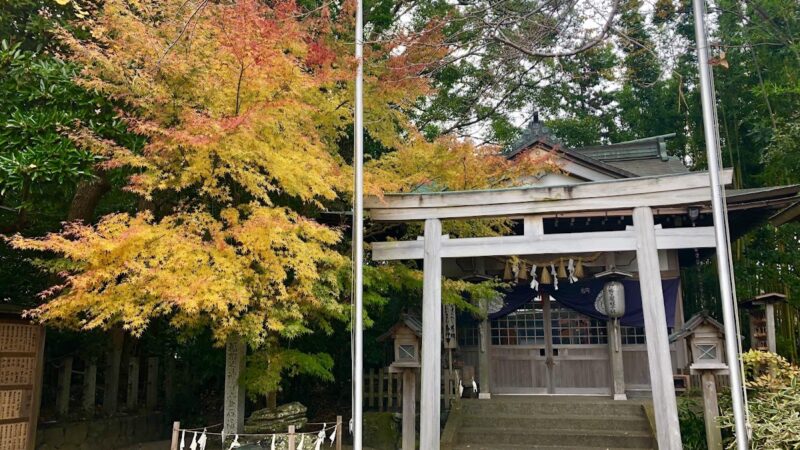
The shrine building follows the traditional style of shrine architecture, creating a simple yet dignified structure. A torii gate stands in front of the main hall, and a well-maintained approach to the shrine.
Natural Environment of the Shrine Grounds
The shrine grounds are planted with trees, making it a valuable green space in the increasingly urbanized city of Ise. Visitors can enjoy the changing scenery with each season, especially during the fresh green season and the autumn foliage season.
Relationship with Surrounding Shrines
Nearby Saka Shrine are other shrines located in the Yokaichiba-cho area, such as Fuji Shrine and Kamiza Ebisu Shrine. These shrines are interconnected, yet each maintains its own unique beliefs.
Fuji Shrine is associated with wisteria blossoms, while Kamiza Ebisu Shrine enshrines Ebisu (Ebisu-sama), known as the god of business prosperity. A “shrine pilgrimage” visiting these shrines would be an interesting experience for understanding the local religious culture.
Annual Events and Festivals: The Practice of Faith at Saka Shrine
Main Annual Events
Saka Shrine holds various Shinto rituals throughout the year. The following events are particularly important:
New Year’s Day Festival (January 1st)
This festival prays for happiness in the new year and safety in the community. Many local residents visit the shrine for their first shrine visit of the year, praying for a safe year.
Spring Festival
This festival celebrates the arrival of spring and prays for a bountiful harvest at the start of agricultural work.
Autumn Festival
This festival expresses gratitude for the harvest and is one of the important events in the community.
Connections with the Community
These festivals are run with the cooperation of local residents, demonstrating the strong connection between the shrine and the community. Neighborhood associations and parishioner organizations are involved in the preparation and operation of the festivals, providing a forum for intergenerational exchange.
Manners and Etiquette for Visiting a Shrine
Basic Etiquette for Visiting a Shrine
When visiting Saka Shrine, please observe the following basic etiquette.
- Bow before passing through the torii gate
As a sign of respect before entering the sacred area, bow before the torii gate.
- Walk along the edge of the path
The center of the path is considered the path of the gods, so it is polite to walk along the edge.
- Purify yourself at the water basin
If there is a water basin, purify your hands and mouth before praying.
- Two bows, two claps, one bow
In front of the main hall, the basic etiquette is “two bows, two claps, one bow”: bow twice, clap your hands twice, and finally bow once.
Points to Note When Visiting
Saka Shrine is located in a residential area, so consideration for the surrounding residents is necessary when visiting. Especially when visiting early in the morning or late at night, please be mindful of quietness during your visit.
While the shrine grounds are open all day, the shrine office may not always be staffed. Therefore, if you wish to obtain a Goshuin (shrine stamp) or other items, it is recommended to check in advance.
Access Information: How to get to Saka Shrine
Basic Information
Address
12-10 Yokaichiba-cho, Ise City, Mie Prefecture
Opening Hours
Open all day (free entry)
Admission Fee
Free
Access by Public Transportation
By Train
- Approximately 14 minutes on foot from Kintetsu/JR “Ise-shi Station”
- Head northeast from the station towards Yokaichiba-cho
Ise-shi Station is a gateway to Ise Grand Shrine and is used by many tourists, making it easily accessible. Since it is within walking distance from the station, you can also visit it when visiting Ise Grand Shrine.
Access by Car
Access from Major Roads
- Approximately 10 minutes from the Ise Interchange on the Ise Expressway
- From National Route 23, head towards the city center
Parking Information
We recommend checking the availability of dedicated parking in advance. Since the surrounding area is residential, please avoid street parking and consider using nearby paid parking lots or public transportation.
Nearby Tourist Attractions: Places to Visit Along with Saka Shrine
Ise Grand Shrine
The closest major tourist attraction to Saka Shrine is, of course, Ise Grand Shrine. Centered around the Inner Shrine (Kotai Jingu) and the Outer Shrine (Toyouke Daijingu), it is Japan’s highest-ranking shrine and one of Japan’s leading sacred sites, attracting approximately 10 million visitors annually.
Visiting Ise Grand Shrine before or after visiting Saka Shrine will allow you to gain a deeper understanding of Japanese Shinto culture.
Okage Yokocho & Oharai-machi
Oharai-machi, which flourished as a temple town in front of the Inner Shrine of Ise Grand Shrine, and Okage Yokocho, located in its heart, are tourist spots where you can experience the history and culture of Ise. You can enjoy local specialties such as Ise udon noodles and Akabuku mochi while strolling through the Edo-period townscape.
Futami Okitama Shrine
Futami Okitama Shrine, located in Futami-cho, Ise City, is famous for its Meoto Iwa (Married Couple Rocks). It was a place where the custom of “Hama-sangu” (purification before visiting Ise Grand Shrine) was practiced since ancient times, and many worshippers still visit today.
Historical Spots in Ise City
Besides Saka Shrine, Ise City has many other historical shrines, temples, and historical sites scattered throughout. If you have time, enjoying a historical walk around the city is highly recommended.
The Cultural Value of Saka Shrine: The Importance of Local Beliefs
The Modern Significance of Ubusunagami Beliefs
In modern society, where the weakening of local communities is a problem, community-based shrines like Saka Shrine play a crucial role in maintaining community cohesion.
Ubusunagami beliefs serve as a cultural foundation for fostering gratitude for being born and raised in a particular land and for cultivating attachment to the region. Even in today’s increasingly urbanized world, maintaining these traditional forms of belief remains highly significant.
Preservation and Transmission of Small-Scale Shrines
Across Japan, there are numerous small-scale local shrines like Saka Shrine. Unlike large, tourist-oriented shrines, these shrines may lack ostentation, but they are invaluable for conveying the history and culture of their respective regions.
However, due to population decline and aging, maintaining these small-scale shrines is becoming increasingly difficult. For Saka Shrine to continue to exist as a place of local worship, the continued involvement of local residents and understanding and support from outside the community will be crucial.
Ise’s Shrine Culture: Background Knowledge for Understanding Saka Shrine
Characteristics of Shrine Beliefs in the Ise Region
The Ise region has developed as a center of Shinto faith since ancient times, due to the presence of Ise Grand Shrine. However, in addition to Ise Grand Shrine, numerous unique shrines exist in each region, forming a multi-layered faith culture.
Saka Shrine is also part of this Ise region’s shrine culture, forming a unique religious landscape where the Grand Shrine and smaller local shrines coexist.
Influence of Shinto-Buddhist Syncretism
In the history of Japanese religion, there was a long period of “Shinbutsu-shugo” (syncretism of Shinto and Buddhism). While the Meiji-era separation of Shinto and Buddhism clearly separated shrines and temples, the influence of previous forms of faith still remains in various regions.
In the Ise region, shrines and temples had a close relationship during the Shinbutsu-shugo era. Understanding this religious history is beneficial for understanding the history of Saka Shrine.
Visitor Voices: Impressions of Visitors to Saka Shrine
Perspectives of Local Residents
For local residents, Saka Shrine is an integral part of their daily lives. Comments such as, “It was my playground when I was a child,” and “I always come here for New Year’s,” suggest that it’s a beloved place across generations.
Perspectives of Tourists
Among tourists who visit Ise Grand Shrine, some also visit smaller shrines within the city. Comments include, “I liked the quiet atmosphere, which was different from Ise Grand Shrine,” and “I felt a form of faith rooted in the local community.”
The simple and intimate atmosphere, which cannot be experienced at large-scale tourist shrines, seems to be the charm of Saka Shrine.
How to Enjoy Visiting Saka Shrine: For a Deeper Experience
A Relaxed Visit
Saka Shrine is a simple shrine that hasn’t been commercialized for tourism. Instead of rushing through your visit, we recommend taking your time to stroll through the grounds and savor the atmosphere.
By paying attention to the details—the trees and seasonal flowers within the shrine grounds, the stone monuments and lanterns—you can feel the history of the shrine and the sentiments of the local people.
Combining Visits to Surrounding Shrines
As mentioned earlier, there are other shrines around Saka Shrine, such as Fuji Shrine and Kamiza Ebisu Shrine. Visiting these shrines in combination will allow you to understand the religious culture of the Yokaichiba area in a more comprehensive way.
Since there are several shrines within walking distance, you can enjoy a leisurely shrine tour if you have about half a day.
Learning Local History
Before visiting Saka Shrine, researching the history of Ise City and Yokaichiba Town will make your visit more meaningful. Visiting local libraries and museums, or gathering information online, will allow you to learn the stories behind the shrine.
The Future of Saka Shrine: The Future of Local Faith
Maintenance Challenges
One challenge facing small shrines throughout Japan is the difficulty of maintenance. Due to the aging of parishioners and population decline, it is becoming increasingly difficult to maintain shrines as a community, as was done in the past.
Saka Shrine may also face similar challenges in the future. Continued involvement from local residents and the transmission of faith to new generations will be crucial.
Discovering New Value
On the other hand, in recent years, interest in local history and culture has increased, and there is a movement to re-evaluate the value of small shrines. The multifaceted value of shrines is being recognized not only as tourist resources, but also as the core of regional identity and a place for community building.
Saka Shrine also has the potential to be positioned as an important cultural asset of the region within this new valuation.
The Importance of Information Dissemination
Appropriate information dissemination is crucial to making the existence of small shrines widely known. By utilizing the internet and social media, the shrine’s appeal can be conveyed to people outside the region.
At the same time, it is important to avoid excessive commercialization and maintain the shrine’s original tranquil atmosphere and its character as a place of worship for local residents. Maintaining an appropriate balance while passing on the value of Saka Shrine to future generations is essential.
Summary: The Value of Local Faith as Conveyed by Saka Shrine
Located in Yokaichiba-cho, Ise City, Mie Prefecture, Saka Shrine is a shrine that has been protected by the local people as a place of worship for the local tutelary deity since ancient times. Unlike large shrines such as Ise Grand Shrine, Saka Shrine has a simple and intimate atmosphere, and can be said to embody the essence of local faith in Japan.
Despite its convenient location, about a 14-minute walk from Ise City Station, the peaceful environment of a quiet residential area makes it a valuable place for people seeking peace of mind away from the hustle and bustle of modern life.
When visiting Ise Grand Shrine, be sure to also visit Saka Shrine. By experiencing a simple form of faith rooted in the community, different from the grandeur of the Grand Shrine, you will be able to gain a deeper understanding of Japanese Shinto culture.
Saka Shrine is open all day and you can visit freely at any time. Visiting it together with the nearby Fuji Shrine and Kamiza Ebisu Shrine will allow you to experience the faith culture of Yokaichiba-cho in a more comprehensive way.
I hope that Saka Shrine, which conveys the history and culture of the region, will continue to exist as a spiritual haven for local residents and visitors alike. I also hope that the great value of this small shrine will be understood by many people and passed on to future generations.