Complete Guide to Tsubaki Grand Shrine | Thorough Explanation of Deities, Blessings, Access, and Amulet Information
Tsubaki Grand Shrine, located in Suzuka City, Mie Prefecture, is known as the head shrine of all Sarutahiko shrines nationwide, with Sarutahiko-no-Okami as its principal deity. It has long been revered as the god of “opening the way,” and is a historic shrine visited by people at crossroads in life or taking a new step.
This article comprehensively explains everything you need to know before visiting Tsubaki Grand Shrine, including its history, enshrined deities, blessings, highlights within the grounds, amulet and goshuin (shrine stamp) information, and access methods.
What is Tsubaki Grand Shrine? Basic Information and History
Overview of Tsubaki Grand Shrine
Tsubaki Grand Shrine is a shrine located in Yamamoto-cho, Suzuka City, Mie Prefecture, and is officially called “Tsubaki Grand Shrine” (Tsubaki Ōkami Yashiro). It is affectionately known as “Tsubaki-san” by locals and attracts many visitors throughout the year. The shrine’s rank was formerly that of a prefectural shrine, and it is currently designated as a special shrine by the Association of Shinto Shrines. Within its vast grounds, numerous subsidiary shrines and smaller shrines are scattered, creating a sacred area surrounded by abundant nature.
History and Origin
The founding of Tsubaki Grand Shrine is said to date back to the reign of Emperor Suinin (around 29 BC to 70 AD). In Japanese mythology, it is believed that Sarutahiko-no-Okami, who guided the descent of the heavenly grandchild, took up residence in this area.
According to shrine tradition, after guiding Ninigi-no-Mikoto, the grandson of Amaterasu-Omikami, to the land of Takachiho, Sarutahiko-no-Okami settled upstream of the Isuzu River in Ise Province, and many people visited the shrine, drawn by his divine virtues.
From the medieval period onward, the shrine developed a deep connection with Ise Grand Shrine, and the custom of visiting Tsubaki Grand Shrine during pilgrimages to Ise became widespread. During the Edo period, it was revered as “Tsubaki Daimyojin” by the common people, and to this day, it is worshipped as the god of “opening the way.”
Deities and Benefits
Main Deity: Sarutahiko-no-Okami
The main deity of Tsubaki Grand Shrine is Sarutahiko-no-Okami. In Japanese mythology, he is known as the god of “opening the way,” who guided Ninigi-no-Mikoto, the grandson of Amaterasu-Omikami, from Takamagahara to Earth during the descent of the heavenly grandchild.
Sarutahiko-no-Okami is depicted as a majestic figure with a nose seven spans long (approximately 1.2 meters) and a height of seven feet (approximately 2.1 meters). Due to his dignified appearance, he has been worshipped as a god with strong power to open up new paths.
Enshrined Deities
Along with the main deity, Sarutahiko-no-Okami, the following deities are enshrined:
- Ninigi-no-Mikoto: Grandson of Amaterasu-Omikami and the main character in the descent of the heavenly grandchild
- Takuhata-Chichihime-no-Mikoto: Mother of Ninigi-no-Mikoto
- Ame-no-Uzume-no-Mikoto: Wife of Sarutahiko-no-Okami and goddess of performing arts
- Konohanasakuya-hime-no-Mikoto: Wife of Ninigi-no-Mikoto and goddess of safe childbirth and child-rearing
Benefits of Tsubaki Grand Shrine
Tsubaki Grand Shrine is known as the “God of Opening the Way” and is said to offer the following benefits:
1. Good Fortune and Protection from Misfortune
As a guidepost at life’s milestones and when starting something new, this shrine offers blessings for good fortune, prosperity, and protection from misfortune. Many people visit when embarking on new paths such as entering higher education, starting a new job, changing jobs, or starting a business.
2. Traffic Safety
As the god of “opening the way,” it is also known for its blessings of traffic safety, protecting safe journeys. Many visitors come to have their cars blessed or pray for safe travels.
3. Matchmaking and Good Relationships
Because the shrine enshrines the married deities Sarutahiko-no-Okami and Ame-no-Uzume-no-Mikoto, it is also believed to offer blessings for matchmaking and marital harmony. The Tsubakigishi Shrine within the grounds is particularly popular among women as a god of matchmaking.
4. Business Prosperity and Success
In the sense of “opening the way” in business, many business owners and entrepreneurs visit to pray for business prosperity and success.
5. Improvement in Performing Arts
Since Ame-no-Uzume-no-Mikoto is the goddess of performing arts, the shrine is also revered by people who wish to improve their skills in performing arts and other artistic fields.
Highlights of the Shrine Grounds
Tsubaki Grand Shrine boasts a vast area of approximately 100,000 tsubo (about 330,000 square meters) and is surrounded by abundant nature. Here are some of the main highlights.
Main Hall and Worship Hall
The main hall of Tsubaki Grand Shrine is built in the Shinmei-zukuri style, the same architectural style as Ise Grand Shrine. Its distinctive cypress bark roof creates a solemn atmosphere.
The worship hall is where worshippers offer their prayers and is located in front of the main hall. When praying, please follow the proper etiquette of two bows, two claps, and one bow.
Tsubaki Kishi Shrine
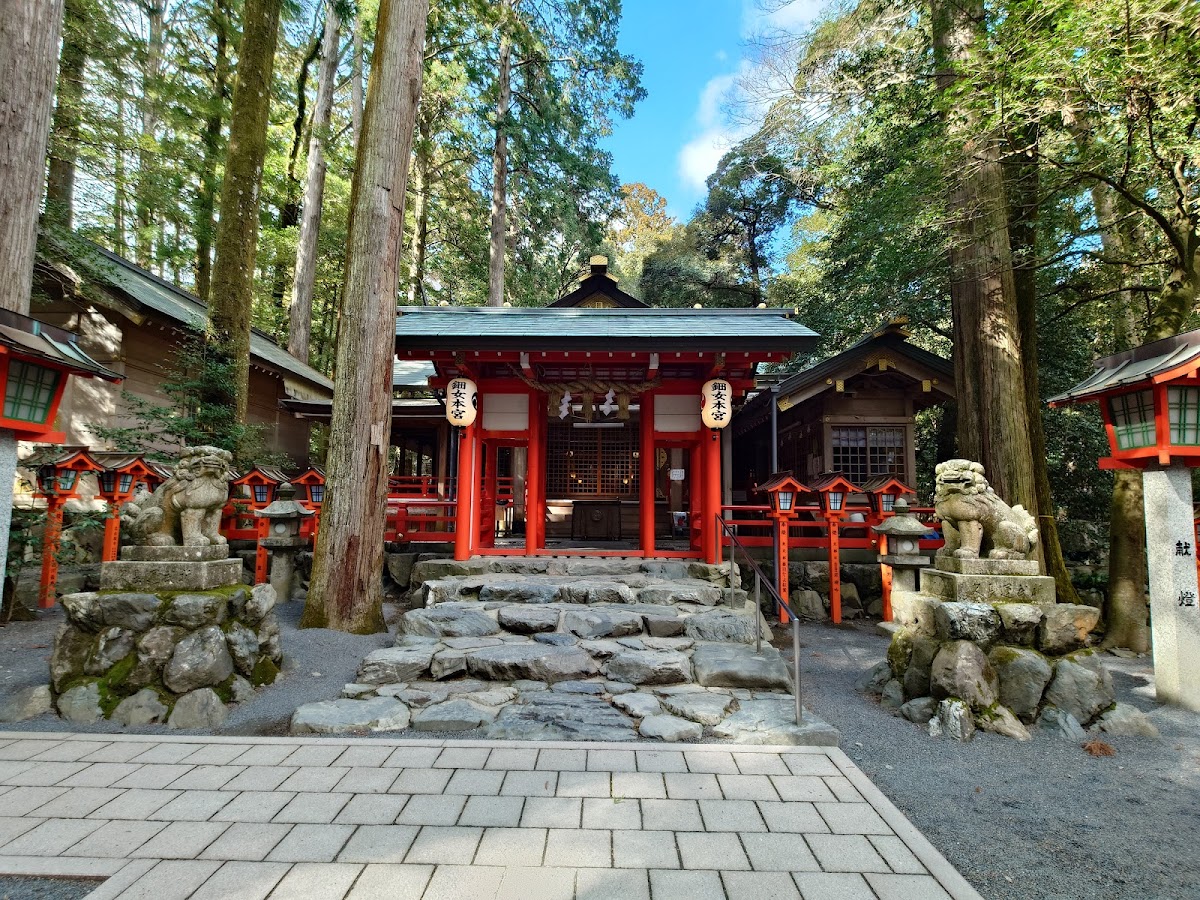
Located to the left of the main shrine, Tsubaki Kishi Shrine is a sub-shrine dedicated to Ame-no-Uzume-no-Mikoto, the wife of Sarutahiko-no-Okami. Popular especially among women as a deity of “performing arts and matchmaking,” it attracts a constant stream of visitors praying for success in love and good relationships.
The shrine’s vermilion color is beautiful, and it features a distinctly feminine and elegant atmosphere. There are also Tsubaki Kishi Shrine-exclusive amulets and goshuin (shrine stamps), and it is recommended to visit both the main shrine and the shrine.
Kanae Waterfall
Located about a 10-minute walk along a mountain path at the back of the shrine grounds, Kanae Waterfall is known as a power spot. This approximately 10-meter-high waterfall is a healing space rich in negative ions.
There is a legend that wishes made in front of the waterfall will come true, attracting many visitors. The walk through nature is also refreshing for both mind and body. However, the ground can be slippery, so comfortable shoes are recommended.
The Ball of Good Fortune
In front of the main hall stands a large stone called the “Ball of Good Fortune.” It is believed that stroking this ball brings good fortune, making it a popular spot for visitors.
Mifune-no-Iwakura (Sacred Ship Rock)
At the back of the shrine grounds lies the “Mifune-no-Iwakura,” a relic of ancient rock worship. This massive rock, shaped like a ship, is said to be the ship that Sarutahiko-no-Okami rode when he descended from heaven, which then turned into stone.
It’s a sacred place, a valuable spot where you can feel the ancient form of worship.
Suzumatsu-an Tea House
Within the shrine grounds is the “Suzumatsu-an” tea house, where you can enjoy matcha green tea (for a fee). Enjoying tea in this quiet space after your visit is highly recommended for a peaceful and calming experience.
Tsubaki Kaikan (Camellia Hall)
Tsubaki Kaikan is a rest facility for visitors, housing restaurants and souvenir shops. You can purchase souvenirs and local specialties.
Information on Amulets and Goshuin (Shrine Seals)
Popular Amulets
Tsubaki Grand Shrine offers a variety of amulets. Here are some of the main ones:
Path-Opening Amulet
This is the representative amulet of Tsubaki Grand Shrine, believed to open the path of life and guide you in a positive direction. Recommended when starting something new or at a crossroads in life.
Traffic Safety Amulet
As the deity of “path-opening,” traffic safety amulets are also popular. A wide variety of types are available, including car stickers and portable versions.
Matchmaking Amulet (Tsubaki Kishijinja Shrine)
The matchmaking amulets offered at Tsubaki Kishijinja Shrine feature cute designs in pink and red. Popular with those wishing for romantic success or good relationships.
Directional Protection Amulet
This amulet is for when you are concerned about directions, such as when moving or traveling. It is believed to ward off misfortune from all directions through the power of Sarutahiko-no-Okami’s “path-opening” power.
About Goshuin (Shrine Seals)
At Tsubaki Grand Shrine, you can receive the following goshuin:
- Tsubaki Grand Shrine Goshuin: This is the goshuin for the main shrine, featuring the calligraphy and red seal of “Tsubaki Grand Shrine.”
- Tsubaki Kishijinja Goshuin: This is the goshuin for Tsubaki Kishijinja, a sub-shrine.
- Seasonal Limited Goshuin: This is a limited-edition goshuin given out during special times such as New Year’s and the annual festival.
Goshuin reception hours are usually 9:00 AM to 5:00 PM, but may vary depending on the crowd. Multiple designs of goshuin notebooks are available, with beautiful designs such as those featuring camellia flowers being particularly popular.
Annual Events and Festivals
Tsubaki Grand Shrine holds various festivals and events throughout the year.
Main Annual Events
- January 1st-3rd: First Shrine Visit of the Year / New Year’s Day Festival
- February 11th: National Foundation Day Festival
- May 3rd: Grand Annual Festival (Spring Grand Festival)
- July 31st: Summer Purification Ceremony
- November 23rd: Harvest Festival
- December 31st: Year-End Purification Ceremony / New Year’s Eve Festival
The Grand Annual Festival on May 3rd is the most important festival at Tsubaki Grand Shrine and attracts many worshippers.
Access and Parking Information
Basic Information
- Address: 1871 Yamamoto-cho, Suzuka City, Mie Prefecture 519-0315
- Phone: 059-371-1515
- Visiting Hours: Grounds are freely accessible (Shrine office is open from 9:00 to 17:00)
- Closed Days: None
- Official Website: Yes (We recommend checking the official website for the latest information)
Access by Car
From Nagoya
- Approximately 10 minutes (approx. 5km) from the Suzuka IC on the Tomeihan Expressway
- Approximately 5 minutes (approx. 3km) from the Suzuka PA Smart IC on the Shin-Meishin Expressway
From Osaka
- Approximately 30 minutes via National Route 1 from the Seki IC on the Meihan National Highway
When using a car navigation system, please search using the phone number “059-371-1515” or “Tsubaki Grand Shrine”. ### Parking
Tsubaki Grand Shrine has a free parking lot with space for approximately 500 regular cars. Temporary parking is also available during peak seasons such as New Year’s Day and the annual festival.
There is also parking space for large buses, making it possible for groups to visit.
Access by Public Transportation
By Train and Bus
- From JR Kansai Main Line “Kasato Station”, take the Mie Kotsu bus bound for “Tsubaki Grand Shrine” (approximately 15 minutes), and get off at the last stop.
- From Kintetsu Suzuka Line “Hirata-cho Station”, take a taxi (approximately 20 minutes).
Since bus service is limited, it is recommended to check the timetable in advance. Especially on weekends and holidays, bus service is infrequent, making access by car more convenient.
Taxi Access
Estimated taxi fare from the nearest station:
- Approximately 10 minutes (approx. ¥2,000) from JR “Kasato Station”
- Approximately 20 minutes (approx. ¥3,500) from Kintetsu “Hiratacho Station”
Manners and Time Required for Visiting the Shrine
Etiquette for Visiting the Shrine
- Bow before passing through the torii gate: As a sign of respect before entering the sacred area, bow before the torii gate.
- Purify yourself at the water basin: Purify in the following order: left hand → right hand → mouth → handle of the ladle in your left hand.
- Walk along the edge of the path: The center is considered the path of the gods, so walk along the edge.
- Worship at the main hall: Worship using the two bows, two claps, and one bow method.
Estimated Time Required
- Worship at the main hall only: Approximately 30 minutes
- Exploring the Shrine Grounds Including Tsubakigishi Shrine: Approximately 1 hour
- Visiting Kanae Falls: Approximately 1 hour 30 minutes to 2 hours
If you want to stroll leisurely through the shrine grounds and enjoy the nature while praying, it’s a good idea to allow about 2 hours.
Nearby Tourist Spots
Here are some nearby spots you might want to visit when you come to Tsubaki Grand Shrine.
Suzuka Circuit
A leading racing circuit in Japan, located about 20 minutes by car from Tsubaki Grand Shrine. Known as the venue for the F1 Japanese Grand Prix, it also has the amusement park “Motopia” on the premises.
Ise Grand Shrine
About 40 minutes by car from Tsubaki Grand Shrine. Ise Grand Shrine, often called the spiritual home of the Japanese people, is a popular shrine that many people visit along with Tsubaki Grand Shrine.
Mount Gozaisho
The main peak of the Suzuka Mountains, you can reach the summit by ropeway. A popular tourist spot where you can enjoy the beauty of nature in all four seasons.
Visitor Reviews and Reputation
Visitors to Tsubaki Grand Shrine have shared the following comments:
- “Surrounded by nature in the vast grounds, I felt a sense of spiritual cleansing.”
- “I visited the shrine at a turning point in my life, and a new path opened up for me.”
- “I prayed for a good match at Tsubaki Kishijinja Shrine, and was blessed with a wonderful relationship.”
- “The path to Kanae Falls is a little challenging, but standing before the falls gives me a refreshing feeling.”
- “I received a blessing for traffic safety, and now I can drive with peace of mind.”
Many visitors seem to be moved by the sacred atmosphere and natural beauty of Tsubaki Grand Shrine, finding peace of mind.
Best Season to Visit Tsubaki Grand Shrine
Tsubaki Grand Shrine has beauty in every season, but each season has its own unique charm.
Spring (March-May)
This is the season when the cherry blossoms and fresh greenery in the shrine grounds are beautiful. It is especially lively during the annual festival on May 3rd.
Summer (June-August)
The lush green grounds are cool, and you can feel refreshed by the negative ions from Kanae Falls. However, there are many insects on the mountain paths, so precautions are necessary.
Autumn (September-November)
The autumn foliage season is one of the most beautiful times to visit the shrine, as the grounds are ablaze with color. The pleasant weather makes it ideal for worship.
Winter (December-February)
The shrine is bustling with many worshippers during the New Year’s visit period. The air is clear, and the sacred atmosphere is even more pronounced. However, caution is needed as the mountain paths may freeze.
Summary: Opening a New Path at Tsubaki Grand Shrine
Tsubaki Grand Shrine, as the head shrine nationwide dedicated to Sarutahiko-no-Okami, the god of “opening paths,” has attracted the faith of many people since ancient times. It is believed that visiting the shrine at turning points in life, when starting a new challenge, or when lost will reveal the path you should take.
The vast grounds of Tsubaki Grand Shrine offer numerous attractions, including the main hall, the Tsubakigishi Shrine (known for matchmaking), and the Kanae Waterfall, a power spot. It’s a place where you can find peace of mind amidst nature and gain the courage to take a new step forward.
When visiting Mie Prefecture, be sure to visit Tsubaki Grand Shrine and receive the blessings of the god of “opening paths.” A new path will surely open up in your life.
When visiting, please refer to the access information, amulet information, and worship etiquette introduced in this article to enjoy a fulfilling visit.