Dainenji Temple (Miyagi Prefecture) Complete Guide | A Famous Obaku Zen Temple that Flourished as the Family Temple of the Date Clan
About Dainenji Temple
Dainenji Temple is an Obaku Zen temple located in Monzen-machi, Taihaku-ku, Sendai City, Miyagi Prefecture. Its mountain name is Ryōsokuzan, its founder was Fuō Tetsugyū, and its principal image is Shakyamuni Buddha. Founded in 1697 by Date Tsunamura, the fourth lord of the Sendai Domain, it played an important role as the family temple of successive lords of the Sendai Domain after Tsunamura.
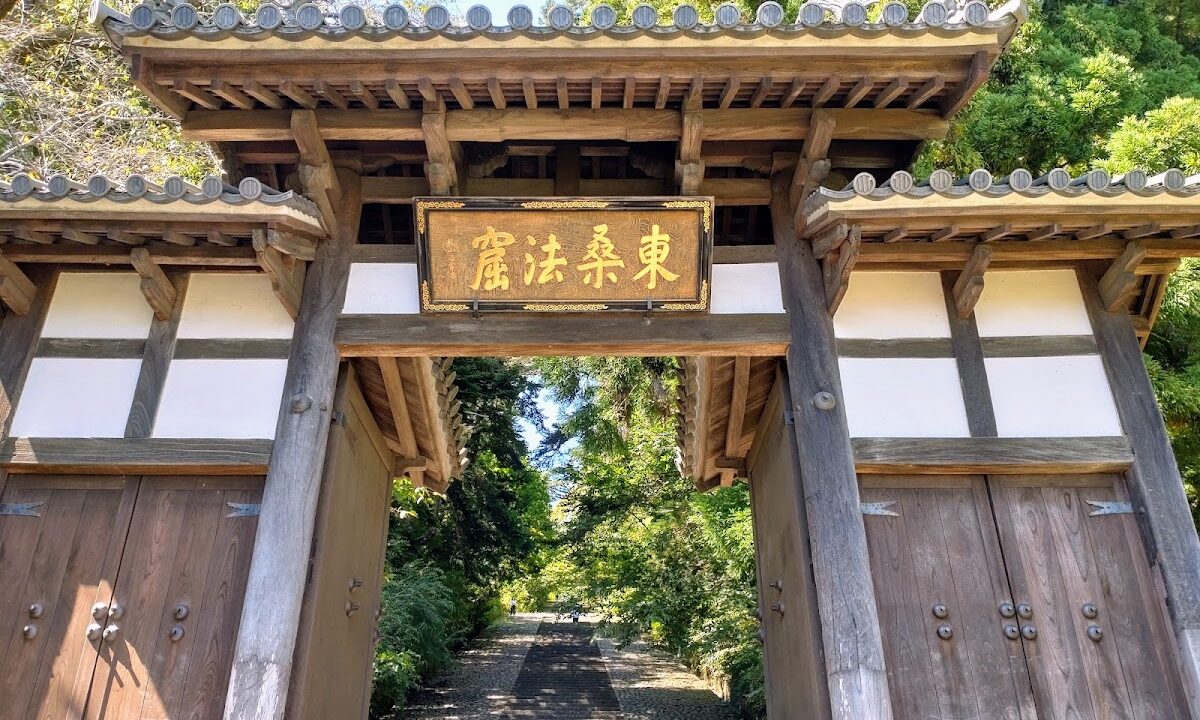
Previously, it boasted a magnificent temple complex near the summit of Shigegasaki (present-day Dainenji-yama), one of the “Seven Capes of Sendai” scattered around the castle town of Sendai Castle. However, most of it was demolished after the Meiji Restoration, and currently, the main gate remains as the only architectural structure.
Basic Information
- Location: 3-22 Monzen-cho, Taihaku-ku, Sendai City, Miyagi Prefecture
- Sect: Obaku Zen sect
- Mountain Name: Ryosokuzan
- Founder: Fuo Tetsugyu Doki
- Founder: Date Tsunamura
- Principal Image: Shakyamuni Buddha
- Founded: Genroku 10 (1697)
- Cultural Property: Dainenji Temple Main Gate (Sendai City Designated Tangible Cultural Property)
- Phone Number: 022-249-6255
History of Dainenji Temple
Circumstances of Founding and Date Tsunamura
The founding of Dainenji Temple began with the deep devotion of Date Tsunamura, the 4th lord of the Sendai domain, to the Obaku Zen sect. In 1695 (Genroku 8), it is said that Tsunamura himself wielded a hoe and cleared the ground at the present site. This act is a symbolic episode demonstrating the strong will of the feudal lord himself to build the temple.
In 1697 (Genroku 10), Tsunamura invited Fuying Tetsugyu Doki, the founder of Kofuku-ji Temple (Edo), which was founded by his father-in-law, Inaba Masanori, to be the founding abbot. Fuying Tetsugyu was a high-ranking priest of the Obaku sect from Nagato Province (present-day Yamaguchi Prefecture). He underwent rigorous training at Inaba Ryuhō-ji Temple (Tottori City, Tottori Prefecture) and later studied under Ingen Ryūki and Mokuan Shōtō, the founders of the Obaku sect, and inherited their teachings.
Completion of the Temple Complex and the Three Great Training Grounds of the Obaku School
After Tsunamura’s death, during the Kyoho era (1716-1736) under the rule of Date Yoshimura, a magnificent temple complex modeled after Manpuku-ji Temple (Uji City, Kyoto Prefecture), the head temple of the Obaku school, was completed. During Yoshimura’s rule, Dainen-ji Temple was developed into a large temple complex with seven main halls, becoming a temple of such high status that it was known as one of the three great training grounds of the Obaku school.
The term “three great training grounds” refers to particularly important training centers within the Obaku school, indicating that Dainen-ji Temple was a central presence for the Obaku school in the Tohoku region. With numerous halls and pagodas surrounding the main Buddha hall, it boasted one of the largest scales in the city, serving as the mausoleum for Tsunamura and his family.
Changes After the Meiji Restoration
After the Meiji Restoration, many of Dainenji Temple’s buildings were demolished due to the effects of the anti-Buddhist movement and financial reasons. The grandeur of its former temple complex was lost, and today only the main gate remains as a surviving architectural structure. This main gate is designated as a tangible cultural property by Sendai City and is preserved as a valuable legacy of Edo-period Obaku Zen architecture.
Highlights of Dainenji Temple
Dainenji Temple Main Gate
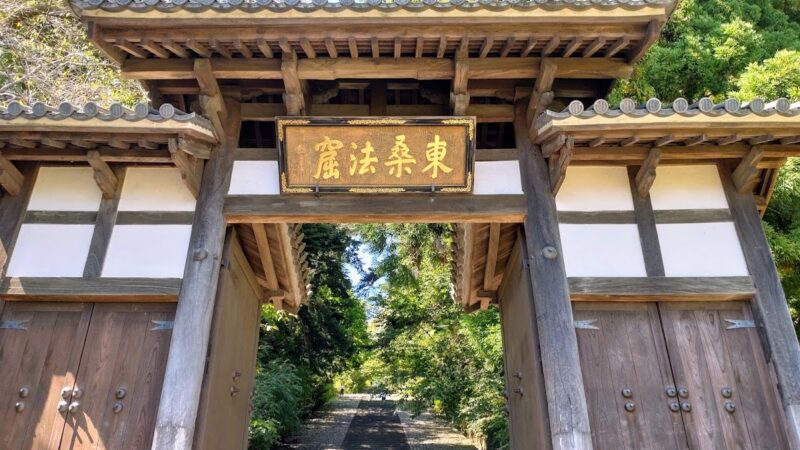
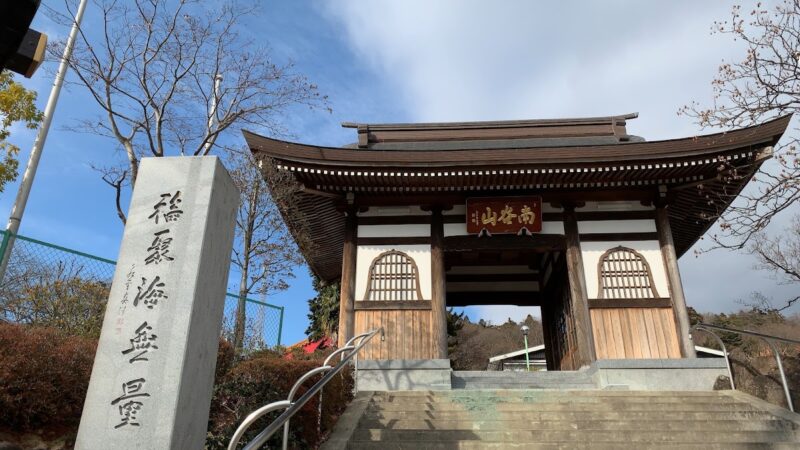
The Dainenji Temple Main Gate is the only remaining Edo-period architectural structure and is designated as a tangible cultural property by Sendai City. It is a valuable gate that conveys the unique architectural style of the Obaku Zen sect, with Chinese-style design elements visible throughout.
The main gate is estimated to have been built during the Genroku period, and is characterized by its symmetrical structure and elegantly curved roof, typical of the Obaku Zen sect. Passing through the gate, a path continues that evokes the grandeur of the former temple. ### Long Stone Staircase and Approach
The approach leading from the main gate features a long stone staircase, known for its surprisingly steep incline, making the ascent and descent quite strenuous. This staircase was constructed utilizing the natural topography of Mount Dainenji, and the main hall is located at the top.
Lush green trees line both sides of the staircase, creating a quiet and serene atmosphere that makes you forget the hustle and bustle of the city. Experiencing the changing seasons while visiting is one of Dainenji’s charms.
Date Family Mausoleum and Mujinto Mausoleum
Dainenji functioned as the temple responsible for the burial grounds of successive lords of the Sendai domain, starting with Date Tsunamura. In particular, the Mujinto Mausoleum, Tsunamura’s mausoleum, was one of Dainenji’s important facilities. Although many buildings were lost after the Meiji Restoration, it remains a significant historical site that tells the story of the Date family’s history.
Date Family Mausoleum and Mujinto Mausoleum
Dainenji functioned as the temple responsible for the burial grounds of successive lords of the Sendai domain, starting with Date Tsunamura. In particular, the Mujinto Mausoleum, Tsunamura’s mausoleum, was one of Dainenji’s important facilities. While many buildings were lost after the Meiji Restoration, it is still maintained today as an important historical site that tells the story of the Date family’s history. On Mount Dainenji lies the Date family mausoleum, where successive feudal lords are buried, allowing visitors to reflect on the history of the Sendai domain. The area around the mausoleum is enveloped in silence, creating a solemn atmosphere.
Literary and Poetry Monuments
Along the path on Mount Dainenji, there are numerous monuments to literary figures associated with Sendai, such as the poetry monument to Hara Asao and the haiku monument to Abe Midorijo. A stroll visiting these literary monuments is highly recommended.
Hara Asao was a poet from Miyagi Prefecture who was active from the Taisho to Showa periods. Abe Midorijo was a haiku poet who was based in Sendai. Both were beloved local literary figures, and monuments inscribed with their works have been erected on Mount Dainenji.
Nature and Environment of Mount Dainenji
Sendai’s 100 Famous Green Spots
Mount Dainenji has been selected as one of “Sendai’s 100 Famous Green Spots,” preserving a rich natural environment despite its urban location. The mountain path, surrounded by lush forests, displays different scenery throughout the seasons and serves as a place of relaxation for citizens.
In spring, you can enjoy the fresh greenery; in summer, the deep green; in autumn, the vibrant autumn leaves; and in winter, the tranquil snowscape. It’s so quiet you can forget the hustle and bustle of the city, making it an ideal environment for nature walks.
Mogasaki and the Seven Capes of Sendai
The Dainenji Temple, located on Dainenji Mountain, was once called “Mogasaki.” It is one of the “Seven Capes of Sendai,” scattered around the castle town of Sendai Castle, and is an important location for understanding Sendai’s topography and history.
The Seven Capes of Sendai refer to seven hilly areas that functioned as defensive strongholds for the Sendai castle town. Mogasaki is located on the southern side of these seven, and the construction of Dainenji Temple added religious and cultural significance to the area.
Access Information
Access by Public Transportation
By Bus from Sendai Station
- Take the Sendai City Bus bound for “Kakitori (via Dainenji)”
- Get off at the “Dainenji” bus stop.
- Travel time: Approximately 20 minutes
By Subway
- Get off at “Nagamachi-Itchome Station” on the Sendai City Subway Namboku Line
- Approximately 12 minutes on foot (approximately 987m)
Access by Car
It is approximately a 10-minute drive from Sendai Station. It is easily accessible from National Route 286, and there are parking spaces around the temple town. However, parking for visitors is limited, so we recommend using public transportation.
Access from Major Nearby Facilities
- Sendai Station: Approximately 10 minutes by car, approximately 20 minutes by bus
- Sendai Airport: Approximately 40 minutes by car
- Nagamachi Station: Approximately 15 minutes on foot
About the Obaku School
Establishment and Characteristics of the Obaku School
The Obaku School is a branch of Zen Buddhism founded in the early Edo period by Ingen Ryūki, who came from China. It is considered one of the three major Zen schools in Japan, following the Rinzai and Sōtō schools.
A key characteristic of the Obaku School is its strong influence from the Zen style of the Ming Dynasty in China. Many Chinese elements are incorporated in its architectural style, rituals, and the tone of its chanting, giving it a unique character distinct from other Zen schools.
Architectural Style of the Obaku School
The architecture of Obaku temples is based on the style of the Ming and Qing dynasties in China. The symmetrical layout, the strongly curved roof, and the vermilion-painted pillars give the building a visually striking and exotic feel.
The main gate of Dainenji Temple also exhibits these characteristics of Obaku Zen architecture, conveying the history of cultural exchange during the Edo period.
Obaku Zen in the Tohoku Region
While Obaku Zen temples are relatively few in the Tohoku region, Dainenji Temple, built with the patronage of the Sendai domain lord, became a central figure in the Obaku Zen community. It held such high status that it was called one of the “Three Sōrin” (Three Great Zen Temples), and functioned as a training ground where many monks came to practice.
The Relationship Between Dainenji Temple and the Date Family
Date Tsunamura’s Devotion to Obaku Zen
The fourth lord of the domain, Date Tsunamura, is known for his deep devotion to Obaku Zen. It is believed that Tsunamura’s attraction to Obaku Zen was influenced by the cultural trends of the time and the influence of his father-in-law, Inaba Masanori.
Inaba Masanori was the founder of Kofuku-ji Temple in Edo and the person who invited Fuou Tetsugyu. Because of this connection, Tsunamura was able to invite Tetsugyu to become the founding abbot of Dainen-ji Temple.
Role as a Family Temple
Dainen-ji Temple functioned as the family temple for successive lords of the Sendai Domain after Tsunamura. Funerals and memorial services for the lords were held there, making it one of the religious centers of the Date family.
It held a high status as a temple of the “Goichimon” class and was maintained with financial support from the domain. Its grand appearance, with its seven main temple buildings, symbolized the authority and wealth of the Date family.
Points to Note When Visiting
Precautions When Visiting
Dainen-ji Temple is still a temple that conducts religious activities today. Please observe the following points when visiting:
- Maintain silence and avoid disturbing other visitors.
- Take photographs only in designated areas.
- Wear comfortable shoes as the stone steps can be slippery.
- Take insect repellent in summer.
- Be aware of snow and ice in winter.
Recommended Time to Visit
While Dainenji Temple can be visited throughout the year, the following times are particularly recommended:
- Spring (April-May): Beautiful fresh greenery and mild weather, perfect for a stroll.
- Autumn (October-November): Stunning autumn foliage, coloring the entire Dainenji Mountain.
- New Year’s Visit (January): Bustling with New Year’s visitors.
Estimated Time Required
A visit to the temple alone takes about 30 minutes, but if you want to enjoy the walking course around Dainenji Mountain, allow 1-2 hours. We recommend taking your time to enjoy the literary monuments and nature.
Nearby Attractions
Sites Associated with the Date Family in Sendai
When visiting Dainenji Temple, it is recommended to also visit other historical sites associated with the Date family in Sendai:
- Zuihoden: Mausoleum of Date Masamune
- Sendai Castle Ruins (Aoba Castle Site): The castle built by Date Masamune
- Osaki Hachimangu Shrine: A national treasure shrine built by Date Masamune
- Rinnoji Temple: A temple associated with the Date family
Tourist Spots in Taihaku Ward
- Akiu Onsen: A hot spring resort known as Sendai’s inner sanctuary
- Akiu Great Falls: A famous waterfall selected as one of Japan’s Top 100 Waterfalls
- Underground Forest Museum: Preservation and exhibition of Paleolithic ruins
Summary
Dainenji Temple is an ancient temple of the Obaku sect, founded by Date Tsunamura. It was once one of the largest temples in the Tohoku region, boasting a magnificent complex of seven main halls. While many buildings were lost after the Meiji Restoration, the main gate remains today as a valuable architectural relic from the Edo period.
Nestled amidst the rich natural environment of Dainenji Mountain, it is a precious place to experience the history of the Date family and the culture of the Obaku sect. Easily accessible from Sendai Station, it is also a popular place of relaxation for locals.
When visiting Sendai, be sure to stop by Dainenji Temple and feel the weight of history in its tranquility. Climbing the long stone steps and passing through the main gate will allow you to contemplate the splendor of the Sendai domain during the Edo period and the spiritual world of the Obaku sect.