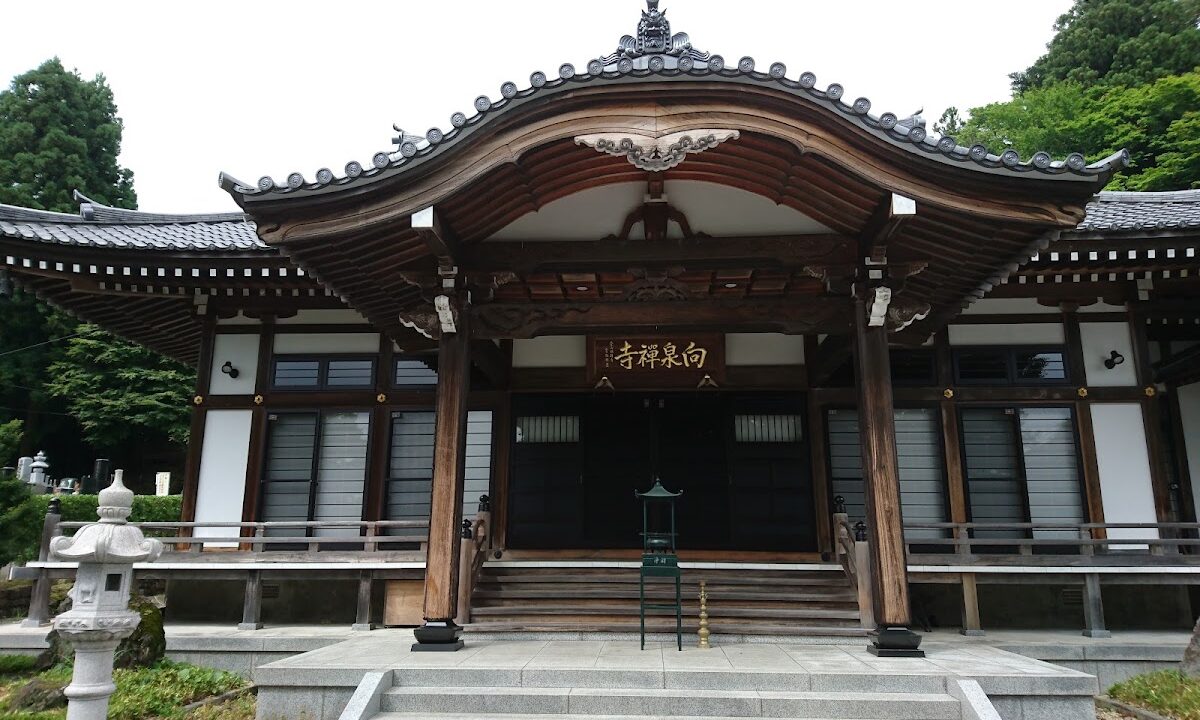
Complete Guide to Kosenji Temple (Taihaku-ku, Sendai City, Miyagi Prefecture) | History and Goshuin Information Related to the Taira Clan
Kosenji Temple, located in Akiu-machi, Taihaku-ku, Sendai City, Miyagi Prefecture, is an ancient Soto Zen temple deeply connected to the legend of the Taira clan refugees. This temple, quietly nestled along the road leading to Akiu Onsen and Akiu Great Falls, is known as a historical temple said to have been founded by a descendant of Taira no Shigemori, son of Taira no Kiyomori.
This article comprehensively introduces information useful for those considering a visit to Kosenji Temple, from its historical background and highlights within the temple grounds to goshuin information and access methods.
What is Kosenji Temple? | An Ancient Temple Related to the Taira Clan
Kosenji Temple is a Soto Zen temple located at 67 Ninowayama, Nagafukuro, Akiu-machi, Taihaku-ku, Sendai City, Miyagi Prefecture. It is close to the center of Akiu-machi and is built on a south-facing mountainside overlooking the Natori River valley. Currently belonging to the Soto Zen sect, its predecessor was Komatsu-ji Temple of the Tendai sect, and it has evolved into its current form through centuries of historical changes.
The temple’s name, “Kosen-ji,” was adopted during a major renovation undertaken during the time of Akiho Katsumori, the 17th head of the Akiho clan. Before that, it was known as “Komatsu-ji.”
History of Kosen-ji Temple | From Komatsu-ji to Kosen-ji
Founding of Komatsu-ji Temple and the Legend of the Heike Fugitives
Komatsu-ji Temple, the predecessor of Kosen-ji Temple, is deeply connected to the legend of the Heike fugitives. According to tradition, a warrior believed to be a descendant of Taira no Shigemori (known as Komatsu Naifu), a son of Taira no Kiyomori, fled to this area after the fall of the Heike clan. He enshrined the “Amida Buddha statue,” the family’s guardian deity, and founded Komatsu-ji Temple to pray for the souls of the Heike clan.
The name Komatsu-ji Temple is thought to originate from the fact that Taira no Shigemori was called “Komatsu Naifu,” indicating a deep connection with the Taira clan.
Transition from Tendai to Soto Zen
In its early days, Komatsu-ji Temple belonged to the Tendai sect as a branch temple of Yoshida Shureisai (also written as Shurokusai) in Takadate, Natori City. However, with the passage of time, its sect changed, and it now belongs to the Soto Zen sect. While historical records are limited regarding the exact timing and circumstances of this sect change, it is highly likely that it occurred during the turbulent period from the Sengoku period to the early Edo period.
Deep Connection with the Akiho Clan
An essential aspect of the history of Kosen-ji Temple is its relationship with the Akiho clan, a powerful samurai family in the region. The Akiho clan ruled the Akiho region and had a deep connection with Kosen-ji Temple (then Komatsu-ji Temple).
In particular, during the time of Akiho Katsumori, the 17th head of the Akiho clan, a large-scale renovation of the temple was carried out, and at this time, the temple’s name was changed from “Komatsu-ji” to “Kosen-ji.” This marked a significant turning point in the temple’s history.
Akiho Sadamori and the Giant Crape Myrtle Tree
In front of the main hall of Kosen-ji Temple stands a giant crape myrtle tree. It is said that this tree was donated by Akiho Sadamori, the 19th head of the Akiho clan, to commemorate his departure for the Summer Siege of Osaka (1615). With a history of over 400 years, this crape myrtle tree blooms magnificently in the summer and has become a symbol of Kosen-ji Temple.
Akiho Sadamori was a samurai who served Date Masamune and participated in the Siege of Osaka. The fact that he donated the crape myrtle tree to Kosen-ji Temple, his family temple, before going into battle is a valuable historical document illustrating the relationship between samurai and temples at that time.
Highlights of the Temple Grounds
Temple Gate
At the entrance to Kosenji Temple stands a three-bay, single-entrance temple gate. Its simple yet dignified construction quietly welcomes visitors. Upon passing through the gate, the main hall immediately comes into view, creating a compact yet orderly layout of the temple grounds.
Main Hall
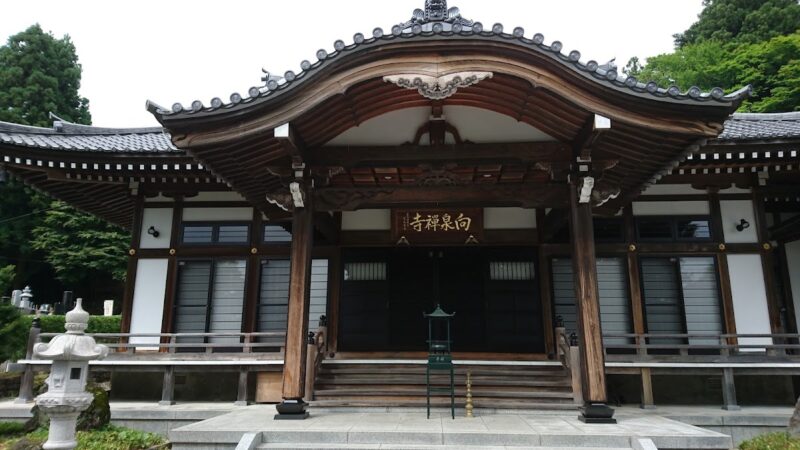
Located immediately after entering the temple gate, the main hall is a small and charming building. While not a large-scale temple structure, its simplicity and warm atmosphere soothe the hearts of many visitors.
The main hall houses an Amida Buddha statue associated with the Taira clan, and continues to pray for the souls of the Taira family.
Giant Crape Myrtle Tree
As mentioned above, the giant crape myrtle tree in front of the main hall is a major highlight of Kosenji Temple. This tree, over 400 years old, blooms with vibrant crimson flowers during the summer (July to September), beautifully adorning the temple grounds. It holds great historical value and can be considered a living witness to the relationship between the Akiu clan and Kosenji Temple.
Quiet Environment
Kosenji Temple is located in a quiet environment despite being close to the center of Akiu town. Situated on a south-facing hillside overlooking the Natori River valley, it enjoys ample sunlight and provides a peaceful atmosphere for worship.
Goshuin (Temple Seal) Information
Goshuin (temple seals) are available at Kosenji Temple. Many visitors receive them as a memento of their visit and as proof of their faith.
Kosenji Temple’s Goshuin
The Kosenji Temple’s goshuin features the temple name written in ink and stamped with a red seal. It is characterized by its simple yet powerful calligraphy.
Goshuin (temple stamp) of Chōonji Temple, Pilgrimage Site No. 18
Notably, Kōsenji Temple also offers the goshuin for Chōonji Temple, Pilgrimage Site No. 18. While Chōonji is a separate temple, it appears that Kōsenji Temple is handling the goshuin distribution for some reason. This is important information for pilgrims.
Points to Note When Receiving a Goshuin (Temple Stamp)
When receiving a Goshuin, please note the following:
- Request the Goshuin after completing your prayers.
- Have your Goshuincho (stamp book) ready.
- Use polite language.
- It’s a good idea to call ahead to confirm, as the temple staff may be absent.
Basic Information
Temple Name
- Official Name: Kosenji Temple
- Sect: Soto Zen Buddhism
- Former Name: Komatsuji Temple
Location and Contact Information
- Address: 67 Ninowayama, Nagafukuro, Akiu-machi, Taihaku-ku, Sendai City, Miyagi Prefecture 982-0243
- Phone Number: 022-399-2147
- Postal Code: 982-0243
Historical Background
- Founding: Late Heian period to early Kamakura period (estimated)
- Founder: A descendant of Taira no Shigemori, a member of the Taira clan who fled (according to legend)
- Principal Image: Amida Buddha
- Former Sect: Tendai Sect (a branch temple of Yoshida Shureisai in Takadate, Natori City)
- Current Sect: Soto Zen
Main Cultural Properties and Highlights
- Giant Crape Myrtle Tree (donated by Akiho Sadamori, over 400 years old)
- Amida Buddha Statue (a guardian deity associated with the Taira clan)
- Three-bay, single-entrance gatehouse
- Main Hall
Access Information
Access by Public Transportation
Using JR and Bus
If you are visiting Kosenji Temple by public transportation, the following routes are convenient:
- From JR Senzan Line “Rikuzen-Shirasawa Station”
- The nearest station is Rikuzen-Shirasawa Station, but it is a distance from the station.
- Taking a taxi is the most practical option.
- Using a Bus from Sendai Station
- Take the bus bound for “Akiu Onsen” from the Sendai Station West Exit bus terminal.
- Get off at the “Akiu Junior High School” bus stop and walk for approximately 7 minutes (approx. 525m).
- Or get off at the “Akiu Post Office” bus stop and walk for approximately 7 minutes (approx. 599m).
Access by Car
The most convenient way to access Kosenji Temple is by car.
From Sendai City Center
- Take National Route 48 towards Akiu.
- Or via Prefectural Route 62 (Sendai-Yamadera Line).
- Travel time: Approximately 30-40 minutes.
From Akiu Onsen/Akiu Great Falls Area
- Located on the right side when heading towards Akiu Great Falls.
- Approximately 5 minutes by car from the Akiu Onsen area.
Parking
There is parking space on the temple grounds, but it is recommended to call in advance to confirm details.
Nearby Tourist Attractions
Kosenji Temple is located in the Akiu Onsen area, so you can visit the following tourist attractions in conjunction with it:
- Akiu Onsen: A hot spring resort known as the “inner sanctuary” of Sendai (approx. 5 minutes by car)
- Akiu Great Falls: A famous waterfall said to be one of Japan’s three great waterfalls (approx. 15 minutes by car)
- Rairaikyo Gorge: A beautiful gorge created by the Natori River (approx. 10 minutes by car)
- Akiu Craft Village: A facility for experiencing traditional crafts (approx. 5 minutes by car)
Manners and Precautions for Visiting
Basic Manners for Visiting
When visiting Kosenji Temple, please observe the following basic manners:
- Bow at the Temple Gate: Bow before passing through the temple gate.
- Be Quiet: Be quiet on the temple grounds.
- Photography: Refrain from taking photographs inside the main hall. Please be considerate when taking photos on the temple grounds.
- Keep it clean: Always take your trash with you.
- Respect for private property: Understand that the temple is a religious facility and also the private space of the head priest.
Best time to visit
Kosenji Temple is open for visits throughout the year, but the best times to visit are:
- Summer (July-September): The crape myrtle flowers are in full bloom.
- Autumn (October-November): The autumn leaves are beautiful, and the surrounding nature is also lovely.
- Spring (April-May): The fresh greenery is beautiful, and the weather is pleasant.
Visiting hours
There are no strict restrictions on visiting hours, but as a general courtesy for temple visits, it is best to avoid visiting early in the morning or late at night, and instead visit during daylight hours (around 9:00-17:00).
If you wish to receive a Goshuin (temple stamp), it is recommended to confirm by phone in advance.
The Charm and Worth of Visiting Kosenji Temple
The Legend of the Heike Clan: A Sense of Historical Romance
The greatest charm of Kosenji Temple lies in the historical romance of the legend of the Heike refugees. The story of the descendants of Taira no Shigemori, grandson of Taira no Kiyomori, fleeing to the far reaches of Tohoku after the fall of the Heike clan, conveys a tragic aspect of Japanese history.
Considering that the world of the Tale of the Heike lives on in this small temple, it will be a particularly moving experience for history buffs.
Local History Seen Through the Relationship with the Akiho Clan
Kosenji Temple has deep ties not only to the Heike legend but also to the Akiho clan, a powerful samurai family in the region. The Akiho clan served the Date family, and the temple served as their family temple.
The giant crape myrtle tree is a valuable witness connecting the important turning point in Japanese history, the Siege of Osaka, with the faith of the local samurai.
Peace of Mind in a Quiet Environment
Kosenji Temple is a temple that maintains a simple atmosphere, unspoiled by commercialization. While it lacks the bustling atmosphere of large tourist temples, it offers a peaceful environment perfect for quiet contemplation and prayer.
When visiting tourist spots like Akiu Onsen or Akiu Great Falls, taking a short detour to Kosenji Temple to find peace will add depth to your trip.
A Small but Charming Main Hall
The main hall of Kosenji Temple is not large, but its simplicity and warm presence are its charm. Sometimes described as “small and cute,” the hall, though unpretentious, quietly tells a story of its long history.
Akiu Town and Kosenji Temple
History and Culture of Akiu Town
Akiu Town, where Kosenji Temple is located, has long been known as a hot spring resort and has been called “Sendai’s inner sanctuary.” Situated in the upper reaches of the Natori River, it is a region blessed with abundant nature.
Historically, it was a region ruled by the Akiu clan, and Kosenji Temple played an important role in that history.
Relationship with Akiu Onsen
Akiu Onsen is an ancient hot spring resort said to date back to the Kofun period (Tumulus period), and a legend remains that it cured a skin disease during the reign of Emperor Kinmei. When visiting Kosenji Temple, it is recommended to stay at Akiu Onsen and enjoy a trip that combines hot springs and historical exploration.
Nature of the Natori River
Kosenji Temple is located overlooking the Natori River valley, allowing visitors to experience the flow of the river and the surrounding nature while praying. The Natori River, which flows into Akiu Great Falls, is a symbol of the nature of the Akiu region and an important element in shaping the environment of Kosenji Temple.
Summary | Significance of Visiting Kosenji Temple
Kosenji Temple, located in Akiu-machi, Taihaku-ku, Sendai City, Miyagi Prefecture, is a historically important temple where the legend of the Heike refugees and the history of the Akiu clan intersect. For hundreds of years since its founding as Komatsuji Temple, this temple has witnessed many historical events, from the transition from Tendai to Soto Zen Buddhism, its deep connection with the Akiu clan, and up to the present day.
While not a flashy tourist temple, it’s the perfect place to reflect on history and find peace of mind in a tranquil setting. When visiting Akiu Onsen or Akiu Great Falls, be sure to also visit Kosenji Temple. This is the place where the Heike refugees and the samurai of the Akiu clan offered their prayers, and you can feel the weight of history.
If you visit in the summer, the crape myrtle blossoms, over 400 years old, will beautifully adorn your visit. Receiving a temple stamp, offering prayers at the small, charming main hall, and finding peace in the quiet grounds—such a time awaits you at Kosenji Temple.
Kosenji Temple, a place of faith and a condensed representation of Akiu’s nature and history, is a small temple where Japanese history and culture are concentrated. Why not visit it at least once?