Otsuka Shrine (Miyazaki Prefecture, Miyazaki City) Complete Guide | History, Deities, Access, and Highlights Explained in Detail
Otsuka Shrine, located in Otsuka-cho, Miyazaki City, Miyazaki Prefecture, is a historical shrine founded during the Heian period. Also known as Otsuka Hachiman Shrine, it has long been revered as the local guardian deity. This article provides detailed information useful for visitors, including the history of Otsuka Shrine, its enshrined deities, divine virtues, access methods, and highlights within the shrine grounds.
What is Otsuka Shrine?
Otsuka Shrine is located at 1598 Haranomae, Otsuka-cho, Miyazaki City, and is affectionately known locally as “Otsuka Hachiman Shrine” or “Otsuka no Hachiman-sama.” It is said to have been founded during the Saihei era (854-857) of the Heian period, making it a historically significant shrine with over 1000 years of history.
As the central shrine of the Otsuka area in Miyazaki City, it serves as a place of faith for the local residents, and traditional events such as spring kagura (sacred dance) and summer festivals are still passed down today. In recent years, it has attracted national attention, having been selected as a relay broadcast location for NHK’s “Year-End and New Year” program.
History of the Shrine
History of Founding
The founding of Otsuka Shrine dates back to the Saihei era (854-857) of Emperor Montoku, the 55th emperor. It is said to have begun when Tsuchimochi Kanja Saemon-no-jo Kagetuna received a divided spirit from Usa Hachimangu Shrine and enshrined it as the tutelary deity of this area. Usa Hachimangu Shrine is the head shrine of all Hachiman shrines nationwide, located in Usa City, Oita Prefecture, and the fact that a divided spirit was invited from it indicates that this area was considered important even at that time.
History of Restoration
Otsuka Shrine has undergone several restorations since its founding to reach its present state. The oldest surviving record is a ridge beam inscription from 1246 (Kangen 4), which is a valuable cultural artifact that proves the history of the shrine.
Later, in 1264 (Bun’ei 1), it was rebuilt by Fujiwara no Suketoki, the founder of the Obi Domain. The Obi Domain was centered around Obi in present-day Nichinan City, and Fujiwara no Suketoki’s efforts in rebuilding the shrine in this region demonstrate the importance of Otsuka Shrine.
Changes since the Edo period
During the Edo period, several repairs and reconstructions are recorded. According to the shrine’s ridge beam inscription, significant restoration work was carried out in the following years:
- Keian 1 (1648)
- Kanbun 7 (1667)
- Horeki 2 (1752)
- An’ei 9 (1780)
- Bunka 12 (1815)
- Kaei 4 (1851)
These records show that Otsuka Shrine has been carefully protected and maintained by the local people.
Modern Changes
In Showa 59 (1984), Jōnoshita Tenjin Shrine was relocated and enshrined together with Otsuka Shrine. As a result, Otsuka Shrine became a shrine that enshrines not only Hachiman-sama but also Tenjin-sama (Sugawara no Michizane), and began to attract worshippers as the god of learning.
Under the Meiji era’s shrine ranking system, it was ranked as a village shrine, establishing its position as a central shrine in the Otsuka area.
Deities Enshrined
Three deities are enshrined at Otsuka Shrine.
Hondawake-no-Mikoto
Hondawake-no-Mikoto is another name for Emperor Ojin. Emperor Ojin was the 15th emperor and is enshrined as Hachiman-sama at Hachiman shrines throughout Japan. He is worshipped as the god of military fortune and the protection of the nation, and is also credited with contributing to the development of culture and industry.
Tamayorihime-no-Mikoto
Tamayorihime-no-Mikoto is the mother of Emperor Jimmu, the first emperor of Japan. She was the daughter of the sea god and became the consort of Ugayafukiaezu-no-Mikoto, Emperor Jimmu’s father. She is worshipped as the goddess of safe childbirth, child-rearing, and matchmaking.
Okinagatarashihime-no-Mikoto
Okinagatarashihime-no-Mikoto is Empress Jingu and the mother of Emperor Ojin. She is a legendary empress who is said to have led an expedition to the Korean Peninsula, and is revered as a goddess of martial prowess, safe childbirth, and safe voyages.
This combination of three deities is a typical configuration of enshrined deities in Hachiman worship, and clearly indicates its history of being invited from Usa Hachiman Shrine.
Divine Virtues
The divine virtues that can be bestowed from the deities enshrined at Otsuka Shrine are diverse.
Academic Achievement
Emperor Ojin is said to have contributed to the development of culture, and with the enshrinement of Jōnoshita Tenjin, he is also deeply revered as a god of learning. Many worshippers visit to pray for success in examinations and academic achievement.
Martial Prowess and Victory
Emperor Ojin and Empress Jingū are known as gods of martial prowess, and are believed to bestow the power to overcome challenges and difficulties in competitions. It is suitable for worshippers praying for success in sports, exams, and business.
Safe Childbirth and Child-Rearing
Tamayorihime-no-Mikoto and Empress Jingu are famous as deities of safe childbirth. Legend says that Empress Jingu went on an expedition to the Korean Peninsula while pregnant and safely gave birth to Emperor Ojin upon her return, leading to strong faith in prayers for safe childbirth.
Development of Production and Various Industries
Since many technologies and cultures are said to have been introduced from the continent during the reign of Emperor Ojin, the shrine is believed to bestow divine blessings for industrial development and business prosperity. It attracts the faith of people engaged in all industries, including agriculture, fishing, and commerce.
Protection from Evil and Family Safety
As the guardian deity of the region, Otsuka Shrine is worshipped as a deity that protects against evil, ensures family safety, and protects the peace of the community.
Shrine Overview
Basic Information
- Official Name: Otsuka Shrine (Otsuka Hachiman Shrine)
- Location: 1598 Haranomae, Otsuka-cho, Miyazaki City, Miyazaki Prefecture 880-0951
- Former Shrine Rank: Village Shrine
- Date of Founding: Said to be during the Saihei era (854-857)
- Annual Festival: November 15th
- Parking: Approximately 40 cars
Main Festivals and Annual Events
Otsuka Shrine holds various festivals throughout the year.
Kinensai (Spring Kagura)
The Kinensai is held annually on the Sunday closest to March 17th. During this festival, the Spring Kagura is performed, with the dance continuing from the afternoon until around 9 PM. The Spring Kagura is an important Shinto ritual praying for a bountiful harvest and the safety of the community, and is passed down as a traditional performing art of the region. It is one of the important annual events at Otsuka Shrine, attracting many worshippers and spectators.
Summer Festival (Goshinkosai)
The Summer Festival is held on the Sunday closest to July 30th. The portable shrine is paraded through the community as part of the Goshinkosai, praying for the safety and prosperity of the region. It is a beloved summer tradition for local residents, and many people participate.
Annual Festival
The annual festival is held on November 15th. As the most important festival of the year, it is a time to remember the history of the shrine and offer gratitude.
New Year’s Eve and First Shrine Visit
Otsuka Shrine has been selected as a relay broadcast location for NHK’s “Year-End and New Year” program in the past, and is bustling with many visitors for their first shrine visit of the year from New Year’s Eve to New Year’s Day. During the broadcast, traffic restrictions will be in place, and temporary parking lots will be set up due to the large crowds.
Access
Access by Public Transportation
From JR Miyazaki Station
- Exit Miyazaki Station West Exit
- Take the Miyazaki Kotsu bus bound for “Otsukadai” or “Komatsudai”
- Get off at the “Nishinohara” bus stop
- Approximately 3 minutes on foot from the bus stop
The bus journey takes approximately 15-20 minutes.
By Taxi
If taking a taxi from Miyazaki Station, the journey takes approximately 12 minutes and costs approximately 1,500-2,000 yen.
Access by Car
From Miyazaki West Interchange
Approximately 5km from the Miyazaki West Interchange on the Miyazaki Expressway, about 10 minutes by car. Access is via National Route 220.
Car Navigation Settings
- Address: 1598 Haranomae, Otsuka-cho, Miyazaki City, Miyazaki Prefecture
- Phone Number: Shrine’s phone number (see official website)
Parking
The shrine has a parking lot with space for approximately 40 cars. It is free to use during normal visits. However, congestion is expected during events such as the Spring Kagura, Summer Festival, and New Year’s visits, so please consider using public transportation.
During special periods such as the New Year holidays, the visitor parking lot behind the shrine may be unavailable at certain times, so it is recommended to check in advance.
Highlights of the Shrine Grounds
Main Hall and Worship Hall
The main hall and worship hall of Otsuka Shrine are built in the traditional shrine architectural style. Despite numerous restorations, they maintain their ancient, solemn atmosphere. The carvings and decorations of the worship hall, in particular, showcase the skill of the craftsmen.
Ridgepole Inscriptions
The shrine possesses several ridgepole inscriptions from the Edo period, including one from the 1246 (Kangen 4) reconstruction. These are valuable cultural artifacts that tell the history of the shrine, and are proof that Otsuka Shrine has been protected by the local people for many years.
Shrine Precincts
Several shrines are enshrined within the grounds of Otsuka Shrine. Jōnoshita Tenjin is also enshrined here, reflecting a strong devotion to Sugawara no Michizane, the god of learning.
Sacred Tree
Within the grounds stands a sacred tree that has stood for many years, quietly watching over the history of the shrine. The sacred tree is cherished as a sacred tree where a deity resides, and visitors can feel the power of the god by touching it.
Shrine Office
Goshuin (shrine stamps) and amulets can be obtained at the shrine office. We recommend obtaining a goshuin as a memento of your visit.
About the Otsuka Area
The Otsuka area of Miyazaki City, where Otsuka Shrine is located, consists of Otsuka-cho and Konan 1-4 chome. It covers an area of 3.87 square kilometers and has a population of approximately 20,100 (about 9,900 households).
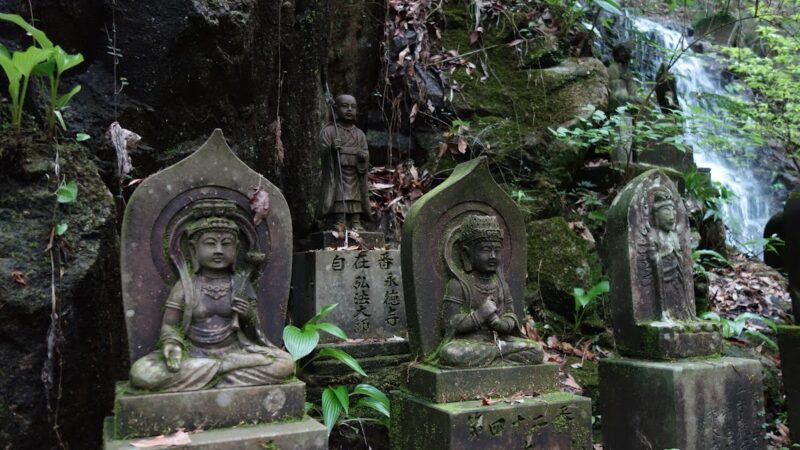
Besides Otsuka Shrine, the area boasts cultural properties designated by the prefecture and city, such as the Oyodo Kofun (ancient burial mound) and the wooden Six Kannon statues, making it a region rich in history and culture. Located close to the center of Miyazaki City, it is a region that has developed as a residential area while carefully preserving its historical resources.
Manners for Visiting the Shrine
Basic Etiquette for Visiting the Shrine
- Bow before passing through the torii gate: Before entering the sacred area, bow before the torii gate.
- Walk along the edge of the path: The center of the path is considered the path of the gods, so walk along the edge.
- Purify yourself at the water basin: Purify your hands and mouth at the water basin.
- Etiquette at the Worship Hall: The basic procedure is two bows, two claps, and one bow.
About Goshuin (Shrine Seals)
Goshuin are given as proof of worship. Leave your goshuincho (seal book) at the shrine office and pick it up after your visit. The fee for a goshuin is generally around 300-500 yen.
Nearby Tourist Attractions
Miyazaki Shrine
Miyazaki Shrine, located about 15 minutes by car from Otsuka Shrine, is a representative shrine of Miyazaki Prefecture, dedicated to Emperor Jimmu. Visiting both is recommended.
Oyodo Kofun (Ancient Burial Mound)
This burial mound in the Otsuka area is a valuable cultural asset for understanding the history of the region.
Summary
Otsuka Shrine (Otsuka Hachiman Shrine) is a historical shrine founded during the Saihei era of the Heian period. For over 1000 years, it has been revered as the guardian deity of the Otsuka area in Miyazaki City. The shrine enshrines three deities: Emperor Ōjin, Tamayorihime-no-Mikoto, and Empress Jingū, and is believed to bestow diverse blessings, including academic success, martial prowess, safe childbirth, and industrial development.
Traditional events such as spring kagura (sacred dance) and summer festivals are also preserved, playing an important role in maintaining local culture. It boasts excellent access, being approximately 15 minutes by bus from Miyazaki Station and about 10 minutes by car from the Miyazaki West Interchange, and has ample parking for approximately 40 cars.
When visiting Miyazaki City, we highly recommend visiting Ōtsuka Shrine and experiencing its long history and traditions. It is a wonderful shrine where you can offer prayers in a warm, community-rooted atmosphere.