Kumano Shrine (Kumano, Miyazaki City, Miyazaki Prefecture) Complete Guide | History, Deities, and the Charm of a Motorcycle Shrine
Kumano Shrine, located in Kumano, Miyazaki City, Miyazaki Prefecture, is an ancient shrine with a history of over 1350 years. In 2022, it was recognized as Miyazaki Prefecture’s first nationally designated motorcycle shrine, making it a noteworthy spot. This article provides a detailed introduction to Kumano Shrine, including its history, enshrined deities, divine virtues, highlights within the grounds, and its unique characteristics as a motorcycle shrine.
Basic Information about Kumano Shrine
Location and Access
Address: 6976-6981, Kumano, Miyazaki City, Miyazaki Prefecture 889-2151
Kumano Shrine is located southeast of the center of Miyazaki City and is cherished by the local people as the principal guardian shrine of the Kumano district. It is also known as the origin of the place name “Kumano,” and is a central figure in the region’s identity.
Main Access Methods:
- Approximately 22 minutes on foot (approx. 1.8 km) from JR Nippo Main Line “Kihana Station”
- Approximately 34 minutes on foot (approx. 2.7 km) from JR Nippo Main Line “Undō Kōen Station”
- Approximately 1 minute on foot from Miyazaki Kotsu Bus “Kumano Shrine” bus stop
- By car, approximately 20 minutes from central Miyazaki City via National Route 220
The shrine grounds have a parking lot, and especially since being designated a “motorcycle shrine,” the number of visitors arriving by motorcycle has increased.
History and Origins of Kumano Shrine
Founding and the Hakuhō Period
Kumano Shrine is said to have been founded in March of the second year of the Hakuhō era (672 AD) during the reign of Emperor Kōbun. This year was also the year of the Jinshin War, a significant turning point in ancient Japanese history, and a turbulent period during the Yamato court era.
It is said that the shrine’s origins lie in the enshrinement of the divine spirit of Kumano Hongu Taisha Shrine in Kii Province (present-day Wakayama Prefecture) at its founding. This enshrinement brought the Kumano faith of Kii Province to southern Kyushu, and the region subsequently came to be known as “Kumano.” In other words, it is a rare example of a shrine’s name becoming the origin of a place name.
The Era as Sanno Daigongen
From its founding to the Edo period, Kumano Shrine was known as “Sanno Daigongen” and was affectionately revered by the local people as “O-Sanno-sama.” This syncretic form of Sanno and Kumano faith is valuable historical evidence of the religious practices of the time, when the syncretism of Shinto and Buddhism was common.
Importance During the Feudal Period
During the feudal period, Kumano Shrine was counted as one of the “Five Shrines of Kiyotake-go,” establishing its position as an important shrine in the region. The Kiyotake-go Gosha-gu refers to five shrines that were considered particularly important in the Kiyotake-go region at the time (the area from the southern part of present-day Miyazaki City to Kiyotake-cho). This designation indicates that Kumano Shrine was not merely a village shrine, but a center of widespread religious faith.
Renaming and Modernization in the Meiji Era
With the arrival of the Meiji era, the Shinto-Buddhist Separation Order led to a nationwide reorganization of shrines. Within this context, Kumano Shrine was renamed from “Sanno Daigongen” to its current name, “Kumano Shrine.” During the Meiji period, the shrine grounds were renovated and the shrine buildings were relocated, resulting in its current form.
Deities and Divine Virtues
Deities of Kumano Shrine
Kumano Shrine enshrines three deities.
Izanagi-no-Mikoto
In Japanese mythology, he is the god of creation, and together with Izanami-no-Mikoto, he is the creator god who gave birth to the Japanese archipelago and many other gods. Also known as a god of purification and cleansing, he is believed to possess the power of purification and regeneration.
Kumano Kusubi no Mikoto
One of the central deities of Kumano faith, he is considered a god related to Ietsumiko no Okami (Susanoo-no-Mikoto), the principal deity of Kumano Hongu Taisha Shrine.
Sarutahiko no Mikoto
A Kunitsukami (earthly deity) who guided the descent of the heavenly grandchild, he is worshipped as a god of guidance and opening paths. He is also known for his divine power of traffic safety.
Divine Virtues (Benefits)
The main divine virtues of Kumano Shrine are as follows:
Matchmaking and Marriage
Based on the worship of the married deities Izanagi no Mikoto and Izanami no Mikoto, he is believed to bring benefits for matchmaking, successful relationships, and marital harmony. The married cedar trees on the shrine grounds are also known as a power spot for matchmaking.
Traffic Safety
Since Sarutahiko-no-Mikoto is the god of opening roads, the shrine is believed to offer particularly strong blessings for traffic safety. Its designation as a motorcycle shrine has further increased its prominence.
Agriculture
As the guardian shrine of the region, it has long been a place where people prayed for abundant harvests and the growth of crops. It has attracted the faith of those engaged in agriculture.
Protection from Evil and Good Fortune
Due to Izanagi-no-Mikoto’s divine role as a purifying deity, the shrine is also believed to offer blessings for protection from evil, purification of mind and body, and improved luck.
Highlights of the Shrine Grounds
The Married Couple Cedar and the Legend of Matchmaking
The most famous feature of Kumano Shrine grounds is the “Married Couple Cedar.” Two large cedar trees stand side by side, and it is a popular power spot for matchmaking, attracting many visitors.
How to Worship the Married Couple Cedar
According to legend, if lovers or married couples hold hands and walk around the Married Couple Cedar three times clockwise, their love will be fulfilled and their marriage will be harmonious. This custom is widely known among local young people and is a popular date spot.
The Married Couple Cedar, estimated to be several hundred years old, exudes a majestic presence, reflecting its status as a sacred tree that has watched over the region for centuries.
Konohana Shrine (Subsidiary Shrine within the Precincts)
The Konohana Shrine is enshrined as a subsidiary shrine both within and outside the main precincts. Konohana Shrine enshrines Konohanasakuya-hime no Mikoto and is worshipped as a guardian deity of safe childbirth, child-rearing, and women. Visiting Konohana Shrine when visiting Kumano Shrine will allow you to receive a wider range of blessings.
Ebisu Shrine (Found in Some Kumano Shrines)
While there are several Kumano Shrines in Miyazaki City, the Kumano Shrine in the Ebihira district has an “Ebisu Shrine” as a subsidiary shrine within its grounds. It is revered by local merchants and industrialists as the guardian deity of business prosperity and fishing.
Atmosphere of the Shrine and Grounds
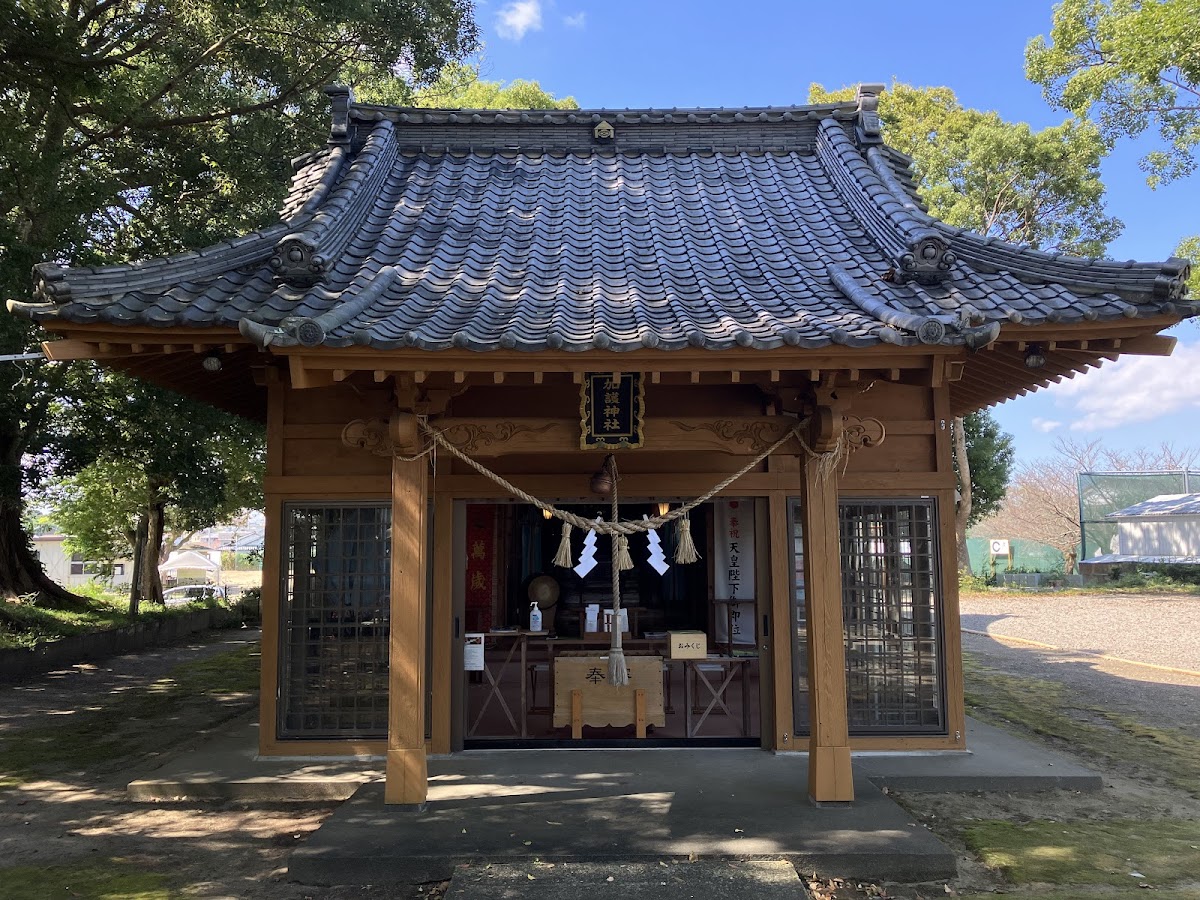
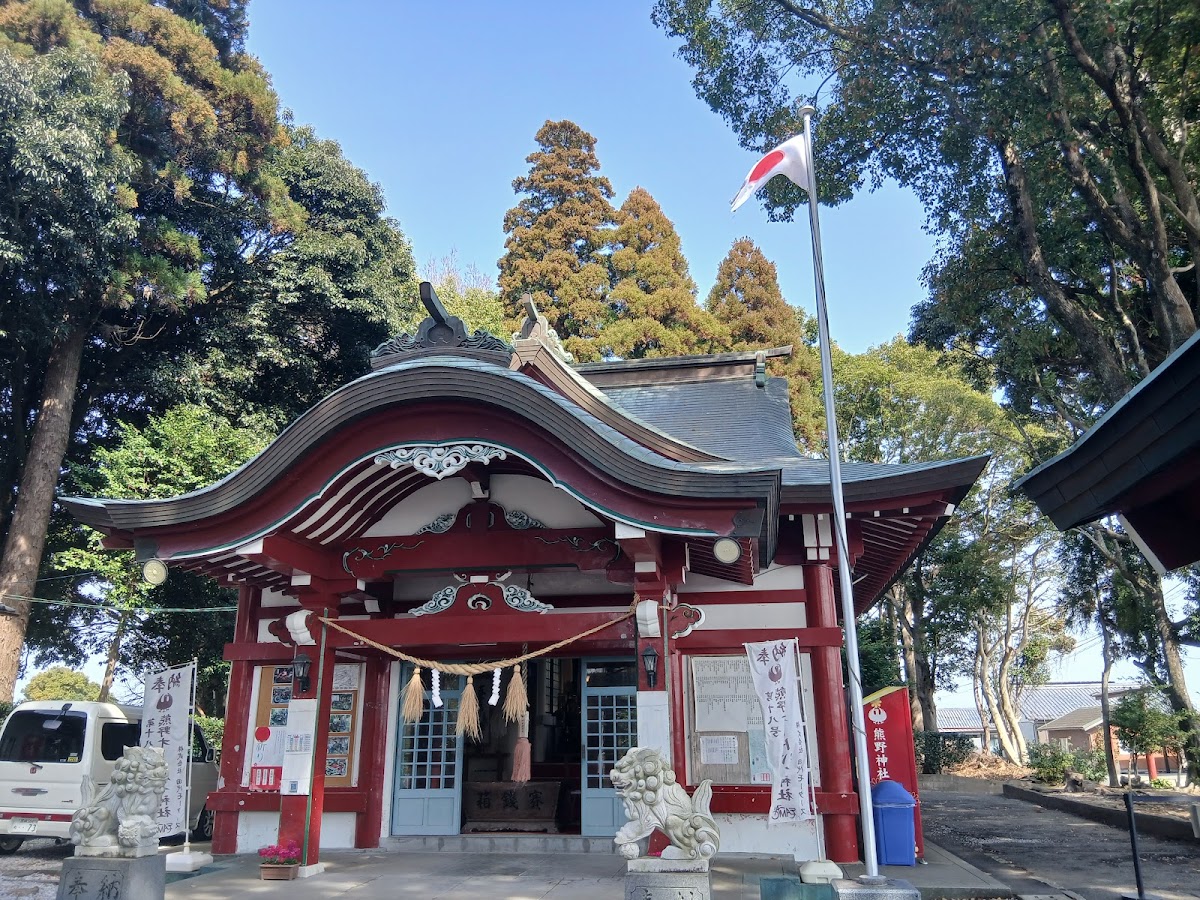
The main hall is built in the traditional style of shrine architecture, and the beautiful wooden structure welcomes visitors. The grounds are enveloped in a tranquil atmosphere, and despite its proximity to the city, one can feel the solemnity and natural richness characteristic of an ancient shrine.
A magnificent shimenawa (sacred rope) adorns the front of the worship hall, and stone lanterns line the approach, telling the story of its long history of worship.
Kumano Shrine as a National Motorcycle Shrine
Miyazaki Prefecture’s First Certified Motorcycle Shrine
In 2022, Kumano Shrine was certified as “National Motorcycle Shrine No. 18” by the Japan Motorcycle Culture Association. This is the first such designation in Miyazaki Prefecture and one of the few motorcycle shrines in the Kyushu region.
Difference between Motorcycle Shrine and Bike Shrine
A motorcycle shrine refers to a shrine officially recognized by the Japan Motorcycle Culture Association. On the other hand, “bike shrine” is a more common term and does not necessarily mean official recognition. Kumano Shrine is an officially recognized “motorcycle shrine” and is attracting attention from riders nationwide.
Services for Riders
Blessing of Motorcycles and Helmets
At Kumano Shrine, you can receive blessings for your motorcycle, helmet, and riding gear. Because Sarutahiko-no-Mikoto, who is believed to grant traffic safety, is enshrined here, the number of riders visiting to pray for safe touring is increasing.
As a Touring Base
Miyazaki Prefecture, with its mild climate, beautiful coastline, and mountainous areas, is an ideal region for touring. Kumano Shrine is located in the southern part of Miyazaki City and lies on touring routes to the Nichinan Coast and Aoshima, making it a popular base for rest and worship.
Parking Space
The shrine grounds also have designated parking spaces for motorcycles, allowing visitors to safely park their bikes and pay their respects.
Future Developments as a Motorcycle Shrine
Since its designation, Kumano Shrine has regularly hosted motorcycle events and touring meetings, functioning as a place for interaction within the rider community. For riders visiting from all over Japan, Kumano Shrine is not just a tourist spot, but a special place to pray for safety and meet fellow riders.
Annual Events and Grand Festivals
Annual Grand Festival
Kumano Shrine’s annual grand festival is held grandly every autumn. Many parishioners and worshippers gather on the festival day for religious ceremonies and offerings. Historically, the festival included Kagura (sacred dance) performances, a procession of the portable shrine, and horse racing, and records show that the entire region was enveloped in the festival’s excitement.
Even today, traditional religious ceremonies are continued, making it an important event that connects the local community.
New Year’s Visit and Annual Events
Many worshippers visit shrines for their first shrine visit of the new year, praying for a safe year, family safety, and traffic safety. Prayers for important life events such as Shichi-Go-San (a traditional rite of passage for children), exorcism, and safe childbirth are also accepted.
Kumano Shrine and the Five Shrines of Kiyotake-go
The “Five Shrines of Kiyotake-go,” which included Kumano Shrines during the feudal period, is an important concept representing the network of shrines in the region. As one of the Five Shrines, Kumano Shrine, along with other important shrines such as Kaeda Shrine, served as a spiritual pillar of Kiyotake-go.
Kaeda Shrine is an ancient shrine located in the present-day Kaeda district of Miyazaki City, and together with Kumano Shrine, it has supported local faith. The “Five Shrine Pilgrimage,” visiting these shrines, was once an important religious event for the local people.
Relationship with Other Kumano Shrines in Miyazaki City
Several Kumano Shrines exist within Miyazaki City. The main ones are listed below.
Kumano Shrine (Ebihira District)
Location: 1-1-16 Ebihira Higashi, Miyazaki City, Miyazaki Prefecture
The exact founding date is unknown, but according to the ridge beam inscription, it was founded before the Kanbun era (approximately 350 years ago). In its heyday, it was known as “Ebihira Gongen,” and during the spring and autumn festivals, Kagura (sacred dance) was performed, and processions and horse races were held, creating a lively atmosphere.
Kumano Shrine (Yamazaki Town)
Location: 906 Shirofusa, Yamazaki Town, Miyazaki City, Miyazaki Prefecture (Postal Code 880-0836)
This shrine is also worshipped as the local guardian deity.
These Kumano Shrines are independent shrines, but all originate from the Kumano faith of Kii Province and have functioned as guardian deities of their respective regions. This article primarily focuses on the Kumano Shrine located in Kumano, Miyazaki City, which has been recognized as a motorcycle shrine.
Manners and Etiquette for Visiting a Shrine
Basic Way to Visit a Shrine
- Bow Before Passing Through the Torii Gate
As a sign of respect before entering the sacred area, bow before the torii gate.
- Purify at the Water Basin
Purify your hands and mouth at the water basin. Purify your left hand, then your right hand, then your mouth, and finally rinse the handle of the ladle.
- Walking Along the Path
The center of the path is considered the path of the gods, so it is polite to walk along the sides.
- Etiquette at the Main Hall
The basic procedure is two bows, two claps, and one bow. Place your offering, ring the bell, bow deeply twice, clap your hands twice, offer your prayer, and finally bow once more.
Receiving Special Prayers
If you wish to receive special prayers, such as prayers for traffic safety, motorcycle blessings, or prayers for finding love, please inform the shrine office. Reservations may be required, so we recommend checking in advance.
Nearby Tourist Attractions
Aoshima Island and Aoshima Shrine
Aoshima Island, located about 15 minutes by car from Kumano Shrine, is a representative tourist destination in Miyazaki Prefecture. Aoshima Shrine is famous as a shrine for matchmaking, and many people visit it along with Kumano Shrine.
Nichinan Coast
The Nichinan Coast, stretching from Miyazaki City to Nichinan City, is known for its beautiful coastline and scenic drives. It’s also ideal for motorcycle touring, and many riders head towards Nichinan after visiting Kumano Shrine.
Miyazaki Shrine
Located in the heart of Miyazaki City, Miyazaki Shrine is a Kanpei Taisha (a high-ranking shrine) dedicated to Emperor Jimmu and is a representative shrine of Miyazaki Prefecture. Visiting it along with Kumano Shrine will make your Miyazaki shrine pilgrimage even more fulfilling.
Planning a Visit to Kumano Shrine
Best Time to Visit
Kumano Shrine is open year-round, but the following times are particularly recommended:
Spring (March-May)
The weather is mild and pleasant, and it’s a beautiful season of fresh greenery. It’s also ideal for motorcycle touring.
Autumn (September-November)
This is the time of the annual festival, offering the opportunity to witness traditional Shinto rituals. It’s also the season of autumn leaves, beautifully coloring the shrine grounds.
New Year’s Visit (January)
Hatsumode (first shrine visit of the year), when people pray for safety in the new year, is the most lively time for the shrine.
Estimated Time Required
A simple visit to the shrine grounds takes about 30 minutes, but if you plan to leisurely view the Meoto Sugi (married couple cedar trees) or visit the subsidiary shrines, allow about an hour. If you wish to receive special prayers, an additional 30 minutes to an hour will be needed.
Clothing and Belongings
For regular visits, no special attire is required, but clean clothing that reflects the sacred nature of the place is desirable. For special prayers, overly casual attire is recommended.
If visiting by motorcycle, bringing a helmet and riding gear will allow you to receive a purification ritual.
Kumano Faith and Southern Kyushu
Spread of Kumano Faith
Kumano faith is a belief system centered around the Kumano Sanzan (Kumano Hongu Taisha, Kumano Hayatama Taisha, and Kumano Nachi Taisha) in Kii Province (Wakayama Prefecture), and spread throughout Japan from the Heian period to the Kamakura period.
Kumano Shrine in Miyazaki City is considered a pioneering example of Kumano faith in southern Kyushu, having enshrined the deity of Kumano Hongu Taisha at a very early stage, during the Hakuhō period (late 7th century).
The Place Name “Kumano”
The tradition that the place name “Kumano” originated from the founding of a shrine indicates that the shrine is central to the region’s identity. There are over 2,000 shrines named “Kumano Shrine” throughout Japan, making it the third largest number of shrines with the same name nationwide. However, examples of shrines being the origin of place names are limited.
Summary: The Charm of Kumano Shrine
Kumano Shrine, located in Kumano, Miyazaki City, Miyazaki Prefecture, is an ancient shrine with a history of over 1350 years, and is noteworthy for the following reasons:
- History from Ancient Times: A long history dating back to its founding in 672, and a distinguished origin as a branch shrine of Kumano Hongu Taisha in Kii Province.
- Origin of the Place Name: The shrine is the central figure in the region, and the name “Kumano” is the origin of the place name.
- Diverse Divine Blessings: A wide range of blessings including matchmaking, traffic safety, agriculture, and protection from evil.
- Legend of the Married Couple Cedar: A power spot for lovers seeking love.
- Motorcycle Shrine: The first motorcycle shrine in Miyazaki Prefecture and a sacred place for riders.
- Kiyotake-go Gosha-gu: A shrine with the status of an important shrine during the feudal period.
Kumano Shrine, which has long been revered as the guardian deity of the region, continues to play a new role as a motorcycle shrine in modern times, and is loved not only by locals but also by riders and tourists from all over the country.
When you visit Miyazaki, be sure to visit Kumano Shrine and experience its history, nature, and sacred atmosphere. Whether you’re hoping to find love, pray for safe travels, or create lasting memories of your motorcycle tour, Kumano Shrine will warmly welcome you, catering to your specific needs.