Iwato Shrine (Miyazaki Prefecture, Miyazaki City) Complete Guide | Deities, History, Access, and Goshuin Information
What is Iwato Shrine?
Iwato Shrine is a historic shrine located at 751 Kamikita-cho, Miyazaki City, Miyazaki Prefecture. Situated on the hillside on the left bank of the Oyodo River, it is known for its unique structure, with its main hall being a rock cave measuring 15 feet deep (approximately 4.5 meters) and 12 feet wide (approximately 3.6 meters).
Since ancient times, this rock cave has been considered the legendary site of “Amano-Iwato,” where Amaterasu Omikami is said to have hidden, and has attracted the faith of the local community. Currently, it is a former village shrine and is counted as one of the most historically significant shrines in Miyazaki City.
The shrine’s name, “Iwato,” is derived from this rock cave (iwaya), indicating its deep connection to the legend of Amano-Iwato in Japanese mythology. In front of the cave, a Shinto prayer hall and a worship hall were built, and a stone staircase three ken (approximately 1.8 meters) wide was constructed along the approach, creating a unique landscape.
Location and Site
Address
Address: 751 Kamikita-cho, Miyazaki City, Miyazaki Prefecture 880-0043
Iwato Shrine is located on a hill approximately 1 kilometer northeast of the Aioi Bridge, where National Route 9 crosses the Oyodo River, in the northern part of Miyazaki City. The surrounding area is a harmonious blend of residential and natural environments, and the shrine is situated in a quiet setting.
Geographically, it is located on a hillside overlooking the Oyodo River, and from the shrine grounds, one can see the city of Miyazaki. The location of the main shrine, utilizing a cave in Mount Aihira, is evidence that ancient people found sacredness in the natural formations.
Features of the Shrine Grounds
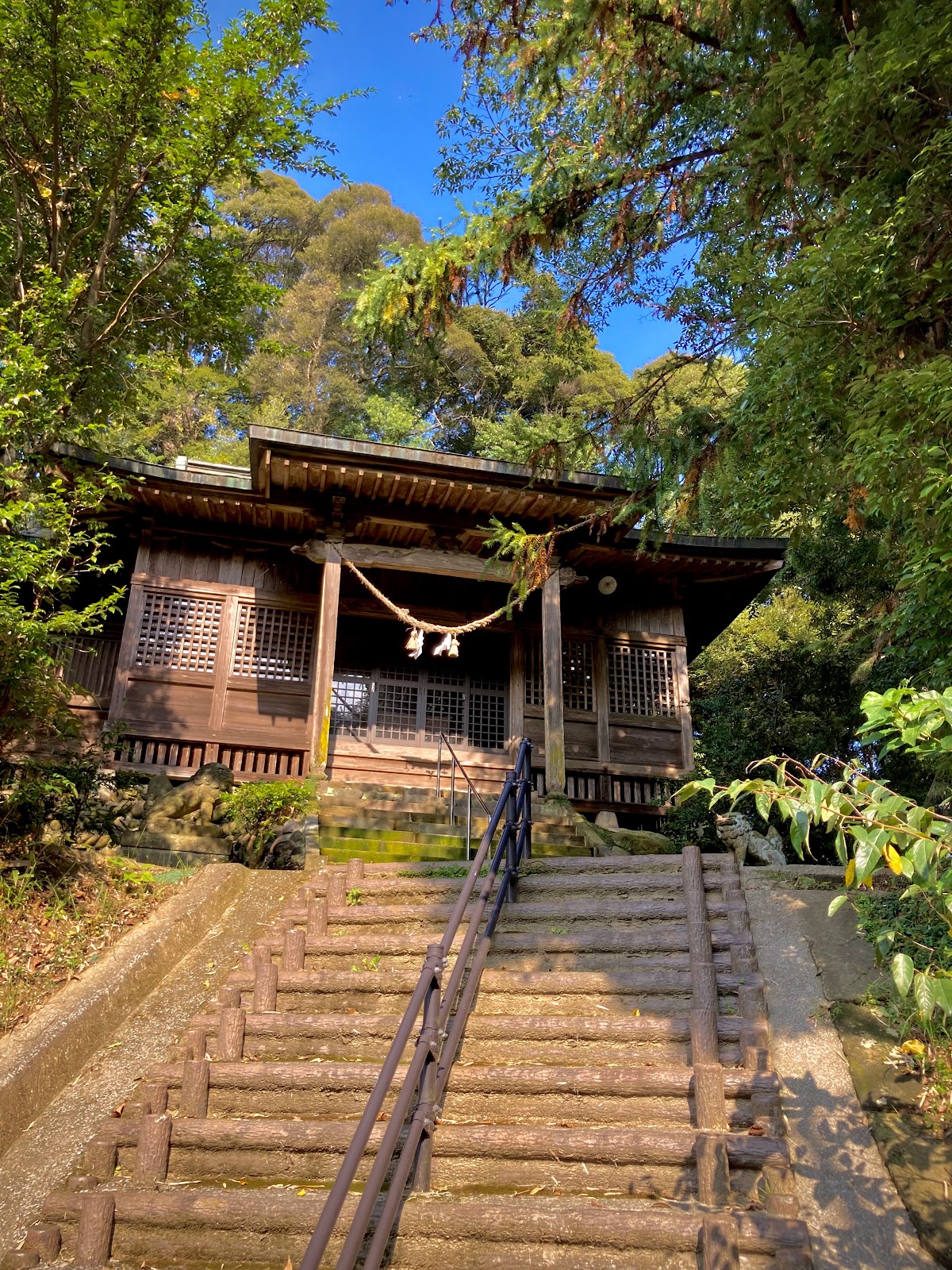
Because the shrine grounds are on a hill, it is necessary to climb stone steps to worship. These stone steps have a history of being donated and maintained by the former and later lords of Nobeoka Castle, and are a magnificent structure measuring three ken (approximately 5.4 meters) in width.
The structure, with a cave serving as the main shrine, is rare throughout Japan, creating a unique space where the natural rock face and artificial shrine buildings are integrated. A prayer hall and worship hall are positioned in front of the cave, and worshippers offer their prayers facing the cave.
Deity Enshrined
The deity enshrined at Iwato Shrine is Amaterasu Omikami.
Amaterasu Omikami is the supreme deity in Japanese mythology, known as the personification of the sun. She is the ancestral deity of the Imperial family and the most revered god in Japan, enshrined at the Inner Shrine of Ise Grand Shrine.
The reason Iwato Shrine enshrines Amaterasu Omikami is that the cave in this area has been traditionally believed to be the setting of the Amano-Iwato legend. In Japanese mythology, the story tells of Amaterasu, the sun goddess, who, angered by the violence of her younger brother Susanoo, hid in the Heavenly Rock Cave, plunging the world into darkness. The legend of the eight million gods performing a ritual in front of the cave and successfully luring Amaterasu out is a crucial myth forming the foundation of Japanese culture.
There are several sites in Miyazaki Prefecture associated with the Heavenly Rock Cave legend, and Iwato Shrine is one of them, having attracted worshippers since ancient times. The worship of Amaterasu, the sun goddess, is believed to bring a wide range of divine blessings, including abundant harvests, national peace and security, and good fortune.
History and Origins
Origin of Founding
Iwato Shrine is said to have been founded during the reign of Emperor Seimu (circa 131-190 AD), when Takenouchi no Sukune was sent as a messenger to worship.
Takenouchi no Sukune is a legendary figure in ancient Japanese history, a loyal retainer said to have served five emperors, from Emperor Keiko to Emperor Nintoku. There is a legend that he lived for over 300 years, and he is known as a symbol of longevity. The founding legend involving such an important figure speaks to the ancient history and high status of Iwato Shrine.
The reign of Emperor Seimu falls within the early Kofun period, and while there are various theories regarding the actual founding date, it is certain that it was an object of worship from a considerably early period.
Medieval History
Iwato Shrine possesses a hanging Buddha halo bearing an inscription dated May 9th, 1204 (Genkyu 1), confirming that it was already an important place of worship in the early Kamakura period. A hanging Buddha is a bronze mirror with a Buddhist or Shinto image cast or engraved on its surface, a valuable relic from the era of syncretism of Shinto and Buddhism.
This hanging Buddha is an important historical document indicating that Iwato Shrine at that time attracted considerable devotion and possessed the status to receive offerings.
Development in the Early Modern Period
During the Edo period, successive feudal lords, including the former Nobeoka Castle lord Arima Saemon-no-jo and his successor, Makino Bingo-no-kami, revered Iwato Shrine.
These lords generously supported the shrine, donating land for religious expenses (land that provided operating funds for the shrine) and undertaking repairs to the shrine buildings. As a result, Iwato Shrine was maintained and developed as an important center of faith in the region.
The construction of the stone steps and the shrine buildings are also thought to have been made possible by the support of these feudal lords. Even in samurai society, faith in Amaterasu Omikami was considered important for praying for national peace and military success.
Modern Era
Under the Meiji era’s shrine ranking system, it was designated a village shrine, officially recognized as a local shrine. Even after the enactment of the Religious Corporations Law after World War II, it continues to be a shrine that attracts the faith of local residents.
Access Information
Nearest Station & Line
The nearest station to Iwato Shrine is JR Nippo Main Line, Miyazaki Station. The shrine is approximately 4 kilometers from Miyazaki Station.
Access from Miyazaki Station:
- By taxi: Approximately 10-15 minutes
- On foot: Approximately 50 minutes (suitable for those with good stamina)
- By bus: Take a Miyazaki Kotsu bus and get off at the “Heiwa-ga-oka Danchi” bus stop, then walk for approximately 9 minutes.
If accessing from Miyazaki Airport, the most convenient route is to take the JR Miyazaki Airport Line to Miyazaki Station (approximately 10 minutes), then transfer to a bus or taxi.
Nearest Bus Stop & Line
Nearest Bus Stop: Heiwa-ga-oka Danchi (Miyazaki Kotsu)
Take a Miyazaki Kotsu bus from Miyazaki Station and get off at the “Heiwa-ga-oka Danchi” bus stop. From there, it’s approximately a 9-minute walk to the shrine. Since bus service is limited, it is recommended to check the timetable in advance.
Access by Car
From National Route 9:
Cross the Aioi Bridge and head northeast for approximately 1 kilometer. There are signs within the residential area of Kamikita-cho.
From the Miyazaki Expressway:
Approximately 15 minutes from Miyazaki IC. Take National Route 220 and National Route 10 to National Route 9.
Parking is available around the shrine, but it is limited, so early arrival is recommended during festivals.
Map Information
Searching for “Iwato Shrine Miyazaki City” on Google Maps will show the exact location. If using a car navigation system, enter the address “751 Kamikita-cho, Miyazaki City, Miyazaki Prefecture.”
You can also search using map services such as Yahoo! Maps, where you can check surrounding road conditions and the latest map information.
Goshuin (Shrine Seal) Information
Goshuin (shrine seals) are available at Iwato Shrine. There are records of several visitors obtaining electronic goshuin to date.
Goshuin (Shrine Seal) Reception
Goshuin are available at the shrine office. However, since there may not always be a resident priest, it is recommended to call ahead to confirm if you wish to receive a goshuin.
Phone Number: 0985-41-2641
Electronic Goshuin
In recent years, an electronic goshuin system utilizing digital technology has been introduced, allowing you to record your visit through smartphone apps. This is attracting attention as a new style of worship that blends tradition and modern technology.
Goshuincho (Shrine Seal Book)
If you bring your own goshuincho, you can have your goshuin written directly. Please inquire directly regarding the availability of Iwato Shrine’s original goshuincho.
List of Festivals and Events (2026)
Iwato Shrine holds various festivals and events throughout the year. The main annual events are as follows:
Main Annual Festivals
New Year’s Day Festival (January 1st)
A festival to celebrate the New Year and pray for peace and prosperity throughout the year. Many first-time visitors come to the shrine.
Spring Grand Festival (April)
An important festival praying for a bountiful spring harvest. Many local residents attend.
Summer Purification Ceremony (June 30th)
A Shinto ritual to purify and cleanse away the sins and impurities accumulated over the past six months. A ritual of passing through a ring of reeds may also be performed.
Autumn Grand Festival (October)
A festival to give thanks for the year’s harvest. One of the most important festivals at the shrine.
Year-End Purification Ceremony (December 31st)
A Shinto ritual to purify oneself of the sins and impurities accumulated over the year and welcome the new year with a fresh start.
Specific dates and times may change, so please contact the shrine in advance if you wish to attend.
Benefits of Visiting the Shrine
Amaterasu Omikami, enshrined at Iwato Shrine, is the supreme deity in Japanese mythology and a goddess who grants all wishes.
Main Divine Virtues
Good Fortune and Prosperity: The light of Amaterasu Omikami, the sun goddess, brings bright fortune to your life.
National Peace and Family Safety: As the ancestral deity of the Imperial Family, she protects the peace of the nation and the home.
Abundant Harvest and Business Prosperity: You can pray for abundant harvests from the blessings of the sun and for the prosperity of your business.
Protection from Misfortune and Disaster: Like Amaterasu Omikami who emerged from the Heavenly Rock Cave, she grants you the strength to overcome difficulties.
Victory and Guaranteed Success: The power of the sun, which illuminates the darkness, guides you to victory.
Nearby Attractions
Major Shrines in Miyazaki City
When visiting Iwato Shrine, it is recommended to also visit other important shrines in Miyazaki City.
Miyazaki Jingu: A representative shrine of Miyazaki Prefecture, dedicated to Emperor Jimmu. Approximately 15 minutes by car from Iwato Shrine.
Eda Shrine: An ancient shrine dedicated to Izanagi-no-Mikoto and Izanami-no-Mikoto. Known as a place of purification.
Around the Oyodo River
The area around the Oyodo River, where the shrine is located, is rich in nature. You can walk along the riverside promenade or enjoy the view from Aioi Bridge.
Precautions When Visiting
Shrine Visiting Etiquette
Due to the unique structure of Iwato Shrine, which has a cave as its main hall, please note the following points.
- Since there are many stone steps, we recommend wearing comfortable shoes for your visit.
- There are rocky areas, so please be careful of your footing in rainy weather.
- The inside of the cave is a sacred place. Please do not enter restricted areas.
- Please take photographs only within permitted areas and be considerate of other visitors.
Visiting Hours
While you can generally visit the shrine grounds freely, the shrine office has limited operating hours. If you wish to receive a Goshuin (shrine stamp) or prayer, we recommend checking by phone in advance.
The Charm of Iwato Shrine
A Sacred Place Integrated with Nature
The greatest charm of Iwato Shrine is its unique structure, where the main shrine is a natural cave. Not only are there artificial structures, but the natural formations themselves create a sacred space.
Standing before the cave, you will understand why ancient people felt the presence of gods in this place. The texture of the rock face, the depth of the cave, and the way the light shines in all contribute to a mystical atmosphere.
Connection to the Legend of Ama-no-Iwato
A major characteristic of Iwato Shrine is its connection to the Ama-no-Iwato legend, one of the most famous legends in Japanese mythology. It offers a sense of historical romance as a place where the world of mythology and the real world intersect.
Quiet Worship Environment
Unlike large, touristy shrines, Iwato Shrine offers a quiet and peaceful atmosphere for worship. This space, away from the hustle and bustle, allows for a peaceful connection with the deities, a precious find in modern society.
Other Iwato Legend Sites in Miyazaki Prefecture
Besides Iwato Shrine, Miyazaki Prefecture has other shrines related to the Ama-no-Iwato legend.
Ama-no-Iwato Shrine (Takachiho Town): A representative Ama-no-Iwato legend site in Miyazaki Prefecture. Many tourists visit it in conjunction with Takachiho Gorge.
Udo Shrine (Nichinan City): A shrine situated in a cave on the Nichinan coast. Like Iwato Shrine, it has a unique structure utilizing a rock cavern.
Visiting these shrines on a “Iwato Pilgrimage” is one of the ways to enjoy shrine visits in Miyazaki Prefecture.
Summary
Iwato Shrine is a historical shrine dedicated to Amaterasu Omikami, located in Kamikita-cho, Miyazaki City, Miyazaki Prefecture. It is said to have been founded by Takenouchi no Sukune during the reign of Emperor Seimu, and is characterized by its unique structure with a cave serving as the main hall.
It has been revered by successive feudal lords, including the former lord of Nobeoka Castle, and has developed as an important center of local faith. Even today, it is a precious shrine where you can feel the divine power of Amaterasu Omikami in a tranquil environment.
When you visit Miyazaki City, be sure to visit Iwato Shrine and quietly pray in its sacred grounds, which are one with nature. The mystical atmosphere emanating from the cave and the warm divine virtue of Amaterasu Omikami will envelop visitors.