Hachiman Shrine (Shimanouchi, Miyazaki City, Miyazaki Prefecture): Complete Guide to History, Origins, Deities, and Access
Hachiman Shrine, located in Shimanouchi, Miyazaki City, Miyazaki Prefecture, is a historically significant shrine that attracts the faith of the local community. Despite its convenient location within walking distance of Hyuga-Sumiyoshi Station on the JR Nippo Main Line, it is known as a rare place where visitors can worship in a tranquil setting. This article provides a detailed introduction to Hachiman Shrine, including its history, enshrined deities, highlights within the grounds, and access information.
Basic Information on Hachiman Shrine (Shimanouchi)
Hachiman Shrine is located at 7599 Shimanouchi, Miyazaki City, Miyazaki Prefecture. It is situated at 131 degrees 27 minutes 12.76 seconds east longitude and 31 degrees 59 minutes 07.84 seconds north latitude, approximately 600 meters southwest of Hyuga-Sumiyoshi Station on the JR Nippo Main Line, adjacent to Sumiyoshi Junior High School.
According to records from February 9, 2014, this shrine has been carefully preserved as the center of faith for the local residents. The telephone number is 0985-39-4634, and it is operated with a focus on maintaining strong ties with the local community.
Deities and Their History
About the Main Deity
Hachiman Shrine (Shimanouchi) enshrines three deities central to Hachiman faith.
Emperor Tarashinakatsuhiko
This refers to the 14th Emperor Chuai, the father of Emperor Ojin. Due to his father’s early death, the Empress acted as regent, handling government affairs until the young Emperor Ojin ascended the throne.
Okinagatarashihime no Mikoto
This is a goddess more commonly known as Empress Jingu. As the empress of Emperor Chuai and the mother of Emperor Ojin, she governed with the assistance of the veteran retainer Takenouchi no Sukune and is also known for the legend of the conquest of the Three Kingdoms of Korea.
Emperor Homuda
This refers to Emperor Ojin, the 15th emperor. Born as the fourth son of Emperor Chuai, he became Crown Prince at the age of four. He is the central deity enshrined at Hachiman shrines throughout Japan.
These three deities are believed to bestow blessings for military fortune, national peace and security, child-rearing, and safe childbirth, and have attracted the faith of people since ancient times.
History and Origins of Hachiman Shrine (Shimanouchi)
Two Theories Regarding the Origin of the Shrine’s Establishment
Regarding the founding of Hachiman Shrine (Shimanouchi), two interesting theories are passed down from the shrine’s historical records and documents.
Theory of Invitation from Hakozaki Hachimangu Shrine in Chikuzen
According to the shrine’s historical records, this shrine is said to have been established by inviting a divided spirit from Hakozaki Hachimangu Shrine in Chikuzen Province (present-day Fukuoka Prefecture). It is believed to have originally been called “Kaizaki Hachiman,” a name that suggests its proximity to the sea. Hakozaki Hachimangu Shrine is a historically significant shrine founded in 921 AD, and its invitation would have been of great importance to the region.
Theory of Invitation from Usa Hachiman
On the other hand, according to the historical document “Usa Daikyo,” it is recorded that Hirohara Manor was established in 1083 AD as a territory of Usa Shrine. Based on this historical fact, the theory that the shrine originated from the invitation of Usa Hachiman is considered plausible. Usa Shrine is the head shrine of all Hachiman shrines nationwide, and it is quite possible that the establishment of its manor and the founding of the shrine were linked.
The History of Our Shrine’s Priestly Family
The Kodama family, who serve as our shrine’s priestly family, possess valuable historical documents, including the Kigensho (ancient Japanese chronicle), passed down through generations. These documents serve as crucial clues to unraveling the history of the shrine and are recognized as highly valuable historical materials in regional history research.
The Kodama family has continuously protected the shrine and supported the local faith for many years. Their history extends beyond that of a single shrine, closely intertwined with the development of the entire Shimanouchi region.
Hachiman Faith and the Shimanouchi Region
The Spread of Hachiman Faith
Hachiman faith is one of the most widespread Shinto beliefs throughout Japan. Hachiman, whose principal deity is Emperor Ojin, possesses characteristics of a god of war, but also aspects of a god of agriculture and prosperity.
While there are numerous Hachiman shrines in Miyazaki Prefecture, the Hachiman shrine in Shimanouchi is considered one of the oldest. Founded in 1083, during the late Heian period, this shrine boasts a history of over 900 years.
Relationship between Hirohara Manor and the Shrine
Hirohara Manor, established as a territory of Usa Shrine, was an important base within the manorial system of the time. It was a common practice at the time to invite Hachiman, the god of war, to demonstrate the divine power of Usa Shrine, the lord of the manor.
The fact that this region was under the influence of Usa Shrine speaks to the status and importance of the shrine in the region. Even after the decline of the manorial system, the shrine continued to function as the center of the local community.
Highlights and Features of the Shrine Grounds
Location and Surrounding Environment
Hachiman Shrine is located adjacent to Sumiyoshi Junior High School, creating an interesting environment where a school and a place of traditional culture coexist. This location provides young people with opportunities to interact with the shrine on a daily basis, making it significant from the perspective of preserving traditional culture.
While residential areas spread out around the shrine, a tranquil atmosphere is maintained within the shrine grounds. Even in the increasingly urbanized city of Miyazaki, the careful preservation of such a place of worship is noteworthy.
Shrine Buildings and Grounds
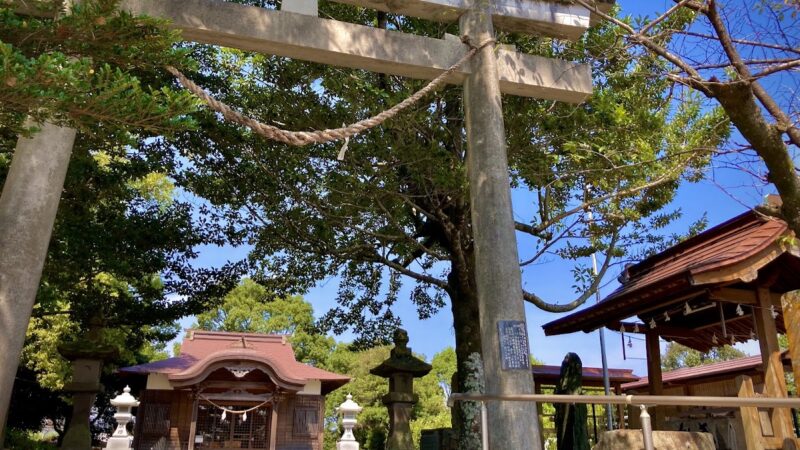
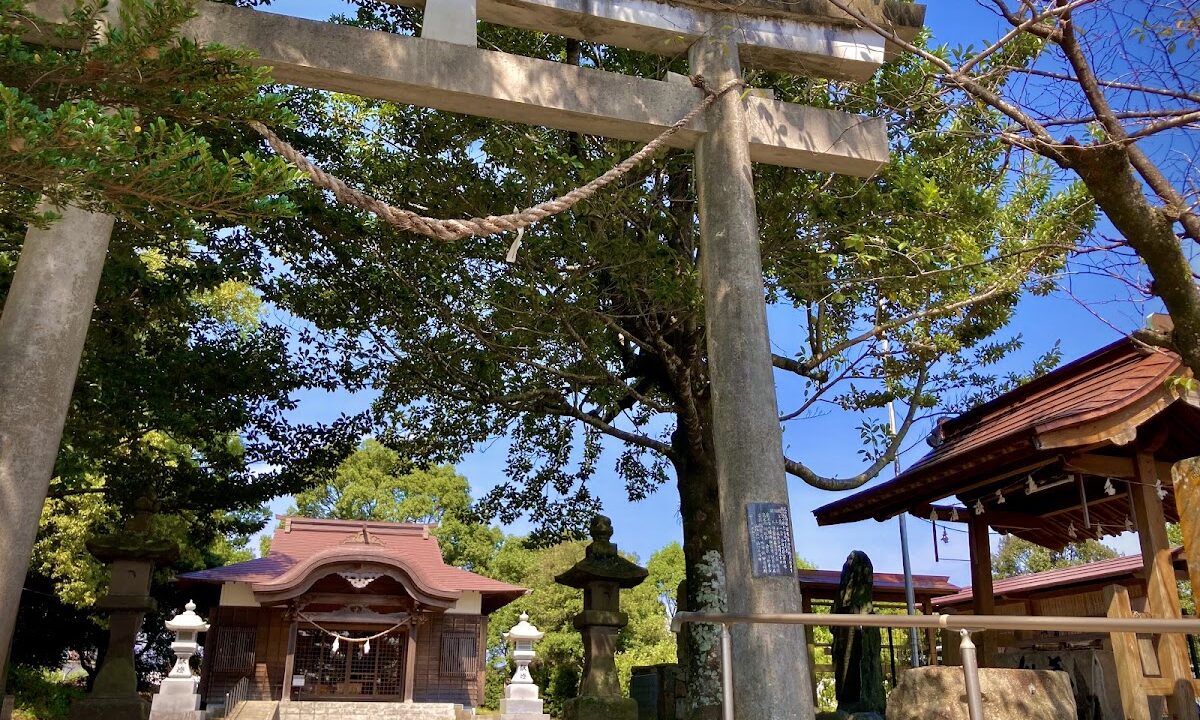
The Hachiman Shrine’s buildings are typical of a local shrine, consisting mainly of the main hall and worship hall. Komainu (guardian lion-dogs) are placed within the grounds, welcoming visitors. These komainu are likely the work of local stonemasons, making them valuable for understanding the local craft history.
The trees within the grounds have been cultivated over many years, displaying different appearances with each season. The atmosphere of the approach to the shrine, in particular, maintains a solemnity befitting a sacred place, despite its urban location.
Annual Events and Festivals
Grand Festival
Hachiman Shrine holds various festivals throughout the year. The Grand Festival, in particular, is the largest event in the region, attracting many parishioners and local residents. On festival days, stalls line the shrine grounds, creating a place to deepen the bonds of the local community.
Daily Rituals
Regular rituals, such as monthly festivals and New Year’s Day festivals, are carefully performed. These rituals are essential for preserving the shrine’s traditions and maintaining a connection with the gods.
Local residents visit Hachiman Shrine at important life events such as New Year’s Day, Shichi-Go-San (a traditional rite of passage for children), and exorcisms, praying for the gods’ protection. These customs are passed down through generations, demonstrating the shrine’s function as a spiritual pillar of the community.
Access and Visiting Information
Access by Public Transportation
Using the JR Nippo Main Line
- Nearest Station: Hyuga-Sumiyoshi Station
- Approximately 9 minutes on foot from the station (approximately 600 meters)
- It’s easiest to head southwest from the station exit and aim for Sumiyoshi Junior High School.
Hyuga-Sumiyoshi Station is a few stops north of Miyazaki Station, about 10 minutes by local train. The route from the station is flat, making it easily accessible on foot.
Access by Car
From central Miyazaki City, head north on National Route 10 and enter the Shimanouchi area. Using Sumiyoshi Junior High School as a landmark will help you find the shrine. Regarding parking, it is recommended to inquire with the shrine before your visit.
Car Navigation Settings
- Address: 7599 Shimanouchi, Miyazaki City, Miyazaki Prefecture
- Phone Number: 0985-39-4634
- Coordinates: 131°27’12.76″E, 31°59’07.84″N
Notes for Visitors
While the shrine is generally open for worship from sunrise to sunset, the office hours may be limited. If you wish to obtain a Goshuin (shrine stamp) or amulet, it is recommended to confirm by phone in advance.
Please observe the following manners when visiting the shrine:
- Bow when passing through the torii gate
- Walk along the sides of the path, as the center is the path for the gods
- Cleanse your hands and mouth at the water basin
- At the main hall, perform the ritual of two bows, two claps, and one bow
Nearby Attractions and Tourist Spots
History of the Sumiyoshi District
The Sumiyoshi district, including the Shimanouchi district where Hachiman Shrine is located, has long been an important area in northern Miyazaki. Located near the sea, this region prospered through fishing and shipping, fostering a unique culture.
After visiting the shrine, it’s a good idea to stroll around the area and learn about the local history. The Sumiyoshi district retains traces of its old townscape, allowing you to experience Miyazaki’s history.
Connections to Other Shrines
There are several other Hachiman Shrines in Miyazaki City. Miyazaki Hachiman Shrine is located in the center of Miyazaki City and is known as a shrine established at the beginning of Miyazaki’s development. Furthermore, records indicate that the Hachiman Shrine in the Yoshimura district was founded in 1476 (Bunmei 8) with a divided spirit from Usa Shrine.
By visiting these shrines, you can understand the spread and historical changes of Hachiman worship in Miyazaki.
The Modern Significance of Hachiman Shrine (Shimanouchi)
As a Center of the Local Community
In modern society, shrines have become more than just religious facilities. Hachiman Shrine (Shimanouchi) also plays an important role as a nexus of the local community.
Through festivals and cleaning activities, it provides a place for local residents to gather and interact. These activities are valuable opportunities to maintain community ties that tend to weaken in an increasingly urbanized environment.
Inheritance of Historical Culture
With a long history potentially dating back to the Heian period, Hachiman Shrine can be considered a living museum that conveys the region’s historical and cultural heritage to the present day. Ancient documents such as the Kigensho, passed down through the Kodama family, are important historical sources for the study of Miyazaki’s history.
From the perspective of passing on culture to the next generation, the existence of shrines is of great significance. Taking advantage of its location adjacent to a school, it provides an environment where children can be provided with opportunities to experience traditional culture.
As a Spiritual Sanctuary
For many modern people, shrines function as a place to find peace of mind amidst various stresses and anxieties. The time spent praying in the quiet shrine grounds is a valuable opportunity to step away from daily life and confront oneself.
The deities enshrined at Hachiman Shrine—Emperor Ojin, Emperor Chuai, and Empress Jingu—are believed to grant people’s various wishes, each possessing different divine virtues.
Summary: A Recommendation to Visit Hachiman Shrine (Shimanouchi)
Hachiman Shrine, located in Shimanouchi, Miyazaki City, has a long history that may date back to the Heian period, and is a venerable shrine said to have been established by inviting deities from Chikuzen Hakozaki Hachiman Shrine or Usa Hachiman Shrine. This shrine enshrines three deities: Emperor Chuai (Tarashinakatsuhiko), Empress Jingu (Okinagatarashihime), and Emperor Ojin (Homuda), and has long been a center of local faith.
Despite its convenient location, just a 9-minute walk from JR Hyuga-Sumiyoshi Station, it offers a rare opportunity for peaceful worship in a tranquil setting. Its proximity to Sumiyoshi Junior High School is also distinctive, creating an environment where education and traditional culture coexist.
If you are visiting Miyazaki, or if you live in Miyazaki, please be sure to visit this historic Hachiman Shrine. The serene atmosphere of this shrine, which has walked hand in hand with the community throughout its long history, will surely remind us of something important in our modern lives.
Visiting a shrine is more than just sightseeing or visiting a power spot; it’s an experience that touches upon Japanese history, culture, and regional identity. Hachiman Shrine (Shimanouchi) is a place that offers such a profound experience.