Complete Guide to Chijo-ji Temple (Kawaminami Town, Miyazaki Prefecture) | History of the Nichiren Sect, Goshuin (Temple Seal), and Access Information
Chijo-ji Temple, located in Kawaminami Town, Koyu District, Miyazaki Prefecture, is a historic temple belonging to the Nichiren sect. It enshrines Fukurokuju (one of the Seven Lucky Gods), Kishimojin (one of the Seven Lucky Gods), and Kiyomasa-ko (one of the Seven Lucky Gods), and has long been a center of local faith. This article provides a detailed explanation of Chijo-ji Temple’s history, highlights, goshuin information, worship methods, and access information—everything you need to know before visiting.
Basic Information about Chijo-ji Temple
Chijo-ji Temple is a Nichiren sect temple located in Hirata, Kawaminami Town, Koyu District, Miyazaki Prefecture. Let’s start by looking at the basic information.
Temple Name: Chijoji Temple
Sect: Nichiren Buddhism
Address: 5050-1 Hirata, Kawaminami-cho, Koyu-gun, Miyazaki Prefecture
Chief Priest: Tomoo Katayose
Nearest Station: Kawaminami Station, JR Nippo Main Line
Chijoji Temple is located in the Hirata district of Kawaminami-cho, in a tranquil environment surrounded by quiet residential areas and rural landscapes. It plays an important role as a center of faith for local residents and as a place to transmit the teachings of Nichiren Buddhism.
About Nichiren Buddhism
By deepening your understanding of Nichiren Buddhism, to which Chijoji Temple belongs, you can gain a deeper understanding of the temple’s characteristics.
Nichiren Buddhism is a Buddhist sect founded by the monk Nichiren Shonin during the Kamakura period. Its fundamental scripture is the Lotus Sutra, and its practice centers on chanting the title “Namu Myoho Renge Kyo.” Nichiren Shonin preached that the Lotus Sutra is the only teaching that conveys the true meaning of Shakyamuni Buddha, and he dedicated his life to spreading this teaching.
A characteristic of the Nichiren sect is its emphasis on worldly benefits and social reform. It is characterized by a proactive stance that seeks to achieve not only individual happiness but also peace and prosperity for society as a whole through faith. Furthermore, there is deep reverence for Nichiren Shonin, the founder, and many temples enshrine statues and mandalas of Nichiren Shonin.
There are several Nichiren sect temples in Miyazaki Prefecture, and Chijo-ji Temple is one of them, supporting the faith of the region.
History and Origins of Chijo-ji Temple
Although there are limited existing records regarding the founding date and detailed history of Chijo-ji Temple, it is believed to have a long history as a temple deeply rooted in the community.
Kawaminami Town has long been a region where agriculture thrives, and people’s lives and faith were closely intertwined. Chijo-ji Temple has served as a spiritual center for local residents, deeply engaging with the community through funerals, memorial services, and annual events.
As a Nichiren Buddhist temple, Chijo-ji Temple conducts services and practices based on the teachings of Nichiren Shonin, and continues its missionary activities among its parishioners. Under the current head priest, Reverend Tomoo Katayose, the temple is managed in a way that is both traditional and relevant to modern times.
Highlights of Chijo-ji Temple
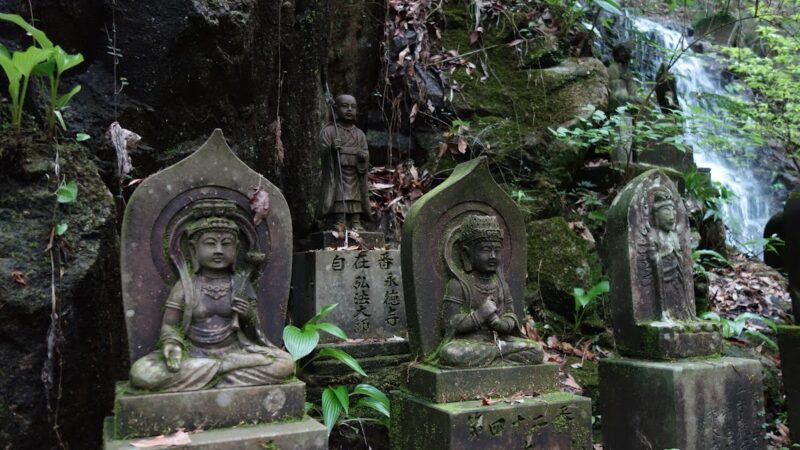
Chijo-ji Temple houses several Buddhist and Shinto statues, each with its own profound meaning.
Fukurokuju (One of the Seven Lucky Gods)
Chijo-ji Temple enshrines Fukurokuju, one of the Seven Lucky Gods. Fukurokuju is a deity originating from Chinese Taoism, believed to bestow the three virtues of happiness (Fuku), income (Roku), and longevity (Ju).
This deity is often depicted with a long head and white beard, carrying a staff and scroll, and frequently accompanied by cranes and turtles, symbols of longevity. They are revered by people seeking business prosperity, career advancement, and good health and longevity.
The Seven Lucky Gods pilgrimage is a popular religious event held throughout Japan, and it is believed that visiting the Fukurokuju at Chijo-ji Temple can bestow their blessings.
Kishimojin
Kishimojin is a widely worshipped deity, revered as the guardian of child-rearing and safe childbirth. Originally a demon who stole and ate other people’s children, she is said to have reformed after being enlightened by Buddha and become a guardian deity of children.
In the Nichiren sect, Kishimojin is highly regarded as a guardian deity of the Lotus Sutra, and is enshrined in many Nichiren temples. The Kishimojin at Chijo-ji Temple also attracts the devotion of families raising children and pregnant women in the community.
Visitors come to pray for safe childbirth, the healthy growth of children, and fertility.
Kiyomasa-ko (Kato Kiyomasa)
Chijo-ji Temple also enshrines Kiyomasa-ko, the Sengoku period warlord Kato Kiyomasa. Kato Kiyomasa is known as a devout follower of the Nichiren sect and is often enshrined as a guardian deity in Nichiren temples.
Kiyomasa-ko is known as a brave warrior, but he was also a master castle builder and demonstrated exceptional skill in flood control. Due to his strength and sense of justice, he is worshipped as a god of protection against misfortune, good fortune, and success in competitions.
In particular, many of Kato Kiyomasa’s achievements remain in Kyushu, and devotion to him can be seen in Miyazaki Prefecture. The statue of Kiyomasa-ko at Chijo-ji Temple also attracts worshippers who believe he grants them the strength to face difficulties.
Main Hall and Temple Grounds
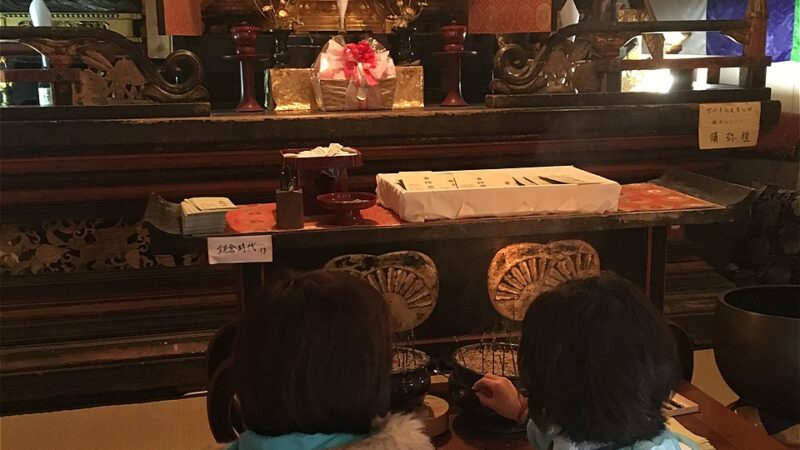
The main hall of Chijo-ji Temple is built in the traditional style of Nichiren Buddhist temples, and houses the principal image and mandala. The temple grounds are meticulously maintained, providing a tranquil environment for worship.
Regular Buddhist services and chanting are held in the main hall, where parishioners gather to deepen their faith. Seasonal events and services are also held, making it a central hub for the local community.
Information on Goshuin (Temple Seals) at Chijo-ji Temple
In recent years, collecting goshuin has become a popular hobby, adding to the enjoyment of visiting temples and shrines. Goshuin can also be obtained at Chijo-ji Temple.
What is a Goshuin?
A goshuin is a seal and calligraphy given as proof of visiting a temple or shrine. Originally, it was given as proof of offering a copied sutra, but now it is commonly received as a memento of a visit.
A Goshuin (temple stamp) is inscribed with the temple name, the name of the principal deity, and the date of visit in ink, and then stamped with a red seal. Each temple has its own unique design, and collecting them in a Goshuincho (stamp book) serves as a record of your visits.
Characteristics of Chijoji Temple’s Goshuin
Chijoji Temple’s Goshuin features a powerful calligraphic style characteristic of Nichiren Buddhist temples. The Goshuin includes the temple name and phrases related to Nichiren Buddhism, and is cherished as a memento of your visit.
When receiving a Goshuin, please first complete your prayers at the main hall, and then speak to someone at the temple office or the main hall. Bringing your Goshuincho is preferable, but pre-printed Goshuin may also be available.
Manners When Receiving a Goshuin
When receiving a Goshuin, it is important to observe several manners.
- Complete your prayers first: Since the Goshuin is proof of your visit, always pray at the main hall before receiving it.
- Request politely: Temple staff hand-write each Goshuin (temple stamp). Please request politely and with gratitude.
- Open and hand over your Goshuin book: It’s considerate to hand over your book with the page you want written on open.
- Prepare the offering: Generally, it’s around 300 to 500 yen. Please prepare exact change to avoid needing change.
- Wait quietly: Please wait quietly while the stamp is being written.
- This is not a stamp rally: Remember that collecting Goshuin is part of faith, and approach it with respect.
How to visit Chijoji Temple
Here’s a basic guide to visiting Chijoji Temple.
Flow of Worship
- Bow at the main gate: Bow at the main gate (Sangon), the entrance to the temple, before entering the grounds.
- Purify yourself at the water basin: If there is a water basin, purify your hands and mouth. Scoop water with the ladle, purify your left hand, then your right hand, and rinse your mouth with water in your left hand.
- Proceed to the main hall: Approach the main hall and stand in front of the offering box.
- Offer your donation: Quietly place your donation into the offering box.
- Bow and clasp your hands together: Bring your hands together in front of your chest and bow. In the Nichiren sect, you may also chant “Namu Myoho Renge Kyo.”
- Pray: Express your wishes and gratitude silently.
- Bow and leave: Bow one last time before leaving the main hall.
- Visit Other Temple Buildings: Similarly, pay your respects to other Buddhist and Shinto statues, such as those of Fukurokuju, Kishimojin, and Kiyomasa.
- Bow at the Temple Gate: When leaving, bow at the temple gate before departing.
Attire and Items to Bring When Visiting
No special attire is required, but it is desirable to dress appropriately for a sacred place like a temple. Avoid revealing or overly flashy clothing.
Items to bring include small change for offerings, a stamp book and offering fee if you wish to receive a temple stamp, and prayer beads (if you have them).
How to Access Chijo-ji Temple
Detailed directions to Chijo-ji Temple are provided below.
Access by Public Transportation
Train: The nearest station is Kawaminami Station on the JR Nippo Main Line. Chijo-ji Temple is approximately 3-4 km from Kawaminami Station.
Access from the Station:
- Taxi: Approximately 10 minutes by taxi from Kawaminami Station.
- Bus: Please check the bus schedule in advance.
- Walking: Approximately 40-50 minutes on foot.
Kawaminami Station is located north of Miyazaki City on the Nippo Main Line, approximately 40 minutes from Miyazaki Station by local train.
Access by Car
From Miyazaki City: Head north on National Route 10 towards Kawaminami Town. Approximately 40-50 minutes.
Using the Expressway: Approximately 15 minutes from the Takanabe IC on the Higashi-Kyushu Expressway. Exit at Takanabe IC and head towards Kawaminami Town via National Route 10.
Parking: It is recommended to check in advance whether the temple has parking spaces. There may be parking for visitors, but the number of spaces may be limited.
Landmarks and Points to Note in the Surrounding Area
Chijo-ji Temple is located in the Hirata district of Kawaminami Town. You can confirm its exact location by entering the address into your car navigation system or smartphone map app.
If you are visiting for the first time, it is recommended to check the location on a map beforehand and familiarize yourself with the surrounding road conditions. Be especially careful when driving on narrow roads or through residential areas.
Tourist Attractions Around Chijo-ji Temple
Visiting the surrounding tourist attractions in addition to Chijo-ji Temple will make your trip more fulfilling.
Attractions in Kawaminami Town
Torontoron Dome: A representative facility of Kawaminami Town, it houses a direct sales market for agricultural and livestock products and a restaurant. You can purchase fresh local produce and specialty products.
Kawaminami Kofun Cluster: Numerous ancient burial mounds are scattered throughout Kawaminami Town, allowing you to experience ancient history.
Kawaminami Wetland: A naturally rich spot where valuable wetland plants grow.
Tourist Attractions in Neighboring Municipalities
Takanabe Town: The neighboring town of Takanabe boasts tourist attractions such as the Takanabe Castle Ruins (Maizuru Castle Ruins), Takanabe Daishi Temple, and Somegaoka Hill.
Tsuno Town: Tsuno Winery offers tastings and purchases of Miyazaki Prefecture wines, and Tsuno Shrine is a popular power spot for matchmaking.
Kijo Town: Kijo Town offers historical and natural spots such as Hiki Shrine and Ishii Memorial Yuai-sha.
About Kawaminami Town
Let’s take a closer look at Kawaminami Town, where Chijo-ji Temple is located.
Kawaminami Town is located almost in the center of Miyazaki Prefecture, in Koyu District, with a population of approximately 15,000. It faces the Hyuga Sea to the east and is surrounded by the mountains of the Osuzuyama mountain range to the west, making it a naturally rich area.
Agriculture and livestock farming are thriving, with livestock farming boasting one of the highest production volumes in the country. Greenhouse horticulture, including tomatoes and bell peppers, is also popular. A mild climate and abundant natural environment support the development of agriculture and livestock farming.
Kawaminami Town has been inhabited since ancient times, and numerous ancient burial mounds remain within the town, allowing visitors to feel its ancient history. Furthermore, traditional local events and festivals are still passed down, and Chijo-ji Temple plays a part in this local culture.
Annual Events at Chijo-ji Temple
Temples hold various events throughout the year. As a Nichiren Buddhist temple, Chijo-ji Temple is believed to hold the following annual events:
Main Annual Events
New Year’s Day (Shushō-e): A memorial service to welcome the new year, praying for peace throughout the year.
Setsubun-e: Events such as bean-throwing may be held on Setsubun in February.
Spring Equinox Service: A memorial service for ancestors is held around the spring equinox in March.
Hanamatsuri (Buddha’s Birthday Festival): Held on April 8th, this event celebrates the birth of Buddha.
Obon (Urabon-e): In August, the Urabon-e festival is held to welcome and honor the spirits of ancestors.
Autumn Equinox Festival: Centered around the autumnal equinox in September, ancestral memorial services are held again.
Oeshiki (Gomyoko): Held on October 13th, this memorial service commemorates the death anniversary of Nichiren Shonin and is one of the most important events for Nichiren Buddhist temples.
New Year’s Eve Bell: On New Year’s Eve, the temple bell is rung to welcome the new year.
For specific event dates and details, we recommend contacting the temple directly.
Prayers and Memorial Services Available at Chijo-ji Temple
Chijo-ji Temple offers a variety of prayers and memorial services.
Various Prayers
- Family Safety: Prayers for the health and happiness of all family members
- Good Health: Prayers for good health and recovery from illness
- Business Prosperity: Prayers for the prosperity of business
- Traffic Safety: Prayers for safety from traffic accidents
- Academic Success: Prayers for academic improvement and passing exams
- Safe Childbirth: Prayers for a safe delivery for mother and child (Kishimojin belief)
- Exorcism: Prayers for protection from misfortune during unlucky years
Memorial Services
- Ancestral Memorial Service: Memorial services for the spirits of ancestors
- Annual Memorial Services: Memorial services for the first, third, and seventh anniversaries of death
- Memorial Service for Stillborn Children: Memorial services to comfort the spirits of stillborn children
- Pet Memorial Service: Memorial services for deceased pets
If you wish to have prayers or memorial services performed, it is recommended that you contact the temple in advance to reserve a date and time. ## Nichiren Buddhism: Teachings and Practice
Let’s take a closer look at the teachings and practices of Nichiren Buddhism as practiced at Chijoji Temple.
How to Chant the Title
The core of Nichiren Buddhism practice is chanting the title “Namu Myoho Renge Kyo.” These seven characters are said to contain the entirety of the teachings of the Lotus Sutra.
“Namu” means to take refuge in or believe, and “Myoho Renge Kyo” is the formal name of the Lotus Sutra. Therefore, “Namu Myoho Renge Kyo” means “I take refuge in the teachings of the Lotus Sutra.”
It is important to chant the title with sincerity and clarity. There is no set number of times, but it is believed that repeatedly chanting it in daily life purifies the mind and brings forth the merits of the Buddha.
The Teachings of the Lotus Sutra
The Lotus Sutra is a representative scripture of Mahayana Buddhism, and its core principle is the idea that “all sentient beings possess Buddha-nature,” meaning that all beings have the potential to become Buddhas.
The Lotus Sutra expounds on the eternal nature of Shakyamuni Buddha, the compassionate actions of Bodhisattvas, and the possibility of all people attaining Buddhahood. Nichiren Shonin was convinced that the Lotus Sutra was the highest teaching that conveyed the true intention of Shakyamuni Buddha, and he dedicated his life to its dissemination.
Practices of the Nichiren School
In addition to chanting the title of the Lotus Sutra, the following practices are emphasized in the Nichiren school:
- Chanting: Reciting the Lotus Sutra
- Copying: Copying the Lotus Sutra
- Listening: Listening to Dharma talks and learning the teachings
- Giving: Giving alms to temples or people in need
- Shakubuku: Spreading the teachings to others
Through these practices, deepening one’s faith and improving oneself is the path of Nichiren Buddhism.
The Relationship Between the Temple and the Local Community
Chijo-ji Temple is not merely a religious facility, but an entity deeply connected to the local community.
The Center of the Local Community
Temples have long played a central role in local communities. They function not only as venues for funerals and memorial services, but also as places for various events and gatherings, deepening the bonds between people.
Chijo-ji Temple also provides a place for people to interact through gatherings of parishioners and local events. Especially in rural areas with aging populations, the social role played by temples is becoming increasingly important.
Cultural Preservation
Temples also play a role in preserving local culture and traditions. Through annual events, festivals, and traditional ceremonies, they pass on the culture inherited from their ancestors to future generations.
At Chijo-ji Temple, we contribute to the preservation and transmission of religious culture by continuing traditional Nichiren Buddhist services and events.
Mental Care
In modern society, more and more people suffer from stress and loneliness. Temples serve as a place of solace and provide mental care.
Temples offer many elements that calm the mind, such as dialogue with the head priest, listening to sermons, and meditation in the quiet temple grounds. Chijo-ji Temple also functions as a source of emotional support for the local community.
Precautions and Manners When Visiting
Here are some precautions and manners to observe when visiting Chijo-ji Temple.
Basic Manners
- Maintain Silence: Please remain quiet and refrain from speaking loudly or making noise on the temple grounds.
- Photography: Photography is prohibited in some areas. Please check before taking photos, and especially obtain permission before photographing inside the main hall or of Buddha statues.
- Smoking and Eating: Please refrain from smoking or eating outside of designated areas.
- Pets: Please check in advance whether pets are allowed.
- Plants on the Temple Grounds: Please refrain from picking or damaging flowers and plants on the temple grounds.
Visiting Hours
Temples have designated visiting hours. Generally, visiting hours are from early morning to evening, but specific times vary depending on the temple.
General visits may not be possible during memorial services or events, so it is recommended to check in advance if you plan to visit on a special day.
About Offerings
Offerings are required when receiving prayers or memorial services. The amount of the offering varies depending on the region and the service, but it is a good idea to research the general amount beforehand.
Offerings should be placed in a white envelope, with “Offering” written on the front. Since offerings express gratitude, please present them respectfully.
Contacting Chijo-ji Temple
If you are planning a visit to Chijo-ji Temple or wish to request prayers or memorial services, it is recommended that you contact the temple in advance.
Confirming visiting hours, event schedules, prayer reservations, and the availability of temple stamps (Goshuin) beforehand will ensure a smooth visit.
Contact information and detailed details can be found on temple information websites and local tourist guides. Information may also be available at the Kawaminami Town Hall or the local tourist association.
Summary
Chijo-ji Temple is a Nichiren Buddhist temple located in Kawaminami Town, Koyu District, Miyazaki Prefecture. It is a historically significant temple enshrining Fukurokuju, Kishimojin, and Kiyomasa. It plays an important role as a center of local faith and as a place for spreading the teachings of Nichiren Buddhism.
Chijoji Temple, with its tranquil environment, offers a peaceful setting for worship. You can also receive a Goshuin (temple stamp), making it an attractive destination for temple and shrine pilgrimages. Combining a visit with sightseeing in Kawaminami Town and the surrounding areas will make for a more fulfilling trip.
Please visit Chijoji Temple to experience the teachings of Nichiren Buddhism and receive the blessings of Fukurokuju, Kishimojin, and Kiyomasa. Spending time in the serene temple grounds will be a precious experience that allows you to forget the hustle and bustle of everyday life and cleanse your mind.