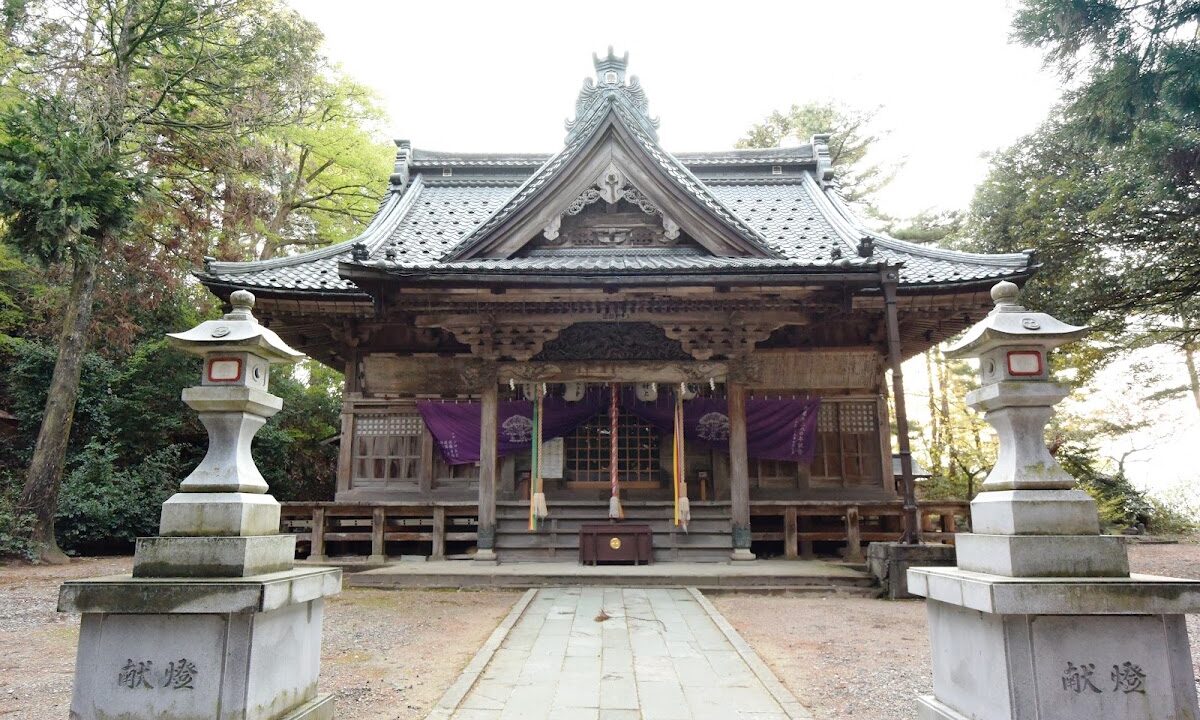
Complete Guide to Senami Shrine (Niigata Prefecture): A Thorough Explanation of the History of the Shikinaisha and the Charms of the Two Canonical Shrines
In Murakami City, Niigata Prefecture, lies the “Senami Shrine,” which boasts a history dating back to ancient times. Known as a prestigious Shikinaisha listed in the Engishiki Jinmyocho (a list of shrines compiled in the Heian period), this shrine actually has two candidate shrines, each preserving its own unique history and beliefs. This article will provide a detailed explanation of the Senami Shrine in Senamihama-cho and the Senami Haguro Shrine in Haguro-cho, from their historical background to their current attractions.
What is Senami Shrine?: Its Historical Value as a Shikinaisha
Senami Shrine is an ancient shrine listed in the “Engishiki Jinmyocho,” compiled during the Heian period, as “Senami Shrine in Iwafune District, Echigo Province.” The Engishiki Jinmyocho is an important historical document that records the major shrines throughout Japan recognized by the imperial court at the time. Being listed here indicates the status and historical depth of a shrine.
Currently, two shrines within Murakami City are considered candidates for this Engishiki shrine. One is the Nishinami Shrine located in Senamihama-cho, and the other is the Nishinami Haguro Shrine (commonly known as Haguro Shrine) located in Haguro-cho. Each has its own unique founding legend and history of worship, and has long been revered by the local people.
Nishinami Shrine in Senamihama-cho: Legend of the God’s Arrival from the Sea
Founding and History
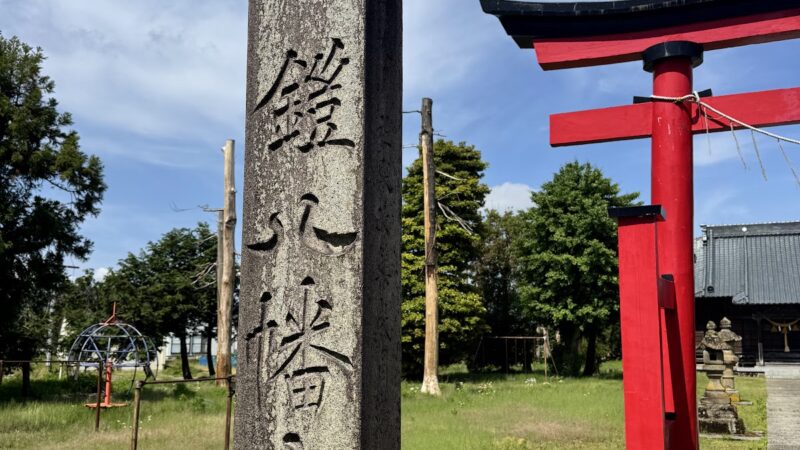
The Nishinami Shrine in Senamihama-cho is located in a sand dune area on the south bank of the Miomote River, near its mouth. While there are no clear records regarding the founding date, according to shrine tradition, there is a mythical legend that the enshrined deity arrived in this area from the sea.
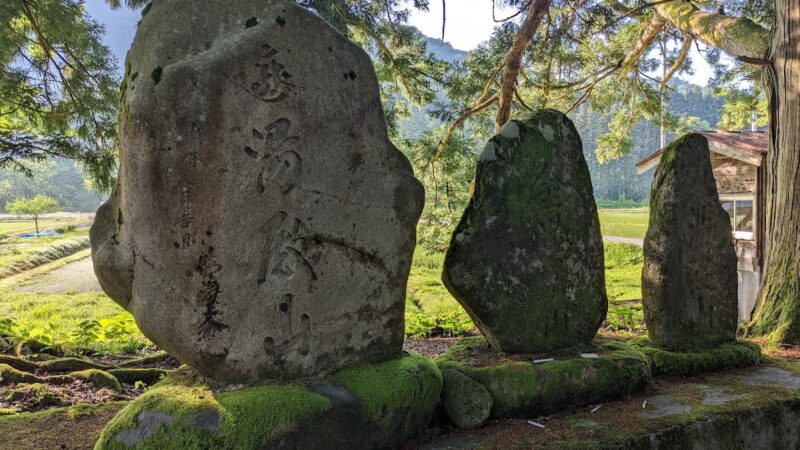
According to the legend, when the deity landed, they exclaimed, “What fine waves!” and from this, the area came to be called “Senami.” This legend of the origin of the place name reflects a form of faith deeply connected to the geographical characteristics of Murakami, which faces the Sea of Japan.
Enshrined Deity and Beliefs
The enshrined deity of Senami Shrine in Senamihama-cho is Kehi-no-Okami. This deity is said to have descended from Kehi Shrine in Tsuruga City, Fukui Prefecture, accompanied by five retainers, and has long been known locally as “Kehi-gu” or “Kehi-daimyojin.”
Kehi-no-Okami is worshipped as the guardian deity of maritime traffic and the god of food, and has been deeply revered by people involved in fishing and trade along the Sea of Japan coast. The tradition of the deity being invited from Tsuruga tells the story of the ancient maritime traffic network and cultural exchange along the Sea of Japan coast.
Location and Access
Nishinami Shrine in Senamihama-cho is located approximately 2 km northwest of Murakami Station on the JR Uetsu Main Line. It is approximately a 21-minute walk (about 1.7 km) from Murakami Station, and approximately a 9-minute walk (about 655 m) from the Seishunten Home-mae bus stop.
The shrine is situated in a sand dune area near the mouth of the Miomote River, and is close to the Senami Onsen hot spring resort area, making it possible to visit while sightseeing. The address is 4-16 Senamihama-cho, Murakami City, Niigata Prefecture, and Goshuin (shrine stamps) can be obtained at the adjacent priest’s residence.
Nishinami Haguro Shrine: The Guardian Shrine of Murakami
An Ancient Shrine Founded in the First Year of Empress Jito’s Reign
Nishinami Haguro Shrine, located in Haguro-cho, is commonly referred to simply as “Haguro Shrine” and is beloved by the citizens of Murakami. According to shrine tradition, it was founded in the first year of Empress Jito’s reign (687 AD), making it an ancient shrine with a history of over 1300 years.
This shrine has walked hand in hand with the development of the castle town as the guardian shrine of Murakami. Its relocation to its current location involves a history of shrine relocation deeply intertwined with the history of the Murakami domain.
The Deity and the History of Shinto-Buddhist Syncretism
The deity enshrined at Nishinami Haguro Shrine was originally Natsuhime-no-Okami. Later, Uganomitama-no-Mikoto and Tsukuyomi-no-Mikoto, who were branched off from the Dewa Sanzan (Yamagata Prefecture), also came to be enshrined as principal deities.
Natsuhime-no-Mikoto, as the local tutelary deity; Uganomitama-no-Mikoto, as the god of rice cultivation and business prosperity; and Tsukuyomi-no-Mikoto, as the god who governs the night—each possessed different aspects of worship, yet were deeply intertwined with the lives of the local people. The connection with the Dewa Sanzan faith is an interesting example demonstrating the spread of mountain worship in the coastal region of the Sea of Japan.
The Kan’ei Relocation and the Beliefs of the Murakami Domain Lords
A significant turning point in the history of Nishina-mi Haguro Shrine was the relocation in Kan’ei 10 (1633). The then-lord of the Murakami domain, Hori Tango-no-Kami Naoyori, considered it sacrilegious to overlook the shrine from the castle and therefore relocated it to its current location.
This relocation of the shrine demonstrates the lord’s deep reverence for the shrine and is also an interesting case study for considering the positioning of religious facilities in the urban planning of the castle town. By placing the shrine at a higher elevation than the castle, a clear respect for divine power was demonstrated.
Shrine Building Designated as a Tangible Cultural Property of Niigata Prefecture
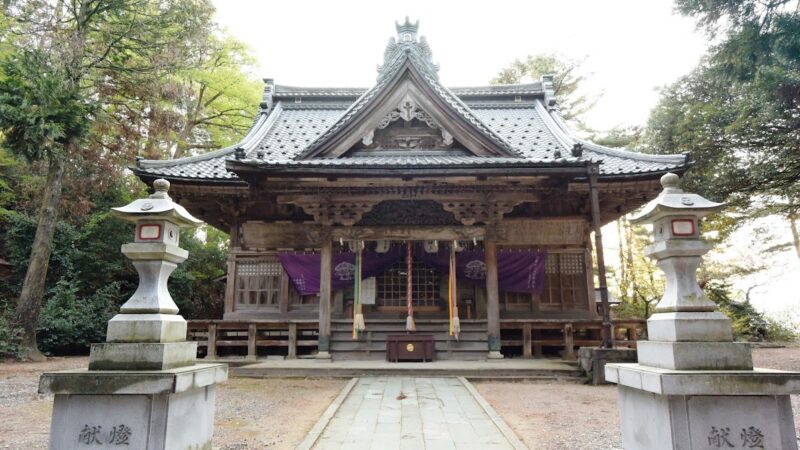
The shrine building (Shinmei-gu), constructed in 1690 by Sakakibara Katsunori, the lord of the Murakami domain, retains many characteristics of mid-Edo period shrine architecture and was designated a Niigata Prefecture Tangible Cultural Property in 1969.
This shrine building adopts the Shinmei-zukuri style, the same style as Ise Grand Shrine, and boasts a simple yet dignified architectural beauty. Its cypress bark roof and exterior, complete with chigi and katsuogi, are valuable cultural assets that convey the tradition of ancient Japanese shrine architecture. The details of the architectural style condense the skill and aesthetic sense of Edo period carpenters. ### Highlights of the Shrine Grounds
Within the grounds of Nishina-mi Haguro Shrine, there is a stone staircase leading to the main hall, and the atmosphere of the approach evokes a sense of solemnity in visitors. At the top of the steps, the Shinmei-gu Shrine, a Niigata Prefecture designated cultural property, comes into view.
Behind the main hall is the entrance to a footpath leading to Sankyo-san Mountain, a scenic spot offering panoramic views of Murakami city and Shimo-watari-yama Mountain. From here, you can see the townscape of the castle town, the surrounding mountains, and the Sea of Japan in the distance, truly appreciating Murakami’s geographical features.
The shrine grounds also contain numerous traces of faith from the Edo period, such as stone lanterns and a water basin donated by successive feudal lords, providing enjoyable historical walks.
Murakami Grand Festival: A Representative Festival of Niigata Prefecture
Festival Overview and History
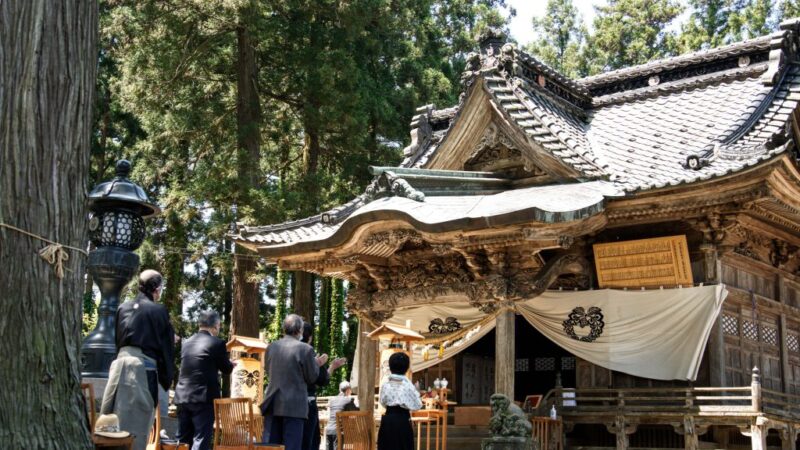
The Murakami Grand Festival, the annual festival of the Nishina-mi Haguro Shrine, is one of Niigata Prefecture’s representative festivals, held every year on July 6th and 7th. This festival boasts a tradition dating back to the Edo period and is an important cultural event that conveys the culture of Murakami’s castle town.
The origins of the Murakami Grand Festival date back to the time of the Murakami Domain. Historically, the feudal lord, samurai, and townspeople worked together to enliven the festival, and even today, the tradition is preserved by preservation societies organized within each neighborhood.
The Charm of the Oshagiri (Float) Procession
The biggest highlight of the Murakami Grand Festival is the procession of magnificent floats called “Oshagiri.” These floats are three-tiered structures, reaching over 6 meters in height, and adorned with intricate carvings and splendid decorations.
Each neighborhood’s oshagiri (portable shrine) has its own unique design, a testament to the craftsmanship passed down since the Edo period. The carvings depict scenes from mythology and history, and are adorned with gold leaf and lacquer. On the day of the festival, these oshagiri parade through the town, creating a beautiful spectacle in harmony with the charming streetscape of the castle town.
Festival Schedule
The Murakami Grand Festival is held over two days. The first day, July 6th, is the “Yoimatsuri” (eve of the festival), where lanterns are lit on the oshagiri from evening onwards, creating a magical atmosphere during the procession. Illuminated by the lanterns, the oshagiri take on a different charm than during the day, captivating many tourists.
The second day, July 7th, is the “Honmatsuri” (main festival), where the portable shrine procession and the oshagiri parade reach their climax. The procession of the portable shrine from the shrine through the town, accompanied by the oshagiri floats, offers a truly quintessential experience of the traditional culture of Murakami, a castle town.
During the festival, local cuisine and specialty products are sold at various locations throughout the town, allowing visitors to enjoy both the festival and the food culture simultaneously. You can also savor Murakami’s famous salmon dishes and local sake, making it a valuable opportunity to experience Murakami culture with all your senses.
Information on Goshuin (Shrine Seals) and Visiting the Shrine at Nishinami Shrine
Issuance of Goshuin
At Nishinami Shrine in Senamihama-cho, you can receive a goshuin at the adjacent priest’s residence. Many visitors receive a goshuin as a memento of their visit and as proof of their shrine pilgrimage. The goshuin includes the shrine name and date of visit written in ink, and stamped with a red seal.
Goshuin are also available at Nishinami Haguro Shrine; please inquire at the shrine office. However, since the shrine staff may be absent, it is recommended to contact them in advance if you wish to be sure to receive a gift.
Manners and Etiquette for Visiting a Shrine
The basic etiquette for visiting a shrine is to bow before passing through the torii gate and to walk along the path, avoiding the center. Cleanse your hands and mouth at the water basin before proceeding to the main hall.
The basic form of worship is “two bows, two claps, one bow.” First, bow deeply twice, then clap your hands twice, and finally bow deeply once. Place your offering quietly in the offering box, and recite your wish silently.
After visiting the shrine, you can receive amulets and goshuin (shrine stamps) at the shrine office. Photography is permitted only in designated areas, and special consideration is needed when taking photos inside the main hall or during festivals.
Combination Plans with Nearby Tourist Spots
Murakami Castle Ruins and Castle Town Stroll
When visiting Nishina-mi Haguro Shrine, a stroll around the Murakami Castle Ruins is also recommended. From the mountaintop, the site of the former main keep offers a panoramic view of Murakami city and the Sea of Japan, allowing visitors to understand the geographical layout of the castle town. The well-preserved stone walls allow visitors to learn about the evolution of castle architecture from the medieval to the early modern period.
The castle town area retains samurai residences and merchant houses, preserving a strong Edo-period atmosphere. Especially during the “Machiya Doll Festival” (March) and the “Folding Screen Festival” (September), dolls and folding screens passed down through generations in each household are displayed, allowing visitors to experience the depth of the castle town’s culture.
Relaxing at Senami Onsen
Senami Onsen, located near the Nishinami Shrine in Senamihama-cho, is known as a hot spring resort facing the Sea of Japan. Hot spring inns line the coast, and bathing while watching the sunset over the Sea of Japan is a special experience.
The spring water at Senami Onsen is a chloride spring, said to be effective for neuralgia, muscle pain, and poor circulation. You can create a fulfilling itinerary that includes relaxing in a hot spring after visiting the shrine and enjoying dishes made with fresh seafood.
Salmon Culture of the Miomote River
Murakami City is known as the “City of Salmon,” and the Miomote River has flourished as a salmon fishing ground since ancient times. It has been known as a salmon migration site since the Heian period, and in the Edo period, it was the site of the world’s first natural salmon hatching and propagation project.
At the “Iyoboya Hall” (Salmon Museum), you can learn about the ecology of salmon and Murakami’s salmon culture. Furthermore, Murakami has a well-developed food culture that utilizes every part of the salmon, and it is said that there are over 100 different salmon dishes. Enjoying traditional salmon dishes such as salted salmon and salmon marinated in sake is one of the great pleasures of sightseeing in Murakami.
Access Information and Actual Visit Details
Access by Public Transportation
Access to Nishinami Shrine in Senamihama-cho:
- Approximately 21 minutes on foot (approx. 1.7 km) from JR Uetsu Main Line “Murakami Station”
- Take the Niigata Kotsu Kanko Bus “bound for Senami Onsen” from Murakami Station, get off at “Seishonen Home-mae” bus stop, and walk for approximately 9 minutes (approx. 655 m)
- By taxi, approximately 5 minutes from Murakami Station
Access to Nishinami Haguro Shrine in Haguro-cho:
- Approximately 15 minutes on foot (approx. 1.2 km) from JR Uetsu Main Line “Murakami Station”
- City loop bus is also available from Murakami Station
- Within walking distance of Murakami Castle Ruins and the castle town area
Access by Car
Nishinami Shrine in Senamihama-cho:
- Approximately 5 minutes from Nihonkai Tohoku Expressway “Murakami Senami Onsen IC”
- Accessible from National Route 7
- We recommend checking parking availability in advance.
Nishinami Haguro Shrine in Haguro Town:
- Approximately 10 minutes from the Murakami Senami Onsen IC on the Nihonkai Tohoku Expressway
- Located in the heart of Murakami city
- Paid parking available nearby (expect congestion during festivals)
Best Time and Season for Visiting
Both Nishinami Shrine and Nishinami Haguro Shrine are open for visits throughout the year. The following are particularly recommended times:
Spring (April-May): Enjoy the cherry blossoms and combine them with a stroll through the castle town. The weather is mild and ideal for sightseeing.
Summer (July): The Murakami Grand Festival (July 6th-7th) is a great opportunity to experience the festival’s energy and traditional culture. However, early reservations for accommodation are necessary.
Autumn (September-November): The atmosphere of the castle town is even more pronounced during the Byobu Festival (September) and the autumn foliage season. It is also the salmon run season, and salmon dishes are in season.
Winter (December-February): Visiting the shrine amidst a snowy landscape is a deeply moving experience. However, caution is necessary due to snow accumulation and icy roads.
While you can generally visit the shrine freely during the daytime, if you wish to receive a Goshuin (shrine stamp) or amulet, the recommended time is from 9:00 AM to around 5:00 PM.
Cultural Value and Preservation Activities of Nishinami Shrine
Academic Importance as a Shikinaisha (Shrine Listed in the Engishiki)
The fact that Nishinami Shrine is listed in the Engishiki Jinmyocho (a list of shrines compiled in the Heian period) provides important clues to understanding the religious and political situation of Echigo Province in ancient times. It is believed to have functioned as a center of ancient rituals in Iwafune District (present-day Murakami City area), making it a valuable resource for studying the structure of the local community at that time.
The existence of two candidate shrines suggests the possibility of division or relocation of shrines over a long history, or that shrines with different origins came to be identified as the same Shikinaisha (shrine listed in the Engishiki). Such cases are an interesting subject of research in the study of Japanese shrine history.
Value as an Architectural Cultural Property
The shrine building of Nishina-mi Haguro Shrine, constructed in 1690 (Genroku 3), retains the characteristics of mid-Edo period shrine architecture in excellent condition and has been designated a cultural property as a representative example of early modern shrine architecture in Niigata Prefecture.
The Shinmei-zukuri architectural style is one of the oldest shrine architectural styles originating from Ise Grand Shrine, and it is rare to see its pure form in a local shrine. From the architectural techniques and materials used to the details of the decoration, it is an important cultural heritage that conveys the carpentry skills and aesthetic sensibilities of the Edo period to the present day.
The Relationship Between the Local Community and the Shrine
Both Nishinami Shrine and Nishinami Haguro Shrine continue to function as spiritual pillars of their respective local communities. In particular, the organized participation of each neighborhood in the Murakami Grand Festival symbolizes the unity of the community centered around the shrine.
Local residents are involved in the preservation of the shrine in various ways, including the maintenance of the festival floats, the operation of the festival, and the cleaning of the shrine grounds. This relationship between the community and the shrine is valuable as an intangible cultural asset and offers valuable insights into the nature of local communities in the modern era.
Summary: The Charm of Nishinami Shrine and the Significance of Visiting
Nishinami Shrine in Murakami City, Niigata Prefecture, is a shrine with multifaceted appeal, possessing historical value as a Shikinaisha (a shrine listed in the Engishiki), unique beliefs and traditions of its two candidate shrines, the living traditional culture of the Murakami Grand Festival, and deep ties to the local community.
The Nishinami Shrine in Senamihama-cho preserves the mythical tradition of a god’s arrival from the sea and the faith in Kehi-no-Okami, demonstrating the relationship between the maritime culture of the Sea of Japan coast and Shinto worship. Meanwhile, the Nishinami Haguro Shrine in Haguro-cho, as the guardian shrine of Murakami, has walked hand-in-hand with the development of the castle town and boasts a history and cultural heritage, having been revered by the feudal lord.
Visiting both shrines allows you to experience the diversity of Japanese Shinto worship from ancient times to the present day, and the different forms of faith found in each region. The shrines, intertwined with the history and culture of Murakami, the maritime culture of the Sea of Japan, and the salmon culture of the region, teach us about the richness of Japanese regional culture.
When visiting Niigata Prefecture, be sure to also visit the Nishinami Shrine in Murakami City. In the tranquil atmosphere of this shrine with over a thousand years of history, you can reflect on traditional Japanese culture and the history of the region. Combined with a stroll through the castle town, hot springs, and local cuisine, it will surely be a fulfilling travel experience.