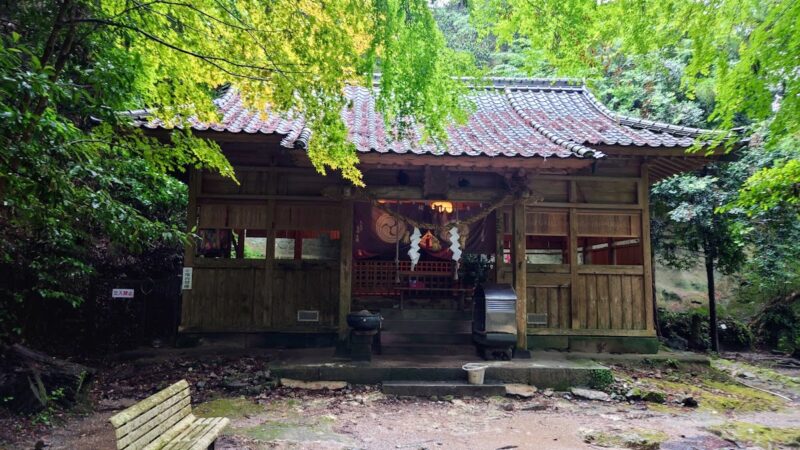
Sannomiya Hachiman Shrine (Bungo-Takada City, Oita Prefecture): A Complete Overview of a Historic Shrine Nestled in a Scenic Spot Along the Katsura River
Sannomiya Hachiman Shrine, located in Tashibu Ueno, Bungo-Takada City, Oita Prefecture, is a historic shrine situated in a scenic spot on the right bank of the Katsura River. As one of the “Three Tashibu Shrines” of Tashibu village, it has long been revered by the local people. This article provides a detailed introduction to the historical background, enshrined deities, highlights of the shrine grounds, and the surrounding landscape of Sannomiya Hachiman Shrine.
History and Origins of Sannomiya Hachiman Shrine
Origins of the Three Tashibu Shrines
To understand the history of Sannomiya Hachiman Shrine, it is necessary to first understand the origins of the “Three Tashibu Shrines.” Hachiman worship in Tashibu village began with the enshrinement of a deity from Usa Hachiman Shrine.
Initially, the three Munakata goddesses—Tagorihime-no-Mikoto, Tagitsuhime-no-Mikoto, and Ichikishimahime-no-Mikoto—were enshrined in a single shrine, which became the Motomiya Hachiman and the Ichinomiya (first shrine) of Tashibu. This Motomiya Hachiman is the origin of Hachiman worship in present-day Tashibu-go.
Relocation in Kanno 2
Later, a major change occurred in Kanno 2 (1351). The three Munakata goddesses were divided and enshrined in three different areas. Tagitsuhime-no-Mikoto was moved to Mado, becoming the Ninomiya Hachiman (second shrine), and Ichikishimahime-no-Mikoto was moved to Inazumi (present-day Tashibu Ueno), becoming the Sannomiya Hachiman (third shrine). At this time, Tagorihime-no-Mikoto remained at the Motomiya Hachiman, continuing to be worshipped as the Ichinomiya.
The three shrines established in this way—Ichinomiya (Motomiya Hachiman), Ninomiya (Mato’s Ninomiya Hachiman), and Sanomiya (Inazumi’s Sanomiya Hachiman Shrine)—are known as the “Tashibu Three Shrines” and have been revered by the local people as the guardian deities of Tashibu village to this day.
Relationship with the Rokugo Culture of the Kunisaki Peninsula
Bungo Takada City, where Sanomiya Hachiman Shrine is located, is situated in the central part of the Kunisaki Peninsula. The Kunisaki Peninsula has long been a region where the Rokugo Manzan culture flourished, and Tashibu village, as one of these six villages, has cultivated its own unique religious culture. Within its deep relationship with Usa Shrine, Hachiman worship took root in the region, giving rise to a unique form of worship like that of the Tashibu Three Shrines.
Deities and Benefits
About Ichikishimahime-no-Mikoto
The deity enshrined at Sanomiya Hachiman Shrine is Ichikishimahime-no-Mikoto. Ichikishimahime-no-Mikoto is one of the three Munakata goddesses, and is said to be a goddess born from the vow (ukei) between Amaterasu Omikami and Susanoo-no-Mikoto.
Generally, Ichikishimahime-no-Mikoto is believed to bestow the following blessings:
- Maritime and Traffic Safety: The three Munakata goddesses are known as goddesses of the sea and protect safe voyages.
- Wealth and Prosperity: As she is identified with Benzaiten, one of the Seven Lucky Gods, she is also worshipped as a goddess of wealth.
- Improvement in Performing Arts: Due to her characteristics as Benzaiten, she is believed to bring blessings for improving talent in music and art.
- Matchmaking and Beauty: As a beautiful goddess, she also accepts wishes for good relationships and beauty.
Role at the Tashiro Three Shrines
At the Tashiro Three Shrines, the Sannomiya Hachiman Shrine, by enshrining Ichikishimahime-no-Mikoto, has functioned as a place to pray for the protection of women and children, and for the prosperity of the region. The practice of visiting all three shrines—Ichinomiya, Ninomiya, and Sannomiya—to pay respects to all three Munakata goddesses is a unique cultural tradition of the Tashiro region that continues to this day.
Grounds and Highlights of Sannomiya Hachiman Shrine
Shrine Entrance and Torii Gate
Sannomiya Hachiman Shrine is located on the right bank of the Katsura River, accessible via Prefectural Roads 655 and 34. It is approximately a 10-minute drive from Fukiji Temple.
A torii gate stands at the entrance to the shrine grounds, welcoming visitors. Surrounded by nature, the area exudes a quiet and peaceful atmosphere. Passing through the torii gate, the worship hall comes into view.
Worship Hall and Main Sanctuary
The worship hall is built in a traditional wooden architectural style. Visitors offer their prayers to Ichikishimahime-no-Mikoto, the enshrined deity, at this hall.
The main sanctuary is located behind the worship hall. The main shrine is a sacred space where the enshrined deity resides. The architectural style and decoration of the main shrine incorporate traditional local techniques, creating a historically significant appearance.
Subsidiary Shrines and Stone Structures
Within the shrine grounds, you can also find a shrine dedicated to Sarutahiko-no-Okami. Sarutahiko-no-Okami is known as the god of opening paths and is worshipped as a deity who guides people through life’s journey. Many visitors pay their respects to Sarutahiko-no-Okami at significant life milestones or when starting new businesses.
Furthermore, stone pagodas and monuments are scattered throughout the grounds, demonstrating how the local people have cherished this shrine throughout its long history. These stone structures are valuable cultural assets that convey the forms of faith from different eras.
Parking and Access
Sannomiya Hachiman Shrine has a parking lot for visitors. It is conveniently located for those traveling by car and is relatively easy to find from the prefectural road. However, as it is a small shrine, prior confirmation is necessary for those traveling by large buses.
“Sannomiya no Kei”: A Scenic Spot Along the Katsura River
Natural Beauty of Unusual Rock Formations
The area where the Sannomiya Hachiman Shrine is located is a scenic spot known as “Sannomiya no Kei.” Unusual rock formations line the right bank of the Katsura River, allowing visitors to enjoy a unique landscape created by nature.
These unusual rock formations along the riverbank were shaped over long periods by water flow and weathering, and their beauty captivates visitors. Especially on sunny days, the contrast between the rock face and the river surface is beautiful, making it a popular spot for photography.
As Part of Tashibu no Sato
“Sannomiya no Kei” is one of the landscapes that make up Tashibu no Sato. Tashibu no Sato is known as a region on the Kunisaki Peninsula where particularly beautiful rural scenery and historical buildings harmonize.
There are many attractions in the surrounding area, including the terraced rice fields of Tashibu-sho, which have been designated a World Agricultural Heritage site, and the Fukiji Daido, a National Treasure. When visiting Sannomiya Hachimangu Shrine, combining it with these other tourist spots allows you to experience the history and nature of Tashibu-go comprehensively.
View from the Opposite Bank
Viewing Sannomiya Hachimangu Shrine and the unique rock formations from the opposite bank of the Katsura River offers a different perspective. The way the shrine and nature harmonize across the river is a truly beautiful, quintessential Japanese landscape.
The changing flow of the Katsura River and the seasonal changes in vegetation are also highlights. With fresh greenery in spring, deep green in summer, vibrant autumn leaves, and a serene, dignified landscape in winter, it’s worth visiting throughout the year.
Tourist Spots Around Sannomiya Hachimangu Shrine
Fukiji Temple (National Treasure: Fukiji Daido Hall)
Located about 10 minutes by car from Sannomiya Hachimangu Shrine, Fukiji Temple is a representative ancient temple of Kyushu, boasting the National Treasure Fukiji Daido Hall. The main hall, built during the Heian period, is known as the oldest wooden building in Kyushu, and its Amida Buddha statue and murals are designated as important cultural properties.
When visiting Tashibu-go, we recommend visiting both the Sannomiya Hachiman Shrine and Fukiji Temple. This offers a unique experience of the Kunisaki Peninsula, where the culture of syncretism between Shinto and Buddhism remains strong.
Motomiya Hachiman (Ichinomiya) and Ninomiya Hachiman
Visiting all three Tashibu shrines in a “Three Shrine Pilgrimage” is a valuable experience for deeply understanding the local faith. Motomiya Hachiman enshrines Tagorihime-no-Mikoto, and Ninomiya Hachiman enshrines Takitsuhime-no-Mikoto. Together with Sannomiya Hachiman Shrine, you can pay homage to all three Munakata goddesses.
Since the shrines are relatively close to each other, it’s possible to visit them all in about half a day. This will be a valuable opportunity to experience the history and forms of faith of the region.
Tashibusho Rice Terraces
The Tashibusho Rice Terraces, designated a World Agricultural Heritage site, are a valuable cultural landscape that preserves the appearance of a manor dating back to the Heian period. Located near the Sannomiya Hachiman Shrine, it offers a glimpse into the origins of Japanese agriculture.
Especially during rice planting season and in autumn when the rice stalks ripen, the beautiful scenery of the terraced rice fields attracts many photography enthusiasts.
Maki Daido Temple
Maki Daido Temple, one of the representative temples of the Rokugo Manzan culture of the Kunisaki Peninsula, is another point of interest in the surrounding area. It houses a collection of Buddhist statues dating from the Heian to Kamakura periods, and their high artistic value has led to their designation as a National Important Cultural Property.
Etiquette and Manners for Visiting a Shrine
Basic Way to Visit a Shrine
Here are the basic manners for visiting Sannomiya Hachiman Shrine:
- Bow before passing through the torii gate: As a sign of respect before entering the sacred area, bow before the torii gate.
- Purify yourself at the water basin: If there is a water basin, purify your hands and mouth.
- Walk along the edge of the path: The center of the path is considered the path of the gods, so walk along the edge.
- Manners in front of the main hall: Place your offering, ring the bell if there is one, and pray with two bows, two claps, and one bow.
- Visit the subsidiary shrines: It is also good to pray to other gods within the grounds, such as Sarutahiko-no-Okami.
Precautions when taking photographs
Sannomiya Hachiman Shrine and the surrounding scenic spots are suitable for photography, but please note the following:
- Refrain from taking photographs in areas where photography is prohibited, such as inside the main hall.
- Please be considerate of other visitors and avoid disturbing them.
- Remember that this is a sacred place and act with respect.
- Take your trash with you to avoid damaging the natural environment.
Access Information to Sannomiya Hachiman Shrine
Location
Address: Tashiro Ueno, Bungo Takada City, Oita Prefecture
Access by Car
- From Oita Airport: Approximately 40 minutes
- From Oita City: Approximately 1 hour via National Route 10
- From Usa City: Approximately 30 minutes via Prefectural Route 34
- From Fukiji Temple: Approximately 10 minutes via Prefectural Route 655 and Prefectural Route 34
Access by Public Transportation
Public transportation access is limited, so visiting by car is recommended. Walking may be required from the nearest bus stop.
Parking
A parking lot for visitors is available. It is free to use, but space is limited, so caution is advised during busy times.
Sannomiya Hachiman Shrine Through the Seasons
Spring (March-May)
Spring is a beautiful season for the area around Sannomiya Hachiman Shrine, with its fresh greenery. The trees along the Katsura River bud, creating a vibrant landscape full of life. During rice planting season, the terraced rice fields of Tashibusho become a beautiful mirror, offering a delightful sight to enjoy alongside your visit to the shrine.
Summer (June-August)
In summer, the shrine grounds, enveloped in deep green, exude a refreshing atmosphere. The clear waters of the Katsura River are soothing, helping you forget the heat. However, insect repellent is necessary.
Autumn (September-November)
Autumn is one of the most beautiful seasons around Sannomiya Hachiman Shrine. The autumn leaves color the Katsura River, creating a magnificent contrast with the unique rock formations. The rice stalks in the terraced rice fields of Tashibusho shine golden, marking the start of harvest season.
Winter (December to February)
In winter, Sannomiya Hachiman Shrine is enveloped in silence. With fewer visitors, you can have time to quietly connect with the deities. The clear air allows for sharper views, offering a unique winter beauty.
Historical Background of Tashibu Village
Manor System and Tashibu Manor
The manor system, which has continued since the Heian period, is essential to understanding the history of Tashibu Village. Tashibu Manor was developed as a manor of Usa Shrine, and its history spans over 1000 years.
Tashibu Ueno, where Sannomiya Hachiman Shrine is located, was also part of this manor, and the establishment of the shrine and the manor system are closely related. It is believed that Hachiman worship was introduced as the guardian deity of the manor, giving rise to the form of the three Tashibu shrines.
Rokugo Manzan Culture
The Kunisaki Peninsula has formed a unique religious and cultural sphere called “Rokugo Manzan.” The term “Rokugo” refers to the six regions of Kurinawa, Tashibu, Aki, Musashi, Kunisaki, and Imi, each of which had numerous temples.
Tashibu was one of these six regions, where a syncretic culture of Shinto and Buddhism flourished, with temples such as Fukiji Temple and shrines such as Sannomiya Hachiman Shrine coexisting. This cultural background has shaped the current landscape and form of faith in Tashibu.
Relationship with Usa Shrine
As evidenced by the fact that the deity enshrined at Sannomiya Hachiman Shrine was invited from Usa Hachiman Shrine, the relationship between this region and Usa Shrine is very deep.
Usa Shrine is the head shrine of all Hachiman shrines nationwide and a highly prestigious shrine with deep ties to the imperial court since ancient times. Its branch shrines and subsidiary shrines spread throughout the Kunisaki Peninsula, becoming centers of regional faith. The three Tashibu shrines also played an important role in the local community as part of this faith network.
Connection with the Community
Annual Events and Festivals
At Sannomiya Hachiman Shrine, various events are held throughout the year by the local community. While detailed festival schedules need to be confirmed with local residents, the spring and autumn grand festivals bring together community members for religious ceremonies.
These festivals serve as important opportunities to deepen community bonds, ensuring that faith and traditions are passed down through generations.
Maintenance by Local Residents
Sannomiya Hachiman Shrine is carefully maintained by local residents. Parishioners and local volunteers cooperate in protecting the shrine through activities such as cleaning the grounds, mowing grass, and repairing buildings.
It is thanks to the efforts of these local people that Sannomiya Hachiman Shrine has been able to maintain its beautiful appearance to this day.
The Significance of Visiting Sannomiya Hachiman Shrine
Experiencing History and Culture
Visiting Sannomiya Hachiman Shrine has meaning beyond mere sightseeing. You can experience the worship traditions of the Tashibu Three Shrines, which have continued since the second year of the Kanno era (1645), the lineage of Hachiman worship originating from Usa Hachiman Shrine, and a glimpse of the Rokugo Manzan culture.
This shrine still allows you to see regional traditions and forms of faith that are gradually disappearing in modern society.
Harmony with Nature
The “Sannomiya no Kei” area, where Sannomiya Hachiman Shrine is located, is a landscape where nature and human activity are in harmony. The clear waters of the Katsura River, the sculptural beauty of the strangely shaped rocks, and the man-made structure of the shrine are beautifully integrated, creating a landscape that can be called a quintessential Japanese scene.
Such a landscape embodies the Japanese spirit of respecting and coexisting with nature, and serves as an important place of learning for us living in the modern age.
Peace of Mind
Away from the hustle and bustle of the city, the time spent praying in the quiet shrine grounds brings peace to the mind. Enveloped in the gentle divine grace of Ichikishimahime-no-Mikoto, offering daily gratitude and prayers will provide a cleansing experience for the soul.
Summary
Sannomiya Hachiman Shrine is a historic shrine located in Tashibu Ueno, Bungo Takada City, Oita Prefecture. Founded in 869 AD (Kanno 2) to enshrine Ichikishimahime-no-Mikoto, it has been one of the three Tashibu shrines, attracting the faith of the local people.
Located in the scenic “Sannomiya no Kei” area on the right bank of the Katsura River, its quiet presence amidst a beautiful natural environment of uniquely shaped rocks leaves a deep impression on visitors. The surrounding area boasts numerous attractions, including Fukiji Temple and the terraced rice fields of Tashibu-sho, making it a place where one can comprehensively experience the history and culture of Tashibu.
With its enshrined deity invited from Usa Hachiman Shrine, the influence of Rokugo Manzan culture, and remnants of the manorial system, Sannomiya Hachiman Shrine possesses a multi-layered history and is an important presence for understanding the religious culture of the Kunisaki Peninsula.
When visiting Oita Prefecture, be sure to visit Sannomiya Hachiman Shrine and experience its history and natural beauty. Spending time in quiet contemplation at this place of worship, which has been carefully preserved by the local people, will surely become an unforgettable memory.