Nagara Hachimangu Shrine (Osaka Prefecture) Complete Guide | A Thorough Explanation of History, Deities, Festivals, and Access
Nagara Hachimangu Shrine, located in Nagara-naka, Kita-ku, Osaka City, is a venerable shrine with a history of over 700 years. It enshrines Hachiman-Okami, who was invited from Iwashimizu Hachimangu Shrine, and is cherished by the people of the Nagara area as the local guardian deity. This article comprehensively introduces all the information you need to know before visiting Nagara Hachimangu Shrine, including its detailed history, enshrined deities, annual festivals, traditional culture such as the Settsu Danjiri Bayashi (festival music), and access methods.
Basic Information about Nagara Hachimangu Shrine
Location: 3-3-1 Nagaranaka, Kita-ku, Osaka City, Osaka Prefecture
Phone Number: 06-6351-6908
Nearest Station: Approximately 8 minutes on foot from Exit 6 of Tenjinbashisuji 6-chome Station (Osaka Metro Tanimachi Line/Sakaisuji Line, Hankyu Senri Line)
Shrine Rank: Former Village Shrine
Nagara Hachimangu Shrine is located in the Nagara district, which stretches northeast from Tenjinbashisuji 6-chome between it and the Yodo River. Despite being in the increasingly urbanized Kita-ku of Osaka City, the shrine grounds maintain a tranquil atmosphere, serving as a spiritual haven for local residents.
History and Origins of Nagara Hachimangu Shrine
Founding History
Nagara Hachimangu Shrine was founded in Einin 4 (1296). In this year, the shrine’s origins lie in the enshrinement of a divine spirit invited from Iwashimizu Hachimangu (also known as Otokoyama Hachimangu), located in Yamashiro Province (present-day Kyoto Prefecture).
Iwashimizu Hachimangu is one of the head shrines of all Hachiman shrines nationwide, and the fact that Nagara Hachimangu received a divided spirit from it indicates that it was founded as an important center of faith in the region. The establishment of Hachiman worship in Nagara during the late Kamakura period is deeply connected to the development of this area.
Edo Period Renovations
In Keicho 15 (1610), it is said that Katagiri Katsumoto, a vassal of the Toyotomi family, renovated the main hall, offering hall, and worship hall. Katagiri Katsumoto served as the construction magistrate of Osaka Castle, and his renovation of the shrine buildings indicates the important position Nagara Hachimangu held in the region at that time.
This renovation established the basic structure of the shrine, creating a foundation for subsequent religious devotion. Throughout the Edo period, it was revered by local residents as the tutelary deity of the Nagara district.
Developments since the Modern Era
With the establishment of the shrine system during the Meiji era, Nagara Hachimangu Shrine was elevated to the rank of a village shrine. Although the surrounding environment changed significantly due to post-war urbanization, the shrine continues to play a central role in the local community. Even today, various festivals are held throughout the year, and it is carefully preserved by parishioners and devotees.
Deities Enshrined and Enshrined Deities
Main Deity: Hachiman Okami
The main deity of Nagara Hachimangu Shrine is Hachiman Okami. In Hachiman worship, Hachiman Okami generally refers to the following three deities (the Three Hachiman Gods).
- Emperor Ōjin: The 15th Emperor, deity of military fortune and national protection.
- Hime Ōkami: One of the three Munakata goddesses, deity of maritime safety and traffic safety.
- Empress Jingū: Mother of Emperor Ōjin, deity of safe childbirth and child-rearing.
Hachiman worship is one of the largest forms of faith in Japan, spread throughout the country, and has been revered as a guardian deity of samurai families and a protector of the lives of ordinary people.
Enshrined Deities
In addition to the main deity, the following deities are enshrined at Nagara Hachiman Shrine.
- Ōnamuchi-no-Ōkami: Another name for Ōkuninushi-no-Mikoto, the god of matchmaking and business prosperity.
- Sukunahikona-no-Ōkami: The god of medicine, hot springs, and sake brewing.
- Sumiyoshi-no-Ōkami: The god of safe voyages and waka poetry.
With these deities enshrined together, Nagara Hachimangu Shrine is a shrine with diverse divine virtues, welcoming worshippers with a variety of wishes. In particular, Ōnamuchi-no-Ōkami and Sukunahikona-no-Ōkami are gods of nation-building, and Sumiyoshi-no-Ōkami has deep ties to the Osaka area, reflecting the regional characteristics of the shrine.
Annual Festivals and Events
Autumn Grand Festival (Autumn Festival)
The most important festival at Nagara Hachimangu Shrine is the Autumn Grand Festival. This festival, held every autumn, features traditional rituals such as the procession of the portable shrine (mikoshi) and the pulling of the danjiri (festival float).
The Autumn Grand Festival is a major event in which all local residents participate, and the normally quiet shrine grounds become bustling with many worshippers during the festival period. It is believed that the procession of the portable shrine through the parish area spreads the blessings of the gods throughout the entire community.
Summer Festival
In the summer, the Summer Festival is held. During the Summer Festival, stalls line the streets, and many people, from children to adults, visit. As a summer tradition, it is an important opportunity to deepen the bonds of the local community.
Other Annual Events
- New Year’s Day Festival: Many worshippers visit for the first shrine visit of the new year.
- Setsubun Festival: Traditional events such as bean-throwing are held.
- Summer Purification Ceremony: A Shinto ritual to purify oneself of the impurities accumulated over the past six months.
- Year-End Purification Ceremony: A Shinto ritual to purify oneself of the impurities accumulated over the past year.
Through these festivals and events, Nagara Hachimangu Shrine plays a role as a spiritual pillar of the community.
The Tradition of Settsu Danjiri Bayashi and Lion Dance
Settsu Danjiri Bayashi (Nagara Style)
A notable aspect of Nagara Hachimangu Shrine’s festivals is the continuation of the Settsu Danjiri Bayashi tradition. Settsu Danjiri Bayashi is a type of festival music that developed in Settsu Province (Setsushu), centered around Osaka, and several schools exist.
At Nagara Hachimangu Shrine, a unique style of dance called Nagara-ryu is passed down through generations and is performed on the shrine grounds during the Autumn Grand Festival and other events. The music, played on instruments such as drums, gongs, and flutes, not only enhances the festive atmosphere but also serves as an important element in expressing the region’s cultural identity.
Lion Dance Performance
During the festival, a lion dance is also performed. The lion dance is a traditional art form that wards off evil spirits and prays for a bountiful harvest and good health. The lion dance performed on the shrine grounds captivates the audience and holds significant meaning as an offering to the gods.
These traditional arts are being passed down to the younger generation in the region, and cultural preservation activities are centered around Nagara Hachimangu Shrine. As a regional culture of Kita (Kita Ward, Osaka City), these traditions will continue to be carefully preserved.
Highlights of the Shrine Grounds
Shrine Architecture
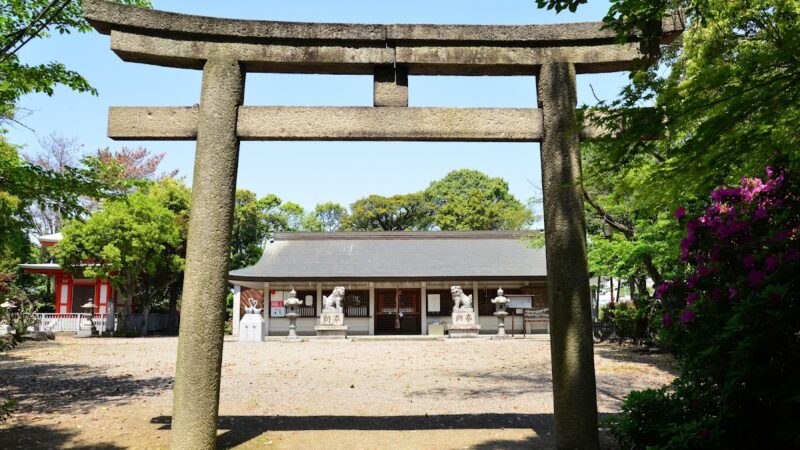
The shrine buildings of Nagara Hachimangu Shrine retain an architectural style that has been passed down since its reconstruction in the early Edo period. The integrated structure of the main hall, offering hall, and worship hall is a typical form of Hachimangu shrine architecture.
Despite its location in an urban area, the shrine grounds are of a suitable size, maintaining a space where worshippers can quietly offer their prayers.
Subsidiary Shrines and Stone Monuments
The shrine grounds also house subsidiary shrines and minor shrines, reflecting the worship of various deities. Furthermore, stone monuments and memorials that tell the story of history are also installed, providing clues to the history of the shrine and the changes in the region.
Lush Green Environment
Trees are planted throughout the shrine grounds, maintaining a lush green environment despite its urban location. The changing natural scenery with each season provides tranquility to worshippers.
Goshuin (Shrine Seal) Information
Goshuin (shrine seals) can be obtained at Nagara Hachimangu Shrine. Goshuin (temple/shrine stamps) are popular among many worshippers as proof of their visit and as a tangible memento of their connection with the deities.
To receive a goshuin, please inquire at the shrine office. However, please note that they may not be able to accommodate requests during festivals or when staff are absent, so it is recommended to call ahead to confirm.
Even if you do not have a goshuincho (stamp book), pre-printed goshuin may be available. The offering fee is generally around 300 to 500 yen, but this varies depending on the shrine, so please check at the shrine.
Access and Transportation Information
Access by Train
Nearest Station: Tenjinbashisuji 6-chome Station
- Osaka Metro Tanimachi Line
- Osaka Metro Sakaisuji Line
- Hankyu Senri Line
Directions from the Station:
Approximately 8 minutes on foot (approx. 670m) from Exit 6 of Tenjinbashisuji 6-chome Station. Exit the station and head northeast. The shrine is located beyond the residential area of Nagara-naka.
Other Nearest Stations
- Approximately 15 minutes on foot from Tenma Station (JR Osaka Loop Line)
- Approximately 12 minutes on foot from Ogimachi Station (Osaka Metro Sakaisuji Line)
Access by Car
Approximately 5 minutes from the Minamimorimachi exit of the Hanshin Expressway Route 12 Moriguchi Line. However, there may not be a dedicated parking lot on the shrine grounds, so please use nearby coin parking. Using public transportation is recommended when visiting the shrine.
Landmarks in the Area
Nagara Hachimangu Shrine is located in a residential area of Nagara-naka, Kita-ku, Osaka City. It is a quiet area slightly north of the Tenjinbashisuji Shopping Street, but it is affectionately known locally as “Nagara no Hachiman-san,” and locals will likely be able to guide you if you ask.
History of the Nagara Area and Surroundings
Origin of the Place Name Nagara
The place name Nagara has existed since ancient times and developed as an area along the Yodo River. The name “Nagara” is said to originate from tools with long handles or from the long, continuous topography. ### Connection to the Yodo River
The Nagara district is located near the Yodo River and has a history of flourishing as a key point for water transport. During the Edo period, the distribution of goods using the Yodo River’s water transport was thriving, and Nagara was one of the important areas supporting Osaka’s economy.
The Sumiyoshi Okami enshrined at Nagara Hachimangu Shrine is also a god of safe voyages, suggesting a deep connection to water transport in this region.
Modern Nagara District
The present-day Nagara district has developed as a residential area located in the northern part of Kita Ward, Osaka City. The area around Tenjinbashisuji 6-chome Station has many commercial facilities, making it a convenient area to live in.
Nagara Hachimangu Shrine, even amidst this urbanization, continues to preserve the region’s traditions and culture, and is a core element of the residents’ identity.
Relationship with Minami Nagara Hachimangu Shrine
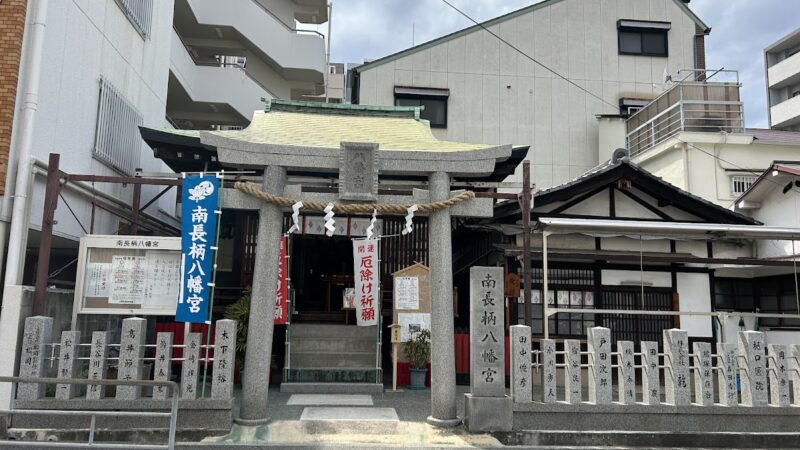
In addition to Nagara Hachimangu Shrine, Minami Nagara Hachimangu Shrine is also located in Nagara-naka, Kita Ward, Osaka City. Minami-Nagara Hachimangu Shrine is located in Nagara-naka 1-chome and is also a shrine with the former rank of a village shrine.
Both shrines are worshipped as the tutelary deities of the Nagara area and have played an important role in the history and development of the region. Visiting both shrines during your pilgrimage would be interesting.
The fact that each shrine has its own unique history and characteristics while continuing to protect the Nagara area demonstrates the richness of local religious beliefs in Osaka.
Manners and Points for Visiting a Shrine
Basic Worship Etiquette
- Bow before passing through the torii gate: This is a courtesy when entering the sacred area.
- Purify yourself at the water basin: Purify your left hand, right hand, and mouth in that order.
- Etiquette in front of the main hall: The basic procedure is two bows, two claps, and one bow.
- Maintain silence on the shrine grounds: Remember that this is a sacred place.
Suitable Time for Visiting a Shrine
Shrines are generally open for worship from sunrise to sunset, but the hours of the shrine office are limited. If you wish to receive a Goshuin (temple/shrine stamp) or amulet, it is best to visit between 9:00 AM and 4:00 PM.
Attire
While casual attire is acceptable for worship, please dress appropriately and cleanly to show respect to the deities. For festivals or special religious ceremonies, slightly more formal attire is recommended.
Divine Blessings at Nagara Hachimangu Shrine
The divine blessings you can receive from the deities enshrined at Nagara Hachimangu Shrine are diverse.
- Protection from Misfortune and Bringing Good Fortune: Powerful protection from Hachiman-Okami
- Long-lasting Military Fortune and Victory: Divine virtue of Emperor Ojin
- Safe Childbirth and Child-rearing: Divine virtue of Empress Jingu
- Traffic Safety and Maritime Safety: Divine virtue of Hime-Okami
- Matchmaking and Business Prosperity: Divine virtue of Onamuchi-Okami
- Healing from Illness and Longevity: Divine virtue of Sukunahikona-Okami
- Family Safety and Abundant Harvest: Divine virtue of Sumiyoshi-Okami
One of the charms of Nagara Hachimangu Shrine is its profound acceptance of worshippers with diverse wishes at various stages of life.
Connections with the Community
Nagara Hachimangu Shrine is not merely a religious facility, but also plays a central role in the local community.
Parishioners’ Organization
The parishioners’ organization is responsible for the maintenance and management of the shrine and the operation of festivals, supporting intergenerational community ties. Active efforts are being made to pass on traditions to younger generations, maintaining the cultural continuity of the region.
Participation in Local Events
Shrine festivals are positioned as important annual events in the region, and collaboration with schools and community organizations is evident. Through festivals, children learn about the region’s history and traditions, fostering a love for their hometown.
Disaster Prevention and Crime Prevention Hub
As a shrine in an urban area, it is also expected to function as an evacuation site during disasters and as a local disaster prevention hub. The shrine grounds are also used as a place for community gatherings and exchanges.
Summary
Nagara Hachimangu Shrine is a historic shrine that has been revered as the guardian deity of the Nagara district in Kita Ward, Osaka City, for over 700 years since its founding in 1296. With Hachiman-Okami, who was invited from Iwashimizu Hachimangu Shrine, as its main deity, and with other deities such as Oonamuchi-Okami, Sukunahikona-Okami, and Sumiyoshi-Okami enshrined alongside, it is a place of worship with diverse divine virtues.
The shrine’s early Edo period renovation by Katagiri Katsumoto, the continuation of traditional performing arts such as Settsu Danjiri Bayashi (Nagara style) and lion dances, and the various festivals held throughout the year demonstrate that this shrine is not merely a historical building, but a living center of faith and culture.
Despite its convenient location, just an 8-minute walk from Tenjinbashisuji 6-chome Station, the tranquil grounds offer a healing space that allows you to forget the hustle and bustle of the city. Whether you’re sightseeing in Osaka or seeking peace of mind in your daily life, a visit to Nagara Hachimangu Shrine will be a valuable experience.
As a shrine deeply rooted in the community, Nagara Hachimangu Shrine will continue to walk alongside the people of Nagara. Please visit and experience its history, traditions, and the warmth of the community.