Complete Guide to Minami-Nagara Hachimangu Shrine (Osaka Prefecture) | Goshuin (Shrine Seal), History, and Access Information
Minami-Nagara Hachimangu Shrine is a historic shrine located in Nagara-naka 1-chome, Kita-ku, Osaka City, Osaka Prefecture. Despite its convenient location just a few minutes’ walk from Tenjinbashisuji 6-chome Station, it is a shrine with historical value dating back to the time of Oda Nobunaga, and is cherished by locals and history enthusiasts alike.
This article provides comprehensive information you should know before visiting Minami-Nagara Hachimangu Shrine, including its detailed history, enshrined deities, goshuin (shrine seal) information, access methods, and information on nearby attractions.
Basic Information on Minami-Nagara Hachimangu Shrine
Location: 1-4-25 Nagaranaka, Kita-ku, Osaka City, Osaka Prefecture 531-0062
Phone Number: 06-6358-4606
Former Shrine Rank: Village Shrine
Main Deity: Emperor Ojin
Other Names: Suichu Hachimangu, Tsuru no Hachimangu (Late Edo Period)
Minami-Nagara Hachimangu Shrine is a Hachimangu shrine that enshrines Emperor Ojin as its main deity. Hachiman has been worshipped since ancient times as a god of war and archery, and numerous Hachimangu shrines exist throughout Japan. However, Minami-Nagara Hachimangu Shrine, despite being located in the urban area of Kita-ku, Osaka City, continues to preserve its unique history and faith.
History and Origins of Minami-Nagara Hachimangu Shrine
Origin of Founding
While there are no clear records regarding the founding date of Minami-Nagara Hachimangu Shrine, it is believed to have existed as a place of worship from a very early period, given that this area has flourished as a strategic point along the Yodo River since ancient times. The place name “Nagara” is pronounced “nagara” and is said to mean the long embankment or riverbank of the Yodo River, indicating its importance as a key point for water transport.
Origin of “Underwater Hachimangu Shrine”
Minami-Nagara Hachimangu Shrine was also known as “Underwater Hachimangu Shrine.” This is said to originate from the fact that the shrine buildings were often submerged due to flooding of the Yodo River. Osaka is known as the “City of Water,” and while it has benefited from rivers such as the Yodo River, it has also suffered from flood damage. The alternative name “Underwater Hachimangu Shrine” for Minami-Nagara Hachimangu Shrine is a valuable testament to the history of the people of this region living in harmony with water.
A Food Stockpile Site for Oda Nobunaga and the Ishiyama War
A noteworthy aspect of Minami-Nagara Hachimangu Shrine’s history is its connection to Oda Nobunaga’s Ishiyama War (1570-1580). During the Ishiyama War, a ten-year conflict between Ishiyama Honganji Temple and Oda Nobunaga, Nobunaga’s army needed to stockpile food supplies in the surrounding area to besiege Honganji.
It is said that Minami-Nagara Hachimangu Shrine had an old storehouse where Nobunaga stockpiled food supplies for the attack on Honganji during this period. Its favorable location, allowing for the transport of supplies via the Yodo River, likely led to its selection as a supply base. This historical fact demonstrates that Minami-Nagara Hachimangu Shrine was not merely a place of worship but also functioned as an important military base during the Sengoku period.
Another Name: “Crane Hachimangu Shrine”
In the late Edo period, it was also known as “Crane Hachimangu Shrine.” There are several theories regarding the origin of this name, but it is thought to be based on a legend that cranes flew to the shrine grounds, or on auspicious stories related to cranes that were passed down through generations. Cranes hold an important position in Japanese culture as symbols of longevity and good fortune, and this alternative name speaks to the shrine’s status and the depth of people’s faith.
Deities and Divine Virtues
Emperor Ōjin
The principal deity of Minami-Nagara Hachiman Shrine is Emperor Ōjin. Emperor Ōjin is considered the 15th Emperor and is worshipped as Hachiman-sama at Hachiman shrines throughout Japan. Hachiman-sama is believed to possess the following divine virtues:
- Long-lasting military fortune and good luck in battle: A belief in the god of war, praying for victory in battle.
- Protection of the nation: A belief in the god who protects the country.
- Promotion of industry: A belief in the development of industry.
- Exorcism and good fortune: A belief in warding off disaster and inviting good fortune.
- Prosperity of descendants: A belief in the prosperity of the family line.
Emperor Ojin is often enshrined together with his mother, Empress Jingu, and many worshippers visit to pray for the bonds between parent and child and the prosperity of their families.
Guide to the grounds of Minami-Nagara Hachimangu Shrine
Features of the shrine buildings
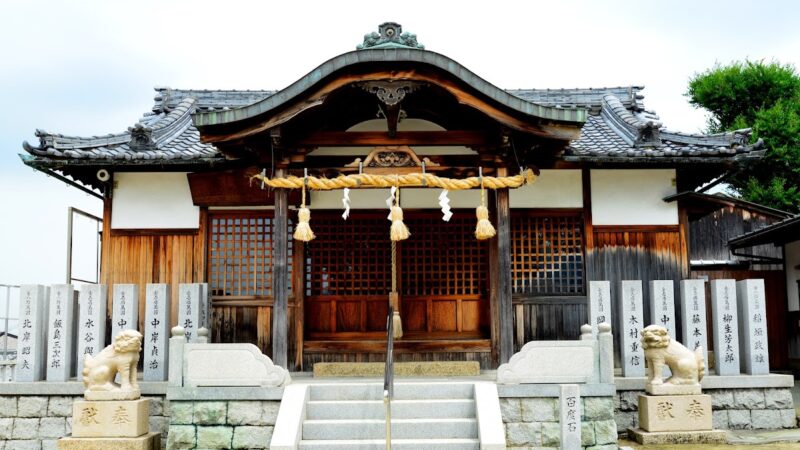
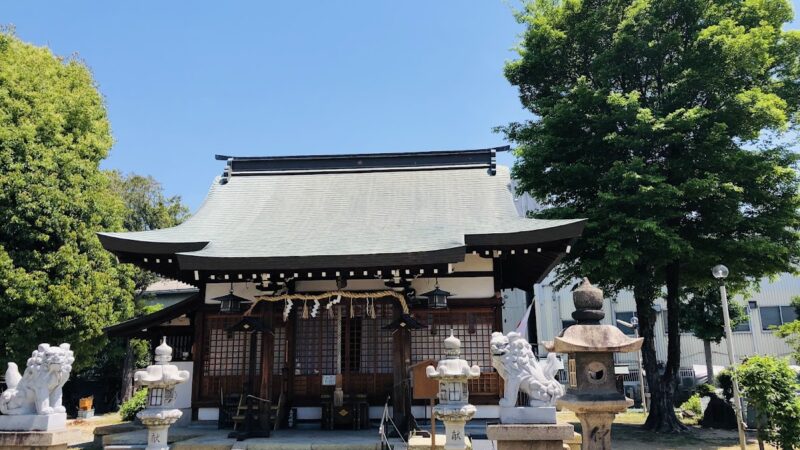
Despite being located in an urban area, the grounds of Minami-Nagara Hachimangu Shrine maintain a tranquil atmosphere. The shrine buildings follow the traditional style of shrine architecture, inspiring a sense of solemnity in worshippers.
The grounds are compact but neatly maintained, and local people can be seen visiting the shrine on a daily basis. This is a peaceful space where you can pray, away from the hustle and bustle of the city.
The Tradition of Danjiri Bayashi (Festival Float Music)
In the Minami-Nagara area, during the autumn festival, danjiri (festival floats) are pulled, and traditional danjiri bayashi (festival float music) is played. Minami-Nagara Hachimangu Shrine, as the guardian shrine of this area, plays a central role in the festival. Danjiri bayashi symbolizes Osaka’s festival culture and is an important event that strengthens the bonds of the local community.
Information on Goshuin (Shrine Seals)
About the Issuance of Goshuin
Goshuin (shrine seals) are available at Minami-Nagara Hachimangu Shrine. Goshuin are popular among many visitors as proof of their visit to the shrine and as a memento of their trip.
Please note the following points when receiving a goshuin.
- Bring your Goshuincho (stamp book): It’s customary to have your Goshuin (stamp) written directly in your Goshuincho.
- Receive after your visit: Always receive your Goshuin after completing your prayers.
- Prepare the offering: Generally, an offering of 300 to 500 yen is required.
- Shrine office hours: It’s recommended to check by phone in advance.
Goshuin Design
The Goshuin at Minami-Nagara Hachimangu Shrine features the shrine’s name and date of visit written in ink, along with the shrine’s seal. Its simple yet powerful calligraphy is highly regarded by Goshuin collectors.
Access
Access by Train
The nearest station to Minami-Nagara Hachimangu Shrine is Tenjinbashisuji 6-chome Station.
Access from Tenjinbashisuji 6-chome Station:
- Osaka Metro Tanimachi Line/Sakaisuji Line: Approximately 3-4 minutes on foot from Exit 2 of Tenjinbashisuji 6-chome Station
- Hankyu Senri Line: Approximately 4-6 minutes on foot from Tenjinbashisuji 6-chome Station
Tenjinbashisuji 6-chome Station is a convenient station served by three lines, making it easily accessible from various parts of Osaka City. The route from the station to the shrine is flat and easy to follow, so even first-time visitors can arrive without getting lost.
Detailed Walking Route
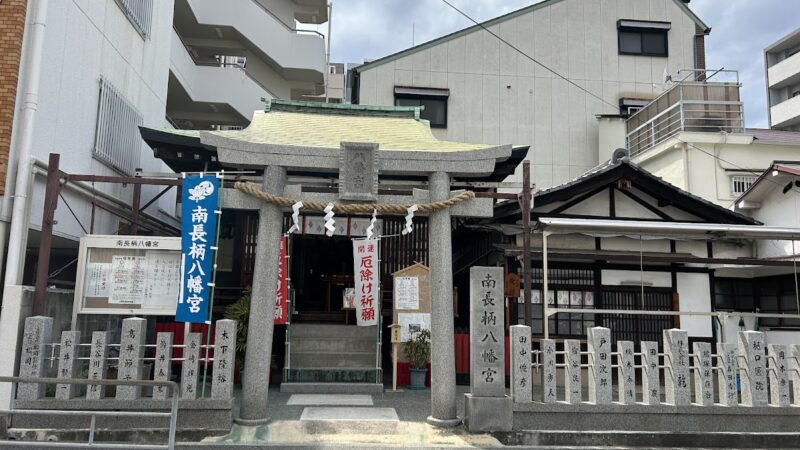
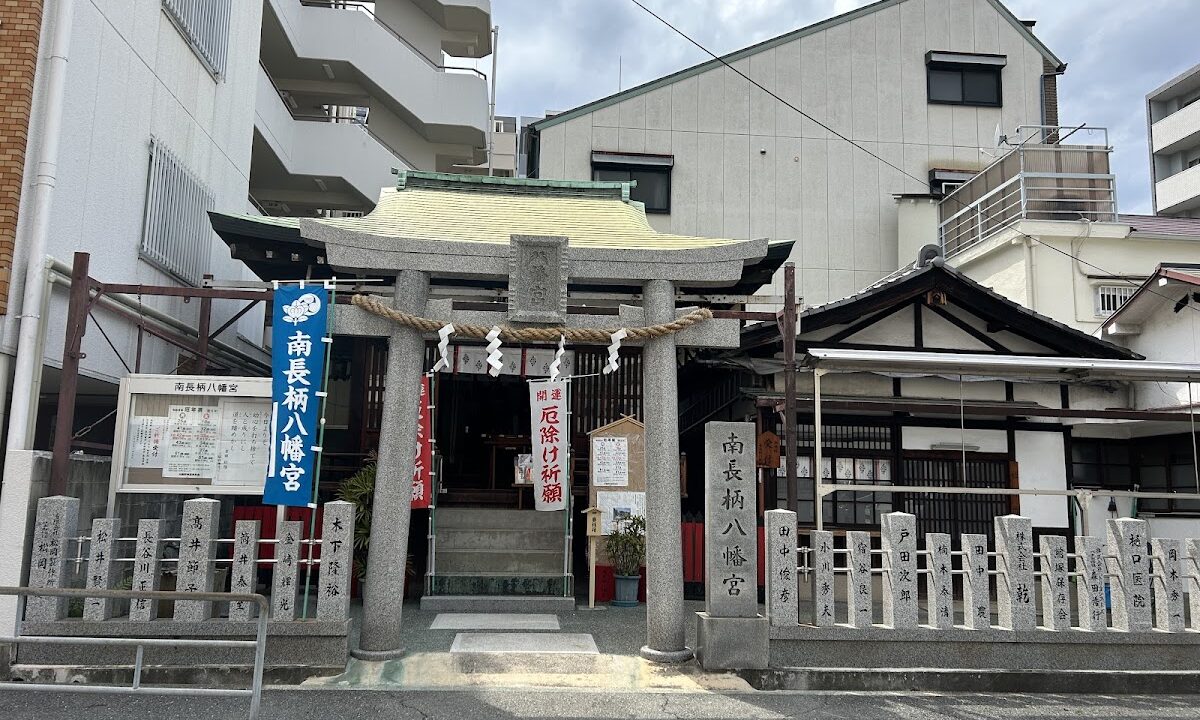
Exit from Exit 2 of Tenjinbashisuji 6-chome Station and head north. Walk in the opposite direction from Tenjinbashisuji Shopping Street, and you will see the torii gate of Minami-Nagara Hachimangu Shrine as you enter a residential area. The surrounding area is a quiet residential neighborhood, allowing for a peaceful walk.
Access by Car and Parking
If visiting by car, the Minami-Morimachi or Ogimachi exits of the Hanshin Expressway Route 12 Moriguchi Line are convenient. However, since the shrine’s dedicated parking is limited, we recommend using nearby coin-operated parking lots.
There are several coin-operated parking lots around Tenjinbashisuji 6-chome Station, which can be used depending on the length of your visit. Because it’s in an urban area, access by public transportation is more convenient.
Nearby Spot Information
Tenjinbashisuji Shopping Street
Tenjinbashisuji Shopping Street, within walking distance of Minami-Nagara Hachimangu Shrine, is known as Japan’s longest shopping street. Approximately 600 shops line the street for about 2.6 kilometers, offering opportunities for street food and shopping. It’s an ideal spot to visit before or after visiting Minami-Nagara Hachimangu Shrine.
Osaka Tenmangu Shrine
Located about a 10-minute walk south from Tenjinbashisuji 6-chome Station, Osaka Tenmangu Shrine enshrines Sugawara no Michizane, known as the god of learning. Many people visit both Minami-Nagara Hachimangu Shrine and Osaka Tenmangu Shrine, and it is a popular and representative shrine in Kita Ward, Osaka City.
Nagara Bridge and Yodo River Embankment
The Yodo River flows north of Minami-Nagara Hachimangu Shrine, and crossing the Nagara Bridge leads to Miyakojima Ward on the opposite bank. The Yodo River embankment is developed as a vast park, bustling with citizens enjoying jogging, cycling, and strolling. It’s a place of relaxation where you can experience nature in all four seasons.
Nearby Temples
Several temples, including Honsho-ji, Shotoku-zenji, and Boon-ji, are scattered around Minami-Nagara Hachimangu Shrine. Visiting these temples is a unique way to enjoy this region. Each temple has its own history and characteristics, allowing you to experience Buddhist culture.
Manners and Points for Worship
Basic Worship Etiquette
By observing basic worship etiquette, you can have a more heartfelt visit.
- Bow before passing through the torii gate: This is a courtesy before entering the sacred area.
- Purify yourself at the water basin: Purify your left hand, then your right hand, then your mouth.
- Walk along the edge of the path: The center is considered the path of the gods.
- Mannerisms in front of the main hall: Two bows, two claps, and one bow are the basic rituals.
- Bow upon leaving: Turn around and bow before leaving the torii gate.
Suitable time for visiting
Minami-Nagara Hachimangu Shrine is located in a residential area, so visiting during the quiet hours of early morning or evening will allow you to experience a more peaceful atmosphere. Visiting in the refreshing morning air will especially refresh both your mind and body.
Regarding photography
Photography is generally permitted on the shrine grounds, but please be considerate of other visitors. It is considered good manners to refrain from taking photos inside the shrine buildings or in sacred areas. If you have any questions, it is recommended to check with the shrine office.
Annual Events and Festivals
Grand Festival
At Minami-Nagara Hachimangu Shrine, the Grand Festival is held every autumn. Local parishioners and worshippers gather for traditional festival events such as the portable shrine procession and the pulling of festival floats. During this time, the shrine grounds are adorned with festive decorations, creating a lively atmosphere different from the usual.
New Year’s Visit
Many worshippers, mainly from the local area, visit the shrine for their first shrine visit of the new year. The shrine is bustling with people praying for good health and safety for the year, creating a refreshing atmosphere of the new year.
Other Annual Events
Various Shinto rituals are held throughout the year, including the Setsubun Festival and the Summer Purification Ceremony. It is recommended to inquire with the shrine in advance for detailed dates.
History and Culture of the Minami-Nagara Area
Origin of the Place Name Nagara
The place name Nagara is thought to mean the long embankment or riverbank of the Yodo River. From ancient times to the Middle Ages, this region flourished as a center for the collection of goods utilizing the Yodo River’s water transport. Minami-Nagara Hachimangu Shrine is a shrine closely intertwined with this regional history.
A Region Developed with Water Transport
The Yodo River was an important water transport route connecting Kyoto and Osaka, and the Nagara region prospered as a transit point. Goods such as rice, salt, and timber were transported by boat, transshipped, and temporarily stored here. The use of Minami-Nagara Hachimangu Shrine as a military supply storage area is rooted in these geographical conditions.
The Modern Nagara Region
The present-day Nagara region has developed as a residential area in Kita Ward, Osaka City. The area around Tenjinbashisuji 6-chome Station boasts numerous commercial facilities and is a popular and livable neighborhood. Within this context, Minami-Nagara Hachimangu Shrine remains a valuable presence, conveying the region’s history and serving as a spiritual anchor for its residents.
Visitor Voices and Experiences
Local Residents’ Faith
Minami-Nagara Hachimangu Shrine is a familiar and beloved guardian shrine for local residents. Faith continues in various forms, from those who stop by during their daily walks to those who make morning visits a daily routine.
Evaluation from History Enthusiasts
Due to its connection to Oda Nobunaga and the Ishiyama War, it attracts attention from history enthusiasts and fans of the Sengoku period. As an essential spot for tracing Osaka’s history, it is visited by many history seekers.
Visits from Goshuin Collectors
For goshuin collectors who visit shrines throughout Japan, Minami-Nagara Hachimangu Shrine is one of the important places to visit in Osaka. Its easy access from Tenjinbashisuji 6-chome Station makes it a popular shrine to visit during Osaka sightseeing.
Points to Note When Visiting Minami-Nagara Hachimangu Shrine
Regarding Attire
While there are no specific dress code regulations for visiting the shrine, it is desirable to dress appropriately and respectfully, as it is a sacred place. Especially when making a formal visit or receiving prayers, please dress appropriately and not too casually.
Visiting Hours
While you can generally visit the shrine grounds freely, the shrine office has limited hours. If you wish to receive a Goshuin (shrine stamp) or request prayers, it is recommended to check by phone in advance.
Consideration for Local Residents
Since Minami-Nagara Hachimangu Shrine is located in a residential area, consideration for the surrounding residents is necessary when visiting. Please refrain from speaking loudly or parking on the street.
Summary
Minami-Nagara Hachimangu Shrine is a historical shrine located at 1-chome, Nagara-naka, Kita-ku, Osaka City, Osaka Prefecture. Despite its convenient location just a few minutes’ walk from Tenjinbashisuji 6-chome Station, it boasts a rich history, including its connection to Oda Nobunaga’s Ishiyama War and its alternative names, “Suichu Hachimangu” and “Tsuru no Hachimangu.”
It enshrines Emperor Ojin as its main deity and is believed to bestow blessings such as military success, national protection, and protection from misfortune and good fortune. This shrine is not only beloved by local residents as their guardian deity, but also attracts attention from history enthusiasts and collectors of Goshuin (shrine stamps).
With many attractive spots nearby, such as Tenjinbashisuji Shopping Street and Osaka Tenmangu Shrine, it’s an ideal place to stop by during your Osaka sightseeing. Why not take a moment to calm your mind and offer prayers in the tranquil grounds, while feeling the history of the Nagara area, which developed alongside the Yodo River’s water transport?
Nearby amidst the hustle and bustle of the city, Minami-Nagara Hachimangu Shrine continues to preserve its history and traditions. When you visit Kita Ward in Osaka City, be sure to stop by.