Complete Guide to Miyukimori Tenjingu Shrine (Osaka Prefecture) | Thorough Explanation of History, Deities, Cultural Properties, and Access Information
Miyukimori Tenjingu Shrine, located in Momotani, Ikuno-ku, Osaka City, is a venerable shrine boasting a history of over 1600 years. Situated right next to Ikuno Koreatown, it has long been revered as the local guardian shrine. This article comprehensively explains everything you need to know before visiting, from the history of Miyukimori Tenjingu Shrine, its enshrined deities, highlights within the grounds, cultural properties, to access information.
Overview and Basic Information of Miyukimori Tenjingu Shrine
Miyukimori Tenjingu Shrine is located at 3-10-5 Momotani, Ikuno-ku, Osaka City, Osaka Prefecture. It has been cherished by the local people as the guardian shrine of Ikaino Village, Higashi-Ikuno District, Settsu Province. Also known as “Shiawase no Mori” (Forest of Happiness), it maintains a tranquil atmosphere despite being in the heart of the city.
Basic Data
- Official Name: Miyukimori Tenjingu
- Pronunciation: Miyukimori Tenjingu
- Location: 3-10-5 Momotani, Ikuno-ku, Osaka City, Osaka Prefecture 544-0034
- Founding: Said to be in the 17th year of Emperor Ojin’s reign (406 AD)
- Former Shrine Rank: Village Shrine
- Deities Enshrined: Emperor Nintoku, Sukunahikona-no-Mikoto, Oshisakahiko-no-Mikoto
History of Miyukimori Tenjingu
Origin of Founding
The founding of Miyukimori Tenjingu is said to date back to the 17th year of Emperor Ojin’s reign (406 AD). According to shrine tradition, it originated when the 16th Emperor Nintoku rested in the beautiful forest of this area during his journey from Naniwa Takatsu Palace to Kawachi Province (present-day Higashi-Osaka City). The shrine’s name, “Gokōmori,” originates from the “Gokō” (imperial outing) of the Emperor.
Emperor Nintoku is known as a “sage emperor” and is famous for the anecdote of the “people’s hearths,” in which he exempted his people from taxes after seeing that no smoke rose from their hearths. This shrine, dedicated to this benevolent emperor, has long been revered by the local residents.
As the tutelary shrine of Ikaino Village
Gokōmori Tenjin Shrine once functioned as the tutelary shrine of Ikaino Village, which once occupied this entire area. The place name Ikaino is said to originate from the fact that wild boars were raised there in ancient times. Even after the Meiji era, it continued to be a central shrine in the region, supporting community unity through festivals and annual events.
Currently, this area is known as Ikuno Koreatown, a multicultural coexistence area, but Gokōmori Tenjin Shrine continues to exist as a spiritual pillar of the community.
Development Since the Modern Era
During the Meiji era, it was designated a village shrine, establishing its status as an official local shrine. Although it suffered war damage during the Showa era, it was rebuilt through the efforts of local residents and stands to this day. Since the Heisei era, its value as a cultural property has been recognized, and the main hall has been designated a nationally registered tangible cultural property, attracting attention as a historical building.
About the Deities Enshrined
Three deities are enshrined at Miyukimori Tenjin Shrine, each possessing different divine virtues.
Emperor Nintoku
Emperor Nintoku, the principal deity, is a legendary monarch recorded in the Nihon Shoki and Kojiki as the 16th Emperor. As symbolized by the anecdote of the “people’s hearth,” he is said to have ruled with compassion for his people and was called a “holy emperor.”
Divine Virtues:
- National Peace and Security
- Stability of People’s Livelihoods
- Compassion and Kindness
- Governance and Leadership
Sukunahikona-no-Mikoto
Sukunahikona-no-Mikoto is known as a deity who, along with Okuninushi-no-Mikoto, built the nation. He is particularly revered as the god of medicine, hot springs, and sake brewing, and is worshipped by medical and pharmaceutical professionals throughout Japan.
Divine Virtues:
- Healing from Illness
- Health and Longevity
- Protection of Medicine and Healthcare
- National Land Development
- Industrial Promotion
Oshisakahiko-no-Mikoto
Oshisakahiko-no-Mikoto is a rare deity enshrined in Japan, and is one of the unique features of Miyukimori Tenjin Shrine. He is believed to be a deity involved in the development and cultivation of the region.
Divine Virtues:
- Protection of the Region
- Development and Exploration
- Love for One’s Hometown
This combination of three deities—Emperor Nintoku as a ruler, Sukunahikona-no-Mikoto as the god of medicine and nation-building, and Oshisakahiko-no-Mikoto as the guardian deity of the region—forms a well-balanced composition, allowing the shrine to fulfill a variety of wishes.
Highlights of the Shrine Grounds
Main Hall (National Registered Tangible Cultural Property)
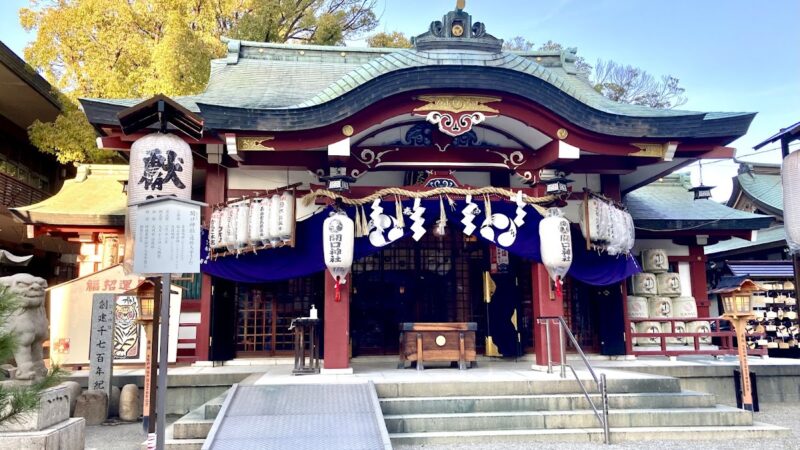
The main hall of Miyukimori Tenjin Shrine is a valuable building designated as a National Registered Tangible Cultural Property. It is built in the Sangensha Nagare-zukuri style, and features decorative gables—Chidori-hafu and Nokikara-hafu—on the front of the roof.
Architectural Features:
- Structure: Three-bay nagare-zukuri style
- Bracket System: The main building (moya) has projecting brackets with eaves supports, and the eaves (hisashi) has a three-tiered bracket system
- Roof: Copper sheet roofing
- Building Area: Approximately 15 square meters
- Style: Wooden single-story building
The carvings and decorations of the main hall are exquisite, and it well preserves the characteristics of shrine architecture from the Edo to Meiji periods. The beautiful curves of the gable and the delicate carvings are particularly worth seeing.
Worship Hall and Offering Hall
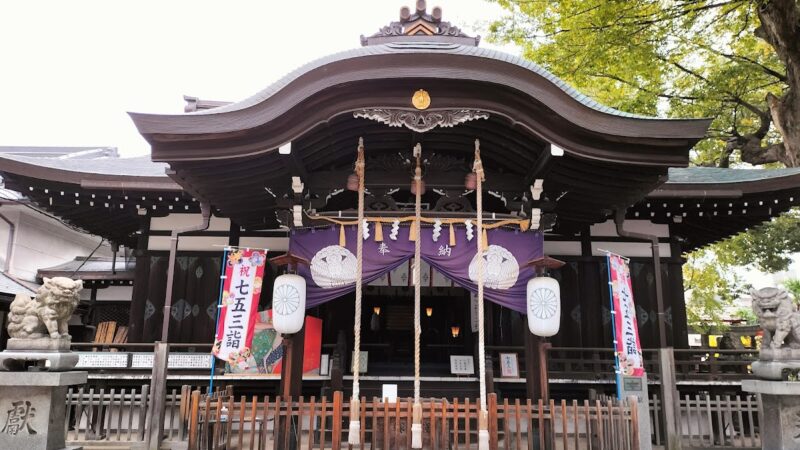
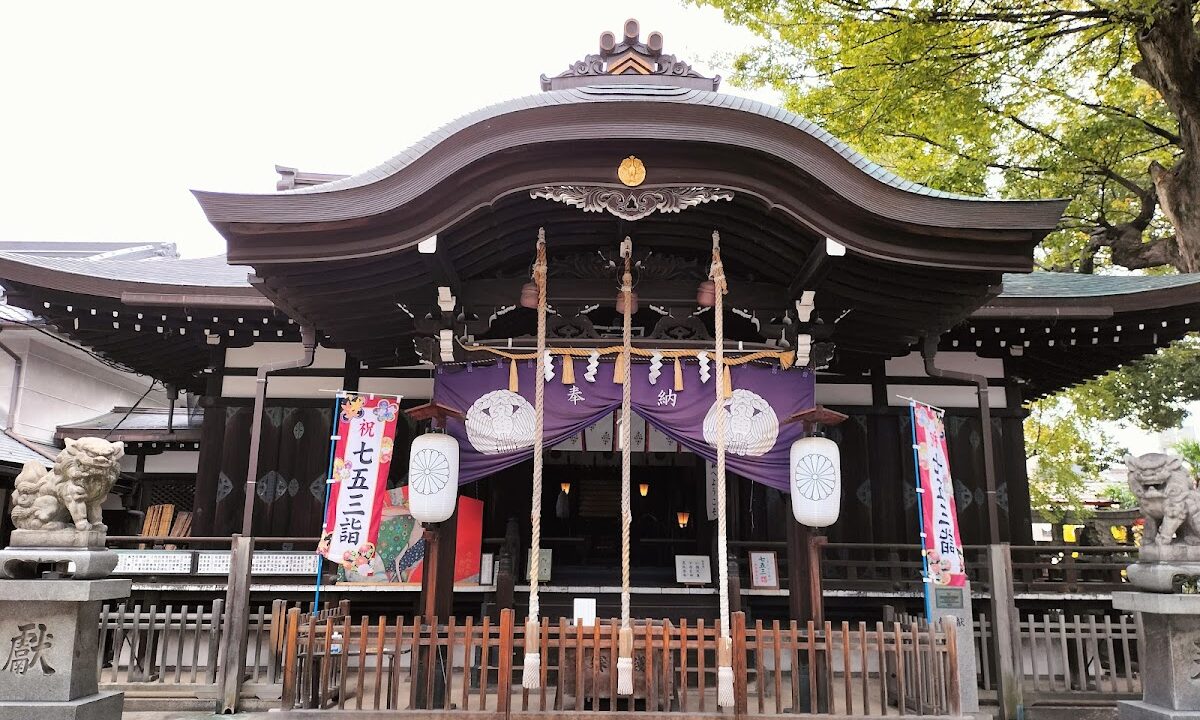
The worship hall is where worshippers offer their prayers and is located in front of the main hall. The offering hall is a building connecting the main hall and the worship hall, and is a sacred space where Shinto rituals are performed. These buildings also have high historical value and, despite being rebuilt in the Showa period, follow the traditional style of shrine architecture.
Shrine Precincts
Within the grounds of Miyukimori Tenjin Shrine, several shrine precincts are enshrined, each attracting its own unique devotion. #### Miyuki Ebisu Shrine
This shrine enshrines Ebisu, known as the god of business prosperity and good fortune. Osaka is a region where “Ebisu” worship is popular, and this shrine enjoys strong devotion from local shop owners and businesspeople.
Inari Shrine
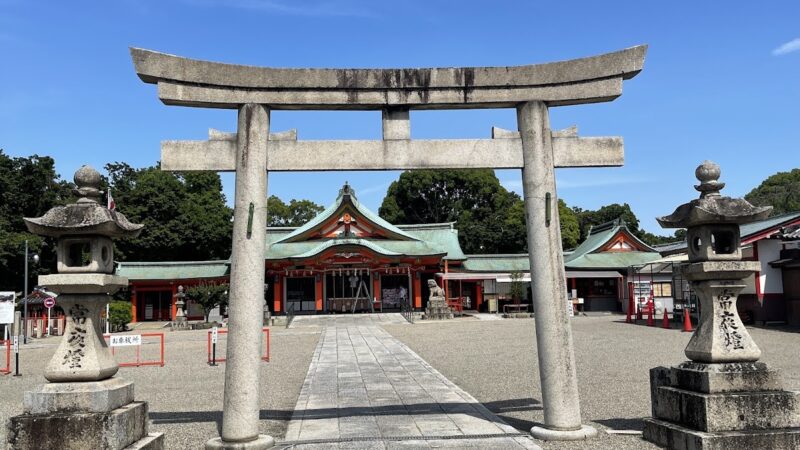
This shrine enshrines Inari Okami, the god of abundant harvests and business prosperity. It is characterized by its red torii gate and is affectionately known as “O-Inari-san.”
Sugawara Shrine (Tenmangu)
This shrine enshrines Sugawara no Michizane, famous as the god of learning. During exam season, many students and their parents visit to pray for success. The fact that Miyuki Mori Tenjin-gu is called “Tenjin-gu” is thought to be influenced by the presence of this Sugawara Shrine.
Mizu Shrine
This shrine enshrines the god of water and is worshipped for protection against water-related disasters and for rain. It is a shrine that reflects the area’s past as a thriving agricultural region. ### Shrine Office and Reception Area
The shrine office provides Goshuin (shrine stamps) and accepts requests for various prayers. Goshuin are popular as mementos of visits, and you can receive a carefully handwritten Goshuin. Amulets and votive tablets are also available, allowing you to choose items that suit your wishes.
Annual Events and Festivals
Miyukimori Tenjin Shrine holds various festivals and events throughout the year.
Main Annual Events
- January 1st: Saitansai (New Year’s Day Festival)
- Around January 9th-11th: Toka Ebisu (Festival to pray for business prosperity)
- February Setsubun: Setsubun Festival (Bean-throwing ritual)
- Spring: Spring Grand Festival
- July: Summer Purification Ceremony (Passing through a ring of reeds)
- Autumn: Autumn Grand Festival (Regional Grand Festival)
- November: Shichi-Go-San Festival
- December 31st: Great Purification Ceremony and New Year’s Eve Festival
The Autumn Grand Festival, in particular, is a community-wide festival, featuring a portable shrine procession and offering ceremonies, attracting many worshippers.
About Goshuin (Shrine Seals)
Goshuin are given as proof of worship at Miyukimori Tenjin Shrine. The Goshuin (temple/shrine stamp) will have the shrine’s name and the date of visit written in ink, and then stamped with a red seal. If you bring your Goshuincho (stamp book), they will write it directly for you, but during busy times, they may provide a pre-written stamp.
The offering fee is usually around 300 to 500 yen. A Goshuin is not just a commemorative stamp, but proof of a connection with the deity, so please handle it with care.
Cultural Value
Nationally Registered Tangible Cultural Property
The main hall of Miyukimori Tenjin Shrine was registered as a Nationally Registered Tangible Cultural Property (building) in 2000. This is a system based on the Cultural Properties Protection Law, and applies to buildings with a history of 50 years or more and recognized historical and artistic value.
While the regulations for Registered Tangible Cultural Properties are not as strict as those for Important Cultural Properties, it is an important system for the preservation and utilization of buildings. The main hall of Miyukimori Tenjin Shrine will continue to be preserved as a valuable architectural heritage that conveys the history of the region.
Architectural Historical Significance
The Sanmasha Nagare-zukuri style is one of the most prestigious forms of shrine architecture. The roof design, combining Chidori-hafu and Nokikara-hafu, demonstrates not only visual beauty but also a high level of architectural skill.
The technique of using different structural elements for the main building and the eaves is a characteristic of shrine architecture from the Edo period onward, and is an important example when considering the history of shrine architecture in Osaka Prefecture.
Access Methods
Access by Train
Mikomori Tenjin Shrine is easily accessible by public transportation.
Nearest Stations:
- JR Osaka Loop Line “Tsuruhashi Station”
- Approximately 9 minutes on foot
- From the South Exit, head towards Ikuno Koreatown
- JR Osaka Loop Line “Momodani Station”
- Approximately 10 minutes on foot
- From the West Exit, head northwest
- Kintetsu Osaka Line “Tsuruhashi Station”
- Approximately 10 minutes on foot
- Connects to JR Tsuruhashi Station
- Osaka Metro Sennichimae Line “Tsuruhashi Station”
- Approximately 12 minutes on foot
Walking Route
From Tsuruhashi Station, it’s easiest to walk towards the entrance of Ikuno Koreatown. Miyukimori Tenjin Shrine is located right next to the large gate of Koreatown. From Momodani Station, head northwest towards Koreatown.
Access by Car
There is no dedicated parking lot, so please use nearby coin-operated parking lots. However, since the surrounding area is densely populated with houses and has narrow roads, we recommend using public transportation.
Address and Navigation
- Address: 3-10-5 Momotani, Ikuno-ku, Osaka City, Osaka Prefecture 544-0034
- Please search for “Miyukimori Tenjin Shrine” or the above address using your car navigation system or smartphone map app.
Nearby Attractions
Ikuno Koreatown
Right next to Miyukimori Tenjin Shrine lies one of Japan’s largest Koreatowns. Approximately 150 shops line the streets, including Korean restaurants, grocery stores, and general merchandise stores. Enjoying Korean cuisine after visiting the shrine is highly recommended.
Miyukidori Shopping Street
This shopping street supports the daily lives of the local community and retains its old-fashioned atmosphere. You can also enjoy interacting with the locals.
Around Tsuruhashi Station
The area around Tsuruhashi Station has many yakiniku (Korean BBQ) restaurants and kimchi shops, making it an area where you can experience the diversity of Osaka’s food culture.
Manners and Points for Visiting a Shrine
Etiquette for Visiting a Shrine
- Bow before passing through the torii gate: This is a courtesy before entering the sacred area.
- Purify yourself at the water basin: Purify your left hand, right hand, and mouth in that order.
- Etiquette in front of the main hall: Two bows, two claps, and one bow are the basic rituals.
- Visit the subsidiary shrines: If you have time, visit the subsidiary shrines as well.
Suitable Time for Visiting
The shrine office is generally open from 9:00 AM to 5:00 PM, but the shrine grounds themselves are open for worship from early morning. For those who wish to worship quietly, early morning is recommended.
Attire
There are no particularly strict dress code regulations, but as a shrine is a sacred place, it is advisable to avoid revealing or overly flashy clothing.
Photography
Photography is generally permitted within the shrine grounds, but please refrain from taking photos inside the main hall or during religious ceremonies. Remember to be considerate of other worshippers.
The Charm of Miyukimori Tenjin Shrine
A Tranquil Space in the City
Despite its location near the bustling downtown area of Osaka, stepping onto the shrine grounds envelops you in a serene atmosphere. As its nickname, “Forest of Happiness,” suggests, it is a space that soothes the soul.
A Symbol of Multicultural Coexistence
Adjacent to Koreatown, Miyukimori Tenjin Shrine continues to exist as a traditional Japanese shrine, playing a vital role as a spiritual pillar for the community in this era of multicultural coexistence.
A Faith Rooted in the Community
Its history of functioning as the local guardian deity for over 1600 years speaks to its strong ties with the local community. Through festivals and annual events, it remains deeply involved in the lives of the local people.
Value as a Cultural Asset
The main hall, a nationally registered tangible cultural property, is a valuable heritage from an architectural history perspective. Its value as a space where one can feel history and culture is also increasing its appeal as a tourist attraction.
Visitor Feedback
The following are some comments from people who have actually visited Miyukimori Tenjin Shrine:
- “It was so quiet and peaceful, you wouldn’t think it was right next to Koreatown.”
- “The architecture of the main hall was beautiful, and I truly felt its value as a cultural asset.”
- “I felt that this shrine is cherished by the local community.”
- “I was happy that the goshuin (shrine stamp) was carefully written.”
- “The subsidiary shrines within the grounds were also excellent, and I was able to make various wishes.”
Summary
Miyukimori Tenjin Shrine is a venerable shrine with a history of over 1600 years, located in Momotani, Ikuno-ku, Osaka City, Osaka Prefecture. It enshrines three deities: Emperor Nintoku, Sukunahikona-no-Mikoto, and Oshisakahiko-no-Mikoto, and has long been revered as the local guardian deity.
The main hall, designated as a National Registered Tangible Cultural Property, is a beautiful example of the three-bay nagare-zukuri style architecture and a valuable historical heritage site. Within the shrine grounds are several smaller shrines, including Miyuki Ebisu Shrine, Inari Shrine, Sugawara Shrine, and Suijin Shrine, catering to diverse religious beliefs.
Its location adjacent to Ikuno Koreatown represents a new form of shrine in the era of multicultural coexistence. Despite being in the heart of the city, it maintains a tranquil atmosphere, offering peace and solace to visitors as a “forest of happiness.”
Its convenient access, just a 9-minute walk from JR Tsuruhashi Station, is another attractive feature. When sightseeing in Osaka, be sure to include a visit to Miyukimori Tenjin Shrine in your itinerary, along with enjoying the cuisine of Koreatown. It will be a memorable experience, allowing you to connect with history, culture, and the warmth of the local people.
Miyukimori Tenjin Shrine will undoubtedly continue to be cherished by many as a spiritual cornerstone of the community, connecting the past, present, and future.