Yamasaka Shrine (Osaka Prefecture) Complete Guide: The History and Blessings of an Ancient Shrine Associated with the Tanabe Clan Since the Heian Period
Yamasaka Shrine, located in Yamasaka, Higashisumiyoshi Ward, Osaka City, is a historical shrine that appears in historical records from the Heian period. It boasts lush grounds amidst a residential area and is affectionately known as “Yamajin” by locals. This article comprehensively introduces all the information you need to know before visiting Yamasaka Shrine, including its detailed history, enshrined deities, blessings, highlights of the grounds, and access methods.
Basic Information about Yamasaka Shrine
Location: 2-19-23 Yamasaka, Higashisumiyoshi-ku, Osaka City, Osaka Prefecture 546-0035
Phone: 06-6622-1838
Shrine Rank: Former Village Shrine
Other Names: Yamasaka Myojin, Tanabe Shrine, Tanabe Nishijin
Visiting Hours: Open 24 hours (Please check the hours of the shrine office)
Yamasaka Shrine is conveniently located about a 3-minute walk southeast from Minami-Tanabe Station on the JR Hanwa Line, and is known as a shrine that maintains a tranquil atmosphere despite being in an urban area.
History of Yamasaka Shrine
Origin and Relationship with the Tanabe Clan
The exact founding date of Yamasaka Shrine is unknown, but its origins date back to ancient times. It is said that the shrine began when Tanabe no Sukune enshrined his ancestral deity, Ame-no-hohi-no-mikoto, in this place. The Tanabe clan was originally a clan of immigrant origin who migrated from western Japan. They were a prosperous family based in what is now Kashiwara City. A branch family moved to this Higashi-Sumiyoshi area and enshrined their ancestral deity, which is considered the origin of Yamasaka Shrine. There is also a legend that the Haji clan, leading 16 archers, accompanied Empress Jingu to the Three Kingdoms of Korea, achieved great feats, and upon their triumphant return, were granted a residence in this area along with the founding of Sumiyoshi in Settsu, and that they adopted the name Umezono Koretomo.
Ancient Shrine Recorded in the “Sandai Jitsuroku”
The oldest record demonstrating the historical importance of Yamasaka Shrine is the Heian period historical work, “Nihon Sandai Jitsuroku.” The entry for August 11, 862 (Jōgan 4) during the reign of Emperor Seiwa states, “In Settsu Province, the Tanabe East Shrine and Tanabe West Shrine were both granted the rank of Junior Fifth Rank, Lower Grade.” It is believed that “Tanabe West Shrine” refers to our shrine, Yamasaka Shrine, and “Tanabe East Shrine” refers to Nakai Shrine.
This record indicates that Yamasaka Shrine already held a high status, receiving divine ranks from the imperial court, in the 9th century, confirming its history as an ancient shrine spanning over 1000 years.
Records from the Edo Period Onward
The Edo period geographical record, “Settsu-shi,” states, “Tanabe West Shrine is Yamasaka Myōjin in Minami-Tanabe Village,” indicating that it was known as Yamasaka Myōjin during this period. The existence of our shrine is also confirmed in records from the Genroku era (1688-1704).
In modern times, under the Meiji era’s shrine ranking system, it was designated a village shrine and continues to serve as a central shrine in the region to this day.
Deities and Benefits
Yamasaka Shrine is a special shrine that enshrines five deities in a single sanctuary. Each deity offers different benefits, fulfilling the diverse wishes of worshippers.
Main Deity: Amenohohi-no-Mikoto
Amanohohi-no-Mikoto is a child of Amaterasu-Omikami and is considered the ancestral deity of the Izumo no Kuni no Miyatsuko, the Haji clan, and the Sugawara clan. The Tanabe clan worshipped this deity as their ancestral god, making him a central figure at Yamasaka Shrine.
Benefits: Family safety, prosperity of descendants, industrial development
Nomi-no-Sukune-no-Mikoto
Nomi-no-Sukune-no-Mikoto is considered a 14th-generation descendant of Amenohohi-no-Mikoto and is known as the “God of Sumo” for his victory over Taima-no-Kehaya in a sumo match during the reign of Emperor Suinin. He is also famous as the originator of Haniwa (clay figures) as an alternative to ritual suicide, and is considered the ancestor of the Haji clan.
Benefits: Improvement in martial arts, good fortune in competitions, improvement in skills
Sarutahiko-no-Mikoto
A Kunitsukami (earthly deity) who guided the descent of the heavenly grandchild, widely worshipped as the god of opening paths.
Benefits: Traffic safety, safe travel, protection from evil directions, good fortune
Ukanomitama-no-Kami
A food god who presides over abundant harvests, also known as Inari-no-Kami.
Benefits: Business prosperity, abundant harvests, industrial development
Other Enshrined Deities
In addition to the four main deities listed above, one more deity is enshrined, making a total of five gods residing under one roof—a truly “slightly special power spot.”
Highlights of the Shrine Grounds
The Shrine Building and Atmosphere
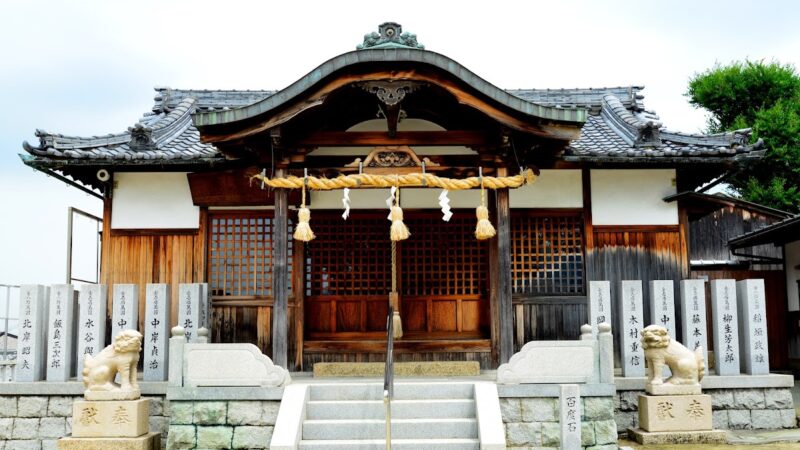
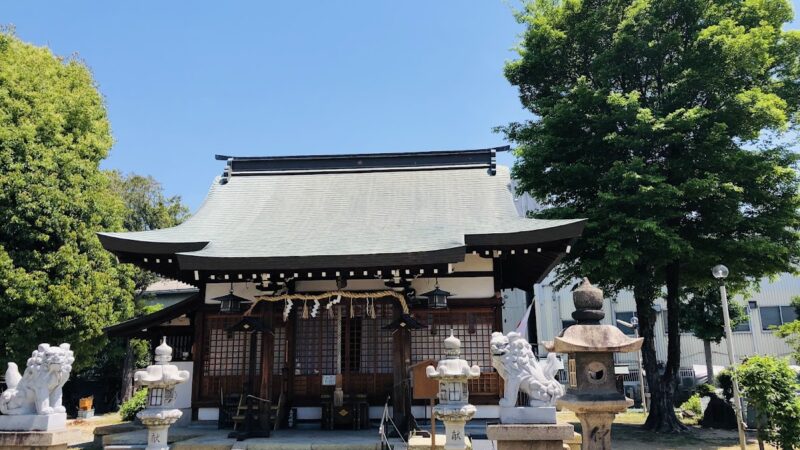
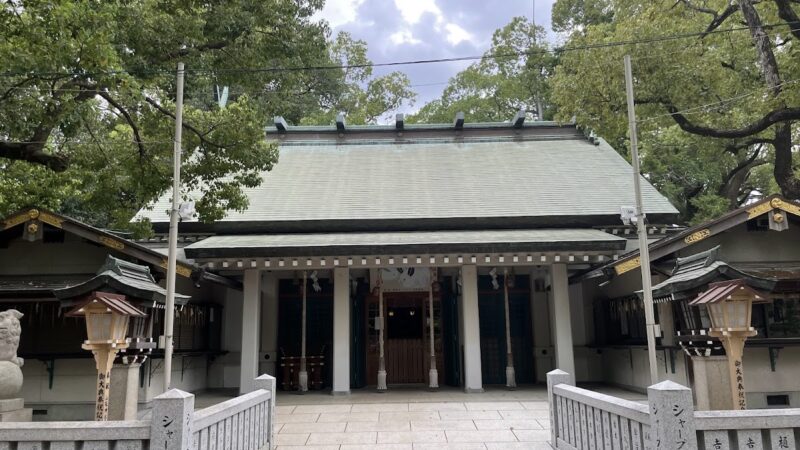
Despite being located in a residential area of an urban center, the grounds of Yamasaka Shrine offer a tranquil space surrounded by greenery. As you proceed along the approach, the shrine building, nestled amongst trees, appears, giving visitors a sense of calm and tranquility.
The shrine building maintains traditional shrine architectural styles while being properly maintained, reflecting the deep faith of the local people.
Power Stones
Several power stones line the path leading to the shrine. These power stones were once used by young men in strength contests, a remnant of the tradition of competing in strength contests during shrine festivals.
Of particular note is the relatively new power stone placed on the far right, which is said to have been donated by Yokozuna Chiyonofuji (Kokonoe Oyakata). This is a valuable donation unique to Yamasaka Shrine, which enshrines Nomi no Sukune no Mikoto, the god of sumo.
Deep Connections with Sumo Stables
Yamasaka Shrine, dedicated to the god of sumo, sometimes uses its grounds as lodging for sumo stables during the Osaka Grand Sumo Tournament. This tradition continues today, providing locals with an opportunity to interact with sumo wrestlers.
Chiyonofuji’s dedication of a power stone is also thought to have originated from this deep connection with sumo.
Parking and Worship Facilities
There is parking space for approximately 10 cars on the grounds, accessible from the north. However, since there are many one-way streets in the surrounding area, it is recommended to check the route in advance if visiting by car.
Annual Events and Community Connections
Summer Festival
Every summer, a local summer festival is held, with many food stalls lining the shrine grounds. It is said that in the past, there were even theaters, making it a very lively event. Even today, it remains an important annual event in the community, attracting many worshippers.
Local Nickname “Yamajin”
The shrine is affectionately known as “Yamajin” (a shortened form of Yamasaka Shrine) by locals, and many people visit it regularly. This friendly nickname indicates that Yamasaka Shrine is not merely a historical building, but continues to function as a central hub for the local community.
About Goshuin (Shrine Seals)
At Yamasaka Shrine, you can receive a goshuin (shrine seal) upon visiting. They also offer an electronic goshuin service, accommodating modern worship styles. Those wishing to receive a goshuin are advised to check the shrine office’s operating hours in advance.
Access
Access by Train
Nearest Station: JR Hanwa Line “Minami-Tanabe Station”
Travel Time: Approximately 3 minutes on foot from the station exit (approximately 200m southeast)
Minami-Tanabe Station is conveniently located just a few stops from Tennoji Station, a major terminal station in Osaka, on the Hanwa Line. Because it’s so close to the station, even first-time visitors can easily find it.
Access by Car and Important Notes
As mentioned above, there is parking space for approximately 10 cars when entering the shrine grounds from the north side. However, the surrounding area is a residential neighborhood with narrow roads and many one-way streets, so please note the following:
- Check your route in advance using a navigation or map app.
- Be careful of oncoming traffic on narrow roads.
- The parking lot may be crowded depending on the time of day.
- If possible, using public transportation is recommended.
Landmarks in the Area
Located relatively close to the Higashisumiyoshi Ward Office in Osaka City, this shrine is well-known in the Minamitanabe area. If you ask locals for directions to “Yamajin,” they will often be able to help you.
Points and Manners for Visiting a Shrine
Etiquette for Visiting a Shrine
When visiting Yamasaka Shrine, follow the general etiquette for visiting a shrine:
- Bow before passing through the torii gate
- Avoid walking in the center of the path
- Cleanse your hands and mouth at the water basin
- Perform “two bows, two claps, one bow” in front of the main hall
- Bow again at the torii gate when leaving
Praying to the Five Deities
A unique feature of Yamasaka Shrine is that five deities are enshrined in a single building. Each deity offers different blessings, so you can offer prayers to a specific deity in your heart according to your wishes. However, it is fundamentally important to show respect and gratitude to all deities when visiting.
Photography
Photography is generally permitted on the shrine grounds, but please be considerate of other visitors. Particular care is needed during festivals and crowded times.
Nearby Attractions
Nakai Shrine
Nakai Shrine, also located in Higashisumiyoshi Ward, is considered “Tanabe Higashi Shrine,” as recorded alongside Yamasaka Shrine in the *Sandai Jitsuroku* (a historical record of the Three Reigns). Visiting both Yamasaka Shrine and Nakai Shrine allows you to experience the religious practices of the Tanabe region during the Heian period.
Nagai Park
A short walk from Yamasaka Shrine will take you to Nagai Park, one of Osaka City’s leading comprehensive parks. With attractions such as the Nagai Botanical Garden and Nagai Athletics Stadium, it’s perfect for a stroll after your visit.
The Charm of Yamasaka Shrine and Reasons to Visit
Yamasaka Shrine is a fascinating shrine with the following characteristics:
- Over 1000 Years of History: An ancient shrine recorded in historical documents from the Heian period
- Five Diverse Deities: A comprehensive power spot that can address a variety of wishes
- Deep Connection to Sumo: Dedicates the god of sumo and houses a power stone donated by Chiyonofuji
- A Healing Spot in the City: A lush, green shrine grounds located in a residential area
- Easy Access: Conveniently located just a 3-minute walk from the station
- Strong Connection to the Community: A community-oriented shrine affectionately known as “Yamajin”
For history enthusiasts, it’s a place to trace the footsteps of ancient faith; for sumo fans, it’s a sacred site; and for those weary of daily life, it’s a healing space where you can “take a breather.” Yamasaka Shrine possesses diverse charms.
Summary: A Recommendation to Visit Yamasaka Shrine
Located in Higashisumiyoshi Ward, Osaka City, Yamasaka Shrine is a historical shrine recorded in the Heian period’s “Sandai Jitsuroku” (True Records of Three Reigns). Even today, it remains a familiar presence, affectionately known as “Yamajin” by locals and visited regularly.
With Amenohohi-no-Mikoto as its main deity, and enshrining five other gods including Nomi-no-Sukune-no-Mikoto (god of sumo), Sarutahiko-no-Mikoto (god of opening roads), and Uga-no-Mitama-no-Kami (god of business prosperity), it offers a wide range of blessings, from family safety and business prosperity to good fortune in competitions and traffic safety.
Yamasaka Shrine also boasts a deep connection to sumo, as evidenced by the power stone donated by Chiyonofuji and the use of sumo stables during the Osaka tournament. Despite being located in a residential area, the shrine grounds, surrounded by greenery, provide a precious space to calm the mind amidst urban life.
Its excellent accessibility, just a 3-minute walk from JR Minami-Tanabe Station, is another attractive feature. When you’re sightseeing in Osaka, or even just in your daily life, why not visit Yamasaka Shrine and experience the breath of its over 1000-year history and deeply rooted local faith?
When you visit, we recommend taking some time to quietly offer your prayers while reflecting on each of the five deities. The gods of Yamasaka Shrine, enveloped in a gentle atmosphere, will surely softly support your wishes.