Complete Guide to Niiya-ni-masu Amateru Mitama Shrine (Osaka Prefecture): History, Benefits, Access, and Highlights Explained in Detail
What is Niiya-ni-masu Amateru Mitama Shrine?
Niiya-ni-masu Amateru Mitama Shrine is a historical shrine located in Ibaraki City, Osaka Prefecture. It has long been revered as the local guardian deity and boasts the status of a Shikinaisha (a shrine listed in the Engishiki Jinmyocho, a historical record of shrines).
Its official name is “Niiya-ni-masu Amateru Mitama Shrine,” but it is affectionately known locally as “Niiya Shrine” or “Amateru Mitama Shrine.” It is an ancient shrine that belonged to Shimoshimo District, Settsu Province, and is known as one of the important shrines in northern Osaka Prefecture.
While the exact founding date of the shrine is unclear, its inclusion in the Engishiki Jinmyocho (compiled in 927 AD) as “Niiya-ni-masu Amateru Mitama Shrine, Shimoshimo District, Settsu Province” confirms that it has a history of at least 1000 years.
Meaning of the Deity and Shrine Name
Main Deity: Amateru Kuniteruhiko Hoakari no Mikoto
The main deity of Araya-ni-imasu Amaterasu Mitama Shrine is Amateru Kuniteruhiko Hoakari no Mikoto. This deity is a grandson of Amaterasu Omikami and is known as the ancestral deity of the Owari and Ama clans.
Amateru Kuniteruhiko Hoakari no Mikoto is worshipped as the god of agriculture, industry, and pioneering, and is believed to possess the power to illuminate and enrich the land. The name “Hoakari” symbolizes the light of the sun and the blessings of fire, and the deity has been revered as a god who brings vitality and prosperity.
Enshrined Deities
Along with the main deity, the following deities are enshrined:
- Amenokoyane-no-Mikoto: The ancestral deity of the Nakatomi clan, god of rituals and the power of words
- Ichikishima-hime-no-Mikoto: One of the three Munakata goddesses, goddess of water and beauty
- Honda-wake-no-Mikoto: Another name for Emperor Ojin, god of military fortune and national peace
Due to these enshrined deities, Araya-ni-imasu Amaterasu Mitama Shrine is revered as a shrine that bestows a variety of blessings.
Origin of the Shrine’s Name
The name “Niiya-ni-imasu Amaterasu Mitama Shrine” holds deep meaning:
- Niiya: Refers to newly developed land or a newly built shrine.
- Nimasu: A respectful expression meaning that a deity resides or sits there.
- Amaterasu Mitama: Refers to the divine spirit that illuminates the heavens, the spirit of the sun god.
From this name, it can be inferred that the shrine was founded in newly developed land to enshrine the spirit of the sun god.
History of Niiya-ni-imasu Amaterasu Mitama Shrine
Ancient Beliefs
While there are no definitive records regarding the founding of Niiya-ni-imasu Amaterasu Mitama Shrine, considering that this region was developed from ancient times, it is highly likely that it was founded between the Asuka and Nara periods.
As it is listed in the Engishiki Jinmyocho (927 AD), it is certain that it was already recognized as an important shrine in the early Heian period. The shrine’s status as a Shikinaisha (a shrine listed in the Engishiki, an ancient Japanese legal text) indicates its historical significance and recognition by the Imperial Court.
Medieval Transformations
During the medieval period, it was protected by local lords and influential figures in Settsu Province. While it is believed to have been affected by the turmoil of the Sengoku period (Warring States period), the shrine was maintained through the faith of the local residents.
Development from the Early Modern Period Onward
During the Edo period, it was revered as the local tutelary deity and guardian shrine of the village. Following the Meiji-era separation of Shinto and Buddhism, it was reorganized from its previous syncretic form to a purely Shinto shrine.
Under the Meiji-era shrine ranking system, it was classified as a village shrine, positioning it as an important local shrine. Since the end of World War II, it has continued to function as a center of local faith as a religious corporation.
Benefits and Divine Virtues
At Araya-za-Amaterasu Mitama Shrine, one can receive a variety of benefits corresponding to the divine status of the enshrined deity.
Main Benefits
- Abundant Harvest and Agricultural Prosperity: As Amateru Kuniteruhiko Hoakari no Mikoto is an agricultural deity, you can pray for a bountiful harvest and the development of agriculture.
- Industrial Development and Business Prosperity: As a deity of land development, it is believed to bring benefits for business development and the prosperity of commerce.
- Good Fortune and Happiness: As it enshrines the spirit of the sun god, it is suitable for praying for improved luck and happiness.
- Family Safety and Protection from Evil: As a guardian deity of the region, it is believed to bring safety to the family and protection from disaster.
- Academic Success: As Amenokoyane no Mikoto is also enshrined here, you can pray for academic improvement and success in examinations.
- Matchmaking and Beauty: Due to the divine virtues of Ichikishimahime no Mikoto, it also brings benefits for successful matchmaking and improvement in beauty and performing arts.
- National Peace and Long-Lasting Military Fortune: Through the divine virtues of Hachiman-no-Mikoto (Emperor Ojin), prayers can be offered for national peace and improved luck in competitions.
Reasons for Reverence
The Araya-za-Amaterasu Mitama Shrine, long revered as the local guardian deity, is a particularly important shrine for local residents, who visit at significant life events. It is used for life rituals such as first shrine visits for newborns, Shichi-Go-San (a traditional rite of passage for children), exorcisms, and weddings.
Highlights of the Shrine Grounds
Main Hall and Worship Hall
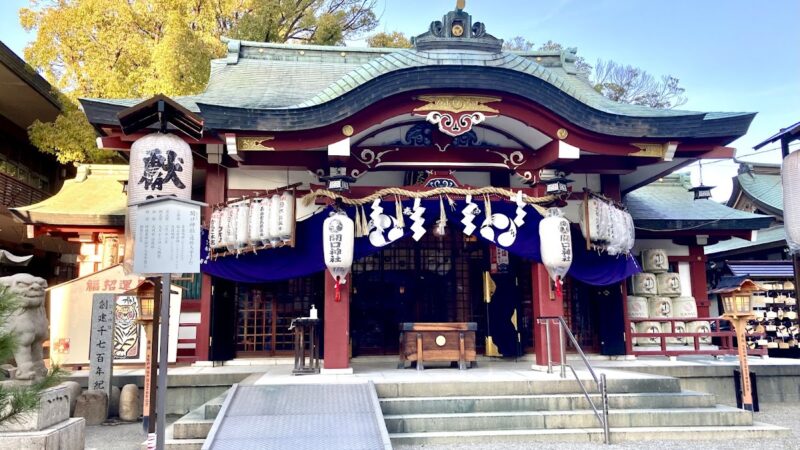
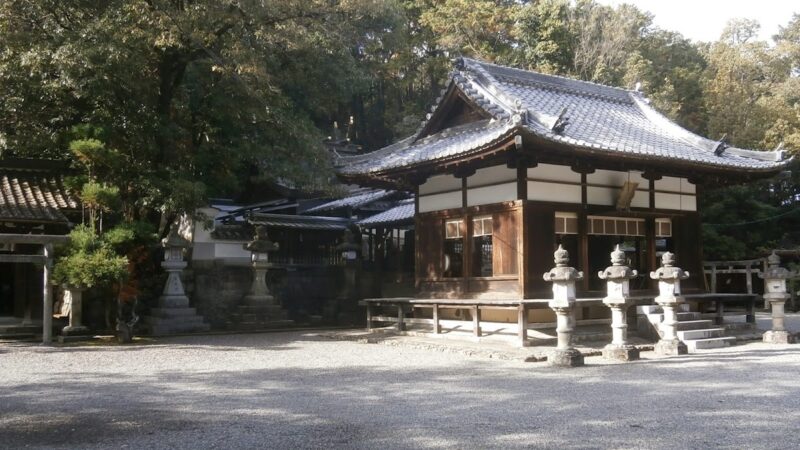
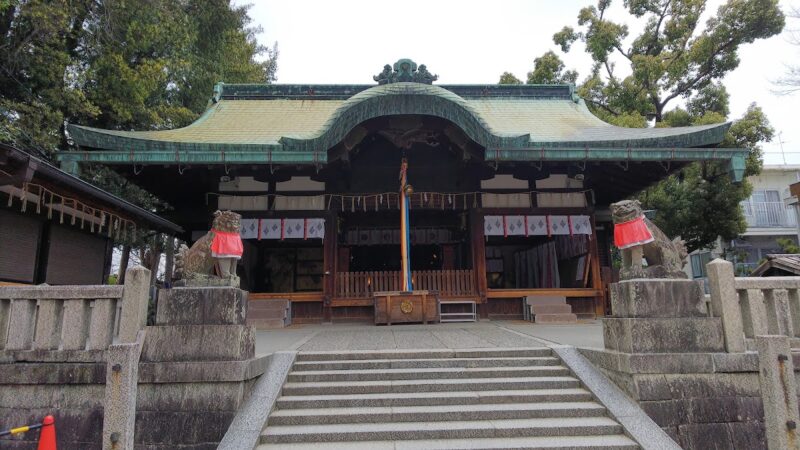
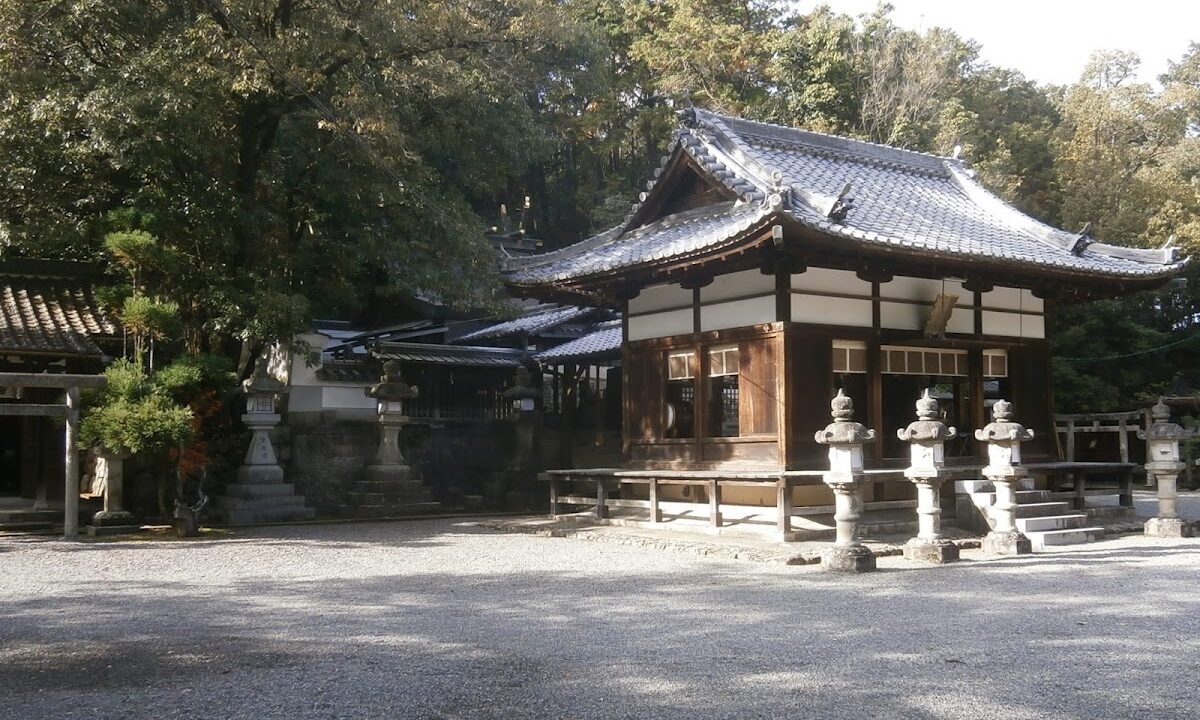
The main hall of the Araya-za-Amaterasu Mitama Shrine is built in a traditional shrine architectural style. The arrangement from the worship hall to the main hall expresses a gradual approach to the sacred space.
The main hall is presumed to be an Ikkensha-nagare-zukuri (one-bay nagare-zukuri) style, exhibiting characteristics of shrine architecture in the Settsu region. Its distinctive cypress bark or copper plate roof creates a solemn atmosphere.
Torii Gate and Approach
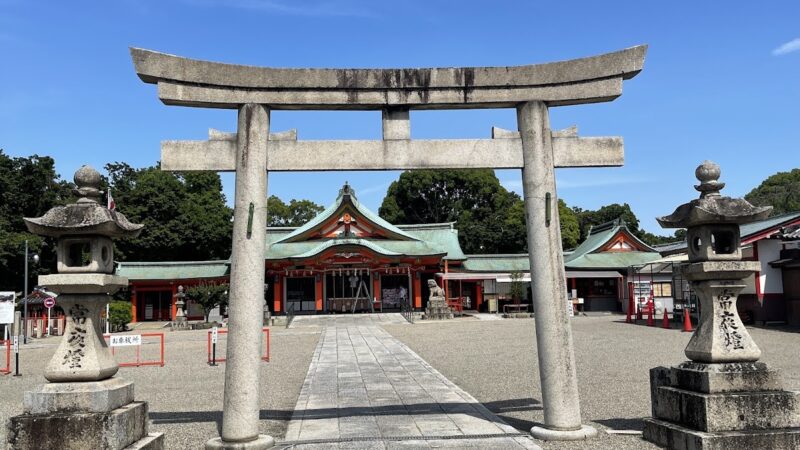
A torii gate stands at the entrance to the shrine grounds, and an approach path leads to the main hall. Passing through the torii gate marks the boundary between the secular world and the sacred realm, purifying the mind and preparing for worship.
Shrine Grove
The trees surrounding the shrine grounds are called the “shrine grove” and are considered sacred as the shrine’s forest. Ancient trees can be seen, telling the story of its long history. One can feel the changing seasons and experience nature, making it a valuable green space in the midst of urbanization.
Komainu (Guardian Dogs) and Stone Lanterns
Komainu and stone lanterns are placed throughout the shrine grounds. These were donated by parishioners and devotees, demonstrating the depth of their faith in the shrine. Inscriptions on the stone structures reveal the history of donations from the Edo period to the modern era.
Water Basin
There is a water basin for purifying oneself before worship. By purifying one’s hands and mouth, one can approach the shrine in a pure state of mind and body. ## Annual Events and Festivals
At Araya-za Amaterasu Mitama Shrine, various festivals and events are held throughout the year.
Main Annual Events
New Year’s Day Festival (January 1st)
A festival to welcome the new year and pray for peace and prosperity throughout the year. It is bustling with many first-time visitors.
Prayer Festival (February)
An important festival to pray for a bountiful harvest of grains in the coming year, coinciding with the arrival of spring.
Grand Festival (Autumn)
The Grand Festival, the most important festival at the shrine, is held in autumn. Local people gather, and sometimes a portable shrine procession and offering ceremonies take place. Please contact the shrine for specific dates.
Niiname-sai Festival (November 23rd)
A festival to give thanks for the autumn harvest and to offer the new grain to the gods. Coinciding with Labor Thanksgiving Day, it is a traditional festival to express gratitude for the blessings of agriculture.
Great Purification Ceremony (June 30th & December 31st)
This is a Shinto ritual to cleanse away the sins and impurities accumulated over the past six months. The Great Purification Ceremony at the end of the year is particularly important for welcoming the new year with a fresh start.
Personal Prayers
We accept the following personal prayers throughout the year:
- First Shrine Visit (Omiyamairi)
- Shichi-Go-San Ceremony
- Exorcism Prayer
- Family Safety Prayer
- Business Prosperity Prayer
- Traffic Safety Prayer
- Success in Exams Prayer
- Safe Childbirth Prayer
- Groundbreaking Ceremony
- Other Various Prayers
If you wish to request a prayer, we recommend contacting the shrine in advance.
Goshuin (Shrine Seals) and Other Items
Goshuin (Shrine Seals)
Araya-za Amaterasu Mitama Shrine offers Goshuin. Goshuin are cherished as proof of worship and as a symbol of connection with the shrine.
When receiving a Goshuin (temple/shrine stamp), please note the following:
- Always pray before receiving a Goshuin.
- Bring your Goshuincho (stamp book) with you (you may be able to purchase one at the shrine if you don’t have one).
- Prepare a donation (typically 300-500 yen).
- If a Shinto priest or shrine maiden is absent, it may not be possible to receive a Goshuin, so it is advisable to contact the shrine in advance if you wish to be sure of receiving one.
Items Available
The following items are available at the shrine’s office:
- Amulets: Various types, including those for traffic safety, academic success, family safety, and protection from evil.
- Ema (votive tablets): Write your wish and offer it.
- Omikuji (fortune slips): Receive a message from the gods.
- Ofuda (amulets): To be placed on your household altar.
The proceeds from these items also contribute to the maintenance and operation of the shrine.
Access and Transportation Information
Location
Address: 2-chome, Sho, Ibaraki City, Osaka Prefecture 567-0806
Access by Train
Using the Hankyu Kyoto Line
- Get off at Hankyu “Ibaraki-shi Station,” approximately 15-20 minutes on foot
- Alternatively, you can take a bus from the station.
Using the JR Line
- Get off at JR Kyoto Line “Ibaraki Station,” approximately 20-25 minutes on foot
- Alternatively, you can take a bus from the station.
Access by Bus
You can take Kintetsu Bus from Hankyu Ibaraki-shi Station or JR Ibaraki Station. Get off at the “Sho” bus stop, a few minutes on foot. Please check the Kintetsu Bus official website for bus routes and timetables.
Access by Car
Using Expressways
- Approximately 10 minutes from the Meishin Expressway “Ibaraki IC”
- Approximately 15 minutes from the Shin-Meishin Expressway “Ibaraki Senteiji IC”
Using General Roads
- From National Route 171, turn onto the prefectural road and head towards the Sho area.
Parking
While there may be parking spaces for visitors at the shrine, the number of spaces is limited. On days when congestion is expected, such as during festivals, we recommend using public transportation. Please contact the shrine for details.
Tips for Setting Your Car Navigation System
When searching with your car navigation system, please search for “Araya-za Amaterasu Mitama Shrine” or the address “2-chome, Sho, Ibaraki City, Osaka Prefecture.” Searching for “Araya Shrine” may display other shrines with the same name in other areas, so please be careful.
Manners and Etiquette for Visiting a Shrine
When visiting a shrine, please observe the following basic manners and etiquette.
Preparations Before Visiting the Shrine
- Attire: Clean, understated clothing is preferred. Avoid clothing that exposes a lot of skin.
- How to Pass Through the Torii Gate: Bow before passing through the torii gate. Since the center of the path is considered the path of the gods, walk along the sides.
- Procedure for Washing Hands:
- Hold the ladle in your right hand and wash your left hand.
- Switch the ladle to your left hand and wash your right hand.
- Switch the ladle back to your right hand, receive water in your left hand, and rinse your mouth (do not put your mouth directly on the ladle).
- Wash your left hand again.
- Hold the ladle upright, let water flow over the handle, and return it to its original place.
Procedure for Worshiping at the Main Hall
- Offering Money: Gently place your offering in the offering box (do not throw it in).
- Bell: If there is a bell rope, ring the bell to announce your visit to the gods.
- Two Bows, Two Claps, One Bow:
- Bow deeply twice (two bows).
- Clap your hands twice at chest height (two claps).
- Keep your hands together and silently express your wishes or gratitude.
- Bow deeply once (one bow).
- Exit: After finishing your prayers, move a short distance from the main hall, bow towards the torii gate, and then exit.
Other Precautions
- Please be quiet on the shrine grounds and refrain from speaking loudly.
- Photography is only permitted in designated areas (some areas, such as the main hall, are off-limits for photography).
- Please refrain from bringing pets (except for guide dogs, etc.).
- Please take all your trash with you.
- Please do not harm the plants or animals on the shrine grounds.
Nearby Tourist Attractions
After visiting Araya-za Amaterasu Mitama Shrine, why not also visit some of the tourist attractions around Ibaraki City?
Attractions in Ibaraki City
Ibaraki Shrine
A Shikinaisha (shrine listed in the Engishiki) located in the center of Ibaraki City, and an ancient shrine known for the legend of Ibaraki Doji.
Soji-ji Temple
An ancient temple, the 22nd temple of the Saigoku Thirty-Three Kannon Pilgrimage. Known for the legend of the turtle’s repayment of kindness, it boasts a beautiful garden.
Ibaraki City Cultural Properties Museum
A facility where you can learn about the history and cultural properties of Ibaraki City.
Moto-Ibaraki River Green Space
A green space park known for its cherry blossoms. It is bustling with many cherry blossom viewers in spring.
Tourist Attractions in Neighboring Cities
Takatsuki City
- Imajozuka Kofun: A large keyhole-shaped burial mound believed to be the tomb of Emperor Keitai.
- Settsukyo Gorge: A valley rich in nature, ideal for hiking.
Suita City
- Expo Commemoration Park: A vast park developed on the site of the 1970 Osaka World Expo.
- Tower of the Sun: An iconic monument created by Taro Okamoto.
Trivia about Shin’ya-za Amaterasu Mitama Shrine
Value as a Shikinaisha Shrine
“Shikinaisha” shrines, listed in the Engishiki Jinmyocho (a list of shrines compiled in the Heian period), are shrines that were recognized as particularly important by the imperial court during the Heian period. Of the approximately 3,100 Shikinaisha shrines nationwide, the Araya-ni-imasu Amaterasu Mitama Shrine boasts a high status as a Shikinaisha in Settsu Province.
Relationship with Place Name
The place name “Sho,” where the shrine is located, is thought to be related to the manorial system from ancient to medieval times. This indicates that this region was a center of agricultural production, and may be related to the reason why a shrine dedicated to the god of abundant harvests was established here.
Genealogy of Hoakari-no-Mikoto
The main deity, Amaterasu Kuniteruhiko Hoakari-no-Mikoto, is an important god appearing in the myth of the descent of the heavenly grandchild. He is considered the elder brother of Ninigi-no-Mikoto and was particularly revered in Owari Province (present-day western Aichi Prefecture) as the ancestral god of the Owari clan. The existence of a shrine dedicated to this god in Settsu Province is an interesting example illustrating the movement of clans and the spread of faith in ancient times.
History of Shrine Consolidation
From the Meiji era to the early Showa era, a policy of shrine consolidation was implemented throughout Japan. While many small shrines were merged, Shin’ya-za-Amaterasu Mitama Shrine maintained its independence due to its status as a Shikinaisha (a shrine listed in the Engishiki), and this tradition continues to this day.
Seasonal Attractions for Visitors
Spring (March-May)
Spring is a beautiful time of fresh greenery, with the trees on the shrine grounds budding. If cherry trees are planted, you can enjoy a visit that also includes cherry blossom viewing. Spring festivals are sometimes held, making it a time to feel the vitality of the community.
Summer (June-August)
The shrine grounds, enveloped in lush greenery, become a tranquil space away from the hustle and bustle of the city. At the Great Purification Ceremony at the end of June, the ritual of passing through a ring of reeds is sometimes performed, allowing you to cleanse yourself of the impurities accumulated over the past six months as part of the summer purification ritual.
Autumn (September-November)
Autumn is an important season when the annual grand festival is held. A festival of thanksgiving for the harvest is held, allowing visitors to experience local traditional culture. It’s also a beautiful time of year for autumn foliage, and the sight of the trees in the shrine grounds changing color is picturesque.
Winter (December-February)
This is the busiest season for the shrine, with the year-end purification ceremony and the first shrine visit of the new year. Visiting the shrine in the crisp, cold air has a refreshing effect on both mind and body. The shrine grounds are filled with worshippers coming to offer prayers for the new year.
Frequently Asked Questions
Q: How do you pronounce Niiya-ni-masu Amateru-mitama Shrine?
A: It is pronounced “Niiya-ni-masu Amateru-mitama Jinja.” Locally, it is sometimes shortened to “Niiya Shrine (Niiya Jinja).”
Q: Can I get a Goshuin (shrine stamp) anytime?
A: Since there are times when priests are not always present, it is recommended to contact the shrine in advance to confirm if you want to be sure to get a Goshuin.
Q: Is there parking available?
A: There may be parking spaces for visitors, but the number is limited. Please contact the shrine for details.
Q: Can I have a wedding ceremony here?
A: It may be possible to have a Shinto wedding ceremony here. If you wish to do so, please contact the shrine directly.
Q: Can I bring my pet to the shrine?
A: Generally, it is discouraged to bring pets into shrine grounds. However, assistance dogs such as guide dogs are an exception.
Summary
Araya-za-Amaterasu-Mitama Shrine is a Shikinaisha (a shrine listed in the Engishiki, an ancient Japanese legal text) located in Ibaraki City, Osaka Prefecture, with a history of over 1000 years. It enshrines Amaterasu-Kuniteruhiko-Hoakari-no-Mikoto as its main deity and is known for its blessings of abundant harvests, industrial development, and good fortune.
It has long been revered as the local guardian shrine, and is visited at various milestones in life, from a baby’s first shrine visit to Shichi-Go-San (a traditional rite of passage for children) and exorcism. The tranquil grounds of this shrine offer a precious sanctuary amidst increasing urbanization.
It’s easily accessible, within walking distance of Hankyu Ibaraki-shi Station and JR Ibaraki Station. When visiting Ibaraki City, be sure to pay your respects at this historic shrine and experience its ancient history of faith.
Visiting during annual events or the grand festival allows you to experience local traditional culture. For those collecting Goshuin (shrine stamps), the stamp from this Shikinaisha shrine will be a valuable collector’s item.
May your visit to Araya-za Amaterasu Mitama Shrine be a truly enriching experience.