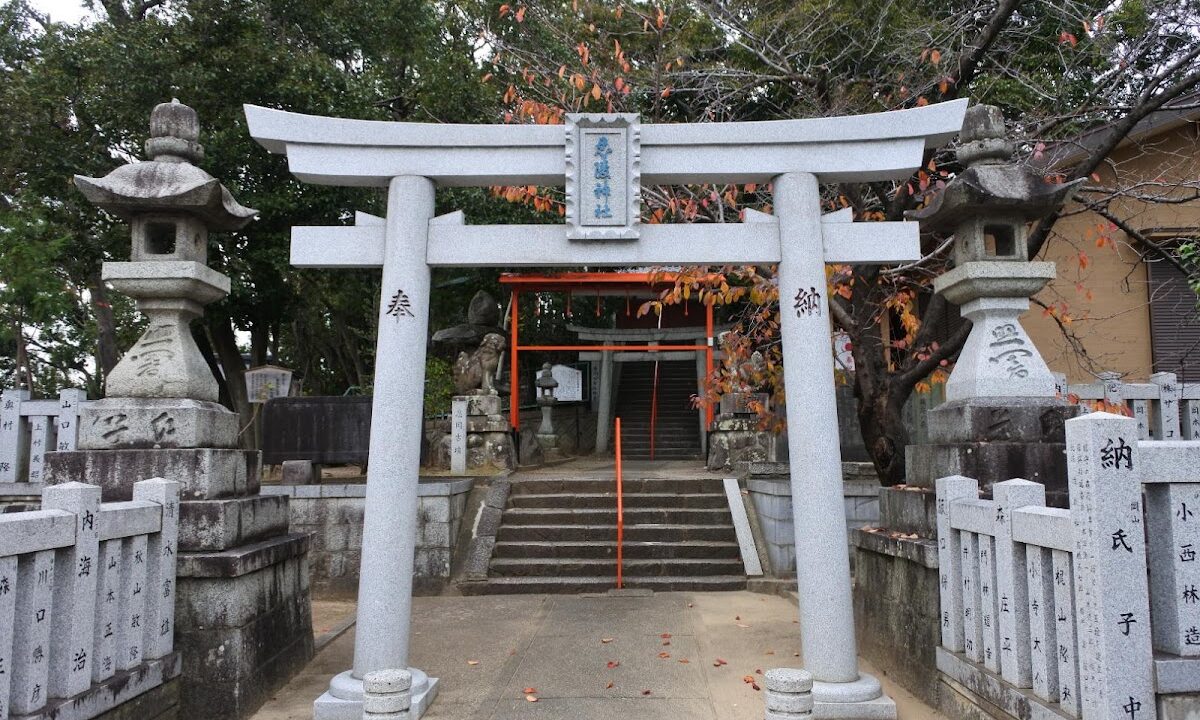
Complete Guide to Shinobugaoka Shrine (Shijonawate City, Osaka Prefecture) | History and Access to the Shikinaisha Shrine Situated on a Burial Mound
What is Shinobugaoka Shrine?
Shinobugaoka Shrine is a Shikinaisha shrine located in Okayama, Shijonawate City, Osaka Prefecture. It is sometimes read as “Ninryo Jinja.” The most distinctive feature of this shrine is that its main hall is built on the mound of the Shinobugaoka Kofun, a keyhole-shaped burial mound constructed in the early Kofun period.
It is located approximately 500 meters from Shinobugaoka Station on the JR Gakken Toshi Line, and the station’s name is also derived from this. It’s interesting that the station name is “Shinogaoka,” the shrine name is “Shinobugaoka,” and the burial mound name is “Shinogaoka,” each with different spellings.
The Engishiki Jinmyocho (a list of shrines compiled in 927 AD) lists it as “Tsuhoko Shrine in Sanra District, Kawachi Province,” and it is known as a historically significant shrine with a long history dating back to ancient times. As the guardian shrine of the Okayama and Suna districts of Shijonawate City, it has been cherished by the local people.
Deities Enshrined and the History of the Shrine
Main Deity and Enshrined Deities
The main deity enshrined at Shinryo Shrine is Fujiwara no Kamatari. It enshrines the ancestor of the Fujiwara clan, known for the Taika Reforms, and a figure who had a significant impact on Japanese history.
The following deities are enshrined as subsidiary deities:
- Kumano Kōtaijin (Kumano Ōkami): A deity invited from the Kumano Sanzan (Three Grand Shrines of Kumano)
- Honda Wake no Mikoto: Emperor Ōjin
- Umamori Ōkami: The deity who protects horses
- Taishōgun-shin: The deity of lasting military fortune
- Tsuhoko Ōkami: The tutelary deity of the local powerful clan, the Tsuhoko clan
Founding and History
Oshinobu Shrine is said to have been founded as the tutelary deity of the local powerful clan, the Tsuhoko clan. According to the shrine’s history from the Edo period, Kumano Kōtaijin was invited from the Kumano Sanzan during the reign of Emperor Tenmu (around 675 AD), and during the reign of Emperor Seiwa (around 870 AD), Fujiwara no Kamatari was enshrined at Shinobugaoka as Kamatari Daimyōjin in order to pray for lasting military fortune.
During the Sengoku period (Warring States period), it is said that Okayama Castle was built on this site, and it also served as a strategically important location. The elevated position of the burial mound is thought to be the reason it was chosen as a strategically important base.
Discovery of the Shinooka Burial Mound
During the Meiji era, a typhoon caused the shrine building to collapse, and during subsequent restoration work, a vertical shaft stone chamber of a keyhole-shaped burial mound was discovered. This discovery revealed that the shrine is situated on the mound of the Shinooka Burial Mound, a keyhole-shaped burial mound from the early Kofun period.
The Shinooka Burial Mound is a keyhole-shaped burial mound approximately 87 meters long and is an important site for understanding the Kofun culture of the Kawachi region. The unique landscape, where the shrine and burial mound are integrated, is of extremely high historical and archaeological value.
Highlights of the Shrine Grounds
Shrine Building and Grounds Layout
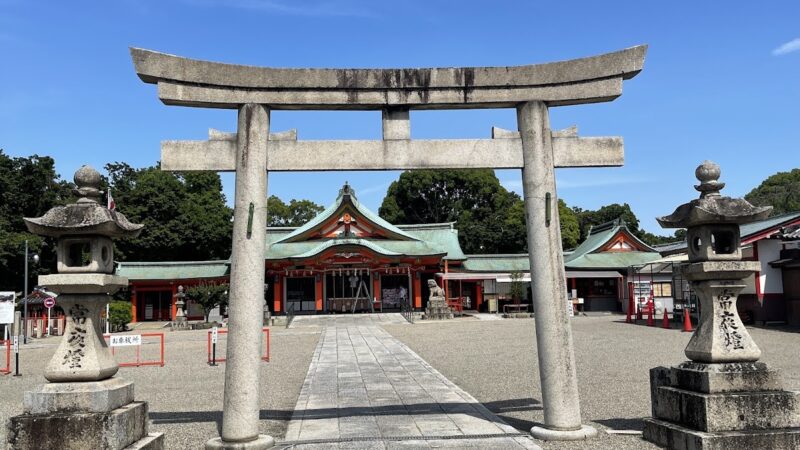
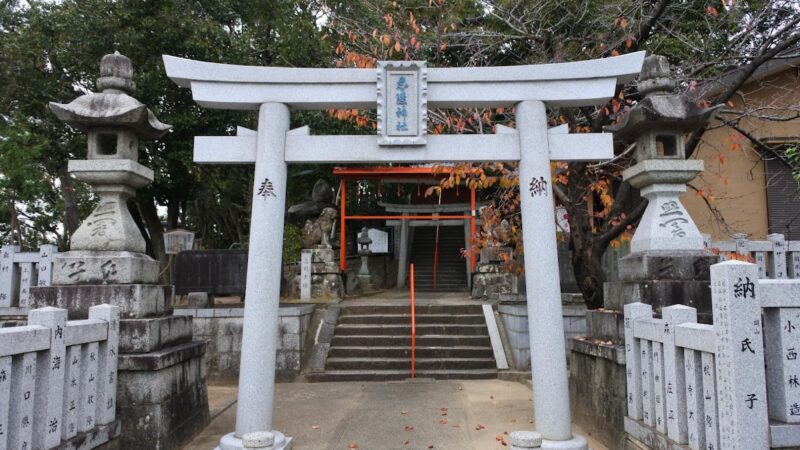
The grounds of Shinobu Shrine have a unique layout that utilizes the burial mound. There are torii gates on the east and north sides, and worshippers ascend the slope of the burial mound to reach the main shrine.
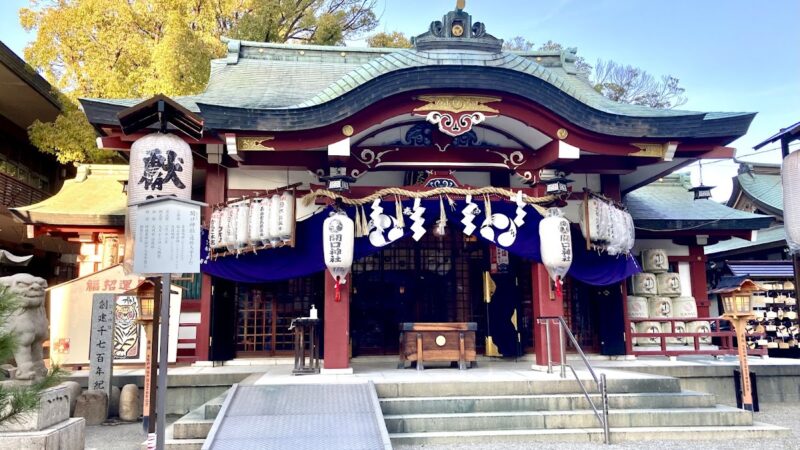
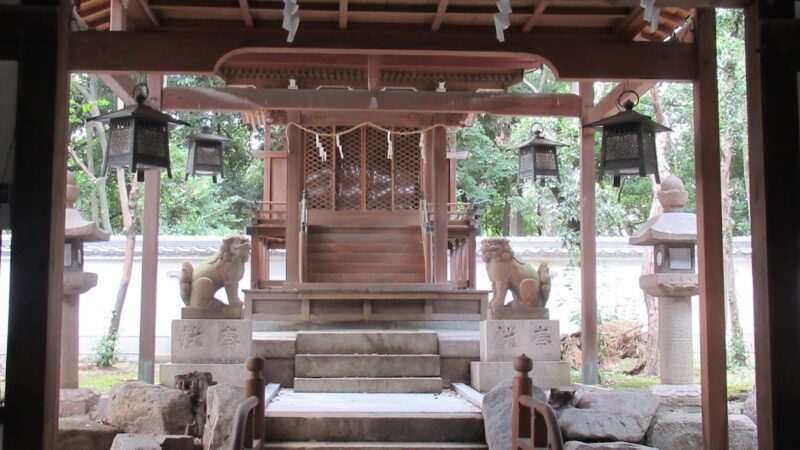
The main shrine is located on the top of the mound and is surrounded by a stone fence. Because of its elevated location, the shrine grounds offer panoramic views of Shijonawate city, allowing visitors to imagine the view from the time when Okayama Castle stood here.
Stone Chamber and Traces of the Burial Mound
The vertical shaft stone chamber, discovered when the shrine building collapsed due to a typhoon, is a valuable relic of a burial facility from the Kofun period. Although currently protected, walking around the grounds allows one to feel the topography of the burial mound.
By exploring the grounds while being mindful of the keyhole-shaped burial mound, one can understand the unique spatial composition where the shrine and the burial mound are fused.
Former Name “Shingu Daigongen”
During the Edo period, it was also called “Shingu Daigongen.” This indicates a connection to Shingu (Kumano Hayatama Taisha), one of the Kumano Sanzan shrines, and speaks to its deep connection with Kumano faith. ## Goshuin (Shrine Seal) Information
Regarding the Issuance of Goshuin
Oshiryo Shrine offers goshuin. Since the shrine office is not always open, it is recommended to check in advance before visiting.
The goshuin may bear the name of “Oshiryo Shrine” along with a seal indicating its status as a Shikinaisha (a shrine listed in the Engishiki, an ancient Japanese legal code). Many visitors receive goshuin as a memento of their visit or as part of a shrine pilgrimage.
Regarding Goshuincho (Shrine Seal Books)
It is recommended to check upon arrival whether original goshuincho are available. Those visiting shrines in Osaka Prefecture often visit this shrine as part of their tour of the Kitakawachi region.
Access and Transportation Information
Access by Train
Nearest Station: JR Gakken Toshi Line (Katacho Line) Shinobu-ga-oka Station
- Approximately 7-10 minutes on foot from Shinobu-ga-oka Station (approximately 500 meters)
- Exit from the west exit of the station and proceed through the residential area.
- There are signs along the way, making it a relatively easy route to follow.
Shinobu-ga-oka Station is easily accessible from both Osaka and Kyoto, and is conveniently located about 20 minutes by rapid train from JR Kyobashi Station, and the next station to JR Shijonawate Station.
Access by Car
Route from Major Roads:
- Via Prefectural Road 20 from National Route 163
- Approximately 15 minutes from Neyagawa-Minami IC on the Daini Keihan Expressway
- Approximately 20 minutes from Moriguchi Exit on the Hanshin Expressway Moriguchi Line
Address: 2-7-12 Okayama, Shijonawate City, Osaka Prefecture
(Former place name: 349 Shinooka, Okayama, Koka Village, Sanra District, Kawachi Province)
Parking Information
Parking is available for visitors. There are several parking spaces along the stone fence north of the east torii gate. However, due to limited space, we recommend using public transportation during busy periods such as New Year’s visits and festivals.
We recommend checking the exact number of parking spaces and operating hours before your visit.
Basic Information
Shrine Name: Shinobugaoka Shrine (Shinobugaoka Jinja / Ninryo Jinja)
Location: 2-7-12 Okayama, Shijonawate City, Osaka Prefecture
Deities Enshrined:
- Main Deity: Fujiwara no Kamatari
- Enshrined Deities: Kumano Kōtaijin, Homudawake no Mikoto, Umamori no Ōkami, Daishogun no Kami, Tsuhoko no Ōkami
Shrine Rank: Shikinaisha (listed in the Engishiki Jinmyōchō), Former Village Shrine
Former Shrine Name: Tsuhoko Shrine, Shingu Daigongen
Annual Festival Date: Please contact the shrine directly for information on annual festivals.
Telephone Number/Inquiries: For details, please contact the Osaka Prefectural Shrine Association or the Shijonawate City Tourism Association.
Nearby Attractions/Shrines and Temples
Shrines in Shijonawate City
When visiting Shinobu-ryo Shrine, we recommend also visiting other shrines and temples in Shijonawate City.
Shijonawate Shrine is a special government-supported shrine dedicated to Kusunoki Masayuki, a military commander from the Nanboku-cho period, and is a representative shrine of Shijonawate City. It is about a 10-minute drive from Shinobu-ryo Shrine.
Shrines in Daito City and Katano City are also nearby, and many visitors come as part of a shrine pilgrimage in the Kitakawachi region.
Sightseeing in the Surrounding Area
Shijonawate City is located in the eastern part of Osaka Prefecture, a naturally rich area spreading at the foot of the Ikoma Mountains. Hiking trails are well-maintained, allowing you to enjoy nature walks in conjunction with shrine visits.
There is also a shopping street around Shinobu-ga-oka Station, where you can stroll around and experience the local atmosphere.
Manners and Precautions for Visiting the Shrine
Proper Way to Visit
Since Shinobu Shrine is situated on the mound of an ancient burial mound, the approach to the shrine consists of stairs and slopes. We recommend wearing comfortable shoes.
Following general shrine visiting etiquette, bow once when passing through the torii gate, purify your hands and mouth at the water basin, and then pray. At the front of the main hall, pray using the “two bows, two claps, one bow” method.
Photography
Photography is generally permitted on the shrine grounds, but please refrain from taking pictures inside the main hall or in sacred areas. It is also important to be considerate of other visitors.
It is important to be mindful that the shrine stands on a cultural asset—an ancient burial mound—and to visit with respect.
Historical Value of Shinobu Shrine
Status as a Shikinaisha Shrine
Shikinaisha shrines, listed in the Engishiki Jinmyocho (a list of shrines compiled in the Heian period), are historically significant shrines that received special treatment from the imperial court during the Heian period. While several Shikinaisha (shrines listed in the Engishiki) existed in Sanra District, Kawachi Province, Shinobu-ryo Shrine (Tsuhoko Shrine) held a particularly important position among them.
Its status as a Shikinaisha demonstrates the historical importance of the shrine in this region and is evidence of its continued presence as a center of local faith for over a thousand years.
Relationship between Kofun (ancient burial mounds) and Shrines
Examples of shrines built on top of burial mounds can be found throughout Japan, but Shinobu-ryo Shrine is one of the most representative examples. It demonstrates a uniquely Japanese form of worship, where burial mounds are revered as sacred places and deities are enshrined there.
From the early Kofun period when the Shinobu-oka burial mound was constructed, through ancient times when it was developed as a shrine, and up to the present day, this area has consistently been treated as a sacred site.
Connection to Local History
Beginning as the tutelary shrine of the Tsuhoko clan, a powerful local family, the shrine developed over time, incorporating Kumano faith and reverence for the Fujiwara clan. During the Sengoku period (Warring States period), Okayama Castle was built, and the shrine also served as a military base.
This layered history shapes the unique character of Shinobu-ryo Shrine.
Origin of the Place Names of Shijonawate City and Shinobu-ga-oka
The place name “Shinobu-ga-oka” originates from the Shinobu-oka Kofun (ancient burial mound) and Shinobu-ryo Shrine. It became widely known after being adopted as the name of a JR Gakken Toshi Line station.
The city name “Shijonawate” originates from the Battle of Shijonawate during the Nanboku-cho period. Known as an ancient battlefield where the Southern Court army led by Kusunoki Masayuki fought against the Ashikaga army, it speaks to the historical importance of this region.
The Okayama district, where Shinobu-ryo Shrine is located, is an ancient settlement with geographical features at the eastern edge of the Kawachi Plain and at the foot of the Ikoma mountain range.
Annual Events and Festivals
Shinobu-ryo Shrine holds various festivals throughout the year. The annual festival, spring and autumn festivals, New Year’s visits, and Setsubun festivals are all observed and maintained by the local people.
For detailed annual event schedules, we recommend contacting the shrine or the Osaka Prefectural Shrine Association Third Branch before your visit. Participating in local festivals will allow you to gain a deeper understanding of the connection between the shrine and the community.
Positioning within Osaka Prefecture’s Shrine Pilgrimage
Osaka Prefecture boasts over 2,800 shrines and temples, with more than 500 shrines in the Kitakawachi and Higashi-Osaka regions alone. Among them, Shinobu-ryo Shrine holds a special place for shrine enthusiasts due to its status as a Shikinaisha (a shrine listed in the Engishiki, an ancient Japanese legal code) and its unique location on a burial mound.
There are 16 shrines within Shijonawate City, and 70 shrines have been confirmed in the Daito, Shijonawate, and Katano regions. Nine shrines are located around Shinobu-ga-oka Station alone, demonstrating the deep faith in this area.
For those collecting Goshuin (shrine stamps), it is worth visiting among the 174 Goshuin-issuing shrines in the Kitakawachi region, due to its high historical value.
Summary: Key Points for Visiting Shinobu Shrine
Shinobu Shrine is a Shikinaisha (a shrine listed in the Engishiki) with a long history spanning from the Kofun period to the present day. Its unique location on a burial mound, its history as a place where Fujiwara no Kamatari is enshrined as the main deity, and its historical background as the site of a castle from the Sengoku period make it a shrine with multiple layers of appeal.
Key Points for Visiting:
- Unity of Burial Mound and Shrine: Feel the atmosphere of an ancient sacred site as you climb the burial mound.
- Status of a Shikinaisha: Visit as a historical shrine listed in the Engishiki Jinmyocho (a list of shrines compiled in the Heian period).
- Reverence for Fujiwara no Kamatari: A valuable shrine dedicated to a key figure in the Taika Reforms.
- Easy Access: Conveniently located within walking distance of Shinobu-ga-oka Station.
- Visiting Nearby Shrines: Visit as part of a tour of shrines in the Kitakawachi region.
When you visit Shijonawate City, Osaka Prefecture, be sure to visit Shinobu Shrine. This ancient site of worship offers a sense of historical romance and tranquil atmosphere.
Before your visit, be sure to check the latest information and approach the site with respect for the local history and culture to ensure a more fulfilling experience.