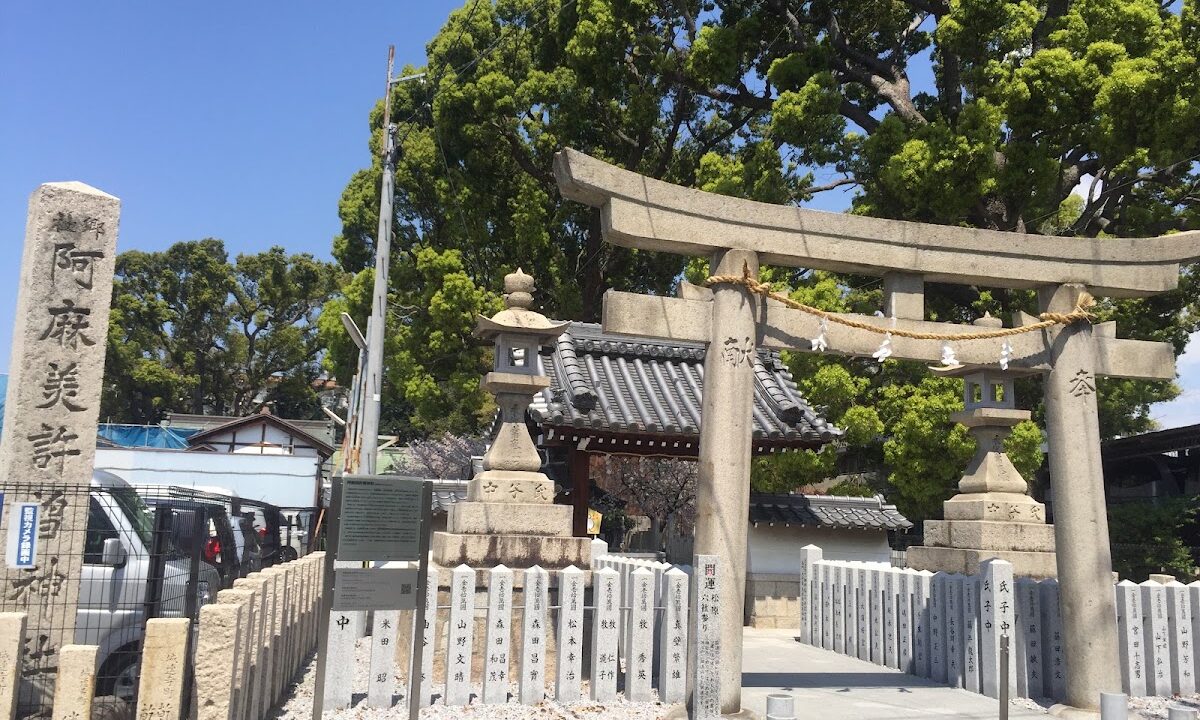
Amamikoso Shrine (Osaka Prefecture) Complete Guide | History, Goshuin (Shrine Seal), and Access Information
Amamikoso Shrine, located in Yada, Higashisumiyoshi Ward, Osaka City, is a historically significant shrine listed in the Engishiki Jinmyocho (a list of shrines compiled in the Heian period). Situated south of the Yamato River, surrounded by a lush forest, the shrine grounds are lined with giant camphor trees designated as protected forests by Osaka City, conveying a sacred atmosphere that has persisted since ancient times. This article provides a detailed overview of Amamikoso Shrine, including its history, deep connections with immigrants, goshuin information, festivals, and access methods.
Basic Information on Amamikosho Shrine
Location: 7-6-18 Yada, Higashisumiyoshi-ku, Osaka City, Osaka Prefecture
Deities Enshrined:
- Susanoo-no-Mikoto
- Amenokoyane-no-Mikoto
- Kotoshironushi-no-Mikoto
Shrine Rank: Shikinaisha (listed in the Engishiki Jinmyocho)
Founding: Said to be during the Daido era (806-810), but it is considered highly likely to be earlier.
Former Name: Amagishi-no-Miya
Amamikosho Shrine has long been revered by local residents as the tutelary shrine of the Amami district of Matsubara City (Jorenji, Aburakami, Shiba, Ikeuchi). Its current location in Yada, Higashisumiyoshi-ku, Osaka City, is due to the historical circumstances of the shrine being separated from its parish area by the Yamato River diversion project during the Edo period. ## History and Origins of Amamikosho Shrine
Ancient Origins
According to shrine tradition, Amamikosho Shrine was founded during the Daido era (806-810), but its actual origins are believed to be even older. It is listed in the Engishiki Jinmyocho (compiled in 927) as “Amamikosho Shrine, Tanbi District, Kawachi Province,” indicating that it was already recognized as an important shrine during the Heian period.
The name “Koso” is thought to originate from a Silla word, suggesting that it may have originated from immigrants from the Korean Peninsula worshipping their ancestors. This region was home to many immigrants from ancient times, and Amamikosho Shrine is presumed to have been one of their cultural centers.
Connection with Gyoki
Amamikosho Shrine has a legend related to Gyoki (668-749), a high-ranking Buddhist monk of the Nara period. It is said that Gyōki lived in this area and provided various conveniences to the residents, and the name of the nearby Yamato River bridge, “Gyōki Ōhashi,” originates from this legend.
Gyōki was from Kawachi Province (present-day eastern Osaka Prefecture) and is known for his social works such as building bridges, roads, and reservoirs for the people. Gyōki’s activities around Amamikosho Shrine indicate that this region has been a vital transportation hub since ancient times, an important place where many people passed through.
Diversion of the Yamato River and Division of the Parishioner Area
An essential part of the history of Amamikosho Shrine is the diversion of the Yamato River, which took place in the first year of the Hōei era (1704) during the Edo period.
Until then, the Yamato River flowed through what is now Osaka City in a complex manner, but due to frequent flooding, a new waterway was excavated to flow directly from Kashiwara City to Osaka Bay. This construction project separated the village of Yada, where the parishioners lived, from the Amamikosho Shrine, the tutelary shrine of the village, by the Yamato River.
Currently, Amamikosho Shrine is located in Yada, Higashisumiyoshi Ward, Osaka City, but its parish area is in the Amami district of Matsubara City, south of the Yamato River. This historical context is a very interesting case study for understanding the relationship between a shrine and its parish area.
The Ancient Shrine that Originated the Name “Amami”
Amamikosho Shrine was formerly known as “Amagishi no Miya,” and it is believed that “Ama” is the origin of the current place name “Amami.”
The name of the Amami district in Matsubara City, and the name of the Kintetsu Minami-Osaka Line’s “Kawachi-Amami Station,” all originate from this ancient shrine. The fact that a single shrine is the origin of a region’s place name speaks volumes about how central Amamikosho Shrine has been to the region since ancient times.
Deep Connections with Immigrants
One of the most distinctive features of Amamikosho Shrine is its deep connection with ancient immigrants.
Etymology of “Koso”
There is a theory that the shrine’s name, “Koso,” originates from the Silla language. Ancient Kawachi Province was a region where many immigrants from the Korean Peninsula resided, and in particular, immigrants from Baekje and Silla brought advanced technology and culture.
It is highly likely that Amamikosho Shrine was founded by these immigrants to enshrine the gods of their homeland and their ancestors. These immigrants contributed to the development of ancient Japan in various fields, including civil engineering, agriculture, and weaving, and Amamikosho Shrine is presumed to have been one of their cultural centers.
Immigrant Culture in the Kawachi Region
There are many other shrines and historical sites related to immigrants in Kawachi Province. For example, there is the Wani Shrine in Hirakata City, which enshrines Dr. Wani of Baekje descent, and Sayama Pond (Osakasayama City), which is believed to have been developed by immigrants of Silla descent.
The area around Amamikosho Shrine is also part of this immigrant cultural sphere, and is thought to have been a place of international cultural exchange in ancient times. How the beliefs of these immigrants are reflected in the shrine’s deities and rituals is a subject of ongoing research.
Highlights of the Shrine Grounds
Giant Camphor Trees
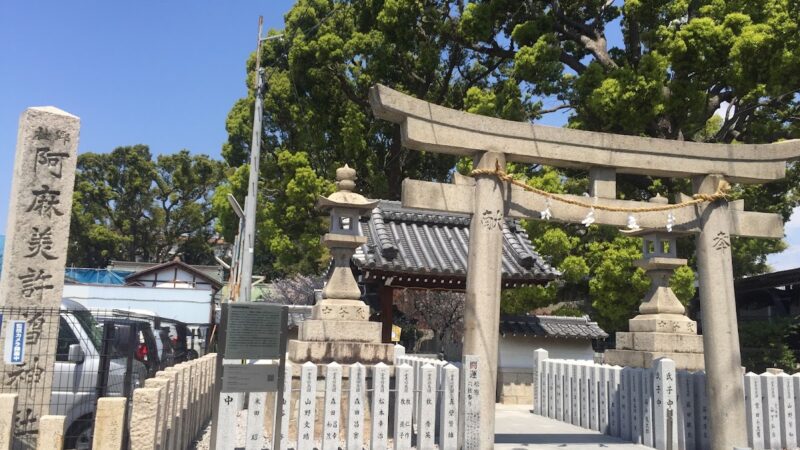
The first thing that catches the eye upon visiting Amamikosho Shrine are the four giant camphor trees standing within the grounds. These camphor trees are designated as a protected forest by Osaka City, and have grown so large that the forest is visible from afar.
As you leave Kawachi-Amami Station on the Kintetsu Minami-Osaka Line and look west before crossing the Yamato River, you’ll see a dense forest; this is the forest surrounding Amamikosho Shrine. In the increasingly urbanized city of Osaka, such a rich natural environment is rare and speaks to the shrine’s long history and the preservation efforts of local residents.
Camphor trees have long been revered as sacred trees and have been designated as sacred trees at many shrines. The camphor tree at Amamikosho Shrine, having stood for hundreds of years, can be considered a living witness to the shrine’s history.
Vast Shrine Grounds
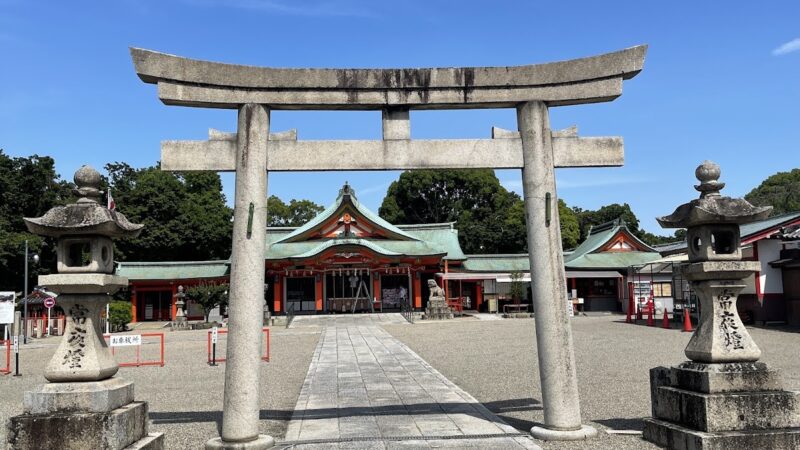
The grounds of Amamikosho Shrine are very large, and many large trees remain. Despite being in an urban area, it maintains a tranquil and sacred atmosphere, allowing visitors to escape the hustle and bustle of everyday life and find peace of mind.
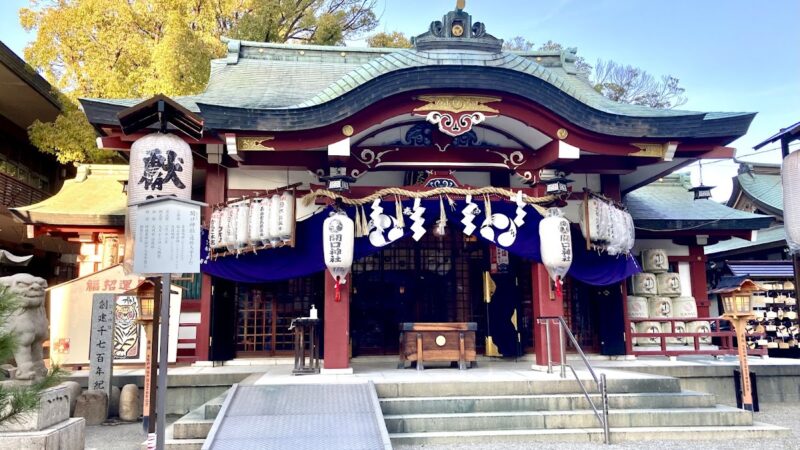
The grounds include the main hall, the worship hall, and several subsidiary shrines, creating a solemn atmosphere befitting an ancient shrine. Entering the grounds from the approach facing the Shimotakano Road, one is greeted by a timeless and serene space.
Goshuin Information
Goshuin (shrine stamps) are available at Amamikosho Shrine. Goshuin are popular among many visitors as proof of their shrine visit.
Regarding the Issuance of Goshuin (Shrine Seals)
Goshuin at Amamikosho Shrine are available at the shrine office. However, the office may not always be open, so if you want to be sure to receive a goshuin, it is recommended to contact the shrine in advance or visit on a festival day.
The goshuin features the shrine name “Amamikosho Shrine” written in ink and stamped with a red seal. It is a solemn goshuin that reflects the status of a Shikinaisha (a shrine listed in the Engishiki, an ancient Japanese legal code).
Regarding Goshuincho (Shrine Seal Books)
While it is generally recommended to bring your own goshuincho, some shrines may provide them. It is recommended to check with Amamikosho Shrine regarding their goshuincho policy when you visit.
Festivals and Annual Events
Amamikosho Shrine holds various festivals throughout the year.
Annual Festival
The annual festival, the most important festival of the shrine, attracts many worshippers from the Amami district of Matsubara City, which is the shrine’s parish area. Despite the unique situation of the shrine being separated from the parish area by the Yamato River, strong community ties remain.
Other Annual Events
- New Year’s Day Festival (January 1st)
- Setsubun Festival (February)
- Summer Festival
- Autumn Grand Festival
- Niiname-sai Festival (November)
At these festivals, traditional Shinto rituals are performed, and prayers are offered for the peace and prosperity of the community, a bountiful harvest, and the prosperity of the parishioners.
Access
Access by Train
Nearest Station: Kintetsu Minami-Osaka Line “Kawachi-Amami Station”
Approximately 15 minutes on foot or 5 minutes by car from Kawachi-Amami Station. The route from the station crosses the Yamato River and heads north.
Also within walking distance (approximately 20 minutes) from Osaka Metro Tanimachi Line “Kire-Uriwari Station”.
Access by Car
Approximately 10 minutes from the Komagawa Exit of the Hanshin Expressway Route 14 Matsubara Line.
While the shrine has parking spaces for visitors, the number of spaces is limited, so we recommend using public transportation, especially on festival days.
Landmarks in the Area
- Along the Shimotakano Road
- North side of the Yamato River
- Near Gyoki Ohashi Bridge
The forest visible across the Yamato River from the Kintetsu train is a landmark.
Nearby Tourist Attractions
Yamato River
The Yamato River, which flows just south of Amamikosho Shrine, took its current course after a diversion project in 1704. The riverbanks are well-maintained, making it a pleasant place for walks and cycling.
Gyoki Ohashi Bridge
The Gyoki Ohashi Bridge, spanning the Yamato River, is named after the legend of Gyoki passed down at Amamikosho Shrine. From the bridge, you can enjoy a panoramic view of the Yamato River and the surrounding scenery.
Shimotakano Road
The Shimotakano Road, which faces Amamikosho Shrine, was one of the important roads from ancient to medieval times. Even today, the road retains traces of history, with old townscapes and historical sites scattered along it.
Manners and Precautions for Visiting the Shrine
Basic Manners for Visiting the Shrine
- Bow before passing through the torii gate.
- Avoid walking in the center of the approach to the shrine.
- Purify your body and mind at the water basin.
- Bow twice, clap twice, and bow once in front of the main hall.
- Maintain silence within the shrine grounds.
Photography
Photography is generally permitted within the shrine grounds, but please refrain from taking pictures inside the main hall or during religious ceremonies. When photographing the natural scenery within the grounds, such as the sacred camphor tree, it is important to do so with respect.
Attire
Formal attire is not required, but please dress appropriately as it is a sacred place. Formal attire is desirable when attending festivals.
Cultural Value of Amamikosho Shrine
Importance as a Shikinaisha Shrine
Shikinaisha shrines, listed in the Engishiki Jinmyocho (a list of shrines compiled in the Heian period), are shrines that received special treatment from the state during the Heian period. Amamikosho Shrine, as a Shikinaisha in Tanbi District, Kawachi Province, is known to have been a religious center of this region since ancient times.
Important Historical Site for the Study of Immigrant Culture
Amamikosho Shrine is an important historical site for the study of ancient immigrant culture. The shrine’s name, “Kosho,” is thought to originate from the Silla language, and its location in an area with a large immigrant population provides valuable clues to understanding the reality of cultural exchange in ancient Japan.
Historical Witness to the Yamato River Diversion Project
The Yamato River diversion project during the Edo period was a significant undertaking in the history of Japanese civil engineering. Despite the division of the shrine and its parish area due to this project, Amamikosho Shrine has maintained its faith, making it a living witness to the impact of this historical project.
Connection with the Community
Despite its unique location separated from its parish area by the Yamato River, Amamikosho Shrine continues to be revered as the tutelary shrine of the Amami district of Matsubara City (Jorenji, Aburakami, Shiba, and Ikeuchi).
During festivals, parishioners cross the Yamato River to visit the shrine, reaffirming their community bonds. This scene is a moving testament to how faith has been passed down through the ages, overcoming the historical event of the Yamato River’s diversion during the Edo period.
Summary
Amamikosho Shrine is a Shikinaisha (a shrine listed in the Engishiki, an ancient Japanese legal code) with a long history dating back to antiquity. It is an important shrine encompassing many historical elements, including the culture of immigrants, the legend of Gyoki, and the history of the Yamato River’s diversion.
The shrine grounds, lined with giant camphor trees designated as protected forests by Osaka City, maintain a sacred atmosphere despite being in an urban area, allowing visitors to feel the weight of ancient history.
The Amamikosho Shrine, an ancient shrine that gave its name to the area of “Amami,” has been a core element of the region’s identity. A visit to the shrine, while receiving a Goshuin (shrine stamp), and reflecting on the ancient immigrant culture and the history of the Yamato River, will surely be a memorable experience.
When you visit Higashisumiyoshi Ward in Osaka City, be sure to stop by the Amamikosho Shrine and experience its history, nature, and the deep faith of the local people.