Complete Guide to Nakatomi Sumuchi Shrine (Osaka Prefecture) | History, Deities, and Access Information for this Engishiki-Listed Grand Shrine
Nakatomi Sumuchi Shrine, located in Sumido-Yata, Higashi-Sumiyoshi Ward, Osaka City, is a prestigious Grand Shrine listed in the Engishiki Jinmyocho (a list of shrines compiled in the Heian period). Deeply connected to the Nakatomi clan, ancestors of the Fujiwara clan, this shrine, nestled quietly in a peaceful residential area, preserves a history of over a thousand years.
This article provides a comprehensive overview of Nakatomi Sumuchi Shrine, including its detailed history, enshrined deities, access information, goshuin (shrine stamp) information, and even testimonials from visitors.
About Nakatomi Sumuchi Shrine
Nakatomi Sumuchi Shrine is a Shinto shrine located at 2-9-20 Sumidoyata, Higashisumiyoshi-ku, Osaka City. It is a Shikinaisha (a major shrine listed in the Engishiki Jinmyocho, a historical record of shrines) listed as “Nakatomi Sumuchi Shrine, Sumiyoshi District, Settsu Province, Dai (大).” Its status as a “Daisha” (大社) indicates its significant importance in ancient times.
The shrine’s name, “Sumuchi,” is also written as “Sumuji,” and is the origin of the place name. There is a theory that this name means “God of the Road of Sumiyoshi,” suggesting a deep connection with Sumiyoshi Taisha (another major shrine).
The current shrine is located in a residential area, and while the grounds are small, it maintains a tranquil atmosphere befitting an ancient shrine. Despite the busy road in front of the shrine, and its modern environment, stepping into the grounds creates a不思議な space where time seems to stand still.
Deities Enshrined and the History of the Shrine
Deities Enshrined
The following deities are enshrined at Nakatomi Sumuchi Shrine:
Main Deity:
- Nakatomi Sumuchi no Kami
Enshrined Deities:
- Uwatsutsu no Mikoto
- Nakatsutsu no Mikoto
- Sokotsutsu no Mikoto
- Okinagatarashihime no Mikoto (Empress Jingu)
The main deity, Nakatomi Sumuchi no Kami, is considered the ancestral deity of the Nakatomi clan. The enshrined deities, Uwatsutsu no Mikoto, Nakatsutsu no Mikoto, and Sokotsutsu no Mikoto, are known as the Sumiyoshi Three Gods, deities of the sea. Furthermore, Empress Jingu is also enshrined, clearly indicating a close relationship with Sumiyoshi Taisha Shrine from the composition of the enshrined deities.
History of Founding
There are various theories regarding the founding of Nakatomi Sumuchi Shrine, but according to the most plausible tradition, it was founded by Fujiwara no Fuhito, the second son of Fujiwara no Kamatari, by imperial decree. This shrine was built as a place to enshrine the ancestral spirits of the Nakatomi clan and held the character of a tutelary shrine for the Nakatomi family.
The Nakatomi clan was a powerful clan in ancient Japan that oversaw religious ceremonies, and later, as the Fujiwara clan, they played a central role in Japanese politics. This shrine, which enshrines the ancestral deities of the Nakatomi clan, was not merely a local shrine, but an important shrine deeply connected to the political and religious structure of ancient Japan.
Status as an Engishiki Shrine
The fact that this shrine is listed in the Engishiki Jinmyocho (compiled in 927) indicates that it was already a prestigious shrine recognized by the imperial court during the Heian period. Furthermore, its status as a “Grand Shrine” is evidence of its particular importance within Settsu Province.
The “Sumido Shrine” mentioned in the Engishiki is believed to correspond to the present-day Nakatomi Sumuchi Shrine, and the place name “Sumido” is also thought to originate from this shrine.
Relationship with the Yasoshima Festival
Nakatomi Sumuchi Shrine is believed to be related to the “Yasoshima Festival,” the oldest festival held under the royal authority in Naniwa (Osaka). The Yasoshima Festival was an important ritual performed upon the enthronement of an emperor and was held at Sumiyoshi Taisha Shrine.
Because the Nakatomi clan was deeply involved in this ritual, it is thought that Nakatomi Sumuchi Shrine also had some connection to the Yasoshima Festival. This indicates that this shrine was not merely a small local shrine, but an important shrine connected to ancient national rituals.
Deep Connection with Sumiyoshi Taisha Shrine
As can be seen from the fact that the enshrined deities are the three Sumiyoshi gods and Empress Jingu, the relationship between Nakatomi Sumuchi Shrine and Sumiyoshi Taisha Shrine is very deep. The Nakatomi clan was also involved in the rituals of Sumiyoshi Taisha Shrine, and the relationship between the two shrines is a historical one dating back to ancient times.
The name “Sumuchi” itself may mean “the road to Sumiyoshi,” suggesting that this shrine played an important role in the spread of Sumiyoshi faith.
Shrine Grounds and Highlights
Compared to larger shrines, the grounds of Nakatomi Sumuchi Shrine are small, giving a modest impression. However, within its quiet atmosphere, one can feel the dignity of an ancient shrine with a long history.
Torii Gate and Approach
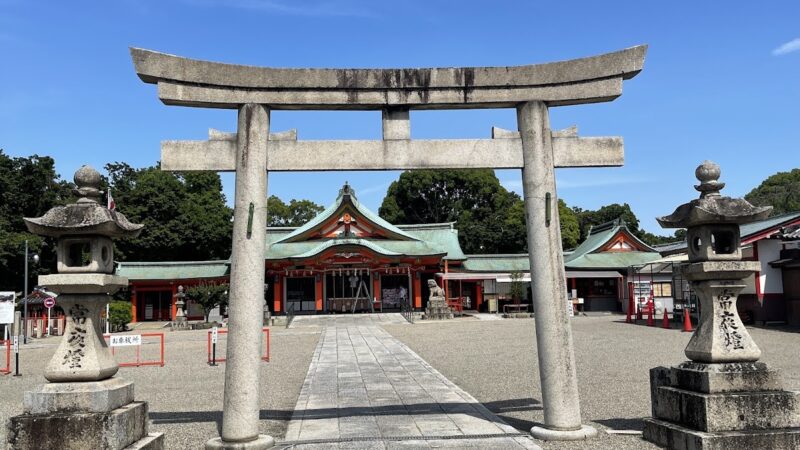
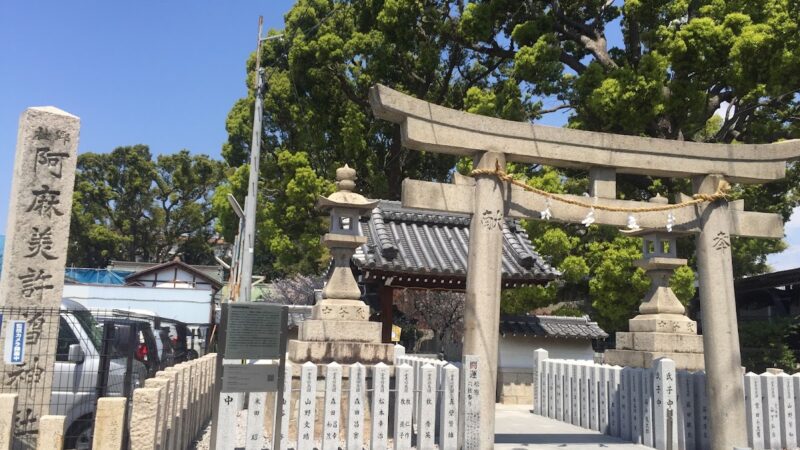
A torii gate stands at the entrance to the shrine, and a short approach leads from there to the main hall. The surrounding area is a residential neighborhood, and the road in front of the shrine has relatively heavy traffic, with cars constantly passing by. However, upon passing through the torii gate and entering the grounds, one is strangely enveloped in silence, a space separated from the hustle and bustle of the city.
Main Hall
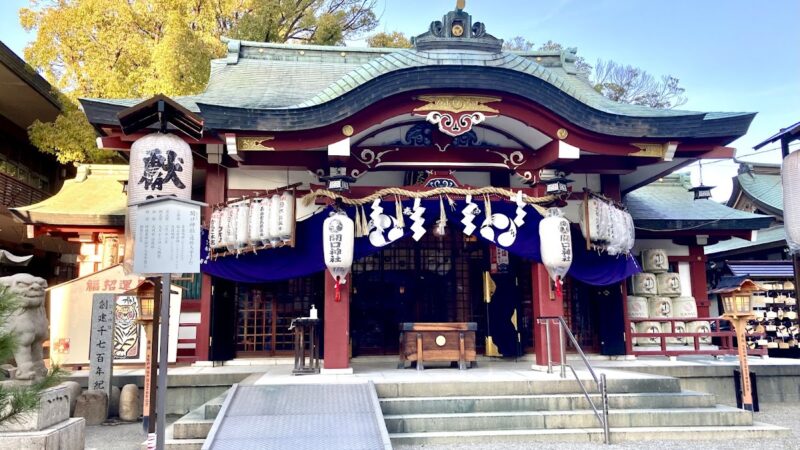
The main hall, though simple, is carefully maintained, reflecting the faith of the local people. The shrine grounds are meticulously clean, indicating that it is a small but carefully preserved shrine.
Atmosphere of the Shrine Grounds
Many visitors have praised the shrine’s atmosphere, describing it as “pleasant” and “quiet and peaceful.” The grounds of Nakatomi Sumuchi Shrine possess a unique tranquility. While it lacks the bustling atmosphere of larger shrines, this allows for a peaceful and serene space for worship.
Although there are few ancient trees or greenery, the orderly grounds exude a refreshing sereneness, maintaining the dignity befitting a Shikinaisha (a shrine listed in the Engishiki, an ancient Japanese legal code).
Location and Surrounding Environment
Nakatomi Sumuchi Shrine is located in the Sumido-Yata area, in the southern part of Higashi-Sumiyoshi Ward, Osaka City, an area characterized by long-established residential neighborhoods.
Address: 2-9-20 Sumidoyata, Higashisumiyoshi-ku, Osaka City, Osaka Prefecture 546-0022
The place name “Sumido” is believed to originate from “Sumuchi,” the name of this shrine, indicating that the shrine is an integral part of the local identity. The place name “Yata” is also ancient, suggesting that this area has been a place of human habitation since antiquity.
The surrounding area is a quiet residential neighborhood, with ordinary houses lining the street very close to the shrine. The road in front of the shrine is used as a local thoroughfare, showcasing the shrine’s integration into the community.
Access Method
Nakatomi Sumuchi Shrine can be accessed by both train and bus.
Nearest Station and Line
Kintetsu Minami-Osaka Line “Yada Station”
- Approximately 10-15 minutes on foot
- Most convenient access method
- Head southwest from the station
Yada Station is on the Kintetsu Minami-Osaka Line, approximately 15 minutes from Osaka-Abenobashi Station. From the station, you will walk through a residential area to reach the shrine. The route is relatively easy to follow, and using a map app should prevent you from getting lost.
JR Hanwa Line “Minami-Tanabe Station”
- Approximately 20 minutes on foot
- Somewhat further
While Minami-Tanabe Station is also within walking distance, Yada Station is closer and more convenient.
Nearest Bus Stop and Line
If using Osaka City Bus:
“Sumido-Yada” Bus Stop
- A few minutes’ walk to the shrine
- Multiple bus lines stop here
If using the bus, the nearest bus stop is very close, making it an easily accessible option. However, it is recommended to check the bus schedule and frequency in advance. ### Access by Car
The shrine does not have a dedicated parking lot. The surrounding roads are narrow residential streets with heavy traffic, so visiting by car is not recommended. We recommend using public transportation.
If you absolutely must visit by car, it is best to use a nearby coin-operated parking lot and walk to the shrine.
Goshuin (Shrine Seal) Information
You can receive a Goshuin at Nakatomi Sumuchi Shrine.
Regarding the Issuance of Goshuin
Goshuin are available at the shrine, but the shrine office is not always open, so if you want to be sure to receive one, we recommend checking in advance.
As it is a small shrine, there are times when the priest is not always present. Those visiting specifically for a Goshuin should check by phone in advance or visit with plenty of time to spare.
Goshuin Design
The Goshuin at Nakatomi Sumuchi Shrine features the shrine name written in ink and stamped with the shrine’s seal. This Goshuin (temple/shrine stamp) is simple yet exudes a sense of dignity.
As a shrine with the status of a Shikinai Taisha (a shrine listed in the Engishiki, an ancient Japanese legal code), this Goshuin will be a valuable item for those who collect Goshuin.
Visitor Reviews and Reputation
We have compiled comments from people who have actually visited Nakatomi Sumuchi Shrine.
Atmosphere
Many visitors rate the shrine as having a “good atmosphere.” Despite being a small shrine, many say that stepping onto the grounds envelops you in silence, bringing a sense of peace.
A typical review states, “It’s a small shrine, but it has a good atmosphere,” praising the shrine’s dignity and serene atmosphere despite its small size.
Tranquility and Location
As one review states, “There are many cars in front of the shrine, but few people inside.” Although located along a busy road, the grounds are quiet and uncrowded, providing a peaceful environment for worship.
Some visitors describe it as having a “quiet atmosphere with relatively few visitors,” making it an ideal shrine for those who want to avoid crowds and worship in peace.
Access and Surrounding Environment
Some visitors have noted that “the road in front is a bit narrow, and there’s a lot of traffic, making it a little noisy.” Indeed, the road in front of the shrine is a busy residential street, a characteristic typical of shrines in urban areas.
However, this can also be seen as part of its charm as an “ancient shrine remaining in modern life.”
Evaluation of Historical Value
Many visitors are interested in its historical background, such as being a major shrine listed in the Engishiki (ancient Japanese legal code) and its connection to the Fujiwara clan, and it is highly regarded as a “prestigious shrine.”
Despite its small grounds, the sense of history is a major attraction of this shrine.
Points and Manners for Visiting
Here are some points to keep in mind when visiting Nakatomi Sumuchi Shrine.
Visiting Hours
While you can generally visit the shrine grounds freely, it’s best to avoid visiting early in the morning or late at night out of consideration for nearby residents. We recommend visiting during daylight hours.
Photography
Photography is permitted on the shrine grounds, but please be considerate of your neighbors as the shrine is located in a residential area. Also, please take photos with respect in sacred areas such as the main hall.
Maintaining Tranquility
The shrine grounds are small and surrounded by a residential area. Please refrain from loud conversations and noisy behavior, and pray quietly. It is important to preserve the tranquil atmosphere that is the charm of this shrine.
Consideration for the Community
The road in front of the shrine is a residential street. Absolutely avoid parking on the street and be careful not to obstruct traffic.
Nearby Attractions
Here are some nearby spots you might want to visit when you come to Nakatomi Sumuchi Shrine.
Sumiyoshi Taisha Shrine
Sumiyoshi Taisha Shrine, which has a deep connection with Nakatomi Sumuchi Shrine, is a shrine you should definitely visit as well. It is a representative shrine of Osaka and the head shrine of all Sumiyoshi shrines nationwide. It’s about a 20-minute train ride from Nakatomi Sumuchi Shrine.
Visiting both shrines will give you a deeper understanding of the relationship between the ancient Nakatomi clan and Sumiyoshi worship.
Exploring the Yada Area
The area around Yada Station is an old residential area with traditional shopping streets and temples scattered throughout. It’s recommended to enjoy a stroll through the area before or after visiting the shrine, so you can appreciate the local atmosphere.
Summary of the Charms of Nakatomi Sumuchi Shrine
Nakatomi Sumuchi Shrine is a major shrine listed in the Engishiki (an ancient Japanese legal code), quietly nestled in a residential area of Higashisumiyoshi Ward, Osaka City. This shrine, which enshrines the ancestral deity of the Nakatomi clan (ancestors of the Fujiwara clan) and has deep ties to Sumiyoshi Taisha, boasts a history and prestige of over a thousand years despite its small grounds.
The Charm of Nakatomi Sumuchi Shrine:
- Prestige as a Grand Shrine Listed in the Engishiki – A historical shrine recognized since the Heian period.
- Deep Connection with the Fujiwara Clan – Dedicated to the ancestral deity of a prestigious clan that played a significant role in Japanese history.
- Connection to Sumiyoshi Faith – Dedicates the three Sumiyoshi deities and has ties to ancient rituals.
- Tranquil Precincts – Quiet and peaceful despite being in the city.
- A Shrine Rooted in the Community – Blended into the residential area and protected by the local people.
Unlike large-scale tourist shrines, it is quiet with few visitors, making it a precious space for peaceful worship. Why not take some time to reflect on the history of ancient Japan while offering your prayers?
Basic Information
Shrine Name: Nakatomi Sumuchi Shrine
Address: 2-9-20 Sumidoyata, Higashisumiyoshi-ku, Osaka City, Osaka Prefecture 546-0022
Deities Enshrined:
- Nakatomi Sumuchi-no-kami
- Omotsutsuo-no-Mikoto
- Nakatsutsuo-no-Mikoto
- Sokotsutsuo-no-Mikoto
- Okinagatarashihime-no-Mikoto
Shrine Rank: Engishiki-listed Grand Shrine
Nearest Station: Approximately 10-15 minutes on foot from Kintetsu Minami-Osaka Line “Yata Station”
Parking: None (Use of public transportation is recommended)
Visiting Hours: Grounds are freely accessible (Shrine office hours are irregular)
Goshuin (Shrine Seal): Available (Please check the hours of issuance)
Telephone Number: *No publicly available information (If you wish to confirm before visiting, please inquire at the Higashisumiyoshi Ward Office, Osaka City, etc.)
Official Website: None
Map/Access Map
Nakatomi Sumuchi Shrine is located at 2-9-20 Sumido Yata, Higashisumiyoshi-ku, Osaka City. The exact location can be found by searching for “Nakatomi Sumuchi Shrine” in your smartphone’s map app.
You can easily check the route from your current location by searching for “Nakatomi Sumuchi Shrine” in map services such as Google Maps or Yahoo! Maps. First-time visitors will be able to access the shrine without getting lost by using a map app.
From Kintetsu Yata Station, head southwest through the residential area. The route is relatively simple, but since it is located in a residential area, it is recommended to check the map as you go.
—
Nakatomi Sumuchi Shrine is a precious shrine that quietly preserves over a thousand years of history amidst the hustle and bustle of Osaka. Please visit this shrine, which combines the prestige of an Engishiki-listed Grand Shrine with a friendly, community-rooted atmosphere. A special space awaits you where the history of ancient Japan and the life of modern Osaka intersect.