Complete Guide to Karakuni Shrine (Fujiidera City, Osaka Prefecture) | A Thorough Explanation of its 1500-Year History and the Charm of its Approach
Karakuni Shrine, located in Fujiidera City, Osaka Prefecture, is a venerable shrine boasting a history of approximately 1500 years. Known as an ancient shrine dedicated to the ancestral deity of the Mononobe clan, its approach, enveloped in lush greenery, has been selected as one of “Osaka’s 100 Green Spots.” This article provides a detailed explanation of everything you need to know before visiting, from the history of Karakuni Shrine and its enshrined deities to its highlights and access information.
History and Origins of Karakuni Shrine
Origins of its Founding and its Deep Connection to the Mononobe Clan
The founding of Karakuni Shrine dates back to the reign of Emperor Yuryaku (late 5th century). The *Nihon Shoki* (Chronicles of Japan) states, “In the spring of the thirteenth year of Emperor Yūryaku’s reign, in the third month, the village of Eka-Nagano was granted to Mononobe no Me no Ōmuraji.” It is believed that Mononobe no Me no Ōmuraji, who came to rule this region, enshrined his ancestral deity, Nigihayahi no Mikoto, marking the beginning of the shrine.
The Mononobe clan was one of the most powerful clans in ancient Japan, playing an important role in military affairs and religious rituals. After Mononobe no Me no Ōmuraji, a member of the same clan, Mononobe no Karakuni no Muraji, is said to have protected the shrine, and it came to be known as “Karakuni Shrine.”
The name “Karakuni” originates from the Karakuni no Muraji, a branch of the Mononobe clan that ruled this area. This clan is also historically known for producing Karakuni no Hirotari, a disciple of En no Ozunu and a renowned sorcerer.
Status as an Engishiki-listed Shrine
Karakuni Shrine is a Shikinaisha (a shrine listed in the Engishiki Jinmyocho, a list of shrines compiled in 927 AD), and already existed as a highly prestigious shrine recognized by the imperial court during the Heian period. A Shikinaisha is a shrine listed in the Jinmyocho of the Engishiki, compiled in 927 AD, demonstrating its national importance from ancient times.
As a major shrine in Tannan District, Kawachi Province (present-day Fujiidera City area), it played a central role in local religious beliefs.
Changes Since the Muromachi Period
During the Muromachi period, the deities of Kasuga (Ame-no-Koyane-no-Mikoto, Himegami, Takemikazuchi-no-Mikoto, and Futsunushi-no-Mikoto) were enshrined together with the deities of Kasuga Taisha in Nara. This enshrinement led to the area being called “Kasugaoka,” a name that remains to this day. The connection to Kasuga faith is thought to reflect the influence of syncretism of Shinto and Buddhism in the medieval period and the relationship with the Fujiwara clan.
Furthermore, during the Meiji era, as part of the shrine consolidation policy, Nagano Shrine was merged with this shrine, resulting in its current form. This merger increased the number of enshrined deities, leading to the shrine’s development and broader appeal to worshippers.
Enshrined Deities and Divine Virtues
Main Deity: Nigihayahi-no-Mikoto
The main deity of Karakuni Shrine is Nigihayahi-no-Mikoto. Nigihayahi-no-Mikoto is the ancestral deity of the Mononobe clan and a deity appearing in the *Nihon Shoki* and *Kojiki*. He is said to have descended from heaven aboard the Ame-no-Iwafune (Heavenly Rock Boat) and is an important deity believed to have ruled the Yamato region even before Emperor Jimmu’s eastern expedition.
Nigihayahi-no-Mikoto is revered as a god of industry and pioneering, and is particularly believed to bestow divine virtues upon the development of manufacturing and technology, and business prosperity.
Deities Enshrined Together
The deities of Kasuga Shrine enshrined together during the Muromachi period are as follows:
- Amenokoyane-no-Mikoto: God of learning and wisdom
- Himegami: God of matchmaking and family safety
- Takemikazuchi-no-Mikoto: God of martial arts and good fortune in competitions
- Futsunushi-no-Mikoto: God of martial arts and protection against evil
With these deities, Karakuni Shrine has become a comprehensive power spot with diverse divine blessings, including academic success, matchmaking, business prosperity, protection against evil, and family safety.
Faith as a Power Spot for Financial Luck
In recent years, Karakuni Shrine has also attracted attention as a power spot for increasing financial luck. Because the Mononobe clan controlled ancient industries and technologies, worshippers from all over the country visit to pray for business prosperity and increased wealth. Many people visit to pray for lottery winnings, and its reputation as a shrine for financial luck is growing.
Grounds and Highlights of Karakuni Shrine
The Approach to the Shrine, One of Osaka’s Top 100 Green Spaces
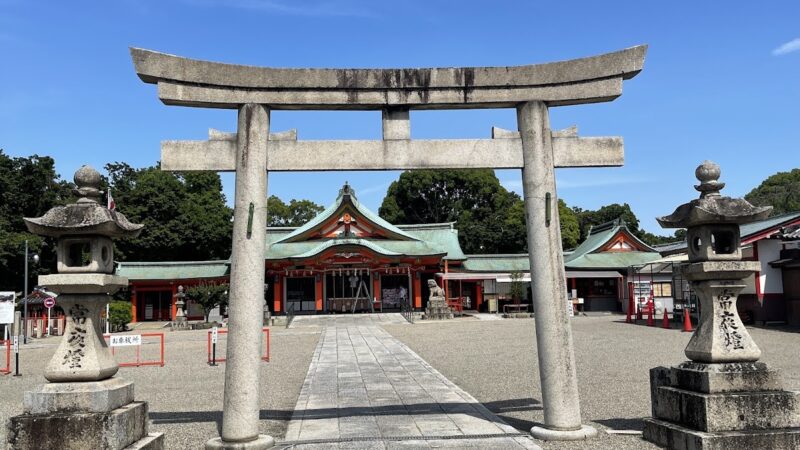
One of Karakuni Shrine’s greatest attractions is its long approach, enveloped in deep greenery. This approach has been selected as one of Osaka’s Top 100 Green Spaces, making it a valuable green space in the increasingly urbanized Osaka Prefecture.
Various tree species are planted along the approach, displaying different appearances with each season. You can enjoy the beauty of nature all year round: fresh greenery in spring, deep shade in summer, autumn leaves in fall, and a tranquil atmosphere in winter. Visiting early in the morning offers a refreshing experience of walking through the dappled sunlight, a healing space that makes you forget the hustle and bustle of the city.
Main Hall and Worship Hall
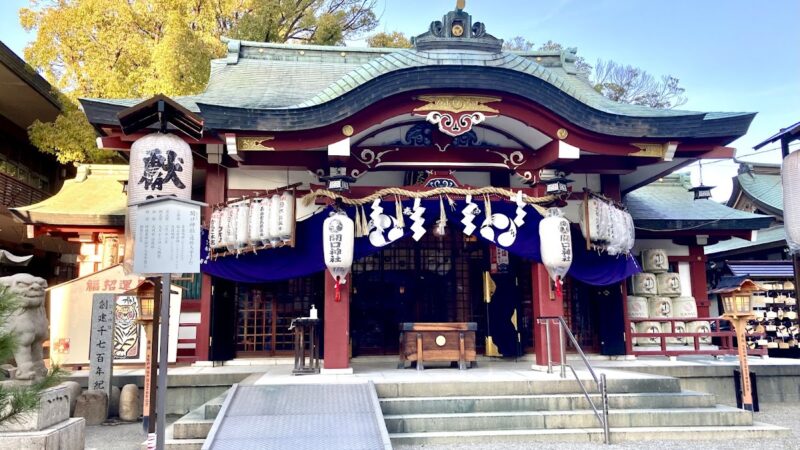
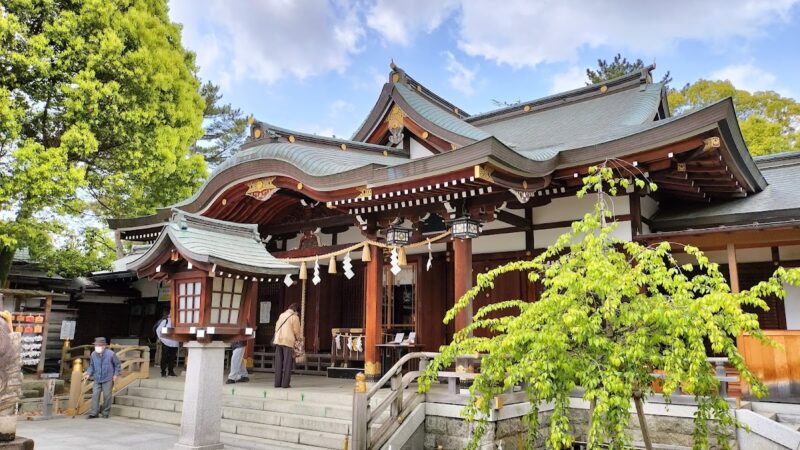
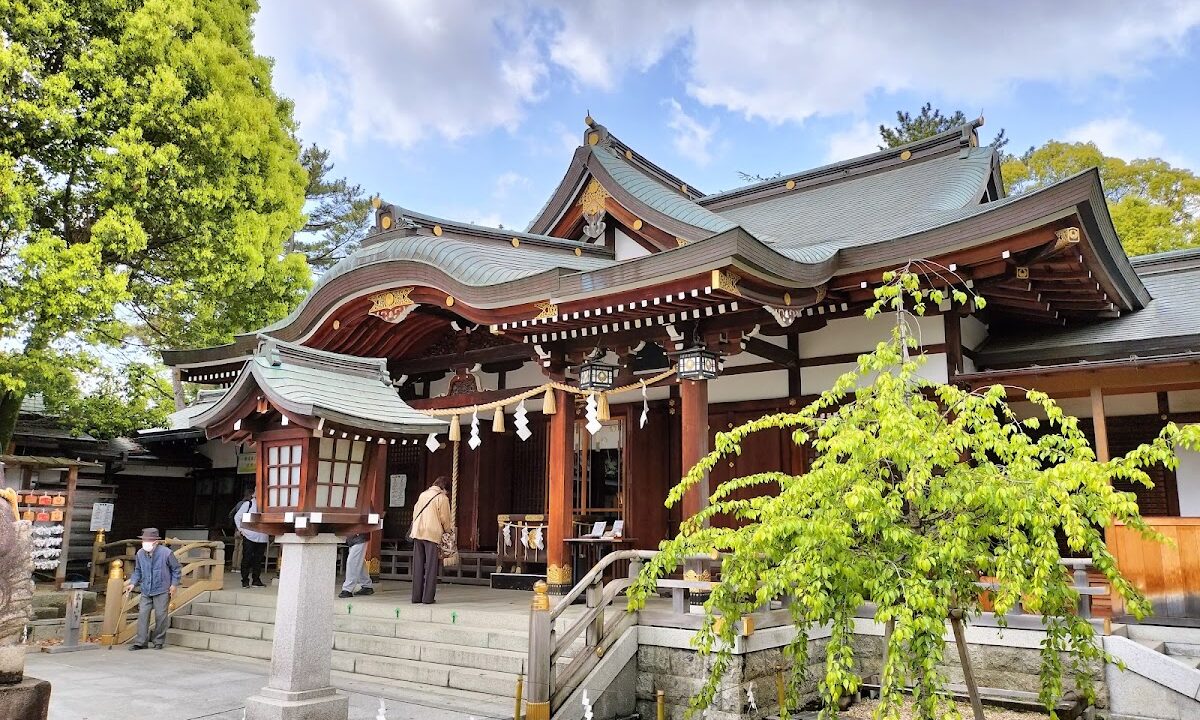
As you proceed along the approach, the solemn worship hall appears. The main hall is built in the traditional shrine architectural style, exuding a sense of long history. The main hall is filled with local people visiting daily, creating a peaceful atmosphere.
The Legend of Karakuni Pond
Within the shrine grounds lies a historical site known as the “Karakuni Pond Site.” According to an old legend, there was once a pond here, and a mysterious story involving a deer, considered a messenger of the gods, is told. It is said that images of this deer are depicted on the walls of successive shrine buildings, and searching for traces of this legend is one of the pleasures of visiting.
These legends and historical sites embody the essence of exploring the depths of history, a key aspect of Fujidera City’s designation as a “City with a Tourist Difficulty Level A.”
Shrines and Facilities
Besides the main hall, Karakuni Shrine’s grounds contain several smaller shrines and facilities. Each shrine enshrines a different deity, catering to various wishes. The shrine office also offers Goshuin (stamped seals) and amulets, which are popular souvenirs of visitors.
The shrine grounds often host seasonal events such as bazaars, making it a vibrant and welcoming place for the community. Its friendly atmosphere, where visitors can enjoy interacting with locals, is a major draw.
Annual Events and Festivals
Main Festivals
Karakuni Shrine holds various festivals and religious ceremonies throughout the year:
- New Year’s Day Festival: A popular first shrine visit of the year, where many worshippers pray for happiness in the new year.
- Spring Grand Festival: An important festival celebrating the arrival of spring.
- Autumn Grand Festival: A festival expressing gratitude for the harvest and praying for a bountiful harvest.
- Monthly Festival: Regular monthly festivals.
Community-Oriented Events
Karakuni Shrine also functions as a center for the local community, regularly hosting bazaars and cultural events. These events feature sales of local specialties and handmade goods, as well as opportunities to experience traditional performing arts, serving as a platform for the preservation and exchange of local culture through the shrine.
Seasonal events include hands-on activities that can be enjoyed by children and adults alike, making it an ideal spot for family visits.
Access and Basic Information
Access by Train
The most convenient way to reach Karakuni Shrine is via the Kintetsu Minami-Osaka Line:
Approximately 5 minutes on foot from Fujidera Station on the Kintetsu Minami-Osaka Line
After exiting Fujidera Station and walking through the Fujidera Ichiban-gai shopping street, you will find Fujidera Temple on your left and Karakuni Shrine on your right. Strolling through the shopping street is part of the enjoyment. Its proximity to the station and excellent accessibility make it easily accessible from Osaka city and Nara.
Access by Car and Parking
If visiting by car:
- Approximately 10 minutes from the Fujidera Interchange on the Nishi-Meihan Expressway
- Approximately 15 minutes from the Miyake Exit on the Hanshin Expressway Route 14 Matsubara Line
While there is parking space for visitors on the temple grounds, spaces are limited. During busy periods such as New Year’s, we recommend using public transportation. There are also several coin-operated parking lots in the surrounding area.
Basic Information
- Location: 1-19-14 Fujidera, Fujidera City, Osaka Prefecture
- Phone Number: 072-955-2473
- Visiting Hours: Grounds are freely accessible (Shrine office is usually open from 9:00 to 17:00)
- Admission Fee: Free
- Goshuin (Shrine Seal): Available (Granted at the shrine office)
- Parking: Available (Free, limited number of spaces)
Nearby Tourist Attractions
Surrounding Karakuni Shrine are several historical sites representative of Fujidera City:
Fujidera Temple
An ancient Shingon Buddhist temple located about a 3-minute walk from Karakuni Shrine. It is famous for its national treasure, the seated statue of the Thousand-Armed Kannon Bodhisattva, and is also known as the fifth temple on the Saigoku Thirty-Three Kannon Pilgrimage. Visiting it together with Karakuni Shrine is recommended.
Domyoji Tenmangu Shrine
This shrine is associated with Sugawara no Michizane and is revered as the god of learning. It is also famous for its plum blossoms, and visitors can enjoy the beautiful plum garden in spring.
Furuichi Kofun Group
Part of the Mozu-Furuichi Kofun Group, a UNESCO World Heritage Site, is scattered throughout Fujiidera City. It’s a place where you can feel the romance of ancient history, with sites such as the tomb of Emperor Ingyo and the tomb of Princess Nakahime.
Manners and Points for Visiting a Shrine
Basic Worship Etiquette
Basic etiquette when visiting Karakuni Shrine:
- Bow before passing through the torii gate: Bow before entering the shrine grounds.
- Walk along the edge of the path: The center of the path is considered the path of the gods.
- Purify yourself at the water basin: Purify your left hand, then your right hand, then your mouth.
- Etiquette at the main hall: The basic ritual is two bows, two claps, and one bow.
Recommended Time to Visit
Early morning visits are recommended. Especially between 7:00 AM and 9:00 AM, there are fewer visitors, allowing for a peaceful and tranquil visit. The morning sun filtering through the trees along the path is beautiful, creating a refreshing atmosphere.
Seasonal highlights include the beautiful fresh greenery of spring and the vibrant autumn foliage, allowing you to enjoy the changing seasons while visiting the shrine.
Goshuin (Shrine Seals) and Amulets
At Karakuni Shrine, you can receive either pre-written or handwritten goshuin (shrine seals). Bringing your goshuincho (seal book) will ensure a careful and thorough writing. Various amulets are also available, catering to a wide range of wishes, including financial success, academic achievement, and family safety.
The Charm and Characteristics of Karakuni Shrine
Value as an Urban Oasis
Karakuni Shrine, boasting one of the most lush green approaches in Osaka Prefecture, is a valuable natural space in the increasingly urbanized city. Selected as one of “Osaka’s 100 Green Spaces,” the approach offers a calming and peaceful atmosphere.
It’s a popular daily walking route for locals, and many people can be seen strolling along the approach in the mornings and evenings. A major appeal of Karakuni Shrine is that it functions not only as a tourist spot but also as a place of relaxation for local residents.
A Shrine that Preserves the History of the Mononobe Clan
As a shrine dedicated to the ancestral deity of the ancient Mononobe clan, Karakuni Shrine is an important spot for studying ancient Japanese history. While the Mononobe clan is known for their political struggles with the Soga clan, before that, they were an important clan that supported the imperial court in both military and religious spheres.
While there are several shrines throughout Japan that enshrine Nigihayahi-no-Mikoto as their main deity, the existence of Karakuni Shrine, which preserves their history in Kawachi Province, one of the Mononobe clan’s strongholds, is extremely valuable. For history enthusiasts, it can be considered a sacred place where one can feel the breath of ancient history.
A Community-Based, Open Shrine
Another characteristic of Karakuni Shrine is its welcoming and open atmosphere. Through events such as bazaars, it plays a central role in the local community, making the shrine not merely a place of worship but also a place for people to interact.
The sight of local people regularly visiting the shrine and the peaceful atmosphere it creates leaves a warm impression on visitors. The welcoming and open atmosphere, which inclusively greets both tourists and locals, is a major draw.
Summary: The Value of Visiting Karakuni Shrine
Karakuni Shrine is a venerable shrine with over 1500 years of history, dedicated to Nigihayahi-no-Mikoto, the ancestral deity of the Mononobe clan. Its beautiful approach, selected as one of “Osaka’s 100 Green Spaces,” its reputation as a power spot for financial luck and business prosperity, and its friendly, open atmosphere are its main attractions.
Despite its convenient location just a 5-minute walk from Kintetsu Fujiidera Station, it offers a tranquil space surrounded by abundant nature, allowing you to forget the hustle and bustle of the city and find peace of mind. Visiting it along with nearby historical sites such as Kuzui-ji Temple and the Furuichi Kofun Cluster will allow you to experience the history and culture of Fujiidera more deeply.
When sightseeing in Osaka, be sure to visit Karakuni Shrine. A special experience awaits you, where you can feel the weight of ancient history, the beauty of nature, and the warmth of the local community.