Complete Guide to Fujii-dera Temple | History, Goshuin (temple stamp), and Access Information for the Famous Thousand-Armed Kannon and Wisteria
Fujii-dera Temple, located in Fujiidera City, Osaka Prefecture, is an ancient temple founded during the Nara period. It is a Shingon sect Omuro school temple with a national treasure, a seated statue of the Thousand-Armed Kannon Bodhisattva, as its principal image. As the fifth temple on the Saigoku Thirty-Three Kannon Pilgrimage, it has long been cherished by many pilgrims and worshippers. Especially during the spring wisteria season, the temple grounds are adorned with beautiful purple flowers, attracting many tourists.
History and Origin of Fujii-dera Temple
Founding and the Fujii Clan
Fujii-dera Temple is believed to have been founded in 725 (Shinki 2) during the Nara period. According to temple tradition, it was built as the family temple of the Fujii clan, a clan of Baekje origin. The Fujii clan was a powerful immigrant family that played an important role in ancient Japan and held influence in this region.
The temple’s name, “Kuzui,” originates from the name of this clan, and the place name, “Fujiidera,” is also believed to have been named after Kuzui-dera Temple. In other words, it’s a rare example where the temple existed first, and its name became the origin of the city name.
Relationship with Emperor Shomu
It is believed that Emperor Shomu’s imperial decree was involved in the founding of Kuzui-dera Temple. Emperor Shomu was a devout Buddhist and is known for establishing provincial temples (Kokubunji) throughout the country to pray for the peace of the nation and the happiness of the people. Kuzui-dera Temple was also considered important as part of the Buddhist promotion policy of that era.
Changes Since the Heian Period
During the Heian period, it was designated as the fifth temple of the Saigoku Thirty-Three Kannon Pilgrimage, and many nobles and commoners began to visit it as an object of Kannon worship. This pilgrimage tradition continues to this day, with many pilgrims visiting throughout the year.
Changes Since the Heian Period
During the Heian period, it was designated as the fifth temple of the Saigoku Thirty-Three Kannon Pilgrimage, and many nobles and commoners began to visit it as an object of Kannon worship. Although it declined during the Middle Ages due to the effects of war, it underwent a period of revival during the Edo period, and the current main hall was rebuilt in 1802 (Kyowa 2).
The Charm of the National Treasure, the Seated Thousand-Armed Kannon Bodhisattva Statue
One of Japan’s Oldest Thousand-Armed Kannon Statues
The greatest treasure of Kuzui-ji Temple is the principal image, the seated statue of the Thousand-Armed Kannon Bodhisattva. This statue is believed to have been created in the mid-8th century during the Nara period and was designated a National Treasure in 1955 (Showa 30).
It is approximately 130 centimeters tall and was made using the dry lacquer technique, which was widely used during the Nara period. Dry lacquer is a technique in which hemp cloth is hardened with lacquer to create a shape, allowing for detailed expression while being lighter than wooden sculptures.
A Thousand-Armed Kannon with 1041 Arms
While Thousand-Armed Kannon statues are usually depicted with 42 arms, the Thousand-Armed Kannon at Kuzui-ji Temple is an extremely rare statue with literally more than a thousand arms. In reality, the statue has 1041 arms of varying sizes, each with an eye painted on its palm.
This faithfully represents the original meaning of the Thousand-Armed Kannon, “saving all sentient beings in all directions with a thousand arms and a thousand eyes,” and is a rare example, with only a few examples existing in Japan. The statues at Kuzui-ji Temple in Osaka, Toshodai-ji Temple in Nara, and Sanjusangen-do Temple in Kyoto are known as “True Thousand-Armed Kannon.”
Opportunities for Viewing
The National Treasure, the seated statue of the Thousand-Armed Kannon Bodhisattva, is unveiled to the public on the 18th of each month from 1 PM to 4 PM (except August 18th). Special unveilings also take place during the Spring Grand Festival on April 17th and 18th, and the Autumn Grand Festival on November 17th and 18th each year.
Since it is usually housed in a shrine, visiting on these unveiling days allows you to view the National Treasure up close. The sight of over a thousand arms radiating outwards is breathtaking and well worth seeing.
Grounds and Highlights of Kuzui-ji Temple
Main Hall
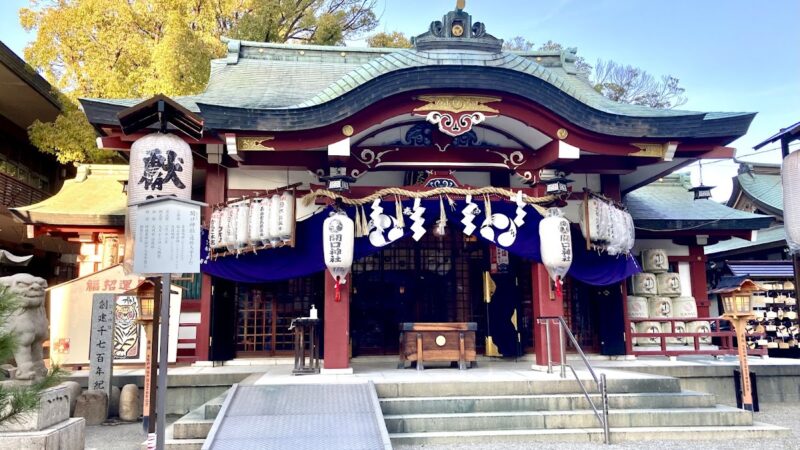
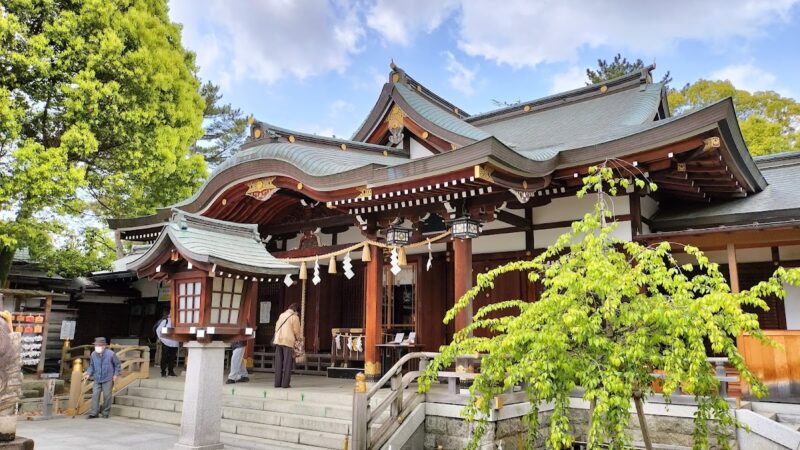
The current main hall was rebuilt in 1802 (Kyowa 2) and is a magnificent building with a hipped roof. Inside the main hall is enshrined the principal image, a seated statue of the Thousand-Armed Kannon Bodhisattva, and it is bustling with many worshippers on days when the statue is open to the public.
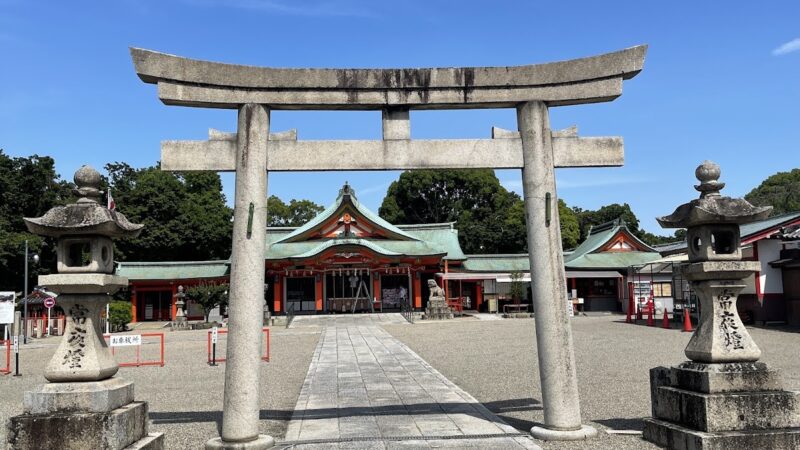
In front of the main hall is a wide, stone-paved temple ground, which quietly welcomes worshippers.
South Gate
At the entrance to the temple grounds is a magnificent South Gate, where Nio statues are enshrined. Passing through this gate allows one to shift their mindset from the secular world to a sacred realm.
Four-Legged Gate (West Gate)
On the west side is a four-legged gate, another dignified building that evokes a sense of history. Many worshippers use this as an entrance to the temple grounds.
Bell Tower and Bell
Within the temple grounds is a bell tower, where an old temple bell hangs. It is also used as the New Year’s Eve bell and is beloved by the local people.
Stone Monuments and Haiku Monuments
Various stone monuments and haiku monuments are scattered throughout the temple grounds, conveying the history and cultural value of Kuzui-ji Temple. For history buffs, strolling around and reading the inscriptions on these monuments is one of the pleasures.
Kuzui-ji Temple as a Famous Wisteria Spot
Origin of the Temple Name and its Relationship to Wisteria
The reading of Kuzui-ji Temple’s name, “Fuji-dera,” has a deep connection to wisteria flowers. While the character “葛” is normally read as “kuzu,” at this temple it is read as “fuji.” This is thought to be because wisteria trees have been planted on the temple grounds since ancient times, and the temple was known as a famous wisteria spot.
Best Time to See Wisteria and Wisteria Festival
The wisteria at Kuzui-ji Temple is at its best from late April to early May each year. During this time, the temple grounds are adorned with beautiful purple wisteria blossoms and filled with a sweet fragrance.
During the wisteria blooming season, the “Wisteria Festival” is held, attracting many tourists and photography enthusiasts. Especially when it coincides with the Spring Grand Festival around April 18th, it offers an excellent opportunity to enjoy both the unveiling of the national treasure, the Thousand-Armed Kannon statue, and the wisteria blossoms.
Highlights of the Wisteria Trellis
There are several wisteria trellises within the temple grounds, each planted with different varieties of wisteria. In addition to purple wisteria, there are also white and pink wisteria, creating a colorful landscape.
The sight of the wisteria blossoms hanging long is extremely elegant, allowing visitors to fully experience the charm of Japanese spring. Many visitors bring cameras to take beautiful photographs of the wisteria.
As the Fifth Temple of the Saigoku Thirty-Three Kannon Pilgrimage
About the Saigoku Thirty-Three Kannon Pilgrimage
The Saigoku Thirty-Three Kannon Pilgrimage is a pilgrimage route of Kannon temples centered in the Kinki region, and is known as the oldest pilgrimage route in Japan. Founded in 718 by Tokudo Shonin, Kuzui-ji Temple boasts a history of over 1300 years.
As the fifth temple on the pilgrimage route, Kuzui-ji holds a significant position. It serves as a relay point on the pilgrimage route, continuing from the fourth temple, Shifuku-ji (Izumi City, Osaka Prefecture), to the sixth temple, Tsubosaka-dera (Takatori Town, Nara Prefecture).
Significance as a Pilgrimage Temple
As a sacred site of Kannon worship, Kuzui-ji Temple is considered a place embodying the compassion of Kannon, the Bodhisattva of Compassion for the salvation of all sentient beings. In particular, the Thousand-Armed Kannon symbolizes the salvation of suffering people with its thousand arms, and many worshippers visit with various prayers.
Pilgrims are believed to purify their hearts and accumulate merit by chanting sutras such as the Heart Sutra in the main hall and receiving a Goshuin (temple stamp).
Goshuin and Sutra Offering
Types of Goshuin
Kuzui-ji Temple offers several types of Goshuin.
Goshuin (temple stamp) of the Saigoku Thirty-Three Kannon Pilgrimage: This is the most common type of goshuin, featuring the calligraphy of “Daihiden” or “Senju Kannon” (Thousand-Armed Kannon) and the temple’s seal. It is the goshuin for the fifth temple on the Saigoku Thirty-Three Kannon Pilgrimage.
Main Deity Goshuin: There are also special goshuin related to the National Treasure, the seated statue of Senju Kannon Bodhisattva.
Seasonal Goshuin: During special seasons, such as wisteria season, limited-edition goshuin designs may be offered.
How to Obtain a Goshuin
You can obtain a goshuin at the Nokyo-sho (temple stamp office) after completing your prayers at the main hall. Bring your goshuincho (stamp book) and say, “I would like to receive a goshuin.”
The offering fee (goshuin fee) is usually around 300 to 500 yen. If you are using a special Nokyo-cho for the Saigoku Thirty-Three Kannon Pilgrimage, it is a good idea to mention this.
Proper Procedure for Offering Sutras
Originally, a Goshuin (temple stamp) is given as proof of “offering sutras.” Therefore, the proper procedure is to first recite sutras such as the Heart Sutra in the main hall before receiving the Goshuin.
Even if you cannot recite sutras, it is important to respectfully join your hands in prayer and pray quietly. Understand that the Goshuin is not merely a tourist stamp, but a symbol of faith, and receive it with respect.
Annual Events and Ceremonies
Spring Grand Festival (April 17th & 18th)
One of the most important events at Kuzui-ji Temple is the Spring Grand Festival, held annually on April 17th and 18th. During this period, the national treasure, the seated statue of the Thousand-Armed Kannon Bodhisattva, is specially unveiled, attracting many visitors.
Also, this period often coincides with the peak blooming season of wisteria, making the temple grounds very lively with worshippers and tourists. Religious ceremonies such as Buddhist services and Goma fire rituals are held, creating a solemn atmosphere.
Autumn Grand Festival (November 17th & 18th)
A similar grand festival is held in autumn on November 17th and 18th. This festival also features a special unveiling of the national treasure, the seated statue of the Thousand-Armed Kannon Bodhisattva, allowing visitors to worship in a different autumnal atmosphere than in spring.
Coinciding with the autumn foliage season, visitors can enjoy the beautiful scenery of the trees in the temple grounds changing color.
Unveiling of the Main Image on the 18th of Every Month
The main image, the seated statue of the Thousand-Armed Kannon Bodhisattva, is unveiled from 1 PM to 4 PM on the 18th of every month (except August). This regular unveiling is a rare opportunity to view the national treasure outside of the grand festival.
The date of the 18th originates from the Kannon Bodhisattva’s auspicious day, and it is believed that visiting on this day brings special merit.
New Year’s Visit and the Ringing of the Bell
The temple is bustling with worshippers for the New Year’s visit. On New Year’s Eve, the temple bell is rung, creating a solemn atmosphere for welcoming the new year.
For locals, Kuzui-ji Temple is a familiar place of worship, cherished throughout the year with various events and activities.
Visiting Information
Visiting Hours
- Temple Grounds: Generally open for free visits (during reasonable hours)
- Main Hall Inner Sanctuary (Viewing of the Principal Image): 18th of each month (except August), 1 PM to 4 PM, and during the Spring and Autumn Grand Festivals
Admission Fee
- Temple Grounds Visit: Free
- Viewing of the Principal Image (On days when the image is unveiled): Adults 500 yen, Junior and Senior High School Students 300 yen, Elementary School Students and younger free (fees are subject to change)
Location and Contact Information
Address: 1-16-21 Fujiidera, Fujiidera City, Osaka Prefecture 583-0024
Phone: 072-938-0005
Official Information
For the latest visiting information and event schedules, we recommend checking the official website or calling Kuzui-ji Temple. It is especially advisable to check the dates for the unveiling of the principal image and special events in advance.
Access Methods
Access by Train
The most convenient way to access Kuzui-ji Temple is by train.
From Kintetsu Minami-Osaka Line “Fujiidera Station”:
- Approximately 5 minutes on foot from the station
- Exit the South Exit and proceed south through the shopping street; you will soon see the gate of Kuzui-ji Temple.
- It is very easily accessible, and even first-time visitors can arrive without getting lost.
From Osaka:
- Approximately 20 minutes by Kintetsu Minami-Osaka Line express or semi-express train from Osaka Abenobashi Station.
From Nara:
- Accessible via Kintetsu Minami-Osaka Line and Yoshino Line.
Access by Car
Using the Expressway:
- Approximately 5 minutes from Nishimeihan Expressway “Fujiidera IC”
- Approximately 15 minutes from Hanshin Expressway Route 14 Matsubara Line “Miyake Exit”
Parking:
- There is no large-scale parking lot dedicated to Kuzui-ji Temple.
- You will need to use nearby coin-operated parking lots.
- There are several coin-operated parking lots around Fujiidera Station.
- It gets crowded during the spring wisteria festival and other major festivals, so using public transportation is recommended.
Access by Bus
While Kintetsu buses are available, walking from Fujiidera Station is the most convenient option.
Nearby Tourist Attractions
Domyoji Tenmangu Shrine
Located about a 15-minute walk from Kuzui-dera Temple, Domyoji Tenmangu Shrine is dedicated to Sugawara no Michizane and is known as the god of learning. It is also famous for its plum blossoms, and visitors can enjoy the beautiful plum grove in spring.
Domyoji Temple
Adjacent to Domyoji Tenmangu Shrine, Domyoji Temple is known as a nunnery and houses the national treasure, the Eleven-Headed Kannon Bodhisattva Standing Statue. It is open to the public on the 18th and 25th of each month.
Emperor Chuai’s Mausoleum (Okamisanzai Tumulus)
Near Kuzui-dera Temple is a large keyhole-shaped tumulus believed to be the mausoleum of Emperor Chuai. This is a must-see spot for those interested in the history of the Kofun period.
Fujiidera City Library and Lifelong Learning Center
As a local cultural facility, you can view materials related to the history and culture of Fujiidera. Recommended for those who want to learn more about the history of Kuzui-ji Temple and the surrounding area.
Furuichi Kofun Group
The Furuichi Kofun Group, stretching from Fujiidera City to Habikino City, is part of the “Mozu-Furuichi Kofun Group,” which was registered as a World Heritage Site in 2019. Numerous burial mounds, including the tomb of Emperor Ojin (Homuda Gobyoyama Kofun), are scattered throughout the area, making it a must-see for ancient history enthusiasts.
Manners and Precautions for Visiting a Temple
Basic Manners for Visiting a Temple
- Clothing: Avoid revealing clothing and dress appropriately for visiting a temple.
- Photography: Photography is generally permitted within the temple grounds, but photography inside the main hall or of the principal image may be prohibited. Always check before taking pictures.
- Quietness: Be quiet within the temple grounds and be considerate of other visitors.
- Offerings: An offering within your means is acceptable. Offer your prayers with sincerity.
- Praying with clasped hands: Before the Buddha, quietly clasp your hands together and pray with sincerity.
Precautions during Wisteria Season
The area becomes extremely crowded during the peak wisteria blooming season (late April to early May) and during the Spring Grand Festival.
- Visiting early in the morning or on weekdays is recommended.
- Parking is limited, so using public transportation is recommended.
- When taking photographs, please be careful not to disturb other visitors.
Manners when receiving a Goshuin (temple stamp)
- Always complete your prayers before receiving a Goshuin.
- Prepare your Goshuincho (stamp book) in advance and show the open page.
- Don’t forget to express your gratitude to the staff at the stamp office.
- Understand that there may be waiting times during busy periods, so visit with ample time in your schedule.
Summary of the Charms of Kuzui-ji Temple
Kuzui-ji Temple is a representative ancient temple of Osaka with a history of over 1300 years as one of the 33 temples of the Saigoku Kannon Pilgrimage, and it houses the national treasure, the seated statue of the Thousand-Armed Kannon Bodhisattva, a masterpiece of Japanese Buddhist art.
As the true Thousand-Armed Kannon, the statue of Kannon with over a thousand arms is extremely rare in Japan, and its majestic appearance will leave an unforgettable impression. Please take advantage of the regular monthly openings on the 18th and the spring and autumn festivals to view this precious national treasure.
Furthermore, during the spring wisteria season, the temple grounds are adorned with beautiful purple flowers, offering a visually memorable experience. The wisteria, which gave the temple its name “Fujiidera,” is another major attraction of Kuzui-ji Temple.
Its convenient location, just a 5-minute walk from Kintetsu Fujiidera Station, is another attractive feature, making it easily accessible from Osaka city. There are many other sights to see nearby, such as Domyoji Tenmangu Shrine and the World Heritage Site Furuichi Kofun Group, allowing you to enjoy a leisurely historical stroll for a whole day.
As a place of worship, a tourist destination, and a place to experience Japanese history and culture, Kuzui-ji Temple is a temple well worth visiting. Please come and experience its charm for yourself.