Complete Guide to Santo Shrine (Osakasayama City, Osaka Prefecture) | History, Goshuin (Shrine Seal), and Access Information
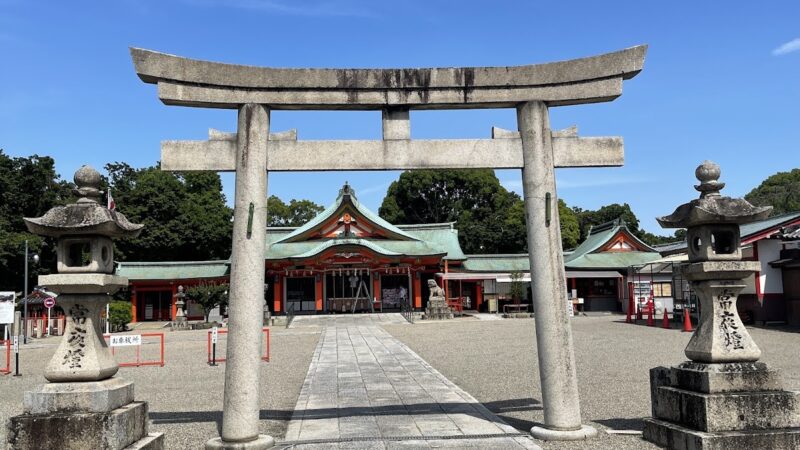
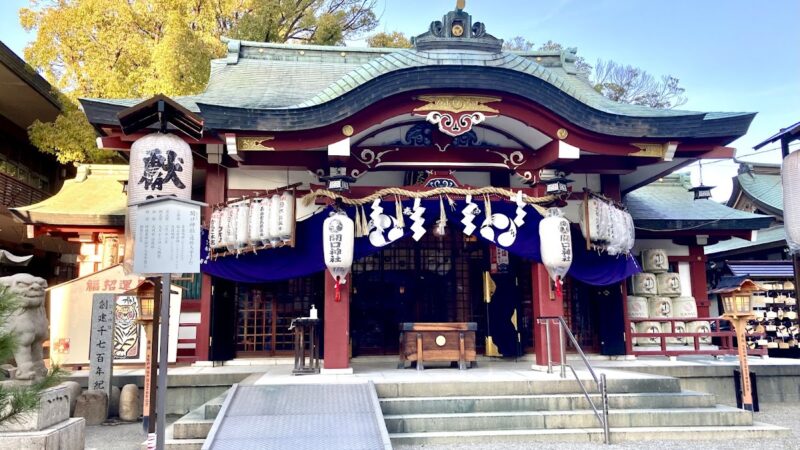
Santo Shrine, located in Imakuma, Osakasayama City, Osaka Prefecture, is a historical shrine with deep ties to Kumano faith. Situated along the Amano Kaido road, it is known as a sacred site where pilgrims on their way to Kumano in Kishu once stopped. This article comprehensively introduces information you should know before visiting Santo Shrine, including its history, enshrined deities, highlights, autumn festival floats, goshuin information, and access methods.
What is Santo Shrine? | A Historic Shrine Also Known as Kumano Shrine
Santo Shrine is located at 5-647 Imakuma, Osakasayama City, Osaka Prefecture, and is also known as “Kumano Shrine.” This name originates from the fact that people traveling along the Amano Kaido road on their way to Kumano in Kishu stopped there, reflecting its history of flourishing with Kumano faith.
The Amano Road, which runs along the western ridge of the shrine, was an important pilgrimage route leading from Amanoyama Kongoji Temple to Kumano in Kishu. It is said that from the medieval to the early modern period, many pilgrims to Kumano traveled this road and prayed for safe journeys at the Mito Shrine.
Although the shrine now stands in a quiet residential area, its history and faith are carefully preserved by the local people.
History of Mito Shrine | From its 7th Century Founding to the Present
Founding and Early History
According to tradition, the founding of Mito Shrine dates back to the 7th century. It is thought to have been founded during the Asuka or Nara period, suggesting it was an ancient center of faith in this region.
Destruction and Reconstruction
Throughout its long history, Mito Shrine was once destroyed by fire during wartime. However, it was rebuilt in the 16th century within Kinzoji Temple by a monk named Taikan. This period coincided with the Sengoku period (Warring States period), and it is conceivable that the restoration of temples and shrines required immense effort.
The restoration, driven by a sense of resignation, was not merely a reconstruction of buildings, but held significant meaning in reuniting the local faith. The fact that it was restored within Kinzo-ji Temple is a valuable historical fact illustrating the form of Shinto-Buddhist syncretism at that time.
Separation of Shinto and Buddhism in the Meiji Era
The Meiji-era decree separating Shinto and Buddhism led to the separation of shrines and temples throughout Japan. Interestingly, in the case of Mito Shrine, the shrine remained while Kinzo-ji Temple disappeared. This can be seen as demonstrating the strong roots of Kumano faith in the region and the shrine’s independence.
After this separation of Shinto and Buddhism, Mito Shrine took its current form and continues to attract worshippers as the local tutelary deity.
Deities Enshrined | Izanagi, Izanami, and Susanoo
The deities enshrined at Mito Shrine are the following three:
Izanagi-no-Mikoto
In Japanese mythology, he is the god of creation, the father of many gods including Amaterasu-Omikami. He is revered as the god who presides over creation and the source of life.
Izanami-no-Mikoto
She is the wife of Izanagi-no-Mikoto and a goddess who, together with him, created the land of Japan and its gods. She is worshipped as the goddess who presides over the birth of life and fertility.
Susanoo-no-Mikoto
He is the son of Izanagi-no-Mikoto and Izanami-no-Mikoto, and a heroic god known for slaying Yamata-no-Orochi. He is widely worshipped as a god who wards off evil and disasters.
These three gods are deeply connected to the gods of Kumano Sanzan, indicating that the Santo Shrine was a center of Kumano faith. This is why it is also called “Kumano Shrine,” due to its connection to the deity of Kumano.
Highlights of the Shrine Grounds | One-Stone Five-Ring Pagoda and Santo Ebisu Shrine
One-Stone Five-Ring Pagoda | Sayama’s Oldest Stone Artifact with a Date Inscription
The most noteworthy cultural artifact within the grounds of Santo Shrine is the “One-Stone Five-Ring Pagoda.” This five-ring pagoda is a rare form, carved from a single stone, and is considered the oldest stone artifact with a date inscribed in Osaka Sayama City.
The five-ring pagoda is a memorial tower representing the Buddhist view of the universe, composed of five elements from bottom to top: earth (square), water (circular), fire (triangular), wind (crescent-shaped), and sky (jewel-shaped). Carving a five-ring pagoda from a single stone is technically difficult and is a valuable legacy demonstrating the high skill of the stonemasons of the time.
This one-stone five-ring pagoda conveys the ancient history of Santo Shrine and the fact that this area was once an important place of worship.
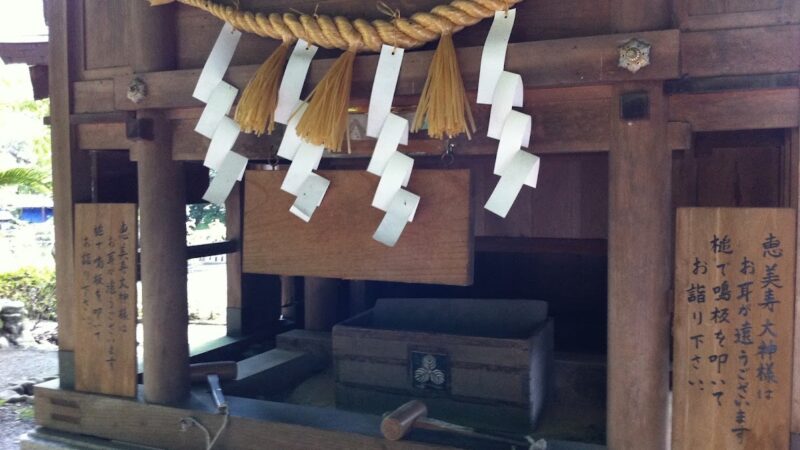
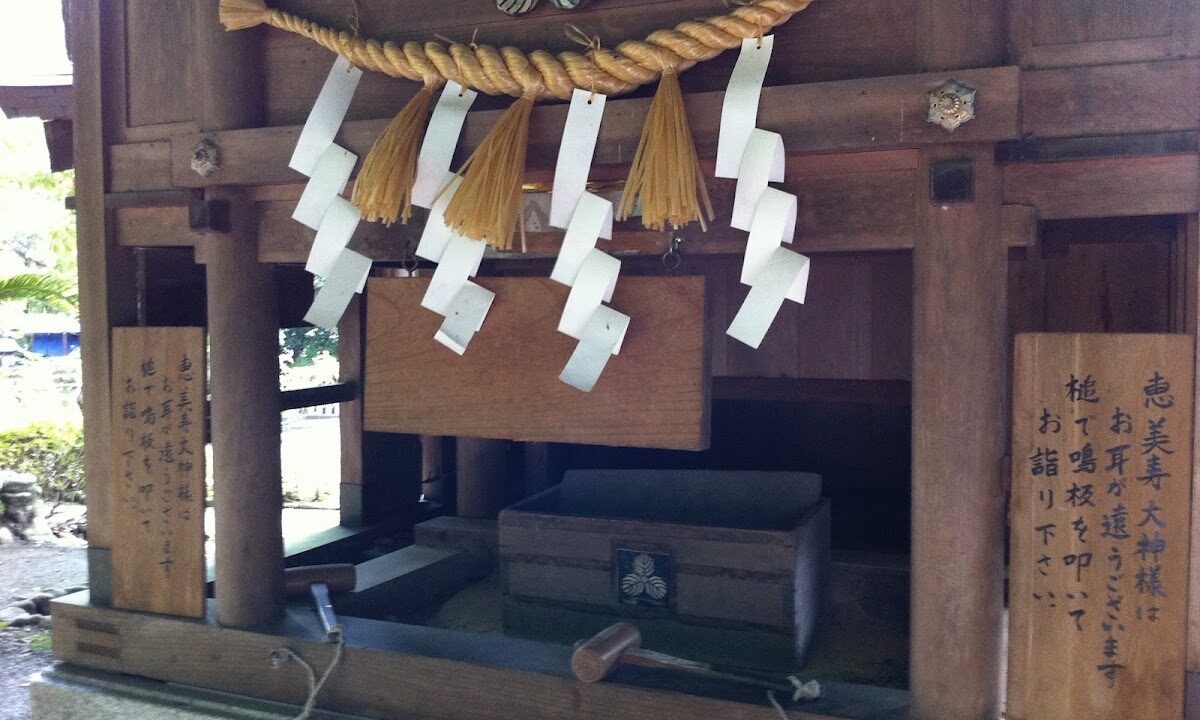
Mitsu Ebisu Shrine | Unusual Worship Method
Within the shrine grounds is the Mitsu Ebisu Shrine, dedicated to Ebisu-sama. This shrine has an interesting worship method. According to the information board, it describes an unusual custom of “worshipping Ebisu-sama, who is a little hard of hearing, by striking a wooden board with a mallet.”
This is based on a folk belief that Ebisu-sama, who carries a fishing rod, became hard of hearing due to the sound of the sea. It’s a humorous and approachable form of worship where worshippers announce their presence to the god by striking the wooden board. This unique way of worshipping Ebisu-sama, who is worshipped as the god of business prosperity and fishing, provides a memorable experience for visitors.
Mitsu Shrine Autumn Festival | Five Danjiri Floats Enter the Shrine
The largest annual event at Mitsu Shrine is the Autumn Festival. This festival is known for the entry of five danjiri (floats) from the local area into the shrine grounds.
Danjiri Floats Entering the Shrine
The following five danjiri floats enter the shrine grounds of Mito Shrine during the autumn festival:
- Kakure
- Yamabushi
- Yamamoto
- Imakuma
- Oono
These danjiri floats are carefully preserved by the parishioners of their respective districts, and on the day of the festival, they are pulled into the shrine grounds with energetic shouts.
Festivals at a Shrine Standing on the Faithful Path, Amano Kaido
While Mito Shrine usually has a quiet atmosphere, it becomes lively during the autumn festival. As the expression “Even a shrine quietly standing on the faithful path, Amano Kaido, has its ‘danjiri’ floats entering the shrine grounds” suggests, it is clear that the shrine, facing a historic pilgrimage route, also functions as a center of the region’s festival culture.
The Danjiri Festival is an important cultural event in southern Osaka, and the autumn festival at Mito Shrine is also a vital event that strengthens the bonds of the local community. Along with the New Year’s visit to the shrine, the autumn festival is a time when local people gather in large numbers.
Goshuin Information | Mito Shrine’s Goshuin
Mito Shrine offers goshuin (shrine stamps). Many people collect goshuin as a memento of their visit and as proof of their faith.
About Goshuin Issuance
For detailed information regarding Mito Shrine’s goshuin, we recommend contacting the shrine directly. Generally, goshuin can be received at the reception area or shrine office after your visit.
Even if you don’t have a goshuincho (stamp book), you may be able to purchase one at the shrine, so first-time visitors can visit with peace of mind.
Manners for Visiting the Shrine
When receiving a goshuin, it is important to first formally pray at the main hall. Remember that the goshuin is proof of your visit, not a stamp rally. It is desirable to show respect to the Shinto priests and request a Goshuin (temple/shrine stamp) using polite language.
Access Information | How to Get to Mito Shrine
Location
Address: 5-647 Imakuma, Osakasayama City, Osaka Prefecture
Phone Number: 072-365-2416
Access by Public Transportation
The following route is convenient when visiting Mito Shrine by public transportation.
Nearest Station: Kongo Station, Nankai Koya Line
By Bus: From Kongo Station on the Nankai Koya Line, take the Nankai Bus bound for Izumigaoka Station and get off at the “Tezukayama Gakuin Izumigaoka-mae” bus stop. It’s about an 8-minute walk from there.
It is recommended to check the bus schedule and frequency in advance. Especially on holidays and festival days, it may be crowded, so please allow plenty of time for your visit.
Access by Car
If visiting by private car, aim for the Imakuma area of Osakasayama City. The shrine is located in a residential area, and there are stone steps at the entrance. Located near Tokiyama, it’s said to be “quite difficult to find even within Osakasayama City,” so using a car navigation system or smartphone map app is recommended.
It’s recommended to check with the shrine in advance regarding parking availability and capacity. Particular caution is needed during busy periods such as the autumn festival and New Year’s visits.
Tourist Attractions near Mito Shrine
Amanosan Kongoji Temple
Amanosan Kongoji Temple, which has deep ties to Mito Shrine, is the head temple of the Omuro branch of Shingon Buddhism and is known as an ancient temple in Okukawachi. Founded during the Heian period, it is a renowned temple housing numerous national treasures and important cultural properties. It is also the starting point of the Amano Road, and visiting it together with Mito Shrine will allow you to gain a deeper understanding of the history and faith of this region.
Sayama Pond
Known as Japan’s oldest dam-type reservoir, Sayama Pond is a symbolic landmark of Osakasayama City. The surrounding area has been developed into a park and is a popular spot for cherry blossom viewing. At the Sayama Pond Museum, you can learn about the history of the pond and the civil engineering techniques used.
Tokiyama Mountain
Located near the Santo Shrine, Tokiyama Mountain is a popular hiking destination. You can enjoy the scenery of the four seasons in a rich natural environment.
Etiquette and Recommended Time to Visit
Basic Manners for Visiting Shrines
By observing basic manners for visiting shrines, you can have a more fulfilling experience.
- Bow before passing through the torii gate: This is a courtesy when entering the sacred area.
- Purify yourself at the water basin: Purify your left hand, then your right hand, then your mouth.
- Avoid the center of the approach: The center is considered the path of the gods.
- Two bows, two claps, one bow: This is the general etiquette for visiting a shrine.
- Be quiet: Please be quiet within the shrine grounds.
Recommended time to visit
Autumn Festival (around October): Experience the lively festival with the procession of the danjiri floats into the shrine. It’s a great opportunity to experience the local traditional culture.
New Year’s Visit (January 1st-3rd): The shrine is bustling with locals visiting for the New Year. It’s a good opportunity to pray for safety and happiness throughout the year.
Spring and Autumn with pleasant weather: Ideal for a visit in conjunction with a stroll along the Amano Kaido road. Walking along the historical path, you can reflect on the people who made pilgrimages to Kumano in the past.
Quiet Weekdays: For those who want to visit the shrine at a leisurely pace and soak up the atmosphere, a weekday visit is recommended.
The Charm of Mito Shrine | A Space Where History and Faith Breathe
The greatest charm of Mito Shrine lies in its history spanning over 1400 years and the faith that still thrives in the region today.
Traces of Kumano Faith
The history of pilgrims passing through the Amano Road on their way to Kumano indicates that this shrine was not merely a local guardian shrine, but part of a broader network of faith. During the era when faith in the Kumano Sanzan (Three Grand Shrines of Kumano) was flourishing, this shrine functioned as an important relay point.
Faith Rooted in the Community
The lively atmosphere of the autumn festival’s Danjiri procession and the New Year’s visit demonstrates that Mito Shrine remains a central hub for the local community even today. The way this historic shrine remains deeply intertwined with people’s lives today evokes a sense of the continuation of Japan’s traditional culture.
A Space Where Silence and History Intersect
While usually quietly nestled in a peaceful residential area, stepping onto the grounds reveals a sacred space steeped in long history. The single-stone five-tiered pagoda and ancient stone steps are testaments to the faith passed down through generations.
Visitor Reviews | Ratings and Comments on Mito Shrine
The following are some comments from visitors to Mito Shrine:
- “Located in a residential area, it’s a little hard to find, but it’s a quiet and peaceful shrine.”
- “The one-stone five-ring pagoda is impressive. It’s a valuable cultural asset that makes you feel the history.”
- “The danjiri floats at the autumn festival are spectacular. I was moved to see how the local traditions are being preserved.”
- “The shrine is bustling with locals during the New Year’s visit. The homey atmosphere is wonderful.”
- “You can enjoy it more deeply if you visit after learning about the history of the Amano Kaido road.”
While usually quiet and peaceful, the shrine receives high praise from visitors for its vibrant atmosphere during festivals, where you can feel the energy of the community.
Summary | Experiencing History and Faith at Mito Shrine
Mito Shrine in Osakasayama City, Osaka Prefecture, is a historical shrine said to have been founded in the 7th century. It is known as a sacred site where pilgrims on the Kumano pilgrimage route stopped by. It enshrines Izanagi-no-Mikoto, Izanami-no-Mikoto, and Susanoo-no-Mikoto, and is also known as “Kumano Shrine.”
Within the shrine grounds is a single-stone five-tiered pagoda, the oldest inscribed stone artifact in Osakasayama City, and visitors can experience a unique method of worship at Mito Ebisu Shrine. During the autumn festival, five danjiri floats enter the shrine grounds, creating a lively atmosphere in stark contrast to the usual tranquility.
Accessible by bus and on foot from Kongo Station on the Nankai Koya Line, visiting Mito Ebisu Shrine in conjunction with nearby tourist attractions such as Amanoyama Kongoji Temple will allow you to gain a deeper understanding of the rich history and culture of this region.
With its history of Kumano faith, deeply rooted festival culture, and sacred space nestled in silence, Mito Ebisu Shrine embodies the essence of traditional Japanese faith. When visiting Osakasayama City, be sure to stop by this historic shrine.