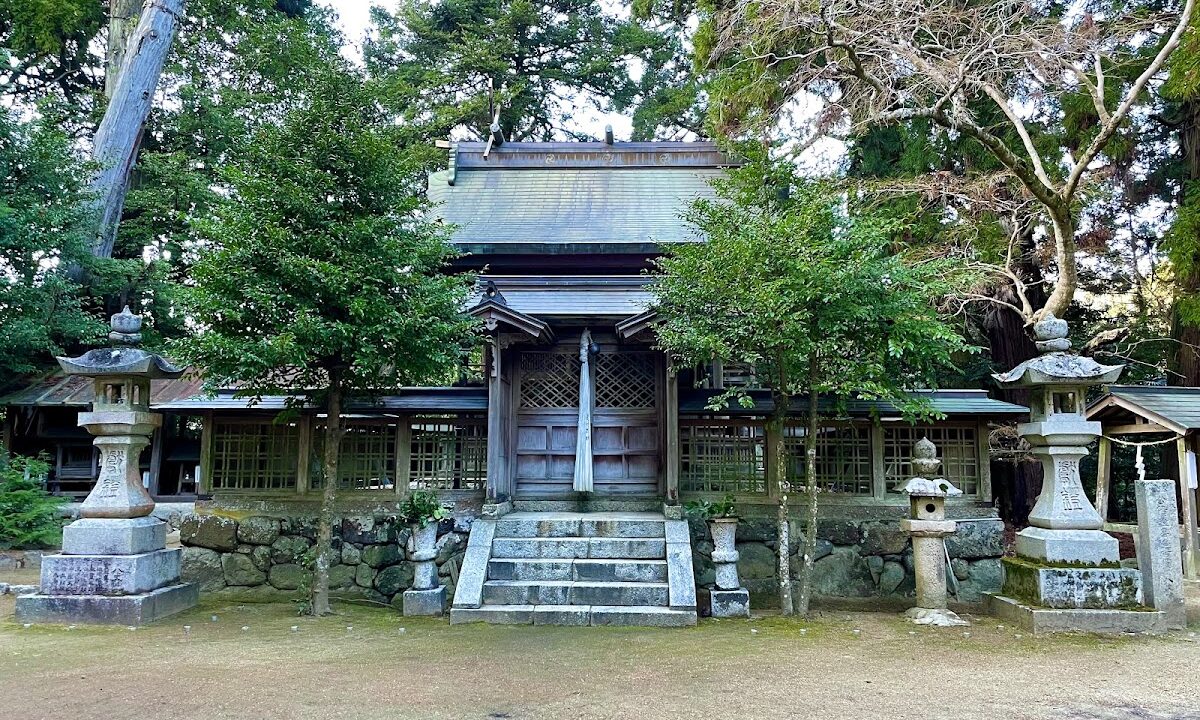
Complete Guide to Kanii Shrine (Kawachinagano City, Osaka Prefecture) | History, Goshuin (Shrine Seal), Blessings, and Access Information
Located in Amami, Kawachinagano City, Osaka Prefecture, Kanii Shrine is a historic shrine that has watched over this area for nearly a thousand years since its founding in 1054. This guide provides a detailed introduction to the shrine, including the origin of its unique name “Kanii,” its connection to the Kusunoki clan during the Nanboku-cho period, and its history of deeply rooted community faith.
Basic Information about Kanii Shrine
Location: 428 Amami, Kawachinagano City, Osaka Prefecture
Former Shrine Rank: Village Shrine
Deities Enshrined: Emperor Jimmu, Emperor Ojin, Empress Jingu, Sugawara no Michizane
Founded: Tenki 2 (1054)
Annual Festival: Early October (Autumn Festival)
Kanii Shrine is located about 10-13 minutes on foot from Amami Station on the Nankai Koya Line, and is situated in a quiet environment on the banks of the Amami River. It is a shrine of high historical value within Kawachinagano City and attracts the faith of local residents.
History and Origins of Kanii Shrine
“Kai Shrine” at the Time of Founding
Kanii Shrine is said to have been founded in Tenki 2 (1054), and at the time of its founding, it was called “Kai Shrine.” This is thought to be derived from the fact that this area was called “Kai-sho.” Established in the late Heian period, this shrine has been revered as the local tutelary deity from its inception.
The Nanboku-cho Period and the Kusunoki Clan
Records show that during the Nanboku-cho period (14th century), the Kusunoki clan, a branch of Kusunoki Masashige who was based in Kawachi Province, prayed for victory at this Kanii Shrine. The Kusunoki clan is known as loyal retainers who served Emperor Go-Daigo, and numerous historical sites related to the Kusunoki clan exist around Kawachinagano. Kanii Shrine, as an important shrine playing a part in this history, has watched over the turbulent Sengoku period.
The Great Fire of Enpo and Changes in the Shrine’s Name
In Enpo 4 (1676), Kanii Shrine suffered a major fire, with its main buildings being destroyed. This fire marked a turning point for the shrine.
During the reconstruction after the shrine burned down, a legend arose that the sacred object appeared from a deep pool called “Kanii no Fuchi” in the Amamigawa River, which flows south of the shrine. It is said that the shrine changed its name from “Kai Shrine” to “Kanii Shrine” because of this event. The place name “Kanii no Fuchi” became the origin of the current shrine name.
Changes since the Meiji Era
In 1872 (Meiji 5), Kanii Shrine was ranked as a village shrine. Furthermore, in 1907 (Meiji 40), several smaller shrines in the surrounding area were merged, resulting in its current form. This merger led to its development as a shrine enshrining multiple deities.
Deities and Divine Virtues
Kanii Shrine enshrines four deities, each possessing different divine virtues.
Emperor Jimmu
Emperor Jimmu, considered the first emperor of Japan, is believed to possess the divine virtues of national peace and good fortune. Legend says that Emperor Jimmu passed through the Kimi Pass in this region during his eastern expedition, and that he gathered stones from the Amami River to create an Iwasaka (sacred rock formation) for rituals.
Emperor Ojin
Emperor Ojin, the 15th Emperor, is worshipped as Hachiman, the god of military fortune, victory, and industrial development.
Empress Jingu
Empress Jingu, the mother of Emperor Ojin, is revered as the goddess of safe childbirth, child-rearing, and the guardian of women. Kanii Shrine is particularly known for its divine blessings for fertility, protection during infertility treatment, and safe childbirth, attracting many worshippers.
Sugawara no Michizane
Sugawara no Michizane, known as the god of learning, is believed to grant blessings for academic success and passing exams. He is also worshipped as a god who clears false accusations and is believed to have the divine power to sever ties.
Benefits of Kanii Shrine
Kanii Shrine is known for its diverse blessings and is cherished as a shrine that fulfills the wishes of each visitor.
Fertility, Safe Childbirth, and Child-rearing
As it enshrines Empress Jingu, it is considered to have particularly strong divine power for prayers for fertility, protection during infertility treatment, and prayers for safe childbirth. Many couples wishing to have children and pregnant women praying for safe childbirth visit the shrine.
Severing Ties
Due to the power to clear the name of Sugawara no Michizane, who was falsely accused, it is believed to have the benefit of severing bad relationships. It is worshipped by visitors who wish to break ties with bad relationships or illness.
Victory in Battle and Good Fortune
Due to the history of the Kusunoki clan praying for victory in battle during the Nanboku-cho period, it is believed to have the benefit of winning in competitions and contests. People facing various “competitions,” such as exams, job interviews, and sports matches, visit the shrine.
Academic Achievement
As this shrine enshrines Sugawara no Michizane, it is believed to offer blessings for academic success and passing exams.
Unique Blessings Related to Crabs
There are also unique beliefs related to the shrine’s name, “Kani” (crab). Because crabs walk sideways, they symbolize “not straying from the right path” and “moving straight ahead.” Furthermore, the hard shell of a crab is considered a symbol of “protection.”
Highlights of the Shrine Grounds
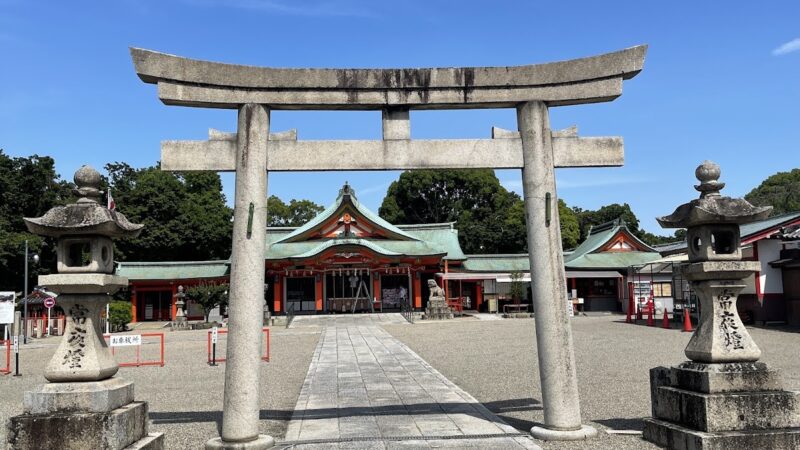
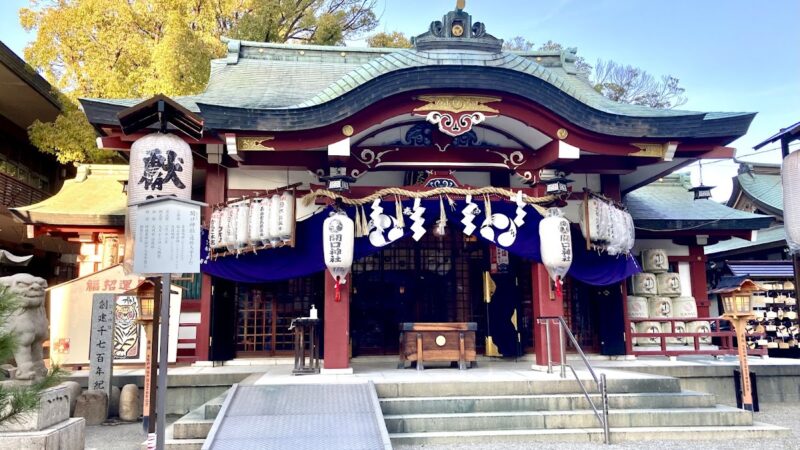
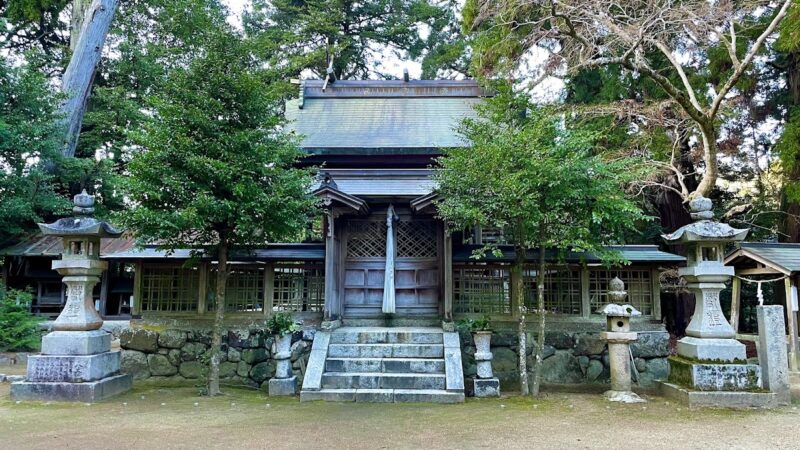
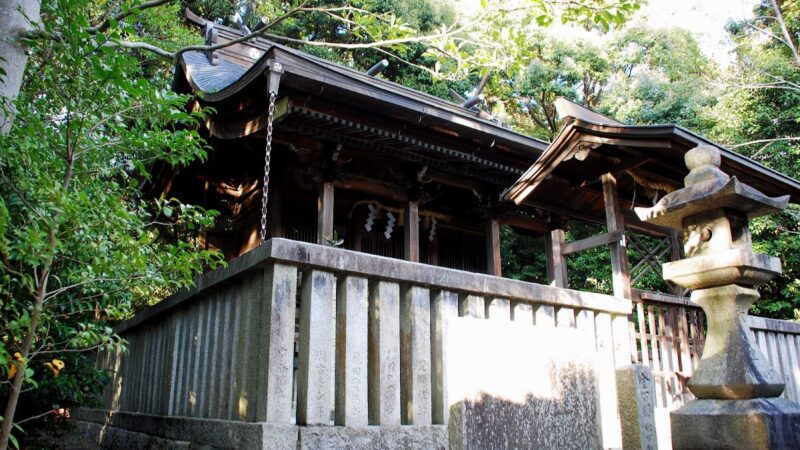
Main Hall and Worship Hall
The shrine buildings, rebuilt after the great fire of Enpo 4 (1676), preserve the architectural style of the Edo period. Their modest yet dignified appearance evokes a long history.
Amamigawa River and Kanii-no-Fuchi (Kani’i Pool)
The Amamigawa River, which flows south of the shrine, once had a deep pool called “Kani-no-Fuchi.” The legend that the deity appeared from this pool is the origin of the shrine’s name, and even today, the clear flow of water contributes to the sacred atmosphere of the shrine.
Nature of the Shrine Grounds
The grounds of Kanii Shrine are surrounded by lush greenery, allowing visitors to experience the beauty of nature throughout the seasons. The grounds are particularly beautifully colored during the autumn foliage season.
Annual Events and Festivals
Autumn Festival (Grand Festival)
The Autumn Festival, held annually in early October, is the most important festival of Kanii Shrine. Local residents participate in this festival, and traditional Shinto rituals are performed.
Lantern Festival
The “Lantern Festival” is held during the Grand Autumn Festival, with many lanterns adorning the shrine grounds. From dusk to night, the light of the lanterns creates a magical atmosphere.
Yudate Ritual
The traditional “Yudate Ritual” is also performed during the Grand Autumn Festival. This is a Shinto ritual in which boiling water from a large cauldron is offered to the gods, and then sprinkled on worshippers with bamboo leaves to purify them and pray for good health. As a valuable event that preserves ancient Shinto rituals, it attracts many visitors.
Goshuin (Shrine Seal) and Goshuincho (Shrine Seal Book) Information
Kanii Shrine offers Goshuin. Those wishing to receive a Goshuin should inquire at the shrine office during their visit.
Features of the Goshuin (Shrine Seal):
- The name “Kanii Shrine” is written in ink.
- The shrine’s official seal is stamped on it.
- It is popular as a memento of your visit and as a collection item for your goshuincho (stamp book).
Notes:
- The goshuin is proof of your visit, so be sure to pray before receiving it.
- The shrine office may be unattended, so it is recommended to check in advance.
- Bringing your goshuincho is recommended.
Access Information
Access by Train
Nearest Station: Nankai Koya Line, “Amami Station”
Travel Time: Approximately 10-13 minutes on foot
From Nankai Namba Station, take the Nankai Koya Line express or rapid train for approximately 40 minutes and get off at Amami Station. Amami Station is also served by semi-express and local trains. The route from the station to the shrine along the Amami River is easy to follow and recommended.
Access by Car
Major Road: Via National Route 371
Parking: There is some parking space on the shrine grounds, but the number of spaces is limited.
It takes about 1 hour by car from Osaka city. From National Route 170 (Outer Ring Road), turn onto National Route 371 and proceed towards Kawachinagano. Setting “Kanii Shrine” or the address “428 Amami, Kawachinagano City, Osaka Prefecture” on your car navigation system is convenient.
Nearby Tourist Attractions
Around Kanii Shrine, there are many spots where you can enjoy the nature and history of Kawachinagano.
- Kimi Pass: A historical pass with legends of Emperor Jimmu’s eastern expedition.
- Amami Onsen: A hot spring facility near Amami Station on the Nankai Electric Railway.
- Iwawakiyama: A mountain popular for hiking.
- Kanshinji Temple: An ancient temple associated with Kusunoki Masashige.
- Kongosan: The highest mountain in Osaka Prefecture, ideal for mountain climbing and hiking.
We recommend spending a day exploring the rich nature and historical heritage of Kawachinagano in conjunction with your temple visit.
Manners and Precautions for Visiting a Shrine
Basic Worship Etiquette
- When passing through the torii gate: Bow before entering the shrine grounds.
- At the purification fountain: Cleanse your left hand, right hand, and mouth in that order.
- Worship at the main hall: Two bows, two claps, and one bow are the basic rituals.
- Behavior within the shrine grounds: Worship quietly and with reverence.
Attire for Visiting a Shrine
There are no specific dress code requirements, but as it is a sacred place, clean and subdued attire is desirable.
Photography
Photography is generally permitted within the shrine grounds, but please refrain from taking photos inside the main hall or during Shinto rituals, or obtain permission beforehand. Also, please be considerate of other worshippers.
The Charm and Significance of Visiting Kanii Shrine
Kanii Shrine, while boasting a history of nearly a thousand years, is a simple and approachable shrine deeply rooted in the local community. Because it hasn’t been heavily commercialized as a tourist destination, it maintains an environment where one can quietly and peacefully offer prayers.
Many historical stories are etched into this shrine, including the legend of “Kanii no Fuchi,” the origin of the shrine’s name, its connection to the Kusunoki clan during the Nanboku-cho period, and its reconstruction after the Great Fire of Enpo. Knowing this history will give your visit a deeper meaning.
The shrine’s broad acceptance of people seeking diverse blessings, such as fertility, safe childbirth, breaking off relationships, and academic success, is another of its charms. It’s worth visiting this shrine at various stages of life.
Nestled in the naturally rich area of Amami, Kanii Shrine is the perfect place to escape the hustle and bustle of the city and cleanse your mind. While easily accessible via the Nankai Koya Line, it remains a beloved spot for many visitors, offering a precious opportunity to experience rich nature and history.
Inquiries
For inquiries regarding visits to Kanii Shrine, goshuin (shrine stamps), prayers, etc., please contact the shrine directly or inquire through the Osaka Prefectural Shrine Association. Osaka Prefectural Shrine Association: Provides comprehensive information on shrines within Osaka Prefecture.
Please note that the shrine office may not be staffed at all times. If you wish to participate in special prayers or events, it is recommended to check in advance.
Summary
Kanii Shrine is a historic shrine located in Amami, Kawachinagano City, Osaka Prefecture, with a history spanning nearly a thousand years. Since its founding in 1054 (Tenki 2), it has continued to attract the faith of local people, changing its name from “Kai Shrine” to “Kanii Shrine.”
It enshrines four deities: Emperor Jimmu, Emperor Ojin, Empress Jingu, and Sugawara no Michizane, and offers various blessings including fertility, safe childbirth, breaking off relationships, and academic success. It is also a historical site where the Kusunoki clan prayed for victory during the Nanboku-cho period.
It is easily accessible, about a 10-minute walk from Amami Station on the Nankai Koya Line. Traditional events such as the Lantern Festival and the Yudate Shinto ritual are held in the autumn. The shrine also offers Goshuin (stamped seals), which are popular as a memento of one’s visit.
Nestled amidst the rich natural beauty of Kawachinagano, Kanii Shrine offers a tranquil environment where one can feel the history and tradition while offering a peaceful prayer. Why not pay a visit sometime?