Complete Guide to Iwatsuta Shrine | History, Fire-Walking Ritual, and Goshuin Information for Japan’s Oldest Ebisu Shrine
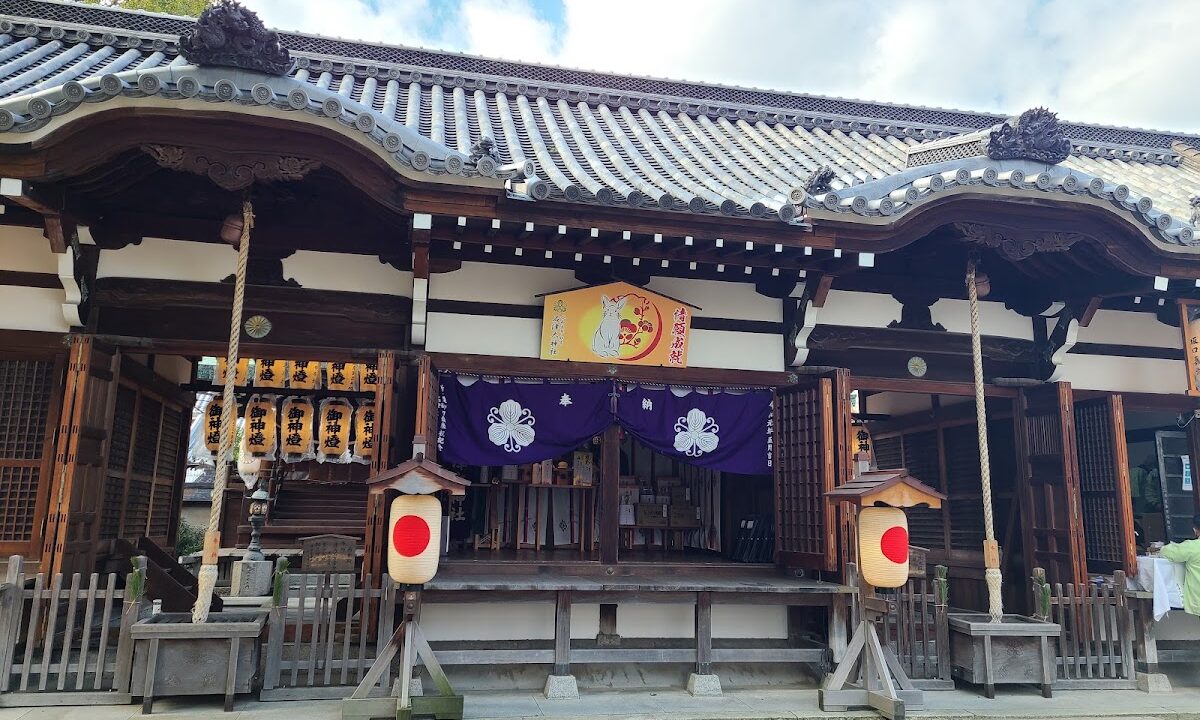
Iwatsuta Shrine, located in Hamadera-Iwatsu-cho, Nishi-ku, Sakai City, Osaka Prefecture, is a venerable shrine known as “Japan’s oldest Ebisu shrine.” It is a minor shrine listed in the Engishiki Jinmyocho (a list of shrines compiled in the Heian period), boasting a long history said to date back to 469 BC. This article comprehensively introduces information you should know before visiting Iwatsuta Shrine, including its history, highlights within the grounds, the “Yassai Hossai” fire-walking ritual, goshuin information, and access methods.
Basic Information on Ishizu Taijinja Shrine
Location: 4-12-7 Hamadera Ishizu-cho Naka, Nishi-ku, Sakai City, Osaka Prefecture 592-8334
Phone Number: 072-241-5640
Former Shrine Rank: Village Shrine
Main Deities: Hiruko-no-mikoto, Yaekotoshironushi-no-mikoto, Amenohohi-no-mikoto
Alternate Name: Ishizu no Ebisu-san
Ishizu Taijinja Shrine, along with Ishizu Shrine in Ishizu-cho, Sakai-ku, Sakai City, is considered a candidate for the “Ishizu Taijinja Shrine in Otori District, Izumi Province” listed in the Engishiki Jinmyocho (Register of Shrines in the Engi Era). Both shrines are known for claiming to be “Japan’s oldest Ebisu shrines” and have played an important role as centers of faith in this region since ancient times.
History
Founding and Ancient History
According to shrine tradition, Ishizu Taisha Shrine was founded in 469 BC, boasting a history of nearly 2500 years. If this date is accurate, it would be one of the oldest shrines in Japan.
In ancient times, Ishizu flourished as a port town facing Osaka Bay and was a key point for maritime traffic. The fact that Ebisu (the god of fishermen and commerce) is enshrined as the main deity indicates that the shrine was deeply revered by the local people as the guardian deity of fishing, shipping, and commerce.
Emperor Kotoku’s Visit
Records show that Emperor Kotoku visited Ishizu Taisha Shrine in 653 (Hakuchi 4). This is a valuable historical fact indicating that Ishizu Taisha Shrine was recognized as an important shrine by the imperial court at the time. Emperor Kotoku was an emperor who made Naniwa Palace (present-day Osaka City) his capital, and Ishizu, being close to Naniwa Palace, held a politically important position. ### Listing in the Engishiki Jinmyocho (Register of Shrines in the Engi Era)
The Engishiki Jinmyocho, compiled in 927 (Enchō 5), lists Ishizu-Taijinja Shrine in Ōtori District, Izumi Province. Shrines listed in the Engishiki Jinmyocho are called “Shikinaisha,” and are high-ranking shrines that received special treatment from the imperial court. This confirms that Ishizu-Taijinja Shrine was recognized as an important shrine even during the Heian period.
From the Medieval to the Early Modern Period
From the medieval period onward, Ishizu-Taijinja Shrine continued to be revered as the local tutelary deity. The current main hall is believed to have been built in the mid-17th century (early Edo period) and employs the Ikkensha Kasuga-zukuri architectural style. This main hall is designated as a Sakai City Tangible Cultural Property and is a valuable cultural asset that conveys the architectural techniques of that time.
Highlights of the Shrine Grounds and Cultural Properties
The grounds of Ishizu-Taijinja Shrine contain numerous historically valuable buildings, including Sakai City Designated Tangible Cultural Properties.
Main Shrine (Sakai City Designated Tangible Cultural Property)
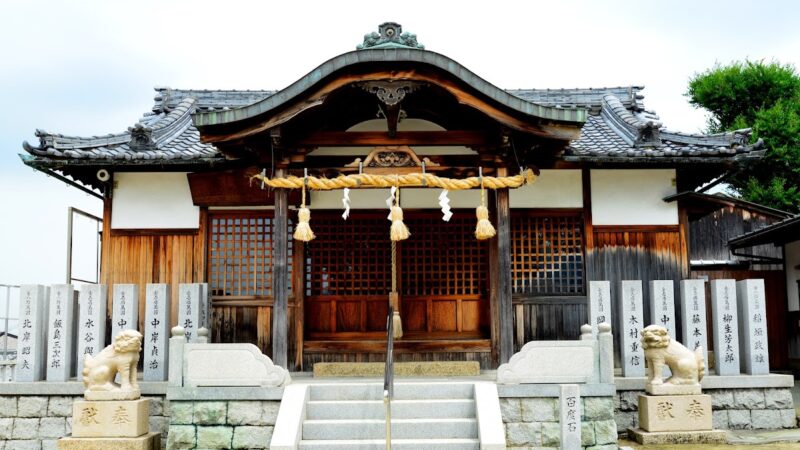
The main shrine, built in the mid-17th century, is constructed in the Ichikensha Kasuga-zukuri architectural style. A distinctive feature is that there are two main shrines, each built as an independent structure. With its cypress bark roof, elaborate carvings, and vermilion-painted pillars, it retains many characteristics of early Edo period shrine architecture, making it a valuable architectural historical site.
The Ichikensha Kasuga-zukuri style is characterized by a facade of one bay (approximately 1.8 meters), a gabled roof, and a portico (kohai) at the front. This style originates from the main shrine of Kasuga Taisha in Nara, indicating its high status.
Worship Hall (Sakai City Designated Tangible Cultural Property)
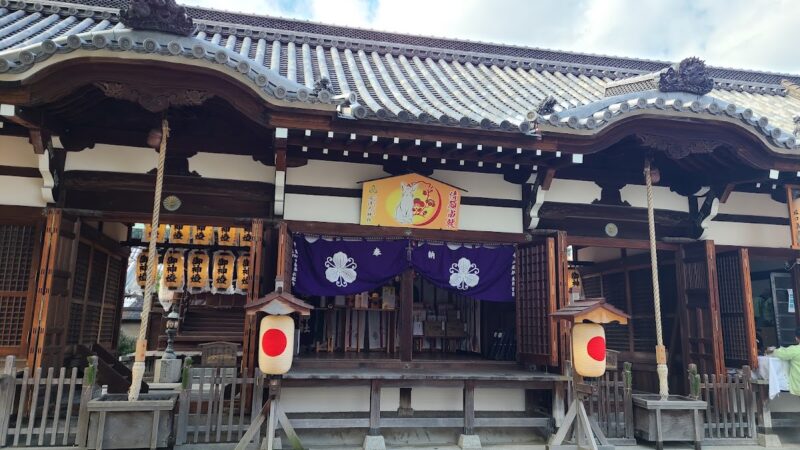
The worship hall is a building located in front of the main shrine where worshippers perform their prayers. A unique feature of the worship hall at Ishizu Taisha Shrine is the presence of two horse paths (medo). A “umamichi” (horse path) is a pathway located on either side of the worship hall or main sanctuary of a Shinto shrine, used for the passage of Shinto priests. A worship hall with two umamichi is relatively rare, highlighting the unique character of this shrine.
First and Second Torii Gates (Sakai City Designated Tangible Cultural Property)
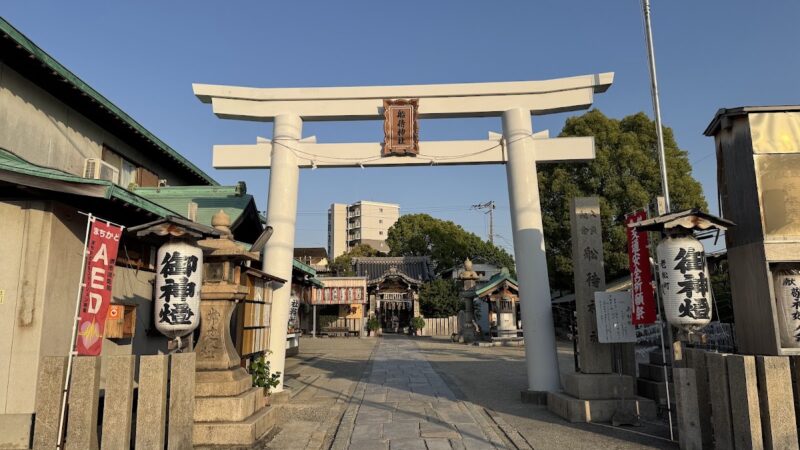
The first torii gate of Ishizu Taijinja Shrine is considered one of the oldest torii gates in Sakai City. Along with the second torii gate, it is designated as a Sakai City Designated Tangible Cultural Property, exhibiting a dignified appearance honed over many years.
Torii gates are important structures marking the entrance to a shrine, serving as a boundary separating the sacred from the secular world. The continued existence of these ancient torii gates is evidence that this shrine has been carefully preserved by the local community for a long time.
Atmosphere of the Shrine Grounds
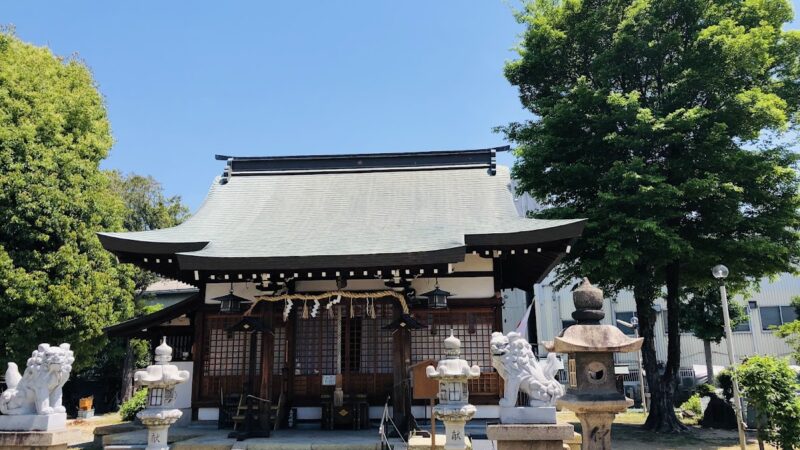
Despite its urban location, the grounds of Ishizu Taijinja Shrine are lush with greenery and offer a tranquil space. With its ancient trees and the changing seasons, it is a valuable historical space and a place of relaxation for the local community. ## Fire-Walking Ritual “Yassai Hossai”
The most famous ritual at Ishizu Taisha Shrine is the fire-walking ritual “Yassai Hossai,” held every December. This ritual is a traditional event praying for protection from evil and good health, attracting many worshippers.
What is “Yassai Hossai”?
The unique chant “Yassai Hossai” is a distinctive element of this ritual. It is believed that by walking across the fire while chanting “Yassai Hossai,” participants can ward off the misfortunes of the year and welcome the new year with a pure mind and body.
Flow of the Fire-Walking Ritual
During the ritual, a fire pit is set up on the shrine grounds, and sacred wood is burned. After the Shinto priests recite prayers and incantations, participants walk across the fire pit barefoot. This ritual is based on the belief that walking on the hot ashes purifies the mind and body and wards off evil.
Amidst the resounding sound of drums, the sight of people crossing the fire one after another, accompanied by the chant of “Yassai Hossai,” is both magnificent and sacred.
Belief in Exorcism
The fire-walking ritual is based on an ancient belief in the purifying power of fire. Fire is believed to burn away impurities and ward off evil spirits, and has played an important role in many religions and folk beliefs. The “Yassai Hossai” ritual at Ishizu Taisha Shrine is a ritual that utilizes this purifying power of fire to ward off evil, and has been passed down to the present day.
Information on Goshuin (Shrine Seals) and Goshuincho (Shrine Seal Books)
In recent years, collecting goshuin has become a popular pastime for shrine visits. You can also obtain goshuin at Ishizu Taisha Shrine.
About Goshuin
Goshuin at Ishizu Taisha Shrine are available at the shrine office. The goshuin will have the shrine name “Ishizu Taisha Shrine” written in ink and stamped with the shrine’s seal. Many visitors receive a Goshuin (temple/shrine stamp) as proof of their visit and as a memento of their trip.
When requesting a Goshuin, it is customary to first visit the main shrine before going to the shrine office. Bring your Goshuincho (stamp book) and make your request politely.
Visiting Hours and Precautions
The shrine office may have limited opening hours, so it is recommended to call ahead to confirm if you wish to receive a Goshuin. Especially outside of New Year’s and festival periods, the office may be closed on weekdays, so please be aware of this.
Access and Transportation Information
Public transportation is the most convenient way to access Ishizu Taijinja Shrine.
Access by Train
If using the Nankai Main Line: Get off at Ishizugawa Station on the Nankai Main Line, and walk southeast for approximately 5 minutes (about 300 meters).
If using the Hankai Tramway Hankai Line: Get off at Ishizu Station on the Hankai Tramway Hankai Line, and walk for approximately 3 minutes.
The shrine is within walking distance from both Ishizugawa Station and Ishizu Station, making access very convenient. The route from the station to the shrine goes through a residential area, but there are signs, so you are unlikely to get lost.
Access by Car
If visiting by car, it’s about 10 minutes from the Ohama Interchange on the Hanshin Expressway Route 4 Wangan Line. However, parking at the shrine may be limited, so using public transportation is recommended.
Nearby Attractions
Around Ishizu Taisha Shrine, there are many historical and cultural attractions, such as Hamadera Park and Hamadera Park Station (a nationally registered tangible cultural property). You can also enjoy exploring the surrounding area during your visit. ## Annual Events and Festivals
Ishizu Taisha Shrine holds various festivals and Shinto rituals throughout the year.
Main Annual Events
- January: First Shrine Visit of the Year, New Year’s Day Festival
- February: Setsubun Festival
- July: Summer Festival
- October: Autumn Festival
- December: Fire Walking Ritual “Yassai Hossai”, Great Purification Ceremony
These events are deeply rooted in the lives of the local people and attract many worshippers. Especially during the first shrine visit of the year and the fire walking ritual, the shrine sees even more visitors than usual.
Ishizu Taisha Shrine and Ebisu Worship
The reason Ishizu Taisha Shrine claims to be “Japan’s oldest Ebisu shrine” is that its main deities, Hiruko-no-Mikoto and Yaekotoshironushi-no-Mikoto, are both worshipped as “Ebisu-sama.”
About Ebisu
Ebisu is widely worshipped throughout Japan as a god of fortune who brings prosperity in business, abundant harvests, and bountiful catches. He is especially affectionately known as “Ebessan” in the Kansai region, and many worshippers visit his shrine during the Toka Ebisu festival, held around January 10th.
Hiruko-no-Mikoto and Yaekotoshironushi-no-Mikoto
Hiruko-no-Mikoto was born as the son of Izanagi and Izanami, but according to myth, he was born deformed and set adrift in a reed boat. Afterward, he came to be worshipped as a god of happiness brought from the sea.
Yaekotoshironushi-no-Mikoto is the son of Okuninushi-no-Mikoto and appears in the myth of the transfer of the land. Due to tradition that he was a fisherman, he came to be worshipped as a god of fishing and commerce.
At Ishizu Taijinja Shrine, these two deities are enshrined as the main deities, making it a central place of worship for those praying for blessings from the sea, business prosperity, and family safety.
Inquiries
For inquiries regarding Ishizu Taijinja Shrine, please contact the following:
Phone Number: 072-241-5640
Address: 4-12-7 Hamadera Ishizu-cho Naka, Nishi-ku, Sakai City, Osaka Prefecture 592-8334
For details regarding visiting hours, Goshuin (shrine stamp) reception hours, festival dates, etc., please contact the shrine directly. Especially if you are visiting from afar or wish to receive a Goshuin, we recommend confirming by phone in advance.
Summary
Ishizu Taijinja Shrine is a venerable shrine boasting a history of nearly 2500 years, said to have been founded in 469 BC, making it “Japan’s oldest Ebisu shrine.” This shrine is listed in the Engishiki Jinmyocho (a historical record of shrines) and possesses numerous valuable cultural assets, including the main hall, worship hall, and torii gate, all designated as tangible cultural properties by Sakai City.
The annual fire-walking ritual, “Yassai Hossai,” held every December, is a traditional event where many worshippers pray for protection from evil and good health. Despite its urban location, the shrine grounds are lush with greenery and serve as a historical space, a spiritual haven for the local community.
Its convenient access, just a few minutes’ walk from Ishizugawa Station on the Nankai Main Line and Ishizu Station on the Hankai Electric Railway, is another attractive feature. Why not visit Ishizu Taisha Shrine, where you can feel the history and faith of Osaka and Sakai? While receiving a Goshuin (shrine stamp), you’ll have a valuable experience touching upon the history and traditions of Japan’s oldest Ebisu shrine.