Complete Guide to Hachita Shrine | History of Suzunomiya, Wind Chime Festival, Bell Divination Ritual, and Access Information
Hachita Shrine, located in Hattadera-cho, Naka-ku, Sakai City, Osaka Prefecture, is a historic shrine affectionately known as “Suzunomiya” (Bell Shrine) by the local people. It is a Shikinaisha (shrine listed in the Engishiki Jinmyocho) and is known for its unique rituals and seasonal events, such as the Bell Divination Ritual at the Setsubun Festival and the Summer Wind Chime Festival. This article provides detailed information you should know before visiting Hachita Shrine, including its history, enshrined deities, highlights of the grounds, annual events, and access methods.
Overview of Hachita Shrine and the Origin of “Suzunomiya”
Hachita Shrine, a Shikinaisha (minor shrine) belonging to Otori District, Izumi Province, has long been a center of local faith. Its former shrine rank was Village Shrine, and it remains an important center of faith in the Hattadera-cho area of Naka-ku, Sakai City.
The nickname “Suzunomiya” (鈴宮) originates from the bell divination ritual performed annually during the Setsubun Festival in February. This ritual involves a traditional ceremony using twelve clay bells to predict the year’s fortune, and this distinctive ritual has led to the shrine becoming widely known as “Suzunomiya.” For locals, the affectionate name “Suzunomiya-san” may be more familiar than the official name, “Hachida Shrine.”
Deities and Divine Virtues
Main Deity: Amenokoyane-no-Mikoto
The main deity of Hachida Shrine is Amenokoyane-no-Mikoto. Amenokoyane-no-Mikoto is considered the ancestral deity of the Nakatomi clan (later the Fujiwara clan) and is known for the myth of reciting prayers when Amaterasu Omikami hid in the Amano-Iwato cave. He is worshipped as the god of learning, wisdom, and the power of words, as well as the god who presides over religious ceremonies.
The origin of Hachita Shrine is deeply intertwined with its founding as the ancestral deity of the Hachita no Muraji clan, who originated in this region. The Hachita no Muraji was an ancient clan believed to have held considerable power in this area.
Enshrined Deities
Along with the main deity, the following deities are enshrined:
- Sugawara no Michizane: A scholar and politician of the Heian period, known as the god of learning
- Kanayama-hiko no Mikoto: God of mining and metalworking
- Izanami no Mikoto: Goddess of creation and birth of the gods
Through these enshrined deities, Hachita Shrine offers a variety of divine blessings, including academic success, business prosperity, safe childbirth, and family safety.
History of Hachida Shrine
Ancient History
While the exact founding date of Hachida Shrine is unclear, its inclusion as “Hachida Shrine, Otori District, Izumi Province” in the “Engishiki Jinmyocho” (a list of shrines compiled in 927 AD during the early Heian period) confirms a history of at least 1000 years.
Shrines listed in the Engishiki Jinmyocho are called “Shikinaisha,” indicating their status as shrines recognized by the imperial court at the time. It is believed that there were 24 Shikinaisha in Otori District, Izumi Province, and Hachida Shrine was one of them, an important center of worship in the region.
Changes in the Medieval and Early Modern Periods
Detailed records from the medieval period onward are limited, but the shrine continued to attract the faith of local residents as the tutelary deity of the region. Despite suffering from warfare and disasters during the Sengoku period, the shrine was preserved through the efforts of the local people.
During the Edo period, it was designated a village shrine, and rituals continued as the guardian shrine of Hattadera Village. It is believed that traditional Shinto rituals, such as the bell divination ritual that continues to this day, were established during this period.
Modern Era
Due to the reform of the shrine system during the Meiji era, Hachida Shrine was ranked as a village shrine. After World War II, it became a shrine belonging to the Association of Shinto Shrines and has continued to function as a center of local faith to this day.
In recent years, while striving to preserve and pass on traditional Shinto rituals, the shrine has also undertaken new initiatives such as the wind chime festival, attracting many worshippers from both within and outside the region.
Highlights of the Shrine Grounds
Torii Gate and Approach
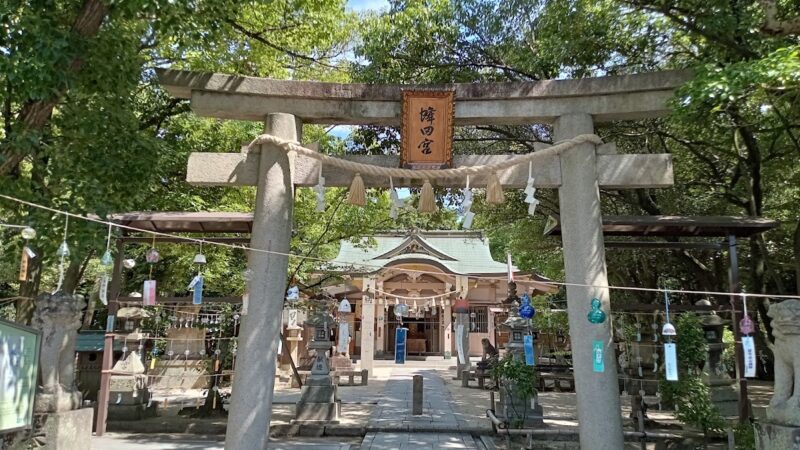
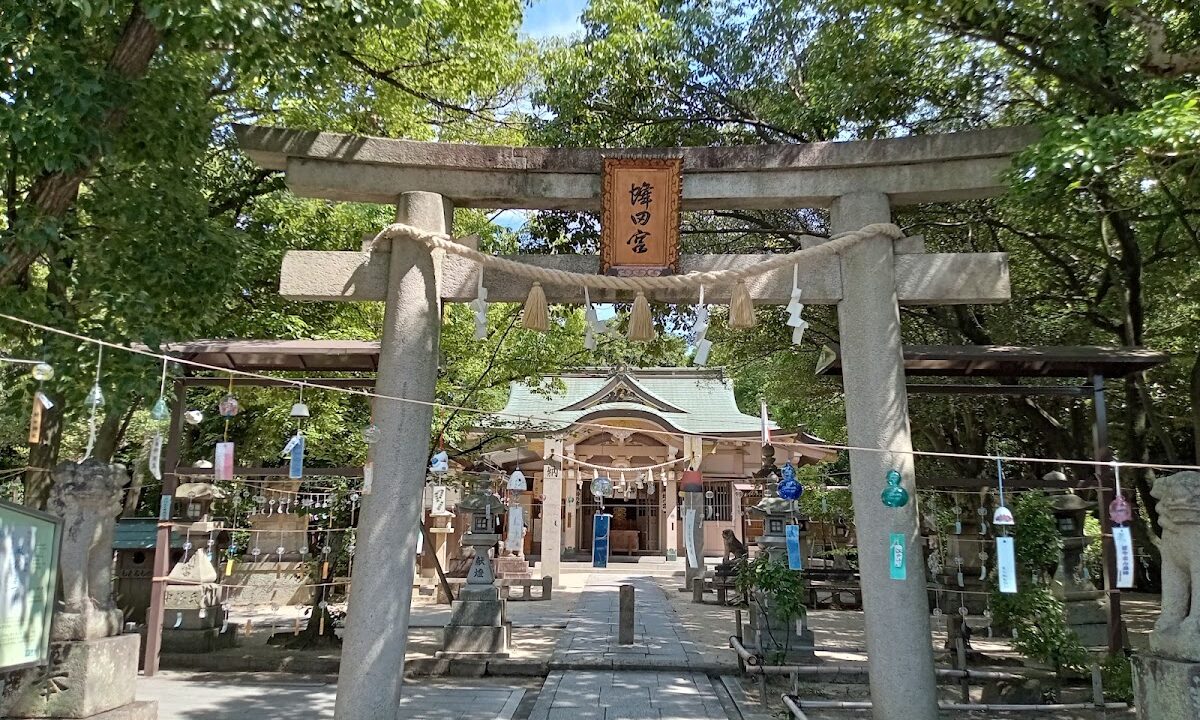
Upon entering the grounds of Hachida Shrine, a magnificent torii gate greets worshippers. Passing through the torii gate and proceeding along the approach, a tranquil atmosphere unfolds. Despite being located in an urban area, it is characterized by its lush greenery and peaceful surroundings.
Worship Hall and Main Shrine
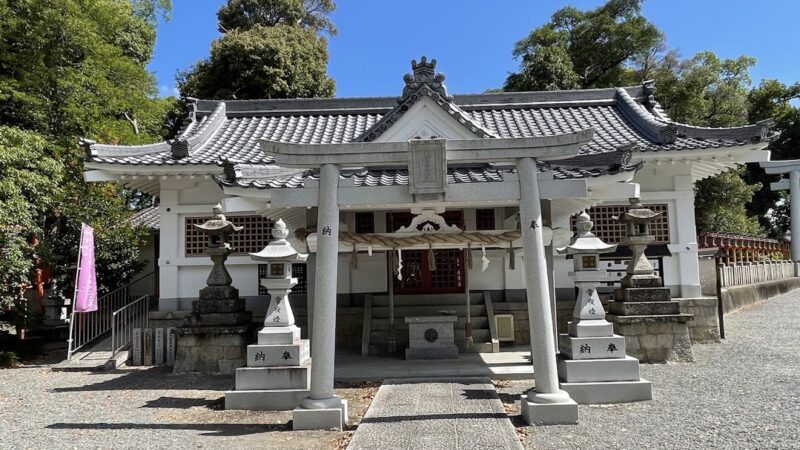
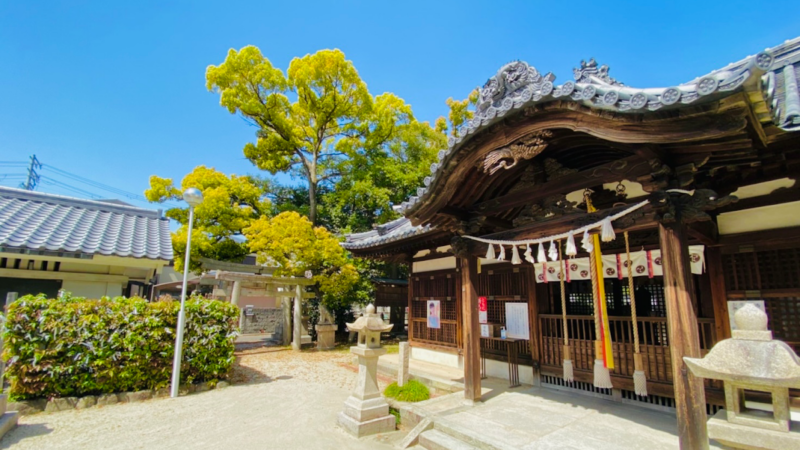
The worship hall is carefully maintained as a place where worshippers offer their prayers. Beyond that lies the main shrine, where the principal deity, Amenokoyane-no-Mikoto, and other gods are enshrined. Standing before the worship hall, one can feel the solemn atmosphere of this shrine with its long history.
Subsidiary Shrines
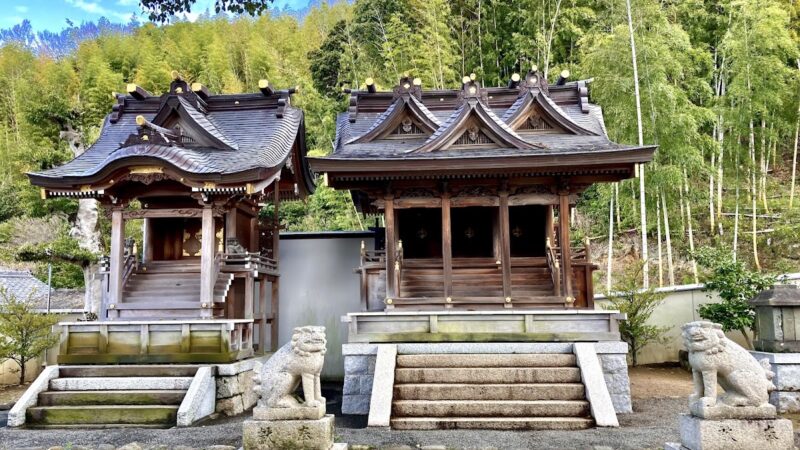
In addition to the main shrine, several subsidiary shrines are enshrined within the grounds. These subsidiary shrines also attract the faith of the local people, and people can be seen visiting each of them.
Shrine Office and Reception Area
The shrine office provides Goshuin (shrine stamps) and accepts requests for various prayers. Seasonal limited-edition Goshuin are sometimes available, making it popular with visitors who enjoy collecting Goshuin.
Annual Events and Festivals
Hachida Shrine holds various Shinto rituals and festivals throughout the year.
Bell Divination Ritual (February Setsubun Festival)
The most important ritual that makes Hachida Shrine famous as the “Shrine of Bells” is the Bell Divination Ritual, held during the Setsubun Festival in February.
In this Shinto ritual, twelve clay bells are used to predict the fortunes of the year (12 months). This traditional ritual, which predicts the luck of each month, the weather, and the abundance or scarcity of crops based on the sound and tone of the bells, has long attracted the attention of local people.
Held at the turning point of the seasons, Setsubun, this ritual, inquiring of the gods about the fortune of the new year, is the most distinctive annual event at Hachida Shrine and is still carefully preserved today.
Wind Chime Festival (July 1st – August 31st)
The Wind Chime Festival has become a popular summer tradition in recent years. For two months, from July 1st to August 31st, approximately 1,500 to 1,900 wind chimes are displayed on the shrine grounds.
Various types of wind chimes from all over Japan, including Edo wind chimes, Kawachi wind chimes, and Nanbu wind chimes, gather together, each producing a different sound. On a hot summer day, visiting the shrine grounds brings a refreshing feeling to visitors with the cool, breezy sound of countless wind chimes swaying in the wind.
The colorful wind chimes decorating the grounds are very photogenic and have become a topic of conversation on social media. A particularly magical atmosphere permeates the area at dusk, attracting many worshippers.
Flower Offering Festival (April)
At the Flower Offering Festival, which celebrates the arrival of spring, beautiful flowers are offered to the gods, expressing gratitude for nature’s blessings.
Tanabata Festival (July)
In July, the Tanabata Festival is held, where worshippers can hang strips of paper with their wishes written on them on bamboo branches. Coinciding with the start of the Wind Chime Festival, it is one of the events that adds to the lively atmosphere of Hachida Shrine in summer.
Thousand Lantern Festival (August)
In August, the Thousand Lantern Festival is held, illuminating the shrine grounds with many lanterns. It is a solemn festival to comfort the spirits of ancestors and pray for peace. ### Annual Festival (October)
The Autumn Annual Festival is one of Hachida Shrine’s most important annual events. A ceremony is held to give thanks for the year’s harvest and to pray for the peace and security of the community.
Fire Prevention Festival (December)
The Fire Prevention Festival at the end of the year is held to pray for protection from fire. It is an important Shinto ritual to express gratitude for a safe year and to pray for safety in the coming year.
Location and Access Information
Location
Address: 524 Hattadera-cho, Naka-ku, Sakai City, Osaka Prefecture 599-8267
Hachida Shrine is located in a residential area of Naka-ku, Sakai City, and the surrounding area maintains a quiet environment.
Access by Public Transportation
Bus Access
The most convenient access method is by Nankai Bus.
- Get off at Suzunomiya Danchi Higashiguchi Bus Stop: Approximately 3 minutes on foot
- Get off at Suzunomiya Danchi Center Bus Stop: Approximately 3 minutes on foot (approx. 242m)
- Get off at Hattaso Nishi Elementary School Bus Stop: Approximately 3 minutes on foot (approx. 251m)
These bus stops are very close to the shrine, and you can arrive immediately after getting off.
By Train
Since it is a distance from the nearest station, we recommend taking the bus from the station.
- Senboku Rapid Railway “Fukai Station”: Approximately 1.9km (approx. 21 minutes on foot, or by bus)
- JR Hanwa Line “Tsukuno Station”: Approximately 2.1km (bus recommended)
From Fukai Station, it is convenient to use the Nankai Bus Tsukuno Line Route 81, etc.
Access by Car
If you are visiting by car, the following route is convenient.
- Approximately 15 minutes from the Sakai IC on the Hanshin Expressway Sakai Line
- Accessible from National Route 310
There is parking space for visitors on the shrine grounds, but congestion is expected during events such as the Wind Chime Festival, so we recommend using public transportation.
Etiquette and Manners for Visiting the Shrine
Basic Etiquette for Visiting the Shrine
When visiting Hachida Shrine, please observe the following basic etiquette.
- When passing through the torii gate: Bow before entering the shrine grounds.
- Purifying yourself at the water basin: Purify your left hand, right hand, and mouth in that order.
- Worship at the main hall: The basic method is two bows, two claps, one bow (two bows, two claps, one bow).
- When leaving the shrine grounds: After passing through the torii gate, turn around and bow.
Regarding Photography
Many people will want to take pictures of the beautiful scenery on the shrine grounds, especially during the Wind Chime Festival. While general photography of the shrine grounds is permitted, please observe the following points:
- Refrain from photographing sacred areas such as the interior of the main hall.
- Be considerate of the privacy of other worshippers.
- Avoid actions that may disturb other worshippers, such as using tripods.
- When posting on social media, remember to show respect to the shrine.
Goshuin (Shrine Seals) and Gifts
Goshuin (Shrine Seals)
Hachida Shrine offers goshuin. Please bring your goshuin book and request one during the shrine office’s opening hours. The offering fee is generally around 300 to 500 yen.
During special periods such as the Wind Chime Festival, limited edition goshuin may be offered. Those who enjoy collecting goshuin are advised to check the shrine’s information in advance.
Amulets and Gifts
Hachida Shrine offers various amulets and gifts.
- Amulet for academic success (Divine virtues of the main deity, Amenokoyane-no-Mikoto, and the enshrined deity, Sugawara no Michizane)
- Amulet for traffic safety
- Amulet for family safety
- Amulet for protection against evil
- Amulet for safe childbirth (Divine virtues of Izanami-no-Mikoto)
Also, amulets featuring bells, in keeping with the shrine’s name “Suzunomiya” (Bell Shrine), are popular.
Nearby attractions
When visiting Hachida Shrine, why not also visit the surrounding tourist spots?
Tourist Attractions in Sakai City
- Daisenryo Kofun (Emperor Nintoku’s Mausoleum): Japan’s largest keyhole-shaped burial mound, registered as a World Heritage Site
- Sakai City Museum: A museum where you can learn about Sakai’s history and culture
- Sakai Rishō no Mori: A facility honoring Sen no Rikyū and Yosano Akiko
- Myōkoku-ji Temple: A temple known for its cycad tree over 1100 years old
Sakai City is a treasure trove of history and culture, and visiting it in conjunction with Hachida Shrine will allow you to experience the region’s charm more deeply.
Summary of Hachida Shrine’s Charms
Hachida Shrine is a shrine with diverse attractions, as listed below.
- Historical Value: Over 1000 years of history as a shrine listed in the Engishiki (an ancient Japanese legal code).
- Unique Rituals: The Bell Divination Ritual, a traditional divination ritual not seen elsewhere.
- Seasonal Tradition: The refreshing sound of approximately 1,500 to 1,900 wind chimes during the summer wind chime festival.
- Diverse Divine Virtues: The enshrined deity grants various wishes, including academic success, business prosperity, and safe childbirth.
- Connection to the Community: A beloved presence among locals as “Suzunomiya” (Bell Shrine).
Despite being located in an urban area, Hachida Shrine maintains a tranquil atmosphere, preserving tradition while continuously showcasing new attractions. It’s a must-visit spot when visiting Sakai City.
Notes for Visitors
Visiting Hours
While entry to the shrine grounds is generally free, the shrine office has limited opening hours. If you wish to obtain a Goshuin (shrine stamp) or other items, it is recommended to check the opening hours in advance. Generally, the hours are from 9:00 AM to 5:00 PM. ### Attire
While there are no specific dress code requirements for visiting the shrine, please dress appropriately, keeping in mind that it is a sacred place. Although the Wind Chime Festival takes place during the hot summer months, it is advisable to avoid overly revealing clothing.
Event Schedule
Specific dates and times for annual events may vary from year to year. If you wish to participate in a particular event, please check with the shrine in advance or consult official sources such as the Sakai Tourist Guide.
Summary
Hachida Shrine, located in Naka-ku, Sakai City, Osaka Prefecture, boasts a long history as a shrine listed in the Engishiki (an ancient Japanese legal code) and possesses a unique charm, affectionately known as “Suzunomiya” (Bell Shrine). The bell divination ritual during the Setsubun Festival in February is a rare and valuable traditional ritual, and the Wind Chime Festival from July to August is a summer tradition that attracts many visitors.
Hachida Shrine enshrines a diverse array of deities, including the principal deity Amenokoyane-no-Mikoto, as well as Sugawara no Michizane, Kanayama-hiko-no-Mikoto, and Izanami-no-Mikoto. Visitors come with various wishes, such as academic success, business prosperity, and safe childbirth.
Access is convenient via Nankai Bus, with the shrine just a few minutes’ walk from bus stops like Suzunomiya Danchi Higashiguchi. Despite being in an urban area, the shrine grounds offer a quiet and peaceful atmosphere, making it an ideal place to escape the hustle and bustle of everyday life and find peace of mind.
When visiting Sakai City, be sure to visit this historic Hachida Shrine, along with the World Heritage-listed burial mounds and places associated with Sen no Rikyu. Especially during the wind chime festival, the refreshing sound of wind chimes will soothe your soul.