Complete Guide to Kusabe Shrine | History, Important Cultural Properties, and Goshuin Information
Kusabe Shrine, located in Kusabe, Nishi-ku, Sakai City, Osaka Prefecture, is a Shikinaisha (shrine listed in the Engishiki) with a deep connection to the legend of Emperor Jimmu’s eastern expedition. It boasts a main hall and stone lanterns designated as important cultural properties of Japan, and is known as an ancient shrine dedicated to the ancestral deity of the Kusabe clan. This article provides a comprehensive explanation of Kusabe Shrine’s history, enshrined deities, cultural properties, and visiting information.
Overview and Basic Information of Kusabe Shrine
Kusabe Shrine is a Shikinaisha listed in the Engishiki Jinmyocho (a list of shrines compiled in the Heian period), and its former shrine rank was Village Shrine. It is pronounced “Kusabe Jinja” and is also written as “Kusabe Shrine.”
Basic Information
- Location: Kusabe, Nishi-ku, Sakai City, Osaka Prefecture
- Shrine Rank: Shikinaisha (Myojin Taisha), Former Village Shrine
- Main Deities: Hikoimasu-no-mikoto, Emperor Jimmu, Michiomi-no-mikoto
- Founding: Unknown (Ancient)
- Annual Festival: Second Sunday of October
Located along the old Chichioni Road, it sits midway between the Kami and Kusabe settlements. It was moved to its current location in 1911 (Meiji 44) after being merged with Yasaka Shrine.
Deities and Mythological Background of Hibe Shrine
Main Deities
The main deities of Hibe Shrine are the following three:
Hikoimasu-no-mikoto
This deity is considered the ancestral god of the Kusakabe clan. He was a prince of Emperor Kaika and a member of the imperial family who appears in the Kojiki and Nihon Shoki. Known as the father of Tanba-no-Michinushi-no-Mikoto, he became the ancestor of many clans. The Kusakabe clan is said to be descended from Hikoimasu-no-Mikoto and was a powerful clan that held influence mainly in Izumi Province.
Emperor Jimmu
He was the first emperor of Japan and the protagonist of the Jimmu Expedition to the East. The area around Nishi-ku, Sakai City, where Hibe Shrine is located, is considered to have played an important role in the Jimmu Expedition. As a place associated with the Jimmu Expedition, as recorded in the Kojiki-den, our shrine holds special significance.
Michiomi-no-Mikoto
He is the ancestral deity of the Otomo clan and a warrior who assisted the emperor during the Jimmu Expedition to the East. He played an active role as a military leader in Emperor Jimmu’s expedition and contributed to the establishment of the Yamato Court.
Former Deity
Before the merger in 1911 (Meiji 44), the Yasaka Shrine, located at the current site, enshrined Gozu Tenno. Gozu Tenno was worshipped as a god who wards off epidemics, and this belief is still carried on today as part of the faith of Hibe Shrine.
History of Hibe Shrine
Ancient History
The exact founding date of Hibe Shrine is unclear, but it is listed as “Hibe Shrine, Otori District, Izumi Province” in the *Engishiki Jinmyocho* (compiled in 927), confirming its existence before the mid-Heian period.
The Kusakabe no Obito clan was a powerful local family in ancient Izumi Province, and they revered Hikoimasu no Mikoto as their ancestral deity. Interestingly, there is a legend that a member of the Kusakabe no Obito family was the model for Urashima Taro, famous from the fairy tale.
Records from the Nanboku-cho Period
Important to understanding the history of Hibe Shrine is the stone lantern placed in front of the main hall. This lantern bears an inscription dating to “Shohei 24” (1369, during the Nanboku-cho period), making it a valuable historical document proving the shrine’s existence during this time.
During this period, Izumi Province was under the influence of Kusunoki Masanori, a supporter of the Southern Court, and the stone lantern is said to have been donated by him. This indicates that Hibe Shrine functioned as a center of local faith even during the turbulent Nanboku-cho period.
Fire during the Meireki Era
During the Meireki era (1655-1657), Hibe Shrine suffered a fire, losing many of its old records and treasures. Because detailed records and ancient documents concerning its founding were lost in this fire, much of the shrine’s history prior to that period remains unknown.
Records from the Edo Period
The *Izumi Meisho Zue* (Illustrated Guide to Famous Places in Izumi), compiled in the late Edo period, mentions Hibe Shrine, indicating that it was known as a local landmark even then. The book depicts the shrine grounds and festivals, providing clues to the state of religious belief during the Edo period.
Changes in the Meiji Era
With the Meiji Restoration, amidst the policies of shrine consolidation and merger, Hibe Shrine also underwent significant changes.
Merger in 1911
Originally, Hibe Shrine was located in Wanouchi, within the Kusabe settlement. In 1911, it merged with Yasaka Shrine, which was located at its current site, and moved to its present location. At this time, the shrine gate was relocated from Sugawara Shrine in Kamimura and remains today as a designated tangible cultural property of Sakai City.
Under the modern shrine ranking system, it was ranked as a village shrine and revered as the local tutelary deity.
Guide to the Grounds of Hibe Shrine
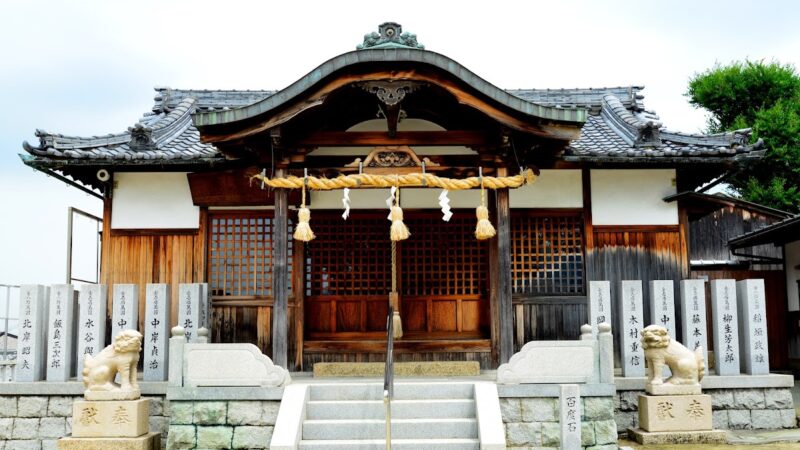
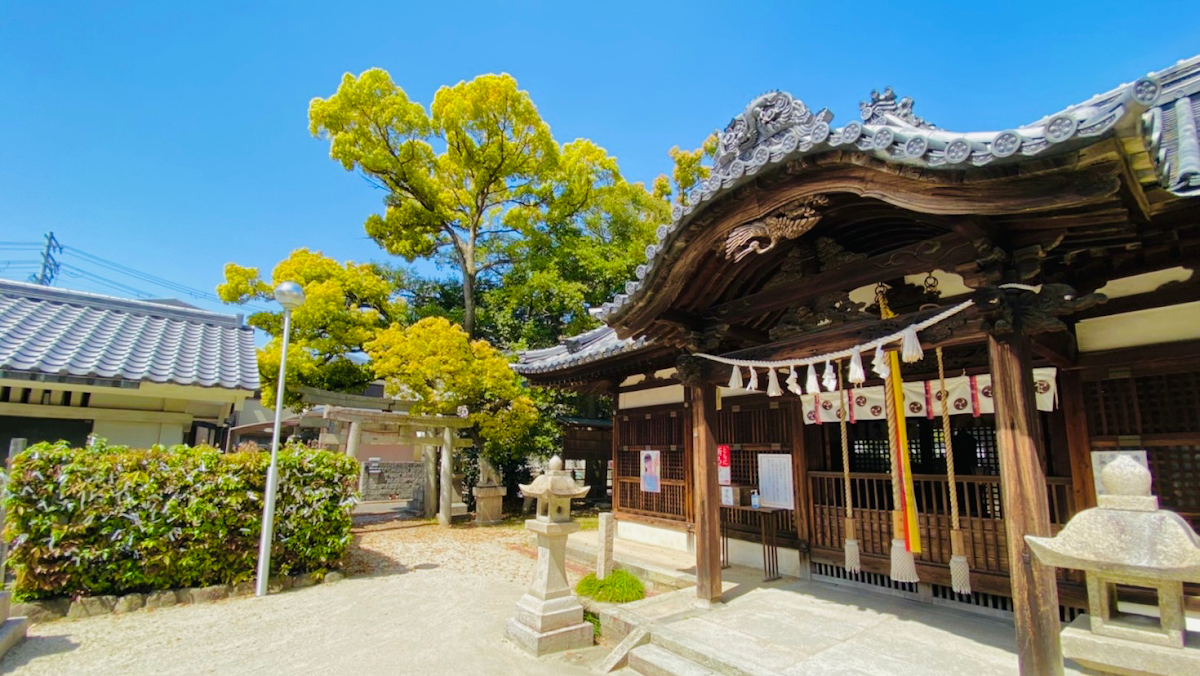
Main Hall (National Important Cultural Property)
The main hall of Hibe Shrine is a valuable building designated as a National Important Cultural Property.
Architectural Style and Characteristics
- Structure: One-bay nagare-zukuri style
- Roof: Cypress bark roofing
- Construction Period: Estimated to be the mid-Muromachi period
- Carvings: Adorned with intricate wood carvings
The main hall retains many characteristics of shrine architecture from the Muromachi period, and the carvings on the frog-leg brackets and wooden brackets demonstrate the excellent techniques of the time. Despite its small size, it is a dignified structure and is valued as a valuable example of medieval shrine architecture in the Izumi region.
Stone Lantern (National Important Cultural Property)
The stone lantern placed in front of the main hall is a stone structure from the Nanboku-cho period, bearing an inscription from Shohei 24 (1369).
Features
- Year of Creation: Shohei 24 (1369)
- Style: Typical style of the Nanboku-cho period
- Donor: Said to be Kusunoki Masanori
- Condition: Good
This stone lantern is of high historical value as a stone structure with a clearly inscribed year from the Nanboku-cho period, and is an important cultural property for understanding the stonemasonry techniques of the time. The tradition of donation by Kusunoki Masanori suggests a relationship between the Southern Court forces and the Hibe Shrine.
Shrine Gate (Sakai City Designated Tangible Cultural Property)
The shrine gate, through which worshippers pass when paying their respects, is designated as a Sakai City Designated Tangible Cultural Property.
Origin and Characteristics
- Year of Relocation: Meiji 44 (1911)
- Original Location: Sugawara Shrine in Kamimura
- Style: Late Edo Period Shrine Architecture
This building was relocated during the Meiji 44 (1911) merger of shrines and is a valuable structure that retains the characteristics of Edo period shrine architecture.
Chūkonsha (Shrine of Loyal Souls)
Located to the right of the main shrine, the Chūkonsha is a shrine dedicated to the spirits of those who died in war. It is still carefully maintained as a place to commemorate the war victims of the region.
Other Shrine Facilities
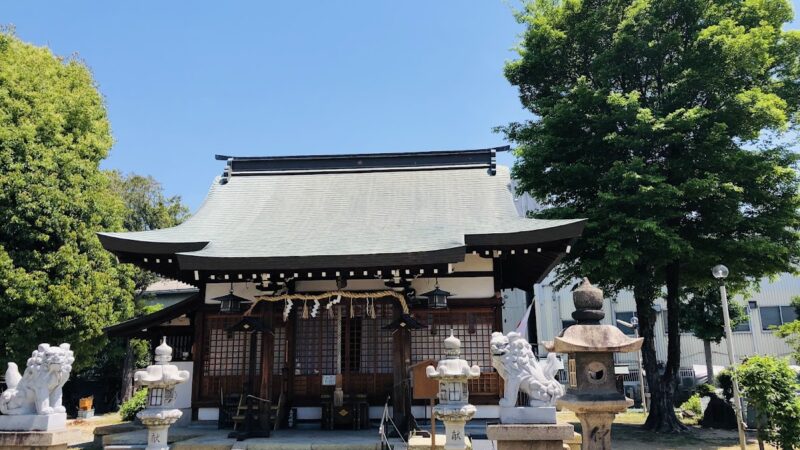
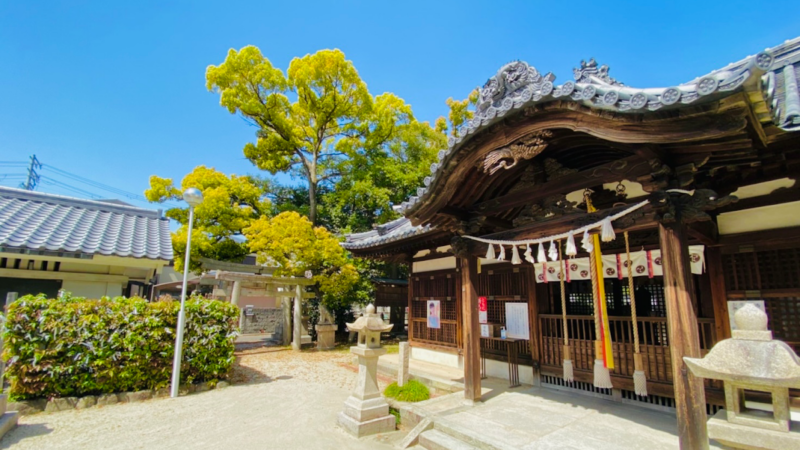
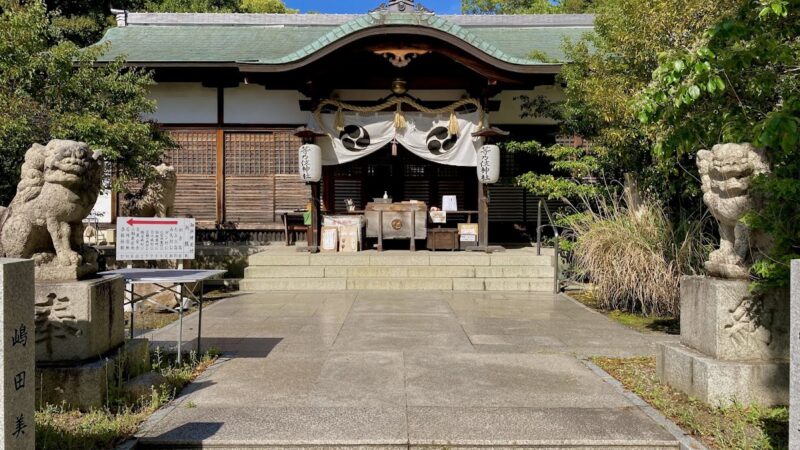
The shrine grounds include facilities such as a purification fountain and a shrine office, creating a tranquil environment for worship. Many of the trees on the grounds are ancient, giving a sense of historical weight.
Cultural Properties of Hibe Shrine
Hibe Shrine preserves nationally and municipally designated cultural properties.
Nationally Designated Important Cultural Property
- Main Shrine – A one-bay nagare-zukuri style building from the mid-Muromachi period, with a cypress bark roof.
- Stone Lantern – Dated Shohei 24 (1369), a stone structure from the Nanboku-cho period.
Sakai City Designated Tangible Cultural Property
- Shrine Gate – Relocated from Sugawara Shrine in the late Edo period.
These cultural properties are highly valued academically as valuable historical materials that convey the faith and culture of the Izumi region from the medieval to early modern periods.
Festivals and Annual Events
Various festivals are held at Hibe Shrine throughout the year.
Main Annual Events
Annual Festival (Autumn Festival)
- Date: Second Sunday of October
- Contents: Mikoshi procession, dedication ceremonies, etc.
- Features: The most important festival, with participation from all local residents.
New Year’s Day Festival
- Date: January 1st
- Contents: New Year’s prayer ceremony
Setsubun Festival
- Date: Around February 3rd
- Contents: Bean-throwing, prayer for warding off evil
Summer Purification Ceremony
- Date: June 30th
- Contents: A Shinto ritual to purify oneself of the impurities accumulated over the past six months.
These festivals are important opportunities to strengthen the bonds of the local community, and long-standing traditions are being passed down.
Goshuin (Shrine Seal) Information
Goshuin are available at Hibe Shrine.
About Goshuin (Shrine Seals)
- Reception: At the shrine office (prior confirmation required)
- Donation: Usually around 300 yen
- Features: Ink inscription indicating its status as a Shikinaisha (shrine listed in the Engishiki)
The goshuin features the inscription “Shikinai Hibe Shrine” and the shrine’s seal, and is popular as a memento of the visit by many worshippers. However, since there may not always be a resident priest, it is recommended that those wishing to receive a goshuin confirm in advance.
Access and Visiting Information
Location
593-8312 Kusabe, Nishi-ku, Sakai City, Osaka Prefecture
Transportation Access
Public Transportation
- Approximately 25 minutes on foot from Ishizugawa Station on the Nankai Main Line
- Approximately 5 minutes on foot from the Kusabe bus stop on the Nankai Bus
By Car
- Approximately 15 minutes from the Ohama Exit of the Hanshin Expressway Route 4 Wangan Line
- Parking: Limited space available on the temple grounds
Visiting Hours
The temple grounds are generally open for free visits. However, the temple office has limited operating hours, so please check in advance if you wish to receive a Goshuin (temple stamp) or prayers.
Manners for Visiting the Shrine
- Bow when passing through the torii gate.
- Walk along the edge of the path, as the center is the path for the gods.
- Cleanse your hands and mouth at the purification fountain.
- Worship using the two bows, two claps, and one bow ritual.
- Maintain silence and be careful not to damage cultural artifacts.
Hibe Shrine and the Kusakabe Clan
Understanding the history of the Kusakabe clan is essential to understanding Hibe Shrine.
Origin of the Kusakabe Clan
The Kusakabe clan was an ancient powerful family descended from Hikoimasu-no-Mikoto, primarily based in Izumi Province. The name “Kusakabe” is believed to originate from a group of people who worshipped the sun god, suggesting a deep connection to sun worship.
Connection to the Urashima Taro Legend
There is a legend that a member of the Kusakabe clan was the model for Urashima Taro. The Nihon Shoki (Chronicles of Japan), in the entry for the 22nd year of Emperor Yuryaku’s reign, mentions “Urashima-ko,” and there is a theory that this person was related to the Kusakabe clan. Izumi Province is a coastal region, and this is an interesting legend that suggests the Kusakabe clan’s character as a seafaring people.
Nearby Attractions
There are other historical sights around Hibe Shrine.
Historical Landscape of Kusabe Settlement
The Kusabe settlement, spread along the old Chichioni Road, retains the atmosphere of an old townscape.
Nearby Temples and Shrines
Many other historical temples and shrines are scattered throughout Nishi Ward, Sakai City, making it suitable for historical walks.
The Modern Significance of Hibe Shrine
Hibe Shrine plays an important role not only in the preservation of historical buildings but also in modern times.
Center of the Local Community
It functions as a place to deepen the bonds of local residents through annual events and festivals. In today’s increasingly urbanized world, it is a valuable base for maintaining traditional communities.
Protection and Inheritance of Cultural Properties
As a shrine possessing a nationally designated important cultural property, it plays a role in passing on medieval architectural techniques and forms of belief to future generations. Regular restoration work ensures the proper preservation of cultural properties.
Historical Education Site
It is used as a living teaching material for learning about the history of Emperor Jimmu’s eastern expedition and ancient powerful clans, and is utilized in school education and lifelong learning.
Summary
Hibe Shrine is a venerable shrine with a history of over a thousand years, listed in the Engishiki Jinmyocho (a list of shrines compiled in the Heian period). It enshrines Hikoimasu-no-Mikoto, Emperor Jimmu, and Michiomi-no-Mikoto, and is deeply connected to the history of Emperor Jimmu’s eastern expedition and the Kusakabe clan.
It possesses valuable cultural properties, including the main hall and stone lanterns, which are designated as important national cultural properties, and the shrine gate, a designated cultural property of Sakai City, conveying the faith and culture from the medieval to early modern periods. Although many records were lost in a fire during the Meireki era, the existing buildings and stone structures tell the story of the shrine’s long history.
Nestled in a quiet residential area, Hibe Shrine is still carefully preserved as the local guardian shrine and plays a central role in the community through its annual events. This shrine is well worth visiting not only for history buffs, but also for those interested in cultural properties and those seeking a peaceful pilgrimage.
When you visit Sakai City, be sure to stop by Hibe Shrine and experience the spirit of ancient faith and the weight of history emanating from its important cultural properties.