Complete Guide to Izumi Inoue Shrine | Visiting the Sacred Spring and Important Cultural Property that Originated the Name of Izumi
Izumi Inoue Shrine, located in Fuchu-cho, Izumi City, Osaka Prefecture, is an ancient shrine that boasts a sacred spring that gave rise to the name “Izumi.” This shrine, with its diverse attractions including the legend of Empress Jingu, important cultural properties rebuilt by Toyotomi Hideyori, and its status as the principal shrine of Izumi Province, will be explained in detail, from its history to points of interest for visitors.
About Izumi Inoue Shrine
Izumi Inoue Shrine is a historically significant shrine formerly known as “Ihachiman Shrine” or “Ido no Mori Hachiman.” It enshrines deities who preside over the peace and protection of the land and the development of industry, and has attracted the reverence of many people since ancient times.
Location and Basic Information
Location: 1-19-1 Fuchu-cho, Izumi City, Osaka Prefecture
Main Deities: Empress Jingu, Emperor Chuai, Emperor Ojin, Tamayorihime-no-Mikoto, Sumiyoshi Three Gods
Former Shrine Rank: Village Shrine
Annual Festival: Third Sunday of October
Izumi Inoue Shrine is conveniently located about a 5-minute walk from Izumi-Fuchu Station on the JR Hanwa Line, making it easily accessible for worshippers.
History of Izumi Inoue Shrine
Legend of Empress Jingu and the Origin of the Sacred Spring
The founding of Izumi Inoue Shrine is deeply connected to a legend involving Empress Jingu. According to shrine tradition, Empress Jingu stopped in this area during her conquest of the Three Kingdoms (Silla expedition). It is said that a pure spring gushed forth overnight, and the Empress named it “Sacred Spring” and established a temporary palace there.
This sacred spring is also known as “Izumi Shimizu,” and it is the origin of the name of the province of “Izumi,” and further, the name of the present-day city of Izumi. Since ancient times, water has been considered the source of life, and the sudden emergence of this spring was regarded as sacred, leading to the recognition of this place as a special location.
Legend of Emperor Jimmu’s Eastern Expedition
Another important legend concerns Emperor Jimmu’s eastern expedition. It is said that Emperor Jimmu visited this place during his expedition and prayed for victory and the successful completion of his campaign. This legend indicates that Izumi Inoue Shrine was an important site of worship from ancient times.
Establishment of the Izumi-no-Gen and the Development of the Shrine
In the second year of the Reiki era (716 AD), the Izumi-no-Gen was established by the imperial court. The Izumi-no-Gen was the administrative office governing the region that would later become Izumi Province, and its establishment increased the importance of the area. Izumi Inoue Shrine, located in the administrative center of the area, became a center of local faith.
During the Heian period, it was recognized as a Shikinaisha (a shrine listed in the Engishiki Jinmyocho, a list of shrines compiled in the Heian period) and positioned as one of the important shrines in Izumi Province.
Transition from the Medieval to the Early Modern Period
During the medieval period, it became a center of Hachiman worship as “Ihachiman Shrine” and attracted the reverence of samurai families. After the turmoil of the Sengoku period, the shrine buildings were rebuilt in 1605 by Toyotomi Hideyori. The Gosha Soja (a shrine complex of five shrines) built at this time still remains on the grounds as an important cultural property, and is an important structure that tells the story of the historical value of Izumi Inoue Shrine.
During the Edo period, it received protection from the Kishiwada Domain and developed as the guardian shrine of the region. After the Meiji Restoration’s separation of Shinto and Buddhism, it was ranked as a village shrine under the modern shrine ranking system, and remains so to this day.
About the Deities
Izumi Inoue Shrine enshrines multiple deities, each playing an important role. ### Main Deities
Empress Jingu
The central deity of Izuminoue Shrine. She was the empress of the 14th Emperor Chuai and is known as a legendary figure who achieved the conquest of the Three Kingdoms of Korea. She is also the protagonist of the legend of the sacred spring that gave rise to the founding of this shrine.
Emperor Chuai
The 14th Emperor and husband of Empress Jingu. He is enshrined alongside Empress Jingu.
Emperor Ojin
The son of Empress Jingu and the 15th Emperor. He is a god widely worshipped throughout Japan as Hachiman.
Tamayorihime-no-Mikoto
A goddess known as the god of the sea and water. A fitting deity for this shrine, which boasts a sacred spring.
Sumiyoshi Sanjin
The three deities are Sokotsutsu-no-Mikoto, Nakatsutsu-no-Mikoto, and Uwatsutsu-no-Mikoto. As gods who protect safe voyages, they have a deep connection to Empress Jingu’s conquest of the Three Kingdoms of Korea.
Divine Virtues of the Deities
These deities are believed to bestow the following divine virtues upon Izumi Inoue Shrine:
- National peace and security, protection of the land
- Long-lasting military fortune and victory
- Safe childbirth and child-rearing
- Maritime safety and traffic safety
- Industrial development and business prosperity
- Good fortune and prosperity
Highlights of the Shrine Grounds
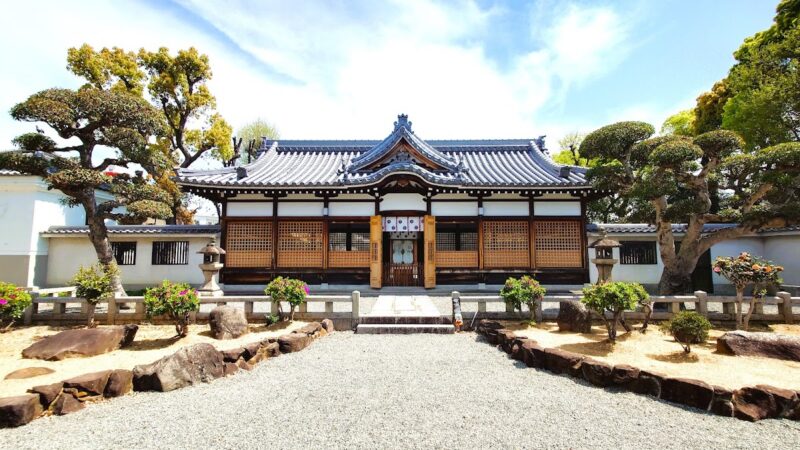
The grounds of Izumi Inoue Shrine are dotted with historically valuable buildings and sacred sites that have been objects of worship.
Important Cultural Property “Gosha Sosha”
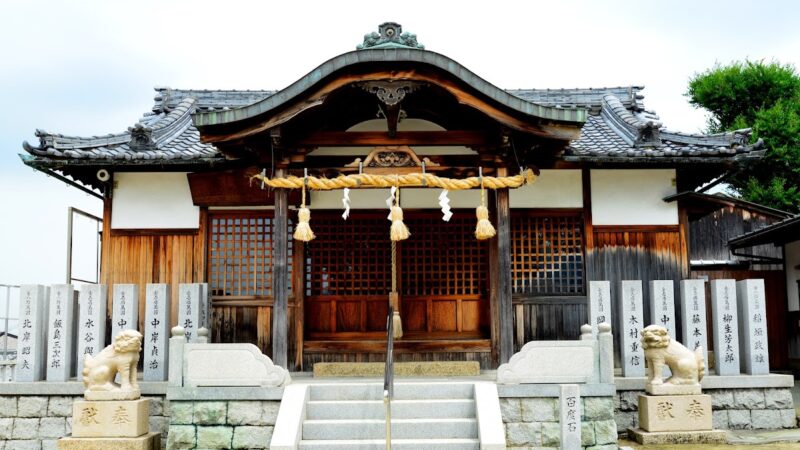
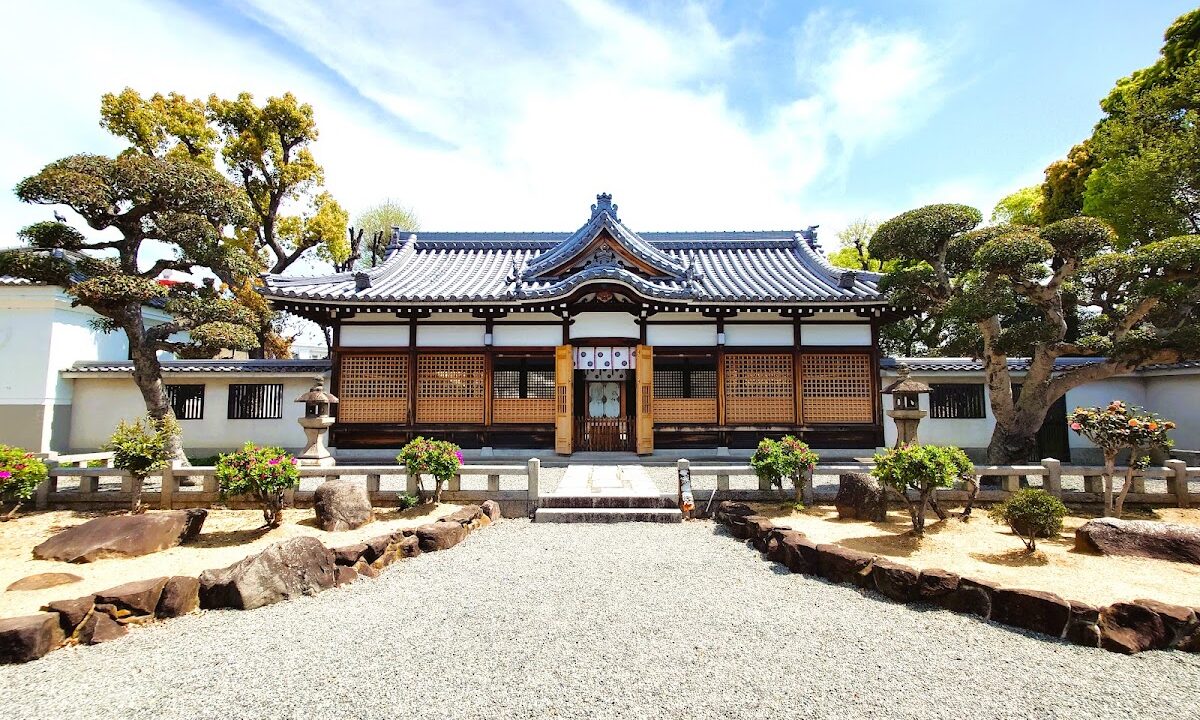
The most noteworthy building on the shrine grounds is the “Gosha Sosha,” a nationally designated Important Cultural Property. Built in 1605 by Toyotomi Hideyori, this shrine is a valuable historical structure that preserves the architectural style of the Momoyama period.
The Gosha Sōsha (Five Shrines Grand Shrine) enshrines the five main shrines of Izumi Province: Ōtori Taisha, Anashi Shrine, Hijiri Shrine, Sekikawa Shrine, and Hine Shrine, and functions as the “Grand Shrine of Izumi Province.” A Grand Shrine is a shrine that enshrines the deities of the main shrines within a province, established by the provincial governor for the convenience of pilgrimage.
The architectural style is a three-bay nagare-zukuri (flowing roof) style with a cypress bark roof. The detailed carvings and decorations exhibit the opulence characteristic of the Momoyama period, reflecting the power and influence of Toyotomi Hideyoshi and his son, Hideyori.
Sacred Spring “Izumi Shimizu”
Within the shrine grounds, a sacred spring, originating from the legend of Empress Jingū, still flows. This spring is called “Izumi Shimizu” and is the sacred water that gave rise to the place name Izumi.
Since ancient times, this water has been believed to possess miraculous powers, and it has been thought to bring healing from illness and longevity. Even today, it is maintained for worshippers to use as a purification fountain, and the pure water continues to flow without interruption.
Main Shrine and Worship Hall
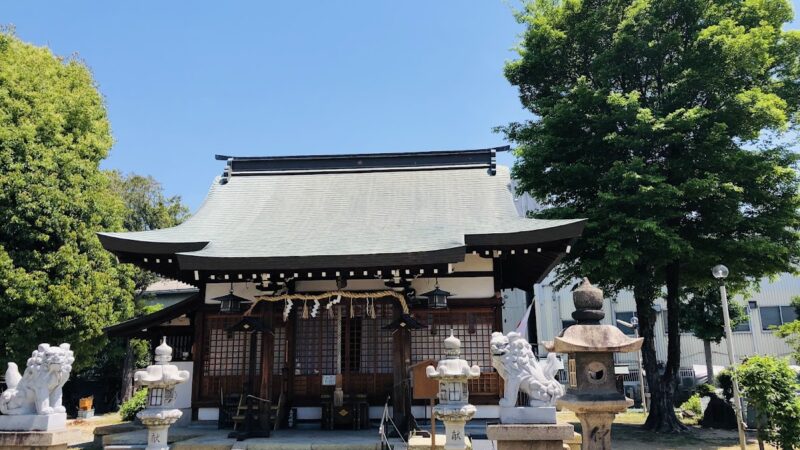
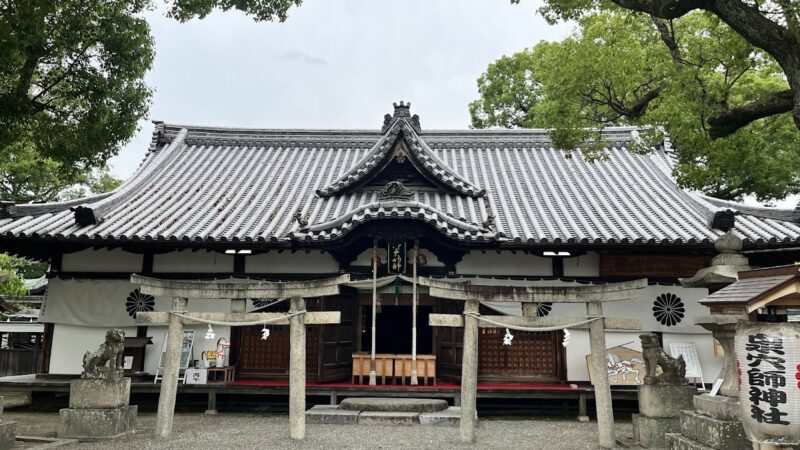
The main shrine of Izumi Inoue Shrine is built separately from the Gosha Sōsha (the five main shrines) and enshrines the deities, including Empress Jingū, the principal deity. The worship hall is located in front of the main shrine and serves as a place for worshippers to offer prayers.
Subsidiary Shrines
Several subsidiary shrines (Auxiliary Shrines and Minor Shrines) are located within the shrine grounds.
Izumi Shrine
This shrine is listed in the Engishiki Jinmyōchō (a list of shrines compiled in the Heian period) and shares its grounds with Izumi Inoue Shrine. It has a long history as an independent shrine and has attracted the faith of the local community.
Other Shrines within the Precincts
Small shrines dedicated to various deities, such as Inari and Tenmangu, are located throughout the precincts, serving as a haven for diverse beliefs.
Shrine Office and Distribution Center
The shrine office within the precincts offers Goshuin (stamped seals) and various amulets and talismans. The Izumi Inoue Shrine’s original Goshuin is popular as a memento of the visit.
Nature within the Precincts
The precincts are lush with ancient trees, maintaining a tranquil atmosphere despite being in an urban area. Especially during the cherry blossom season in spring and the autumn foliage season, visitors can enjoy a landscape where the beauty of nature and historical buildings harmonize.
Festivals and Annual Events
Izumi Inoue Shrine holds various festivals throughout the year.
Annual Grand Festival
The Annual Grand Festival, held on the third Sunday of October each year, is the most important festival at Izumi Inoue Shrine. The festival is a grand celebration involving the entire community, with a procession of portable shrines, lion dances, and drum performances. Parishioners and devotees gather to express gratitude to the gods and pray for the prosperity of the community.
New Year’s Day Festival
On January 1st, the New Year’s Day Festival is held to pray for happiness and peace in the new year. Many worshippers visit the shrine for their first visit of the year, welcoming the start of the year before the gods.
Setsubun Festival
On Setsubun in February, the Setsubun Festival is held, with rituals such as bean-throwing to ward off evil and invite good fortune.
Summer Purification Ceremony
On June 30th, the Summer Purification Ceremony (Nagoshi no Oharai) is held. Through rituals such as passing through a ring of reeds, people purify themselves of the impurities accumulated over the past six months and pray for good health and protection from illness for the remaining half of the year.
Autumn Grand Festival
In autumn, the Autumn Grand Festival is held to express gratitude for the harvest. Along with giving thanks for a bountiful harvest, prayers are offered for the prosperity of the region.
Year-End Purification Ceremony
On December 31st, the Year-End Purification Ceremony is held to cleanse away the impurities of the past year and prepare for the New Year.
Cultural Property and Historical Value
Nationally Designated Important Cultural Property
As mentioned above, the Gosha Sōsha Shrine is protected as a nationally designated Important Cultural Property. As a Momoyama period shrine building with a clearly identifiable construction date of Keichō 10 (1605), it is a valuable historical artifact in architectural history.
Its historical background, including its reconstruction by Toyotomi Hideyori, is also significant, and it is highly valued as a relic that conveys the culture of the late Toyotomi regime. Regular preservation and repair work is carried out, and it is carefully protected as a cultural heritage to be passed down to future generations.
Historical Significance as the Grand Shrine of Izumi Province
Izumi Inoue Shrine (Gosha Soja) has a history of functioning as the grand shrine of Izumi Province. The grand shrine system was established during the Heian period, created to allow provincial governors to efficiently visit the major shrines within the province.
By enshrining the deities of the five major shrines of Izumi Province (Otori Taisha, Anashi Shrine, Hijiri Shrine, Sekikawa Shrine, and Hine Shrine) in one place, it played a central role in praying for national peace and regional prosperity. This tradition as a grand shrine continues to this day.
Cultural Value as the Origin of the Place Name
The presence of a sacred spring, which is the origin of the place name “Izumi,” is important from the perspective of cultural history and toponymy. As a place that conveys the origin of the place name to the present day, Izumi Inoue Shrine can be said to be a source of Izumi City’s identity.
Points to Note When Visiting
Etiquette for Visiting
Visiting Izumi Inoue Shrine follows the general etiquette for visiting shrines.
- Bow before passing through the torii gate.
- Purify your body and mind at the water basin (left hand → right hand → mouth → left hand ladle).
- Offer your donation in front of the main hall.
- Bow using the two bows, two claps, and one bow ritual.
- Visit the subsidiary shrines within the grounds.
- Bow at the torii gate upon leaving.
Goshuin (Shrine Seal)
Izumi Inoue Shrine offers goshuin as proof of your visit. They are available at the shrine office, and the offering fee is usually around 300 yen. You can bring your own goshuincho (seal book) or purchase one on the day.
Items Offered
Various items are available, including amulets, talismans, and votive tablets. Water-related amulets, especially those related to the sacred spring, and amulets for victory and good fortune are particularly popular.
Photography
Photography is generally permitted within the shrine grounds, but there are areas where photography is prohibited, such as inside the main hall. Also, please be mindful of proper etiquette when taking photos, such as refraining from photography during festivals.
Estimated Time Required for Visiting
If you plan to leisurely explore the grounds, admire the five important cultural properties (Goshasōsha), and visit the sacred spring, allow approximately 30 minutes to 1 hour.
Access
Public transportation is the most convenient way to access Izumi Inoue Shrine.
Access by Train
Using the JR Hanwa Line
- Get off at “Izumi-Fuchu Station,” approximately 5 minutes on foot
- From the west exit of the station, head south along Prefectural Road 30, then turn west at the Fuchu-cho intersection; the shrine is immediately there.
From Osaka city, access is very convenient, approximately 20 minutes by JR Hanwa Line rapid train from Tennoji Station.
Access by Car
Using the Hanwa Expressway
- Approximately 10 minutes from “Kishiwada Izumi IC”
- Approximately 15 minutes from “Sakai IC”
Using General Roads
- Approximately 40 minutes from Osaka city via National Route 26
Parking
There is a parking lot for visitors on the shrine grounds, but spaces are limited. On days when congestion is expected, such as during festivals, we recommend using public transportation.
Address and Navigation
Address: 1-19-1 Fuchu-cho, Izumi City, Osaka Prefecture 594-0071
Entering “Izumi Inoue Shrine” or the above address into your car navigation system or smartphone map app will display the exact location.
Nearby Attractions
When visiting Izumi Inoue Shrine, you can also visit nearby tourist spots.
Izumi City Kubosou Memorial Museum
A museum located approximately 10 minutes by car from Izumi Inoue Shrine. It is known for its collection of East Asian ancient art, including national treasures and important cultural properties. The Japanese garden is also beautiful, making for a culturally enriching day.
Ikegami-Sone Ruins
This is a large-scale settlement site from the Yayoi period, where you can see reconstructed large buildings and other structures. It is an important historical site where you can learn about the history of the ancient Izumi region.
Shinodayama Hills
This is a hilly area rich in nature, with well-maintained hiking trails. It is a spot where you can enjoy nature in all four seasons.
Izumi-Fuchu Shopping Street
A shopping street spreads around Izumi-Fuchu Station, where you can enjoy local produce and gourmet food. It is convenient for meals and shopping after visiting the shrine.
The Charm and Significance of Izumi-Inoue Shrine
Charm as a Power Spot
Due to its history as a sacred spring with legends of Empress Jingu and its connection to Emperor Jimmu, Izumi-Inoue Shrine is attracting attention as a power spot. In particular, many visitors come seeking good fortune and success.
The water of the sacred spring is a symbol of vitality, and because it has continuously flowed from ancient times to the present day, it is considered a symbol of enduring power and prosperity.
Spiritual Pillar of the Region
Izumi Inoue Shrine is a central figure in the history and culture of Izumi City. As the shrine from which the place name originates, it serves as a cornerstone of the local residents’ identity and plays a role in strengthening community bonds through festivals and other events.
Place for Historical Learning
Izumi Inoue Shrine, with its various historical elements from ancient to early modern times, is a valuable place for learning Japanese history. Visitors can learn about diverse historical themes such as the legend of Empress Jingu, the ancient provincial government system, the Soja system, and the culture of the Toyotomi regime.
Architectural Historical Value
The Gosha Soja, a designated Important Cultural Property, is a valuable historical structure that preserves Momoyama period shrine architecture. It offers opportunities to learn about architectural styles and decorative techniques, making it a worthwhile building for those interested in architectural history and art history.
Points to Note and Manners When Visiting a Shrine
Attire
When visiting a shrine, clean and subdued attire is desirable. Especially when receiving prayers, formal attire or something similar is appropriate.
Visiting Hours
Entry to the shrine grounds is generally only permitted during the daytime. The shrine office is generally open from 9:00 AM to 5:00 PM, but this may vary depending on festivals and seasons.
Respectful Attitude
The shrine grounds are a sacred place. Please refrain from loud conversations and disruptive behavior, and pray quietly.
Pets
Bringing pets to the shrine grounds may generally result in restrictions. It is recommended to check in advance.
Smoking and Eating/Drinking
Smoking is prohibited on the shrine grounds. Please refrain from eating and drinking outside of designated areas.
Summary
Izuminoue Shrine is a multifaceted shrine with many facets of appeal, including a sacred spring steeped in the legend of Empress Jingu, a five-shrine complex built by Toyotomi Hideyori as an Important Cultural Property, and the prestigious status of the main shrine of Izumi Province. Its historical significance as the origin of the place name “Izumi” is immeasurable, and it continues to play a vital role as a spiritual pillar of the region.
With its convenient location just a 5-minute walk from Izumi-Fuchu Station on the JR Hanwa Line, it’s easily accessible from Osaka City. Why not quietly offer your prayers in the shrine grounds, where the ancient spring continues to flow, feeling the weight of history and the sacred atmosphere?
With its three elements—an Important Cultural Property building, a sacred spring that gave the place name, and a main shrine enshrining the five shrines of Izumi Province—Izuminoue Shrine is a shrine worth visiting for history buffs, architecture enthusiasts, power spot pilgrims, and anyone interested in local history. Please visit this historic shrine and experience the source of Izumi’s history and culture.