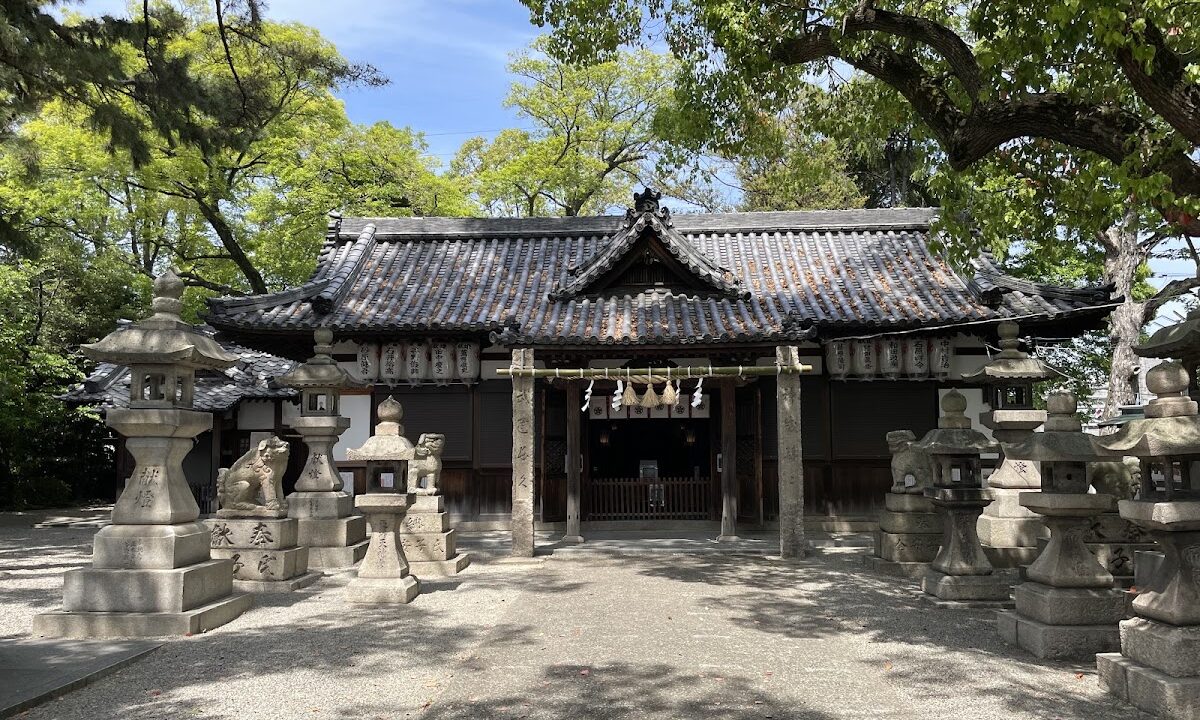
Complete Guide to Tadaoka Shrine | A Historic and Wealth-Boosting Power Spot in Japan’s Smallest Town
Located in Tadaoka-cho, Senboku-gun, Osaka Prefecture, Tadaoka Shrine is a historic shrine situated in Japan’s smallest town by area. Known as Tenjin Shrine until the Edo period, it took its current form after the Meiji era’s shrine consolidation. Within the shrine grounds are the sacred tree “Miisan,” believed to bring good fortune, and monuments inscribed with haiku by renowned haiku poets, making it a beloved center of local faith and culture.
This article provides a detailed explanation of Tadaoka Shrine’s history, enshrined deities, blessings, highlights, and access information—everything you need to know before visiting.
Basic Information about Tadaoka Shrine
Location: 1-26-3 Tadaoka-naka, Tadaoka-cho, Senboku-gun, Osaka Prefecture
Phone Number: 0725-32-3628
Visiting Hours: 9:00 AM – 4:00 PM (Hours may change on festival days)
Admission Fee: Free
Official Website: http://www.tadaokajinja.jp/
Modern Shrine Rank: Village Shrine
Tadaoka Shrine is the only shrine in Tadaoka-cho registered as a religious corporation and serves as a center of faith for local residents.
About Tadaoka-cho | Japan’s Smallest Town
Tadaoka-cho, where Tadaoka Shrine is located, is a long, narrow town sandwiched between Izumiotsu City and Kishiwada City, and is known as Japan’s smallest town by area, with an area of only about 4.03 square kilometers.
The population is approximately 17,000, and it has long been a region where the textile industry thrived. Known particularly for its blanket and cotton textile production, this area boasts a thriving traditional industry dating back to the Edo period. Despite its compact size, it’s a fascinating region brimming with history and culture.
History and Origins of Tadaoka Shrine
Founding and History as an Ancient Shrine
The founding date of Tadaoka Shrine is unknown, but judging from its architectural style and traditions, it is believed to be a considerably ancient shrine. Located in the former Tadaoka Village, Michimura, it was known as “Tenjin Shrine” until the Edo period.
It enshrines Sugawara no Michizane as its principal deity and has a history of being revered by the local people as the god of learning.
Changes in the Meiji Era
In 1872 (Meiji 5), Tenjin Shrine was designated a village shrine as “Sugawara Shrine.” This was part of the Meiji government’s reform of the shrine system, a period when shrines nationwide were incorporated into the shrine ranking system.
A major turning point occurred in 1909 (Meiji 42). Due to the government’s policy of consolidating shrines, several shrines within Tadaoka Village were merged.
Specifically, the following shrines were merged:
- Yasaka Shrine, a village shrine in Minamito, former Tadaoka Village: Dedicated to Susanoo-no-Mikoto
- Itsukushima Shrine, a village shrine in Benten, the same village: Dedicated to Sayorihime-no-Mikoto
- Other village shrines: Shrines dedicated to Takemikazuchi-no-Mikoto, Futsunushi-no-Mikoto, and others
Following this consolidation, the shrine was renamed “Tadaoka Shrine” on April 26, 1910 (Meiji 43), becoming the general guardian shrine enshrining multiple deities.
Connection to the Genpei War
Tadaoka Shrine has a tragic story related to the Genpei War. During the late Heian period, when the Minamoto and Taira clans were at war, battles are said to have taken place in this region, and this history has been passed down as local tradition.
The shrine grounds and surrounding area retain historical sites and legends that evoke the atmosphere of the past, making it a fascinating place for history buffs.
Deities and Blessings
The following five deities are enshrined at Tadaoka Shrine:
Sugawara no Michizane
The principal deity, the god of learning. A distinguished scholar and politician of the Heian period, he is revered throughout Japan as Tenjin-sama.
Blessings: Academic success, passing exams, improvement in literary arts
Susanoo-no-Mikoto
A heroic god appearing in Japanese mythology. Known as a brave god who defeated Yamata no Orochi, he is worshipped as a god of protection against evil.
Benefits: Protection from misfortune and good fortune, protection from disaster, healing from illness
Sayorihime-no-Mikoto
A water goddess, also identified with Ichikishimahime-no-Mikoto. Also known as Benzaiten, she is revered as the goddess of performing arts and wealth.
Benefits: Increased financial luck, business prosperity, improvement in performing arts
Takemikazuchi-no-Mikoto
A god of thunder and war. Known as the principal deity of Kasuga Taisha Shrine, he is worshipped as the god of victory and martial arts.
Benefits: Good fortune in victory, improvement in martial arts, good luck and prosperity
Futsunushi-no-Mikoto
A war god who, together with Takemikazuchi-no-Mikoto, achieved the transfer of the land. Also known as the god of the sword.
Benefits: Victory, Good Fortune, Protection from Misfortune
As a result of the combined blessings of these deities, Tadaoka Shrine is particularly known for increased financial fortune and protection from evil and good fortune.
Highlights of the Shrine Grounds
Sacred Tree “Miisan” | Power Spot for Increased Financial Fortune
The most noteworthy feature of Tadaoka Shrine is the sacred tree “Miisan” standing within the grounds. This tree is revered locally as a tree that brings increased financial fortune, attracting many worshippers.
Affectionately known as “Miisan,” this magnificent tree, said to be several hundred years old, possesses an overwhelming presence. It is believed that walking around the tree or touching its trunk will bestow the blessing of financial fortune.
Those wishing for increased financial fortune should definitely offer their prayers to this sacred tree.
Three Generations of Haiku Monuments | A Treasure of the Haiku World
Within the grounds of Tadaoka Shrine stands a “Three Generations of Haiku Monuments,” an extremely valuable artifact in the world of haiku.
The haiku monuments of Takahama Kyoshi, who presided over the haiku magazine *Hototogisu*, and his son Takahama Toshio were erected in 1971 (Showa 46). Furthermore, in 1989 (Heisei 1), a haiku monument to Toshio’s daughter, Inahata Teiko, was erected.
This collection of three generations of haiku monuments is extremely rare in Japan, existing only in Tadaoka Town, Ashiya City in Hyogo Prefecture, and Chikushino City in Fukuoka Prefecture.
It is a must-see spot for haiku enthusiasts and anyone interested in literature. In the tranquil atmosphere of the shrine grounds, one can contemplate the world of haiku.
Main Hall and Worship Hall
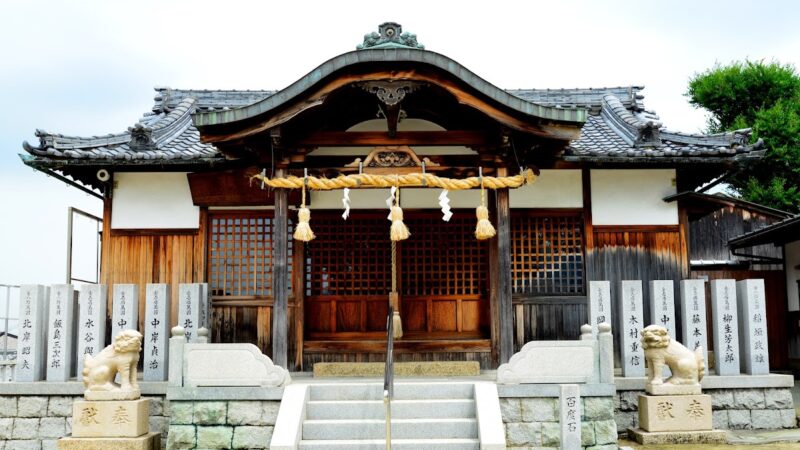
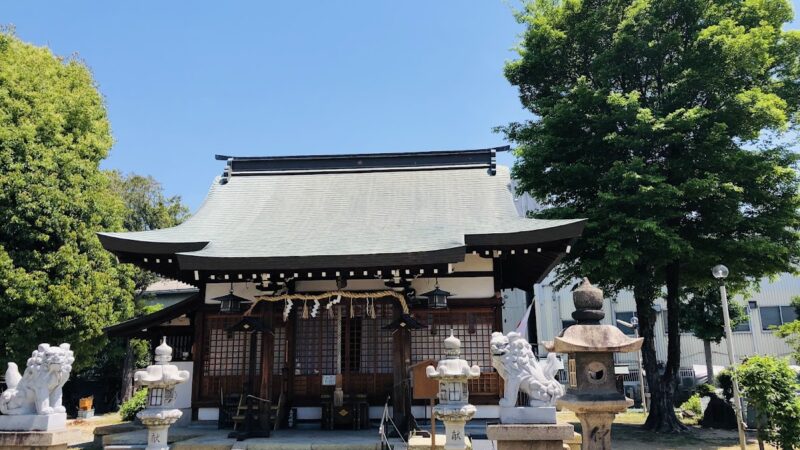
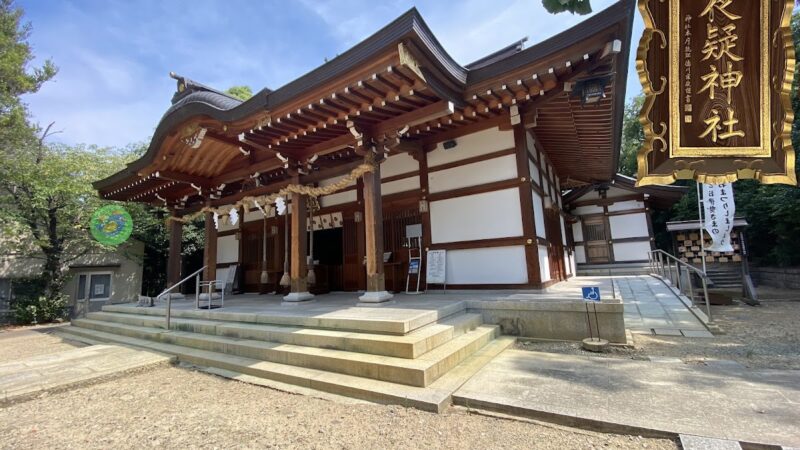
The main hall of Tadaoka Shrine is built in a traditional shrine architectural style, suggesting it is a considerably ancient shrine. The main hall is a place where worshippers offer prayers and is kept clean.
The building’s details are adorned with carvings and decorations showcasing the craftsmanship of artisans, making it well worth observing closely.
A Quiet and Refined Precinct
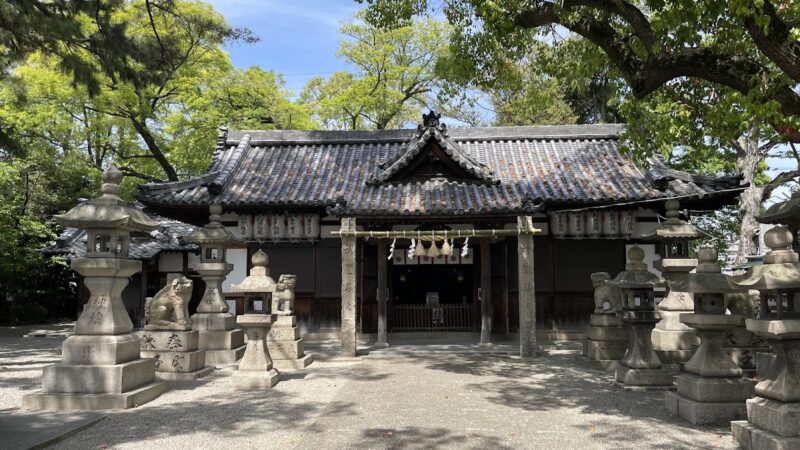
The grounds of Tadaoka Shrine are a tranquil space, far removed from the hustle and bustle of the city. Surrounded by trees, the grounds allow visitors to experience the beauty of nature throughout the seasons, especially during the fresh green season and the autumn foliage season.
With relatively few visitors, it provides an environment where one can pray at their own pace and calmly. It is a place where one can escape the busyness of daily life and quietly connect with the gods.
Tadaoka Shrine’s Annual Festival and Danjiri Festival
Overview of the Annual Festival
The annual festival of Tadaoka Shrine is held every year on October 10th. This is the most important festival for the shrine, where gratitude for the past year is offered to the gods, and prayers are offered for the prosperity of the region and the peace and well-being of its residents.
Danjiri Festival | Four Floats Enter the Shrine
The highlight of the annual festival is the traditional Danjiri Festival of Tadaoka Town. Four danjiri (floats) from the town enter Tadaoka Shrine, showcasing their magnificent appearance.
Danjiri is a popular traditional event in the Senshu region of southern Osaka, and it has been passed down in Tadaoka Town for centuries. The sight of young men pulling the lavishly carved danjiri, weighing several tons, with energetic shouts is truly impressive.
On the day of the festival, the usually quiet grounds of Tadaoka Shrine are filled with excitement and crowds of spectators. It’s a valuable opportunity to feel the unity of the community and the continuation of traditional culture.
Please note that visiting hours may change on festival days, so it is recommended to check in advance if you plan to visit.
Etiquette and Manners for Visiting the Shrine
Here are some basic etiquette guidelines for visiting Tadaoka Shrine.
How to Pass Through the Torii Gate
- Bow before passing through the torii gate.
- Walk along the edge of the path, as the center is considered the path of the gods.
How to Purify Yourself at the Water Basin
- Take the ladle in your right hand and purify your left hand.
- Switch the ladle to your left hand and purify your right hand.
- Take the ladle again in your right hand, receive water in your left hand, and rinse your mouth.
- Finally, stand the ladle upright and purify the handle.
How to Worship at the Main Hall
- Place your offering in the offering box.
- If there is a bell, ring it.
- Perform the two bows, two claps, and one bow ritual.
- Sincerely express your wishes and gratitude.
Manners on the Shrine Grounds
- Worship quietly.
- Photography is permitted, but please be considerate of other visitors.
- Please take all your trash with you.
- Please touch the sacred tree with respect.
Access
Access by Train
Nankai Main Line “Tadaoka Station” is the nearest station.
- Approximately 4 minutes on foot from Tadaoka Station (approximately 300m west)
- Approximately 30 minutes from Osaka Namba Station to Tadaoka Station
- Approximately 40 minutes from Kansai International Airport to Tadaoka Station
After exiting Tadaoka Station and heading west, you will see the torii gate of Tadaoka Shrine in a residential area. It is very close to the station and easily accessible.
Access by Car
- Approximately 10 minutes from Hanshin Expressway Route 4 Wangan Line “Kishiwada Kita IC”
- Approximately 15 minutes from Hanwa Expressway “Kishiwada Izumi IC”
Regarding parking, there are a few spaces on the shrine grounds or nearby, but on days when congestion is expected, such as festival days, we recommend using public transportation.
Nearby Tourist Attractions
When visiting Tadaoka Shrine, why not also visit the following nearby spots?
- Tadaoka Town Local History Museum: A facility where you can learn about the history and culture of Tadaoka Town.
- Izumiotsu City: A neighboring city known as the “town of blankets.”
- Kishiwada Castle: A beautiful castle located in Kishiwada City.
- Kishiwada Danjiri Hall: A facility where you can learn about the history and culture of the Danjiri Festival.
About Goshuin (Shrine Seals)
You can receive a Goshuin at Tadaoka Shrine.
Reception Hours: 9:00 AM – 4:00 PM (Hours may change on festival days)
Offering Fee: Usually around 300-500 yen (Subject to change)
The Goshuin will be carefully written by the shrine priests. You can bring your own Goshuincho (seal book) or purchase one at the shrine.
When requesting a Goshuin (temple/shrine stamp), please speak to the shrine office staff after completing your prayers. Since the shrine priests may not always be present, it is recommended to call ahead to confirm availability if you wish to receive one.
Annual Events at Tadaoka Shrine
Tadaoka Shrine holds various Shinto rituals and events throughout the year.
Main Annual Events
- January 1st: New Year’s Day Festival (Celebration of the New Year)
- February (Setsubun): Setsubun Festival (Bean-throwing, prayer for warding off evil)
- Spring: Spring Grand Festival
- July: Summer Purification Ceremony (Shinto ritual to purify sins and impurities accumulated over the past six months)
- October 10th: Autumn Grand Festival (Danjiri float procession)
- November: Shichi-Go-San Festival
- December 31st: Grand Purification Ceremony, New Year’s Eve Festival
The Setsubun Festival and Autumn Grand Festival, in particular, attract many visitors. Please check the official website or call for detailed dates and times.
Amulets and Lucky Charms Available at Tadaoka Shrine
Tadaoka Shrine offers a variety of amulets and lucky charms for various blessings.
Main Amulets
- Financial Fortune Amulet: An amulet for increasing financial fortune, named after the sacred tree “Miisan”
- Academic Success Amulet: An amulet for academic success, attributed to the divine virtues of Sugawara no Michizane
- Exorcism Amulet: An amulet for protection against evil, attributed to the divine virtues of Susanoo-no-Mikoto
- Traffic Safety Amulet: An amulet for safe driving and traffic safety prayers
- Health Amulet: An amulet for recovery from illness and prayers for good health
Ema (Votive Tablets) and Prayers
There is an ema hanging area on the shrine grounds, where ema inscribed with various wishes are offered. You can offer an ema with your own wishes, such as academic success, increased financial fortune, or family safety.
The Charm of Tadaoka Shrine | Why You Should Visit
The Guardian Shrine of Japan’s Smallest Town
As the central shrine of Tadaoka Town, the smallest town in Japan by area, it conveys the history and culture of the region to the present day. Despite its compact size, this town exudes a deep history and rich culture.
Power Spot for Increased Financial Luck
The sacred tree, “Miisan,” is believed to bring good fortune in finances, attracting visitors from all over Japan seeking business prosperity and financial success. A peaceful visit to the shrine may allow you to feel an improvement in your luck.
Sacred Site of Haiku Culture
As one of the few shrines in Japan with three generations of haiku monuments, it’s a special place for haiku enthusiasts and literature fans. You can feel the lineage of haiku from Takahama Kyoshi to Inahata Teiko.
Traditional Danjiri Festival
At the annual festival in October, you can experience the traditional Danjiri Festival of the Senshu region. It’s a valuable opportunity to feel the community’s unity and the continuation of traditional culture firsthand.
Easy Access
Conveniently located just a 4-minute walk from Tadaoka Station on the Nankai Main Line. Easily accessible from Osaka Namba in about 30 minutes, making it a convenient visit.
Attire and Items to Bring When Visiting
Attire
There are no specific dress code requirements, but it is desirable to dress appropriately for a sacred place.
- Clean and neat attire
- Avoid revealing clothing
- Formal attire is recommended if participating in a festival
Items to Bring
- Goshuincho: For receiving Goshuin (stamps)
- Offering: It’s convenient to have small change ready
- Camera: For photographing the beautiful scenery of the shrine grounds (remember to be considerate of other visitors)
- Notebook: For recording the contents of the haiku monument, etc.
Local Cuisine and Souvenirs Around Tadaoka Shrine
Local Specialties of Tadaoka Town
Tadaoka Town has long been a thriving textile industry town, but it also boasts a rich food culture.
- Senshu Onions: Sweet and tender local onions
- Senshu Water Eggplants: A juicy and delicious local specialty
- Local Japanese Sweets: Seasonal Japanese sweets from a long-established confectionery shop
Nearby Restaurants
There are many restaurants loved by locals around Tadaoka Station. Why not stop by before or after your visit to the shrine?
Summary | A Rich and Enriching Visit to Tadaoka Shrine
Tadaoka Shrine is a historical shrine located in Japan’s smallest town, yet it is a special place with diverse attractions, including a power spot for increasing wealth, a sacred site of haiku culture, and a traditional Danjiri Festival.
The sacred tree “Miisan” standing on the shrine grounds is known for its blessings of wealth, and the three haiku monuments are treasures of the haiku world, captivating literature fans. The five deities, including Sugawara no Michizane, bring various blessings such as academic success, protection from evil and good fortune, and business prosperity.
Located just a 4-minute walk from Tadaoka Station on the Nankai Main Line, Tadaoka Shrine boasts an excellent location, easily accessible from Osaka city. Its tranquil and peaceful grounds offer the perfect place to escape the hustle and bustle of everyday life and find peace of mind.
Reflecting on history, experiencing culture, and offering prayers to the gods—a visit to Tadaoka Shrine is sure to enrich your life. Please do visit this charming shrine in a small town.