Complete Guide to Kishiki Shrine | The Origin of the Kishiwada Danjiri Festival, its History of Matchmaking, Goshuin (Shrine Seals), and Access Information
Kishiki Shrine, located in Kishiki-cho, Kishiwada City, Osaka Prefecture, is a shrine known nationwide as the sacred site of the Kishiwada Danjiri Festival. Affectionately known as “Kishiki-san” by locals, it boasts a long history as the guardian shrine of Kishiwada Castle and is also deeply revered as a deity of matchmaking. This article provides a detailed introduction to Kishiki Shrine, including its history, enshrined deities, festivals, highlights of the grounds, goshuin (shrine seals), and access information.
What is Kishiki Shrine?
Kishiki Shrine is located east of Kishiwada Castle and is the general guardian shrine of Kishiwada, serving the three districts of Murakata, Machikata, and Hamakata. Known as the birthplace of the Kishiwada Danjiri Festival, the annual festival in September features the magnificent sight of 15 danjiri floats entering the shrine grounds. Furthermore, because Kishiwada Castle was formerly called “Chigiri Castle,” it is widely worshipped as a god of matchmaking, due to its association with “Chigiri” (a pledge or vow).
Basic Information
- Official Name: Kishiki Shrine
- Reading: Kishiki Jinja
- Other Names: Chigiri no Miya, Kishiki-san
- Location: 11-30 Kishiki-cho, Kishiwada City, Osaka Prefecture
- Religious Organization: Association of Shinto Shrines
- Main Deities: Amaterasu Omikami, Susanoo-no-Mikoto, Hondawake-no-Mikoto
History of Kishiki Shrine
The history of Kishiki Shrine dates back to the Nanboku-cho period. Let’s look at its founding and changes in each era.
Founding and the Nanboku-cho Period
Kishiki Shrine is said to have been founded in Shohei 17 (1362). This year marked the beginning of the shrine’s founding, when Susanoo-no-Mikoto was invited from Kanshin-in Temple (present-day Yasaka Shrine) in Kyoto to Numamura. Initially called “Gozu Tenno Shrine,” it was revered as the center of local faith. Founded during the turbulent Nanboku-cho period, this shrine played a vital role as a spiritual anchor for the local people.
Development during the Keicho Era
During the Keicho era (1596-1615), the Shinmei Shrine was built, and Amaterasu Omikami was enshrined. This period also saw the full-scale development of Kishiwada Castle, and the shrine’s role as the castle’s guardian shrine became stronger. Along with the development of the castle town, the shrine grew into a central religious institution in the region.
Changes during the Edo Period
In Genroku 7 (1694), the Hachiman Shrine was built, and Homudawake-no-Mikoto (Emperor Ojin) was enshrined. These three deities are the main deities enshrined today. Throughout the Edo period, the shrine was known as “Gogu” or “Gozu Tenno-sha” and attracted the fervent devotion of the people of Kishiwada Castle town. During this time, a festival that would become the prototype for the Danjiri Festival also began to be held, further strengthening the ties between the shrine and the community.
Renaming after the Meiji Restoration
With the Meiji Restoration’s policy of separating Shinto and Buddhism, the shrine underwent a major transformation. The shrine, previously known as “Gozu Tenno-sha” or “Gogu,” was renamed “Kishijo Shrine” during the Meiji era. This name originates from Kishiwada Castle and symbolizes the deep relationship between the castle and the shrine.
Modern Major Renovation
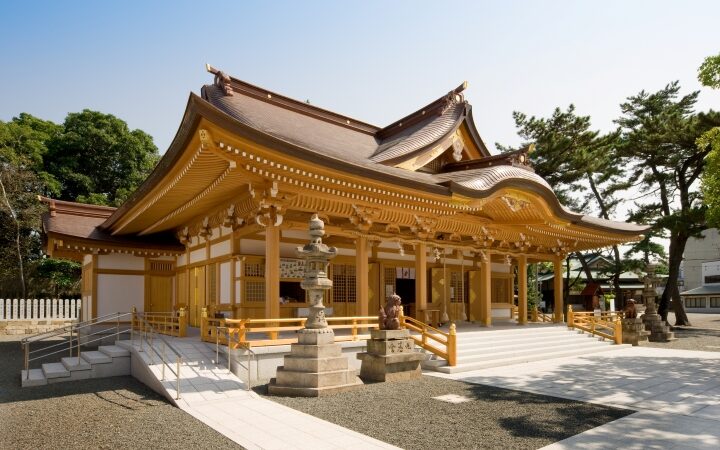
Even in the Heisei era, Kishijo Shrine has continued to undergo important renovations. In 2001 (Heisei 13), a major renovation of the shrine buildings was carried out, resulting in the magnificent shrine buildings we see today. Furthermore, improvements to the shrine grounds have been made, creating a comfortable environment for worshippers.
Deities and Beliefs
Kishijo Shrine enshrines three deities, each believed to bring different blessings.
Main Deities
Amaterasu Omikami
The supreme deity in Japanese mythology, the personification of the sun. Revered as the ancestral deity of the Imperial family, she is believed to bring blessings of national peace and security, abundant harvests, and good fortune. Enshrined in the Shinmei Shrine, she has been one of the main deities of Kishijo Shrine since the Keicho era.
Susanoo-no-Mikoto
The younger brother of Amaterasu Omikami, a heroic deity who slayed the Yamata no Orochi (eight-headed serpent). He is believed to bring blessings of protection against misfortune, eradication of disease, matchmaking, and business prosperity. He was invited from Kanshin-in Temple in Kyoto in 1362 (Shohei 17) and was a central deity in the founding of Kishijo Shrine.
Honda-wake no Mikoto
This refers to Emperor Ojin, the 15th emperor of Japan, and is widely worshipped as Hachiman-sama. He is believed to bring blessings for military success, national protection, and industrial prosperity. In 1694 (Genroku 7), a Hachiman shrine was built, and he became one of the main deities enshrined there.
Faith in Matchmaking
Kishijo Shrine became known as “Chigiri no Miya,” a shrine for matchmaking, deriving its name from the alternative name of Kishiwada Castle, “Chigiri Castle.” Because the sound “Chigiri” is similar to “Chigiri” (a pledge or commitment), many worshippers visit to pray for success in love, good relationships, and marital harmony. It is believed to bring blessings not only for romantic relationships, but also for good relationships in work, friendships, and all kinds of relationships.
Relationship with the Kishiwada Danjiri Festival
An essential aspect of discussing Kishijo Shrine is its deep connection with the Kishiwada Danjiri Festival.
The Shrine Where the Danjiri Festival Originated
The Kishiwada Danjiri Festival is said to have originated in 1703 (Genroku 16), when Okabe Nagayasu, the lord of the Kishiwada domain at the time, held an Inari festival to pray for a bountiful harvest. Kishijo Shrine, as the central shrine of this festival, is known as the shrine where the Danjiri Festival originated. With a history of over 300 years, this festival has become nationally famous, attracting many tourists every year.
The Annual Festival and the Procession into the Shrine
The Kishiwada Danjiri Festival, held every September, includes the annual festival of Kishijo Shrine. At the climax of the festival, the procession into the shrine sees 15 danjiri floats gathering, showcasing a magnificent and spirited parade. The sight of the danjiri floats entering the shrine one after another, accompanied by the resounding sounds of drums and gongs and shouts, is breathtaking and symbolizes autumn in Kishiwada.
Cultural Significance of the Danjiri Festival
The Kishiwada Danjiri Festival is more than just a festival; it plays a vital role in strengthening community bonds and passing on traditional culture to future generations. Kishijo Shrine continues to attract unwavering devotion as a place that unites the hearts of the local people through this festival.
Highlights of the Shrine Grounds
The grounds of Kishijo Shrine contain numerous historical buildings and attractions that captivate visitors.
Main Shrine Building
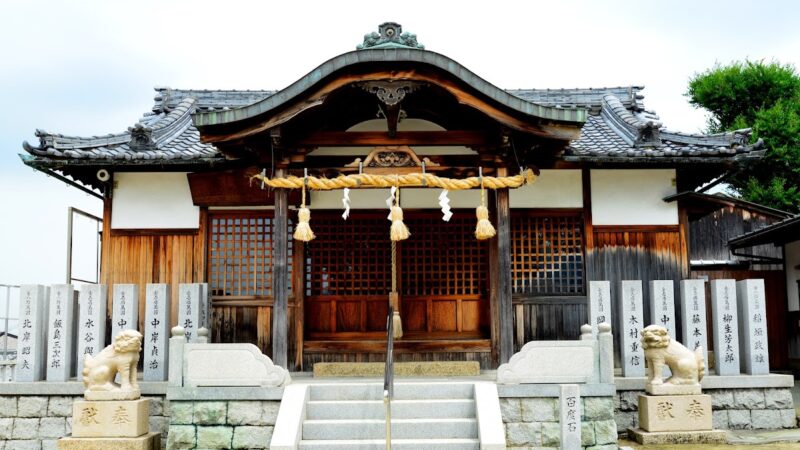
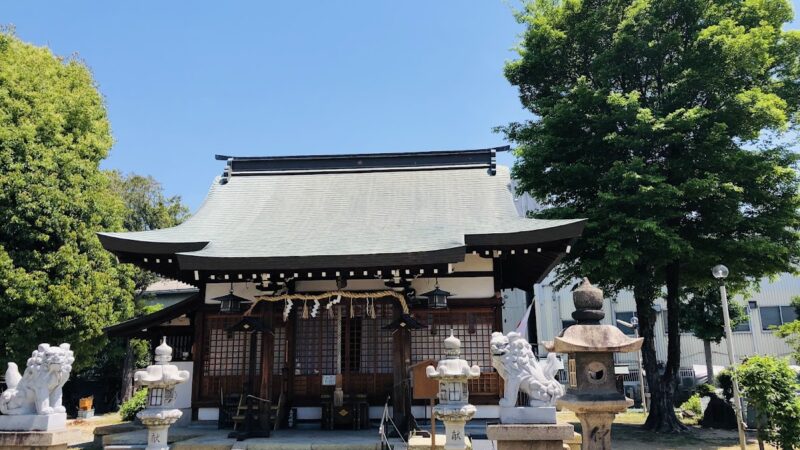
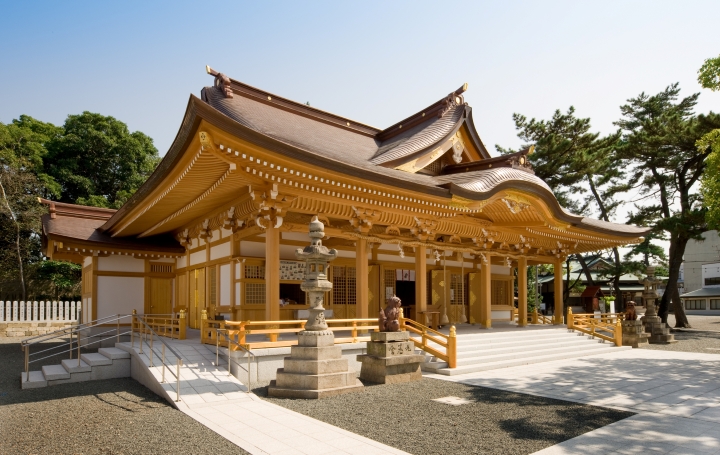
The main shrine building, extensively renovated in 2001, still conveys the beauty of traditional shrine architecture. The majestic appearance, with its cypress bark roof and vermilion-painted pillars in harmony, evokes a sacred atmosphere for visitors. The worship hall provides a peaceful space where one can quietly offer prayers.
Subsidiary Shrines
Several subsidiary shrines are located within the grounds, each attracting its own unique devotion. These subsidiary shrines were either merged with or newly established within the history of Kishijo Shrine, reflecting the diversity of local beliefs. Visiting not only the main shrine but also the subsidiary shrines offers a deeper religious experience.
Atmosphere of the Shrine Grounds
Located east of Kishiwada Castle, the shrine grounds offer views of the castle’s keep. Despite being in an urban area, the grounds maintain a tranquil atmosphere, providing peace of mind to visitors. The grounds, especially in the early morning and at dusk, are enveloped in a mystical atmosphere, offering a special experience for those who visit.
Symbol of Matchmaking
The shrine grounds feature ema (votive tablets) and other items related to matchmaking, attracting many visitors praying for good fortune in love. Young couples and those about to marry often visit, pledging their eternal love.
Goshuin (Shrine Seal) Information
Kishijo Shrine offers goshuin as a memento of your visit.
Features of the Goshuin (Shrine Seal)
The goshuin at Kishijo Shrine features the calligraphy of “Kishijo Shrine” and the shrine’s seal. The simple yet powerful calligraphy makes it a popular memento for many visitors. The date of visit is recorded on the goshuin, serving as proof of that day’s visit.
Location and Hours of Issuance
Goshuin are issued at the shrine office. Issuance hours are usually from 9:00 AM to around 5:00 PM, but may change during festivals and events. Especially during the Danjiri Festival, crowds are expected, so it is recommended to visit with plenty of time to spare.
Goshuincho (Shrine Seal Book)
Kishijo Shrine also offers original goshuincho, with designs featuring the Danjiri float and the shrine being particularly popular. Those collecting goshuin for the first time might consider purchasing an original goshuincho.
Annual Events and Festivals
Kishijo Shrine holds various festivals and events throughout the year.
Main Annual Events
New Year’s Day Festival (January 1st)
A festival to welcome the new year and pray for peace and happiness throughout the year. It is bustling with many first-time visitors, celebrating the start of the new year.
Setsubun Festival (around February 3rd)
A festival where beans are scattered to ward off evil and invite good fortune. The chant of “Good fortune in, demons out!” drives away evil spirits.
Annual Festival (September)
This is the most important festival, held around the same time as the Kishiwada Danjiri Festival. Fifteen danjiri floats enter the shrine grounds, filling the area with excitement.
Niiname-sai Festival (November 23rd)
A festival to give thanks for a bountiful harvest, offering the year’s harvest to the gods.
Monthly Festivals
Monthly festivals are held on the 1st and 15th of each month, praying for the peace and well-being of parishioners and worshippers. It serves as an opportunity for local people to regularly visit and offer their gratitude for their daily lives.
Access Information
The most convenient way to access Kishijo Shrine is by train.
Access by Train
Using the Nankai Main Line
- Approximately 5 minutes on foot from “Takojizo Station”
- Approximately 10 minutes on foot from “Kishiwada Station”
Takojizo Station is the nearest station. If you exit the station and head east, you will see Kishiwada Castle, and Kishijo Shrine is located to the east of it. It is also within walking distance from Kishiwada Station, allowing you to enjoy the atmosphere of the castle town while walking through the shopping street.
Access by Car
Hanshin Expressway Route 4 Wangan Line
Approximately 10 minutes from “Kishiwada Minami IC”
National Route 26
Approximately 5 minutes from the “Kishiwada” intersection
Parking Information
Kishijo Shrine has its own parking lot, but the number of spaces is limited. During festivals such as the Danjiri Festival, surrounding roads may be subject to traffic restrictions, so we recommend using public transportation. There are also paid parking lots near Kishiwada Castle.
Combining with Nearby Sightseeing
Kishijo Shrine is surrounded by many attractions, including Kishiwada Castle, Kishiwada Castle Garden (Hachijin Garden), and the Kishiwada Danjiri Museum. These sights are all within walking distance, allowing you to spend half a day to a full day immersing yourself in Kishiwada’s history and culture.
Manners and Etiquette for Visiting the Shrine
Here are some basic manners and etiquette for visiting Kishijo Shrine.
How to Pass Through the Torii Gate
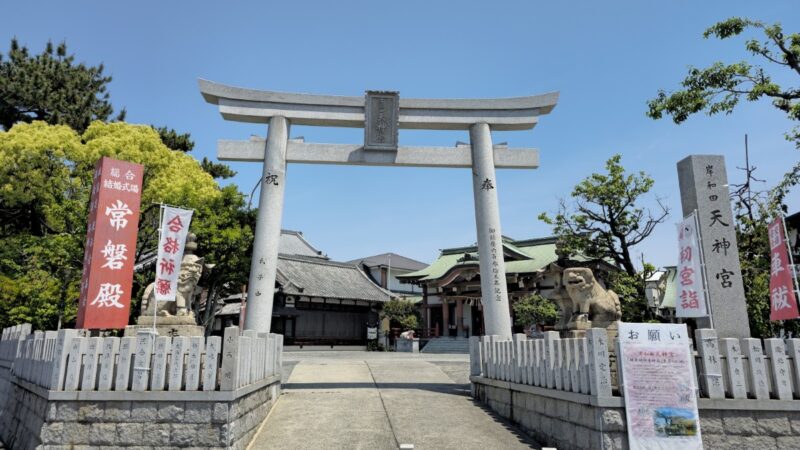
The torii gate is the entrance to the sacred area. Before passing through the torii gate, bow and compose yourself before entering the grounds. The center of the path is considered the path of the gods, so it is polite to walk along the side.
Proper Ritual for Washing Hands
- Take the ladle with your right hand and wash your left hand.
- Switch the ladle to your left hand and wash your right hand.
- Switch the ladle back to your right hand, receive water in your left hand, and rinse your mouth.
- Wash your left hand again.
- Hold the ladle upright, let water flow over the handle, and return it to its original position.
Proper Ritual for Worship
The basic worship ritual at a shrine is “two bows, two claps, one bow.”
- Place your offering in the offering box.
- Ring the bell (if present).
- Bow deeply twice.
- Clap your hands twice at chest height.
- Offer your prayer with your hands clasped together.
- Bow deeply once.
Cultural Assets and Historical Value of Kishijo Shrine
Kishijo Shrine is not merely a place of worship, but also an important cultural asset that conveys the history of Kishiwada to the present day.
Historical Building
The current shrine building underwent a major renovation during the Heisei era, but it faithfully preserves the traditional style of shrine architecture and forms part of Kishiwada’s historical landscape. Along with Kishiwada Castle, it is recognized as an important group of buildings that tell the history of the castle town.
Inheritance of Festival Culture
Kishijo Shrine plays a crucial role as a central figure supporting the intangible cultural asset of the Kishiwada Danjiri Festival. Its continued preservation of the festival’s traditions for over 300 years is highly valued from the perspective of the inheritance of Japanese festival culture.
Core of the Local Community
Kishijo Shrine has historically been the core of Kishiwada’s local community. The parishioner and festival organizations centered around the shrine continue to strengthen community ties, making them valuable in today’s increasingly urbanized society.
Relationship with Kishiwada Castle
The history of Kishijo Shrine is closely intertwined with the history of Kishiwada Castle.
As the Guardian Shrine of the Castle
Kishijo Shrine has served as the guardian shrine of Kishiwada Castle, attracting the faith of the castle lord and the people of the castle town. It has played an important role as a place to pray for the safety of the castle and the well-being of its inhabitants.
The Legend of Chigiri Castle
The legend that Kishiwada Castle was once called “Chigiri Castle” is the origin of Kishijo Shrine’s reputation as “Chigiri no Miya” (Shrine of Vows), attracting worshippers seeking matchmaking. This legend symbolizes the deep connection between the castle and the shrine.
Relationship in Modern Times
Even today, Kishiwada Castle and Kishijo Shrine are adjacent to each other and are central tourist spots in Kishiwada. Visiting both the castle and the shrine allows for a deeper understanding of Kishiwada’s history and culture.
Voices and Experiences of Visitors
Many visitors have shared various opinions about Kishijo Shrine.
Experiences of Matchmaking
Kishijo Shrine, known as the “Shrine of Vows,” receives numerous reports of people finding good relationships after praying there. Beyond romantic success, the shrine receives expressions of gratitude for various kinds of “connections,” including positive encounters at work and the development of friendships.
The Excitement of the Danjiri Festival
Visitors during the Danjiri Festival often express their awe and wonder at the power and emotion of the procession entering the shrine grounds. Many say the sight of the 15 danjiri floats entering the grounds one after another is a lifelong memory.
A Tranquil Atmosphere
Outside of the festival season, the shrine grounds are quiet and peaceful, offering a calming atmosphere that many find healing. Despite being in an urban area, the sacred atmosphere of the grounds makes it a popular place to escape the hustle and bustle of everyday life and find peace of mind.
Summary
Kishijo Shrine, as the birthplace of the Kishiwada Danjiri Festival and as a deity of matchmaking, has attracted the faith of many people throughout its long history. Founded during the Nanboku-cho period and continuing to the present day, this shrine has walked hand in hand with the history of Kishiwada, and is a precious place that conveys the local culture and traditions to the present day.
Kishijo Shrine enshrines three deities: Amaterasu Omikami, Susanoo-no-Mikoto, and Hondawake-no-Mikoto, and is believed to bring various blessings such as protection from evil, matchmaking, and abundant harvests. Every September, the grand festival takes place with 15 danjiri floats entering the shrine grounds, adding color to the autumn in Kishiwada.
Its convenient location, just a 5-minute walk from Takojizo Station on the Nankai Main Line, is also a major draw. Visiting it along with Kishiwada Castle and the Kishiwada Danjiri Museum allows for a deeper experience of Kishiwada’s history and culture.
Kishijo Shrine is a place that can be visited for a variety of purposes, whether you are praying for matchmaking, interested in the danjiri festival, want to visit a historical shrine, or seeking peace of mind. Why not pay a visit sometime? This shrine, affectionately known as “Kishijo-san,” is sure to bring special experiences and good fortune to those who visit.