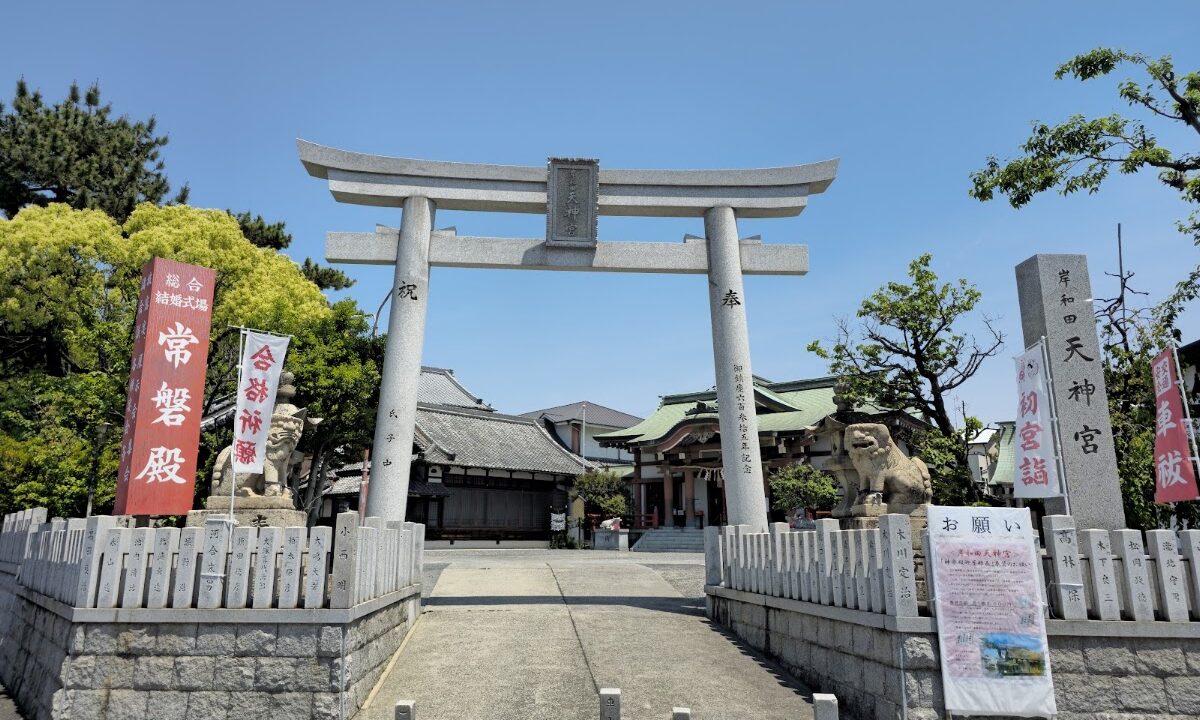
Complete Guide to Kishiwada Tenjin Shrine | History, Deities, Danjiri Festival Procession, Goshuin (Shrine Seal), and Access Information
Kishiwada Tenjin Shrine, located in Bessho-cho, Kishiwada City, Osaka Prefecture, is a shrine affectionately known locally as “Numa Tenjin” or “Numa no Tenjin-san.” It boasts an excellent location, just a 2-minute walk from Kishiwada Station on the Nankai Main Line, and has a history of over 660 years. Known as an important shrine where six danjiri (festival floats) enter the grounds during the Kishiwada Danjiri Festival, it possesses a unique character, combining Gion and Tenjin faiths.
This article comprehensively explains everything you need to know before visiting Kishiwada Tenjin Shrine, including its history, deities, highlights within the grounds, its role in the Kishiwada Danjiri Festival, goshuin information, and access methods.
History and Origins of Kishiwada Tenjin Shrine
Circumstances of its Founding and the Filial Piety of Numano Shogen
The founding of Kishiwada Tenjin Shrine dates back to Shohei 17 (1362). It began when Numano Shogen, the village headman of Numamura in Izumi Province (present-day Bessho-cho area of Kishiwada City), prayed at Yasaka Shrine for his father’s recovery from illness.
Numano Shogen’s filial piety was profound, and as a result of his fervent prayers, it is said that he received a divine intervention within three days, and his father’s illness was completely cured. Grateful for this miraculous event, Shogen constructed a shrine within the sacred grounds of his residence and enshrined Susanoo-no-Mikoto, the deity of Yasaka Shrine. This is the origin of Kishiwada Tenjin Shrine.
Addition of Tenjin Worship and the Name of Numa Tenjin
Later, during the Meitoku era (1390-1394), Sugawara no Michizane was enshrined alongside the existing deity, and Tenjin worship was added. This resulted in a unique shrine combining Gion worship (Susanoo-no-Mikoto) and Tenjin worship (Sugawara no Michizane). Derived from the original place name “Numamura” (Swamp Village), it came to be called “Numa Tenjin,” and is still affectionately known as “Numa no Tenjin-san” by locals today.
History of War and Reconstruction
During the Tensho era (1573-1592), the shrine experienced a period of hardship, repeatedly being destroyed by fire during the Sengoku period. However, each time it was rebuilt through the faith of the local people, leading to its current form. Having overcome numerous trials throughout its long history, Kishiwada Tenjin Shrine has been protected to this day as a spiritual pillar of the community.
Deities and Divine Virtues
Main Deities
Kishiwada Tenjin Shrine enshrines two main deities.
Susanoo-no-Mikoto
This is the main deity enshrined since the shrine’s founding and is the central deity of Gion faith. He is believed to bestow blessings such as protection from evil, eradication of disease, matchmaking, and business prosperity. He is also known as the enshrined deity of Yasaka Shrine and is known for his courageous and daring character.
Sugawara no Michizane
This is a deity of Tenjin faith who was enshrined together during the Meitoku era. He is widely known as the god of learning and bestows blessings such as academic success, passing exams, and improvement in literary arts. He is also revered as a symbol of sincerity and a sense of justice.
Divine Virtues and Benefits of Worship
At Kishiwada Tenjin Shrine, many worshippers visit seeking the following benefits from the divine virtues of these two deities.
- Academic Success and Passing Exams: Due to the divine virtues of Sugawara no Michizane, many students and those taking exams visit the shrine.
- Protection from Evil and Expulsion of Disease: Due to the divine virtues of Susanoo-no-Mikoto, many people in their unlucky years and those praying for good health visit the shrine.
- Healing from Illness: In keeping with the origin of the shrine’s founding, many people visit to pray for healing from illness.
- Business Prosperity: The shrine enjoys strong faith from local business owners.
- Family Safety: As the local guardian deity, there is a constant stream of visitors praying for the safety of their families.
Highlights of the Shrine Grounds
Impressive Grand Torii Gate
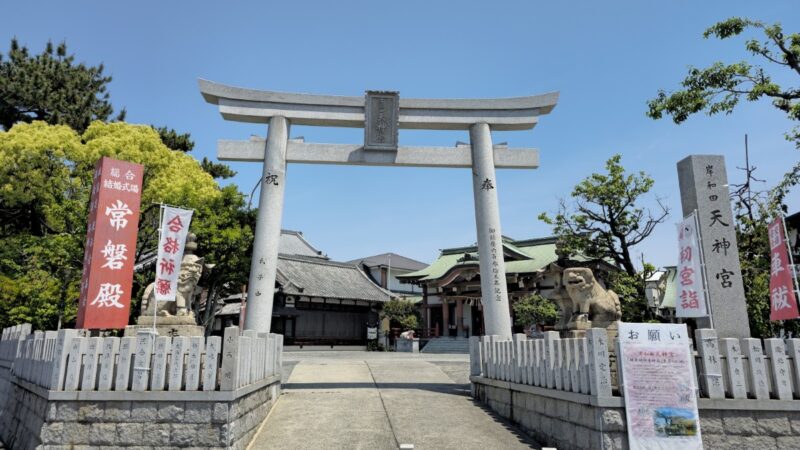
The first thing that catches the eye within the grounds of Kishiwada Tenjin Shrine is the magnificent grand torii gate. Because it is close to Minami-Kishiwada Station, its presence can be felt even from the station. This torii gate symbolizes the status and history of the shrine, welcoming visitors.
Worship Hall and Main Shrine
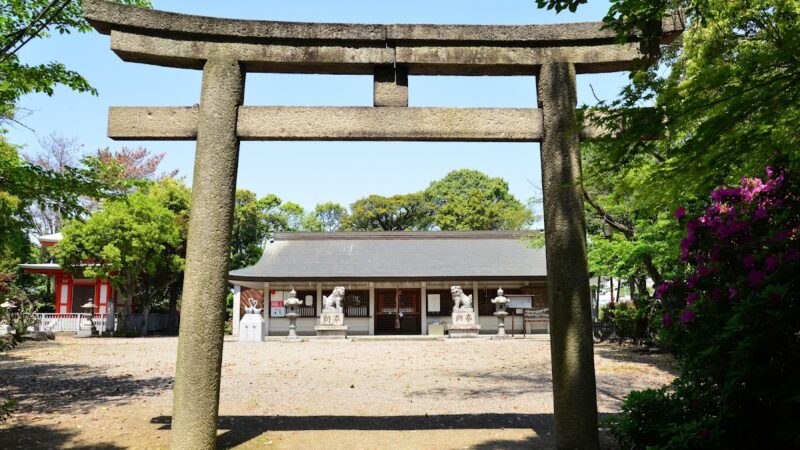
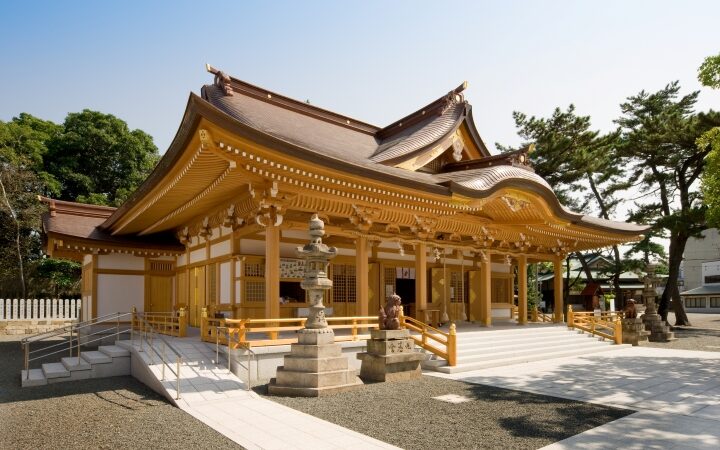
At the center of the shrine grounds stands the serene Worship Hall. This hall is where worshippers offer their prayers and is meticulously maintained. Behind it is the Main Shrine, where the two principal deities are enshrined.
In front of the Worship Hall, instructions on proper worship etiquette are posted, ensuring that even first-time visitors can worship with ease.
Subsidiary Shrines and Stone Monuments
Besides the Main Shrine, there are several subsidiary shrines within the grounds, enshrining various deities. Stone monuments and memorials, telling the story of the shrine’s long history, are also scattered throughout.
Shrine Office and Amulet Shop
The shrine office offers Goshuin (shrine stamps), various amulets, and talismans. Seasonal amulets, as well as amulets for specific purposes such as academic success and protection from evil, are available to meet the needs of worshippers.
Kishiwada Danjiri Festival and the Shrine Entry
The Role of Kishiwada Tenjin Shrine in the Kishiwada Danjiri Festival
Kishiwada Tenjin Shrine plays a vital role in the Kishiwada Danjiri Festival, held every September. The Kishiwada Danjiri Festival is a magnificent festival with a history of over 300 years, attracting many tourists from both Japan and abroad.
The following six danjiri floats enter the grounds of Kishiwada Tenjin Shrine:
- Numacho
- Sujikaicho
- Namimatsucho
- Fujiicho
- Shimonochō
- Besshocho
By entering the shrine grounds, these districts pray for the safety of the festival and the prosperity of the region.
Scenes and Highlights of the Shrine Entry
During the Danjiri Festival, the grounds of Kishiwada Tenjin Shrine are bustling with many people. The sight of the six danjiri floats entering the shrine grounds one after another is breathtaking, offering a unique spectacle where the spirited pulling of the floats blends with the sacred atmosphere of the shrine.
During the shrine entry, each town’s danjiri float passes through the torii gate and enters the shrine grounds, where it is offered to the gods. At this moment, the enthusiasm of the young men pulling the floats and the solemn atmosphere of the shrine become one, allowing you to experience the unique fervor of the Kishiwada festival.
History of the Festival and its Connection to the Community
The Kishiwada Danjiri Festival is the very identity of the region, and Kishiwada Tenjin Shrine functions as one of its spiritual centers. Through the festival, community bonds are strengthened across generations, and traditional culture is passed down.
Goshuin (Shrine Seal) Information
Features of the Goshuin
Kishiwada Tenjin Shrine offers goshuin to visitors. The goshuin features the shrine’s name and the date of visit written in ink, and stamped with a red seal. Characterized by its simple yet powerful calligraphy, it is a popular souvenir for visitors.
Goshuin Reception Hours and Location
Goshuin (temple/shrine stamps) are given at the shrine office. Reception hours are usually from 9:00 AM to 5:00 PM, but these may vary depending on festivals and events. If you wish to be sure to receive one, it is recommended to contact the shrine in advance.
Phone Number: 072-436-1188
Bringing Your Goshuincho (Stamp Book)
It is recommended to bring your goshuincho when receiving a goshuin. While some shrines may offer pre-written goshuin even without one, policies vary by shrine, so it’s best to have one if possible.
Annual Events and Festivals
Main Annual Events
Kishiwada Tenjin Shrine holds various festivals throughout the year.
New Year’s Day Festival (January 1st)
This festival welcomes the new year and prays for peace and prosperity throughout the year. The shrine is bustling with many visitors for the New Year’s pilgrimage.
Setsubun Festival (around February 3rd)
Bean-throwing ceremonies are held, and local residents participate in this event to ward off evil and invite good fortune.
Tenjin Festival (related to the anniversary of Sugawara no Michizane’s death)
As a central event of Tenjin worship, prayers are offered for academic success and passing exams.
Kishiwada Danjiri Festival (September)
As mentioned above, this is the largest annual event, with six danjiri floats entering the shrine grounds.
Shichi-Go-San (November)
Many families visit to celebrate children’s growth and pray for their healthy development.
Great Purification Ceremony (June and December)
A Shinto ritual is performed to purify and cleanse away the sins and impurities accumulated over the past six months.
Special Prayers
Kishiwada Tenjin Shrine accepts special prayers at any time. We offer prayers for various occasions, including protection from evil, success in exams, recovery from illness, safe childbirth, and business prosperity. If you wish to have a prayer performed, we recommend contacting the shrine office in advance to make a reservation.
Access Information
Location
Address: 1-13-15 Bessho-cho, Kishiwada City, Osaka Prefecture 596-0045
Access by Train
Approximately 2 minutes on foot from Kishiwada Station on the Nankai Main Line
Kishiwada Tenjin Shrine is located approximately 250 meters northeast of Kishiwada Station on the Nankai Main Line, making it very close to the station. After exiting the ticket gate, head northeast and you will see the large torii gate. It’s only a 2-3 minute walk from the station, making it very convenient to access by train.
From Namba Station to Kishiwada Station, it takes approximately 30 minutes by Nankai Main Line Limited Express and approximately 40 minutes by Express.
Access by Car and Parking
Approximately 10 minutes from the Kishiwada Minami Interchange on the Hanshin Expressway Route 4 Wangan Line
Approximately 15 minutes from the Kishiwada Izumi Interchange on the Hanwa Expressway
Kishiwada Tenjin Shrine has a parking lot for visitors, with space for approximately 40 cars. However, it becomes extremely crowded during events such as the Danjiri Festival, so we recommend using public transportation.
Even during normal times, if the parking lot is full, you will need to use nearby coin-operated parking lots.
Surrounding Facilities
Around Kishiwada Station, there are tourist and commercial facilities such as Kishiwada Castle and Kishiwada Kankan Bayside Mall, allowing you to enjoy sightseeing in Kishiwada in conjunction with your visit to the shrine.
Precautions and Manners for Visiting the Shrine
Etiquette for Visiting the Shrine
Please observe the basic etiquette for visiting a shrine.
- Bow before passing through the torii gate.
- Cleanse your hands and mouth at the water basin.
- Bow twice, clap twice, and bow once in front of the main hall.
- After praying, turn around and bow once as you leave the torii gate.
Photography
Photography is generally permitted on the shrine grounds, but please refrain from taking photos inside the main hall or during prayers. Also, please be considerate of other worshippers.
Attire
No special attire is required for a normal visit, but if you are receiving a prayer, clean and subdued clothing is preferable.
The Charm of Kishiwada Tenjin Shrine and a Recommendation for Visiting
Kishiwada Tenjin Shrine boasts a long history of over 660 years, and continues to be deeply rooted in the community as the center of the Kishiwada Danjiri Festival, a traditional event that continues to this day.
Its unique character, combining the two faiths of Gion and Tenjin, its founding story stemming from filial piety, its history of being preserved through war, and the fervent faith of the local people. All of these factors contribute to the charm of Kishiwada Tenjin Shrine.
Its excellent accessibility, just a 2-minute walk from Minami-Kishiwada Station, is another attractive feature. When visiting Kishiwada, be sure to stop by Kishiwada Tenjin Shrine and experience its history, traditions, and the faith of the local people.
Students praying for academic success, those seeking protection from evil, tourists wanting to experience the Kishiwada Danjiri Festival, those collecting Goshuin (shrine stamps), and those interested in local history—Kishiwada Tenjin Shrine welcomes visitors warmly today as a shrine open to everyone.
Summary
Kishiwada Tenjin Shrine is a historical shrine founded in 1362 (Shohei 17), affectionately known locally as “Numa Tenjin” or “Numa no Tenjin-san.” It enshrines Susanoo-no-Mikoto and Sugawara no Michizane as its main deities, possessing a unique character that combines Gion faith and Tenjin faith.
Conveniently located about a 2-minute walk from Minami-Kishiwada Station, this shrine is an important venue for the Kishiwada Danjiri Festival, where six danjiri floats enter the shrine grounds. It is believed to offer blessings for academic success, protection from evil, and recovery from illness, attracting many worshippers throughout the year.
The shrine also offers Goshuin (stamped seals), and boasts numerous points of interest within its grounds, including a magnificent torii gate and main hall. It’s a shrine you should definitely visit when you’re in Kishiwada.