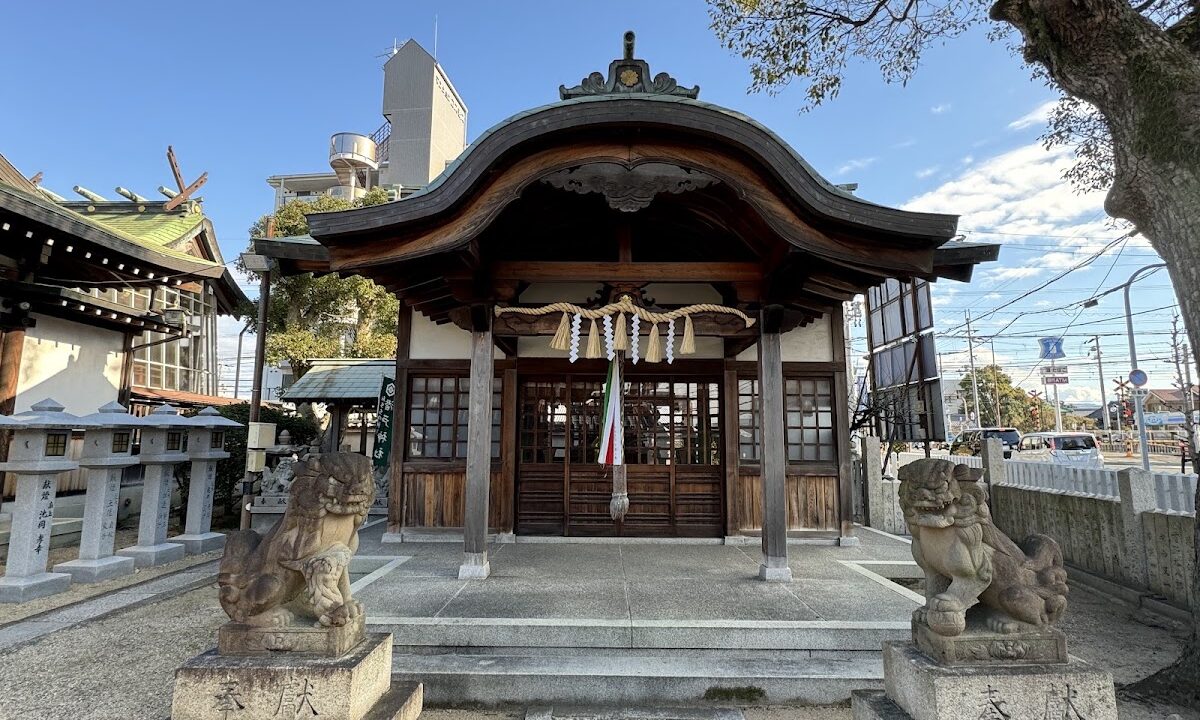
Complete Guide to Kanda Shrine | The History, Goshuin (Shrine Seals), and the Charm of the Taikodai Festival of Kaizuka Terauchi-cho
What is Kanda Shrine?
Kanda Shrine (Kanda Jinja) is a shrine located in Nakamachi, Kaizuka City, Osaka Prefecture. Formerly known as “Kanda Kawara Daimyojin,” it boasts a convenient location just a 3-minute walk from Kaizuka Station on the Nankai Main Line. It is a historical shrine deeply revered by locals as the guardian deity of the land in Kaizuka Terauchi-cho.
Formerly a village shrine, it remains a central shrine in Kaizuka City, serving as a cornerstone of local faith and culture. Within its grounds is the only remaining structure preserving the remnants of the moat that once surrounded Kaizuka Terauchi-cho, making it a shrine of high historical value.
Main Deities and Divine Virtues
Kanda Shrine enshrines three deities.
Amaterasu Omikami
The supreme deity of Japan, invited from Ise Grand Shrine, and the goddess who governs the sun. She bestows divine blessings of national peace and security, abundant harvests, and good fortune.
Susanoo-no-Mikoto
A deity invited from Kanshin-in Temple (present-day Yasaka Shrine) in Yasaka-go, Atago-gun, Yamashiro Province, known for his divine blessings of warding off evil, eradicating disease, and matchmaking.
Sugawara no Michizane
The god of learning, invited from Kitano Tenmangu Shrine in Kyoto, bestows divine blessings of academic success, passing exams, and improvement in writing.
With these three deities enshrined together, Kanda Shrine has become a shrine with diverse divine blessings, welcoming worshippers with a variety of wishes.
History of Kanda Shrine
Origin of its Founding
Kanda Shrine was founded approximately 600 years ago. At that time, the people living in the small village of the former Kaizuka Village decided to enshrine a deity to pray for the development and prosperity of their village. It is said that the village elders took the lead in inviting three deities from Kyoto and Ise, marking the beginning of the shrine’s founding.
Specifically, Susanoo-no-Mikoto was invited from Kanshin-in Temple in Yasaka-go, Atago-gun, Yamashiro Province (present-day Kyoto Yasaka Shrine), Amaterasu-Omikami from Ise, and Sugawara no Michizane from Kitano Tenmangu Shrine in Kyoto. The wisdom of our ancestors in enshrining these three deities together demonstrates their intention to create a guardian deity for the village.
Reconstruction in 1587 and Kaizuka Terauchi-cho
The current form of Kanda Shrine was established in 1587 (Tensho 15). It is believed that the shrine was built by the townspeople in this year. This period corresponds to the latter half of the Middle Ages, when Kaizuka Terauchi-machi was developing.
Kaizuka Terauchi-machi was an autonomous city formed around Gansenji Temple of the Jodo Shinshu sect, characterized by its defensive town planning with a moat surrounding it. Kanda Shrine, as the tutelary deity of this temple town, coexisted with Buddhist temples and attracted the faith of the local community. At that time, it was called “Kanda Kawara Daimyojin” and was beloved by the people as the guardian deity of the land.
Development after the Edo Period
During the Kan’ei era (1624-1644), Kaizuka Village was divided into five towns, and the area where Kanda Shrine is located became known as Nakano-machi. Since then, the shrine has been maintained and developed, receiving the deep faith of the local people.
Throughout the Edo period, Kanda Shrine attracted the faith of Kaizuka’s merchants and craftsmen, and prospered alongside the town. In particular, Kaizuka flourished as a production center for Izumi cotton and developed into a commercial city. This development was underpinned by the strong community ties fostered by faith in Kanda Shrine.
Even after the Meiji-era separation of Shinto and Buddhism, Kanda Shrine maintained its status as a central shrine in the region, a position it continues to hold today.
Highlights of the Shrine Grounds
Shrine Buildings
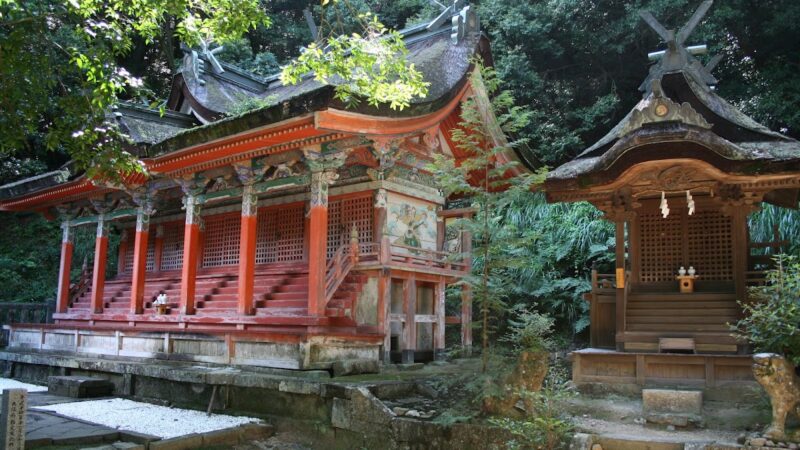
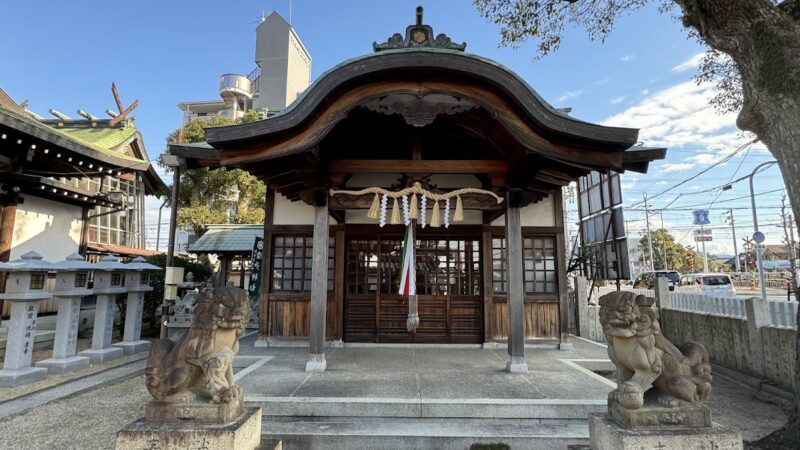
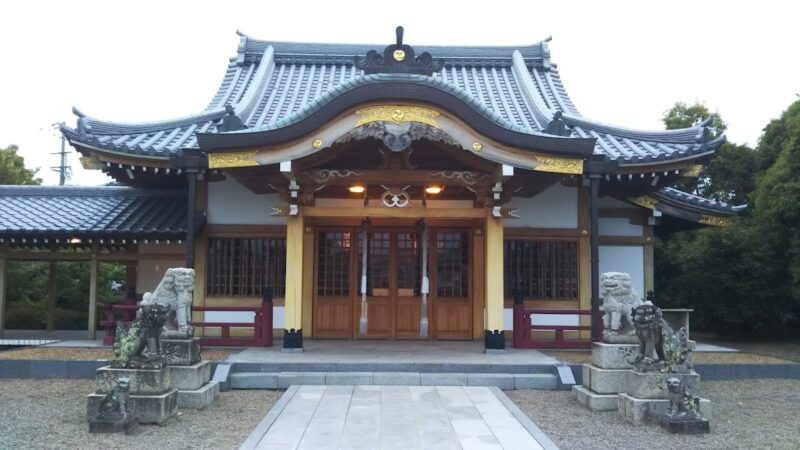
The shrine buildings of Kanda Shrine beautifully preserve the traditional beauty of shrine architecture. Both the main hall and the worship hall are meticulously maintained, welcoming visitors with a solemn atmosphere. The construction of the shrine buildings showcases the combined skills of local craftsmen, and the intricate decorations and carvings are particularly noteworthy.
Remains of the Moat
The remains of the moat within the shrine grounds are an important historical site that speaks to the historical value of Kanda Shrine. It is considered the only remaining trace of the moat that once surrounded the entire Kaizuka temple town, making it a valuable historical site that conveys the urban defense system of the late medieval period.
This moat was dug to protect the temple town from external enemies, and it gives us a glimpse into the self-governing city of the time. Although only a portion remains today, its existence demonstrates the deep connection between Kanda Shrine and the Kaizuka temple town.
Atmosphere of the Shrine Grounds
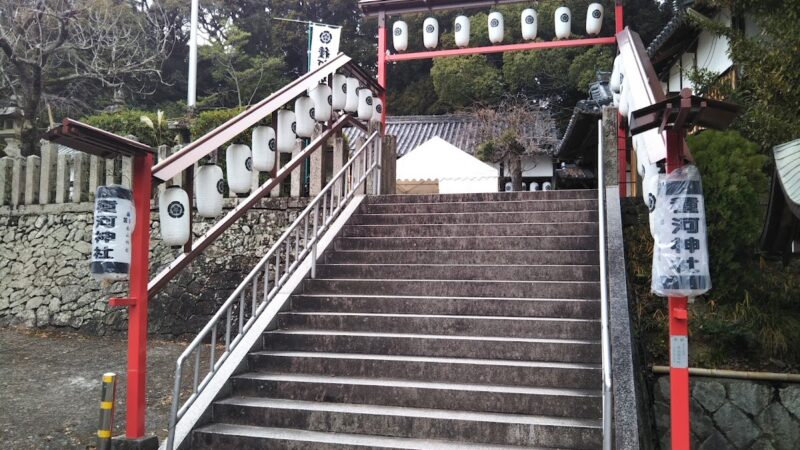
Despite being located in an urban area just a 3-minute walk from Kaizuka Station, the shrine grounds are enveloped in a tranquil atmosphere. Surrounded by trees, the grounds provide a peaceful space for worshippers and also function as a place of relaxation for local residents.
Taikodai Festival in July
What is the Taikodai Festival?
The largest event at Kanda Shrine is the Taikodai Festival, held annually around July 19th. This festival is widely known as a summer tradition in Kaizuka City and is said to be the most exciting day of the year for the local people.
The Taikodai Festival is a traditional event held as the annual festival of Kanda Shrine, where taikodai (drum floats) from each town in the Kaizuka temple town parade through the streets, creating a magnificent and spirited festival. This festival has a history spanning several hundred years and is an important cultural event that can be considered an integral part of the identity of the people of Kaizuka.
The Charm of the Taikodai
A taikodai is a float carrying a large drum, carried by dozens of young people. Each town’s taikodai has its own unique decorations and characteristics, and is created and maintained with pride for the town.
On the day of the festival, the taikodai parade through the town, and a fierce “yarimawashi” (a maneuver where the floats clash) takes place in and around the grounds of Kanda Shrine. This magnificent sight is breathtaking and captivates many spectators. The sound of the drums resounds and the shouts of the bearers fill the air, truly symbolizing summer in Kaizuka.
Local Community and the Festival
The Taikodai Festival is not merely a tourist event, but an important opportunity to strengthen the bonds of the local community. Preparations for the festival begin several months in advance, with residents of each town cooperating in the maintenance and practice of carrying the taikodai.
For young people in particular, participating in the Taikodai Festival is an opportunity to strengthen their sense of community involvement and serves as a place for intergenerational exchange. Many people return home for the festival every year, and for those from Kaizuka, it’s an important event to reaffirm their connection to their hometown.
Goshuin (Shrine Seals) and Goshuincho (Shrine Seal Books)
About Goshuin
Kanda Shrine offers goshuin to visitors. Goshuin are given as proof of visiting the shrine, and in recent years, collecting them has become a popular hobby.
Kanda Shrine’s goshuin features the shrine’s name and the date of visit written in ink, followed by a red seal. The simple yet powerful calligraphy reflects the shrine’s status as the tutelary deity of Kaizuka Terauchi-cho.
Goshuin Reception Hours
Goshuin are usually available from 9:30 AM to 5:00 PM. However, this may not be possible during religious ceremonies or festivals. Therefore, if you wish to receive a goshuin, it is recommended to check with the shrine in advance. ### Goshuincho (Shrine Stamp Book)
Kanda Shrine offers original goshuincho (shrine stamp books). Designs reflecting local characteristics, such as those featuring motifs from Kaizuka Terauchi-cho and the Taikodai Festival, make them popular souvenirs for visitors.
Access Information
Basic Information
Address
10-1 Nakamachi, Kaizuka City, Osaka Prefecture 597-0003
Phone Number
For inquiries to the shrine, please check the official website.
Visiting Hours
While visiting the shrine grounds is generally free, the shrine office is open from 9:30 AM to 5:00 PM.
Closed Days
Open every day
Access by Train
Using the Nankai Main Line
Get off at Kaizuka Station on the Nankai Main Line, and walk approximately 3 minutes from the North Exit.
Kaizuka Station is approximately 30 minutes from Namba Station by Nankai Main Line express train, and approximately 25 minutes by Limited Express Southern train. The shrine is very close to the station and is located north of the station, so you can arrive without getting lost.
If you head north from the station, you will immediately come across the historic townscape of Kaizuka Terauchi-cho, with Kanda Shrine at its center. There are guide signs along the way, so even first-time visitors can easily find their way.
Access by Car
Using the Hanshin Expressway
Approximately 5 minutes from the Kaizuka IC on the Hanshin Expressway Route 4 Wangan Line.
Parking
Since the shrine’s dedicated parking is limited, we recommend using nearby coin-operated parking lots. Especially during events such as the Taikodai Festival, the use of public transportation is recommended.
Nearby Attractions
Kaizuka Terauchi-cho
Kaizuka Terauchi-cho, where Kanda Shrine is located, is an area that retains a historical townscape formed from the late medieval period to the early modern period. The structure of the temple town, centered around Gansenji Temple, remains in the road layout and town divisions even today, allowing you to feel the history just by strolling around.
Within the town, there are scattered townhouses and merchant houses dating back to the Edo period, some of which are open to the public. We recommend enjoying a historical stroll through Kaizuka Terauchi-cho in conjunction with a visit to Kanda Shrine.
Gansenji Temple
This Jodo Shinshu Buddhist temple, which was the center of Kaizuka Terauchi-cho, is located about a 5-minute walk from Kanda Shrine. Its magnificent main gate and main hall are impressive and an essential spot for understanding the history of Terauchi-cho.
Kaizuka City Nature and Learning Center
This facility, where you can learn about the nature and history of Kaizuka City, is located about a 10-minute drive from Kanda Shrine. You can deepen your understanding of the origins and culture of Kaizuka City.
Manners and Etiquette for Visiting Shrines
Basic Etiquette for Visiting Shrines
When visiting Kanda Shrine, please observe the following basic etiquette:
- Bow Before Passing Through the Torii Gate
As a sign of respect before entering the sacred area, bow before the torii gate.
- Purifying Yourself at the Water Basin
At the water basin located on the approach to the shrine, purify your hands and mouth. Hold the ladle in your right hand and wash your left hand, then hold the ladle in your left hand and wash your right hand. Again, hold the ladle in your right hand, receive water in your left hand, and rinse your mouth. Finally, hold the ladle upright and rinse the handle.
- Walk Along the Edge of the Path
The center of the path is considered the path of the gods, so it is polite to walk along the edge.
- Worship at the Main Hall
At the main hall, worship using the “two bows, two claps, one bow” method. Place your offering, ring the bell, bow deeply twice, clap twice, and finally bow deeply once.
Photography Etiquette
Photography is generally permitted on the shrine grounds, but there may be restrictions, such as inside the main hall or during religious ceremonies. If you are unsure, please check with the shrine office. It is also important to be considerate of other worshippers and avoid causing any inconvenience.
Annual Events at Kanda Shrine
Main Annual Events
January 1st: New Year’s Day Festival
A festival celebrating the New Year, attracting many first-time visitors.
February 3rd: Setsubun Festival
Events such as bean-throwing are held, and prayers are offered for protection against evil.
July 19th: Annual Festival (Taiko-dai Festival)
Kanda Shrine’s largest festival, a magnificent event that colors the summer in Kaizuka.
November: Shichi-Go-San Festival
Prayers are offered for Shichi-Go-San, celebrating the growth of children.
December 31st: Great Purification Ceremony
A Shinto ritual to purify and cleanse away the impurities of the year.
These events are deeply rooted in the lives of the local people, and by visiting Kanda Shrine each season, you can experience traditional Japanese annual events.
A Summary of the Charms of Kanda Shrine
Kanda Shrine, with a history spanning over 600 years, has remained the tutelary shrine of Kaizuka Terauchi-cho, a central hub of local faith and culture. Enshrining three deities—Amaterasu Omikami, Susanoo-no-Mikoto, and Sugawara no Michizane—it welcomes worshippers with diverse wishes and blessings.
The annual Taikodai Festival in July is a representative traditional event of Kaizuka City, and its magnificent spectacle is well worth seeing. Furthermore, despite its convenient location just a 3-minute walk from Kaizuka Station, the shrine grounds are enveloped in a tranquil atmosphere, offering a peaceful escape from the hustle and bustle of the city.
Nestled within the historic townscape of Kaizuka Terauchi-cho, Kanda Shrine is an ideal base for historical exploration. For those collecting Goshuin (shrine stamps), those interested in shrines and temples, those seeking to experience traditional Japanese culture, and those wanting to experience local festivals, Kanda Shrine will be a fascinating destination.
When you visit Kaizuka City in Osaka Prefecture, be sure to visit Kanda Shrine and experience the local history, culture, and the faith of its people.