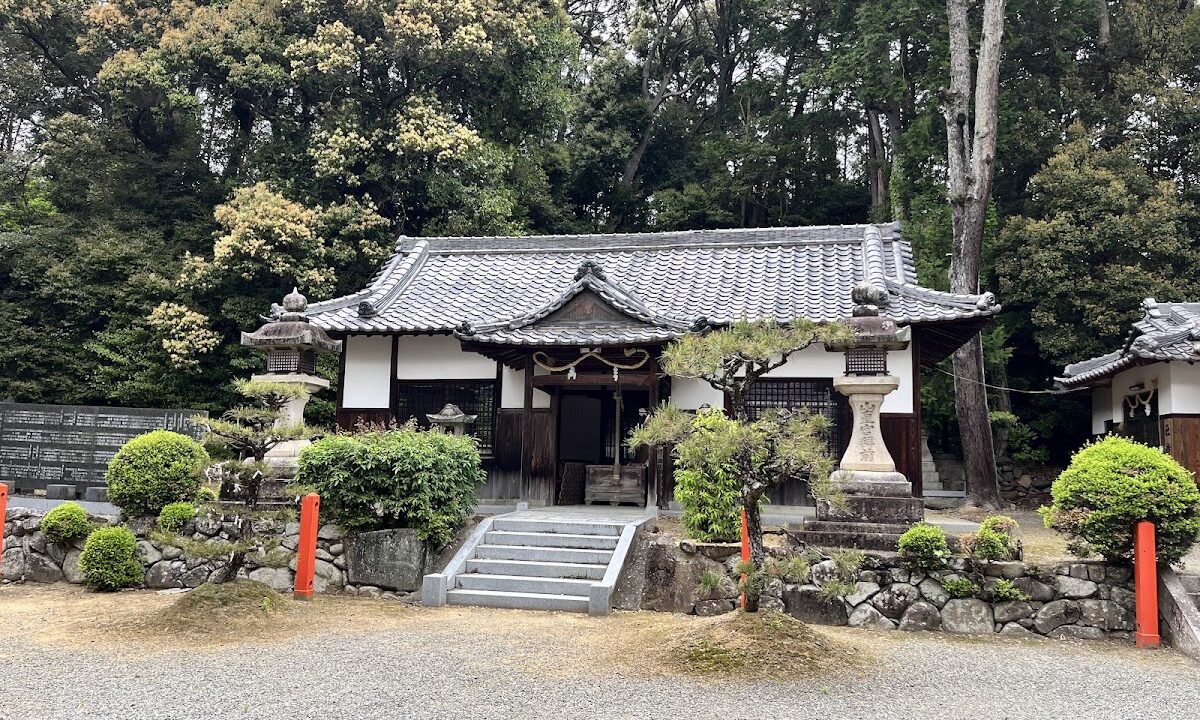
Yamadai Shrine (Kishiwada City, Osaka Prefecture) Complete Guide: The History and Cultural Heritage of this Shikinaisha Shrine
Yamadai Shrine, located in Uchihata-cho, Kishiwada City, Osaka Prefecture, is a historically significant Shikinaisha shrine dedicated to the ancestral deity of the ancient Yamano-atae clan. As the central shrine of the former Yamano-atae district, it has a long history of attracting local faith, and its main hall architecture, dating from the Momoyama period to the early Edo period, is highly regarded as an Osaka Prefecture-designated tangible cultural property. This article provides a detailed introduction to Yamadai Shrine, including its history, enshrined deities, cultural heritage, and helpful local information for visitors.
History of Yamadai Shrine
Founding and the Yamano-atae Clan
The exact founding date of Yamadai Shrine is unclear, but according to shrine tradition, it was founded by Amenohohi-no-mikoto. However, a more historical perspective suggests that its origin lies in the worship of the ancestral deity by the ancient Yamano-atae clan, who resided in the area.
The Yamanao clan was a family with the surname (kabane) “Yamanao,” and “Atae” is an ancient surname. This family held considerable power based in Yamanao-go (present-day southern Kishiwada City) and played a crucial role in the development and governance of the region. Yamanao Shrine has been revered as the clan’s tutelary deity and the local guardian deity.
Status as a Shikinaisha Shrine
Yamanao Shrine is a Shikinaisha shrine listed in the Engishiki Jinmyocho (a list of shrines compiled in the Heian period), and is recorded as the Yamanao Shrine of the Junior Fifth Rank, Upper Grade in the “Kokunai Jinmyocho” (a list of shrines within the province). A Shikinaisha is a shrine listed in the Engishiki Jinmyocho, compiled in the 5th year of the Engi era (927 AD) during the mid-Heian period, and is proof of its historical significance recognized by the imperial court.
As a Shikinaisha belonging to Izumi County, Izumi Province, Yamanao Shrine was an important shrine officially recognized since ancient times. This status speaks to the power of the Yamanao clan and the importance of the shrine in the region.
The Existence of Miyadera/Chōkōji Temple
In the Middle Ages, Yamanae Shrine had a shrine temple (Jingūji) called “Chōkōji” attached to it. A Miyadera is a temple built attached to a shrine under the syncretic belief of Shinto and Buddhism. Chōkōji served as the head temple of Yamanae Shrine, responsible for the shrine’s rituals and management.
However, with the Meiji-era separation of Shinto and Buddhism, Chōkōji was abolished. This policy, promoted by the Meiji government, clearly distinguished Shinto and Buddhism. As a result, many Miyadera temples throughout the country were abolished, and Chōkōji was no exception. While no remains of Chōkōji exist today, its history speaks to the long history of faith surrounding Yamanae Shrine.
From the Early Modern to the Modern Period
Throughout the Edo period, Yamanae Shrine continued to attract the faith of local residents as the tutelary deity of the region. In the Meiji era, under the modern shrine ranking system, it was ranked as a village shrine, officially recognized as a local shrine.
Even after the enactment of the Religious Corporations Law following World War II, Yamanae Shrine has been carefully preserved to this day as the center of traditional local faith.
Deities Enshrined
Yamanae Shrine enshrines several deities. The main deity and enshrined deities are as follows:
Main Deity
Amaterasu Omikami
The supreme deity in Japanese mythology and the ancestral deity of the Imperial family. As a deified representation of the sun, she is a benevolent being who brings blessings to all life.
Ame no Hohi no Mikoto
Considered a child of Amaterasu Omikami, and the ancestral deity of the Izumo no Kuni no Miyatsuko and the Haji clan. According to shrine tradition, he is the founding deity of this shrine.
Susanoo no Mikoto
The younger brother of Amaterasu Omikami, and the god of martial arts and agriculture. Widely worshipped as a god of protection against misfortune and disaster.
Enshrined Deities
Hikosonosero-no-Mikoto
A deity considered to be the ancestral god of the Yamanao clan. He possesses the characteristics of a pioneering deity of the region.
Kotokatsukunikatsunagasa-no-Kami
Enshrined as a deity who brings about national development and victory.
Sayorihime-no-Mikoto
As a goddess, she attracts worshippers seeking family safety and prosperity of descendants.
From this composition of enshrined deities, it is clear that while Yamanao Shrine has its characteristics as the tutelary shrine of the Yamanao clan, it has also attracted diverse worshippers as the general guardian shrine of the region.
Cultural Properties and Architecture
Main Hall (Osaka Prefecture Designated Tangible Cultural Property)
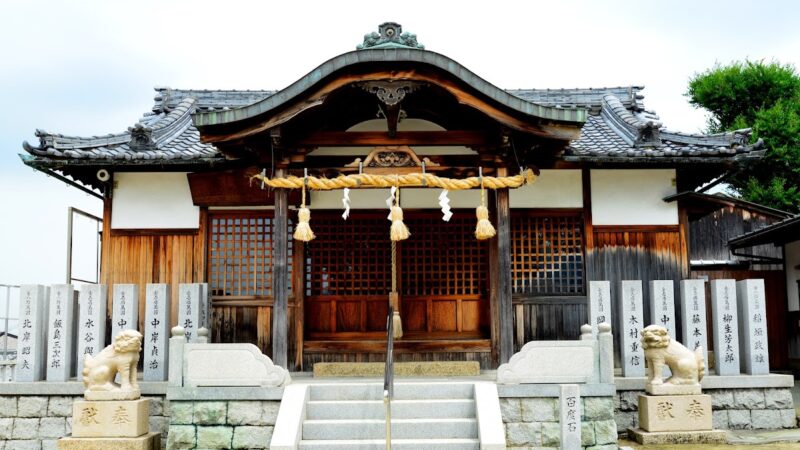
The greatest highlight of Yamanao Shrine is the main hall, which is designated as an Osaka Prefecture Designated Tangible Cultural Property. This main hall is built in the Ikkensha Nagare-zukuri architectural style.
Architectural History
According to shrine records, the current main hall was rebuilt in 1594 (Bunroku 3). Furthermore, it is said that the roof was re-thatched and repaired in 1601 (Keicho 6). This period falls within the transitional period from the Momoyama period to the early Edo period, and the architectural style strongly reflects the characteristics of that era.
Architectural Style Characteristics
The Ikkensha Nagare-zukuri style is a type of shrine architecture where the front has one bay (one column space), and the roof extends long and flowing outwards from the front. The main hall of Yamanao Shrine is valued as a precious building that combines the magnificent ornamentation of the Momoyama period with the characteristics of the transitional period to the simplification of the early Edo period.
The detailed carvings and joinery exhibit the powerful style characteristic of the Momoyama period, conveying the high level of architectural technology of that time. There are only a limited number of Momoyama period shrine buildings remaining in Osaka Prefecture, and the main hall of Yamanao Shrine is a valuable cultural asset that is in excellent condition among them.
Significance of Cultural Property Designation
Protected as an Osaka Prefecture-designated Tangible Cultural Property, this valuable building is properly maintained and passed down to future generations. Regular repairs and preservation measures are carried out, ensuring that this building, with over 400 years of history, remains beautiful to this day.
Overall Structure of the Shrine
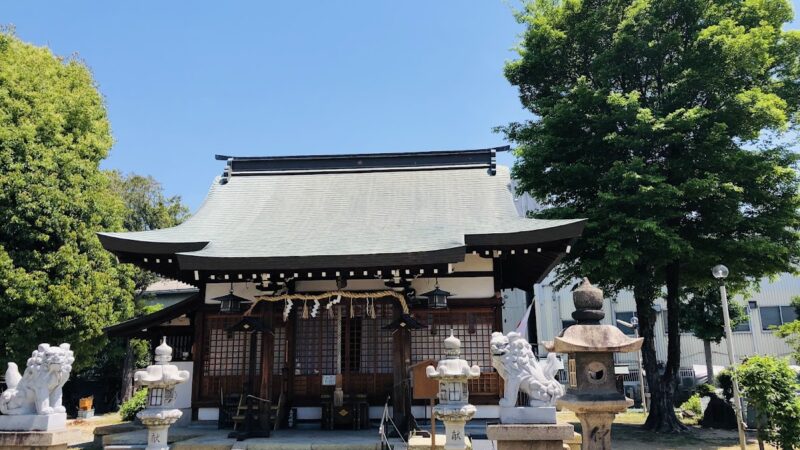
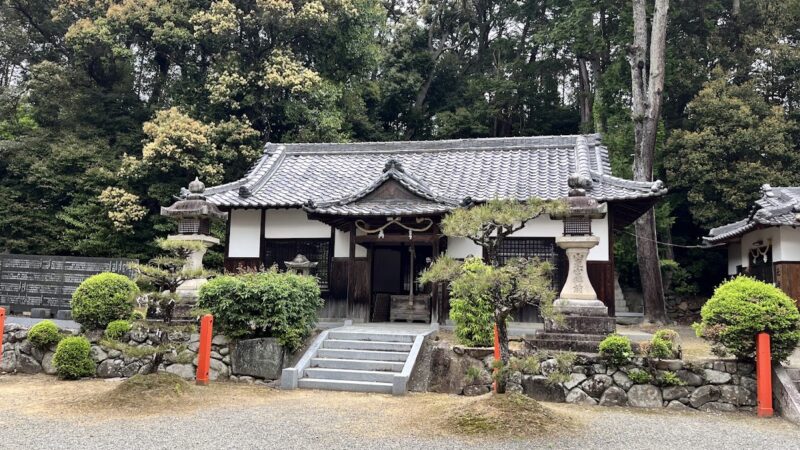
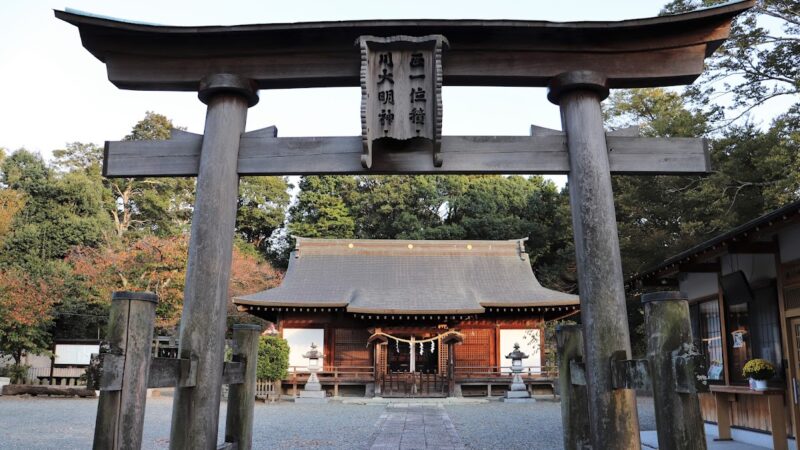
In addition to the main hall, the worship hall, torii gate, and subsidiary shrines are neatly arranged, maintaining the traditional spatial configuration of a Shinto shrine. The shrine grounds are enveloped in a tranquil atmosphere, making it a valuable historical space in the increasingly urbanized city of Kishiwada.
Annual Events and Festivals
Yamaguchi Shrine holds various festivals throughout the year.
Winter Shrine Festival (February)
The Winter Shrine Festival, held in February, is an important festival praying for good health and a bountiful harvest throughout the year. Held during the cold season, this festival is a traditional event where local people gather at the shrine to pray for peace in the new year.
Annual Grand Festival (October)
The annual grand festival, held in October, is the most important annual event at Yamanao Shrine. It is a time to give thanks for the autumn harvest and pray for the prosperity of the community. Many parishioners and local residents attend, making the shrine the liveliest place of the year. The festival includes a portable shrine procession and dedication ceremonies, allowing visitors to experience the atmosphere of a traditional festival.
These festivals are important opportunities to deepen the bonds of the local community, and ancient traditions have been passed down to the present day.
Yamanao Shrine and Surrounding Yamanao-Related Shrines
There are several shrines in Kishiwada City that bear the name “Yamanao.” This is a remnant of the time when several shrines related to the Yamanao clan were located in the large area known as the former Yamanao-go.
Yamanaonaka Shrine (Nakamura Shrine)
The Yamanaonaka Shrine (commonly known as Nakamura Shrine), located in Yamanaonaka-cho, Kishiwada City, is officially registered with the Association of Shinto Shrines as “Nakamura Shrine,” but is affectionately known locally as “Yamanaonaka Shrine.” The enshrined deities are Ichikishimahime-no-Mikoto, Hachiman-no-Mikoto (Emperor Ojin), and Sugawara no Michizane.
Yamanaonaka Shrine is sometimes considered a candidate for the Shikinaisha (shrines listed in the Engishiki), demonstrating the widespread faith in the Yamanaonaka region. While it is a separate shrine from the Yamanaonaka Shrine in Uchihata-cho, it is an important shrine belonging to the same regional cultural sphere.
The Faithful Sphere of the Yamanaonaka Region
The former Yamanaonaka region corresponds to the southern part of present-day Kishiwada City and consisted of multiple settlements. Each settlement enshrined its own tutelary deity, and several shrines bearing the name “Yamanaonaka” existed. The Yamanaonaka Shrine in Uchihata-cho is thought to have held a special position as a central Shikinaisha among them.
Location and Access
Location
Address: 3619 Uchihata-cho, Kishiwada City, Osaka Prefecture
Yamana Shrine is located on a hillside in Uchihata-cho, in the southern part of Kishiwada City. It is situated in a quiet environment, surrounded by a mix of residential and agricultural land.
Access Methods
Access by Train and Bus
- From Nankai Main Line “Kishiwada Station” or “Izumi-Omiya Station,” take the Nankai Wing Bus (Southern Line) and get off at the “Uchihata” bus stop, then walk for approximately 5 minutes.
- From JR Hanwa Line “Higashi-Kishiwada Station,” take a taxi for approximately 15 minutes.
Access by Car
- Approximately 10 minutes from the Hanwa Expressway “Kishiwada-Izumi IC.”
- Accessible via prefectural roads from National Route 170 (Osaka Outer Ring Road).
- There may be parking spaces for visitors on the shrine grounds or nearby, but it is recommended to check in advance.
Notes
Yamana Shrine is located in a residential area, and some roads are narrow. If you are visiting for the first time, we recommend using a map app or car navigation system and allowing ample time for your visit.
Tips and Highlights for Visiting
Points to Note During Your Visit
Yamaguchi Shrine is open at all times, but the shrine office may not always be staffed. If you wish to receive a Goshuin (shrine stamp), we recommend checking in advance. Also, while the main hall, a cultural property, is usually only viewable from the outside, you can still admire its exquisite architectural beauty up close.
Highlights of the Shrine Grounds
- Main Hall Architecture: You can admire the Momoyama period architecture, a designated cultural property of Osaka Prefecture, from the outside. Pay attention to the beautiful curves of the roof and the detailed carvings.
- Tranquil Shrine Grounds: Despite being in an urban area, a quiet space is maintained, allowing for a peaceful visit.
- Historical Shrine Grove: The trees on the grounds have been nurtured over many years, giving a sense of the shrine’s history.
Nearby Attractions
Kishiwada City has many other historical sites. Visiting Kishiwada Castle and the Kishiwada Danjiri Museum in conjunction with sightseeing in the city is highly recommended. Furthermore, a tour of the shrines in the Yamanao area, including the nearby Yamanao Nakajinja Shrine, would be an interesting experience.
Faith at Yamanao Shrine and the Local Community
Parishioners and the Local Community
Yamanao Shrine continues to be revered by local residents as the tutelary shrine of Uchihata-cho and the surrounding areas. During festivals, parishioners cooperate to perform religious ceremonies, creating a place to deepen community bonds.
Even in today’s increasingly urbanized world, this connection between traditional faith and local community plays a crucial role in the stability of the local community and the preservation of culture.
Cultural Property Protection and Preservation
The maintenance and management of the main hall, a designated cultural property of Osaka Prefecture, requires the cooperation of local residents and the government. Regular inspections, repairs, and cleaning of the shrine grounds are all efforts by many people to protect this valuable cultural heritage.
Passing on traditions to younger generations is also an important issue. Efforts to pass on the region’s history and culture to future generations through participation in festivals and learning about the shrine’s history continue.
Summary
Yamauchi Shrine is a venerable shrine with over 1000 years of history, dedicated to the ancestral deity of the ancient Yamauchi clan. The main hall, a designated tangible cultural property of Osaka Prefecture, is a valuable cultural heritage site that preserves the architectural style of the Momoyama period, and holds high architectural historical value.
As the central shrine of the former Yamauchi district, Yamauchi Shrine has attracted the faith of the region and continues to play an important role as a spiritual pillar of the local community today. Visiting the shrine in its tranquil grounds, while reflecting on its history, allows one to feel the continuation of the faith from ancient times and the devotion of the people who have preserved it.
When visiting Kishiwada City, be sure to visit Yamauchi Shrine and experience its history and cultural treasures. Its status as a Shikinaisha (a shrine listed in the Engishiki), its valuable Momoyama-period architecture, and the deeply rooted faith of the community will leave a profound impression on visitors.
Related Information
- Kishiwada City Board of Education: Information on cultural properties within the city
- Osaka Prefectural Board of Education: Detailed information on prefecturally designated cultural properties
- Yamanao Naka Shrine (Nakamura Shrine): A related shrine located in the same Yamanao area
- Kishiwada Castle: A historical building representative of Kishiwada City
- Kishiwada Danjiri Festival: A traditional festival culture of Kishiwada City
Yamanao Shrine is an important shrine indispensable for understanding the history and culture of southern Osaka Prefecture. Its tranquil atmosphere and valuable cultural properties make it well worth a visit.