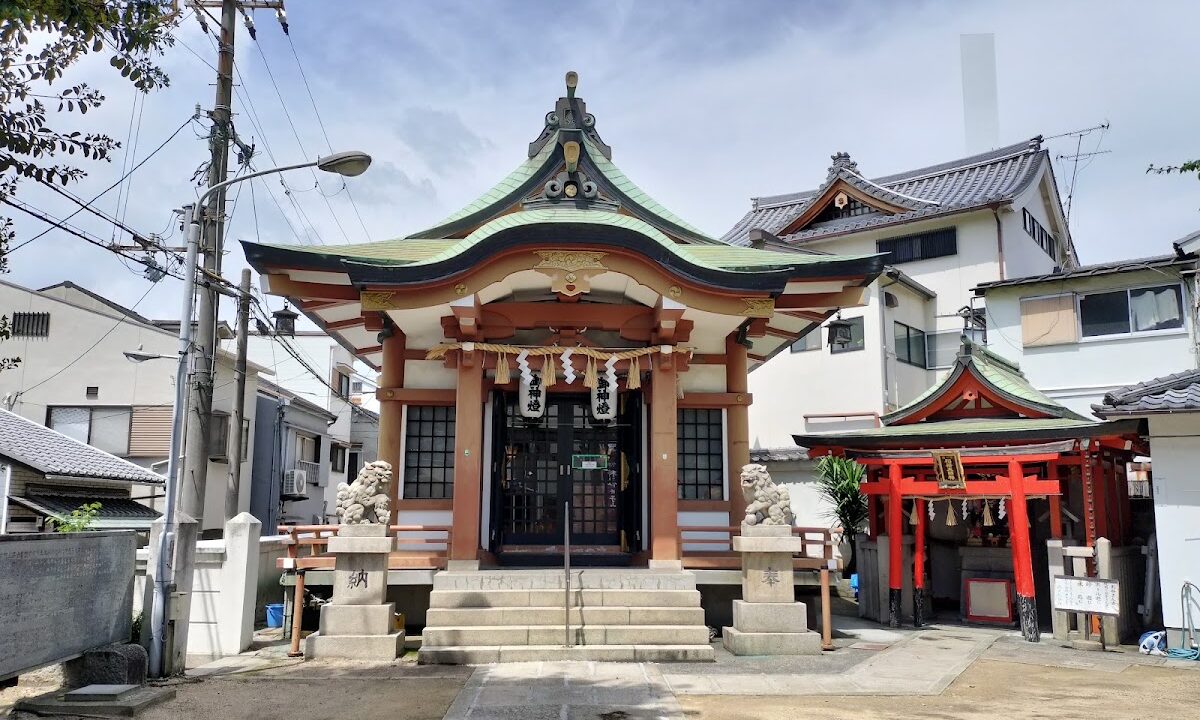
Nishikujo Shrine (Osaka Prefecture) Complete Guide | History, Access, Goshuin (Shrine Seal), and Highlights Explained in Detail
Nishikujo Shrine, located in Nishikujo, Konohana-ku, Osaka City, is a historic shrine that has watched over the community since the Edo period. Quietly nestled in a residential area, this shrine is beloved by locals while also being known as a fascinating place with a distinguished history and unique origins.
This article comprehensively introduces useful information for those considering a visit to Nishikujo Shrine, including its detailed history, the origins of its enshrined deities, access methods, highlights within the shrine grounds, information on goshuin (shrine seals), and nearby tourist attractions.
Basic Information about Nishikujo Shrine
Location and Access
Address: 1-4-20 Nishikujo, Konohana-ku, Osaka City, Osaka Prefecture 554-0012
Nearest Station:
- Approximately 3-5 minutes on foot from Nishikujo Station on the JR Osaka Loop Line, JR Yumesaki Line, and Hanshin Namba Line
- Approximately 300-500 meters east from the East Exit (Exit 3) of Nishikujo Station
Nishikujo Station is a major transportation hub where the Osaka Loop Line and Hanshin Namba Line intersect, making access very convenient. While the walk from the station to the shrine takes you through a residential area, the route is relatively easy to follow, and locals are happy to provide directions.
Visiting Hours and Admission Fee
Nishikujo Shrine is a shrine where entry to the grounds is free, and it is generally open 24 hours a day. Admission is free. However, the shrine office’s operating hours may be limited, so it is recommended to check in advance if you wish to obtain a Goshuin (shrine stamp) or other items. ### Contact Information
Since Nishikujo Shrine is under the management of Ibaraki Sumiyoshi Shrine, detailed inquiries should be directed to Ibaraki Sumiyoshi Shrine.
Ibaraki Sumiyoshi Shrine: 06-6582-2211
History and Origins of Nishikujo Shrine
Background of Founding: Land Reclamation Development in the Edo Period
The history of Nishikujo Shrine dates back to the Jōkyō era of the Edo period (1684-1688, or around 1680 according to one theory). During this period, large-scale land reclamation was underway near the mouth of the Yodo River, and many people settled in the area known as Nishino Shinden.
For those who farmed in the new land, a bountiful harvest was the most important wish. Furthermore, given its location at the mouth of the Yodo River, maritime safety was also a fervent prayer. Against this backdrop, it is believed that Nishikujo Shrine originated when the settlers enshrined Inari Taisha and Sumiyoshi Ōkami, the guardian deity of maritime safety.
Changes in the Meiji Era: Relationship with Ibaraki Sumiyoshi Shrine
In 1907 (Meiji 40), Nishikujo Shrine became the temporary shrine (angusho) of Ibaraki Sumiyoshi Shrine. An angusho refers to a facility that enshrines a divided spirit of the main shrine or serves as a temporary resting place for the deity. During this period, shrine consolidation was progressing nationwide, and many small shrines were placed under the management of more powerful neighboring shrines.
Ibaraki Sumiyoshi Shrine is a historically significant shrine located in Nishi-ku, Osaka City, with Sumiyoshi Okami as its principal deity. Since Nishikujo Shrine also enshrined Sumiyoshi Okami, it is thought that a relationship with Ibaraki Sumiyoshi Shrine was naturally established.
Post-War Name Change: To Nishikujo Shrine
In 1946 (Showa 21), after the chaotic period immediately following the end of the war, the shrine’s name was officially changed to “Nishikujo Shrine.” This is thought to have been a measure to clarify the regional identity and make the name more familiar to local residents.
The place name Nishikujo originates from the fact that this area was once located on the western side of the Jori system’s grid divisions, known as “Kujo.” The change in the shrine’s name has further strengthened the connection between the shrine and the local community.
About the Deity: Sumiyoshi Okami
What is Sumiyoshi Okami?
The principal deity of Nishikujo Shrine is Sumiyoshi Okami. Sumiyoshi Okami is formally the collective name for the following three deities:
- Sokotsutsu-no-Mikoto
- Nakatsutsu-no-Mikoto
- Uwatsutsu-no-Mikoto
These are also known as the “Sumiyoshi Three Gods” and have been worshipped since ancient times as gods of the sea and navigation. In Japanese mythology, they are said to be the gods born when Izanagi-no-Mikoto performed a purification ritual upon returning from the underworld.
Divine Virtues of Sumiyoshi-no-Okami
Sumiyoshi-no-Okami is believed to possess diverse divine virtues:
- Maritime Safety and Protection of Navigation: Revered since ancient times as the guardian deity of sailors and fishermen.
- Abundant Harvest: Also worshipped as a god who brings prosperity to agriculture.
- Business Prosperity: Considered important as a god of business in Osaka, a commercial city.
- God of Waka Poetry and Literature: As the divine messenger of Sumiyoshi Taisha is also known as the god of waka poetry, cultural benefits are also believed to be present.
- Exorcism and Purification: As a god born from purification rituals, it is believed to have the power to ward off defilement.
Why is Sumiyoshi-no-Okami enshrined in Nishikujo?
The Nishikujo area is close to the mouth of the Yodo River and was once a key point for water transport. As farmland expanded due to land reclamation, and water transport was also thriving in the area, Sumiyoshi Okami, who presides over both maritime safety and abundant harvests, was chosen as the most suitable guardian deity.
It is believed that a divided spirit was invited from Sumiyoshi Taisha, which faces Osaka Bay, and a faith closely intertwined with the lives of the local people has flourished.
Highlights and Cultural Assets of the Shrine Grounds
Main Hall and Worship Hall
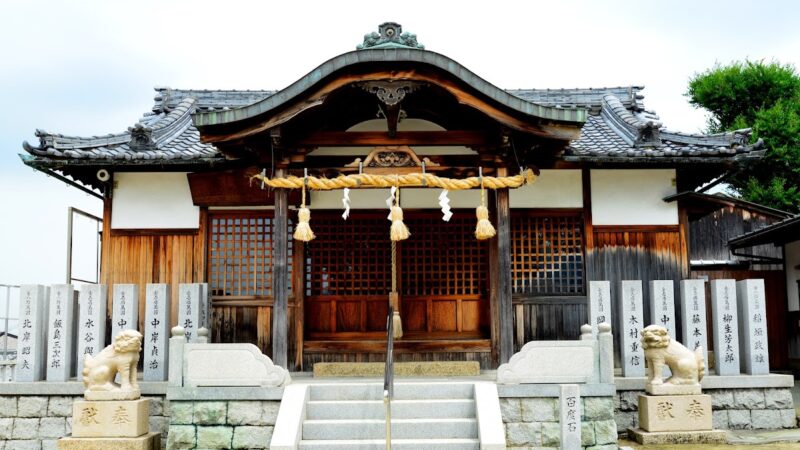
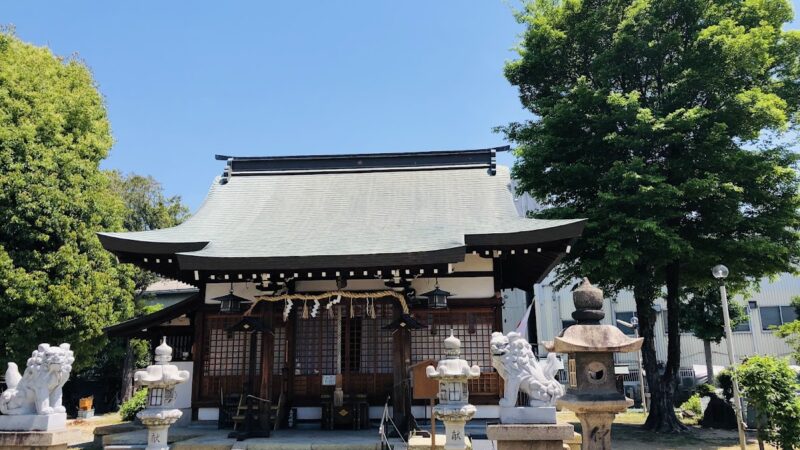
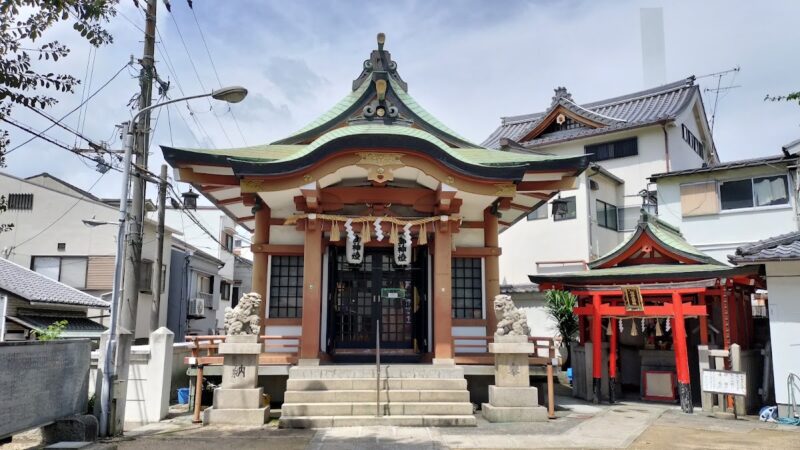
The main hall of Nishikujo Shrine maintains a tranquil atmosphere despite being located in a residential area. While not large in scale, it is meticulously maintained by local residents, resulting in a clean and serene grounds.
The worship hall, a place for worshippers to offer prayers, is simply yet majestic in its construction.
Komainu (Guardian Dogs)
Within the shrine grounds sit komainu (guardian dogs) said to have been donated in the early Showa period. These komainu are also known as “Genki Komainu” (Energetic Guardian Dogs) and are characterized by their powerful and lively expressions. This work, showcasing the pinnacle of stonemasonry techniques from the early Showa period, is attracting attention among shrine architecture and guardian lion-dog enthusiasts.
The guardian lion-dogs are positioned along the approach to the shrine as its guardians, warmly welcoming visitors. It’s also a popular spot for photography.
Trees and Nature on the Shrine Grounds
Although located in an urban area, the shrine grounds maintain ancient trees and greenery, allowing visitors to experience nature throughout the seasons. The quiet grounds are especially beautiful during the fresh greenery of spring and the vibrant autumn foliage.
Shrine Name Marker and Torii Gate
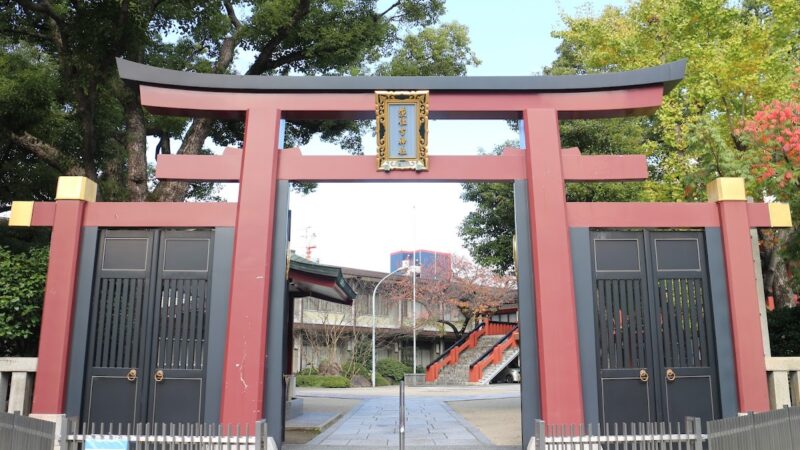
A shrine name marker inscribed with “Nishikujo Shrine” stands at the entrance to the grounds, welcoming visitors. Passing through the torii gate marks the beginning of a sacred area, far removed from the hustle and bustle of everyday life.
About Goshuin (Shrine Seals) and Gifts
How to Obtain a Goshuin
Since Nishikujo Shrine is under the management of Ibaraki Sumiyoshi Shrine, prior confirmation is necessary if you wish to obtain a goshuin. Since there may not always be a resident Shinto priest, if you definitely want to receive a Goshuin (temple/shrine stamp), we recommend contacting Ibaraki Sumiyoshi Shrine (06-6582-2211) in advance.
A Goshuin is proof of your visit to the shrine, not just a commemorative stamp. When visiting, please first offer a sincere prayer at the main hall before receiving your Goshuin.
Items Available
The opening hours of the shrine office for items available (such as amulets and talismans) may be limited. If you wish to obtain a specific item, we recommend checking before your visit.
Etiquette for Visiting Nishikujo Shrine
Basic Flow of Worship
- Bow at the Torii Gate: Before passing through the torii gate, stop briefly and bow slightly.
- Purify at the Water Basin: If there is a water basin, purify your left hand, then your right hand, then your mouth.
- Walk along the Edge of the Path: The center of the path is considered the path of the gods, so walk along the edge.
- Worship in Front of the Main Hall:
- Quietly place your offering in the offering box.
- Ring the bell if there is one.
- Perform the two bows, two claps, one bow (bow deeply twice, clap twice, bow deeply once).
- Walk Around the Shrine Grounds: Visit other points of interest such as the guardian lion-dogs and subsidiary shrines.
- Bow at the Torii Gate: When leaving, turn back to the torii gate, bow, and then exit.
Manners During Worship
- Please be quiet within the shrine grounds and refrain from loud conversations.
- Photography is permitted, but please refrain from taking pictures in areas where photography is prohibited, such as inside the main hall.
- Please take all your trash with you.
- As the shrine is adjacent to the living spaces of local residents, special consideration must be given to noise levels.
Annual Events and Festivals
Nishikujo Shrine, as a small local shrine, is believed to hold several festivals throughout the year. However, detailed festival schedules may not be publicly available, so if you wish to participate in a specific event, we recommend contacting Ibaraki Sumiyoshi Shrine.
Typical Annual Events at Shinto Shrines
- New Year’s Day Festival (January 1st): A festival celebrating the New Year
- Setsubun Festival (around February 3rd): A festival for warding off evil spirits
- Spring Festival: A festival celebrating the arrival of spring
- Summer Purification Ceremony (June 30th): A Shinto ritual to purify oneself of the impurities accumulated over the past six months
- Autumn Festival: A festival to express gratitude for the harvest
- Year-End Purification Ceremony (December 31st): A Shinto ritual to purify oneself of the impurities accumulated over the past year
As a local shrine, these traditional events are likely to be preserved by the local people.
Nearby Tourist Attractions and Shrines/Temples
Nearby Shrines
Ibara Sumiyoshi Shrine
This shrine is the main shrine of Nishikujo Shrine. Located in Nishi-ku, Osaka City, it has a larger precinct and shrine building. After visiting Nishikujo Shrine, a visit to its main shrine, Ibaraki Sumiyoshi Shrine, will allow you to experience a deeper history of faith.
Namba Yasaka Shrine
Located in Naniwa Ward, Osaka City, this shrine is famous for its massive lion statue. It’s easily accessible from Nishikujo, making a visit to both shrines highly recommended.
Attractions in Konohana Ward
Universal Studios Japan (USJ)
A world-renowned theme park located just one stop from Nishikujo Station on the JR Yumesaki Line. Many tourists visit before or after their shrine visit.
Maishima Sports Island
This area features sports facilities and a park overlooking Osaka Bay, making it popular with families.
Nearby Restaurants and Rest Stops
Near Nishikujo Station, there are numerous local restaurants. Enjoying local cuisine after your shrine visit is a highlight of your trip. You’ll also find many shops serving Osaka-style takoyaki and okonomiyaki.
Detailed Access Information to Nishikujo Shrine
Access by Train
From Osaka Station/Umeda Station
- Approximately 10 minutes on the JR Osaka Loop Line, alight at Nishikujo Station, then a 3-5 minute walk.
From Namba Station
- Approximately 5 minutes on the Hanshin Namba Line, alight at Nishikujo Station, then a 3-5 minute walk.
- Transfer to the JR Osaka Loop Line from JR Namba Station to Nishikujo Station.
From Tennoji Station
- Approximately 15 minutes on the JR Osaka Loop Line, alight at Nishikujo Station, then a 3-5 minute walk.
From Shin-Osaka Station
- Take the JR Kyoto Line to Osaka Station, then transfer to the JR Osaka Loop Line to Nishikujo Station (total approximately 20 minutes).
Access by Car and Parking
Nishikujo Shrine does not have its own parking lot. If visiting by car, you will need to use coin-operated parking lots around Nishikujo Station. However, as it is located in a residential area, we strongly recommend using public transportation.
Walking Route Guide
After exiting the east exit (Exit 3) of Nishikujo Station, head straight east. After walking approximately 300-500 meters through the residential area, you will see the shrine’s torii gate on your right. There are few signs along the way, so it’s best to use a smartphone map app or ask a local for directions.
Visitor Reviews and Reputation
Evaluation from Local Residents
Nishikujo Shrine is a community-oriented shrine, beloved by local residents. The following comments can be found on review sites and social media:
- “A quiet shrine located in a residential area, perfect for a stroll.”
- “A hidden gem of a shrine known only to locals.”
- “The guardian lion-dogs have powerful and impressive expressions.”
- “The grounds are small but kept clean.”
Impressions from Tourists
The following comments have been received from tourists:
- “I stopped by on my way back from Universal Studios Japan. It’s different from tourist spots; you can experience a local atmosphere.”
- “A historical shrine, you can feel its history dating back to the Edo period.”
- “Easy to access, close to the station.”
- “Visited as part of a tour of Osaka’s shrines. Small but meticulously maintained.”
The Charm of Nishikujo Shrine: Why You Should Visit
Feeling the Weight of History
Nishikujo Shrine has a history closely intertwined with the development of Osaka, specifically the land reclamation project during the Edo period. Behind its founding lay the earnest prayers of people who began their lives in this new land. Even we, living in the modern age, can renew our gratitude for our daily lives by connecting with the thoughts and feelings of our ancestors.
A Place of Worship Rooted in the Community
Unlike large-scale tourist shrines, Nishikujo Shrine is an integral part of the lives of local residents. While not flashy, it embodies a form of faith deeply integrated into people’s daily lives. Experiencing this “living faith” allows us to rediscover the true meaning of visiting a shrine.
A Tranquil Spot in the City
Despite being close to the heart of the metropolis of Osaka, the shrine grounds maintain a quiet and peaceful atmosphere. A place to escape the hustle and bustle of everyday life, it offers solace and healing not only to locals but to all visitors.
A Must-See for Komainu Enthusiasts
The komainu (guardian lion-dogs) from the early Showa period are valuable cultural assets that convey the stonemasonry techniques and artistry of that era. For those interested in komainu, the “energetic komainu” at Nishikujo Shrine are a must-see.
Precautions and Requests for Visitors
Consideration in a Residential Area
Nishikujo Shrine is located in a residential area, so visitors must be considerate of the surrounding residents:
- Avoid loud conversations and noise
- Never park on the street
- Always take your trash with you
- Do not trespass on private property
- When taking photographs, be careful not to include surrounding houses in the shot
Observance of Shrine Etiquette
Shrines are sacred places. Please observe the following manners:
- Choose clean and modest attire (avoid excessive exposure)
- Refrain from eating or drinking on the shrine grounds
- If you bring a pet, please refrain from entering the grounds or carry it
- Do not enter the main hall or other shrine buildings without permission
What to Do When the Shrine Office is Unattended
The shrine office is often unattended, so those who wish to receive a Goshuin (shrine stamp) or other items must contact the office in advance. Even when the office is unattended, you can still visit the shrine grounds; please complete your visit quietly.
The Future and Preservation Activities of Nishikujo Shrine
Connection with the Local Community
Nishikujo Shrine is an important presence that conveys the history and culture of the region. Local residents participate in cleaning and maintenance activities, and it also functions as a place that strengthens community ties.
Value as a Cultural Asset
With its history dating back to the Edo period, its guardian lion-dogs from the early Showa period, and its history closely linked to Osaka’s land reclamation project, Nishikujo Shrine possesses value as a cultural asset. Appropriate preservation and transmission are expected in the future.
What Visitors Can Do
What we visitors can do is:
- Pray with appropriate manners
- Understand and respect the history and cultural value of the shrine
- If possible, contribute to the maintenance of the shrine through offerings and gifts
- When sharing information on social media, strive for accurate and respectful expression
These small actions will contribute to the preservation and transmission of the shrine.
Summary: A Recommendation to Visit Nishikujo Shrine
Nishikujo Shrine, located in the urban area of Konohana Ward, Osaka City, is a valuable shrine that preserves its history dating back to the Edo period and the faith of the local people.
Key Features of Nishikujo Shrine:
- A historical shrine founded around the Jōkyō era (circa 1680)
- Its history began with the prayers of people who settled there during land reclamation
- Dedicated to Sumiyoshi Ōkami, offering blessings for maritime safety and abundant harvests
- A temporary shrine under the management of Ibaraki Sumiyoshi Shrine
- A highlight is the “energetic guardian lion-dogs” from the early Showa period
- Conveniently located a 3-5 minute walk from JR Nishikujo Station
- A quiet worship space in a residential area
This shrine can be enjoyed for various purposes, such as stopping by before or after sightseeing at Universal Studios Japan, visiting as part of an Osaka shrine tour, or visiting to learn about local history.
The greatest charm of Nishikujo Shrine is its simple and warm atmosphere, rooted in the local community, unlike large-scale tourist shrines. When you visit Osaka, please be sure to stop by. In the tranquil grounds, you can experience a special time where the prayers of our ancestors and modern faith intersect.
When you visit, please remember to be considerate of the local residents and offer your prayers with sincerity. We hope that Nishikujo Shrine will bring you wonderful blessings.