Complete Guide to Kuragaki Tenmangu Shrine (Osaka Prefecture) | A Historic Tenmangu Shrine Dedicated to Sugawara no Michizane and Featuring a 400-Year-Old Ginkgo Tree
Kuragaki Tenmangu Shrine, located in Nose-cho, Toyono-gun, Osaka Prefecture, is a historic shrine dedicated to Sugawara no Michizane, known as the god of learning. Within the shrine grounds stands a magnificent ginkgo tree, designated a natural monument of Osaka Prefecture, over 400 years old. Its golden autumn foliage particularly captivates visitors. This article provides a detailed explanation of Kuragaki Tenmangu Shrine’s history, enshrined deities, blessings, access methods, and highlights—all essential information for a visit.
Basic Information about Kuragaki Tenmangu Shrine
Location
Address: 989 Kuragaki, Nose-cho, Toyono-gun, Osaka 563-0113 (Some sources list 988)
Kuragaki Tenmangu Shrine is located in a quiet mountainous area of Nose-cho, Toyono-gun, in the northern part of Osaka Prefecture. Surrounded by a rich natural environment, it is a shrine where you can worship in a peaceful atmosphere away from the hustle and bustle of the city.
Deities and Benefits
Main Deity: Sugawara no Michizane
Enshrined Together: Emperor Ojin
Sugawara no Michizane was a scholar and politician of the Heian period and is worshipped nationwide as the god of learning and literature. Kuragaki Tenmangu Shrine is said to offer the following benefits:
- Academic Success and Passing Exams: For the improvement of academic ability for students and examinees.
- Academic Advancement: For the development of scholarship for researchers and scholars.
- Literary and Artistic Advancement: For the blossoming of artistic talent in calligraphy, literature, etc.
- Protection from Misfortune and Good Fortune: To avoid disaster and improve one’s luck.
The enshrined Emperor Ōjin is known as Hachiman-shin and is worshipped as a god of military success and national peace.
History of Kuragaki Tenmangu Shrine
Origin of Founding
The founding of Kuragaki Tenmangu Shrine dates back to the mid-Heian period, in Tenki 2 (1054). It is said to have begun when Minamoto no Yorimoto, the lord at the time, invited a divided spirit from Kitano Tenmangu Shrine in Kyoto to the summit of Utagakiyama Mountain and enshrined it.
Minamoto no Yorimoto was a warrior descended from the Seiwa Genji clan and ruled this region. Amidst the growing devotion to Sugawara no Michizane, it is believed that the Tenmangu shrine was founded with the hope of promoting the development of learning and culture in the region.
Relocation to the Current Location
Originally, Kuragaki Tenmangu Shrine was located on the summit of Utagakiyama Mountain, but it was relocated to its current location in Tensho 12 (1584). This was during the late Sengoku period, when Toyotomi Hideyoshi was unifying Japan. The relocation from the mountaintop to the current location made it easier for more people to visit and worship.
Records indicate that a large ginkgo tree, known as “Suihe Sennen Nariki” (meaning “a thousand years of green branches”), already existed on the shrine grounds at the time of the relocation. This tree is believed to be the ginkgo tree that still stands on the grounds today, designated as a natural monument by Osaka Prefecture.
Alternative Name: “Kurahashi Sosha”
Kuragaki Tenmangu Shrine is also known as “Kurahashi Sosha.” The place name “Kuragaki” was formerly written as “Mukubashi,” and it has been deeply revered by local residents as the guardian shrine of the region. A “Sōsha” refers to a shrine that enshrines the deities of multiple shrines, suggesting its role as the spiritual center of the region.
Osaka Prefecture Designated Natural Monument: The Ginkgo Tree of Kuragaki Tenmangu Shrine
Overview of the Ginkgo Tree
The greatest attraction of Kuragaki Tenmangu Shrine is the giant ginkgo tree towering over the grounds. This tree is designated as an Osaka Prefecture Designated Natural Monument and has the following characteristics:
- Height: Approximately 18 meters
- Trunk Circumference: Approximately 8 meters
- Estimated Age: Over 400 years
- Year of Designation: Designated as an Osaka Prefecture Natural Monument
History and Origin of the Ginkgo Tree
Botanically, the ginkgo tree is believed to be native to China and was introduced to Japan during the ancient to medieval period. The ginkgo tree at Kuragaki Tenmangu Shrine is recorded as having “green branches that lasted for a thousand years” at the time of its relocation in 1584, suggesting its actual age may exceed 400 years.
Ginkgo trees are known for their longevity and have also been valued as “fire-preventing trees” due to their fire resistance. Their frequent planting in shrines and temples stems from this practical reason combined with their sacredness and religious significance.
Autumn Foliage Season
The ginkgo tree at Kuragaki Tenmangu Shrine is at its most beautiful during the autumn foliage season, from mid- to late November. The sight of the golden leaves shining in the sunlight is breathtaking, and after the leaves fall, the shrine grounds become a magical scene, like a yellow carpet.
Due to its location in the mountainous area of Nose Town, it is relatively uncrowded, allowing visitors to quietly and leisurely enjoy the autumn colors. It is also a popular spot for photography, and many beautiful photos of the ginkgo tree are posted on social media.
Access Methods
Kuragaki Tenmangu Shrine is located in the mountainous area of northern Osaka Prefecture. Therefore, access is generally by a combination of public transportation and walking, or by private car.
Access by Train and Bus
Nearest Station: Nose Railway “Myokenguchi Station”
- Using Hankyu Bus from Nose Railway “Myokenguchi Station”:
- Take the Hankyu Bus bound for “Nose no Sato” or “Nose-cho Shukuno” from Myokenguchi Station.
- Get off at the “Utagakiyama Tozanguchi” bus stop (approximately 15 minutes).
- Walk east for approximately 10 minutes (approximately 800 meters) from the bus stop.
- Example of Access from Osaka City:
- Take the Hankyu Takarazuka Line from Hankyu Umeda Station to “Kawanishi-Noseguchi Station” (approximately 30 minutes).
- Transfer to the Nose Railway at Kawanishi-Noseguchi Station and go to “Myokenguchi Station” (approximately 30 minutes).
- Take the bus mentioned above from Myokenguchi Station.
Note: Bus services are limited, so it is recommended to check the timetable in advance. Buses may be crowded, especially on holidays and during the autumn foliage season.
Access by Car
- Approximately 40 minutes from Ikeda-Kibe IC on the Hanshin Expressway Ikeda Line via National Route 173
- Approximately 30 minutes from Kawanishi IC on the Shin-Meishin Expressway via National Route 173
Parking: There are some parking spaces around the shrine grounds, but the number is limited. During peak seasons such as autumn foliage, it is recommended to visit earlier in the day.
Map Information
For accurate location information, search for “Kuragaki Tenmangu” on Google Maps or your smartphone’s navigation app. Since it is located in a mountainous area, it is recommended to use a car navigation system or a smartphone map app.
Visiting Hours
Kuragaki Tenmangu is generally open for worship all day. While worship is permitted freely as there is no permanently staffed shrine office, please note the following points:
- Visiting Hours: From sunrise to sunset (nighttime visits are discouraged)
- Shrine Office: Often not staffed at all times
- Goshuin (Shrine Seal): Advance notice may be required (see below)
Located in a mountainous area, the surroundings become dark after sunset. For safety reasons, please visit during daylight hours.
About Goshuin
Regarding the issuance of Goshuin at Kuragaki Tenmangu Shrine, please note the following points, as the shrine office is often not staffed at all times.
How to Obtain a Goshuin
- Advance Notice: If you wish to receive a Goshuin, it is recommended to contact a shrine official in Nose Town or the Osaka Prefectural Shrine Association in advance.
- Handling in Case of Absence: If the shrine office is unattended, it may not be possible to receive a Goshuin on the spot.
- Pre-printed Goshuin: In some cases, pre-printed Goshuin may be available.
If your purpose for visiting is to obtain a Goshuin, it is important to check the latest information in advance.
Highlights of the Shrine Grounds
Main Hall and Worship Hall
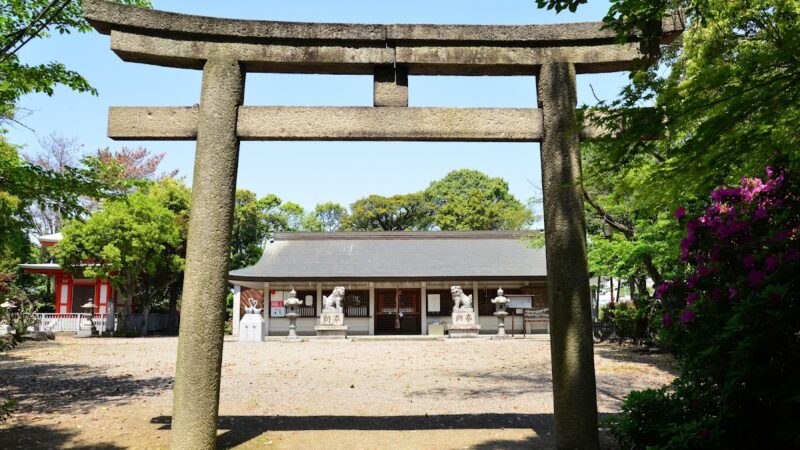
The main hall of Kuragaki Tenmangu Shrine is a building that has stood the test of time since its relocation in 1584, undergoing several repairs along the way. While not large in scale, it exudes a solemn atmosphere in its tranquil mountain setting.
In front of the worship hall, votive tablets (ema) inscribed with wishes are offered by worshippers, and during exam season, many are dedicated to praying for success in exams.
Stone Steps and Approach
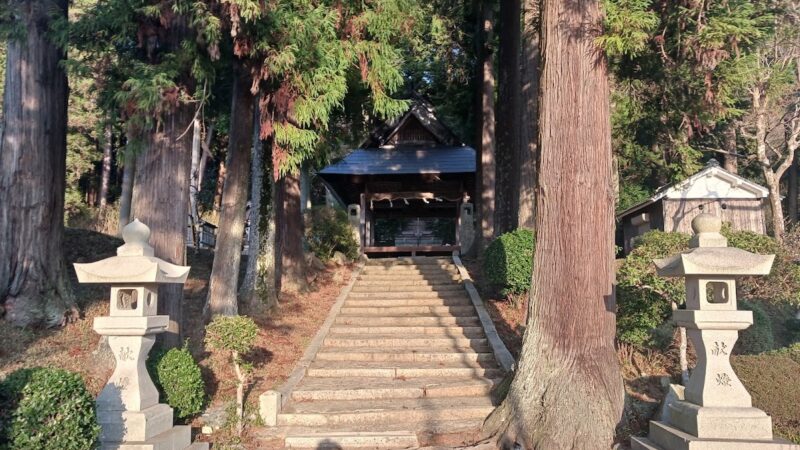
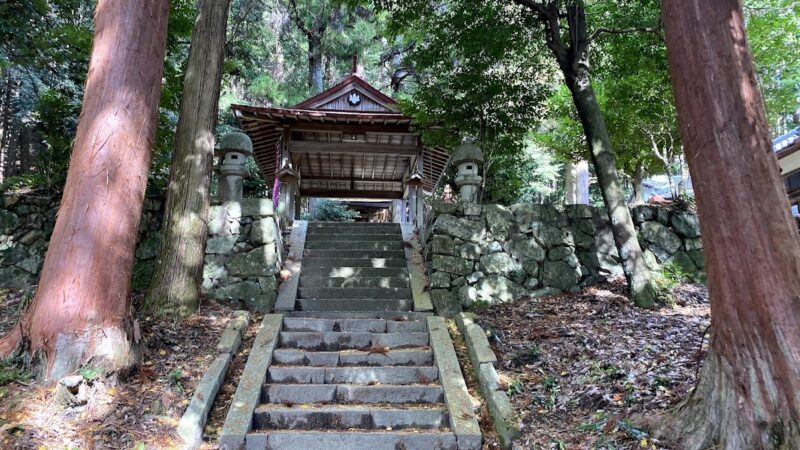
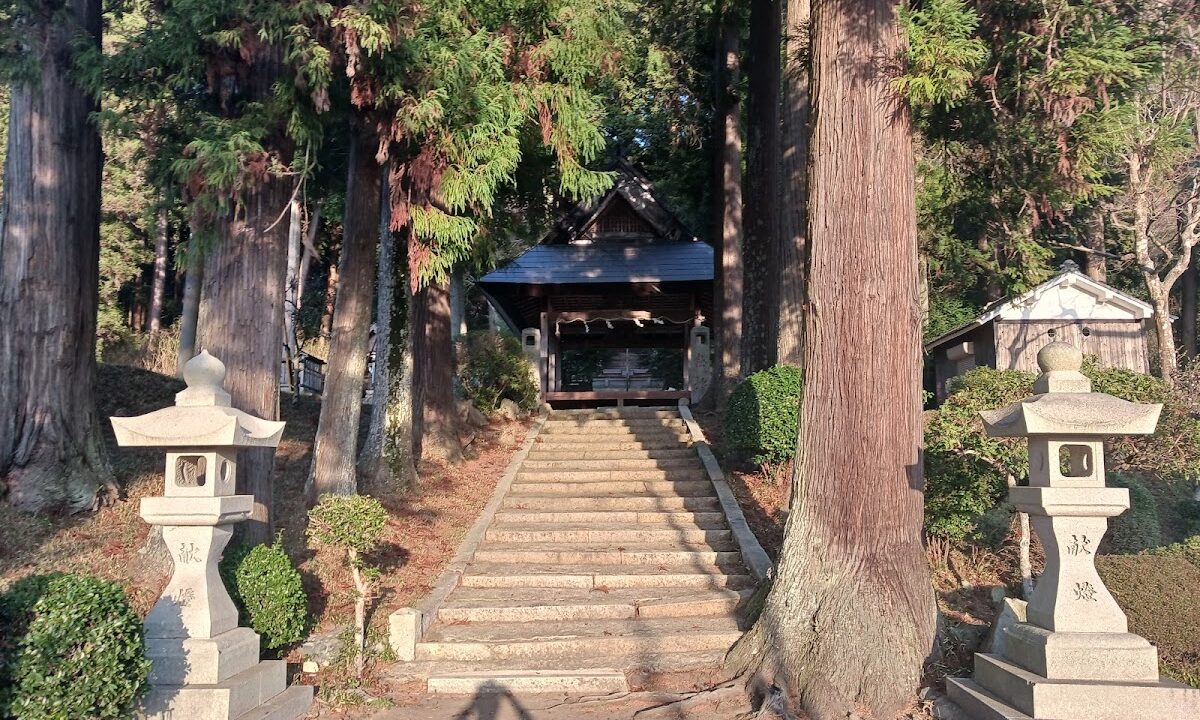
The stone steps leading to the shrine grounds have a charming, historical feel. Walking along the approach, surrounded by trees, naturally calms the mind and evokes a sense of being led into a sacred space.
Natural Environment of the Shrine Grounds
The area surrounding Kuragaki Tenmangu Shrine is blessed with abundant nature, allowing visitors to enjoy the scenery of each season.
- Spring: Beautiful fresh greenery and refreshing air.
- Summer: Cool shade, making it a comfortable summer retreat.
- Autumn: The golden leaves of the large ginkgo tree are breathtakingly beautiful.
- Winter: A solemn atmosphere permeates the tranquil grounds.
Nearby Tourist Attractions and Shrines/Temples
When visiting Kuragaki Tenmangu Shrine, you can also visit other tourist attractions around Nose Town.
Utagakiyama Mountain
Utagakiyama Mountain, where Kuragaki Tenmangu Shrine was originally located, is a popular hiking course. From the summit, you can enjoy a panoramic view of Nose Town’s beautiful scenery and fully appreciate nature.
Nose Myokenyama Mountain
Myokenyama Mountain, which gives its name to Nose Railway’s Myokenguchi Station, is a sacred site dedicated to Myoken Bodhisattva, the deification of the North Star. Nose Myokenyama (Nose Myokengu Shrine) is a Nichiren Buddhist temple known for its blessings and star festivals.
Nose no Sato Onsen (Hot Spring)
Nose no Sato is a hot spring facility you can visit after your pilgrimage. You can enjoy meals made with local ingredients and relax after a long day.
Annual Events at Kuragaki Tenmangu Shrine
At Kuragaki Tenmangu Shrine, traditional Shinto rituals are performed by local people.
New Year’s Visit
At the start of the new year, local people visit the shrine for their first visit of the year, praying for safety and academic success. Compared to large shrines in cities, it is less crowded, allowing for a peaceful visit.
Tenjin Festival (Anniversary of Sugawara no Michizane’s Death)
The Tenjin Festival is sometimes held around February 25th, the anniversary of Sugawara no Michizane’s death. Please check local information for details.
Manners and Precautions for Visiting the Shrine
When visiting Kuragaki Tenmangu Shrine, please observe the following manners and precautions.
Basic Etiquette for Visiting Shrines
- Bow Before the Torii Gate: Bow before entering the sacred area.
- Walking Along the Path: The center of the path is considered the path of the gods, so walk along the sides.
- Procedure for Washing Hands: If there is a water basin, wash your left hand, then your right hand, then your mouth.
- Procedure for Worship: Two bows, two claps, one bow (bowing twice, clapping twice, bowing once).
Precautions
- Take Your Trash Home: To maintain the cleanliness of the shrine grounds, always take your trash home.
- Do Not Shout: Be mindful that this is a sacred place and worship quietly.
- Photography: If photography is prohibited, such as inside the main hall, please abide by the rules.
- Protection of Natural Monuments: Please cooperate in protecting natural monuments by not stepping on the base of ginkgo trees or breaking branches.
- Safety in Mountainous Areas: Please be careful of your footing, especially during rainy weather and winter when the ground can be slippery.
About Nose Town
Nose Town, where Kuragaki Tenmangu Shrine is located, is a town rich in nature, situated at the northernmost tip of Osaka Prefecture.
Characteristics of Nose Town
- Population: A small town of approximately 10,000 people
- Local Products: Nose chestnuts, Nose rice, Nose vegetables, etc.
- Tourism: Myokenyama Mountain, Utagakiyama Mountain, hot spring facilities, etc.
- Culture: Joruri and traditional performing arts are passed down.
While located within Osaka Prefecture, it boasts abundant nature and rural landscapes, offering a peaceful escape from the hustle and bustle of the city.
Best Season for Visiting Kuragaki Tenmangu Shrine
Kuragaki Tenmangu Shrine can be visited throughout the year, but the following times are particularly recommended.
Autumn (Mid-to-Late November)
Highly Recommended: The large ginkgo tree’s leaves turn golden at their peak, painting the shrine grounds in a golden hue. It’s an ideal time for photography.
Spring (April-May)
The fresh greenery is beautiful, and you can visit the shrine in refreshing air. The weather is mild and pleasant.
New Year’s Visit (January)
It’s also a good time to visit for New Year’s prayers. It’s less crowded, allowing for a peaceful visit.
For Students and Students
Kuragaki Tenmangu Shrine, dedicated to Sugawara no Michizane, the god of learning, is especially recommended for students and students taking exams.
Points for Praying for Success in Exams
- Sincere Worship: It’s important to pray with sincerity, not just go through the motions.
- Offering an Ema (votive tablet): Write your wish on an ema and offer it.
- Receiving an Amulet: If there is an amulet for academic success, ask to receive one.
- Continuous Effort: It’s important to continue your daily efforts at the same time as praying to the gods.
The quiet environment, where you can calmly face your goals, is also one of the charms of Kuragaki Tenmangu Shrine.
Summary
Kuragaki Tenmangu Shrine is a historic Tenmangu shrine located in Nose-cho, Toyono-gun, Osaka Prefecture. Founded in 1054 during the Heian period, it was moved to its current location in 1584 and has been cherished by the local people ever since.
Within the shrine grounds stands a magnificent ginkgo tree, designated a natural monument of Osaka Prefecture and over 400 years old. Especially during the autumn foliage season, it attracts many worshippers and photography enthusiasts. The shrine enshrines Sugawara no Michizane, the god of learning, and is believed to grant blessings for academic success and passing exams.
Access is convenient by bus and on foot from Myokenguchi Station on the Nose Railway (approximately 25 minutes), or by private car. Its charm lies in the peaceful environment nestled in the mountains, allowing for a tranquil visit.
Why not take a short trip from Osaka city to experience history and nature? Kuragaki Tenmangu Shrine is the perfect place to escape the hustle and bustle of the city and find peace of mind. For accurate, up-to-date information and details, it is recommended to check the Osaka Prefectural Shrine Association or Nose Town’s tourism information before visiting.