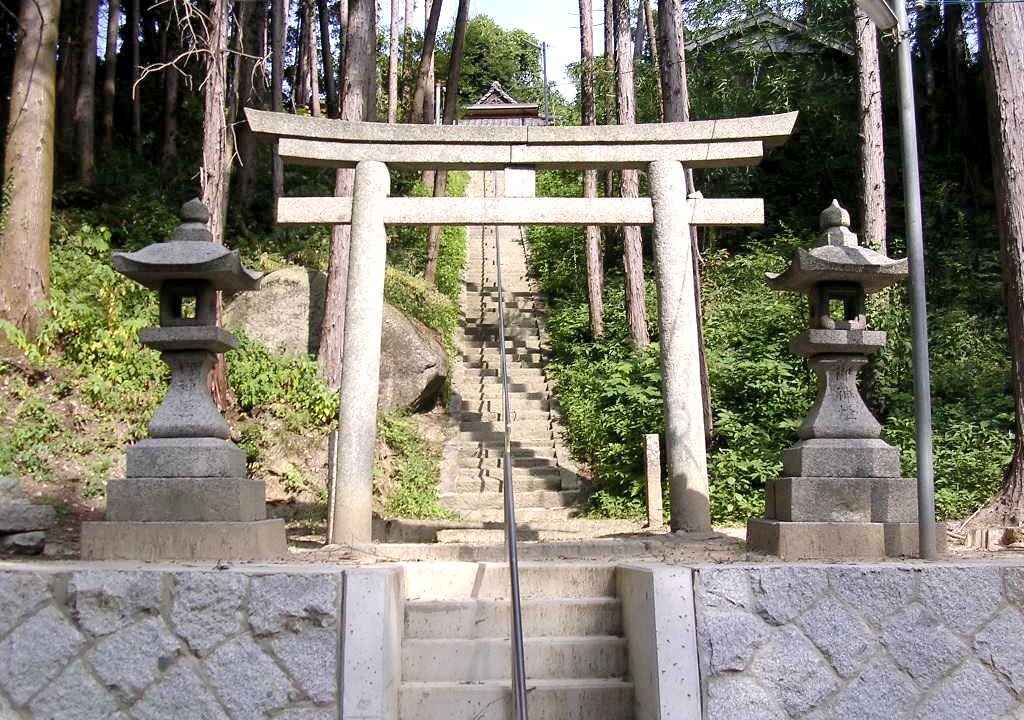
Iihara Shrine (Ibaraki City, Osaka Prefecture) Complete Guide | A Thorough Explanation of Deities, Benefits, Access, and History
Located in the Saito area in the northern part of Ibaraki City, Osaka Prefecture, Iihara Shrine has long been revered as the local guardian shrine. Even in today’s era of urban development, it continues to exist as a spiritual haven for local residents in a quiet residential area. This article provides detailed information useful for visitors, including the deities enshrined at Iihara Shrine, its benefits, access methods, history, and annual events.
Basic Information about Iihara Shrine
Location: 251 Yasumoto, Ibaraki City, Osaka Prefecture
Nearest Station: Saito-Nishi Station, Osaka Monorail Saito Line
Parking: Available (on the shrine grounds or nearby)
Shrine Rank: Former Village Shrine
Annual Festival: Mid-October (Autumn Festival)
Iihara Shrine is located in the Yasumoto district in northern Ibaraki City. The surrounding area is a mix of new residential areas and old settlements due to the Saito New Town development. With the opening of the Osaka Monorail Saito Line, access has improved, and the shrine is cherished by both new and old residents.
Deities and Benefits
Main Deity: Ukanomitama-no-kami
The deity enshrined at Iihara Shrine is Ukanomitama-no-kami. This deity, appearing in the Kojiki and Nihon Shoki, is a god who presides over food and grains, and is sometimes identified with Toyouke-no-Ōkami of the Outer Shrine of Ise Grand Shrine. The shrine’s name, “Iihara,” also suggests its deep connection to rice cultivation and food.
Main Benefits
- Abundant Harvest: As a guardian deity of agriculture, bestows abundant harvests.
- Business Prosperity: Due to its nature as a food deity, prayers are offered for business prosperity.
- Family Safety: As a god who protects food, the foundation of life, it protects the peace and safety of the home.
- Industrial Development: Watches over the development of all regional industries.
Uga-no-Mitama-no-Kami is often enshrined in Inari shrines throughout Japan, including Fushimi Inari Taisha in Kyoto, and is one of the gods most familiar to the lives of Japanese people. At Iihara Shrine, not only local farmers but also worshippers from various professions visit to pray for business prosperity and family safety.
History and Origins of Iihara Shrine
Circumstances of Founding
The exact founding date of Iihara Shrine is unclear, but it is believed to have been worshipped since ancient times as the tutelary deity of the Yasumoto district. The place name “Iihara” and the shrine’s name suggest that rice cultivation flourished in this region from ancient times, indicating that a belief in the god who presides over “food,” which is of utmost importance to the Japanese people as an agricultural society, was deeply rooted.
From the Edo Period to the Modern Era
During the Edo period, it was the guardian shrine of Yasumoto Village in Shimo-gun, Settsu Province, and attracted the faith of the villagers. Despite being affected by the Meiji-era separation of Shinto and Buddhism and the shrine consolidation policy, it survived as an independent shrine due to the strong faith of the local residents. In the Meiji period, it was ranked as a village shrine, establishing its position as a central shrine in the region.
Iihara Shrine in the Modern Era
From the Showa to the Heisei period, large-scale development progressed in the northern part of Ibaraki City, and the Saito New Town was constructed. With the opening of the Osaka Monorail Saito Line, the area around Iihara Shrine has seen an increase in new residents. However, the shrine continues to play an important role as a valuable cultural asset that conveys the history of the region, and as a place for interaction between new and old residents.
Access Methods
Access by Train
Using the Osaka Monorail Saito Line
- Get off at “Saito-Nishi Station” and walk for approximately 15-20 minutes.
- From the station, head northwest, passing through the residential area towards the Yasumoto district.
- To reach Saito-Nishi Station, transfer to the Saito Line from “Senri-Chuo Station” on the Osaka Monorail Main Line.
Using the JR Kyoto Line/Hankyu Kyoto Line
- Take a Hankyu bus from JR “Ibaraki Station” or Hankyu “Ibaraki-shi Station”.
- Get off at the “Yasumoto” bus stop and walk for approximately 5 minutes.
- Since bus services are limited, it is recommended to check the timetable in advance.
Access by Car
- Approximately 15 minutes from “Ibaraki IC” on the Meishin Expressway.
- Approximately 10 minutes from “Ibaraki-Senteiji IC” on the Shin-Meishin Expressway.
- The route heading north on the prefectural road from National Route 171 is convenient.
- Parking is available on the temple grounds or nearby, but it may be crowded during festivals.
Landmarks in the Surrounding Area
Located at the western edge of Saito New Town, within the Yasumoto district settlement. The surrounding area retains rural landscapes, offering a quiet environment distinct from urban areas.
Highlights within the Shrine Grounds
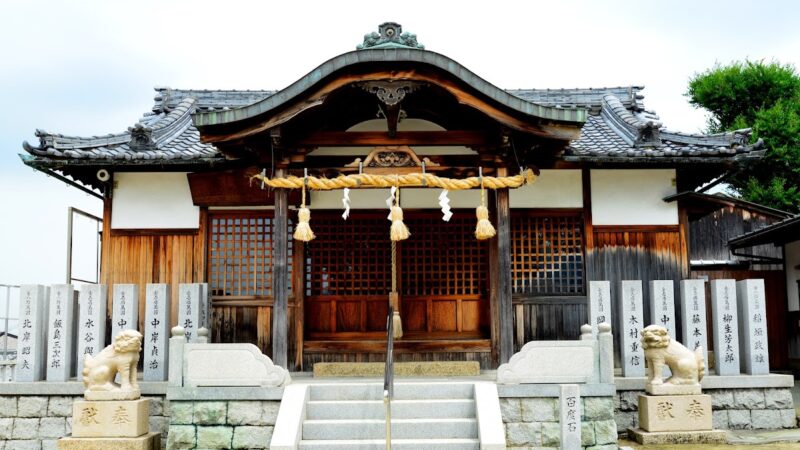
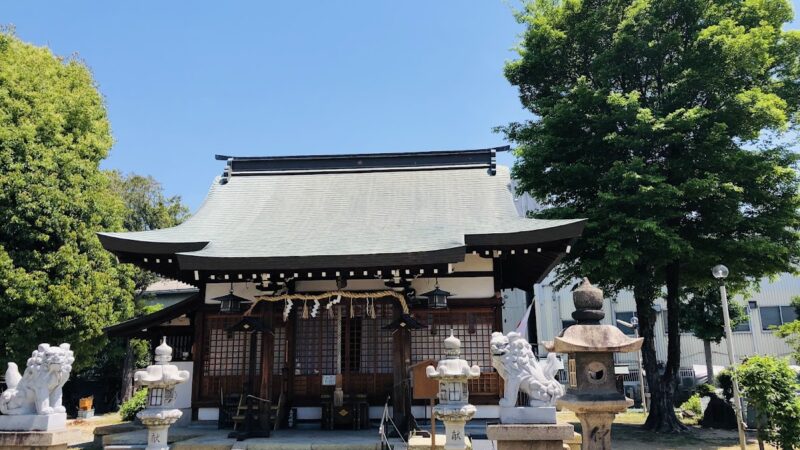
Main Hall and Worship Hall
The main hall of Iihara Shrine maintains traditional shrine architectural styles, conveying the history of the region. While not large in scale, the carefully maintained shrine reflects the deep faith of the parishioners.
Subsidiary Shrines
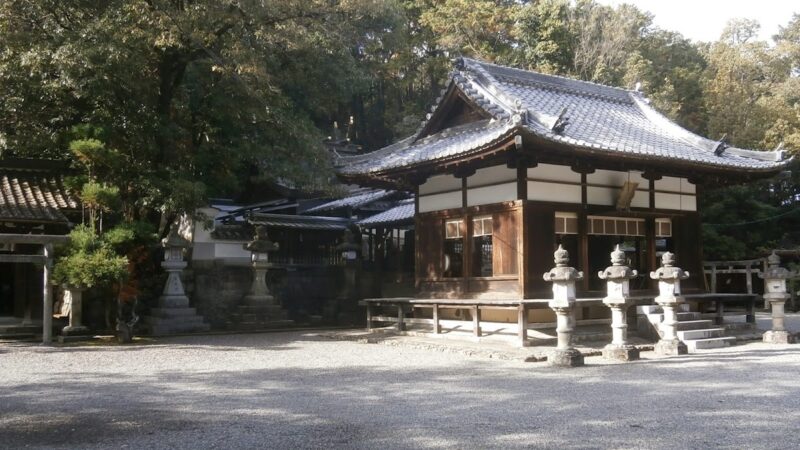
Small shrines that have been worshipped in the region may be enshrined around the main hall. These are valuable examples that demonstrate the diversity of local history and beliefs.
Shrine Grove
The shrine grounds retain ancient trees and a sacred grove, providing a valuable natural environment in an increasingly urbanized area. The nature within the grounds, which shows different expressions with each season, offers solace to visitors.
Annual Events and Festivals
Annual Festival (Autumn Festival)
Held annually in mid-October, the annual festival is the most important festival at Iihara Shrine. It is a time to give thanks for a bountiful harvest and pray for the peace and prosperity of the community. The parishioners play a central role in the solemn and traditional Shinto rituals.
New Year’s Visit
At the start of the new year, local residents visit to pray for the safety of their families and for a peaceful year. While not as crowded as large shrines, it offers a warm, community-oriented atmosphere to welcome the new year.
Monthly Festivals
Monthly festivals are held regularly, offering prayers for daily peace and gratitude to the gods.
Manners and Etiquette for Visiting a Shrine
Basic Etiquette for Visiting a Shrine
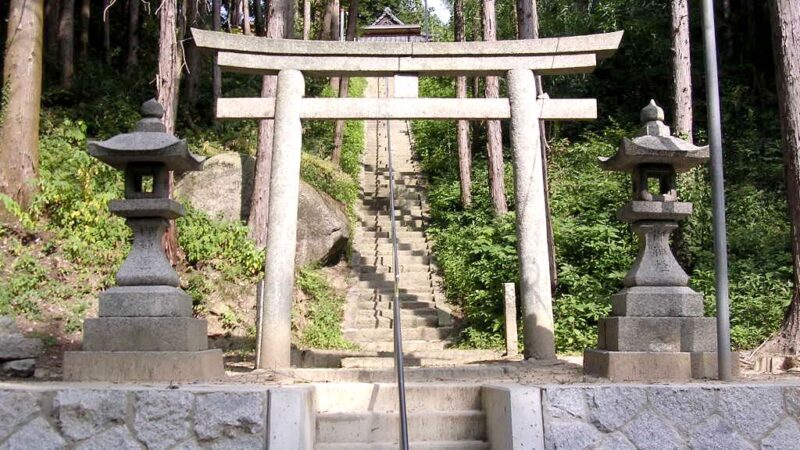
- Bow before passing through the torii gate: This is a sign of respect when entering the sacred area.
- Purify yourself at the water basin: Purify your left hand, then your right hand, then your mouth.
- Walk along the edge of the path: The center is considered the path of the gods.
- Etiquette in front of the main hall: Two bows, two claps, and one bow are the basic rituals.
- Bow upon leaving: After leaving the torii gate, turn around and bow once.
Regarding Photography
Photography is generally permitted on the shrine grounds, but it should be refrained from inside the main hall or during religious ceremonies. Also, be considerate of other visitors. When posting on social media, be careful not to damage the dignity of the shrine.
Nearby Shrines and Temples
Major Shrines in Ibaraki City
Ibaraki Shrine (Motomachi, Ibaraki City)
- A Shikinaisha (shrine listed in the Engishiki) located in the center of Ibaraki City
- Also known for the Ibaraki Doji legend
- Within walking distance of JR and Hankyu Ibaraki Stations
Mizokui Shrine (Isuzucho, Ibaraki City)
- A Shikinaisha, an ancient shrine in the Mishima region
- Dedicates Himetataraisuzuhime-no-Mikoto
- Worshipped as a god of safe childbirth and child-rearing
Kasuga Shrine (Kasuga, Ibaraki City)
- Enshrined from Kasuga Taisha in Nara
- Dedicates Takemikazuchi-no-Mikoto, Futsunushi-no-Mikoto, etc.
- Beloved as the local tutelary deity
Nearby Shrines in Minoh City and Suita City
If you venture a little further from Iihara Shrine, you can visit historical temples and shrines such as Katsuoji Temple and Takiyasuji Temple in Minoh City, and Izumidono-gu Shrine in Suita City.
Iihara Shrine’s Connection to the Community
Role as a Local Guardian Deity
Iihara Shrine serves as the local guardian deity of the Yasumoto district and is a central presence in the community. Through festivals and cleaning activities, it serves as a place to deepen the bonds between residents. Even now, with the increase in new residents due to the development of Saito New Town, the shrine functions as a place for interaction between new and old residents.
Preservation of Local Culture
Through festivals and annual events, the region’s traditional culture is passed down to the next generation. Children’s participation in shrine festivals fosters a sense of attachment to the community and an understanding of tradition.
Preservation of the Natural Environment
The shrine’s forest is a valuable green space in an increasingly urbanized area. It also functions as a habitat for wild birds and insects, contributing to the conservation of biodiversity.
History and Culture of Ibaraki City
Overview of Ibaraki City
Ibaraki City is located in the northern part of Osaka Prefecture, a transportation hub situated between Osaka City and Kyoto City. From ancient times, Ibaraki flourished as a transportation hub, and in the Middle Ages, Ibaraki Castle was built, leading to its development as a castle town.
Historical Heritage of Ibaraki
- Emperor Keitai’s Mausoleum: The Imajozuka Kofun is considered the true mausoleum of Emperor Keitai.
- Ibaraki Doji Legend: Known for his battle with Watanabe no Tsuna, one of Minamoto no Yorimitsu’s Four Heavenly Kings.
- Christian Relics: Traces of Christian culture from the Sengoku period remain.
Modern Ibaraki City
Ibaraki City has educational institutions such as Ritsumeikan University and Otemon Gakuin University, giving it an academic city aspect. Furthermore, it continues to develop as a residential city through developments such as the Saito New Town.
Important Points and Useful Information for Visiting the Shrine
Best Time to Visit
- Spring: Enjoy the beautiful fresh greenery and a refreshing visit.
- Autumn: Experience local festivals during the annual festival season.
- New Year’s Visit: Enjoy a warm, community-oriented New Year’s visit.
Clothing and Items to Bring
- Please wear clean clothing appropriate for visiting a shrine.
- Take precautions against the sun in summer and warm clothing in winter.
- Wear comfortable shoes if you need to walk to the shrine.
Regarding Souvenirs and Items
As this is a small shrine, the souvenir shop may not always be open. If you wish to receive amulets or goshuin (shrine stamps), it is recommended to check in advance. Souvenirs and items are more likely to be available during festivals such as the annual festival.
Contacting Iihara Shrine
For detailed information regarding visits and festival schedules, you can inquire through the Osaka Prefectural Shrine Association or the Ibaraki City Tourism Association.
Osaka Prefectural Shrine Association: Provides comprehensive information on shrines within Osaka Prefecture.
Ibaraki City Tourism Association: Provides information on tourist and cultural facilities within Ibaraki City.
Summary: The Charm of Iihara Shrine
Iihara Shrine is a historic local shrine located in Yasumoto, Ibaraki City, Osaka Prefecture. Its enshrined deity, Uga-no-Mitama-no-Kami, is known for granting blessings of abundant harvests and business prosperity, and it enjoys the fervent devotion of local residents.
Despite being located in the rapidly developing Saito area, Iihara Shrine continues to uphold its ancient faith and traditions, playing a vital role as a central hub for the local community even today. Its charm lies in its warm, community-rooted atmosphere, unlike large-scale tourist shrines.
With the opening of the Osaka Monorail Saito Line, access has improved, making it easier for new visitors to come. When visiting northern Ibaraki City, why not visit Iihara Shrine and experience the region’s history and faith?
The time spent calming your mind in the tranquil grounds and offering daily gratitude to the gods will be a precious moment in your busy modern life. As the guardian deity of the region, Iihara Shrine continues to watch over the peace and well-being of the community to this day.