Tomorogi Shrine (Neyagawa City, Osaka Prefecture) Complete Guide | History, Deities, Access, and Goshuin Information
Tomorogi Shrine, located in Kiyamachi, Neyagawa City, Osaka Prefecture, is a historic shrine dating back to the early Heian period. Quietly nestled in a residential area near the Yodo River, this shrine, with its beautiful main hall reflecting the Momoyama culture and its venerable history as a shrine enshrining six deities, is beloved by the local community.
This article provides detailed information necessary for visiting Tomorogi Shrine, including its history, enshrined deities, highlights within the grounds, access methods, and Goshuin information.
Basic Information about Tomorogi Shrine
Location: 10-25 Kiyamachi, Neyagawa City, Osaka Prefecture
Former Shrine Rank: Village Shrine
Deities Enshrined: Rokusha Daimyojin (Amaterasu Omikami, Toyouke Omikami, Hiruko Omikami, Sumiyoshi Omikami, Empress Jingu, Amenokoyane Omikami)
Annual Festival Date: October 16th
Spring Festival: April 16th
It is important to confirm the location “Kiyamachi” as there are other shrines with the same name in Neyagawa City. This is Tomorogi Shrine located at 10-25 Kiyamachi, and is a different shrine from Tomorogi Shrine.
History and Origins of Tomorogi Shrine
Founded in the Early Heian Period
It is said that Tomorogi Shrine was founded in Jogan 3 (861) during the reign of Emperor Seiwa. This shrine has existed as a center of faith in this region since the early Heian period. With a history of over 1,100 years since its founding, it is one of the most venerable shrines in Osaka Prefecture.
Origin of Rokusha Daimyojin
Before the Edo period, this shrine was called “Rokusha Daimyojin.” This name originates from the fact that it enshrines six deities. This form of worship, which bestows broader divine blessings upon people by enshrining multiple deities, is evidence of its function as the guardian shrine of the region.
Modern Shrine Status and Development
Following the reform of the shrine system during the Meiji era, it was designated a village shrine in 1872 (Meiji 5). Furthermore, in October 1913 (Taisho 2), it was designated a shrine receiving offerings of sacred food and cloth, establishing its position as an important shrine in the region. A shrine receiving offerings from the government (shinsen) and heihaku (heihaku) is a shrine that signifies its high status.
Deities and Divine Virtues
Tomogi Shrine enshrines six deities. Let’s take a closer look at each deity and their divine virtues.
Amaterasu Omikami
The supreme deity in Japanese mythology, a goddess who personifies the sun. She is the ancestral deity of the Imperial family and revered as the tutelary deity of all Japanese people.
Divine Virtues: National peace and security, good fortune, and increased vitality.
Toyouke Omikami
A goddess who presides over food and grains, also known as the enshrined deity of the Outer Shrine of Ise Grand Shrine. She is the guardian deity of industrial development and the necessities of life (clothing, food, and shelter).
Divine Virtues: Abundant harvests, industrial development, protection of clothing, food, and shelter
Hiruko-no-Okami
A beloved deity of business prosperity, affectionately known as Ebisu-sama. Widely worshipped as the guardian deity of fishing and commerce.
Divine Virtues: Business prosperity, maritime safety, protection of fisheries
Sumiyoshi-no-Okami
A deity known as the god of safe voyages and protection at sea. Also the enshrined deity of Sumiyoshi Taisha Shrine in Osaka, and revered as the god of waka poetry.
Divine Virtues: Safe voyages, traffic safety, improvement in waka poetry
Empress Jingu
The empress of the 14th Emperor Chuai and mother of Emperor Ojin. Known for the legend of her conquest of the Three Kingdoms of Korea, she is worshipped as the goddess of safe childbirth and child-rearing.
Divine Virtues: Protection for safe childbirth, child-rearing, and good fortune in victory
Amenokoyane-no-Okami
The principal deity of Kasuga Taisha Shrine and the ancestral deity of the Nakatomi clan (Fujiwara clan). As the god who presides over Shinto prayers, he is also revered as the god of the power of words and learning.
Divine Virtues: Academic success, career advancement, and family safety
Through these six deities, Tomorogi Shrine has welcomed worshippers with various wishes, offering diverse divine blessings.
Highlights of the Shrine Grounds
Architectural Beauty of the Main Hall
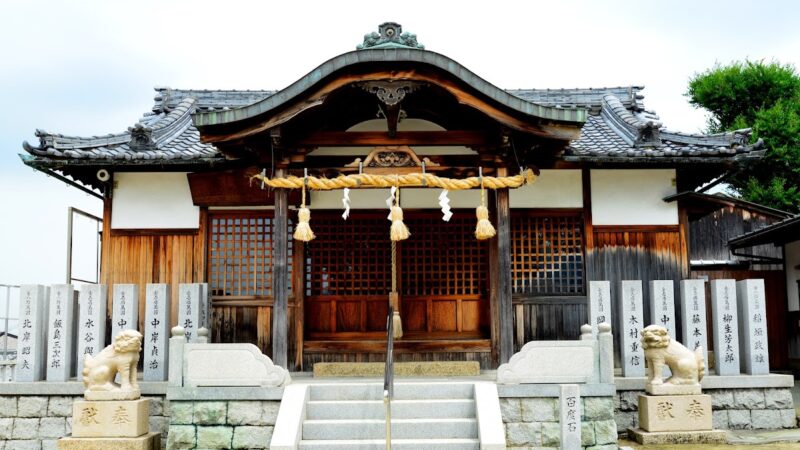
The main hall of Tomorogi Shrine is known for its beautifully colored nagare-zukuri style, which reflects the Momoyama culture. It is a rare style even within Neyagawa City and a valuable cultural asset influenced by the flamboyant architectural style of the Azuchi-Momoyama period.
Nagare-zukuri is a style of shrine architecture characterized by a long, extended roof, featuring elegant curves. The painted main hall conveys the aesthetic sensibilities of that era.
Shrine Precincts
The following shrines are located within the grounds of Tomorogi Shrine:
Wakamiya Hachiman Shrine
Deity: Emperor Ojin
Divine Virtues: Long-lasting military fortune, success in competitions, protection from evil
Emperor Ojin is widely worshipped throughout Japan as Hachiman-sama, and is known as the guardian deity of military fortune and success in competitions.
Inari Shrine
Deity: Inari Okami
Divine Virtues: Business prosperity, abundant harvests, family safety
Inari worship is one of the most widespread beliefs in Japan, and Inari is revered as the guardian deity of business and agriculture.
Atmosphere of the Shrine Office and Grounds
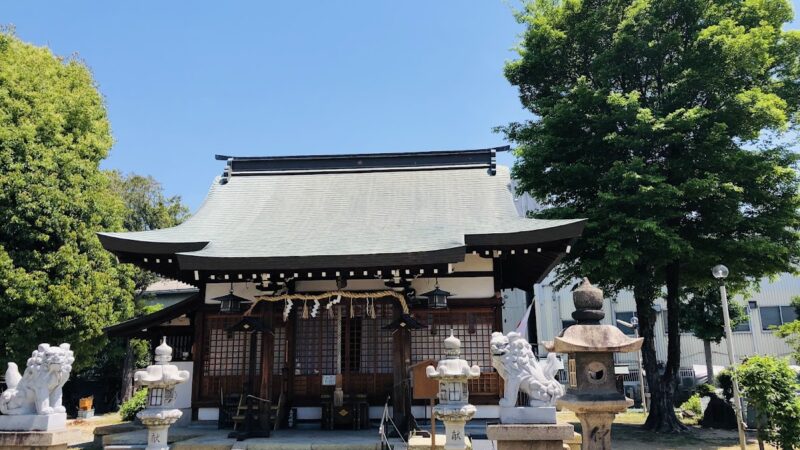
To the left of the main hall is the shrine office, where visitors are attended to. Despite being located in a residential area, the grounds maintain a quiet and peaceful atmosphere, providing a space where one can forget the hustle and bustle of the city and worship in tranquility.
From the grounds, one can enjoy a panoramic view of Hotel Leap Harbor, one of Neyagawa City’s landmarks, and appreciate the unique landscape where modernity and tradition harmonize.
Access Methods
Access by Train
Nearest Station: Keihan Railway “Kōrien Station”
Tomogi Shrine is approximately 1.2 km northwest of Kōrien Station.
Walking Route
It takes approximately 15-20 minutes on foot from Kōrien Station. Exit the station and head west, passing through a residential area. Located in the Kiyamachi area near the Yodo River, you can enjoy the riverside scenery on your way.
Access by Bus
If you are using the bus from Kōrien Station, please use the local bus routes operating within Neyagawa City. The nearest bus stop is a few minutes’ walk away. We recommend checking the detailed timetable and routes in advance.
Access by Car
Tomorogi Shrine may not have its own parking lot, so if you are visiting by car, please use nearby coin-operated parking lots. As it is located in a residential area, please avoid street parking and be mindful of proper etiquette during your visit.
Map Information
Address: 10-25 Kiyamachi, Neyagawa City, Osaka Prefecture
You can find the exact location by searching for “Tomorogi Shrine Kiyamachi” in your smartphone’s map app. Since there are several shrines with the same name in Neyagawa City, please be sure to confirm the address for “Kiyamachi.”
Regarding Goshuin (Shrine Seals)
Multiple visitor records report that Tomorogi Shrine does not currently offer Goshuin.
While it may be disappointing for those collecting Goshuin (temple/shrine stamps), the experience of visiting this historic shrine itself is valuable even without a Goshuin. You can find peace of mind in the quiet grounds and enjoy a dialogue with the deities.
Please note that the availability of Goshuin may change. For the latest information, we recommend contacting the shrine directly or checking with the shrine office during your visit.
Annual Festivals and Rituals
Grand Festival (October 16th)
The most important festival of Tomorogi Shrine is the Grand Festival, held annually on October 16th. It is the most grand festival of the year to honor the deities, with local people gathering to pray for the prosperity of the shrine and the peace of the community.
During the Grand Festival, Shinto priests solemnly perform rituals, and attendees offer gratitude and prayers to the deities.
Spring Festival (April 16th)
The Spring Festival, celebrating the arrival of spring, is held annually on April 16th. This is an important event at the start of a new season, where prayers are offered for a bountiful harvest and the safety of the family.
The Spring Festival, marking the season when new life sprouts after winter, is a time to express gratitude for nature’s blessings and the protection of the gods.
Daily Visits
Even on days other than the annual festival and the Spring Festival, Tomorogi Shrine warmly welcomes visitors. In its tranquil grounds, you can express your daily gratitude and wishes to the gods.
Nearby Attractions
Yodogawa Area
Tomorogi Shrine is located near the Yodogawa River, allowing visitors to stroll along the riverbank after their visit. The vast riverbank is bustling with people enjoying walking and cycling, and is a spot where you can enjoy the changing seasons.
Other Shrines in Neyagawa City
Besides Tomorogi Shrine, Neyagawa City has many other historical shrines. You can enjoy visiting shrines such as Tomorogi Shrine, which is pronounced the same way. Each shrine has its own unique history and characteristics, making it an interesting experience to compare them while visiting.
Hotel Leap Harbor
Hotel Leap Harbor, visible from the shrine grounds, is a landmark of Neyagawa City. It’s recommended to take a break at one of the nearby cafes or restaurants before or after your visit.
Manners and Etiquette for Visiting Shrines
Basic Etiquette for Visiting Shrines
- Bow at the Torii Gate: Bow before passing through the torii gate to prepare yourself to enter the sacred area.
- Purification at the Water Basin: If there is a water basin, purify your hands and mouth.
- Walking Along the Path: The center of the path is considered the path of the gods, so walk along the sides.
- Worship at the Main Hall: Two bows, two claps, and one bow is the basic etiquette.
Attire for Visiting Shrines
There are no specific dress code requirements, but please wear clean clothing that is respectful to the gods. For special occasions such as annual festivals, slightly more formal attire is desirable. ### Regarding Photography
Photography is generally permitted within the shrine grounds, but please refrain from taking photos inside the main hall or in sacred areas. Please also be considerate of other visitors.
The Charm of Tomorogi Shrine
A Quiet Worship Environment
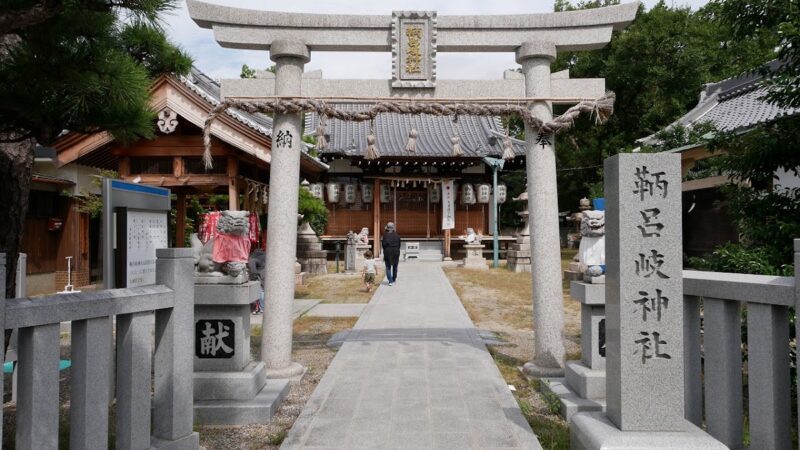
Located in a residential area, Tomorogi Shrine, unlike large tourist shrines, boasts a quiet and peaceful atmosphere. It offers an ideal environment for those who wish to avoid crowds and worship at their own pace.
The Inheritance of History and Culture
With a long history dating back to the Heian period and a cultural asset—the main hall built in the Momoyama style—Tomorogi Shrine is a valuable presence that conveys the history of the region to the present day. Through worship, you can experience traditional Japanese culture.
Diverse Divine Virtues
By enshrining six deities, Tomorogi Shrine is characterized by its broad-mindedness in responding to various wishes. It welcomes worshippers seeking diverse divine blessings, including business prosperity, family safety, academic success, and safe childbirth.
A Faith Rooted in the Community
Tomorogi Shrine, protected by the local people for over 1,100 years, also serves as a central hub for the community. It is an important place for understanding the history and culture of the region.
Points to Note When Visiting
Check Opening Hours
Shrines are generally open from sunrise to sunset, but the hours of the shrine office may be limited. If you wish to have prayers or other services performed, it is recommended to contact them in advance.
Beware of Confuse with Other Shrines with the Same Name
As mentioned above, there are several shrines in Neyagawa City that are pronounced “Tomorogi.” When visiting, be sure to confirm the address: “Kiyamachi 10-25.”
Manners in a Residential Area
The area around the shrine is a residential area, so please be considerate of nearby residents by avoiding noise, illegal parking, etc.
The History of Neyagawa City and Tomorogi Shrine
Neyagawa City is located in the northeastern part of Osaka Prefecture and has long developed as a transportation hub along the Yodo River system. It is presumed that people already lived in this area and engaged in agriculture and trade during the early Heian period, when Tomorogi Shrine was founded.
Its location near the Yodo River was convenient for transporting goods and facilitating the movement of people using water transport, which was a crucial factor in the shrine’s function as a center of local faith. By enshrining a variety of deities as Rokusha Daimyojin, it attracted the faith of people engaged in various livelihoods, including agriculture, commerce, and navigation.
After the modernization of the Meiji era and the post-war period of rapid economic growth, Neyagawa City developed as a residential city. Throughout this development, Tomorogi Shrine has continued to exist as a spiritual center for the community.
From the Latest Visitor Records
According to records from visitors who have actually visited Tomorogi Shrine, the following impressions have been received:
- “It’s a shrine quietly nestled in a residential area, allowing for peaceful worship.”
- “The colors of the main hall were beautiful, and I could feel the history.”
- “The view of the hotel from the shrine grounds was impressive.”
- “They don’t offer Goshuin (shrine stamps), but the calm atmosphere was wonderful.”
These comments convey the tranquil atmosphere and historical value of Tomorogi Shrine.
Summary
Tomorogi Shrine is a venerable shrine located in Kiyamachi, Neyagawa City, Osaka Prefecture, with a history of over 1,100 years dating back to the early Heian period. As Rokusha Daimyojin, it enshrines six deities, offering a variety of divine blessings.
The beautiful Momoyama-style main hall, tranquil grounds, and history of faith rooted in the community convey peace of mind and the splendor of traditional Japanese culture to visitors.
It’s accessible on foot from Keihan Electric Railway’s Korien Station. While they don’t offer Goshuin, the shrine itself is highly worthwhile to visit. When you visit Neyagawa City, why not stop by Tomorogi Shrine and offer your prayers while reflecting on its long history?
In a quiet residential area, you can enjoy a conversation with the gods and spend time finding peace of mind.