Complete Guide to Mitsurugi Shrine (Yao City, Osaka Prefecture): History, Deities, and Access Information
About Mitsurugi Shrine
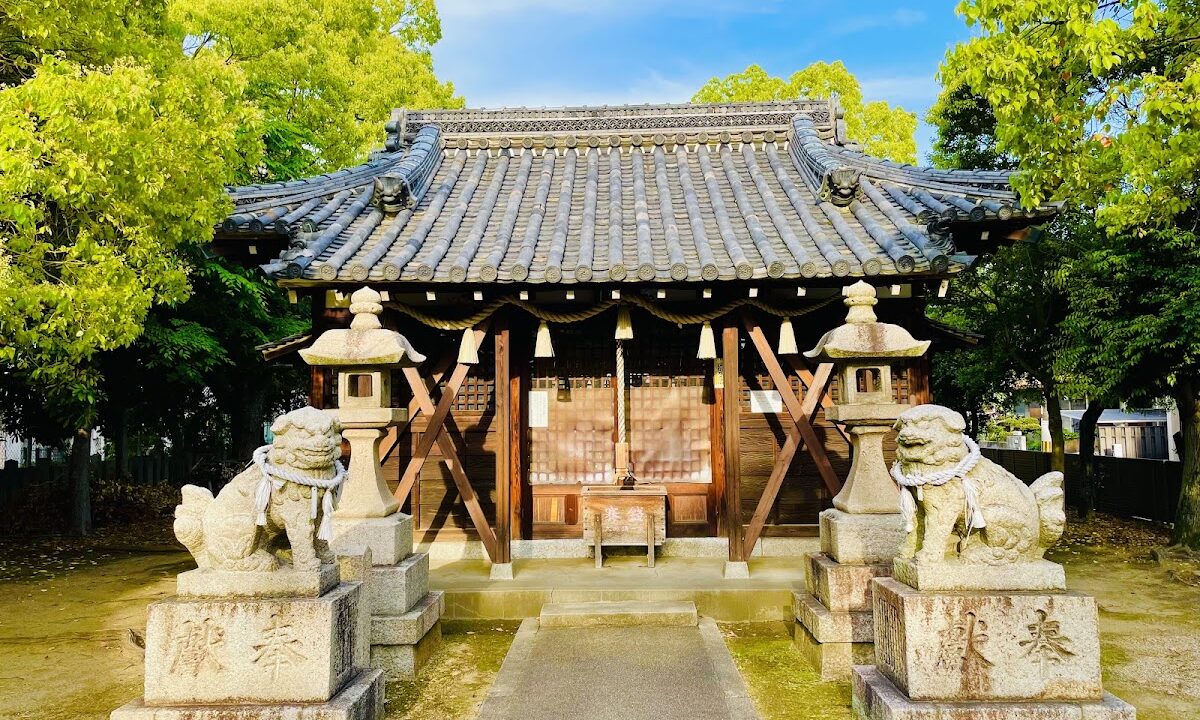
Mitsurugi Shrine is a historic shrine located in Tainaka, Yao City, Osaka Prefecture. It belongs to the Osaka Prefectural Shrine Association and, formerly a village shrine, has long been a center of local faith. The name “Mitsurugi” originates from the sacred sword in Japanese mythology, and the shrine has long been revered as a deity of military fortune and protection against misfortune.
Yao City belonged to the ancient Kawachi Province and is a historically important area with many ancient burial mounds and temples and shrines scattered throughout. Mitsurugi Shrine is also deeply connected to the history of this region and continues to be carefully preserved as a spiritual pillar for the local residents.
Basic Information about Kamiken Shrine
Location and Access
Address: 3-178 Tainaka, Yao City, Osaka Prefecture 581-0095
Transportation Access:
- Approximately 12 minutes on foot west from JR Yamatoji Line “Shiki Station” (approx. 900m)
- Bus access is also available from Kintetsu Osaka Line “Yao Station”
- Access by car: We recommend checking parking availability in advance.
Contact Information
Kamiken Shrine is managed and inquiries are handled by Yuge Shrine.
Contact Information: Yuge Shrine (TEL: 072-949-1623)
Yuge Shrine manages several shrines within Yao City and provides detailed information regarding festivals and worship at Kamiken Shrine.
Deities and Divine Virtues
Main Deity: Susanoo-no-Mikoto
The main deity enshrined at Kamiken Shrine is Susanoo-no-Mikoto (also written as 素戔嗚尊 or 素盞嗚命). Susanoo-no-Mikoto is an important deity in Japanese mythology, known as the younger brother of Amaterasu-Omikami.
Myth of Susanoo-no-Mikoto:
- Famous as the hero who slayed Yamata-no-Orochi
- The Kusanagi-no-Tsurugi (Ame-no-Murakumo-no-Tsurugi), obtained during the slaying, is one of the Three Sacred Treasures of Japan
- Transformed from a fierce god to a god of agriculture and industry
Divine Virtues:
- Protection from misfortune and disaster
- Long-lasting military fortune
- Matchmaking
- Extermination of disease
- Abundant harvest
Enshrined Deity: Uke-mochi-no-Kami
Uke-mochi-no-Kami is the goddess who presides over food and is the deity who is the origin of grains and food in Japanese mythology.
Divine Virtues of Uke-mochi-no-Kami:
- Abundant harvest
- Business prosperity
- Food safety
- Stability of life
By enshrining both Susanoo-no-Mikoto and Uke-mochi-no-Kami, Shinken Shrine is revered as a shrine that bestows a wide range of blessings, from protection from misfortune to stability of life.
History of Kamiken Shrine
Historical Background of Kawachi Province and Yao
Yao City, where Kamiken Shrine is located, belonged to Kawachi Province in ancient times. Kawachi Province was an important region with close ties to the Yamato court, and a land where many powerful clans were active.
The Tainaka area has long been a thriving agricultural area, and it is believed that Kamiken Shrine was founded as the guardian deity of the village. While the exact founding date is unknown, it is inferred from local elders’ traditions and surrounding historical remains that it has been an object of worship since a considerably early period.
History as a Village Shrine
Under the Meiji era’s shrine ranking system, Kamiken Shrine was ranked as a “village shrine.” A village shrine was a shrine recognized as the guardian deity of a village, and was a central presence in the local community.
History since the Modern Era:
- Meiji Era: Designated as a village shrine under the shrine ranking system.
- Post-war: Belongs to the Osaka Prefectural Shrine Association following the establishment of the Association of Shinto Shrines.
- Present: Under the management of Yuge Shrine, it continues the local faith.
Highlights of the Shrine Grounds
Torii Gate and Approach
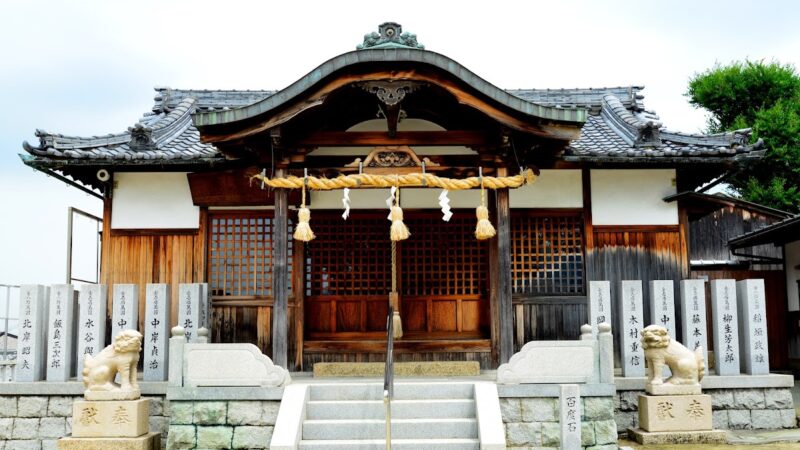
The grounds of Kamiken Shrine maintain a tranquil atmosphere despite being located in a residential area. Passing through the torii gate, the approach leads to the main shrine.
The torii gate serves as a boundary separating the sacred realm from the secular world; beyond this point is the realm of the gods. When visiting, the proper etiquette is to bow before the torii gate before entering the grounds.
Worship Hall and Main Shrine
Worship Hall:
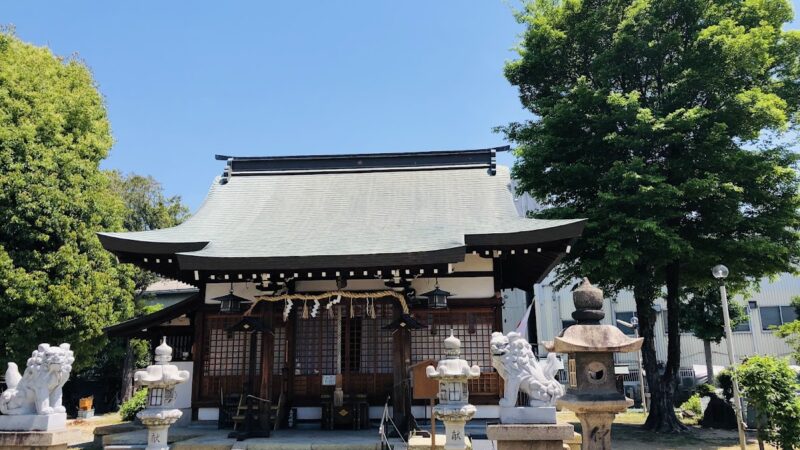
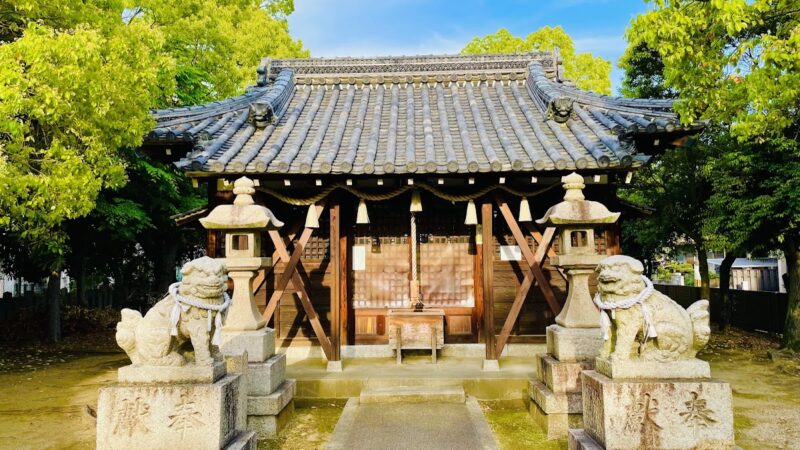
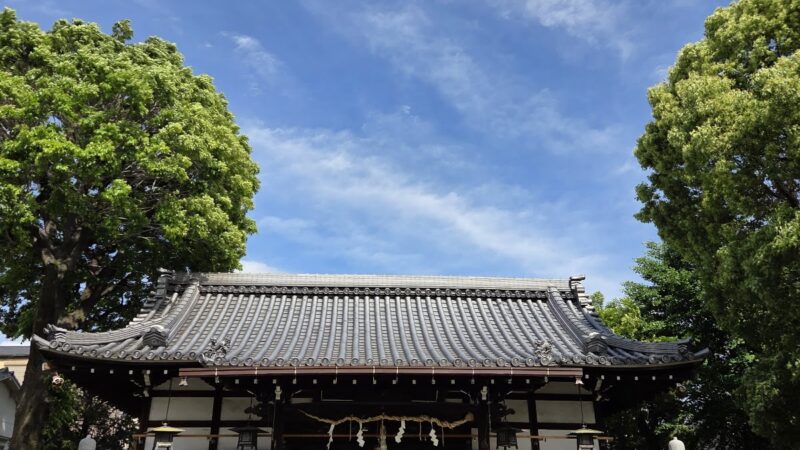
The worship hall is where worshippers offer their prayers. The worship hall of Kamiken Shrine is simple yet carefully constructed, typical of a local shrine.
Main Shrine:
The main shrine is the most sacred place where the enshrined deity resides. It is usually located behind the main hall, and general worshippers pay their respects from afar.
Shrines and Stone Monuments
Like many shrines, the grounds of Kamiken Shrine may contain subsidiary shrines, smaller shrines, and monuments. These are important cultural assets that show the history of the shrine and its connection to the local community.
How to Visit a Shrine and Etiquette
Basic Shrine Visit Etiquette
Procedure for Visiting a Shrine:
- Bow at the Torii Gate: Bow before passing through the torii gate.
- Purification at the Water Basin: If there is a water basin, purify your hands and mouth.
- Hold the ladle in your right hand and wash your left hand.
- Switch the ladle to your left hand and wash your right hand.
- Switch the ladle back to your right hand, receive water in your left hand, and rinse your mouth.
- Finally, hold the ladle upright and wash the handle.
- Worship at the Main Hall: Two Bows, Two Claps, One Bow
- Bow deeply twice.
- Clap your hands twice.
- Recite your prayer silently.
- Finally, bow deeply once.
About Offerings
Offerings express gratitude to the gods. There are no set amounts, but it is important to offer them sincerely.
Photography Etiquette
Photography is generally permitted on the shrine grounds, but please observe the following points:
- Do not enter areas where photography is prohibited, such as inside the main hall.
- Refrain from taking photographs during religious ceremonies.
- Be considerate of other worshippers.
Annual Events and Festivals
Main Festivals
Kamitsurugi Shrine holds various festivals throughout the year. For specific dates, we recommend contacting Yuge Shrine, the managing shrine.
Typical Annual Events at Shinto Shrines:
- New Year’s Day Festival (January 1st): A festival celebrating the New Year
- Setsubun Festival (around February 3rd): A festival for warding off evil spirits
- Spring Festival: A prayer for a good spring harvest
- Summer Purification Ceremony (June 30th): A ceremony to cleanse oneself of sins and impurities accumulated over the past six months
- Autumn Festival: A festival to give thanks for the harvest
- Year-End Purification Ceremony (December 31st): A ceremony to cleanse oneself of sins and impurities accumulated over the past year
Connections with the Community
As a village shrine, Kamiken Shrine is deeply rooted in the community and has strong ties with local residents. Local people gather for festivals, continuing to preserve traditions.
Relationships with Surrounding Shrines
Relationships with Yuge Shrine
Kamiken Shrine is managed by Yuge Shrine. Yuge Shrine is one of the important shrines in Yao City and plays a role in overseeing multiple shrines. ### Other Shrines in Yao City
Yao City has many historical shrines:
- Yuge Shrine
- Koma Shrine
- Onchi Shrine
- Kayaburi Shrine
Visiting these shrines on a “shrine tour” is a great opportunity to learn about the history of Yao.
Shrines with “Sword” in Osaka Prefecture
Several shrines in Osaka Prefecture have “sword,” “sword,” or “blade” in their names:
- Yatsurugi Shrine (Joto Ward, Osaka City): Located in Osaka City
- Mitsurugi Shrine (Tomoi, Higashi-Osaka City): Located in Higashi-Osaka City
These shrines are also known for their blessings of military fortune and protection from evil.
The Charm of Visiting Shinken Shrine
A Quiet Environment for Worship
Despite being located in a residential area, Shinken Shrine maintains a tranquil atmosphere. Unlike large tourist shrines, its charm lies in its calm environment for worship.
Experiencing Local History
Visiting Kamiken Shrine allows you to experience firsthand the history of Kawachi Province and the origins of Yao City. It is a valuable place that preserves ancient forms of faith.
Worship of Susanoo-no-Mikoto
Susanoo-no-Mikoto is a heroic deity in Japanese mythology, and his divine virtues are multifaceted. For those seeking protection from misfortune and lasting military fortune, Kamiken Shrine will be an important place of worship.
Points to Note When Visiting
Visiting Hours
Kamiken Shrine is generally open for worship throughout the day, but it is recommended to avoid visiting at night. Visiting during daylight hours is preferable.
Parking
Since the shrine is located in a residential area, it is necessary to check in advance about the availability and size of parking. Please also consider using public transportation.
Contact Information Confirmation
For information regarding festival dates and special visits, we recommend contacting the managing shrine, Yuge Shrine (072-949-1623), in advance.
History and Culture of Yao City
As the Center of Kawachi Province
Yao City was one of the central regions of the ancient Kawachi Province. Located in the Yamato River basin, it is a fertile land where agriculture flourished.
Historical Heritage:
- Numerous burial mounds
- Ancient temple ruins
- Roads from the medieval period onward
Modern Yao City
Present-day Yao City is a developed residential city adjacent to the southeast of Osaka City. At the same time, many historical shrines, temples, and cultural properties remain, making it a city where history and modernity coexist.
Detailed Access Information to Kamiken Shrine
Access by Train
Using JR Yamatoji Line:
- Get off at “Shiki Station” and walk west for approximately 12 minutes (approx. 900m).
- The route from the station goes through a residential area.
- We recommend using a map app.
Using Kintetsu Osaka Line:
- Take a bus or taxi from “Yao Station” or “Kawachi-Yamamoto Station”.
- Access from JR Shiki Station is more convenient as it is a distance from Yao Station.
Access by Car
- Approximately 10 minutes from the Hanshin Expressway “Yao IC”.
- Accessible from National Route 25.
- Enter “3-178 Tainaka, Yao City” into your car navigation system.
Nearby Facilities
Nearby facilities you can visit before or after your visit:
- Shopping street around JR Shiki Station
- Yao City Library
- Yao City Historical and Folk Museum (Learn about the history of Yao)
Summary: The Value of Kamiken Shrine
Kamiken Shrine is a historic shrine located in Tainaka, Yao City, Osaka Prefecture. It enshrines Susanoo-no-Mikoto and Uke-mochi-no-Kami as its deities, and is cherished by the local community for its wide range of divine blessings, from protection against misfortune to blessings of abundant harvests.
As a former village shrine, Kamiken Shrine has remained a center of local faith and is a valuable cultural heritage site that conveys the history of Kawachi Province. Belonging to the Osaka Prefectural Shrine Association and managed by Yuge Shrine, it continues to provide opportunities for traditional festivals and worship.
Its convenient location, within walking distance of JR Shiki Station, is another attractive feature. While situated in a quiet residential area, Kamiken Shrine maintains a solemn atmosphere befitting a sacred site, making it an ideal place to escape the hustle and bustle of everyday life and find peace of mind.
Those interested in exploring the history of Yao City or deepening their faith in Susanoo-no-Mikoto should definitely visit Kamiken Shrine. Although it is a small shrine deeply rooted in the community, it is imbued with a long history and the fervent faith of the local people.
When visiting, please observe basic shrine etiquette and offer your prayers quietly to feel the blessings of Susanoo-no-Mikoto and Uke Mochi-no-Kami. For detailed information and festival schedules, please contact Yuge Shrine (072-949-1623), the managing shrine.