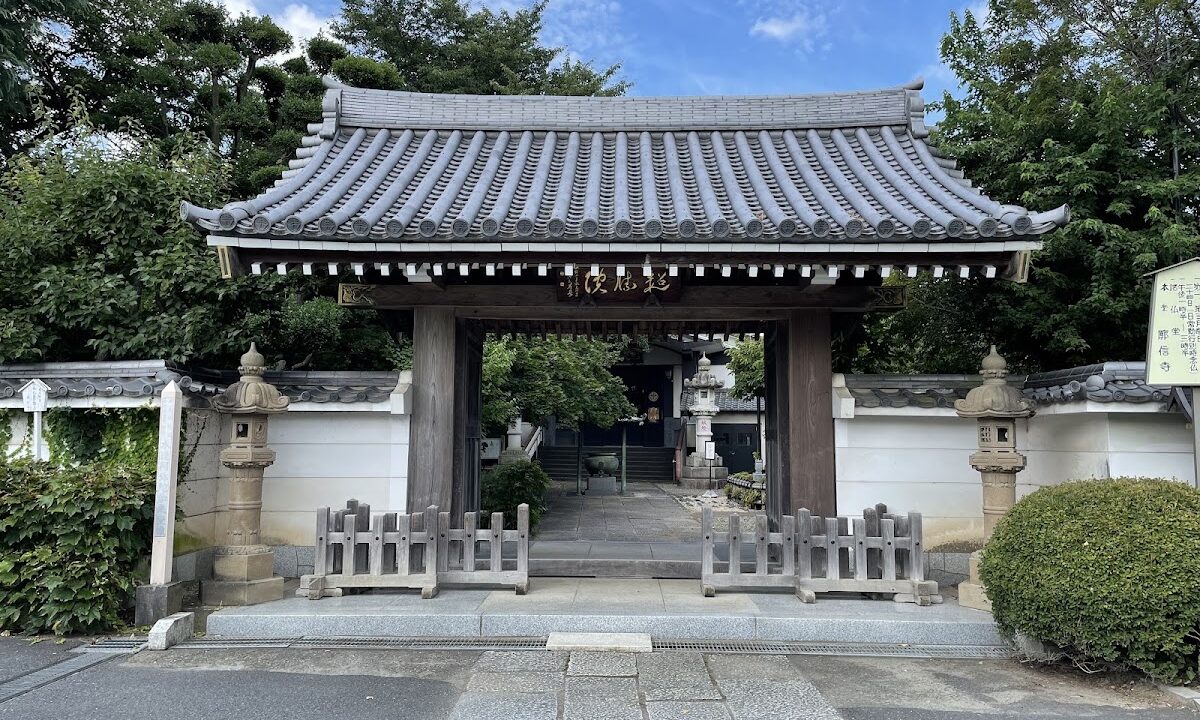
Kakushinji Temple (Saitama Prefecture) | Complete Guide to the History, Cultural Assets, Goshuin (Temple Seal), and Access of this Ancient Temple in Urawa
Overview of Kakushinji Temple
Kakushinji Temple is a Jodo sect temple located in Kita-Urawa, Urawa Ward, Saitama City, Saitama Prefecture. Its formal name is Shogakuzan Sojuin Kakushinji, and its principal image is Amida Buddha. Founded during the Keicho era (1596-1615), it boasts a history of over 400 years as an ancient temple in Urawa.
Despite its convenient location, approximately a 5-minute walk from Kita-Urawa Station on the JR Keihin-Tohoku Line, the temple grounds are home to a giant kaya tree estimated to be several hundred years old, maintaining a tranquil atmosphere despite being in an urban area. It is also known as the second temple on the Adachi Bando Thirty-Three Kannon Pilgrimage and the ninth temple on the Musashi Adachi Hyakufudo Pilgrimage, attracting many visitors.
Basic Information
- Mountain Name: Shōgakusan
- Temple Name: Sōjuin
- Sect: Jōdo-shū (Pure Land Buddhism)
- Principal Image: Amida Buddha
- Founder: Kōyo Manrei
- Founder: Nakamura Yaemon-no-jō Yoshiteru
- Established: Keichō era (around 1609)
- Location: 3-chome, Kita-Urawa, Urawa-ku, Saitama City, Saitama Prefecture
- Pilgrimage Site: 2nd temple of the Adachi Bandō Thirty-Three Kannon Pilgrimage, 9th temple of the Musashi Province Adachi Hyakufudōson Pilgrimage
History and Origin of Kakushinji Temple
Circumstances of Establishment
The establishment of Kakushinji Temple dates back to the time of Tokugawa Ieyasu. During the Keicho era (around 1609), Nakamura Yaemon-no-jo Yoshiteru (posthumous name: Shin’yo, died in Genna 8/1622), who was the magistrate of Urawa-go with a 10,000 koku domain, built this temple to pray for the repose of his former lord, Takariki Kawachi-no-kami Kiyonaga (posthumous name: Kakushin Doyo).
Takariki Kiyonaga was a senior retainer of Tokugawa Ieyasu and served as the lord of Iwatsuki Castle. Nakamura Yoshiteru, a retainer of Kiyonaga, was appointed magistrate of Urawa by Ieyasu, but never forgot his debt of gratitude to his former lord and founded this temple to mourn his passing. The temple’s name, “Kakushin,” is thought to be derived from each character of Kiyonaga’s posthumous name, “Kakushin Doyo.”
The temple was founded by the Venerable Kōyo Manrei. Kōyo Manrei was invited to be the founding abbot, and Kōshinji Temple was established by Yoshiteru Nakamura as the patron. From the beginning, it was a Jōdo (Pure Land) sect temple.
Kōshinji Temple in the Edo Period
The Edo period geographical record, “Shinpen Musashi Fudoki Kō” (New Compilation of the Topography of Musashi Province), contains detailed information about Kōshinji Temple. According to this book, Kōshinji Temple was located in the center of Urawa-juku and is recorded as a branch temple of Tamazōin (a branch temple of Zōjōji Temple).
Throughout the Edo period, Kōshinji Temple functioned as the central Jōdo sect temple in Urawa-juku, attracting the faith of the local people. Urawa flourished as a post town on the Nakasendō road, and Kōshinji Temple, as a temple in the post town, served as a spiritual center for travelers and local residents.
History Since the Meiji Era
After the Meiji Restoration, Urawa became the prefectural capital of Urawa Prefecture (later integrated into Saitama Prefecture) following the abolition of the feudal domains and the establishment of prefectures. The city of Urawa developed as the prefectural capital. Kakushinji Temple also developed alongside the region, continuing its activities as a venerable temple rooted in the community from the Showa to the Heisei era.
With the creation of Saitama City in 2001, Kakushinji Temple became a temple in Urawa Ward, Saitama City, but it continues to attract the faith of local people.
Cultural Properties of Kakushinji Temple
The Kaya Tree of Kakushinji Temple (Saitama City Designated Natural Monument)
Within the grounds of Kakushinji Temple stands a gigantic Kaya tree (Japanese nutmeg), estimated to be several hundred years old, and designated as a natural monument of Saitama City. This magnificent tree, with a trunk circumference of approximately 4 meters and a height of approximately 20 meters, is a symbolic presence of Kakushinji Temple.
The Japanese nutmeg tree (Kaya) is an evergreen conifer known for its slow growth and longevity. The Japanese nutmeg tree at Kakushinji Temple may have watched over the temple grounds since its founding, making it a living witness to the temple’s history of over 400 years.
In the heart of Urawa, a rapidly urbanizing area, the presence of such a massive tree is invaluable, possessing not only cultural significance but also ecological importance. Visitors to the temple grounds often stop before this giant tree, overwhelmed by its presence.
Niomon Gate and Temple Buildings
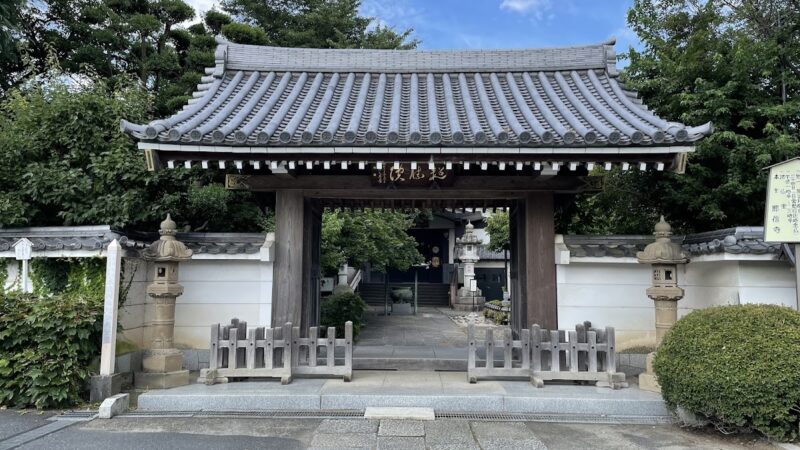
At the entrance to Kakushinji Temple is the Niomon Gate, welcoming visitors. The Niomon Gate plays a crucial role as a guardian of the temple, and Nio statues are enshrined on either side.
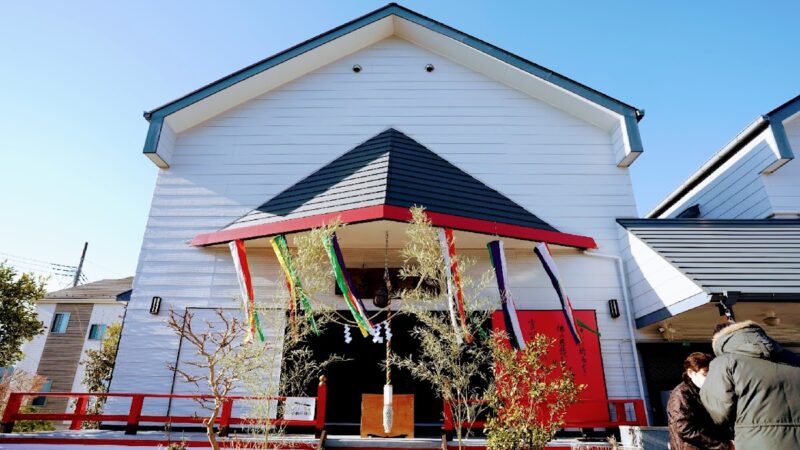
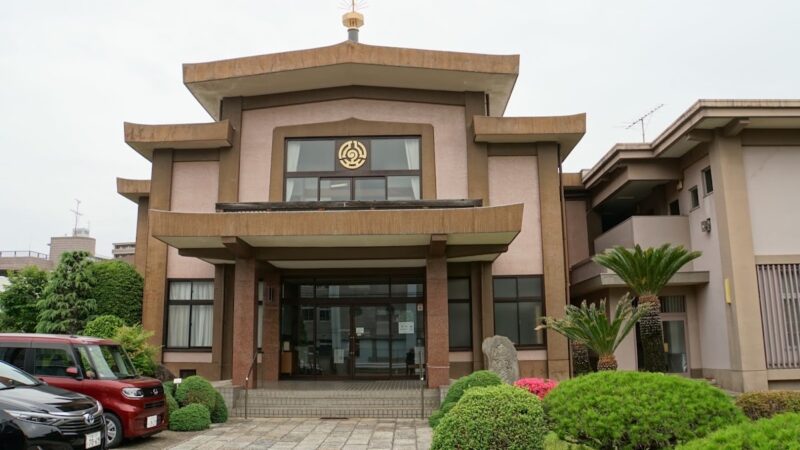
The main hall, though rebuilt in modern times, retains the traditional temple architectural style, creating a tranquil atmosphere. In addition to the main hall, the temple grounds include the priest’s quarters, bell tower, and other buildings, forming a well-organized temple complex.
Other Cultural Assets
Kakushinji Temple is believed to possess Buddhist statues and artifacts dating back to the Edo period, but detailed information is limited. The temple houses the principal image of Amida Buddha, as well as statues of Kannon Bodhisattva and Fudo Myoo, each receiving considerable devotion.
The Relationship Between Kakushinji Temple and the “Beniaka” Sweet Potato
Surprisingly, Kakushinji Temple is known for playing an important role in the history of sweet potatoes in Japan. During the Meiji era, the “Beniaka” variety of sweet potato was developed in this region and spread throughout Japan as a high-quality variety, sometimes called the “Queen of Sweet Potatoes.”
Beniaka is a superior variety discovered in 1898 (Meiji 31) by a woman named Yamada Ichi from Urawa, among sweet potatoes she cultivated in fields around Kakushinji Temple. It is characterized by its beautiful reddish-purple skin, fluffy texture, and refined sweetness, and was highly prized in high-end restaurants in Tokyo. The area around Kakushinji Temple is known as the “birthplace of Beniaka (crimson red)” and holds an important position in the local history of Urawa. Even today, activities commemorating this history are carried out in the community, and Kakushinji Temple is recognized as part of that history.
Kakushinji Temple as a Pilgrimage Site
Second Temple of the Adachi Bando Thirty-Three Kannon Pilgrimage
Kakushinji Temple is designated as the second temple of the Adachi Bando Thirty-Three Kannon Pilgrimage. The Adachi Bando Kannon Pilgrimage is a Kannon pilgrimage site spread throughout Adachi County (present-day Saitama City area) in southern Saitama Prefecture, and has attracted worshippers since the Edo period.
The Kannon pilgrimage is a pilgrimage based on faith in Kannon Bodhisattva, and by visiting the thirty-three sites, one can receive the compassion of Kannon and pray for worldly benefits and rebirth in paradise. At Kakushinji Temple, a statue of Kannon Bodhisattva is enshrined in the Kannon Hall, attracting pilgrims.
9th Temple of the Musashi Province Adachi Hundred Fudo Pilgrimage
Kakushinji Temple is also the 9th temple on the Musashi Province Adachi Hundred Fudo Pilgrimage. Fudo Myoo is an important deity in Esoteric Buddhism, believed to have the power to sever worldly desires and subdue evil.
A statue of Fudo Myoo is enshrined in the Fudo Hall of Kakushinji Temple, attracting worshippers seeking protection from fire and misfortune. For pilgrims on the Hundred Fudo Pilgrimage, Kakushinji Temple is an important pilgrimage site.
Information on Kakushinji Temple’s Goshuin (Temple Seal)
Kakushinji Temple offers Goshuin to visitors. Goshuin are ink writings and red seals given by temples as proof of worship, and collecting them has become a popular hobby in recent years.
Types of Goshuin (Temple Seals)
At Kakushinji Temple, in addition to the regular goshuin, several types of goshuin are available, including those for the Adachi Bando Kannon Pilgrimage (No. 2) and the Musashi Adachi Hyakufudo-son Pilgrimage (No. 9).
The goshuin are inscribed with the temple name “Kakushinji,” the principal image “Amida Buddha,” and the pilgrimage number, and stamped with the temple’s official seal. While the calligraphy and composition may vary depending on the time of year, all goshuin are beautifully and carefully written.
Time and Location of Goshuin Distribution
Goshuin are usually distributed at the temple office (kuri). Distribution times may vary depending on the temple’s circumstances, but generally, they are from 9:00 AM to around 4:00 PM. However, since staff may be absent due to ceremonies or events, it is recommended to call ahead to confirm if you wish to receive a goshuin.
If you bring your goshuincho (stamp book), they will write the stamp directly for you. However, during busy times or when the temple is absent, pre-written stamps may be available.
Annual Events at Kakushinji Temple
Kakushinji Temple, a Jodo sect temple, holds various Buddhist events throughout the year.
Main Annual Events
- New Year’s Day/New Year’s Ceremony (January 1st): A Buddhist service to welcome the new year and pray for peace throughout the year.
- Nirvana Ceremony (Around February 15th): A Buddhist service commemorating the passing of Buddha.
- Spring Equinox Ceremony (7 days centered around the spring equinox): A memorial service for ancestors.
- Flower Festival (Buddha’s Birthday) (April 8th): A memorial service celebrating the birth of Buddha.
- Obon Festival (August): The Ullambana Festival to welcome the spirits of ancestors.
- Autumn Equinox Ceremony (7 days centered around the autumn equinox): A memorial service for ancestors.
- Ten Nights Ceremony (October or November): An important Buddhist service of the Jodo sect.
- New Year’s Eve Bell Ringing (December 31st): The ringing of the bell to mark the end of the year.
In the Jodo sect, it is said that 19 different sutras are chanted as part of daily practice, and Kakushinji Temple also continues the traditional Jodo sect practices and rituals.
Access and Visiting Information
Access by Train
Public transportation is the most convenient way to access Kakushinji Temple.
Nearest Station: JR Keihin-Tohoku Line “Kita-Urawa Station”
Travel Time: Approximately 5 minutes on foot from the west exit of Kita-Urawa Station (approximately 337m)
Kita-Urawa Station is easily accessible from central Tokyo, approximately 30 minutes from Tokyo Station and approximately 10 minutes from Omiya Station. After exiting the station, head towards the west exit and you will arrive at Kakushinji Temple after passing through the residential area.
Access by Car
If you are visiting by car, it is approximately 10 minutes from the Urawa Kita Interchange on the Shuto Expressway Saitama-Omiya Line, or accessible from National Route 17. However, since the temple’s parking is limited, we recommend using public transportation whenever possible.
Visiting Hours
You can generally visit the temple grounds during the daytime. However, if you wish to visit the main hall or receive a Goshuin (temple stamp), the recommended time is from 9:00 AM to around 4:00 PM.
Precautions During Your Visit
- Please visit the temple grounds quietly.
- Photography is permitted, but please be considerate of those inside the main hall and other visitors.
- The Kaya tree is a natural monument, so please be careful not to damage or climb it.
- Please be considerate of the local residents.
Attractions Around Kakushinji Temple
There are other attractions scattered around Kita-Urawa, where Kakushinji Temple is located.
Saitama Prefectural Museum of Modern Art
Located about a 3-minute walk from the west exit of Kita-Urawa Station, the Saitama Prefectural Museum of Modern Art houses works by artists such as Monet, Chagall, and Picasso. It’s an ideal stop before or after visiting Kakushinji Temple.
Kita-Urawa Park
Adjacent to the Saitama Prefectural Museum of Modern Art, Kita-Urawa Park is a popular recreational spot for citizens, featuring a spacious lawn and a musical fountain. Cherry blossoms bloom beautifully in the spring.
Urawa Townscape
Strolling through the townscape, which retains the atmosphere of the former Urawa-juku post town, is highly recommended. Old merchant houses and storehouses are scattered throughout, allowing you to feel the history.
Historical Connections between Kakushinji Temple and Urawa
Kakushinji Temple is not merely a temple; it is deeply intertwined with the history of Urawa itself. From the time of Urawa-juku on the Nakasendo road during the Edo period, through its development as the prefectural capital of Urawa Prefecture and Saitama Prefecture after the Meiji Restoration, to the birth of modern-day Saitama City, Kakushinji Temple has always walked hand in hand with the local community.
Urawa is known as a “cultural and educational city,” and is home to many schools and cultural facilities. This historical background is rooted in the educational and cultural activities of temples and shrines that have continued since the Edo period, and Kakushinji Temple has played a vital role in this.
Kakushinji Temple, born from the lord-vassal relationship between Kōriki Kiyonaga, a samurai from the Sengoku period to the early Edo period, and his retainer Nakamura Yoshiteru, can be considered a symbolic representation of the fusion of bushido spirit and Buddhist faith.
Summary
Kakushinji Temple is an ancient Jodo sect temple with a history of over 400 years, founded during the Keichō era. It is a historically significant temple, built by Nakamura Yoshiteru, a magistrate and retainer of Kōriki Kiyonaga, the lord of Iwatsuki Castle, to commemorate him, and is an indispensable part of Urawa’s history. This temple boasts a variety of attractions, including a giant Japanese nutmeg tree designated as a natural monument by Saitama City, its role as a pilgrimage site for the Adachi Bando Kannon Pilgrimage and the Musashi Adachi Hyakufudo Pilgrimage, and its historical significance as the birthplace of the “Beniaka” sweet potato.
Despite its convenient location just a 5-minute walk from Kita-Urawa Station, the temple grounds are enveloped in a tranquil and peaceful atmosphere. Why not visit Kakushinji Temple as part of your pilgrimage for collecting temple stamps, visiting sacred sites, or exploring historical sites?
In the rapidly urbanizing city of Saitama Prefecture, Kakushinji Temple, which continues to preserve its history and traditions, remains a precious place where modern people can find peace of mind.