Complete Guide to Kanda Shrine (Mano-cho, Otsu City, Shiga Prefecture) | The History and Charm of Visiting Two Shrines
In the Mano area of Otsu City, Shiga Prefecture, there are two shrines bearing the same name, “Kanda Shrine.” These two shrines, each with its own unique historical background, are valuable cultural heritage sites that convey the lineage of the ancient Wani clan. This article provides a detailed explanation of these two Kanda Shrines located on the western shore of Lake Biwa, including their history, enshrined deities, cultural properties, and access methods.
Why are there two Kanda Shrines in Mano?
In Mano, Otsu City, there are two Kanda Shrines: “Upper Kanda Shrine (Fumon Kanda Shrine)” and “Lower Kanda Shrine.” This unusual situation stems from a dispute over festivals that occurred during the Bunki era (1501-1504).
Originally, there was one shrine, but due to conflicts among the parishioners, separation was decided, and a new shrine dedicated to the distant ancestors was built on Mount Fumon. Due to this historical background, both shrines remain centers of faith in the Mano region.
Kami-no-Kanda Shrine (Mano Fumon-cho)
Located at 942 Mano Fumon-cho, Kami-no-Kanda Shrine is a shrine dedicated to the distant ancestors of the Mano clan, a branch of the ancient Wani clan. It is within walking distance of Ono Station on the JR Kosei Line and is located east of the Mano Interchange on the Kosei Road (National Route 161 Bypass).
Deities enshrined:
- Hikokunifuku-no-Mikoto: Distant ancestor of the Mano clan, a branch of the Wani clan
- Wanibe-no-Omi-Torinotsukasa-Otsuoshikatsu: The first person to be granted the surname Mano in the 4th year of Empress Jito’s reign (690 AD)
- Susanoo-no-Mikoto: Younger brother of Amaterasu-Omikami
Shimo-Kanda Shrine (Mano 4-chome)
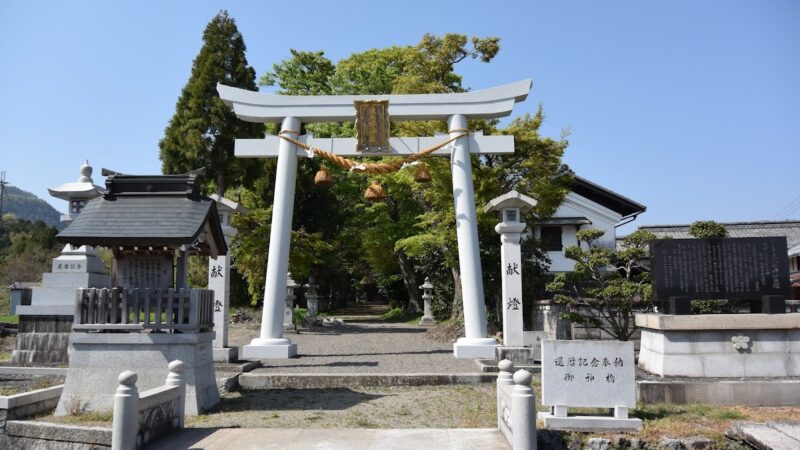
Shimo-Kanda Shrine, located at 7-2 Mano 4-chome, is situated southwest of Miyaike Pond and is about a 5-minute taxi ride from JR Kosei Line Katata Station. This shrine retains an older style and boasts a main hall designated as a National Important Cultural Property.
Deities Enshrined:
- Amatarashihikokunioshihito-no-Mikoto: Son of the 5th Emperor Kōshō, and ancestor of the ancient Ono and Wani clans on the western shore of Lake Biwa.
- Hikokunifuku-no-Mikoto: Ancestor of the Mano clan.
- Susanoo-no-Mikoto
Founding and History of Kanda Shrine
Origin of the Shrine
According to shrine tradition, in the 4th year of Empress Jitō’s reign (690 AD), the surname Mano-no-Omi was bestowed upon Wanibe-no-Omi Shimatsuto-no-Ōshishikatsu and others, who were 12th-generation descendants of Hikokunifuku-no-Mikoto. In September of the same year, they designated Jōchi Fumon-yama, located beside their residence, as their palace, and enshrined Susanoo-no-Mikoto as “Mano Daimyōjin,” marking the beginning of the shrine.
Based on its founding date, this shrine is an ancient one with a history of over 1,300 years. The fact that it is said to have been founded in the early Heian period also aligns with this timeframe.
Relationship with the Engishiki Jinmyocho (Register of Shrines in the Engi Era)
The Engishiki Jinmyocho lists Kanda Shrine among the “eight shrines in Shiga District, Omi Province,” stating that it “enshrines the ancestors of Sumiyoshi Mano no Omi.” It was formerly known as “Mitoshiro no Kami no Yashiro” and has an important history of belonging to the rice fields of the Ise Grand Shrine.
This record indicates that Kanda Shrine was not merely a local tutelary shrine, but a highly prestigious shrine with deep ties to the imperial court and Ise Grand Shrine.
Records from the Reign of Emperor Saga
Records indicate that the shrine was established in 811 AD (Kōnin 2) during the reign of Emperor Saga. The deities enshrined during this period are believed to be Hikotsuchi-no-kami and Hikokunibuki-no-mikoto of Mano, ancestors of the present-day Mano family.
Main Hall, a Nationally Designated Important Cultural Property
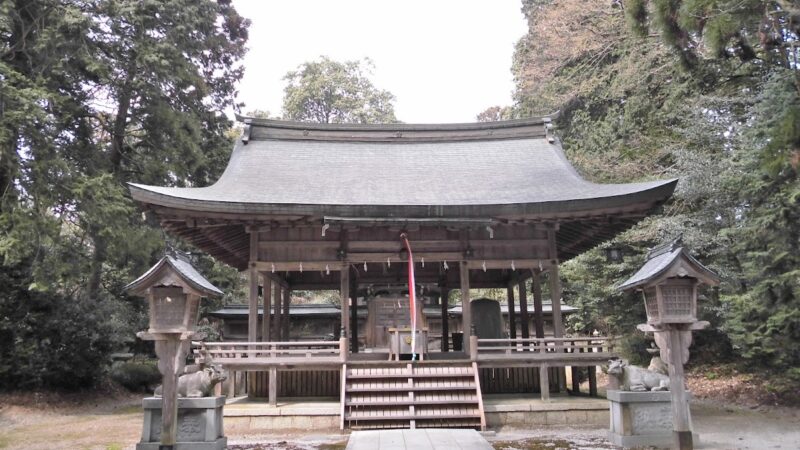
The main hall of Shimo-Kanda Shrine (Mano 4-chome) was designated a Nationally Designated Important Cultural Property in 1913 (Taisho 2). This main hall, believed to have been built in the early Muromachi period, is a valuable example of medieval shrine architecture within Shiga Prefecture.
Architectural Style Characteristics
Structure:
- Three-bay nagare-zukuri style
- One-bay portico
- Cypress bark roofing
The main hall features intricate carvings down to the smallest detail, showcasing the excellent craftsmanship of the Muromachi period. Particularly noteworthy is the diamond-shaped lattice visible on the front of the staircase, an important element that reflects the architectural style of the time.
Preservation and Cultural Value
The cypress bark roof requires periodic re-thatching, but it remains in excellent condition thanks to proper maintenance. The three-bay nagare-zukuri style is common in medieval shrine architecture, but such a well-preserved example is rare.
As a representative example of medieval shrine architecture in the western shore region of Lake Biwa, it holds an important position in the study of architectural and art history.
Kanda Shrine Grounds and Highlights
Moss-Covered Stone Steps and Natural Beauty
The Kanda Shrine (Mano 4-chome) is also known for the beauty of its moss. The stone steps are covered in so much moss that they resemble a slope rather than steps. These moss-covered steps symbolize the harmony between the shrine’s long history and nature.
The green of the moss, formed over time, shines particularly beautifully after rain or when wet with morning dew, giving visitors a serene impression.
Miyaike Pond and its Ecosystem
Miyaike Pond, located near the shrine, is home to carp and turtles, delighting visitors. This pond is not merely a scenic element; it is an important part of the shrine’s sacred precincts and has been an object of worship since ancient times.
The area surrounding the pond offers beautiful scenery throughout the seasons, displaying different appearances with each passing year: cherry blossoms in spring, lush greenery in summer, and vibrant autumn leaves.
Jinguji Temple and Fudo Myoo
Within the grounds of Kanda Shrine is Jinguji Temple, dedicated to Fudo Myoo. This is a valuable historical relic that preserves the history of Shinto-Buddhist syncretism. While many shrines removed Buddhist elements after the Meiji-era separation of Shinto and Buddhism, Kanda Shrine has maintained this tradition.
Fudo Myoo is worshipped as a deity that wards off evil, which is one reason why the shrine is known as an “ancient shrine for warding off evil.”
The History of the Wani and Mano Clan
Ancient Powerful Clan on the Western Shore of Lake Biwa
The Wani clan was a powerful ancient clan based on the western shore of Lake Biwa. They traced their ancestry to Ama-no-Tarashihiko-Kunioshihito-no-Mikoto and branched into many clans, including the Ono, Kasuga, and Kakimoto clans.
The Wani clan had close ties to the imperial court and are known for producing many empresses and consorts. Their sphere of influence extended over a vast area from the northern part of present-day Otsu City to the southern part of Takashima City.
The Establishment of the Mano Clan
In the 4th year of Empress Jito’s reign (690 AD), the surname “Mano Clan” was bestowed upon Wanibe-no-Omi Torii-no-Oshi-no-Oshikatsu and others. This signifies that a branch of the Wani clan, based in the Mano region, was recognized as an independent clan.
The Mano clan played a crucial role in the development and governance of the Mano region, and Kanda Shrine was built to enshrine their ancestral deity. The current Mano family is considered to be direct descendants of this Mano clan.
Relationship with the Ono Clan
The Ono clan, also descended from Amenotarihiko Kunioshihito no Mikoto, was a powerful clan known for Ono no Imoko. An Ono no Imoko Shrine also exists in the Mano region, indicating that it was a base for the Wamai clan.
These clans expanded their power through trade utilizing Lake Biwa’s water transport and agricultural development in the western Lake Biwa region. Kanda Shrine is a valuable legacy that conveys the history of these ancient powerful clans.
How to Access Kanda Shrine
Access to Lower Kanda Shrine (4-7-2 Mano)
By Train/Taxi:
- Get off at JR Kosei Line “Katata Station,” then a taxi ride of approximately 5 minutes.
- When taking a taxi, it’s helpful to tell the driver “Kanda Shrine near Shinjuku Bridge.”
By Car:
- Approximately 10 minutes from “Mano IC” on the Kosei Road (National Route 161 Bypass).
- Free parking available.
Address: 4-7-2 Mano, Otsu City, Shiga Prefecture
Access to Upper Kanda Shrine (942 Mano Fumon-cho)
By Train:
- Get off at JR Kosei Line “Ono Station” or “Katata Station,” then a few minutes on foot or by car.
By Car:
- Head east from “Mano IC” on the Kosei Road (National Route 161 Bypass).
- Use Miyaike Pond as a landmark.
Address: 942 Mano Fumon-cho, Otsu City, Shiga Prefecture
Nearby Tourist Spots
When visiting Kanda Shrine, we recommend also visiting the nearby historical sites.
- Ono no Imoko Shrine: A shrine dedicated to Ono no Imoko, known as an envoy to the Sui Dynasty.
- Lake Biwa: Japan’s largest lake, with exceptional views from the western shore area.
- Katata Townscape: An area that retains the atmosphere of a temple town dating back to the Middle Ages.
Kanda Shrine’s Faith and Festivals
As a Famous Shrine for Warding Off Evil
Kanda Shrine is known as an ancient shrine for warding off evil, with a history of approximately 1,200 years. Susanoo-no-Mikoto is widely worshipped as a god of warding off evil and disease, and in addition, Fudo Myoo within the shrine grounds is also revered as a Buddha for warding off evil.
Many people, especially those entering their unlucky years, visit the shrine to pray for protection against evil. For the local people, it is a shrine they visit at important milestones in their lives, and it enjoys deep reverence.
As the Local Guardian Shrine
Kanda Shrine has played a central role in the local community as the guardian shrine of the Mano area. Many parishioners participate in the spring and autumn festivals, and traditional rituals are performed.
The unique situation of having two Kanda Shrines is now accepted as a characteristic of the region, and each shrine has its own parishioner organization while supporting the faith of the entire Mano area.
Manners and Points to Note When Visiting
Etiquette for Visiting
When visiting Kanda Shrine, please follow the general manners for visiting shrines.
- Bow before passing through the torii gate.
- Cleanse your hands and mouth at the water basin.
- Bow twice, clap twice, and bow once in front of the main hall.
- Walk quietly within the shrine grounds and take photographs with moderation.
Points to Note
Lower Kanda Shrine (Mano 4-chome):
- Observe the architectural style of the main hall, a National Important Cultural Property.
- Appreciate the natural beauty of the moss-covered stone steps.
- Pay attention to the detailed carvings, such as the diamond-shaped lattice.
- Observe the ecosystem of the shrine pond.
Upper Kanda Shrine (Mano Fumon-cho):
- Reflect on the history of the Mano clan, descendants of the Wani clan.
- Enjoy the tranquil atmosphere of the shrine grounds.
- Enjoy the surrounding natural environment.
Regarding Photography
Photography is generally permitted within the shrine grounds, but consideration is necessary when festivals or prayers are being held. When photographing cultural properties such as the main hall, refrain from using flash and take care not to damage the buildings.
The Position of Kanda Shrine in Shiga Prefecture
Within Shiga Prefecture’s Shrine Culture
Shiga Prefecture has many ancient shrines, but Kanda Shrine is particularly important for understanding the ancient history of the western shore region of Lake Biwa. Its status as an Engishiki-listed shrine, its main hall designated as a National Important Cultural Property, and its unique history of having two shrines coexisting demonstrate the diversity of Shiga Prefecture’s shrine culture.
As a Historical Heritage Site in the Lake Biwa Region
Along the JR Kosei Line, there are numerous shrines with ancient histories, such as Ono Shrine and Shirahige Shrine. Among them, Kanda Shrine is a valuable site that concretely conveys the history of the ancient Wani clan.
Kanda Shrine is indispensable for understanding the history of the Lake Biwa region, which developed using water transport on Lake Biwa.
Kanda Shrine in Each Season
Kanda Shrine in Spring
Spring is a beautiful season with cherry blossoms blooming in the shrine grounds and surrounding areas, and the fresh greenery is stunning. The moss’s green becomes even more vibrant, creating an atmosphere full of life. It’s also the time of the spring festival, and the shrine is bustling with local people.
Summer at Kanda Shrine
The shrine grounds, covered in deep green, are filled with cool air. The breeze from Lake Biwa is pleasant, making you forget the summer heat. Lotus flowers sometimes bloom on the surface of the shrine pond, offering a serene beauty.
Autumn at Kanda Shrine
During the autumn foliage season, the shrine grounds are dyed in red and yellow. The contrast between the green moss and the autumn leaves is beautiful, attracting many photography enthusiasts. The autumn festival is also held, offering thanks for the harvest.
Winter at Kanda Shrine
When it snows, the shrine grounds are enveloped in silence. The sight of snow accumulating on the moss-covered stone steps is fantastical, conveying the weight of the shrine’s history. While there are fewer visitors, it’s a season to quietly connect with the gods.
Summary: The Significance of Visiting Kanda Shrine
The two Kanda Shrines in Mano, Otsu City, Shiga Prefecture, each boast a history of over 1,300 years, making them valuable cultural heritage sites that convey the lineage of the ancient Wani clan. They offer numerous attractions, including the main hall (a nationally designated Important Cultural Property), moss-covered stone steps, and the Fudo Myoo statue at the Jinguji temple.
Easily accessible via the JR Kosei Line, they are ideally located for a visit in conjunction with Lake Biwa sightseeing. As a renowned shrine for warding off evil and a place to experience ancient history, we highly recommend a visit to many people.
The rare historical context of two Kanda Shrines coexisting teaches us about the diversity of Japanese shrine culture and the depth of local history. When visiting Mano, be sure to visit both shrines and experience their individual characteristics and shared history.