Izu Shrine (Otsu City, Shiga Prefecture) Complete Guide | History, Goshuin (Shrine Seals), Access, and Highlights Explained in Detail
Izu Shrine, located in Otsu City, Shiga Prefecture, is an ancient shrine nestled in a quiet residential area on the western shore of Lake Biwa. Despite its history dating back to the Heian period, it remains relatively unknown as a tourist destination, attracting attention from history buffs and shrine-visiting enthusiasts.
This article provides a thorough explanation of everything you need to know before visiting Izu Shrine, including its history, enshrined deities, highlights, goshuin information, and access methods.
What is Izu Shrine? | Basic Information and Overview
Izu Shrine is a shrine located in Ikadachi Shimozaichi-cho, Otsu City, Shiga Prefecture, and is a historical shrine with deep ties to the ancient Ika clan.
Basic Data
- Official Name: Izu Shrine
- Location: Ikadachi Shimozaichi-cho, Otsu City, Shiga Prefecture
- Deities Enshrined: Amaterasu Omikami, Ikatsuomi no Mikoto
- Founding: Details unknown (believed to be before the Heian period)
- Former Shrine Rank: Village Shrine
- Annual Festival Day: Second Sunday of October
The name Izu Shrine originates from the fact that this area was called “Ikadachi” in ancient times, and has no direct connection to Izu on the Izu Peninsula.
History and Origins of Izu Shrine
Connection to the Ancient Powerful Clan, the Ika Clan
The existence of the ancient powerful clan, the Ika Clan, is indispensable when discussing the history of Izu Shrine. The Ika clan was a powerful family based in the northern part of Omi Province (present-day Shiga Prefecture), deeply involved in the development and governance of the region.
The place name Ika-tachi itself is said to originate from the fact that the Ika clan “established” (set up a base) in this area. It is believed that Izu Shrine was founded as the tutelary shrine of the Ika clan, or as a shrine worshipped by the family.
Records from the Heian Period
Although not listed in the *Engishiki Jinmyocho* (compiled in 927), historical records suggest that the shrine already existed in the mid-Heian period. This region was close to Kyoto, and dotted with aristocratic villas and manors, so the shrine functioned as a center of local faith.
From the Medieval to the Early Modern Period
During the Sengoku period, like many shrines in Omi Province, it is presumed to have been affected by the wars, but detailed records do not remain. During the Edo period, it was a village shrine, attracting the faith of local people and revered as the guardian deity of agriculture.
Changes Since the Meiji Era
Due to the Meiji-era separation of Shinto and Buddhism and the introduction of the shrine ranking system, Izu Shrine was designated a village shrine. Since then, it has been carefully preserved by the local people as the tutelary deity of the region, and continues to be so to this day.
Deities and Divine Virtues
Main Deity
Amaterasu Omikami
The supreme deity in Japanese mythology, and the sun goddess considered the ancestral deity of the Imperial family. Also known as the main deity of Ise Grand Shrine, she is believed to bestow divine virtues such as national peace and security, abundant harvests, and good fortune.
Ikatsuomi no Mikoto
A deity considered the ancestral deity of the Ikatsu clan. He has been worshipped as the god of regional development and industrial promotion.
Divine Virtues (Benefits)
Izu Shrine is believed to offer the following divine virtues:
- Abundant Harvests and Protection of Agriculture: Located in an agricultural area, it has been a place of deep faith for praying for bountiful harvests since ancient times.
- Family Safety: As the local guardian deity, it protects the safety of families.
- Good Fortune and Prosperity: Improved luck due to the divine virtues of Amaterasu Omikami.
- Regional Development: Benefits for industrial development, inheriting the pioneering spirit of the Ika clan.
Highlights of the Shrine Grounds
Main Hall and Worship Hall
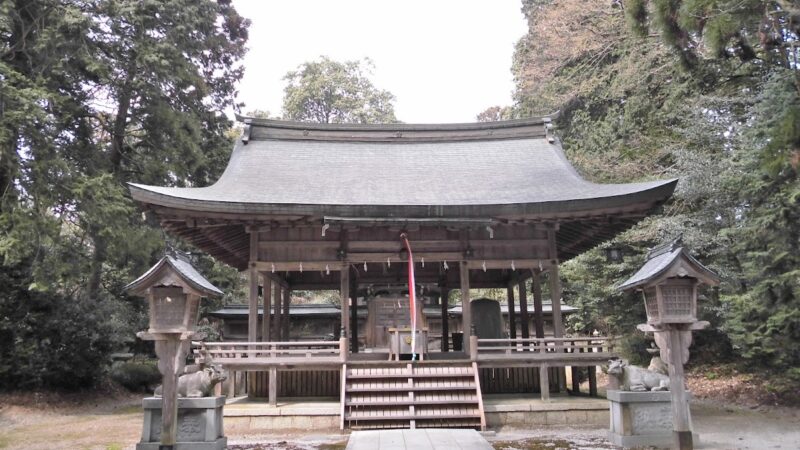
The main hall of Izu Shrine is simple yet dignified, retaining the characteristics of traditional shrine architecture in the region. The worship hall is also modest but carefully maintained, reflecting the deep faith of the local people.
Shrine Grove
The trees surrounding the shrine grounds are called the “shrine grove,” forming a sacred space for the shrine. The shrine grounds of Izu Shrine retain many ancient trees, and especially in summer, you can enjoy a lush and tranquil atmosphere.
Stone Steps and Approach
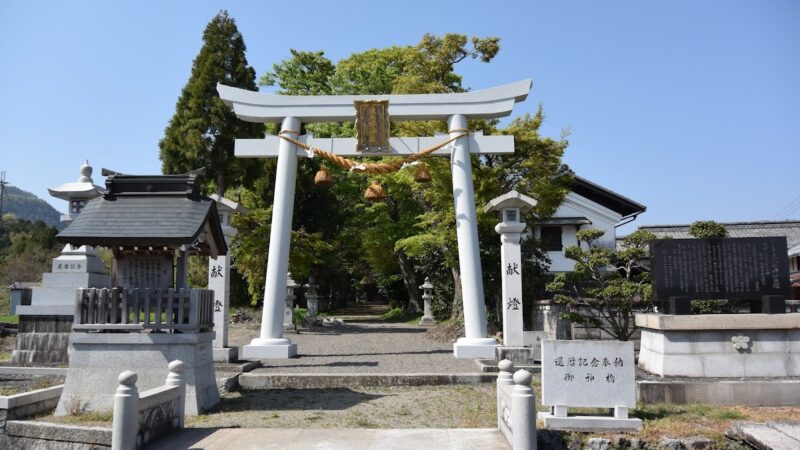
The stone steps leading to the shrine grounds have a long-standing, weathered appearance, conveying a sense of history. The approach is well-maintained, allowing you to enjoy the changing seasons while visiting the shrine.
Subsidiary Shrines
Several small subsidiary shrines (sessha/massha) are enshrined around the main hall, preserving the diverse beliefs of the region.
Goshuin (Shrine Seal) Information
Regarding the Issuance of Goshuin
Since the priest is not always present at Izu Shrine, the issuance of goshuin is irregular. Please note the following points if you wish to visit the shrine:
- Advance Contact: If you wish to receive a Goshuin (shrine stamp), it is recommended that you contact the Otsu City Shrine Association or the local parishioners’ representative in advance.
- Pre-printed Goshuin: In some cases, pre-printed Goshuin may be available.
- Visiting the Shrine is Free: You are free to visit the shrine grounds even without a Goshuin.
Characteristics of the Goshuin
When issued, it features a simple, traditional calligraphic style. The name of the shrine, “Izu Shrine,” and the date of your visit are inscribed.
Annual Events and Festival
Annual Festival (Autumn Festival)
The annual festival is held on the second Sunday of October every year. It is an important local event, centered around local residents, where Shinto rituals and offerings are performed.
Other Annual Events
- New Year’s Day Festival: January 1st, a prayer for peace in the new year.
- Spring Festival: A prayer for a bountiful harvest in spring.
- Summer Purification Ceremony: Late June, a Shinto ritual to purify oneself of the impurities accumulated over the past six months.
These events are held in a warm, homey atmosphere, typical of a small local shrine.
Access Information
Access by Public Transportation
Using the JR Kosei Line
- Get off at JR “Katata Station”
- Take the Kojaku Kotsu bus “Ikadachi Line” (approx. 20 minutes)
- Get off at “Shimozaichi” bus stop, approximately 5 minutes on foot.
Since bus service is limited, it is recommended to check the timetable in advance.
Using the Keihan Ishiyama-Sakamoto Line
Approximately 15 minutes by taxi from Keihan “Sakamoto-Hieizanguchi Station”.
Access by Car
From the Meishin Expressway
- Approximately 30 minutes from Kyoto East IC via National Route 161 (Nishi-Omi Road)
- Approximately 40 minutes from Otsu IC
Parking
There are several parking spaces on the temple grounds. However, it may get crowded during events such as festivals, so please consider using public transportation.
Address and Navigation Settings
- Address: Ikadachi Shimozaichi-cho, Otsu City, Shiga Prefecture
- Car Navigation Settings: Search for “Izu Shrine, Otsu City” or enter the above address.
Nearby Tourist Attractions
Enryaku-ji Temple on Mount Hiei
Enryaku-ji Temple on Mount Hiei, a World Heritage Site located about 20 minutes away by car, is a famous temple known as the mother mountain of Japanese Buddhism. Visiting it in conjunction with a visit to Izu Shrine is highly recommended.
Lake Biwa
Located on the western shore of Lake Biwa, Japan’s largest lake, it’s about a 15-minute drive to the lakeshore. Enjoy a drive or stroll along the lakeside.
Hiyoshi Taisha Shrine
The head shrine of the approximately 3,800 Hiyoshi, Hie, and Sanno shrines nationwide, located about a 15-minute drive away.
Ukimido (Mangetsuji Temple)
A beautiful temple seemingly floating on Lake Biwa, known as one of the Eight Views of Omi, “Wild Geese Descending at Katata.”
Manners and Precautions for Visiting a Shrine
Basic Worship Etiquette
- Bow before the Torii Gate: Bow before entering the sacred area.
- Walk along the edge of the path: The center is considered the path of the gods.
- Purify yourself at the water basin: Purify in the order of left hand → right hand → mouth → left hand.
- Two bows, two claps, one bow: This is the basic etiquette in front of the main hall.
Precautions
- Worship quietly: Please be considerate of noise as the shrine is adjacent to a residential area.
- Take your trash home: Please cooperate in keeping the shrine grounds clean.
- Photography: Photography is prohibited in some areas, such as inside the main hall.
- Dress Code: There are no particularly strict regulations, but please be considerate of the sacred place.
Charms and Recommended Points of Izu Shrine
Quiet Worship Environment
The biggest appeal is that, as it is not a tourist destination, you can worship quietly away from the hustle and bustle. This is a precious space where you can calm your mind and connect with the divine.
Experience Historical Romance
You can trace the footsteps of the ancient Ika clan, making this a must-see spot for history buffs. The name “Ikadachi,” which remains in the place name, also conveys the depth of this area’s history.
Experience Local Faith
This is not a tourist-oriented site, but a “living place of worship” preserved by the local people. It’s a valuable opportunity to feel firsthand the relationship between Japanese communities and shrines.
Nature in Every Season
Each season has its own beauty: the fresh green of spring, the deep green of summer, the vibrant autumn leaves, and the tranquility of winter. The autumn foliage season, in particular, offers a beautiful landscape as the shrine grounds are ablaze with color.
Visitor Reviews and Reputation
The following are comments from people who have actually visited Izu Shrine:
- “There were few tourists, so I was able to worship at my own pace.”
- “I could feel the atmosphere of how much the shrine is cherished by the local people.”
- “It’s a quiet shrine with a sense of history, and it felt like my soul was being cleansed.”
- “Access is a little inconvenient, but that actually adds to its special feeling.”
Frequently Asked Questions
Q: Can I visit Izu Shrine without a reservation?
A: Yes, you are free to visit the shrine grounds. However, if you wish to receive a Goshuin (shrine stamp) or request a special prayer, you need to contact us in advance.
Q: Is there parking?
A: There are a few parking spaces on the shrine grounds. It is free to use, but it may get crowded during events such as festivals.
Q: Is it related to Izu Shrine on the Izu Peninsula?
A: There is no direct relationship. The name “Izu” originates from the ancient name of this region, “Ikadachi,” and has a different origin from the Izu Peninsula.
Q: When is the best time to visit?
A: You can visit throughout the year, but October, when the annual festival is held, May, when the fresh greenery is beautiful, and November, when the autumn leaves are at their peak, are recommended.
Q: Are there any restaurants or cafes nearby?
A: Since the area around the shrine is residential, there are limited restaurants. There are restaurants around Katata Station and along National Route 161.
Summary | Recommendation for Visiting Izu Shrine
Izu Shrine in Otsu City, Shiga Prefecture, is a shrine with a long history dating back to ancient times, yet it possesses a simple charm that hasn’t been commercialized for tourism.
It is especially recommended for those who want to visit in a quiet environment to calm their minds, those who want to feel the romance of history, and those who want to experience a form of faith rooted in the local community.
Access is somewhat inconvenient, but this actually creates a special pilgrimage experience. Why not visit Izu Shrine as part of your sightseeing along the western shore of Lake Biwa?
A tranquil moment at Izu Shrine will surely bring peace to your heart.