Complete Guide to Ogura Shrine (Shiga Prefecture) | History of the Shikinaisha Shrine, Ogi Festival, Goshuin (Shrine Seal), and Access Information
Ogura Shrine, located in Ogi, Otsu City, Shiga Prefecture, is a historically significant shrine listed in the “Engishiki Jinmyocho” (a list of shrines compiled in the Heian period). It has a founding legend related to Emperor Tenji’s relocation of the capital to Otsu-kyo and has been revered as the tutelary shrine of the Ogi village for over a thousand years. This article comprehensively introduces information useful for visiting Ogura Shrine, including its history, highlights within the grounds, festivals, goshuin (shrine seals), and access methods.
Basic Information on Ogura Shrine
Ogura Shrine is a shrine located in Ogi, Otsu City, Shiga Prefecture. It is a Shikinaisha (Engishiki shrine) and its former rank was Prefectural Shrine. Located near the Ogi entrance of the Okuhiei Driveway, its location at the foot of Mount Hiei has led to deep connections with mountain worship since ancient times.
Location: Ogi, Otsu City, Shiga Prefecture
Deity Enshrined: Kuraokami-no-kami
Former Shrine Rank: Prefectural Shrine
Shrine Rank: Shikinaisha (Shrine listed in the Engishiki)
Former Name: Tadokoro Shrine, Goshadaigongen (Daimyojin)
Within the grounds of Ogura Shrine, there are four subsidiary shrines: Omiya Shrine, Wakamiya Shrine, Imamiya Shrine, and Shingu Shrine. These were collectively known as “Goshadaigongen” at one time.
History of Ogura Shrine
Origin of Founding and the Legend of Emperor Tenji
There are several legends regarding the founding of Ogura Shrine. The most widely known is the legend related to the relocation of the capital to Otsu-kyo in the 6th year of Emperor Tenji’s reign (667 AD).
According to shrine tradition, when Emperor Tenji moved the capital from Asuka to Otsu Palace (Otsu-kyo) in Omi Province, a hermit named Kadayu Sennin (also written as Kadayu or Kadayu), who accompanied him, invited a divided spirit from the Niukawakami Shrine in Yamato Province to the land of Ogi, marking the shrine’s founding. This tradition suggests that Ogura Shrine was founded as a shrine responsible for protecting the capital and for water deity worship.
On the other hand, another tradition states that it was founded in 857, during the reign of Emperor Montoku, the 55th emperor, showing discrepancies in dates depending on the document. In any case, it is certain that Ogura Shrine is an ancient shrine established from ancient to medieval times.
Status as an Engishiki Shrine
Ogura Shrine is listed as an Engishiki shrine in Shiga District, Omi Province, in the “Engishiki Jinmyocho,” a list of shrines compiled in 927 during the mid-Heian period. Engishiki-listed shrines are shrines that were particularly important to the imperial court and were of high status, being the object of national worship.
While there are several candidate shrines in the Shiga district listed in the Engishiki, Ogura Shrine is considered a strong candidate in present-day Ogi, Otsu City. This status as an Engishiki-listed shrine indicates that Ogura Shrine has been an important center of faith in the region since ancient times.
Transition from the Medieval to the Early Modern Period
In the medieval period, it was also called “Tadokoro Shrine,” and also “Gosha Daigongen” or “Gosha Daimyojin.” This stems from the fact that, in addition to the main Ogura Shrine, four other shrines—Omiya Shrine, Wakamiya Shrine, Imamiya Shrine, and Shingu Shrine—were enshrined within the grounds.
During the Edo period, it was revered as the local tutelary shrine by the people of Ogi village, and rituals related to agriculture and water management were performed there. The enshrined deity, Kuraokami-no-kami, is a dragon god who controls water, and was worshipped in agricultural societies as an object of prayer for rain and bountiful harvests. ### History Since the Modern Era
During the Meiji era’s shrine ranking system, Ogura Shrine was ranked as a prefectural shrine. This indicated a high status among the shrines in the region. Even after the abolition of the shrine ranking system after World War II, Ogura Shrine continues to attract many worshippers as the tutelary shrine of the Ogi region and as a historically significant Shikinaisha (shrine listed in the Engishiki).
Even today, its ties with the community remain strong, and at the Ogi Festival held annually on May 3rd, local residents come together to carry on the traditional events.
About the Deity: Kuraokami-no-kami
The deity enshrined at Ogura Shrine is Kuraokami-no-kami, also known as Kuraokami-no-kami. This deity is known in Japanese mythology as a dragon god who controls water.
The Divine Nature of Kuraokami-no-Kami
According to the Kojiki and Nihon Shoki, Kuraokami-no-Kami is a god born from the blood dripping from the sword when Izanagi-no-Mikoto slew Hinokagutsuchi-no-Kami. This god possesses the divine nature of governing water in valleys and streams, and is often enshrined in mountainous areas, particularly at water sources and valleys.
“Kura” means the deepest part of a valley, and “Okami” is an archaic word referring to a dragon god. Therefore, Kuraokami-no-Kami means “dragon god of the valley bottom,” and has been worshipped as a god who protects water sources.
Water God Worship and Agriculture
The Ogi area is located at the foot of Mount Hiei, and is a region through which the Tenjin River and other water systems flow. Water is essential for agriculture, and the worship of Kuraokami-no-kami was deeply intertwined with prayers for rain, irrigation, and bountiful harvests.
The fact that Ogura Shrine is believed to have been founded by inviting a deity from Niukawakami Shrine in Yamato Province is not unrelated to the fact that Niukawakami Shrine was considered important as a place of rain prayer by the imperial court since ancient times. As a shrine that inherits the lineage of water deity worship, Ogura Shrine has protected the agriculture and livelihoods of the region.
Highlights of the Shrine Grounds
Approach and Torii Gate
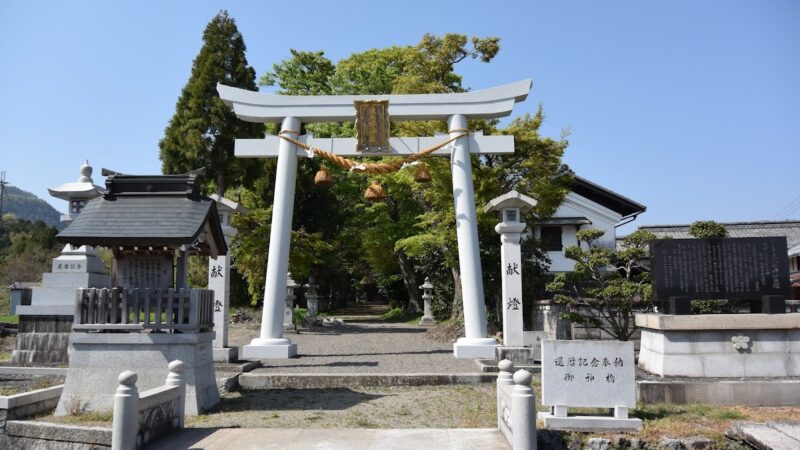
The approach to Ogura Shrine begins along the road about 500 meters before the Ogi entrance of the Okuhiei Driveway. Passing through the torii gate, a lush, green approach continues, enveloping you in a tranquil atmosphere.
Following the approach, a bridge with red railings appears over the Tenjin River. Crossing this bridge gives you the feeling of crossing the boundary between the secular world and the sacred realm. The Tenjin River is deeply connected to the water deity worship at Ogura Shrine, and it is said that a small shrine, considered the inner sanctuary, exists about 3 kilometers upstream.
Shrine Building and Worship Hall
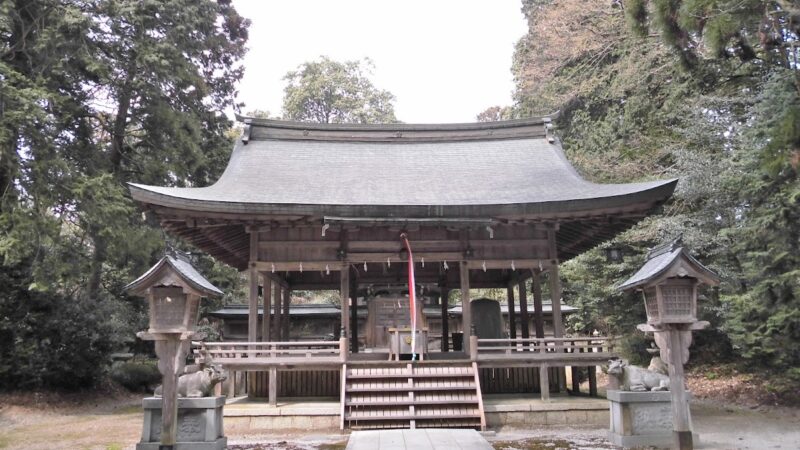
Upon entering the shrine grounds, the worship hall stands directly ahead. The worship hall is a traditional wooden shrine building, exhibiting a tranquil presence befitting a local guardian deity. Behind the worship hall is the main sanctuary, where the enshrined deity, Kuraokami-no-kami, is worshipped.
To the right corner of the worship hall stands a mikoshi (portable shrine) storage building, where the mikoshi used in the Ogi Festival is carefully stored. This mikoshi is paraded through the community every year on May 3rd during the Ogi Festival, praying for the peace and prosperity of the parishioners and a bountiful harvest.
Subsidiary Shrines: Arrangement of Four Shrines
Within the grounds of Ogura Shrine, there are four subsidiary shrines: Omiya Shrine, Wakamiya Shrine, Imamiya Shrine, and Shingu Shrine. These shrines are remnants of the former collective name “Gosha Daigongen,” demonstrating the multifaceted nature of the faith surrounding Ogura Shrine.
Next to the portable shrine storage is a Yutate Kamado (a type of boiling stove), behind which the Omiya Shrine (on the right) and Wakamiya Shrine (on the left) are enshrined side by side. The Yutate Shinto ritual involves boiling water in front of the shrine and using it for purification, preserving traces of a traditional ceremony that has been performed since ancient times.
Imamiya Shrine and Shingu Shrine are also enshrined within the grounds, each attracting its own unique devotion. While the detailed deities enshrined in these four shrines vary depending on the document, all have played important roles within the sphere of influence of Ogura Shrine’s faith.
Natural Environment of the Shrine Grounds
The grounds of Ogura Shrine are surrounded by abundant nature. Located at the foot of Mount Hiei, one can experience the changing seasons. In spring, cherry blossoms bloom; in summer, deep green covers the shrine grounds; in autumn, the autumn leaves are beautiful; and in winter, silence envelops the area.
The nature along the Tenjin River is particularly beautiful, and visiting the shrine while listening to the gentle murmur of the clear stream is a truly refreshing experience. The shrine, dedicated to the water god, maintains an environment blessed with abundant water and greenery, befitting its status as a water deity.
Festivals of Ogura Shrine
Ogi Festival (May 3rd)
The most important festival at Ogura Shrine is the Ogi Festival, held annually on May 3rd. This festival is a celebration for the entire Ogi village, a traditional event in which all residents participate.
During the Ogi Festival, the portable shrine parades through the community, visiting the homes of parishioners to pray for protection from evil and a bountiful harvest. The energetic shouts of the shrine bearers echo throughout the area, and the entire community is enveloped in the festive atmosphere. Through the festival, community bonds are strengthened, and traditions are passed down to future generations. The Ogi Festival is more than just a religious event; it’s an important opportunity to reaffirm the region’s identity and deepen community bonds.
Annual Events
Besides the Ogi Festival, Ogura Shrine holds various festivals throughout the year. On New Year’s Day, the Saitansai Festival is held to pray for peace in the new year. In autumn, the Autumn Grand Festival is held to give thanks for the harvest.
These festivals are deeply connected to the agricultural calendar and reflect the shrine’s character as a shrine dedicated to the water god. Traditional Japanese agricultural rituals, such as praying for a bountiful harvest at the spring Kinensai Festival and giving thanks for the harvest at the autumn Niinamesai Festival, are still practiced today.
The Connection Between the Shrine and the Community
Ogura Shrine, as the tutelary shrine of Ogi village, has deep ties to the community. Ogi is a settlement located at the western foot of Mount Hiei, where life has long revolved around agriculture.
History of Ogi Village
The name Ogi is said to originate from either “a tree to look up at” or from the topography, which is a sloping area that resembles “looking up.” This area is believed to have been inhabited since the time of Emperor Tenji’s Otsu-kyo, which aligns with the founding legend of Ogura Shrine.
In the Middle Ages, it was under the influence of Enryaku-ji Temple on Mount Hiei, and in the early modern period, it belonged to Shiga District of Omi Province. Its location between Lake Biwa and Mount Hiei has provided a rich environment blessed with water and mountains.
Modern-Day Local Deity Worship
Even today, Ogura Shrine functions as the spiritual center of Ogi Village. Many parishioners visit the shrine for important life events such as their child’s first shrine visit, Shichi-Go-San (a traditional rite of passage for children), and exorcisms, making it an indispensable part of the region’s traditional events.
In recent years, new residential areas have been developed around Ogi Village, but the participation of both new and old residents in Ogura Shrine’s festivals is fostering community integration.
Goshuin (Shrine Seals) and Amulets
About Goshuin
Ogura Shrine offers Goshuin. Goshuin are popular among many visitors as proof of worship and as a way to forge a connection with the shrine.
The Goshuin features the calligraphy of “Ogura Shrine” and the shrine’s seal. Sometimes, the characters “Shikinai” (meaning “shrine listed in the Engishiki”), indicating its status as a Shikinaisha (a shrine listed in the Engishiki), are also inscribed. If you wish to receive a Goshuin, please speak to a staff member at the shrine office. However, since priests may not always be present, it is recommended to check in advance if you definitely wish to receive a Goshuin.
Amulets and Souvenirs
Ogura Shrine offers various amulets and souvenirs. Particularly noteworthy is the bicycle amulet. The area around Mount Hiei is a popular cycling route, and the bicycle amulet, praying for the safety of cyclists, is a popular souvenir that meets modern needs.
In addition, various amulets are available to fulfill wishes such as traffic safety, family safety, academic success, and protection from evil. As a shrine dedicated to the water god, amulets for protection against water-related disasters are also available.
Access Information
Access by Public Transportation
Nearest Station: JR Kosei Line “Ogoto Onsen Station”
Ogura Shrine is approximately 4 kilometers from Ogoto Onsen Station, taking about 50 minutes on foot. It is more convenient to use a bus or taxi from the station.
By Bus: Take the Kojaku Kotsu bus bound for “Ogi” from Ogoto Onsen Station, get off at the “Ogi” bus stop, and walk for about 10 minutes. However, since bus services are limited, it is recommended to check the timetable in advance.
By Taxi: A taxi ride from Ogoto Onsen Station takes about 10 minutes and costs approximately 1,500 yen.
Access by Car
Meishin Expressway: Approximately 20 minutes from Kyoto East Interchange
Kosei Road: Approximately 15 minutes from Mano Interchange
Aim for the Ogi entrance of the Okuhiei Driveway. The torii gate of Ogura Shrine is located approximately 500 meters before the entrance. The torii gate is visible along the road, making it relatively easy to find.
Parking: There is a parking lot for visitors next to the torii gate. There is space for several cars, so it is possible to visit by car. However, congestion is expected during festivals such as the Ogi Festival, so please consider using public transportation.
Nearby Tourist Attractions
There are many attractive tourist spots around Ogura Shrine, including Enryaku-ji Temple on Mount Hiei, Ogoto Onsen hot springs, and Lake Biwa.
Enryaku-ji Temple on Mount Hiei: It takes approximately 20 minutes from Ogura Shrine via the Okuhiei Driveway to reach Enryaku-ji Temple, a World Heritage Site. As the head temple of the Tendai sect, it is one of the most important temples in the history of Japanese Buddhism.
Ogoto Onsen: Around Ogoto Onsen Station, the nearest station, there are many hot spring inns overlooking Lake Biwa. Relaxing in the hot springs after your visit is highly recommended.
Lake Biwa: Lake Biwa, Japan’s largest lake, is about a 15-minute drive from Ogi. You can enjoy various activities such as cycling along the lakeshore and lake cruises.
Etiquette and Manners for Visiting a Shrine
Etiquette for Visiting a Shrine
There are basic manners for visiting a shrine. Bow when passing through the torii gate, and avoid walking in the center of the path (the center is considered the path of the gods).
If there is a purification fountain, cleanse your hands and mouth before proceeding to the main hall. At the main hall, perform the “two bows, two claps, one bow” ritual. Quietly place your offering in the offering box, bow deeply twice, clap your hands twice, offer your prayer, and bow once more.
Photography
Photography is generally permitted on the shrine grounds, but there may be restrictions inside the main hall or during Shinto rituals. Please be considerate of other visitors.
Clothing and Belongings
There are no specific dress code requirements, but it is advisable to wear clothing appropriate for a sacred place. Since the shrine grounds are in a natural setting, comfortable walking shoes are recommended.
If you wish to receive a Goshuin (shrine stamp), please bring your Goshuincho (stamp book). If you wish to receive amulets or talismans, please bring cash.
The Charm and Significance of Visiting Ogura Shrine
The greatest charm of Ogura Shrine lies in its history as a Shikinaisha (a shrine listed in the Engishiki, an ancient Japanese legal code) with over a thousand years of history, yet it continues to thrive as a local guardian deity. From ancient founding legends to the modern Ogi Festival, a form of faith passed down through generations is truly present here.
The shrine grounds, dedicated to the water deity Kuraokami-no-kami, are surrounded by the clear waters of the Tenjin River and the lush greenery of Mount Hiei, creating a space where nature and faith are intertwined. It’s a place where one can escape the hustle and bustle of the city and find peace of mind through quiet worship.
Another characteristic of Ogura Shrine is its deep connection to the local community of Ogi-no-sato. Traditional local events, such as the Ogi Festival, demonstrate that the shrine is not merely a tourist destination, but a place of faith closely intertwined with people’s lives.
With its historical value as a Shikinaisha (a shrine listed in the Engishiki), its tradition of water deity worship, its strong ties to the community, and the beautiful natural environment at the foot of Mount Hiei, Ogura Shrine, where all these elements harmonize, offers a worthwhile pilgrimage to many people as one of Shiga Prefecture’s representative shrines.
Summary
Ogura Shrine is a Shikinaisha located in Ogi, Otsu City, Shiga Prefecture, and is a historical shrine with a founding legend related to Emperor Tenji’s relocation of the capital to Otsu-kyo. The enshrined deity, Kuraokami-no-kami, is a dragon god who controls water and has been revered since ancient times as an object of prayer for rain and bountiful harvests.
Within the shrine grounds are four subsidiary shrines: Omiya Shrine, Wakamiya Shrine, Imamiya Shrine, and Shingu Shrine, formerly known as “Gosha Daigongen.” The Ogi Festival, held annually on May 3rd, is an important community event, demonstrating the enduring tradition of tutelary deity worship.
Access is by bus or taxi from Ogoto Onsen Station on the JR Kosei Line, or by car, as it is located near the Ogi entrance to the Okuhiei Driveway. Popular items such as Goshuin (shrine stamps) and bicycle charms are also available.
Near the foot of Mount Hiei, in a naturally rich environment, Ogura Shrine offers a tranquil atmosphere befitting a Shikinaisha (shrine listed in the Engishiki) with over a thousand years of history. When visiting Shiga Prefecture, a visit to this shrine is highly recommended.