Complete Guide to Iwai Shrine (Otsu City, Shiga Prefecture) | History and Cultural Assets of a Shikinaisha Shrine Dedicated to the Eight Great Dragon Kings
Iwai Shrine, located in Nishinoshō, Otsu City, Shiga Prefecture, is a venerable Shikinaisha shrine with a history of over 1,300 years. Situated in a residential area just a few minutes’ walk from Nishiki Station on the Keihan Ishiyama-Sakamoto Line, this shrine possesses valuable cultural assets, including a main hall from the Kamakura period and divine statues from the Heian period. As a sacred site of water deity worship dedicated to the Eight Great Dragon Kings, it continues to attract many worshippers.
Overview and Basic Information of Iwai Shrine
Iwai Shrine is a Shikinaisha shrine listed in the Engishiki Jinmyōchō (a list of shrines compiled in the Heian period), and its former rank was that of a village shrine. Located approximately 500 meters northwest of the western end of Biwako Ohashi Bridge, east of the Shiga University Faculty of Education Affiliated Elementary School, the shrine buildings, imbued with a sense of history, stand quietly in a residential area.
Location: 15-16 Nishinosho, Otsu City, Shiga Prefecture
Former Shrine Rank: Village Shrine
Shrine Rank: Shikinaisha (Shrine listed in the Engishiki)
Main Deities: Prince Hikoimasu, Emperor Tenji, Iga-no-Ume-Takakohime-no-Mikoto, Emperor Kobun (Prince Otomo), Toyotama-hiko-no-Mikoto, Watatsumi-no-Kami
Deities and History of Ishiimasu Shrine
Six deities are enshrined at Ishiimasu Shrine, each with a deep historical background.
Prince Hikoimasu
The main deity, Prince Hikoimasu, was a son of the ninth Emperor Kaika and a member of the imperial family with deep ties to Omi Province. According to shrine tradition, the first provincial governor of Omi Province, Haruta-no-Muraji, who was established in Seta, buried his ancestor, Prince Hikoimasu, four generations prior, on Chausuyama Mountain, and enshrined the sacred mountain of Goryodenyama, which rises behind it, as the founding of this shrine. Prince Hikoimasu is said to have made significant contributions to the development of ancient Omi Province and has been revered as a guardian deity of the region.
Emperor Tenji and Princess Iga-uneme-yakakohime
Emperor Tenji is known for carrying out the Taika Reforms and constructing the Omi-Otsu Palace. Princess Iga-uneme-yakakohime was one of Emperor Tenji’s consorts and the mother of Emperor Kobun, who will be discussed next. Due to the historical context of Emperor Tenji’s rule over Omi, she is enshrined at this shrine.
Emperor Kobun (Prince Otomo)
Emperor Kobun was Prince Otomo, the son of Emperor Tenji and Princess Iga-uneme-yakakohime. He was a tragic prince who was defeated in the Jinshin War. Although he was expected to become the crown prince of the Omi court, he lost the succession struggle against Emperor Tenmu and is said to have committed suicide in Otsu. It is believed that the deity was enshrined here to appease that spirit.
Toyotamahiko-no-Mikoto and Watatsumi-no-Kami
Toyotamahiko-no-Mikoto and Watatsumi-no-Kami are both deities known as gods of the sea and water. As our shrine is also known as Hachidai Ryuo-gu, they are worshipped as central figures in water deity worship. There is a tradition that they were originally worshipped as water deities in the upper reaches of the Sagami River (a river flowing through present-day Otsu City) and were later moved to our shrine.
History of Ishiza Shrine
Founding and Ancient History
The founding date of Ishiza Shrine is unknown, but according to shrine traditions and ancient records of the shrine family, its origins date back to ancient times. It is said to have begun when the first provincial governor of Omi Province, Haruta-no-Muraji, enshrined his ancestor, Hikoza-no-Ō, during the time when the provincial capital of Omi Province was located in Seta.
Records show that in the first year of the Shuchō era (686 AD), the monk Sonryō relocated the shrine to the spacious garden of Ichijōin Sonryō Awazugō-ō’s forest and constructed a shrine building. This dates to the late Asuka period, indicating that the shrine was already established as an important place of worship.
Prosperity during the Nara and Heian Periods
In the fourth year of the Hōki era (773 AD), during the reign of Emperor Kōnin, Ishiza Shrine was granted the highest rank of Shōichii (First Rank) and the First Class Order of Merit, along with an imperial decree stating that it was “a shrine for the protection of the nation.” This demonstrates that the shrine was recognized as a nationally important shrine. The bestowal of the highest rank of Shōichii is evidence of the deep reverence it received from the imperial court.
The Engishiki Jinmyōchō (compiled in 927 AD) lists it as “Ishiza Shrine, Shiga District, Ōmi Province,” establishing its status as a Shikinaisha (a shrine listed in the Engishiki).
Emperor Tenji and the Eight Great Dragon Kings Belief
According to shrine tradition, over 1,300 years ago, Emperor Tenji, guided by a divine oracle, sent an imperial envoy to enshrine the Eight Great Dragon Kings and the sea god Toyotamahiko-no-kami (Ishiza-no-Okami) at the Amatsu-Iwakura (heavenly rock formation) on Mount Goryoden, where deities have resided since the age of the gods. The Eight Great Dragon Kings are eight noble dragon gods, believed to bestow blessings of good fortune, longevity, and protection against misfortune.
This belief in the Eight Great Dragon Kings is a syncretism of Buddhist dragon king worship and ancient Japanese water deity worship, and it continued to attract widespread devotion from the medieval period onward.
From the Medieval to the Early Modern Period
The current main hall was constructed in 1266 (Bun’ei 3) during the Kamakura period. This main hall, with its three-bay nagare-zukuri style, is a valuable structure that well preserves the characteristics of Kamakura period shrine architecture and was designated a Shiga Prefecture Tangible Cultural Property in 1957 (Showa 32).
From the medieval to the early modern period, it continued to attract local devotion as an influential shrine in Omi Province. The shrine buildings were maintained even during the turbulent Sengoku period, and in the Edo period, it played a central role in the local community as a village shrine.
Modern Era
With the Meiji-era separation of Shinto and Buddhism, Buddhist elements were eliminated, and its character as a Shinto shrine became clear. Under the Meiji-era shrine ranking system, it was ranked as a village shrine and continues to serve as the guardian deity of the region to this day.
After World War II, with the enactment of the Cultural Properties Protection Law, the shrine’s divine statues and main hall were officially designated as cultural properties, and their historical value was re-recognized.
Cultural Properties of Ishiza Shrine
Ishiza Shrine possesses numerous valuable cultural properties dating from the Heian to Kamakura periods.
Divine Statues Designated as Important Cultural Properties
The four divine statues owned by our shrine are designated as Important Cultural Properties of Japan.
Wooden Seated Statue of Prince Hikoimasu: Believed to be a late Heian period work, this is a divine statue representing Prince Hikoimasu, the principal deity. It is characterized by its serene expression and meticulous carving technique, and is highly regarded as a fine example of Heian period divine statue carving.
Wooden Seated Statue of Amemikotohirakasuwake-no-Mikoto: This is a divine statue of Amemikotohirakasuwake-no-Mikoto, the deified form of Emperor Tenji, and is a Heian period work. Its dignified appearance, expressing the emperor’s authority, is impressive.
Wooden Seated Statue of Emperor Kobun: This is a divine statue of Emperor Kobun (Prince Otomo), believed to be a Kamakura period work. It is characterized by its delicate form, retaining the image of the tragic prince.
Wooden Seated Statue of Iga-no-Uneme-no-Takakohime-no-Mikoto: A Kamakura period work, this is a graceful representation of a female deity.
These statues are usually not open to the public, but their cultural value is extremely high, and they are important resources for studying Heian and Kamakura period deity sculptures.
Main Hall (Shiga Prefecture Designated Tangible Cultural Property)
The main hall, built in 1266 (Bun’ei 3), is in the Sangensha Nagare-zukuri style, and retains many characteristics of Kamakura period shrine architecture.
The roof of the main hall features elegant curves, and its silhouette when viewed from the front symbolizes the beauty of shrine architecture. The structural materials such as pillars and beams embody the architectural techniques of the time, making it a valuable historical artifact.
It was designated a Shiga Prefecture Designated Tangible Cultural Property in 1957 (Showa 32) and is carefully preserved with regular restorations.
Highlights of the Shrine Grounds
Main Hall and Worship Hall
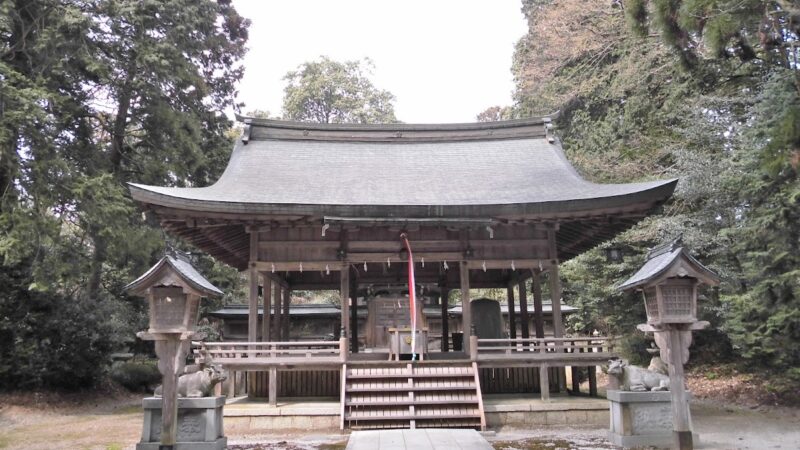
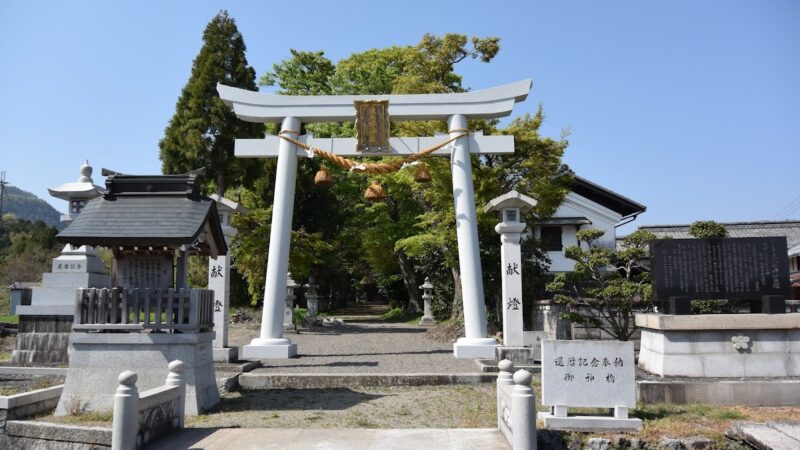
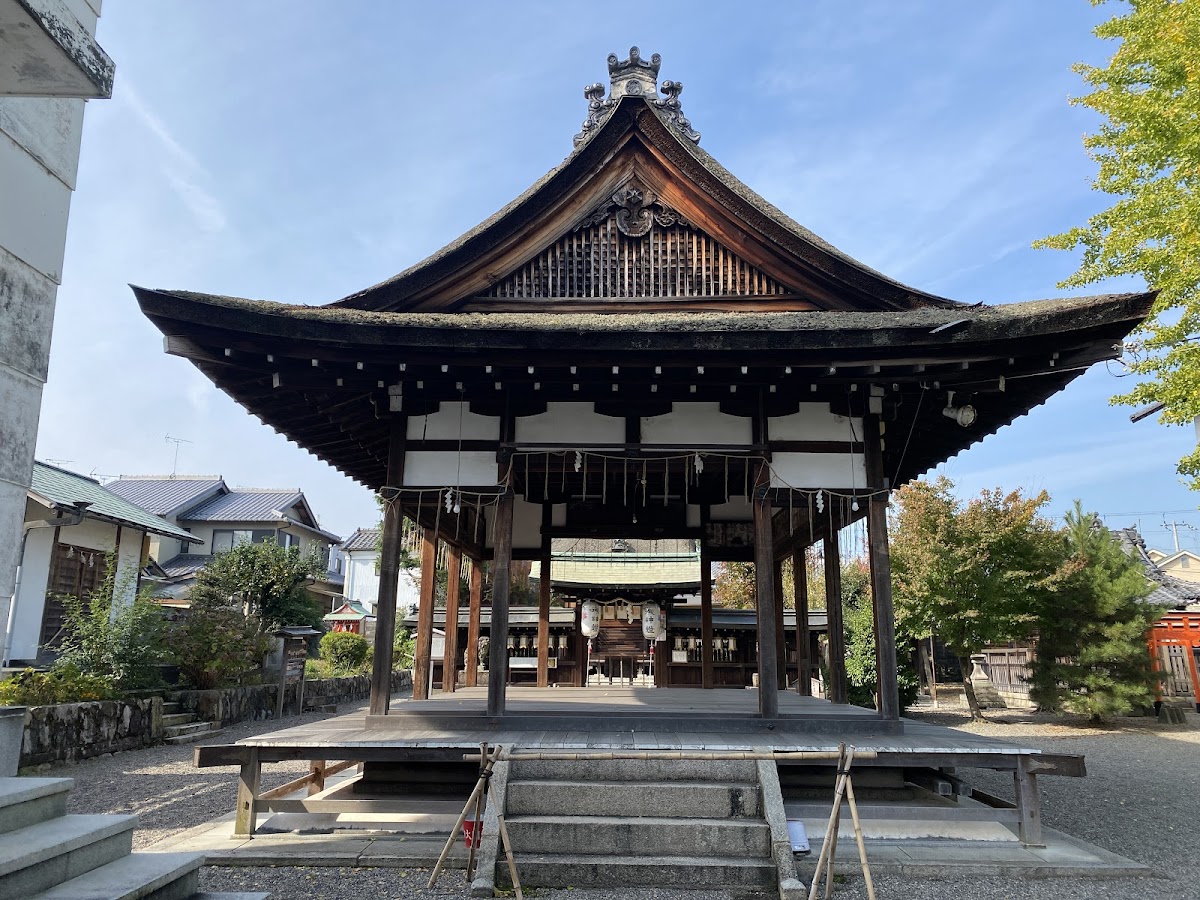
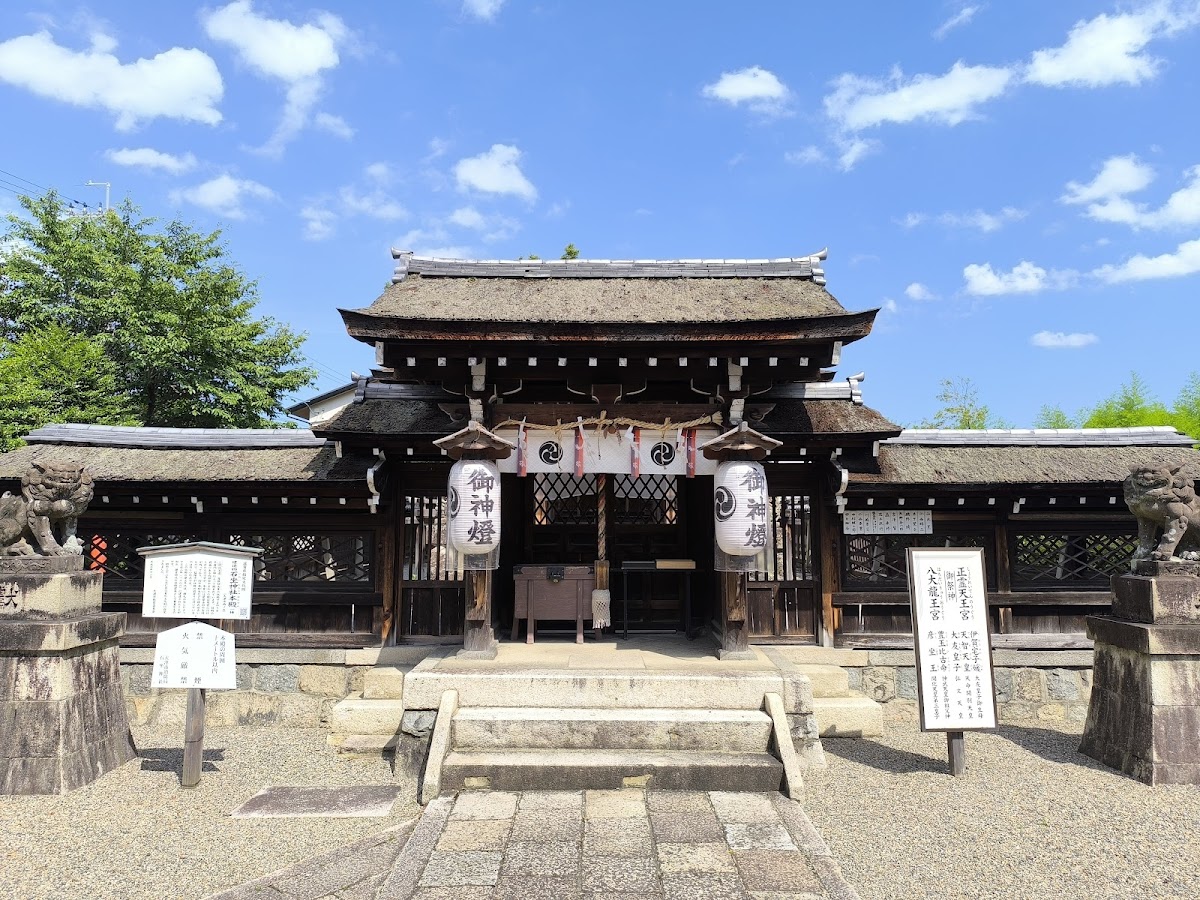
After passing through the torii gate, the worship hall is directly ahead, and beyond that, the main hall, a prefectural designated cultural property, is located. The main shrine is protected by a protective structure, and the curve of its roof still conveys the architectural beauty of the Kamakura period.
Hachidai Ryuo-gu Shrine
Within the shrine grounds is a shrine dedicated to the Eight Great Dragon Kings, indicating its character as a center of water deity worship. Dragon deity worship has long been popular among ordinary people as a way to pray for rain and protection from water disasters.
Benzaiten Shrine and Inari Shrine
Behind the main shrine are subsidiary shrines dedicated to Benzaiten and Inari. Benzaiten is worshipped as the goddess of water and performing arts, while Inari is worshipped as the god of abundant harvests and business prosperity.
Goryoden-yama Mountain and Sacred Mountain Worship
Goryoden-yama Mountain, towering behind Ishiza Shrine, has been revered as a sacred mountain since ancient times. Sacred mountain worship, which considers the mountain itself as a sacred dwelling place of a god, is one of Japan’s earliest forms of belief and is an important element that tells the story of the origins of this shrine.
Chausuyama and the Burial Place of Prince Hikoimasu
According to shrine tradition, Prince Hikoimasu was buried on Chausuyama. This Chausuyama is thought to be part of Goryodenyama, and the possibility of an ancient burial mound existing there has been suggested.
Divine Virtues and Faith of Ishiza Shrine
God of Good Fortune, Longevity, and Protection from Evil
Because it enshrines the Eight Great Dragon Kings, it is believed to possess the divine virtues of good fortune, longevity, and protection from evil. Many worshippers visit at important life milestones and during unlucky years.
Faith as a Water God
Because it enshrines water gods such as Toyotamahiko-no-Mikoto and Watatsumi-no-Kami, it has attracted worshippers seeking rain, protection from water disasters, and blessings for bountiful harvests. Its location near Lake Biwa is also deeply connected to water god worship.
God of National Protection
Since it received an imperial decree in 777 AD designating it a “Shrine for the Protection of the Nation,” it is also revered as a shrine for praying for national peace and security and regional peace.
Shrines Associated with the Imperial Family
Because the shrine enshrines deities connected to the Imperial Family, such as Emperor Tenji, Emperor Kobun, and Prince Hikoimasu, there is also a belief in praying for the safety and security of the Imperial Family.
Annual Events and Festivals
Ishiza Shrine holds various festivals throughout the year.
In spring, the annual festival is held, with local people gathering for a procession of the portable shrine and the dedication of sacred dances. In autumn, the harvest festival features a Shinto ritual to give thanks for a bountiful harvest.
In New Year’s, the shrine is bustling with worshippers for the first shrine visit of the year, who come to pray for good health and safety for their families in the new year. During the Setsubun festival, prayers for warding off evil are offered, attracting many worshippers in their unlucky years.
Access
Access by Train
Keihan Ishiyama-Sakamoto Line: Get off at Nishiki Station, walk north for about 3 minutes.
JR Tokaido Main Line: Get off at Zeze Station, walk east for about 7 minutes.
JR Kosei Line: Get off at Otsukyo Station, walk southeast for about 15 minutes.
The most convenient access is from Nishiki Station on the Keihan Ishiyama-Sakamoto Line. It’s just a few minutes’ walk through the residential area from the station. Using Shiga University Faculty of Education Affiliated Elementary School as a landmark will make it easier to find.
Access by Car
Approximately 500 meters northwest from the west end of Biwako Ohashi Bridge. Approximately 15 minutes from the Meishin Expressway Otsu Interchange. There is parking space on the grounds, but the number of spaces is limited, so using public transportation is recommended.
Nearby Tourist Attractions
Biwako Otsu Prince Hotel
A high-rise hotel located approximately 1 kilometer south of Ishiza Shrine. The view of Lake Biwa is magnificent, making it a popular base for sightseeing.
Omi Jingu Shrine
Omi Jingu Shrine, dedicated to Emperor Tenji, is located approximately 3 kilometers north of Ishiza Shrine. It’s recommended to visit both shrines, as they are associated with Emperor Tenji.
Mii-dera Temple (Onjo-ji Temple)
Mii-dera Temple, the head temple of the Tendai Jimon sect, is located approximately 2 kilometers northeast of Ishiza Shrine. It’s an ancient temple housing numerous national treasures and important cultural properties.
Lake Biwa Canal
Constructed during the Meiji era, the Lake Biwa Canal is highly valued as a modern civil engineering heritage site, and the surrounding area has been developed into a walking path.
Points and Precautions for Visiting
Visiting Hours
While you can generally visit the shrine grounds freely, the shrine office has limited operating hours. If you wish to receive a Goshuin (shrine stamp), it is recommended to check in advance.
Attire and Manners
Please dress appropriately for visiting a shrine. Since the main hall is a cultural property, photography should be limited to permitted areas, and the statues and other artifacts are usually not open to the public.
Located in a Quiet Residential Area
Ishiza Shrine is located in a residential area, so please be considerate of the nearby residents when visiting. Avoid loud conversations and noise.
The Charm of Ishiza Shrine
Ishiza Shrine, though not flashy, is an ancient shrine that quietly tells the story of over a thousand years of history. Possessing valuable cultural assets such as the main hall from the Kamakura period and the statues from the Heian period, its secluded presence in a residential area makes it truly worthy of being called a “hidden gem.”
Ishiza Shrine enshrines deities who tell the history of ancient Omi—Prince Hikoza, Emperor Tenji, and Emperor Kobun—and continues the tradition of water deity worship with the Eight Great Dragon Kings. It is one shrine you should definitely visit when sightseeing around Lake Biwa.
The land of Seta, where the Omi provincial government was located, and the land of Otsu, where Emperor Tenji established his capital. Ishiza Shrine, nestled in this historically rich land, is a precious place where you can experience the continuous history and faith of Japan from ancient times.
Summary
Ishiza Shrine is a Shikinaisha (a shrine listed in the Engishiki, an ancient Japanese legal text) located in Otsu City, Shiga Prefecture. It is a historical shrine dedicated to Prince Hikoimasu, Emperor Tenji, and Emperor Kobun. The main hall from the Kamakura period is a prefectural designated cultural property, and the four divine statues from the Heian and Kamakura periods are designated as national important cultural properties.
Also known as Hachidai Ryuo-gu, it is considered a sacred site of water deity worship, offering divine blessings for good fortune, longevity, and protection from evil. Despite its convenient location just a 3-minute walk from Keihan Nishiki Station, it is situated in a quiet residential area, allowing for a peaceful and tranquil visit.
The ancient history of Omi, the era of Emperor Tenji, the tragedy of the Jinshin War, and ancient Japanese forms of worship such as sacred mountain worship and water deity worship—all these experiences are deeply intertwined. Ishiza Shrine, where all of these elements are condensed, is a shrine you should definitely visit when you come to Shiga Prefecture.