Complete Guide to Ikuwa Shrine (Yasu City, Shiga Prefecture) | The Important Cultural Property Main Hall and the Legend of Fujiwara Tadashige
Ikuwa Shrine, located in Tominami-Otsu, Yasu City, Shiga Prefecture, is a historical shrine dedicated to Fujiwara Tadashige, a feudal lord from the mid-Heian period. It boasts a main hall designated as an Important Cultural Property and is known as a valuable cultural heritage site protected by the local community. This article provides a detailed introduction to Ikuwa Shrine, including its history, cultural properties, visiting information, and access methods.
History and Origins of Ikuwa Shrine
Background of its Founding and Fujiwara Tadashige
Ikuwa Shrine’s founding dates back to the mid-Heian period. The main deity, Fujiwara Tadashige, the lord of Tominami-no-sho, ruled the region. Fujiwara Tadashige dedicated himself to the development of the area and was deeply respected by the residents.
After Lord Tadashige’s death, the local residents, who admired his virtues, enshrined him as a god, which is considered the origin of Seiwa Shrine. The current shrine building is believed to have been constructed during the Muromachi period, and it has been preserved as a center of local faith throughout its long history.
The Legend of the Serpent’s Slaying
The most famous legend associated with Seiwa Shrine is the story of Lord Fujiwara Tadashige’s slaying of the serpent. In the mid-Heian period, a giant serpent inhabited Ichinosawa in Tominami, tormenting the villagers. Lord Tadashige, the local lord, rose to the occasion to save the residents who were terrified of the serpent, which ravaged their fields and attacked their livestock.
Lord Tadashige bravely confronted the serpent and successfully slayed it. This heroic act saved the residents from their plight and allowed them to regain their peaceful lives. This legend is one of the main reasons why Lord Tadashige is enshrined as a god, and it is still passed down in the region today.
About the Deities Enshrined
In addition to the principal deity, Fujiwara Tadashige, the following deities are enshrined at Seiwa Shrine:
- Amaterasu Omikami: The supreme deity in Japanese mythology
- Takemikazuchi no Kami: God of thunder and military power
- Futsunushi no Kami: God of war and swords
- Himegami: A general term for goddesses
By enshrining these deities together, Seiwa Shrine has played the role of a comprehensive guardian deity of the region.
Important Cultural Property Buildings
Main Hall (Nationally Designated Important Cultural Property)
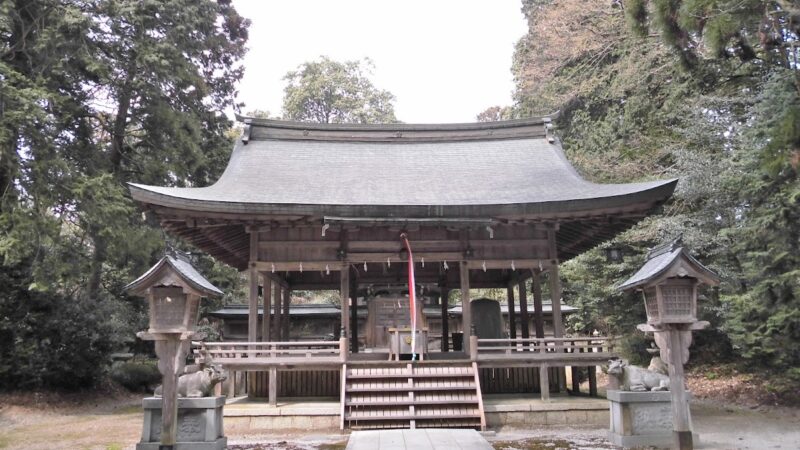
The greatest highlight of Seiwa Shrine is the main hall, which is designated as a nationally important cultural property. Built during the Nanboku-cho period (14th century), this main hall employs the Ikkensha Nagare-zukuri architectural style.
Architectural Features:
- Style: One-bay Nagare-zukuri style
- Roof: Cypress bark roofing
- Period: Nanboku-cho period (mid-14th century)
- Characteristics: Characterized by its elegantly curved roof and intricate wooden joinery.
Cypress bark roofing is a traditional roofing method using layers of cypress bark, and is considered the most prestigious roofing method in shrine architecture. Over time, it develops a unique patina, creating a beautiful landscape that harmonizes with the surrounding natural environment.
The one-bay Nagare-zukuri style features a single bay (approximately 1.8 meters) between the pillars at the front, and a long, extended “kohai” (front porch). This style is representative of medieval shrine architecture, and the main hall of Seiwa Shrine is highly valued as an excellent example of this style.
Kasuga Shrine Main Hall (National Important Cultural Property)
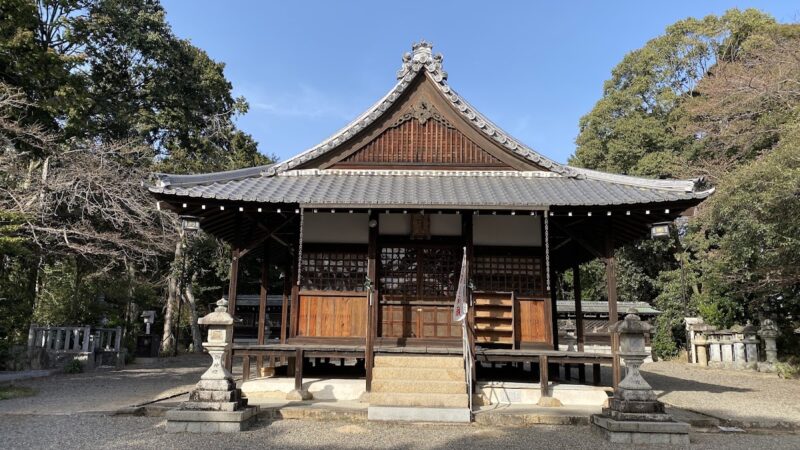
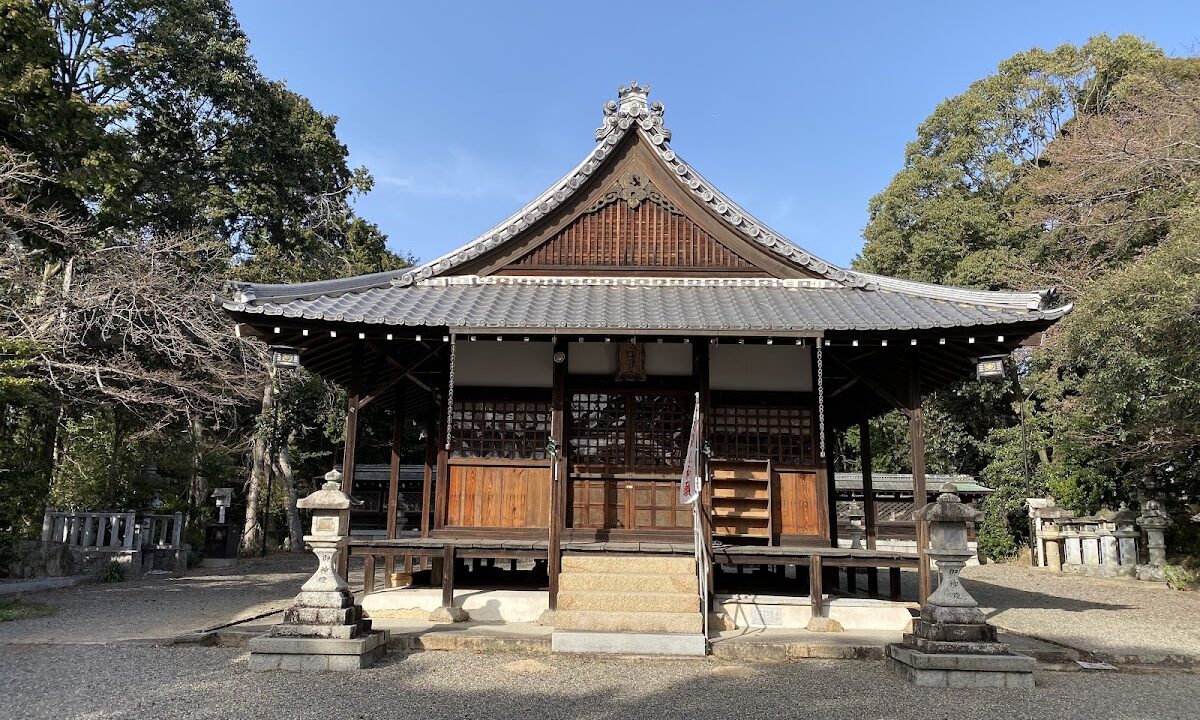
Within the grounds of Seiwa Shrine lies another Important Cultural Property: the Kasuga Shrine Main Hall. This hall is believed to have been built in the late Kamakura period (late 13th to early 14th century), and its architectural style is slightly older than that of the main hall.
Characteristics of the Kasuga Shrine Main Hall:
- Construction Period: Late Kamakura period
- Style: Structure influenced by Kasuga-zukuri architecture
- Value: Well-preserved characteristics of Kamakura period shrine architecture
Although small in scale, the detailed decorations and wooden joinery showcase Kamakura period techniques, making it a valuable historical document for architecture. Shrines possessing two Important Cultural Properties, including the main hall, are rare in Shiga Prefecture, demonstrating the high cultural value of Seiwa Shrine.
Preservation Status of Cultural Properties
Both buildings are well-preserved thanks to the efforts of local residents and parishioners. Regular re-roofing of the cypress bark and inspection and repair of the structural materials are carried out, ensuring that this building, with its centuries-old history, is preserved to the present day.
Highlights of the Shrine Grounds
Atmosphere of the Shrine Grounds
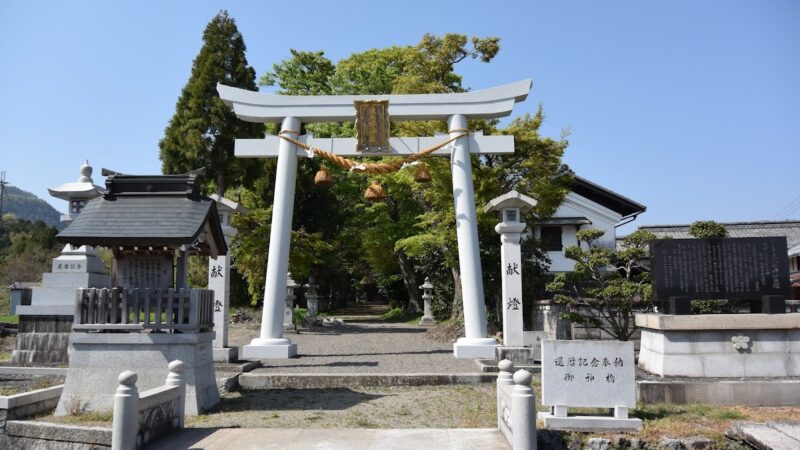
The grounds of Seiwa Shrine are located in a quiet rural area, possessing a solemn atmosphere surrounded by ancient trees. Passing through the torii gate, a gravel-covered path leads to the main shrine. Surrounded by fields and farmlands, its presence in the tranquil rural landscape evokes a sense of quintessential Japanese scenery for visitors.
Shrine Building Layout
In addition to the main shrine, the grounds include a worship hall, a subsidiary Kasuga Shrine, and a purification fountain. While not large in scale, the orderly layout and well-maintained grounds speak to the deep faith of the local people.
Seasonal Scenery
- Spring: Cherry blossoms bloom in the shrine grounds and surrounding area, creating a vibrant atmosphere.
- Summer: Lush green trees provide cool shade.
- Autumn: Autumn leaves adorn the shrine grounds, creating a beautiful contrast with the cypress bark roof.
- Winter: Enveloped in silence, the shrine exudes a dignified atmosphere, allowing visitors to feel its history.
Visiting Information
Basic Information
- Location: 631-1 Tominami Otsu, Yasu City, Shiga Prefecture
- Phone Number: No information available (managed by local parishioners)
- Visiting Hours: Grounds are open (visiting is possible at any time)
- Admission Fee: Free
- Parking: Small visitor parking space available (a few cars)
About Goshuin (Shrine Seals)
Ikuwa Shrine does not have a permanent shrine office or priests, therefore Goshuin are not issued. While this shrine holds significant cultural value, it is a small, local shrine maintained by its parishioners, making it unsuitable for those seeking to collect Goshuin (shrine stamps).
However, it offers a rare opportunity to view important cultural properties up close, making it a highly valuable destination for those interested in architecture and history.
Festivals and Events
At Seiwa Shrine, festivals are held throughout the year by the local parishioners. While the exact dates may vary from year to year, the Autumn Grand Festival, among others, is a significant local event that continues to be celebrated.
Access Methods
Access by Train
Nearest Station: JR Biwako Line “Yasu Station”
- Walking from Yasu Station: Approximately 30 minutes (approx. 2.5 km)
- Taxi from Yasu Station: Approximately 10 minutes
- Bus from Yasu Station: Omi Railway bus available (a few minutes’ walk from the nearest bus stop)
Yasu Station is relatively easily accessible, located approximately 30 minutes from Kyoto Station by rapid train and approximately 1 hour from Osaka Station. However, since the shrine is some distance from the station, it is recommended to allow ample time if walking.
Access by Car
If using the expressway:
- Approximately 20 minutes from the Meishin Expressway “Ritto IC”
- Approximately 25 minutes from the Meishin Expressway “Ryuo IC”
Car Navigation Settings:
- Address: 631-1 Tominami Otsu, Yasu City, Shiga Prefecture
- Facility Name: Seiwa Shrine
The parking lot is small, but it can be used without problems on weekdays and during normal times. However, it may be crowded during festivals.
Combining with Nearby Tourist Attractions
When visiting Seiwa Shrine, combining it with other tourist attractions in Yasu City and the surrounding area will make for a more fulfilling trip.
Within Yasu City:
- Bronze Bell Museum (Yasu City Historical and Folk Museum): Approximately 10 minutes by car
- Hyozu Taisha Shrine: Approximately 15 minutes by car
Nearby Cities and Towns:
- Moriyama City: Sagawa Art Museum, etc. (Approximately 20 minutes by car)
- Omihachiman City: Hachimanbori Canal, Omi Merchant Townscape (Approximately 25 minutes by car)
Cultural Value of Seiwa Shrine
Importance in Architectural History
The main hall of Seiwa Shrine and the main hall of its subsidiary shrine, Kasuga Shrine, are valuable historical remains that convey shrine architecture from different periods, the Nanboku-cho period and the late Kamakura period, respectively. In particular, the one-bay nagare-zukuri style main hall is an important document that shows the level of technology and aesthetic sense of shrine architecture in the medieval period.
The technique of cypress bark roofing is also a traditional craft that is now inherited by only a limited number of craftsmen, and its maintenance requires advanced skills and considerable effort. The excellent condition in which the buildings of Seiwa Shrine are preserved demonstrates the high level of awareness in the region regarding the preservation of cultural properties.
Significance in Local History
Sewa Shrine is also an important historical site that conveys the history of the Tominami-sho, a local community under the manorial system. It provides clues to understanding the state of regional governance from the Heian period to the Muromachi period, the relationship between the lord and the residents, and the forms of faith.
The process by which Fujiwara Tadashige, a real historical figure, was deified is an interesting example that illustrates the characteristics of Japanese folk beliefs. The legend of slaying the giant serpent is also thought to be a mythologization of the lord’s actual achievements, such as flood control and land development, and has value from a folkloric perspective.
Points to Note and Manners When Visiting
Visiting Manners
Sewa Shrine is a shrine cherished by the local people as the guardian deity of the region. Please pay attention to the following points when visiting.
- Please worship in silence: Due to its location near a residential area, please refrain from speaking loudly.
- Photography: Photography of the main hall and other areas is permitted, but please avoid using flash and take pictures with moderation from the perspective of cultural property preservation.
- Maintain cleanliness of the grounds: Please be sure to take your trash with you.
- Illegible land: The area surrounding the temple grounds consists of fields and private land. Please be careful not to trespass.
Points to note when visiting
When visiting important cultural property buildings, paying attention to the following points will help you understand them more deeply.
- Roof Curves: The elegant curves of cypress bark roofing
- Woodworking Techniques: Traditional construction techniques that do not use nails
- Sculptures and Decorations: Design details
- Aging Process: The texture of wood and cypress bark that has aged for hundreds of years
Shiga Prefecture’s Shrine Culture and Seiwa Shrine
Characteristics of Shrines in Shiga Prefecture
Shiga Prefecture, home to Lake Biwa, Japan’s largest lake, has flourished as a transportation hub since ancient times. Therefore, many historically significant shrines exist within the prefecture.
- Hiyoshi Taisha (Otsu City): The head shrine of all Hiyoshi, Hie, and Sanno shrines nationwide.
- Taga Taisha (Taga Town): An ancient shrine affectionately known as “O-Taga-san.”
- Takebe Taisha (Otsu City): The Ichinomiya (first-ranked shrine) of Omi Province.
- Shirahige Shrine (Takashima City): Famous for its torii gate floating on Lake Biwa.
Compared to these grand shrines, Seiwa Shrine, though smaller in scale, possesses unique value as a precious shrine with important cultural properties.
Community-Based Faith
The defining characteristic of Seiwa Shrine is that it is not a large-scale tourist shrine, but rather retains a strong character as a community-based tutelary shrine. While lacking in splendor and bustle, it quietly continues to be protected as an object of daily faith for the local people.
Such small shrines form the foundation of Japanese Shinto culture and are important for understanding the relationship between local communities and faith.
Historical Background of the Surrounding Area
History of Tominami Manor
The area of Tominami (Tominami), where Seiwa Shrine is located, was a manor called Tominami Manor during the Heian period. A manor was private land owned by nobles or temples and shrines, and it had its own system of governance.
Fujiwara Tadashige, as the lord of Tominami Manor, dedicated himself to agricultural development, flood control, and the protection of the residents. Manor lords at that time were not merely landowners, but also entities responsible for regional administration, justice, and military affairs, and were important figures who guaranteed the safety and stability of the residents’ lives.
History of Yasu City
Yasu City has developed as a transportation hub since ancient times. The Tokaido road passed through it, making it an important point connecting Kyoto and the eastern provinces. It is also known for the excavation of bronze bells (dotaku), and is a historical land where people have lived since the Yayoi period.
In the Middle Ages, local shrines like Seiwa Shrine functioned as the spiritual center of village communities. Even today, Yasushi City retains numerous historical shrines and temples, preserving the region’s history and culture.
Summary
Ikuwa Shrine, located in Yasushi City, Shiga Prefecture, is a historical shrine with noteworthy value in the following respects:
- Important Cultural Property: Possesses two Important Cultural Properties: the main hall from the Nanboku-cho period and the main hall of the subsidiary Kasuga Shrine from the late Kamakura period.
- Historical Background: Dedicated to Fujiwara Tadashige, a feudal lord of the Heian period, and tells the legend of his slaying of a giant serpent.
- Architectural Value: An excellent example of medieval shrine architecture, a one-bay nagare-zukuri style building with a cypress bark roof.
- Regional Culture: Still protected by local people as the guardian deity of the region.
While not a large-scale tourist shrine, it is a valuable spot where you can quietly appreciate Japanese shrine culture and medieval architecture. It is relatively easy to access from Yasushi Station, making it a worthwhile shrine to visit as part of a historical exploration of Shiga Prefecture.
The opportunity to view Important Cultural Property buildings up close is invaluable. When you visit Shiga Prefecture, be sure to stop by Seiwa Shrine and experience its centuries-old architectural beauty and the legends passed down in the region. In its tranquil grounds, you’re sure to feel the depth of Japanese history and culture.