Hinade Shrine (Maibara City, Shiga Prefecture) Complete Guide | History, Goshuin (Shrine Seals), and Sumo Dance Highlights
Hinade Shrine, located in Kando, Maibara City, Shiga Prefecture, is a historic shrine listed in the Engishiki Jinmyocho (a list of shrines compiled in the Heian period). It has a legend associated with Empress Jingu, and the sumo wrestling and sumo dance performances held annually in autumn are designated as intangible folk cultural properties of Shiga Prefecture. This article provides detailed information you should know before visiting Hinade Shrine, including its history, enshrined deities, highlights of the grounds, access methods, and goshuin information.
History and Origins of Hinade Shrine
Origin of Founding and the Legend of Empress Jingu
The exact founding date of Hinade Shrine is unclear, but according to shrine tradition, it began as a ceremony to celebrate the victory of Empress Jingu (Okinagatarashihime). This area is said to be the birthplace of Empress Jingu’s ancestors, and the shrine is believed to have been founded to commemorate the success of the conquest of the Three Kingdoms of Korea.
According to the *Shinsen Shōjiroku* (New Compilation of Family Names), the Yamada no Miyatsuko and Hinade no Atai clans, who were descendants of Achi no Omi, the fourth-generation descendant of Emperor Ling of the Later Han Dynasty, resided in this region. One theory suggests that the Hinade Shrine originated from their worship of their ancestral deity. The *Jingi Shiryō* and *Jinja Kakuroku* also mention “the enshrined deity is the ancestral god of the Hinade no Atai,” indicating a deep connection with immigrant clans.
Status as an Engishiki Shrine
Hinade Shrine is one of the five Myōjin Shōsha (minor shrines) in Sakata District listed in the *Engishiki Jinmyōchō* (Register of Shrines in the Engi Era), and was a highly prestigious shrine recognized by the imperial court since ancient times. As a “Myōjin Shōsha,” second only to Myōjin Taisha (major shrines), it played an important role as a center of regional faith.
Decline and Reconstruction Due to War
During the Tenbun, Koji, Eiroku, and Tensho eras, numerous shrine buildings, treasures, and records were destroyed by repeated warfare, and the shrine gradually declined. It is regrettable that many valuable cultural assets were lost amidst the chaos of the Sengoku period.
However, the shrine buildings were later rebuilt through the faith of local residents, and during the Edo period, it was worshipped as Hinade Daimyojin, a syncretic Shinto-Buddhist deity. With the separation of Shinto and Buddhism decree issued at the beginning of the Meiji era, the Buddhist elements were abolished, and the shrine was renamed to its current name, “Hinade Shrine.”
Deities and Divine Virtues
There are various theories regarding the deities enshrined at Hinade Shrine, but it is generally believed that the following gods are worshipped.
- Empress Jingu (Okinagatarashihime no Mikoto): An ancient empress known for her conquest of the Three Kingdoms of Korea
- Hinade no Naozono Kami: The ancestral deity of the clans residing in the region
Empress Jingu is known as the goddess of martial prowess and safe childbirth, and at Hinade Shrine, she is especially believed to bestow the following divine blessings:
- Long-lasting military fortune
- Improved luck in competitions
- Prayers for safe childbirth
- Protection from evil
- Family safety
Hinade Shrine Grounds and Highlights
First Torii Gate and Approach
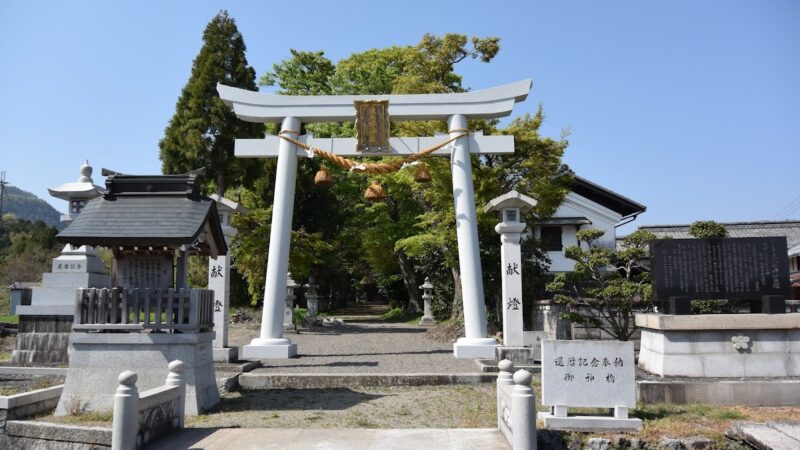
The first torii gate of Hinade Shrine stands on a road within the Kando settlement. It features a unique landscape where the settlement’s road and the sacred area are integrated, allowing one to feel the history of faith rooted in the region. Passing through the torii gate, the approach extends to the foot of Mount Hinade.
Main Hall and Worship Hall
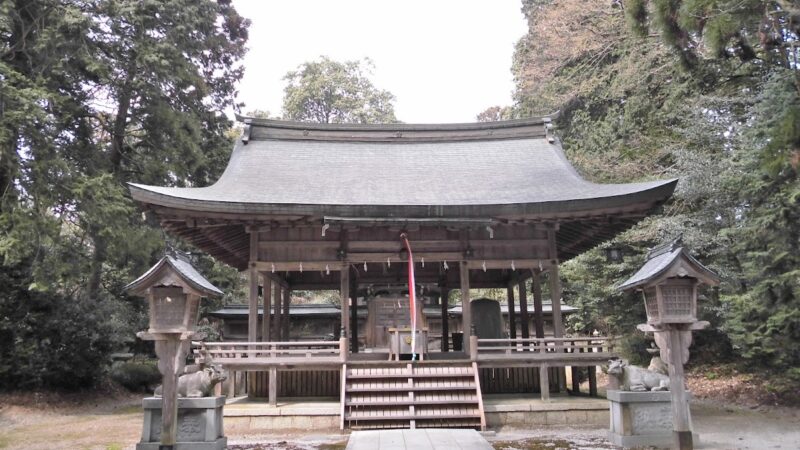
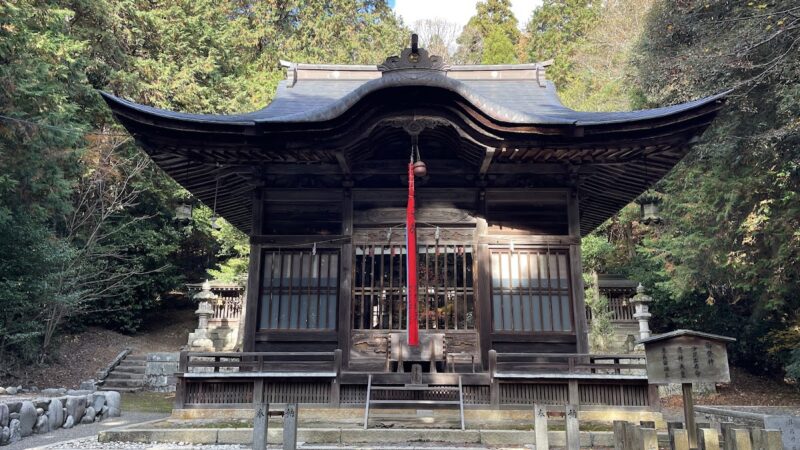
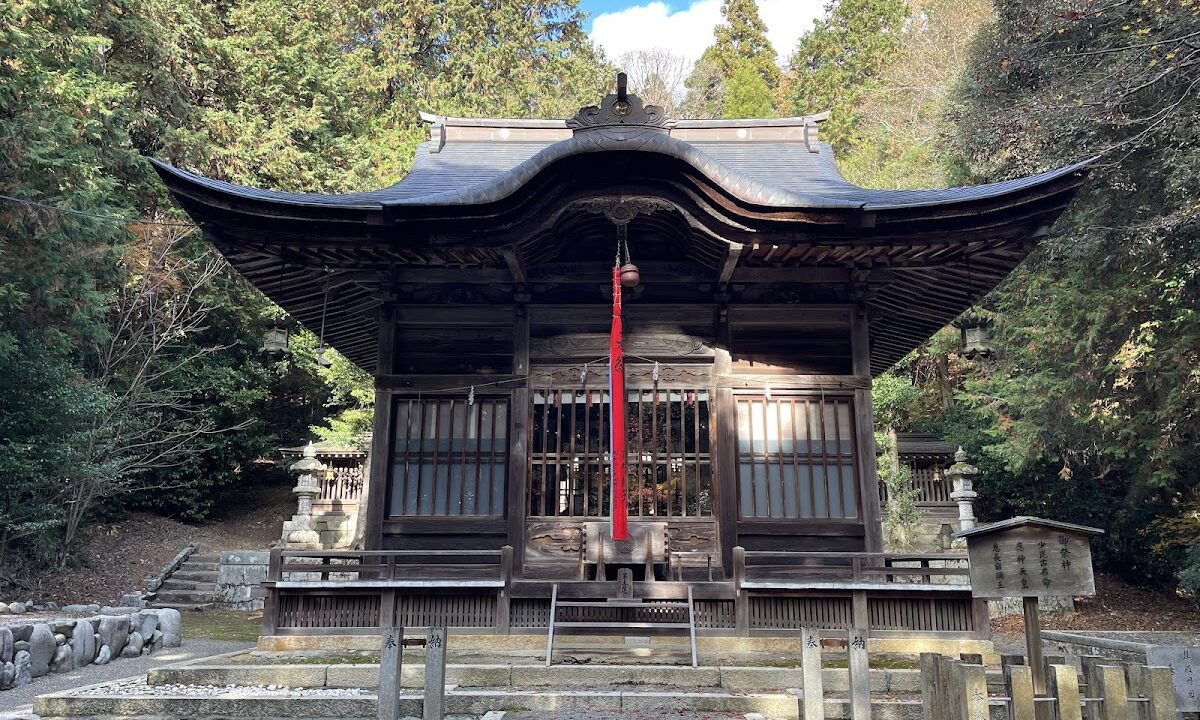
The current shrine buildings were rebuilt after the Edo period and maintain the style of traditional shrine architecture. The shrine grounds are situated at the foot of Mt. Hinade, enveloped in a quiet and solemn atmosphere.
Shrine Treasures and Cultural Properties
Although many shrine treasures were lost in war, the following valuable cultural properties remain:
Gejōfuda (Dismounting Sign)
The Gejōfuda, said to be associated with Emperor Go-Toba, is an important historical document indicating the shrine’s status. A Gejōfuda was a sign ordering people to dismount from their horses or palanquins before entering the sacred area, symbolizing the shrine’s authority.
Dedicatory Sumo and Sumo Dance
The main highlight of Hinade Shrine is the “Dedicatory Sumo” and “Sumo Dance” held annually during the autumn festival.
Dedicatory Sumo (Ancient Sumo)
At the autumn festival, held annually on the second Monday of October (Health and Sports Day), traditional ancient sumo is dedicated. This votive sumo wrestling has a long history and has been passed down as an important annual event in the region.
The Shinto ritual is performed in the morning, and the votive sumo wrestling begins in the afternoon. Children and young people from the region become sumo wrestlers, competing in front of the shrine. It is not merely a sport, but also a Shinto ritual praying for a bountiful harvest and peace in the region.
Sumo Dance (Prefectural Designated Intangible Folk Cultural Property)
The “Sumo Dance,” performed alongside the votive sumo wrestling, is a valuable folk performing art designated as an intangible folk cultural property of Shiga Prefecture. It is a unique dance incorporating sumo movements, characterized by a magnificent performance mimicking the movements of sumo wrestlers.
This Sumo Dance is attracting attention as a rare folk performing art nationwide and symbolizes the cultural identity of the region. A preservation society continues its transmission activities, ensuring its continuation to future generations.
Goshuin Information
Goshuin (shrine stamps) can be obtained at Hinade Shrine.
- Reception Location: Shrine Office (may be unattended)
- Reception Hours: During visiting hours
- Offering Fee: Usually around 300-500 yen
- Inquiries: 0749-52-1792
*Regarding the issuance of Goshuin (shrine stamps), it is recommended to confirm by phone in advance. Please note that we may not be able to assist you if the chief priest is absent.
Access, Parking, and Basic Information
Location
Address: 77 Kaido, Maibara City, Shiga Prefecture
Access by Public Transportation
Using Trains and Rental Bicycles
- Get off at Sakata Station on the JR Hokuriku Main Line
- Approximately 10 minutes by rental bicycle from the station
- Approximately 20-25 minutes on foot
Rental bicycle services are available around Sakata Station, making it convenient to visit by bicycle. You can enjoy the peaceful rural scenery on your way to the shrine.
Access by Car
Using the Expressway
- Approximately 10 minutes by car from the Maibara Junction on the Hokuriku Expressway
- Approximately 10 minutes by car from the Maibara Interchange on the Meishin Expressway
Setting your car navigation system
Please search using the address “77 Kaido, Maibara City, Shiga Prefecture” or the phone number “0749-52-1792”.
Parking
- Number of spaces: Approximately 3 standard-sized cars
- Fee: Free
- Notes: Due to limited parking space, congestion is expected during events such as the Autumn Festival. Please consider using public transportation.
Visiting Hours
- Grounds Free to Use: Open 24 hours for worship
- Shrine Office: Irregular hours (advance contact recommended)
Inquiries
- Phone Number: 0749-52-1792
- Jurisdiction: Information also available from the Maibara City Tourism Association, etc.
Recommended Tourist Spots Around Hinade Shrine
When visiting Hinade Shrine, exploring the surrounding tourist spots will allow you to experience the charm of Maibara City more deeply.
Mount Ibuki
Mount Ibuki, one of Japan’s 100 Famous Mountains, is a representative tourist spot of Maibara City. From its 1,377-meter-high summit, you can enjoy a panoramic view of Lake Biwa and the surrounding mountains, and it is especially known for its beautiful alpine plants in summer. You can access the area near the summit by car using the Ibuki Mountain Driveway.
Samegai-shuku
Samegai-shuku, which flourished as a post town on the Nakasendo road, is a charming area that retains its historical townscape. The Jizo River flows with clear water, and in summer, you can enjoy the beautiful scenery of white water crowfoot flowers blooming in the water. It’s about a 15-minute drive from Hinade Shrine.
Kashiwabara-juku
Kashiwabara-juku, another post town on the Nakasendo road, is also a must-see. Known as a production area for Ibuki moxa, it features a historical museum and old townhouses.
Around Maibara Station
JR Maibara Station is a transportation hub where the Shinkansen and conventional lines intersect. Around the station, you can find restaurants and souvenir shops where you can enjoy Shiga’s local cuisine, such as Omi beef and funazushi (fermented crucian carp sushi).
Points and Manners for Visiting Hinade Shrine
Etiquette for Visiting Shrine
When visiting Hinade Shrine, please observe the following basic etiquette.
- Bow before passing through the torii gate: This is a courtesy before entering the sacred area.
- Avoid walking in the center of the path: The center is considered the path of the gods.
- Purify your body and mind at the water basin: Purify your left hand, right hand, and mouth in that order.
- Worship in front of the main hall: Two bows, two claps, and one bow is the basic form.
- Bow upon leaving: Turn around and bow when leaving the torii gate.
Photography Etiquette
Photography is generally permitted on the shrine grounds, but please note the following:
- Refrain from taking photos inside the main hall.
- Refrain from taking photos during Shinto rituals, or obtain permission.
- Be considerate of other worshippers.
- Be mindful of location information and personal information when posting on social media.
Attire
Casual attire is acceptable for worship, but avoid extremely revealing or overly flashy clothing. Especially if receiving prayers, somewhat formal attire is preferable.
Clothing ## Annual Events and Festivals
Hinade Shrine holds various festivals throughout the year.
Autumn Festival (Second Monday of October)
This is the most important festival, featuring sumo wrestling and sumo dance performances. Shinto rituals are held in the morning, followed by sumo wrestling and sumo dance performances in the afternoon. It’s a lively festival with participation from the local community, attracting many spectators.
Other Annual Events
- New Year’s Day Festival: January 1st
- Spring Festival: Spring
- Summer Purification Ceremony: Around June 30th
- Year-End Purification Ceremony: December 31st
Specific dates may vary from year to year, so it is recommended to check before visiting.
To Enjoy the Charms of Hinade Shrine to the Fullest
Recommended Time to Visit
Autumn (October)
October, when the Autumn Festival is held, is the most recommended time to visit. This is an excellent opportunity to witness the precious folk arts of sumo wrestling and sumo dance. However, crowds are expected during this time, so please try to arrive early.
Spring/Early Summer
This is a beautiful season with fresh greenery, allowing for a peaceful visit to the shrine grounds. The surrounding nature is also beautiful, making it ideal for a stroll.
Winter
The shrine amidst a snowy landscape has a unique charm. However, caution is needed when walking in heavy snow.
Estimated Time Required
- Visiting the Shrine Only: 20-30 minutes
- A Relaxing Stroll Through the Grounds: 40-60 minutes
- Watching the Autumn Festival: 2-3 hours
- Including Surrounding Sightseeing: Half a Day to a Full Day
Useful Items to Bring
- Goshuincho (Shrine Stamp Book): For receiving shrine stamps
- Camera: For documenting the scenery and architecture of the shrine grounds
- Drinks: Especially in summer, to prevent heatstroke
- Comfortable Walking Shoes: For exploring the shrine grounds and surrounding area
- Rain Gear: For unpredictable weather
Community Involvement and Preservation Activities
Hinade Shrine is not merely a tourist spot; it continues to play an important role as the center of faith for local residents, including those in the Kando district.
Core of the Community
The shrine serves as a place to deepen bonds among residents through local festivals and events. The autumn festival, in particular, functions as an opportunity for intergenerational exchange and plays an important role in passing on the region’s traditional culture to the next generation. ### Activities of the Sumo Dance Preservation Society
To pass on the Sumo Dance, a prefecturally designated intangible folk cultural property, to future generations, a preservation society has been organized by local residents. Through regular practice sessions and instruction for younger generations, they are working to preserve this valuable folk art.
Cultural Property Protection in Maibara City
The Maibara City Board of Education and the department in charge of cultural properties also recognize the cultural value of Hinade Shrine and are providing support for its preservation and utilization. Local residents and the administration are cooperating to maintain the shrine and protect its cultural properties.
Summary: The Charm of Hinade Shrine
Hinade Shrine is a representative shrine of Maibara City, Shiga Prefecture, possessing the status of an Engishiki-listed shrine, a historical background of the Empress Jingu legend, and the cultural value of the Sumo Dance, a prefecturally designated intangible folk cultural property.
The shrine grounds, nestled quietly on the mountainside, are an ideal place to escape the hustle and bustle of modern life and find peace of mind. Especially during the autumn festival season, you can truly feel the vibrant spirit of the region’s deeply rooted traditional culture.
When visiting Maibara City, be sure to stop by Hinade Shrine and experience its ancient history of faith and the culture that has been carefully preserved by the local people. Combining a visit to Hinade Shrine with a trip to Mount Ibuki and the post towns along the Nakasendo road will make for a more fulfilling trip to Shiga Prefecture.
Hinade Shrine is a place worth visiting for a variety of people, including history buffs, those who enjoy visiting shrines and temples, those interested in folk performing arts, and those seeking a peaceful place to recharge. Take your time to pray, feeling the warm faith of the local people and the weight of its long history.