Complete Guide to Saikyoji Temple | History, Highlights, and Visiting Information for the Head Temple of the Tendai Shinsei Sect
Located in Sakamoto, Otsu City, Shiga Prefecture, Saikyoji Temple is the head temple of the Tendai Shinsei sect, which has over 400 branch temples throughout Japan. This ancient temple, nestled in a quiet mountain valley at the eastern foot of Mount Hiei, is said to have been founded by Prince Shotoku and is also known as the family temple of the Sengoku period warlord, Akechi Mitsuhide. This article thoroughly explains everything you need to know before visiting Saikyoji Temple, from its rich history to its highlights and visiting information.
What is Saikyoji Temple? – An Overview of the Head Temple of the Tendai Shinsei Sect
Saikyoji Temple is officially called “Kenhossho Saikyoji,” and its mountain name is Kaikozan. Located at the foot of Yokawa, one of the three towers of Mount Hiei, Saikyo-ji Temple boasts a superb location offering panoramic views of Lake Biwa.
The Tendai Shinsei sect is a branch of the Tendai sect, founded by the Muromachi period monk Shinsei Shonin. While Saikyo-ji is an important center of Tendai Buddhism alongside Enryaku-ji and Onjo-ji (Mii-dera), and may not be as well-known as those two temples, its historical value and rich cultural assets are in no way inferior.
The principal image is Amida Buddha, and the sounds of chanting and gongs resonate throughout the temple grounds, creating a profound and tranquil atmosphere. This tradition of continuous chanting is a symbolic feature of Saikyo-ji, continuing for over 500 years since the time of Shinsei Shonin.
The History of Saikyoji Temple – From its Founding to the Present
Legend of Founding by Prince Shotoku
Regarding the founding of Saikyoji Temple, there is a legend that Prince Shotoku (574-622) built it for his teachers, the high-ranking Korean monks Eji and Eso. Prince Shotoku is known for his dedication to the flourishing of Buddhism and is said to have founded temples throughout Japan; Saikyoji Temple is considered one of them.
Later, it is said that Emperor Tenji (626-671) bestowed an imperial decree upon Saikyoji Temple, and it developed into a temple with deep ties to the imperial court.
Development in the Heian Period – Ryōgen and Genshin
In the mid-Heian period, Ryōgen (913-985), known as the restorer of Enryaku-ji Temple, built a hermitage at Saikyō-ji Temple. Following this, Eshin Sōzu Genshin (942-1017) of Yokokawa further developed it as a training hall. Genshin, as the author of the *Ōjō Yōshū* (Essentials of Rebirth), made significant contributions to the development of Pure Land Buddhism, and it was during this period that Saikyō-ji Temple acquired its character as a Pure Land Buddhist training hall.
A Period of Ruin and Decline
From the Kamakura period to the Muromachi period, Saikyō-ji Temple experienced a long period of ruin. During the Shōchū era (1324-1326), there were attempts at restoration by monks such as Echin and Enkan, but a full-scale restoration was not achieved. In this era of war and turmoil, many temples suffered a similar fate.
Restoration by Shinsei Shonin and the Establishment of the Tendai Shinsei Sect
The most important turning point in the history of Saikyoji Temple was the arrival of Shinsei Shonin (1443-1493) in 1486. After 20 years of rigorous training at Enryakuji Temple, Shinsei entered the dilapidated Saikyoji Temple and rebuilt its buildings and teachings.
In the religious world, which was undergoing a major transformation reflecting the turbulent times, Shinsei Shonin preached a unique doctrine emphasizing strict adherence to precepts and continuous recitation of the Buddha’s name. He particularly emphasized “precepts,” “recitation of the Buddha’s name,” and “transfer of merit,” teaching that both monks and lay believers should equally observe the precepts and recite the Buddha’s name.
In 1493, during the Tokusei Uprising, warrior monks from Enryakuji Temple attacked the temple grounds, but the legend of the “white monkey acting as a substitute” remains. An anecdote tells of a monkey with white paws continuously striking a gong in the main hall. The warrior monks, mistaking it for someone chanting Buddhist prayers, hesitated to attack. This monkey is believed to have acted as a substitute for the monk Shinsei, and the story is passed down as one of the seven mysteries of Saikyo-ji Temple.
After Shinsei’s death, his teachings spread throughout Japan by his disciples, forming the Tendai Shinsei sect. Currently, Saikyo-ji Temple, as the head temple with over 400 branch temples nationwide, continues to uphold its religious traditions.
Akechi Mitsuhide and Saikyo-ji Temple
Saikyo-ji Temple’s current widespread recognition as “Akechi Mitsuhide’s family temple” is deeply intertwined with the history of the Sengoku period (Warring States period). Mitsuhide ruled the Sakamoto area as the lord of Sakamoto Castle and made a significant contribution to the temple’s restoration.
During the burning of Mount Hiei in 1571, Saikyo-ji Temple was also caught in the flames, and many of its buildings were destroyed. In the subsequent reconstruction, Akechi Mitsuhide, as the lord of Sakamoto Castle, dedicated himself to the rebuilding of Saikyo-ji Temple, donating temple lands and repairing its buildings.
After the Honno-ji Incident (1582), the bodies of Mitsuhide and his family, who were defeated at the Battle of Yamazaki, were brought to Saikyo-ji Temple by his retainers and buried there. Even today, the temple grounds contain the graves of Akechi Mitsuhide and his family, with the tombstones of Mitsuhide, his wife Hiroko, and other family members standing side by side.
At the tomb of Mitsuhide’s wife, Hiroko, there is an anecdote about her as “Mitsuhide’s devoted wife,” known as a wise wife who supported Mitsuhide through his impoverished times. Saikyo-ji Temple also houses the only known portrait of Mitsuhide, which can be viewed during special exhibitions.
Development Since the Edo Period
During the Edo period, further developments were made, including the relocation of remains from Fushimi Castle. The guest hall, currently designated as an Important Cultural Property, is said to have been relocated from Fushimi Castle, and its magnificent sliding screen paintings and architectural style retain the atmosphere of the Momoyama period.
Having weathered the wave of anti-Buddhist movement after the Meiji Restoration, Saikyoji Temple has continued to uphold its traditions as the head temple of the Tendai Shinsei sect to this day.
Highlights of Saikyoji Temple – Temple Grounds Guide
Main Gate and Approach
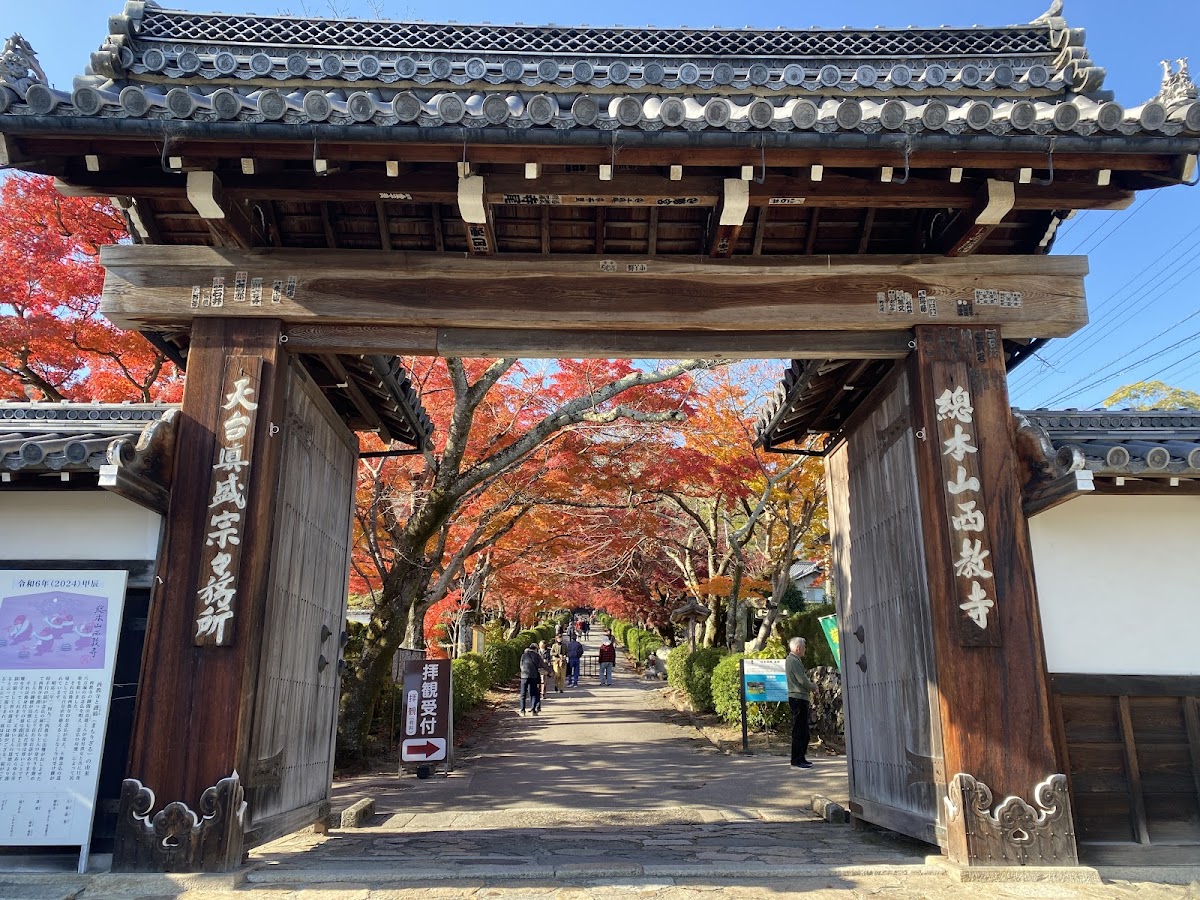
The approach to Saikyoji Temple shows a different face with each season. In spring, it is full of cherry blossoms, and in summer, 700 colorful glass wind chimes adorn the approach as part of the “Wind Chime Path Passage.” This wind chime path is a collaborative project between Saikyoji Temple and Kurokabe, held annually from July to September with the meaning of cooling off and warding off evil.
The main gate is a structure associated with Akechi Mitsuhide and is said to have been relocated from Sakamoto Castle. Its imposing structure still conveys the vestiges of the former castle architecture.
Main Hall (Important Cultural Property)
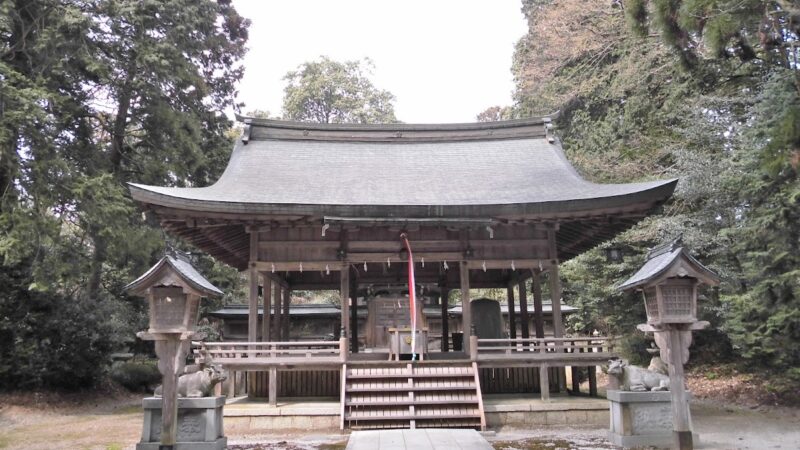
The main hall of Saikyo-ji Temple is a magnificent structure designated as an Important Cultural Property. Inside, the principal image of Amida Buddha is enshrined, and the sounds of chanting and gongs resonate continuously throughout the day.
Inside the main hall is a dojo for continuous chanting of the Buddha’s name, preserving the teachings of Shinsei Shonin, where monks take turns chanting. This tradition has continued uninterrupted for over 500 years and is the spiritual center of Saikyo-ji Temple.
Guest Hall (Important Cultural Property)
The guest hall is a structure said to have been relocated from Fushimi Castle and is designated as an Important Cultural Property. The interior features magnificent fusuma paintings by Kano school artists, conveying the vibrant culture of the Momoyama period.
Recently, the interior of the guest hall was opened to the public for the first time, offering an opportunity to see the only known portrait of Akechi Mitsuhide. It also gained attention for being used as a filming location for the Netflix drama “Ikusagami.”
From the guest hall, you can view the garden, said to have been designed by Kobori Enshu. This garden is a pond-style garden, where you can enjoy its beauty throughout the seasons. Kobori Enshu was a representative landscape architect of the early Edo period, and his works remain throughout Japan, with the garden at Saikyoji Temple being particularly highly regarded.
Burial Grounds of the Akechi Mitsuhide Family
Within the temple grounds are the graves of Akechi Mitsuhide, his wife Hiroko, and other family members. Mitsuhide’s grave originated after his defeat at the Battle of Yamazaki following the Honnoji Incident, when his remains were brought here by his retainers and buried here.
The burial grounds are enveloped in a tranquil atmosphere, a place where one can reflect on the warlords and their families who lived through the turbulent Sengoku period. Especially since the broadcast of the historical drama “Kirin ga Kuru,” it has become a popular destination for history buffs as a place associated with Mitsuhide.
Battle Bell (Important Cultural Property)
Within the temple grounds, a battle bell said to have been used by Akechi Mitsuhide in battle is preserved. This bell was used by Mitsuhide to announce the time on the battlefield and was donated to Saikyoji Temple. It is designated as an Important Cultural Property and is a valuable relic, a practical item of Mitsuhide’s.
Treasure Hall
The treasure hall of Saikyoji Temple houses and displays items related to the monk Shinsei, materials related to Akechi Mitsuhide, and Buddhist art. The wooden statue of Shinsei, as well as Mitsuhide’s letters and portraits, are particularly must-sees.
Other Highlights
Other historical buildings, such as the bell tower, sutra repository, and priest’s quarters, are scattered throughout the temple grounds. Furthermore, special exhibitions and events are held seasonally, including exhibitions that blend tradition and modern culture, such as the “Hina Doll Exhibition” and the “Ikusagami Giant Shujiro Statue.”
Annual Events at Saikyoji Temple
Saikyoji Temple holds various Buddhist services and events throughout the year.
- Shōshō-e (January): A Buddhist service to welcome the New Year
- Nirvana-e (February): A Buddhist service commemorating the passing of Shakyamuni Buddha
- Spring Equinox Service (March)
- Hanamatsuri (April): A Buddhist service celebrating the birth of Shakyamuni Buddha
- Shinsei Shōnin Goki (May): A memorial service for the death anniversary of the founder of the sect, Shinsei Shōnin
- Obon Festival (July-August)
- Autumn Equinox Service (September)
- Wind Chime Path Passage (July-September): A well-established summer tradition
- Autumn Leaves Illumination (November): The autumn leaves on the temple grounds are beautifully illuminated
During these events, cultural properties that are normally closed to the public may be specially opened, making a visit even more worthwhile.
Saikyōji Temple’s Social Contribution Activities
Saikyōji Temple actively engages not only in traditional religious activities but also in addressing issues in modern society. ### Shojin Children’s Cafeteria (Saikyoji Temple x Yasaigo)
In recent years, Saikyoji Temple has been running a “Shojin Children’s Cafeteria.” This initiative provides vegetarian meals to local children, aiming to promote food education and the transmission of Buddhist culture. Through vegetarian dishes using local vegetables, the temple aims to teach children the importance of life and the importance of gratitude.
This activity is attracting attention as an example of a Buddhist temple demonstrating its commitment to being open to the community and addressing contemporary issues.
Visiting Information
Visiting Hours and Admission Fees
- Visiting Hours: 9:00 AM – 5:00 PM (Last admission at 4:30 PM)
- Admission Fees: Adults 500 yen, Junior and Senior High School Students 300 yen, Elementary School Students 200 yen (Group discounts available)
- Special Viewings: Additional fees may apply during special openings of the main hall and treasure hall.
Access
Access by Train
- Approximately 20 minutes on foot or 5 minutes by taxi from JR Kosei Line “Hieizan Sakamoto Station”
- Approximately 20 minutes on foot or 5 minutes by taxi from Keihan Electric Railway Ishiyama Sakamoto Line “Sakamoto Hieizanguchi Station”
Access by Bus
- Immediately after alighting at “Saikyoji” bus stop on the Kojaku Kotsu bus from JR “Hieizan Sakamoto Station” or Keihan “Sakamoto Hieizanguchi Station”
Access by Car
- Approximately 20 minutes from the Kyoto East Interchange on the Meishin Expressway
- Approximately 5 minutes from the Sakamoto North Interchange on the Kosei Road
- Parking: Free parking available (approximately 50 regular cars)
Location
5-13-1 Sakamoto, Otsu City, Shiga Prefecture 520-0113
Inquiries
Phone: 077-578-0013 (Saikyoji Temple Office)
Official Website: http://saikyoji.org/
Tourist Attractions Around Saikyoji Temple
When visiting Saikyoji Temple, we recommend also visiting the tourist attractions in the surrounding Sakamoto area.
Hiyoshi Taisha Shrine
Hiyoshi Taisha Shrine, known as the guardian shrine of Mount Hiei, is approximately a 15-minute walk from Saikyoji Temple. It is the head shrine of approximately 3,800 Hiyoshi, Hie, and Sanno shrines nationwide, and its grounds contain numerous important cultural properties, including the East and West Main Shrines, which are National Treasures.
Former Chikurin-in Temple
Former Chikurin-in Temple, one of the temple’s ancestral temples, is known for its beautiful garden. Designated a National Place of Scenic Beauty, it offers beautiful scenery throughout the seasons.
Sakamoto Townscape
Sakamoto is a historic town that developed as a temple town for Enryaku-ji Temple on Mount Hiei. Its stone-walled streets are beautifully preserved. The stone walls, built by a group of stonemasons known as the “Anou-shu,” boast a unique beauty and sturdiness, and the area has been designated an Important Preservation District for Groups of Traditional Buildings.
Enryaku-ji Temple
Enryaku-ji Temple on Mount Hiei can be accessed from Saikyo-ji Temple via the hiking trail to Yokokawa. Enryaku-ji Temple, the head temple of the Tendai sect, is also a World Cultural Heritage site and attracts many worshippers as the mother mountain of Japanese Buddhism.
Points to Note When Visiting Saikyoji Temple
Recommended Time to Visit
- Spring (Late March to April): The cherry blossoms along the approach to the temple are in full bloom.
- Early Summer (May): The fresh greenery is beautiful, and a memorial service for Shinsei Shonin is held.
- Summer (July to September): The wind chime-lined approach is open, offering a refreshing atmosphere.
- Autumn (November): The autumn leaves are beautiful, and the temple is illuminated at night.
- Winter (December to February): You can enjoy a peaceful and tranquil visit.
Time Required
If you plan to explore the temple grounds at a leisurely pace, allow approximately 1 to 1.5 hours. If you plan to include special viewings of the guest hall and treasure hall, it is recommended to allow an additional 30 minutes to 1 hour.
Photography
Photography is generally permitted on the temple grounds, but there may be restrictions on photography inside the halls and of cultural artifacts. We recommend checking with staff before taking photos.
Temple Lodging Experience
Saikyoji Temple has an attached youth hostel, and temple lodging experiences are available. This is a valuable opportunity to experience temple life, such as participating in morning prayers and enjoying vegetarian meals. Reservations are required, so please inquire in advance.
Summary – The Charm of Saikyoji Temple
Saikyoji Temple is an ancient temple with a history of over 1400 years, from the legend of its founding by Prince Shotoku to its restoration by Shinsei Shonin and its deep connection to Akechi Mitsuhide. As the head temple of the Tendai Shinsei sect, it oversees over 400 branch temples nationwide and has preserved the tradition of continuous chanting of the Buddha’s name for over 500 years.
There are many sights to see, including the main hall and guest hall, both designated as important cultural properties, the garden designed by Kobori Enshu, and the burial grounds of Akechi Mitsuhide’s family. Furthermore, its commitment to modern initiatives while preserving tradition, such as the wind chime approach and the vegetarian children’s cafeteria, is also highly regarded.
Nestled in the tranquil environment at the foot of Mount Hiei, the ethereal atmosphere created by the sounds of Buddhist chanting and gongs makes it the perfect place to escape from everyday life and find peace of mind. Visiting it in conjunction with other tourist spots in the Sakamoto area will allow you to experience history and culture more deeply.
When you visit Shiga Prefecture, be sure to stop by Saikyoji Temple and experience its historical significance and serene atmosphere.