Complete Guide to Hisakuni Shrine (Minato Ward, Tokyo) | History, Goshuin (Shrine Seal), and Access Information
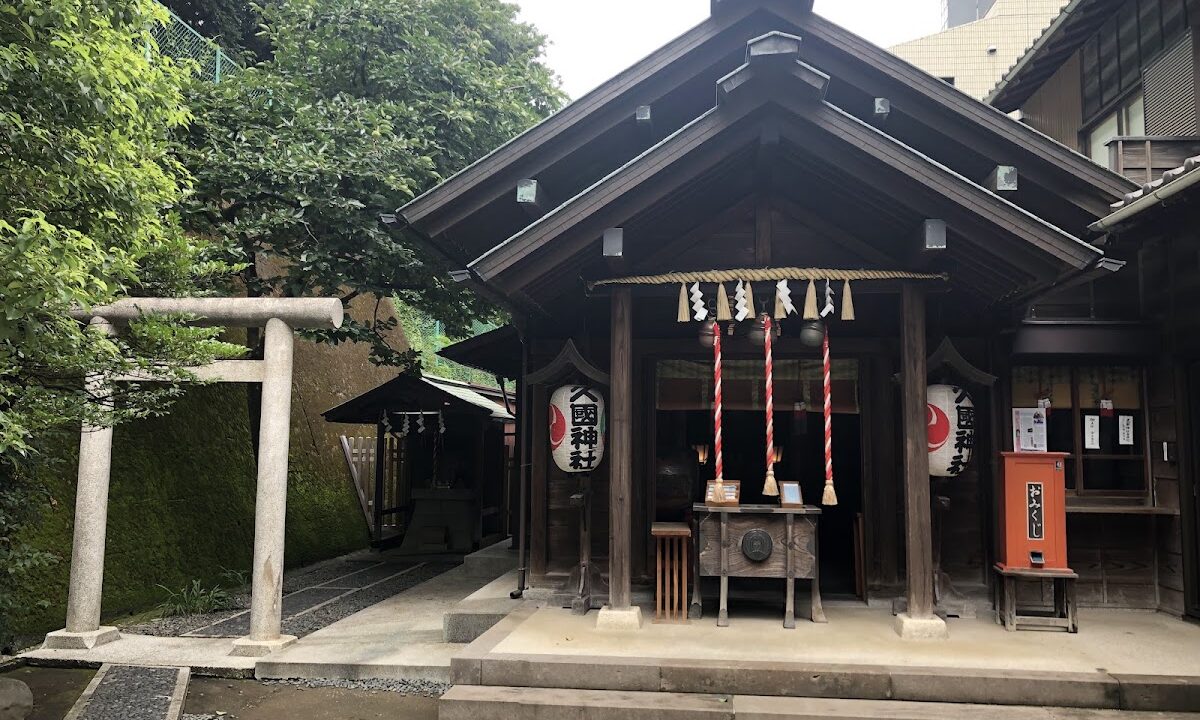
Hisakuni Shrine, nestled in the heart of Tokyo’s Roppongi district, presents a tranquil atmosphere. Named after a famous sword from the Kamakura period, and deeply connected to the history of Edo Castle’s construction, this shrine is also known as the Hotei (god of happiness) of the Minato Seven Lucky Gods pilgrimage. This article comprehensively covers information useful for visitors, including the shrine’s history, enshrined deities, goshuin (shrine seal), highlights within the grounds, and access methods.
Hisakuni Shrine (Minato Ward, Tokyo) Complete Guide | History, Goshuin, and Access Information
Basic Information about Hisakuni Shrine
Official Name: Hisakuni Shrine (久國神社)
Pronunciation: Hisakuni Jinja
Location: 2-1-16 Roppongi, Minato-ku, Tokyo
Deity Enshrined: Ukanomitama-no-Mikoto
Former Shrine Rank: Unranked Shrine
Former Name: Hisakuni Inari Shrine
Annual Festival Date: September 15th
Benefits: Business prosperity, abundant harvest, good fortune
Hisakuni Shrine is located about a 5-minute walk from Roppongi-itchome Station on the Tokyo Metro Namboku Line. Despite being in the bustling Roppongi area, it maintains a lush, tranquil atmosphere.
History of Hisakuni Shrine
Founding and the Chiyoda Village Momiji Era
The founding date of Hisakuni Shrine is unknown, but it is said to have been located in Chiyoda Village Momiji (present-day Imperial Palace grounds) in ancient times. While the exact date of its enshrinement is unclear, it is evident that the shrine was a center of faith in this region even before the construction of Edo Castle.
Ota Dokan and the Construction of Edo Castle
The most important turning point in the history of Hisakuni Shrine is deeply connected to the construction of Edo Castle by Ota Dokan. In 1457, when Ota Dokan built Edo Castle, the shrine was relocated to Tameike in 1465 as the guardian deity of the castle.
“Guardian deity of the castle” means being enshrined as the guardian deity of the castle. This shows that Hisakuni Shrine held an important position even at that time, as a shrine responsible for protecting Edo Castle, a crucial military base.
Origin of the Name “Hisakuni”
The name of the shrine originates from a famous sword crafted by Awataguchi Hisakuni, a renowned swordsmith of the Kamakura period. Ota Dokan donated this treasured sword, made by Hisakuni, to the shrine, leading to its name, “Hisakuni Inari Shrine.”
The Awataguchi school was known as a group of swordsmiths in Kyoto, and Hisakuni, in particular, was renowned as an exceptionally skilled swordsmith. The fact that this famous sword was dedicated to the shrine speaks to the high status of Hisakuni Inari Shrine at the time.
Relocation to Roppongi
In 1741 (Kanpo 1), Hisakuni Inari Shrine was relocated to its current location in Roppongi, Minato Ward. This relocation led to it becoming the guardian shrine of the former Tanimachi and Tansumachi areas, attracting the faith of the local people.
Throughout the Edo period, it was affectionately known as “Hisakuni Inari Shrine,” but in 1945 (Showa 20), it was renamed to its current name, “Hisakuni Shrine.” Some sources suggest the name change occurred in 1927 (Showa 2).
From Post-War to the Present
After the damage of World War II, Hisakuni Shrine has grown alongside the development of Roppongi. Even as Roppongi developed into a bustling entertainment district during the period of rapid economic growth, the shrine maintained its tranquil atmosphere, becoming a beloved urban oasis for local residents and worshippers.
Currently, as the shrine dedicated to Hotei, one of the Seven Lucky Gods of Minato, it is particularly crowded with worshippers during the New Year.
Deities and Blessings
Ukanomitama-no-Mikoto
The deity enshrined at Hisakuni Shrine is Ukanomitama-no-Mikoto. Ukanomitama-no-Mikoto is the god who presides over grains and food, and is widely worshipped as “O-Inari-san.” In the Kojiki, he is recorded as the child of Susanoo-no-Mikoto and Kamu-Oichihime.
“Uka” means food, and “tama” represents spirit, so Ukanomitama-no-Mikoto means “spirit of food.” As a central deity of Inari worship, he is enshrined in Inari shrines throughout Japan.
Benefits
Kukuni Shrine is said to offer the following benefits:
- Business Prosperity: A representative benefit of Inari shrines
- Abundant Harvest: Blessings related to agriculture and food
- Industrial Development: Success and development of businesses
- Good Fortune and Prosperity: Good fortune as Hotei, one of the Seven Lucky Gods of Minato
- Family Safety: Health and safety of family members
Especially because it is located in the commercial area of Roppongi, many business people and executives working in the surrounding area visit the shrine.
Minato Seven Lucky Gods Pilgrimage and Hotei
What is the Minato Seven Lucky Gods Pilgrimage?
Hisakuni Shrine enshrines Hotei, one of the deities in the “Minato Seven Lucky Gods Pilgrimage.” The Minato Seven Lucky Gods Pilgrimage is a popular pilgrimage route visiting eight temples and shrines within Minato Ward.
Composition of the Minato Seven Lucky Gods Pilgrimage:
- Hoju-in Temple (Benzaiten)
- Daihoji Temple (Daikokuten)
- Tenso Shrine (Fukurokuju)
- Kumano Shrine (Ebisu)
- Sakurada Shrine (Jurojin)
- Hikawa Shrine (Bishamonten)
- Kukuni Shrine (Hotei)
- Juban Inari Shrine (Treasure Ship)
About Hotei
Hotei is one of the Seven Lucky Gods, and is said to be modeled after the Zen monk Keishi, who lived during the Tang Dynasty. Often depicted with a large bag on his back, a potbelly, and a smiling face, Hotei is believed to bring the following blessings:
- Laughter Brings Good Fortune: Good fortune comes to those who smile
- Marital Harmony: Harmony within the family
- Children: Prosperity of descendants
- Business Prosperity: Abundant good fortune and virtue
At Hisakuni Shrine, a statue of Hotei is enshrined on the grounds, and worshippers believe they will receive good fortune by stroking Hotei’s belly.
Season for the Seven Lucky Gods Pilgrimage
The Minato Seven Lucky Gods pilgrimage is possible year-round, but especially during the New Year (around January 1st to 7th), special commemorative paper and treasure ships are given out, attracting many worshippers. At Hisakuni Shrine, during this period, worshippers line up to receive Hotei’s Goshuin (shrine stamp).
Goshuin (Shrine Seal) and Goshuincho (Shrine Seal Book) Information
About Goshuin
At Hisakuni Shrine, you can receive two types of goshuin: a regular goshuin and a Hotei (Laughing God) goshuin.
Regular Goshuin:
- Calligraphy of “Hisakuni Shrine” in the center
- Shrine’s seal
- Offering fee: Approximately 300-500 yen
Hotei (Laughing God) Goshuin:
- Calligraphy of “Hotei”
- Special seal for the Minato Seven Lucky Gods pilgrimage
- Offering fee: Approximately 300-500 yen
Goshuin Reception Hours
Goshuin are only available during the hours the shrine office is open. Generally:
- Weekdays and weekends: Approximately 9:00 AM to 5:00 PM
- New Year period: Extended hours may be available
However, if the chief priest is absent, you may not be able to receive a goshuin. Therefore, if you want to be sure to receive a goshuin, it is recommended to check in advance.
Goshuincho (Stamp Book)
The availability of the original Goshuincho at Hisakuni Shrine may vary depending on the time of year. The special shikishi (decorative paper) and treasure ship stamps for the Minato Seven Lucky Gods pilgrimage are available during the New Year period.
Highlights of the Shrine Grounds
Shrine Building
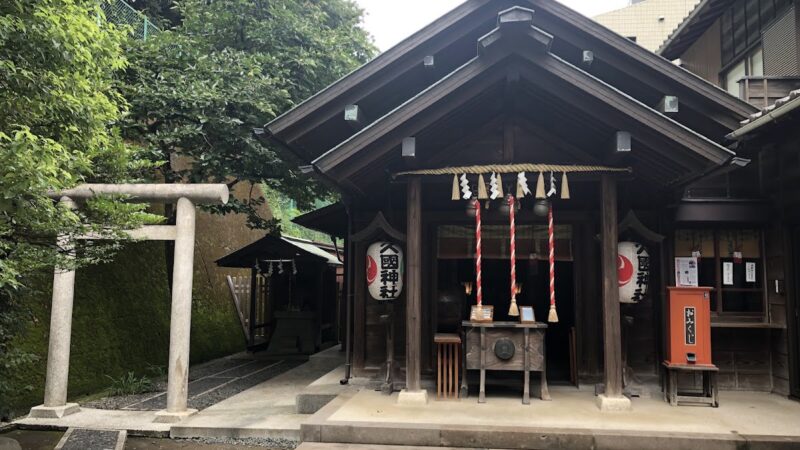
The shrine building of Hisakuni Shrine was rebuilt after the war and, while small, is elegantly constructed. Despite being in the heart of the city of Roppongi, it maintains a tranquil atmosphere, offering peace to visitors.
Hotei Statue
A statue of Hotei is enshrined on the grounds, a must-see spot for visitors on the Minato Seven Lucky Gods pilgrimage. The plump, smiling Hotei has a warm expression that seems to bestow good fortune upon those who see him.
Features of the Inari Shrine
Hisakuni Shrine was originally an Inari shrine called “Hisakuni Inari Shrine.” The shrine grounds feature fox statues, symbols of Inari worship, and elements of vermilion paint, preserving the traditions of an Inari shrine.
Lush Green Grounds
Despite being located in the bustling Roppongi district, the grounds of Hisakuni Shrine are lush with greenery, functioning as an urban oasis. Combined with its quiet location just off the main street, it offers a space where one can escape the hustle and bustle and find peace of mind.
Access Information
Access by Train
Nearest Station:
- Tokyo Metro Namboku Line “Roppongi-itchome Station”
- Approximately 5 minutes on foot
- Closest station
- Tokyo Metro Hibiya Line/Toei Oedo Line “Roppongi Station”
- Approximately 8-10 minutes on foot
- Exit 3 is convenient
- Tokyo Metro Chiyoda Line “Nogizaka Station”
- Approximately 10 minutes on foot
Walking Route (from Roppongi-itchome Station)
- Exit the ticket gate at Roppongi-itchome Station
- Proceed towards Izumi Garden Tower
- Head towards Roppongi on Gaien-Higashi Street
- Enter the residential area of Roppongi 2-chome
- You will see Hisakuni Shrine on your left
Access by Car
Hisakuni Shrine does not have its own parking lot. If you are visiting by car, you will need to use a nearby coin parking lot. Parking fees are quite high around Roppongi, so we recommend using public transportation.
Nearby Landmarks
- Izumi Garden Tower
- Roppongi Hills (within walking distance)
- Tokyo Midtown (within walking distance)
Manners and Etiquette for Visiting a Shrine
Basic Shrine Visit Etiquette
- Bow before the Torii Gate: Bow before passing through the torii gate.
- Purify yourself at the Water Basin:
- Hold the ladle in your right hand and purify your left hand.
- Switch the ladle to your left hand and purify your right hand.
- Switch the ladle back to your right hand, receive water in your left hand, and rinse your mouth.
- Finally, hold the ladle upright and purify the handle.
- Offer your donation: Gently place your donation in the offering box.
- Two bows, two claps, one bow:
- Bow deeply twice.
- Clap your hands twice.
- Bow deeply once.
- Bow when leaving the Torii Gate
Unique Rituals at Inari Shrines
While Hisakuni Shrine is an Inari shrine, the worship ritual is the same as at most shrines: “two bows, two claps, one bow.” Some Inari shrines use the “two bows, four claps, one bow” ritual, but at Hisakuni Shrine, the standard ritual is perfectly acceptable.
Annual Events
Annual Festival (September 15th)
This is the most important festival at Hisakuni Shrine, a ceremony honoring the enshrined deity, Ukanomitama-no-Mikoto.
New Year’s Visit and Minato Seven Lucky Gods Pilgrimage (January 1st-7th)
The New Year period is the busiest time for visitors on the Minato Seven Lucky Gods pilgrimage. Long lines can form for those seeking the Hotei (goshuin) stamp.
Hatsuumasai Festival (First Horse Day of February)
The Hatsuumasai Festival, an important festival at Inari shrines, is held. This traditional event celebrates the day when the Inari deity is believed to have descended.
Nearby Shrines and Temples
Near Hisakuni Shrine, there are several other historical shrines and temples.
Sakurada Shrine
Located in Nishi-Azabu, Minato-ku, this shrine enshrines Jurojin, one of the Seven Lucky Gods of Minato. Approximately a 15-minute walk from Hisakuni Shrine.
Hikawa Shrine (Akasaka Hikawa Shrine)
Located in Akasaka, Minato-ku, this prestigious shrine enshrines Bishamonten, one of the Seven Lucky Gods of Minato. It is a valuable shrine with an existing Edo-period shrine building.
Tenso Shrine
Located in Roppongi, Minato-ku, this shrine enshrines Fukurokuju, one of the Seven Lucky Gods of Minato. Within walking distance of Hisakuni Shrine.
Juban Inari Shrine
Located in Azabu Juban, this Inari shrine is responsible for the treasure ship of the Seven Lucky Gods of Minato. It is famous for its frog statue.
The Charm of Hisakuni Shrine
Tranquility in the City
Despite being located in Roppongi, an international entertainment district, Hisakuni Shrine maintains a surprisingly quiet and peaceful atmosphere. Situated just off the main street, with little traffic or foot traffic, it allows you to forget the hustle and bustle of the city and find peace of mind.
The Weight of History
It boasts a history linked to important events in Japanese history, such as Ota Dokan and the construction of Edo Castle, and its name is derived from the famous Kamakura period sword “Hisakuni,” giving it a romantic and distinguished history.
Convenient Access
Located just a 5-minute walk from Roppongi-itchome Station, it’s easily accessible for a visit during work breaks or while shopping. Its proximity to tourist attractions such as Roppongi Hills and Tokyo Midtown makes it easy to incorporate into sightseeing routes.
Enjoying the Minato Seven Lucky Gods Pilgrimage
As a shrine dedicated to Hotei, it is counted as one of the Minato Seven Lucky Gods pilgrimage sites, allowing you to experience the traditional Japanese faith culture of the Seven Lucky Gods pilgrimage.
Points to Note When Visiting
Shrine Office Opening Hours
If you wish to receive a Goshuin (shrine stamp) or other amulets, you must visit during the shrine office’s opening hours. Since the chief priest may not always be present, it is recommended to check in advance if you definitely want a Goshuin.
Shrine in a Residential Area
Kyukuni Shrine is located in a residential area, so consideration for nearby residents is necessary when visiting. Please refrain from loud conversations and noise.
Photography
Photography is generally permitted on the shrine grounds, but please be considerate of other visitors. Refrain from photographing inside the shrine building, or obtain permission before doing so.
Summary
Kyukuni Shrine, located in the heart of Tokyo’s Roppongi district, possesses a tranquil atmosphere and a rich history. With historical backgrounds including Ota Dokan, the construction of Edo Castle, and the famous Kamakura-period sword Kyukuni, it is currently popular with many visitors as the Hotei (god of happiness) of the Minato Seven Lucky Gods pilgrimage.
Its convenient location, just a 5-minute walk from Roppongi-Itchome Station, its lush green grounds that offer a respite from the hustle and bustle of the city, and its deity, Ukanomitama-no-Mikoto, who is believed to bring prosperity and good fortune in business—all of these factors contribute to the charm of Hisakuni Shrine.
When shopping or dining in Roppongi, or as part of a pilgrimage to the Seven Lucky Gods of Minato, be sure to visit Hisakuni Shrine. It will be a precious experience to quietly feel the history and tradition in the heart of the city.