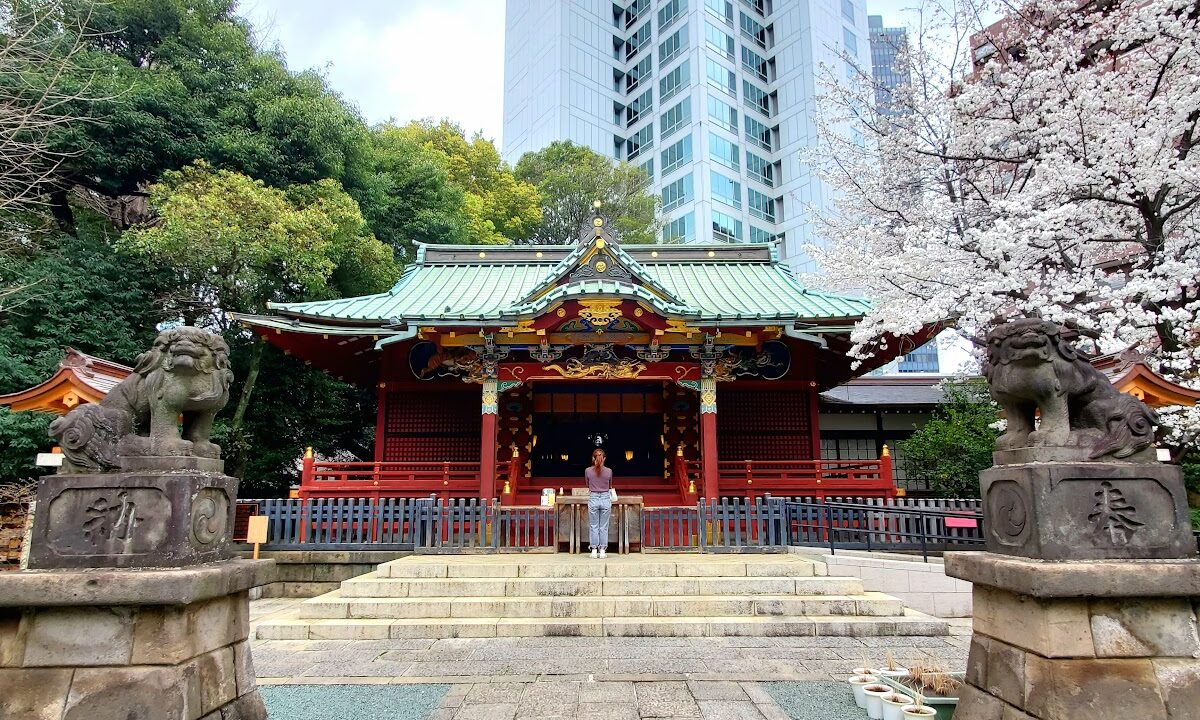
Konno Hachimangu Shrine (Shibuya Ward, Tokyo) Complete Guide | Exploring History and Goshuin (Shrine Seals) at the Birthplace of Shibuya
Located in the heart of Shibuya Ward, Tokyo, just a 5-minute walk from Shibuya Station, Konno Hachimangu Shrine is a venerable shrine with a history of over 900 years dating back to the Heian period. Despite being in the midst of modern buildings in Shibuya, stepping into the shrine grounds reveals an atmosphere of tranquility and solemnity.
This article comprehensively covers everything you need to know before visiting Konno Hachimangu Shrine, including its history, enshrined deities, highlights, goshuin information, and access methods.
Basic Information about Konno Hachimangu Shrine
Location: 3-5-12 Shibuya, Shibuya-ku, Tokyo
Shrine Office Hours: 9:00 AM – 5:00 PM
Access: 5-minute walk from the East Exit, South Exit, or Shin-Minami Exit of Shibuya Station (JR, Tokyu, and Tokyo Metro lines)
Former Shrine Rank: Gosha (village shrine)
Deities Enshrined: Emperor Ojin / Hondawake-no-Mikoto
History of Konno Hachimangu Shrine | The Story of its Origin in Shibuya
Founding in the Heian Period and the Shibuya Clan
The history of Konno Hachimangu Shrine dates back to January 15th, 1092 (Kanji 6), during the late Heian period. This shrine was founded in this location when Kawasaki Motoie, who served as the vanguard under Minamoto no Yoshiie during the Later Three Years’ War (1083-1087), was granted the surname “Shibuya” for his military achievements and built his castle, Shibuya Castle, in this area.
Motoie believed that Minamoto no Yoshiie’s victory was due to the protection of Hachiman, the god of war, and enshrined Hachiman within the castle. This marked the beginning of Konno Hachimangu Shrine and the origin of the place name “Shibuya.” Initially, it was called “Shibuya Hachimangu.”
The Legend of Shibuya Konnomaru
The name of Konno Hachimangu Shrine originates from Shibuya Konnomaru, a descendant of the Shibuya clan. Konnomaru was born the son of Shibuya Taira no Mieie and served Minamoto no Yoshitomo as a warrior at the age of 17.
Konnomaru is known for his unwavering loyalty to his lord, Minamoto no Yoshitomo. During the Hogen Rebellion (1156), he fought alongside Yoshitomo, and his bravery and loyalty became widely known. Even after Yoshitomo’s defeat in the Heiji Rebellion (1159), it is said that Kanamaru remained loyal to his lord.
Due to his fame, Shibuya Hachimangu Shrine eventually came to be known as “Kanao Hachimangu Shrine.” Within the shrine grounds is the Kanaomaru Mikage-do (Kanaomaru Portrait Hall), where Kanaomaru is still enshrined.
Minamoto no Yoritomo and Kanao Hachimangu Shrine
On July 7, 1189 (Bunji 5), when Minamoto no Yoritomo was heading to Oshu to subdue Fujiwara no Yasuhira, he stopped at the residence of Shibuya Takashige and dedicated a sword to Kanao Hachimangu Shrine. This sword is still preserved as a shrine treasure.
Yoritomo visited the Kanaomaru Mikage-do, commemorating Kanaomaru’s loyalty to his father, Yoshitomo, and strictly commanded that his name be preserved for posterity. It is said that the Ureiwasurezakura (forgetful cherry tree) from the Kamegaya residence in Kamakura was transplanted to this location and named “Konno-zakura.”
Prosperity in the Edo Period
During the Edo period, Konno Hachimangu Shrine was counted as one of the “Eight Hachimangu Shrines of Edo” and was revered as an important Hachimangu shrine in Edo.
Notably, in 1624, Kasuga no Tsubone, known as the wet nurse of the third shogun Tokugawa Iemitsu, built a shrine building as a token of gratitude for Iemitsu’s appointment as shogun. This shrine building, a lavish construction entirely covered in lacquer, is still designated as a tangible cultural property of Tokyo.
The construction of the shrine building by Kasuga no Tsubone is an important historical fact demonstrating the importance placed on Konno Hachimangu Shrine by the Edo shogunate.
Deities and Blessings
Emperor Ōjin (Homudawake no Mikoto)
The deity enshrined at Konnō Hachimangū Shrine is Emperor Ōjin, also known as Hondawake no Mikoto. Emperor Ōjin was the 15th Emperor of Japan and is a god of military fortune, worshipped at Hachiman shrines throughout Japan.
Blessings
Konnō Hachimangū Shrine is believed to offer the following blessings:
- Increased Military Fortune and Victory: Emperor Ōjin is known as the god who governs military fortune.
- Improved Career and Promotion: Popular among modern business people.
- Conception and Safe Childbirth: Based on the legend of Empress Jingū, Emperor Ōjin’s mother.
- Protection from Evil and Good Fortune: Protects the area as the guardian shrine of Shibuya.
Many visitors seek career and promotion fortune, and due to its location in the heart of Shibuya, a business district, many business people visit the shrine even on weekdays.
Highlights of the Shrine Grounds
Shrine Building (Tokyo Metropolitan Designated Tangible Cultural Property)
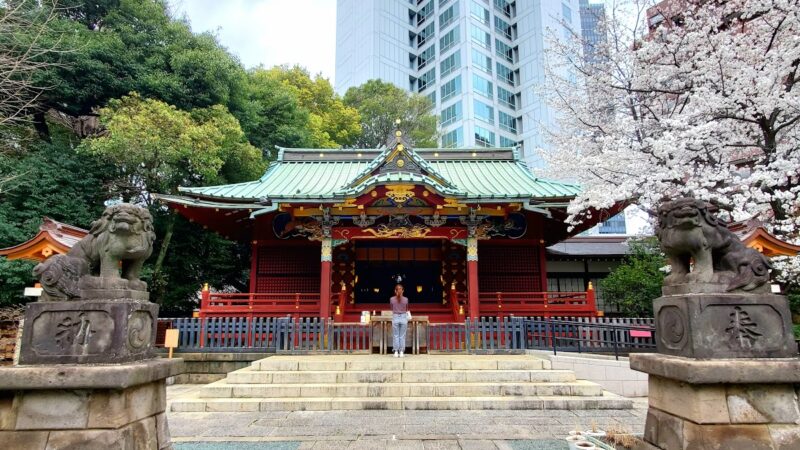
The greatest highlight of Konno Hachimangu Shrine is the shrine building, constructed by Kasuga no Tsubone. Built in 1624 (Kanei 1), this shrine building boasts a magnificent, entirely lacquered structure and is a valuable cultural asset that preserves the architectural style of the early Edo period.
It was designated a Tokyo Metropolitan Tangible Cultural Property on March 26, 1976 (Showa 51), and the attached covered walkway was also designated in 2010 (Heisei 22).
The shrine building is highly valuable as an Edo-period surviving example of a painted shrine in the heart of Tokyo. The vermilion-lacquered pillars and intricate carvings remain beautifully preserved even after nearly 400 years.
Konno Cherry Tree
The Konno cherry tree, which blooms beautifully in spring within the shrine grounds, is said to have been transplanted by Minamoto no Yoritomo to pass on the name of Konnomaru to future generations. The Konno-zakura cherry tree is a rare variety called Choshu Hi-zakura, characterized by its unique blooming pattern of single and double blossoms on a single branch, with some stamens having transformed into petals. This distinctive blooming style is extremely rare and captivates many worshippers and cherry blossom viewers.
The blooming season is typically from late March to early April, offering an elegant view that makes you forget the hustle and bustle of Shibuya.
Konno-maru Mikage-do Hall
Within the temple grounds is a Mikage-do hall dedicated to Konno-maru. It is said that Minamoto no Yoritomo also visited this hall and commemorated Konno-maru’s loyalty.
Konno-maru’s bravery and loyalty continue to inspire many people even today.
Mathematical Tablets (Tokyo Metropolitan Government Designated Tangible Cultural Property)
Konno Hachimangu Shrine preserves three mathematical tablets dedicated during the late Edo period:
- Dedicated in 1850 (Kaei 3)
- Dedicated in 1859 (Ansei 6)
- Dedicated in 1864 (Genji 1)
These were designated as Tokyo Metropolitan Government Tangible Cultural Properties on February 5, 1993 (Heisei 5). These mathematical tablets are valuable historical materials demonstrating the development of Edo-period mathematics (Wasan) and illustrate the culture of dedicating mathematical problems to shrines at that time.
Shrine Gate
The shrine gate, which serves as the entrance to the shrine grounds, is also designated as a Tokyo Metropolitan Government Tangible Cultural Property along with the shrine building. The beautiful vermilion-painted gate stands out in the heart of Shibuya.
Goshuin (Shrine Seal) Information
Regular Goshuin
Goshuin can be obtained at the shrine office at Konno Hachimangu Shrine.
Reception Hours: 9:00 AM – 5:00 PM
Offering Fee: Approximately 500 yen (subject to change)
The goshuin (temple/shrine stamp) will have the words “Konno Hachimangu” written in ink and stamped with the shrine’s seal. The powerful brushstrokes of the goshuin give the impression of a shrine dedicated to the god of martial fortune.
Goshuincho (Shrine Stamp Book)
Konno Hachimangu Shrine also offers original goshuincho. Multiple designs are sometimes available, including those featuring the Konno cherry blossoms and the shrine building.
Please check with the shrine office during your visit regarding the offering fee and availability of goshuincho.
Limited Edition Goshuin
During the annual festival and special events, limited edition goshuin may be offered. In the past, limited edition goshuin coinciding with the blooming season of the Konno cherry blossoms have been offered.
We recommend checking the shrine’s official information or visitor posts on social media for information on limited edition goshuin.
Annual Festivals and Rituals
Monthly Festivals and Daily Offerings
At Konno Hachimangu Shrine, in addition to annual events, regular festivals are held:
- Monthly Festival: 9:00-9:30 AM on the 1st and 15th of each month
- Daily Offerings: 9:00-9:30 AM daily
During these festivals, Shinto priests offer daily thanks to the gods and pray for the peace and well-being of worshippers and the community.
Grand Festival
The Grand Festival of Konno Hachimangu Shrine is held grandly every autumn. It features a portable shrine procession and offering ceremonies, attracting many parishioners and worshippers.
Despite being a shrine in the heart of Shibuya, it continues to uphold traditional festival rituals and plays a central role in the local community.
Items Offered (Amulets and Talismans)
The Konno Hachimangu Shrine office offers a variety of items:
Main Items Offered
- Victory Amulet: An amulet that bestows good fortune in battle and victory.
- Career Amulet: An amulet for improving career luck and promotion.
- Exorcism Amulet: An amulet for warding off evil and misfortune.
- Safe Childbirth Amulet: An amulet for safe childbirth and fertility.
- Divine Talisman: A talisman to be placed on the household shrine.
- Ema (Votive Tablet): A votive tablet on which to write wishes and offer them.
The victory amulet and career amulet are particularly popular among business people.
Prayers and Sacred Rites
Konno Hachimangu Shrine accepts various prayers and sacred rituals from individuals and corporations:
Main Prayers
- Protection from misfortune and evil influences
- Family safety and traffic safety
- Business prosperity and company success
- Success in examinations and academic achievement
- Safe childbirth and first shrine visit for a newborn
- Shichi-Go-San (7-5-3) ceremony
If you wish to request a prayer or sacred ritual, we recommend contacting the shrine office in advance.
Inquiries: Shrine Office (9:00 AM – 5:00 PM)
Access & Parking
Access by Train
Konno Hachimangu Shrine is very close to Shibuya Station and extremely convenient to access:
JR Line: 5-minute walk from Shibuya Station East Exit
Tokyu Line: 5-minute walk from Shibuya Station
Tokyo Metro Lines: 5-minute walk from Shibuya Station
Access is possible from any of the East, South, or Shin-Minami exits of Shibuya Station. It is located on the south side of Roppongi Street, near Kokugakuin University.
Access by Car & Parking
There is parking space for visitors on the shrine grounds, but the number of spaces is limited. Due to its location in Shibuya, the surrounding roads are always congested, so we strongly recommend using public transportation.
If you are visiting by car, please consider using nearby coin-operated parking lots.
Nearby Attractions
Kokugakuin University Museum
Kokugakuin University is located very close to Konno Hachimangu Shrine, and its museum offers free admission to exhibits on Shinto and Japanese culture. Visiting it in conjunction with a visit to Konno Hachimangu Shrine is highly recommended.
Shibuya Hikawa Shrine
Shibuya Hikawa Shrine, another important shrine in Shibuya Ward, is also within walking distance. This shrine also boasts a long history and is known for its blessings related to matchmaking.
Aoyama/Omotesando Area
Walking from Konno Hachimangu Shrine towards Minami-Aoyama provides access to the Omotesando shopping area. Its location is convenient for shopping and dining after your visit.
As the Guardian Shrine of Shibuya and Aoyama
Konno Hachimangu Shrine has long served as the guardian shrine of the Shibuya and Aoyama area, protecting this region for many years. Its parish extends over a wide area, and it remains a spiritual center for the community even today.
The shrine’s parish area includes parts of Shibuya and Jinnan in Shibuya Ward. Including the parish area of the related Ontake Shrine, it protects a wide area in the heart of Shibuya.
Manners and Precautions for Visiting the Shrine
Basic Worship Etiquette
- Bow before passing through the torii gate.
- Cleanse your hands and mouth at the water basin.
- Bow twice, clap twice, and bow once in front of the main hall.
- Bow again when leaving the torii gate after praying.
Photography
Photography is generally permitted on the shrine grounds, but consideration should be given to avoiding disturbing ceremonies or other worshippers. There may be restrictions on photography inside the shrine buildings, so please check in advance.
Attire
Everyday clothing is acceptable for worship, but it is advisable to avoid overly casual or revealing clothing. If receiving a prayer service, please dress appropriately.
Cultural Value of Konno Hachimangu Shrine
Konno Hachimangu Shrine is valuable not only as a place of worship, but also as a historical facility possessing important cultural properties:
Tokyo Metropolitan Government Designated Tangible Cultural Property
- Shrine building and gate (with covered walkway): A valuable structure that conveys the architectural style of the early Edo period.
- Three mathematical tablets: Academic materials that demonstrate the Japanese mathematics culture of the Edo period.
These cultural properties are indispensable materials for understanding the history and culture of Tokyo, and are appropriately preserved and managed.
Value as the Site of Shibuya Castle
The shrine grounds are said to be the site of Shibuya Castle, and are also the birthplace of the place name Shibuya. As a valuable historical site that conveys the history of Shibuya, which has continued since the Heian period, it is a historically important place.
Frequently Asked Questions
Q1: When can I get a Goshuin (shrine stamp) at Konno Hachimangu Shrine?
A: You can get one during the shrine office’s operating hours, from 9:00 to 17:00. However, times may change during festivals and events, so if you want to be sure to receive a Goshuin (temple stamp), we recommend checking in advance.
Q2: Is there parking?
A: There is parking space for visitors on the temple grounds, but the number of spaces is limited. Due to its convenient location, just a 5-minute walk from Shibuya Station, we recommend using public transportation.
Q3: When can I see the Konno Cherry Blossoms?
A: They are usually in full bloom from late March to early April. This is a rare type of cherry blossom where single and double blossoms bloom together on a single branch, attracting many visitors during this time.
Q4: Is a reservation required for prayers?
A: Individual prayers are generally accepted without a reservation, but to avoid waiting times and to ensure you receive a prayer, we recommend contacting us in advance. For corporations and groups, advance reservations are mandatory.
Q5: Who is Shibuya Konnomaru? **
A: Shibuya Kin’ōmaru was a samurai warrior from the late Heian period and a loyal retainer of Minamoto no Yoshitomo. He distinguished himself in the Hōgen Rebellion and other conflicts, and was known for his bravery and loyalty to his lord. It is said that Minamoto no Yoritomo praised Kin’ōmaru’s loyalty and ordered that his name be preserved for posterity.
Summary
Kon’ō Hachimangu Shrine, while located in the heart of the modern city of Shibuya, is a valuable shrine that has preserved a long history and tradition dating back to the Heian period. It holds great historical significance as the birthplace of the name Shibuya and the site of the legend of Shibuya Kin’ōmaru.
With its lacquered shrine building built by Kasuga no Tsubone, the Kin’ō Cherry Tree associated with Minamoto no Yoritomo, and Edo-period mathematical tablets, there are plenty of sights to see, making it enjoyable not only for worship but also as a cultural treasure.
Its excellent accessibility, just a 5-minute walk from Shibuya Station, is another attractive feature. Be sure to visit Kon’ō Hachimangu Shrine while shopping or dining, or to pray for good fortune in your career or victory. Escape the hustle and bustle of the city center and spend peaceful time in a tranquil space steeped in over 900 years of history.