Complete Guide to Irugi Shrine (Shinagawa Ward, Tokyo) | History, Goshuin (Shrine Seal), Access, and Benefits Explained in Detail
Irugi Shrine, located in Osaki, Shinagawa Ward, Tokyo, is a shrine where you can find peace and tranquility amidst the hustle and bustle of the city center, thanks to its lush green grounds. Despite its convenient location, just a 3-minute walk from JR Osaki Station, it preserves a history and tradition dating back to the early Edo period. This article provides a thorough explanation of everything you need to know before visiting Irugi Shrine, including its history, enshrined deities, benefits, goshuin (shrine seal), access methods, annual festival, and highlights of the grounds.
History and Origins of Irugi Shrine
History of Founding and Relocation
The exact founding date of Irugi Shrine is unknown, but according to the “Shinpen Musashi Fudoki-ko” (New Compilation of the Topography of Musashi Province), it was originally located in Irugibashi Village, Ebara District, Musashi Province (near the present-day Irugibashi Bridge on Yamate-dori). At the time, it was called “Kijinomiya” and was located near the Iki Bridge over the Meguro River.
In the early Edo period, to avoid flooding caused by the Meguro River, it was relocated to its current location in Osaki 3-chome, Shinagawa Ward. During this relocation, Kifune Myojin, Kasuga Myojin, Kogongen, and Inari Myojin were enshrined together, and it came to be known as “Gosha Myojin.”
Changes since the Meiji Period
In 1872 (Meiji 5), with the establishment of the shrine system, the shrine’s name was changed from “Gosha Myojin” to “Iki Shrine.” Subsequently, it was ranked as a village shrine and has been revered by the people of the Osaki area as the guardian shrine of the region.
Although the area around Osaki Station has undergone significant transformation due to post-war urban development, Iki Shrine remains a spiritual center for the community and an urban oasis, welcoming many worshippers.
Origin of the Place Name “Irugi”
There are several theories regarding the origin of the place name “Irugi,” but the most likely theory is that a bridge called “Yurugi Bridge” once spanned the Meguro River, and “Yurugi” transformed into “Irugi.” Even today, a bridge called “Irugi Bridge” remains on Yamate-dori, marking the site of the shrine’s founding.
Deities and Blessings
Main Deity: Yamato Takeru no Mikoto
The main deity of Irugi Shrine is Yamato Takeru no Mikoto. Yamato Takeru no Mikoto is a legendary prince who appears in the Kojiki and Nihon Shoki, known for numerous military achievements such as the eastern expedition and the subjugation of the Kumaso people. He is revered as a hero who was not only brave and daring, but also possessed wisdom and resourcefulness, as seen in the legend of the Kusanagi Sword.
Deities Enshrined Together
In addition to the main deity, the following deities are enshrined together at Iki Shrine:
- Takaokami-no-kami: A dragon god who controls water. Worshipped as the god of rainmaking and stopping rain.
- Okuninushi-no-mikoto: God of matchmaking and business prosperity.
- Ukanomitama-no-mikoto: Inari god of abundant harvests and business prosperity.
- Amanokoyane-no-mikoto: God of learning and wisdom.
- Kanshojo: Sugawara no Michizane. God of learning.
- Tachikarao-no-mikoto: God of strength. Good fortune and success in competitions
- Yodohime-no-Mikoto: Goddess of water
- Oyamakui-no-Mikoto: God of mountains. Local Deity
Divine Blessings
At Iki Shrine, the following blessings are believed to be bestowed by the various enshrined deities:
- Protection from Evil and Disaster: Protection through the power of Yamato Takeru, the god of war
- Business Prosperity and Abundant Fortune: Prosperity in business through Okuninushi-no-Mikoto and Ukanomitama-no-Mikoto
- Academic Success: Improvement of academics through Sugawara no Michizane and Amenokoyane-no-Mikoto
- Good Fortune and Prosperity: Comprehensive protection from various deities
- Matchmaking: Success in finding a good partner through Okuninushi-no-Mikoto
- Abundant Harvest: Prayers for a bountiful harvest through Inari-no-Kami
Highlights of the Shrine Grounds
Shrine Building
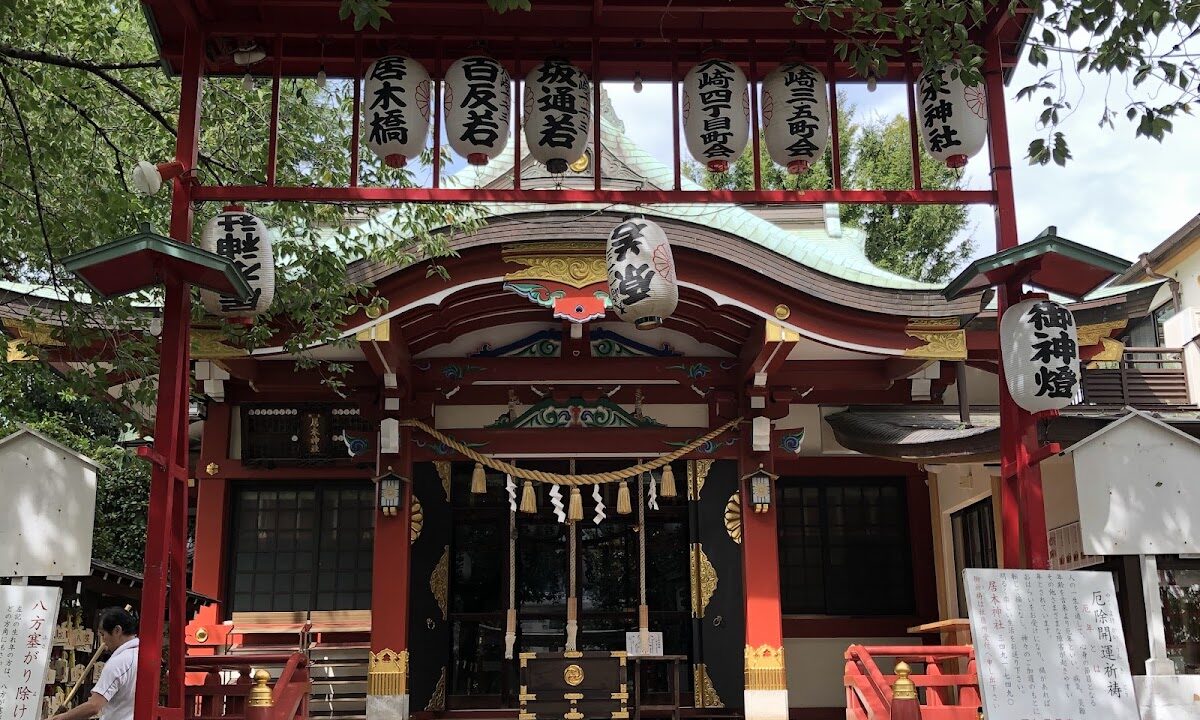
The current shrine building was rebuilt after the war. While retaining the traditional Shinmei-zukuri style of wooden construction, it also possesses the functionality of an urban shrine. The worship hall is beautifully painted in vermilion, creating a solemn atmosphere that harmonizes with the greenery of the shrine grounds.
The main shrine enshrines eight deities, including the principal deity, Yamato Takeru. Worshippers offer their prayers from the worship hall towards the main shrine.
Sacred Tree and Greenery of the Shrine Grounds
A sacred tree, estimated to be several hundred years old, stands tall within the grounds of Iki Shrine. Despite being in the heart of the city, the shrine grounds, enveloped in lush greenery, truly deserve to be called an “urban oasis.”
Various plants add color to the grounds with each season, allowing visitors to enjoy the changing seasons: cherry blossoms in spring, fresh greenery in early summer, and autumn leaves in fall.
Komainu (Guardian Dogs)
A pair of komainu (guardian dogs) sit in front of the worship hall. These dignified stone komainu evoke a sense of history, having protected the shrine for many years. Be sure to pay attention to these komainu when you visit.
Ema (Prayer Plaques) for Protection from Disaster
Particularly popular at Iki Shrine are the “Ema for Protection from Disaster.” This ema (votive tablet) has a cutout for the character “災” (disaster). Worshippers write their name and age on the ema, then drop the cutout into a special box before offering it.
This unique form literally symbolizes “warding off disaster,” and is popular with many worshippers seeking protection from misfortune.
Water Basin
Near the entrance to the shrine grounds is a water basin where worshippers can purify themselves before praying. Pure water flows constantly, creating a tranquil atmosphere that makes you forget the hustle and bustle of the city.
Goshuin (Shrine Seal) Information
Goshuin Issuance
Iki Shrine offers standard goshuin. The goshuin includes the shrine’s name, “Iki Shrine,” and the date of visit, along with the shrine’s seal.
Hours of Distribution: 9:00 AM – 5:00 PM
Offering Fee: Usually around 300-500 yen (subject to change, please confirm during your visit)
Goshuincho (Stamp Book)
Iki Shrine also offers its own original goshuincho. The designs feature scenery from the shrine grounds and the enshrined deity, making them a memorable keepsake for goshuin collectors.
Distribution Office
Goshuin are distributed at the distribution office on the shrine grounds. In addition to goshuin, amulets, ema (votive tablets), and omikuji (fortune slips) are also available at the office.
Annual Festival and Regular Events
Annual Festival
Iki Shrine’s annual festival is held over three days, Friday, Saturday, and Sunday, around August 25th each year. As the largest festival in the Osaki area, it attracts many parishioners and worshippers.
During the festival, a portable shrine procession takes place, with the shrine parading through the streets of Osaki accompanied by energetic shouts. As an important event that preserves local traditions, it is held grandly every year.
Other Annual Events
- New Year’s Day Festival (January 1st): A festival celebrating the New Year
- Setsubun Festival (around February 3rd): A prayer for warding off evil through bean-throwing
- Summer Purification Ceremony (June 30th): A Shinto ritual to purify oneself of the impurities accumulated over the past six months
- Shichi-Go-San Festival (November): A visit to celebrate the growth of children
- Year-End Purification Ceremony (December 31st): A Shinto ritual to purify oneself of the impurities accumulated over the past year
For detailed dates and content of each event, please check the latest information on the shrine’s official website and social media.
Prayers and Rituals
Prayer Requests
Iki Shrine accepts various prayer requests.
Reception Hours: 9:00 AM – 4:15 PM
Reservations: Advance reservations are recommended (Tel: 03-3491-7490)
Main Types of Prayers
- Exorcism Prayer: Protection from misfortune during unlucky years
- Family Safety: Health and safety of family members
- Business Prosperity: Development and prosperity of business
- Traffic Safety: Blessing of vehicles, etc.
- Academic Success: Passing exams and academic improvement
- Safe Childbirth Prayer: Health and safe childbirth for mother and child
- First Shrine Visit: Healthy growth of the baby
- Shichi-Go-San Ceremony: Gratitude for the child’s growth
Shinto Wedding Ceremony
Iki Shrine also holds Shinto wedding ceremonies. Despite its convenient location in the city center, the ceremony takes place in the lush green grounds, creating a solemn and memorable experience. Please contact the shrine in advance regarding wedding ceremonies.
Access and Visiting Information
Location
Address: 3-8-20 Osaki, Shinagawa-ku, Tokyo 141-0032
Access by Train
Iki Shrine is within walking distance of Osaki Station and is easily accessible.
From JR Osaki Station:
- JR Yamanote Line, JR Saikyo Line, JR Shonan-Shinjuku Line, Tokyo Waterfront Area Rapid Transit Rinkai Line
- Approximately 3 minutes on foot from the West Exit
From Tokyu Ikegami Line Osaki Hirokoji Station:
- Approximately 6 minutes on foot
Access by Car
Shuto Expressway Route 2 Meguro Line:
- Approximately 6 minutes from the Ebara Interchange
Parking: There is parking space for visitors on the shrine grounds, but the number of spaces is limited. We recommend using public transportation.
Visiting Hours
- Shrine Grounds Visiting: 24 hours
- Shrine Office: 9:00 AM – 5:00 PM
- Prayer Request Reception: 9:00 AM – 4:15 PM
Inquiries
- Phone: 03-3491-7490
- FAX: 03-3494-0749
- Reception Hours: 9:00 AM – 5:00 PM
Nearby Tourist Attractions
Around Osaki Station
The area around Osaki Station, where Iki Shrine is located, has undergone significant redevelopment in recent years, becoming an area lined with office buildings and commercial facilities.
Gate City Osaki: A large-scale complex where you can enjoy shopping and dining.
Osaki New City: A facility integrating office buildings and a shopping mall.
Meguro River
The Meguro River, near the former site of Iki Shrine, is known as a famous cherry blossom viewing spot. In spring, a row of cherry trees stretches for approximately 4 km along the river, attracting many visitors enjoying the blossoms. Combining a visit to Iki Shrine with a stroll through the area is highly recommended.
Gotanda Area
Gotanda, just one station away from Osaki, boasts a large concentration of restaurants, making it a great place for a culinary adventure. A popular plan involves visiting Iki Shrine and then enjoying a meal in Gotanda.
Manners and Etiquette for Visiting a Shrine
Basic Etiquette for Visiting a Shrine
- Bow before passing through the torii gate: As a sign of respect before entering the sacred area.
- Purify yourself at the water basin:
- Hold the ladle in your right hand and purify your left hand.
- Switch the ladle to your left hand and purify your right hand.
- Hold the ladle in your right hand again, receive water in your left hand, and rinse your mouth.
- Finally, hold the ladle upright and purify the handle.
- Pray in front of the main hall:
- Bow lightly before offering your money.
- Ring the bell if there is one.
- Bow twice, clap twice, and bow once.
- Bow again when leaving the shrine grounds: With gratitude to the gods.
Regarding Photography
Photography is generally permitted on the shrine grounds, but please note the following:
- Do not take photos in areas where photography is prohibited, such as inside the main hall.
- Be considerate of other worshippers.
- Refrain from taking photos during Shinto rituals or prayers.
- When posting on social media, please be mindful of using appropriate language.
The Charm of Iki Shrine
Value as an Urban Oasis
Despite being located in Osaki, a central business district in Tokyo, the grounds of Iki Shrine are enveloped in a tranquil atmosphere and lush greenery, like a world apart. This sacred space, suddenly appearing amidst skyscrapers, truly is an “urban oasis,” a place to escape the hustle and bustle of daily life and find peace of mind.
Excellent Accessibility
Located just a 3-minute walk from JR Osaki Station, it boasts one of the best accessibility points in Tokyo. Its proximity to Osaki Station, served by four lines including the Yamanote Line, makes it easy to visit on your way home from work or while shopping.
A Faith Rooted in the Community
As the guardian shrine of Osaki since the Edo period, Iki Shrine has been a center of faith for the local people. Even today, it is cherished by parishioners and local residents, and events such as the annual festival bring the entire community together in celebration.
Diverse Blessings
At Iki Shrine, which enshrines Yamato Takeru as its main deity and eight other gods, you can receive a variety of blessings, including protection from evil, business prosperity, academic success, and matchmaking. Its welcoming nature, accommodating worshippers with diverse wishes, is one of its charms.
Summary
Iki Shrine is a historic shrine located in Osaki, Shinagawa Ward, Tokyo. While preserving traditions dating back to the early Edo period, it has become a center of local faith, seamlessly integrated into modern urban life.
Its excellent accessibility (just a 3-minute walk from Osaki Station), the tranquil atmosphere of its lush grounds, the wide range of blessings offered by its diverse deities, and its warm, community-rooted atmosphere are major attractions of Iki Shrine.
It’s perfect not only for important life events such as New Year’s visits, protection from evil, Shichi-Go-San (a traditional Japanese rite of passage for children), and prayers for success in exams, but also as a place to casually drop by and find peace of mind. If you’re looking for a quiet retreat from the hustle and bustle of the city to connect with the divine, please consider visiting Iki Shrine.
Located in the convenient Osaki area of Shinagawa Ward, Iki Shrine combines a rich history and tradition dating back to the Edo period with the modern functionality of an urban shrine. We hope this article will be helpful to those planning a visit.